10 Best American History Books

Essential Reading for Understanding the American Experience

These ten seminal works offer diverse perspectives on American history, from the founding documents to Civil Rights, Native American narratives to Great Migration stories. Each book challenges conventional wisdom and provides essential context for understanding America's complex past and present. Whether exploring political genius, systemic oppression, or overlooked historical narratives, these selections represent the most important and thought-provoking American history books available.

01

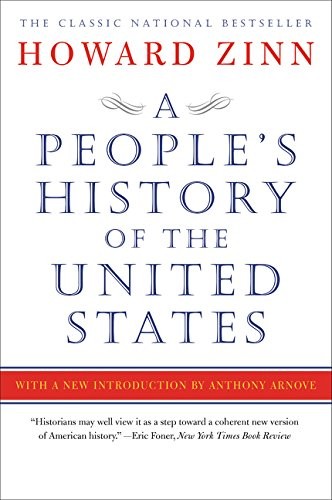
A People's History of the United States

by Howard Zinn

View on Amazon →

"If those in charge of our society — politicians, corporate executives, and owners of press and television — can dominate our ideas, they will be secure in their power."

A groundbreaking perspective on American history told from the viewpoint of marginalized communities rather than political elites. Zinn challenges the traditional narrative by highlighting the experiences of Native Americans, enslaved people, labor movements, and ordinary citizens who shaped the nation. This work fundamentally changed how Americans understand their country's past.

This book is essential for understanding history from below—the stories of those rarely heard in traditional textbooks. Zinn's narrative approach reveals the cost of American progress through the eyes of its victims and resisters. It remains the most influential counter-narrative to establishment history.

  • American history viewed from perspective of marginalized groups
  • Labor movements and social resistance shaped the nation
  • Traditional narratives omit crucial stories of dissent and struggle
  • History is interpreted through the lens of power structures
  • Some argue Zinn's selection emphasizes negative aspects while minimizing achievements
  • Accused of presenting a one-sided leftist perspective
  • Lacks some nuance in discussing complex historical figures

"The most important book about American history ever published."

The Nation, Political Magazine

"Howard Zinn's work represents a crucial corrective to official histories."

Dr. Cornel West, Philosopher and Scholar
02

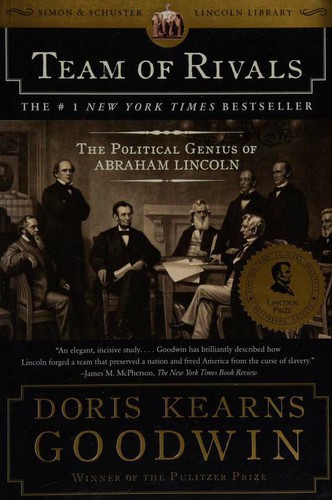
Team of Rivals: The Political Genius of Abraham Lincoln

by Doris Kearns Goodwin

View on Amazon →

"In order to 'win a man to your cause,' Lincoln explained, you must first reach his heart, 'the great high road to his reason.'"

An intimate portrait of Abraham Lincoln and his cabinet, exploring how he assembled a team of former political opponents to lead the nation through the Civil War. Goodwin illuminates Lincoln's extraordinary leadership qualities, emotional intelligence, and political acumen. The narrative reveals how Lincoln's ability to listen, compromise, and inspire loyalty from rivals transformed American politics.

This Pulitzer Prize-winning biography offers unparalleled insight into leadership during America's greatest crisis. Goodwin's meticulous research and compelling narrative demonstrate how Lincoln's political genius lay not in ideological purity but in his capacity to forge unity among deeply divided factions. Essential for understanding Civil War era governance.

  • Lincoln's leadership relied on emotional intelligence and strategic empathy
  • Cabinet composed of rivals forced diverse perspectives and innovation
  • Political compromise and consensus-building were Lincoln's greatest strengths
  • Leadership during national crisis requires flexibility and personal growth
  • Over 700 pages may be too lengthy for casual readers
  • Some historians argue it presents an overly sympathetic Lincoln
  • Limited coverage of Lincoln's evolving views on race

"A masterwork of American historical biography that won the Pulitzer Prize for History."

Pulitzer Prize Committee, American Literary Excellence

"A superb Lincoln biography that captures both the man and the era."

The New York Times, Major Newspaper
03

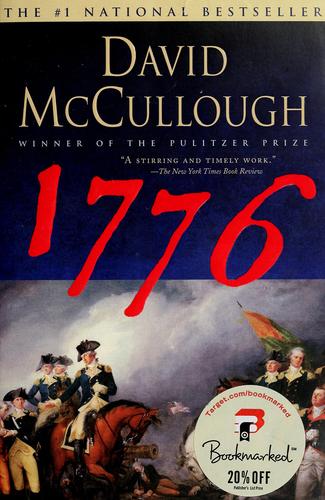
1776

by David McCullough

View on Amazon →

"The year 1776, celebrated as the birth year of the nation and for the signing of the Declaration of Independence, was for those who carried the fight for independence forward a year of all-too-few victories and sustained suffering."

A vivid narrative of the year America declared independence, revealing the desperate struggle, sacrifices, and near-disasters that defined the revolutionary war's most critical year. McCullough chronicles the military campaigns, political debates, and personal struggles of Washington, Adams, and other founding figures. The book brings immediacy and humanity to the events that created the nation.

McCullough transforms the founding year into a gripping drama that reveals the fragility of American independence. His meticulous research and narrative skill make complex military and political events accessible and compelling. This book answers the question of how America nearly lost before it truly began.

  • 1776 was a year of desperate military defeats and near-collapse
  • Washington's leadership prevented the Revolution from failing
  • The Declaration of Independence alone could not guarantee freedom
  • Personal sacrifice and determination were as important as ideology
  • Some historians note McCullough omits discussions of slavery among founders
  • The narrative focuses heavily on military aspects over political philosophy
  • Limited coverage of common soldiers and non-elite perspectives

"A magnificent narrative about the most consequential year in American history."

Washington Post, Major Newspaper

"Makes the founding of America vivid and deeply human."

Bestselling Readers, Popular Audience
04

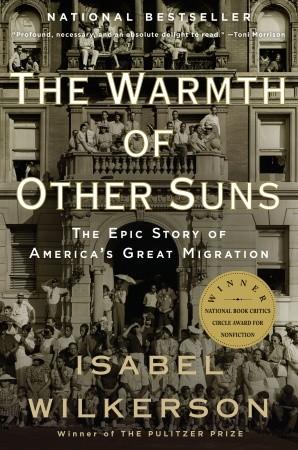
The Warmth of Other Suns: The Epic Story of America's Great Migration

by Isabel Wilkerson

View on Amazon →

"Perhaps it is not a question of whether the migrants brought good or ill to the cities they fled to, but a question of how they summoned the courage to leave in the first place or how they found the will to press beyond the forces against them."

An epic narrative of six million African Americans who fled the Jim Crow South between 1916 and 1970, seeking freedom and opportunity in Northern cities. Wilkerson follows three individuals across decades, weaving together personal stories with social history to illuminate one of America's largest demographic upheavals. The book reveals how individual courage and family determination challenged systemic racism.

This Pulitzer Prize-winning work makes visible one of America's most consequential demographic shifts that reshaped the nation's culture, politics, and social landscape. Wilkerson's intimate biographical approach reveals the human dimensions of mass migration. Essential for understanding 20th-century American social history and the roots of contemporary racial inequality.

  • The Great Migration fundamentally transformed American society and culture
  • Individual courage and resilience shaped this movement more than institutional forces
  • The migration created a new African American middle class and political power
  • Northern segregation replaced Southern segregation with different mechanisms
  • Some argue the three narrative threads don't fully represent the diversity of experiences
  • Limited discussion of economic exploitation in Northern factories
  • Occasionally portrays migration as more voluntary than circumstances allowed

"An extraordinary achievement in narrative nonfiction that illuminates an epic American story."

Pulitzer Prize Committee, American Literary Excellence

"One of the most important books about America ever written."

Bill Gates, Gates Notes
05

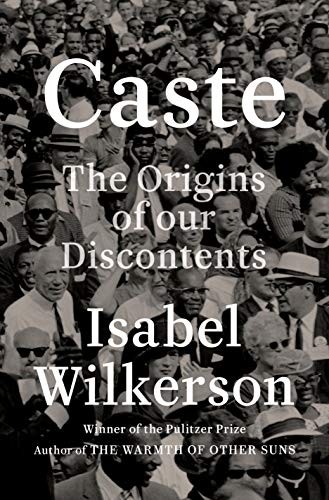
Caste: The Origins of Our Discontents

by Isabel Wilkerson

View on Amazon →

"A caste system relies on dehumanization to lock the marginalized outside of the norms of humanity so that any action against them is seen as reasonable."

Wilkerson examines America's caste system—a rigid hierarchy determining access to resources, respect, and human dignity. Drawing parallels to the caste systems of India and Nazi Germany, she argues that racism is insufficient to explain American inequality and that understanding caste reveals the infrastructure undergirding persistent racial disparities. The book challenges readers to recognize and dismantle these invisible systems.

This groundbreaking work provides a new conceptual framework for understanding American inequality that goes beyond race to examine the caste system's foundational role. Wilkerson's comparative historical analysis reveals how dehumanization enables systemic oppression. Essential for comprehending why racial progress has been limited despite decades of civil rights reforms.

  • America operates under an underlying caste system beyond racial categories
  • Caste systems require dehumanization to function and persist
  • Historical comparison reveals caste's universal mechanisms of control
  • Understanding caste structure is necessary for genuine social transformation
  • Some critics argue the caste framework may oversimplify American racial dynamics
  • Comparisons to India and Nazi Germany raise debates about historical equivalence
  • Limited prescriptive solutions for dismantling caste structures

"A powerful and revelatory examination of America's hidden social architecture."

NPR, National Public Radio

"A stunning and necessary book that reframes how we understand American inequality."

The New York Times, Major Newspaper
06

Bury My Heart at Wounded Knee: An Indian History of the American West

by Dee Brown

View on Amazon →

"They made us many promises, more than I can remember, but they never kept but one; they promised to take our land, and they took it."

A devastating account of the systematic destruction of Native American cultures and peoples during the settlement of the American West from 1860 to 1890. Brown presents history from the Native American perspective, documenting broken treaties, forced relocations, and cultural genocide. The book includes powerful quotes from Native American leaders witnessing the destruction of their way of life.

This seminal work exposed American atrocities to a mass audience and fundamentally changed how scholars and readers understand westward expansion. Brown's meticulous documentation and emotional power make invisible histories visible. Essential for understanding that American progress was built on indigenous dispossession and that this history remains relevant.

  • Westward expansion was built on systematic displacement and cultural destruction
  • Native Americans actively resisted their erasure through multiple means
  • Broken treaties reveal the hypocrisy at the nation's founding
  • Indigenous peoples' own voices and perspectives were historically silenced
  • Some scholars note the book was ahead of its time in Native representation but has limitations
  • The reliance on archival sources means some indigenous voices remain excluded
  • The narrative sometimes reinforces tragic victim narratives over agency

"A landmark work that permanently changed American historical consciousness about Native Americans."

American History Association, Professional Historians

"Essential reading for understanding the true history of American westward expansion."

Academic Historians, University Scholars
07

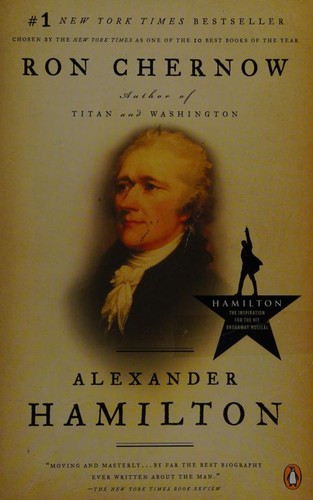
Alexander Hamilton

by Ron Chernow

View on Amazon →

"If Washington is the father of the country and Madison the father of the Constitution, then Alexander Hamilton was surely the father of the American government."

A comprehensive biography of Alexander Hamilton, the immigrant who became one of America's most influential founding figures. Chernow reveals Hamilton's ambitious drive, financial innovations, and vision for a strong federal government that shaped American capitalism. The biography rehabilitates Hamilton's reputation while honestly addressing his flaws and controversies.

Chernow's masterwork restored Hamilton to prominence and inspired the Broadway musical that reached millions. This biography is essential for understanding the financial and constitutional foundations of the American state. Hamilton's immigrant story and outsized ambition make him a compelling figure for understanding American opportunity and limitation.

  • Hamilton's financial system created the foundation for American capitalism
  • He envisioned a strong federal government, not weak confederation
  • As an immigrant, Hamilton exemplifies American social mobility and its limits
  • His ideas about executive power and federal authority remain contested
  • Some historians argue Chernow portrays Hamilton too sympathetically
  • Limited discussion of Hamilton's hypocrisy regarding slavery and democracy
  • The biography may give excessive weight to financial contributions

"A magnificent biography of one of America's most important yet enigmatic figures."

George Washington Book Prize, Historical Excellence Award

"A work so compelling it inspired a global cultural phenomenon."

Lin-Manuel Miranda, Cultural Figure
08

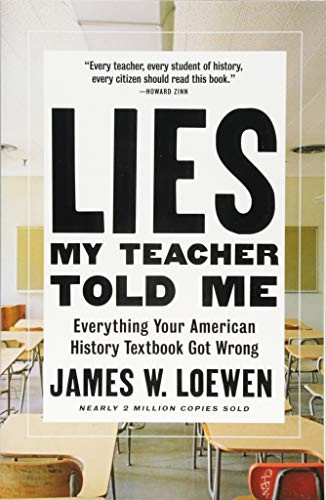
Lies My Teacher Told Me: Everything Your American History Textbook Got Wrong

by James W. Loewen

View on Amazon →

"Those who don't remember the past are condemned to repeat the eleventh grade."

A critical examination of twelve high school history textbooks that exposes false narratives, Eurocentric perspectives, and mythologized accounts of American history. Loewen documents how textbooks present misleading information about Columbus, Native Americans, slavery, industrialization, and American foreign policy. The book reveals how textbooks serve ideology over accuracy.

This American Book Award-winner fundamentally changed how educators and scholars think about historical accuracy in education. Loewen demonstrates that textbooks actively shape citizens' understanding of their country through systematic distortion. Essential for understanding how historical narratives are constructed and the stakes of educational choices.

  • High school textbooks contain systematic errors and misleading narratives
  • Textbooks prioritize patriotic mythology over historical accuracy
  • Columbus and founding narratives are particularly distorted
  • Textbook selection processes can improve historical accuracy
  • Some argue specific examples are dated and need updating
  • Critics note that newer textbook editions have incorporated some corrections
  • The book's critique doesn't always provide balanced counterarguments

"A vital work that won the American Book Award for bringing truth to American history education."

American Book Award Committee, Literary Recognition

"A powerful indictment of historical inaccuracy in American education."

The New York Times, Major Newspaper
09

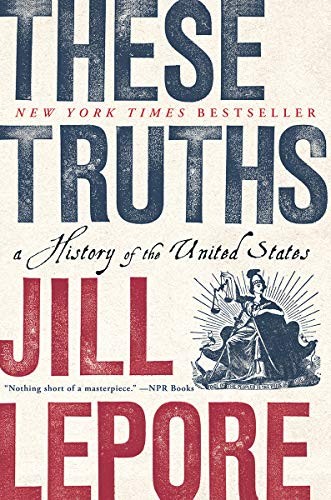
These Truths: A History of the United States

by Jill Lepore

View on Amazon →

"A nation born in contradiction… will fight, forever, over the meaning of its history."

A comprehensive one-volume history of the United States from pre-Columbian times to the present, organized around the nation's founding principles of political equality, natural rights, and popular sovereignty. Lepore traces how Americans have continuously reinterpreted these ideals and examines the technological and political forces that have altered how people understand truth itself.

Lepore's modern masterpiece provides an accessible yet sophisticated overview of American history for contemporary readers. Her focus on how Americans debate the meaning of founding principles remains strikingly relevant. Essential for understanding the American experiment not as predetermined progress but as contested struggle.

  • American founding principles have been continuously reinterpreted over time
  • Technology and media shape how Americans understand what is true
  • The nation has always contained internal contradictions about equality
  • American history is fundamentally about struggles over meaning and justice
  • Some scholars debate whether the organizing framework adequately captures complexity
  • The book's scope means some periods receive limited attention
  • Recent events and current politics are addressed somewhat briefly

"A brilliant synthesis of American history that captures both grand themes and human particularity."

The New Yorker, Leading Magazine

"A sophisticated and accessible history that will serve as a standard text for years to come."

Academic Historians, University Scholars
10

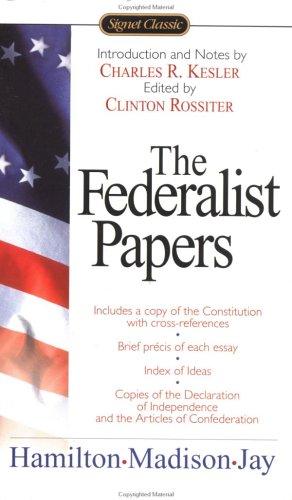
The Federalist Papers

by Alexander Hamilton, James Madison, and John Jay

View on Amazon →

"If men were angels, no government would be necessary... In framing a government which is to be administered by men over men, the great difficulty lies in this: you must first enable the government to control the governed; and in the next place oblige it to control itself."

A collection of 85 essays written by Hamilton, Madison, and Jay arguing for ratification of the Constitution. The Papers present the founders' vision for constitutional government, separation of powers, federalism, and the structure of the presidency. These documents remain the most authoritative interpretation of the Constitution's original intent and foundational political philosophy.

The Federalist Papers are essential primary documents for understanding the Constitution and founding political theory. They reveal the founders' deliberative process and their anxieties about democratic governance. Essential reading for understanding debates over executive power, federal authority, and constitutional interpretation that persist today.

  • The separation of powers was designed to prevent tyranny through checks and balances
  • Federalism distributes power between national and state governments
  • The founders were skeptical of pure democracy and popular passion
  • Constitutional interpretation remains contested and these papers guide debate
  • Some scholars argue the Papers don't fully represent all founders' views
  • The founders' exclusion of women, enslaved people, and Native Americans is unaddressed
  • The Papers were written to persuade, not to provide neutral analysis

"The best commentary on the principles of government ever written."

Thomas Jefferson, Founding Father

"The authoritative guide to understanding constitutional intent and political philosophy."

Supreme Court Justices, Constitutional Authority
Back to all lists