Essential Anthropology Reading List

Understanding Human Culture, Society, and Evolution Through Landmark Anthropological Studies

This collection brings together the most influential and illuminating works in anthropological study. These texts examine humanity through multiple lenses—evolutionary biology, cultural practice, historical development, and social organization—providing readers with comprehensive frameworks for understanding human behavior and social structures. From foundational ethnographies to revisionist histories, these books represent both classical scholarship and contemporary reexamination of anthropological knowledge.

01

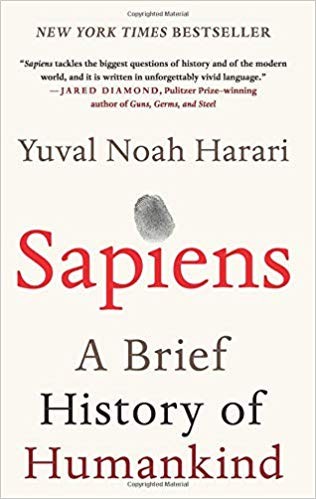
Sapiens: A Brief History of Humankind

by Yuval Noah Harari

View on Amazon →

"You could never convince a monkey to give you a banana by promising him limitless bananas after death in monkey heaven."

A sweeping narrative history examining how Homo sapiens came to dominate the world through cognitive, agricultural, and scientific revolutions. Harari traces seventy thousand years of human development, from hunter-gatherer societies through the modern age, exploring the imagined orders—religions, nations, and corporations—that enable large-scale human cooperation.

Essential for understanding human history on a grand scale. Harari synthesizes evolutionary biology, archaeology, and sociology to explain how cultural myths and collective belief systems have shaped human civilization. This book fundamentally challenges readers to question the origins of inequality, technology, and modern society.

  • Cognitive Revolution enabled symbolic thought and language
  • Agricultural Revolution created hierarchies and domestication
  • Scientific Revolution challenged religious and cultural orthodoxy
  • Imagined orders bind large societies together through shared belief systems
  • Overly broad generalizations across vast time periods
  • Western-centric perspective on non-Western civilizations
  • Deterministic view of historical causation oversimplifies complexity

"A compelling global history that illuminates how our species rose from obscurity to global dominance, with profound implications for understanding our future."

Bill Gates, Microsoft Founder

"Sapiens is an eye-opening exploration of human history that challenges conventional thinking and offers fascinating perspectives on our collective past."

Chris Evans, Actor

"A thought-provoking examination of human civilization that changes how you think about history, culture, and our place in the world."

Barack Obama, Former U.S. President
02

The Interpretation of Cultures

by Clifford Geertz

View on Amazon →

"Man is an animal suspended in webs of significance he himself has spun."

A foundational collection of essays introducing symbolic and interpretive anthropology. Geertz argues that culture must be understood through dense description and interpretation of meaning rather than structural universals. His approach revolutionized ethnographic methodology by emphasizing the anthropologist's role as interpreter of cultural symbols and practices.

Geertz's interpretive approach became central to modern anthropology. His concept of 'thick description' provides essential methodology for cultural analysis. This book transforms how anthropologists and social scientists approach fieldwork, making it indispensable for understanding culture as a system of meaningful symbols.

  • Culture as systems of meaningful symbols
  • Thick description as ethnographic methodology
  • Interpretation requires understanding context and local meaning
  • Anthropology is subjective interpretation, not objective science
  • Dense theoretical writing difficult for general readers
  • Emphasis on interpretation raises questions about objectivity
  • Limited discussion of power dynamics and colonial contexts

"Geertz is an anthropologist, philosopher, political scientist, literary critic who has helped a vast public make sense of the human condition through brilliant essays."

Robert Darnton, New York Review of Books Critic

"The Interpretation of Cultures was named one of the 100 most important books published since World War II."

Times Literary Supplement, Leading Literary Journal

"Awarded the Sorokin Award in 1974 for his brilliant essays that clarified the meaning of culture and relate it to human experience."

American Sociological Association, Professional Organization
03

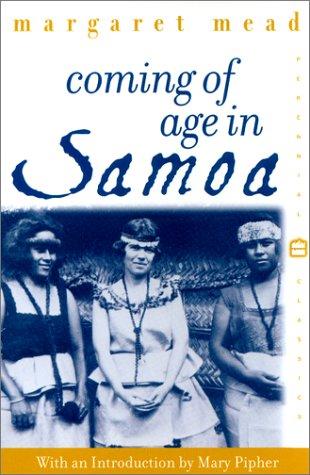
Coming of Age in Samoa

by Margaret Mead

View on Amazon →

"The adolescent stage is not necessarily a time of stress and strain, but this particular form of psychological disturbance is due to the civilization."

An influential ethnographic study of adolescent girls in Samoa challenging Western assumptions about the inevitable turbulence of puberty. Mead presents Samoan culture as producing a smooth transition to adulthood through relaxed sexual attitudes and flexible social roles, suggesting that adolescent conflict is culturally determined rather than biologically inevitable.

This pioneering work established ethnography as a rigorous discipline and demonstrated how comparative anthropology reveals cultural relativity. Mead's analysis profoundly influenced debates about nature versus nurture, gender roles, and adolescent development, making it foundational for understanding cultural variation in human development.

  • Cultural relativity—no single path through adolescence
  • Socialization shapes personality more than biology
  • Non-Western societies offer alternative models of social organization
  • Anthropology challenges ethnocentric assumptions
  • Methodological concerns about accuracy of Mead's observations
  • Romanticization of Samoan culture oversimplifies complexity
  • Later critics questioned her informants' reliability

"Corroborates, through practical demonstration, the psychosexual theories promulgated by Freud and his pupils, providing essential empirical evidence."

Dr. A. A. Brill, Psychoanalyst and Scholar

"Became anthropology's most widely read work, fundamentally transforming how the field approaches the study of culture and human development."

Academic Community, Anthropological Scholars

"Largely defended Mead's findings, recognizing her pioneering contributions to ethnographic methodology despite later controversies."

Lowell D. Holmes and Ellen Rhoads Holmes, Anthropologists
04

Tristes Tropiques

by Claude Lévi-Strauss

View on Amazon →

"The wise man doesn't give the right answers, he poses the right questions."

A philosophical memoir combining travel narrative with anthropological meditation on indigenous South American societies and Western civilization. Lévi-Strauss reflects on his fieldwork among Brazilian tribes while developing the theoretical framework of structural anthropology, examining underlying patterns in human thought across cultures.

This masterwork represents the pinnacle of structural anthropology and offers profound meditation on the decline of non-Western cultures. Lévi-Strauss's analysis of how human minds organize meaning through binary oppositions revolutionized anthropological theory. The book combines rigorous scholarship with literary artistry, making it essential for understanding 20th-century anthropology.

  • Structuralism reveals universal patterns underlying cultural diversity
  • Binary oppositions organize human thought across all cultures
  • Indigenous knowledge systems employ sophisticated logical structures
  • Modern civilization carries seeds of its own destruction
  • Structuralism critiqued as reductionist and deterministic
  • Romanticizes indigenous societies as repositories of truth
  • Provides limited attention to colonial power dynamics

"Tristes Tropiques is one of the great books of our century. It is rigorous, subtle, and bold in thought, and beautifully written."

Susan Sontag, Prominent Intellectual

"The organizers lamented they could not award the prize because Tristes Tropiques was technically non-fiction, marking it as a work of extraordinary literary merit."

Prix Goncourt, French Literary Award

"The cultural landmark of 1955 in France, an immensely popular bestseller when first published that captured the public imagination."

French Literary Culture, 1955 Cultural Landmark
05

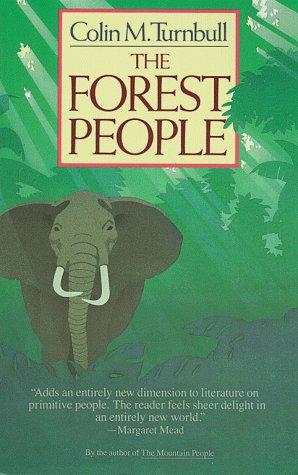
The Forest People

by Colin Turnbull

View on Amazon →

"The Mbuti are basically good-natured, gentle people; they are not harsh or strict with their children."

An intimate ethnographic account of the Mbuti pygmies of the Ituri Forest in the Democratic Republic of Congo. Turnbull presents a society organized around egalitarian values, cooperation, and integration with the rainforest environment, challenging assumptions about primitive societies and violence.

Turnbull's detailed portrait of an egalitarian society without formal hierarchy provides crucial evidence for anthropological debates about human social organization. This work demonstrates that societies can function effectively without centralized authority or significant status differentiation, offering important counterexamples to evolutionary hierarchies assumed in Western thought.

  • Egalitarian societies function effectively without coercive hierarchies
  • Resource abundance enables cooperative social organization
  • Hunting-gathering societies possess sophisticated ecological knowledge
  • Cultural variation demonstrates multiple viable human social arrangements
  • Critique that Turnbull imposed Western romanticism on the Mbuti
  • Later work suggested he misrepresented aspects of their culture
  • Participation-observation methodology raises objectivity concerns

"Adds an entirely new dimension to literature on primitive people, revealing the depth and complexity of Mbuti society."

Margaret Mead, Pioneering Anthropologist

"Turnbull's intimate knowledge from years of living among the Mbuti enables readers to enter into understanding the meaning of their lives and participate in a culture other than our own."

Harry L. Shapiro, Curator of Physical Anthropology

"An exceptional work that profoundly influenced discussions about egalitarian societies and challenged evolutionary hierarchies in anthropological thought."

Anthropological Scholarship, Academic Community
06

Don't Sleep, There Are Snakes

by Daniel Everett

View on Amazon →

"The Pirahã language challenges our deepest assumptions about what language must look like."

A gripping account of Everett's decades-long encounter with the Pirahã people of the Amazon, combining adventure narrative with linguistic and anthropological revelation. Everett documents the Pirahã language's unique structural features and the tribe's distinctive worldview, challenging established linguistic theory.

This work bridges adventure, ethnography, and theoretical linguistics, providing crucial evidence for linguistic relativity and the relationship between language and thought. Everett's documentation of the Pirahã language challenged Chomsky's universal grammar hypothesis and provided unprecedented insights into human linguistic variation and cognitive diversity.

  • Language structure reflects and shapes cultural values and worldview
  • Linguistics must account for cultural context, not just universal rules
  • Isolated societies maintain sophisticated knowledge systems
  • Technology and material goods do not determine social values
  • Claims about Pirahã language structure remain debated among linguists
  • Narrative style prioritizes drama over systematic analysis
  • Limited engagement with alternative explanations for linguistic features

"Selected as one of the best books of 2009 in the US, praised for its fascinating exploration of the Pirahã people."

National Public Radio, Media Organization

"Makes the rain forest sound like a magic mushroom, transforming scientific inquiry into compelling adventure narrative."

Harper's Magazine, Literary Publication

"A riveting account of a Christian missionary 'converted' to the viewpoint of the Amazonian Indians he had intended to evangelize."

Time Magazine, Major Publication
07

The World Until Yesterday

by Jared Diamond

View on Amazon →

"We can't live as our ancestors did, but we can learn from their wisdom."

Diamond examines how traditional societies handle problems from child rearing to conflict resolution to aging, drawing lessons applicable to modern life. Through comparative analysis of societies from Papua New Guinea to the Americas, he explores what contemporary societies might learn from the social practices and values of pre-industrial cultures.

This work exemplifies applied anthropology, demonstrating how ethnographic knowledge informs contemporary problems. Diamond's comparative approach reveals that modern Western practices are not inevitable or universally optimal, providing anthropological perspective on aging, child development, conflict resolution, and environmental management.

  • Traditional societies offer tested solutions to universal human problems
  • Child-rearing practices vary widely across cultures with different outcomes
  • Egalitarian societies manage conflict through different mechanisms than hierarchical ones
  • Modern practices represent choices, not inevitable evolutionary advances
  • Oversimplifies complex societies into homogeneous categories
  • Selective use of evidence to support predetermined conclusions
  • Risks romanticizing non-Western societies

"An epoch-changing work that offers us hope through real-life solutions to our most pressing problems, positioning Diamond as the Charles Darwin of our generation."

Michael Shermer, Publisher of Skeptic Magazine

"An incredible insightful journey into the knowledge and experiences of peoples in traditional societies that enriches understanding of human possibilities."

Diane Ackerman, Author of The Zookeeper's Wife

"Extraordinary in erudition and originality, compelling in its ability to relate the digitized pandemonium of the present to the agrarian past."

The New York Times Book Review, Leading Book Review
08

Debt: The First 5000 Years

by David Graeber

View on Amazon →

"Debt is the most effective system of control ever invented; it makes people accept degradation as a form of virtue."

An anthropological history of debt and economic systems challenging conventional narratives about money's origins. Graeber traces debt relationships across civilizations, arguing that barter was never the foundation of economy and that credit systems preceded coined money, reframing our understanding of economic organization.

Graeber employs anthropological methodology to overturn mainstream economic assumptions. This work demonstrates how ethnography and comparative historical analysis reveal that contemporary economic systems are culturally contingent choices rather than inevitable outcomes of natural economic laws.

  • Debt relationships predate coined money and were central to civilizations
  • Gift economies and credit systems were widespread before market economies
  • Economic systems reflect cultural values and political choices
  • Debt functions as mechanism of social control across hierarchical societies
  • Historical claims disputed by economic historians and numismatists
  • Overly deterministic about role of debt in shaping civilization
  • Limited discussion of legitimate reasons debt relationships developed

"Won the Bateson Book Prize, recognizing groundbreaking anthropological scholarship that challenges fundamental economic assumptions."

Society for Cultural Anthropology, Academic Organization

"A groundbreaking study that opened up a vibrant and ongoing conversation about the evolution of our economic system."

Astra Taylor, Critic, The New Yorker

"Graeber's book is not just thought-provoking, but also exceedingly timely in challenging conventional economic narratives."

Gillian Tett, Financial Times
09

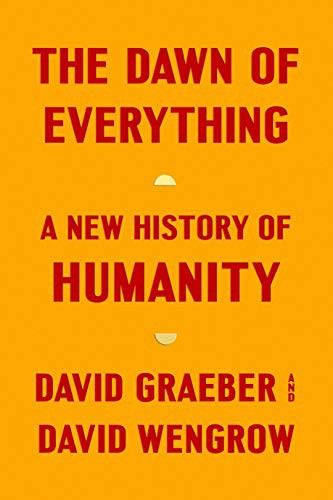
The Dawn of Everything

by David Graeber and David Wengrow

View on Amazon →

"The emergence of the state was a choice, not an inevitable consequence of human nature or social evolution."

A revisionist history of human civilization arguing that pre-agricultural societies were more diverse, complex, and dynamic than conventional narratives suggest. Graeber and Wengrow present archaeological and anthropological evidence of sophisticated urban settlements, democratic assemblies, and seasonal mobility in the Pleistocene.

This work fundamentally challenges received narratives about human progress and civilization. By integrating archaeology, anthropology, and historical analysis, it demonstrates that human societies experimented with diverse organizational forms throughout history, suggesting that contemporary inequality is neither inevitable nor universal.

  • Pre-agricultural societies were complex, diverse, and often egalitarian
  • Agricultural Revolution enabled but did not necessitate hierarchical states
  • Human social organization reflects choices within cultural contexts
  • Progress narratives mask alternative paths through human history
  • Archaeological interpretations sometimes go beyond available evidence
  • Overly dismissive of alternative explanations for social complexity
  • Limited engagement with evolutionary and biological perspectives

"A brilliant and inspiring work that upends bedrock assumptions about 30,000 years of human change and possibility."

William Deresiewicz, The Atlantic

"A great book that will stimulate discussions, change minds, and drive new lines of research in understanding human history."

Erle Ellis, Science Magazine

"Recipient of the 2025 J.I. Staley Prize for exceptional scholarship and writing that expands the boundaries of anthropological thought."

J.I. Staley Prize Committee, Anthropological Excellence Award
10

Guns, Germs, and Steel

by Jared Diamond

View on Amazon →

"We've always believed that the people on the other islands were fundamentally lazier and somehow less intelligent than us. Here's an explanation that doesn't require you to believe that."

An ambitious analysis of how geography, not inherent superiority, determined which societies developed agricultural civilizations, metallurgy, and technology. Diamond traces how possession of domesticable plants, animals, and natural resources shaped differential development across continents, accounting for global inequalities.

This Pulitzer Prize-winning work applies biogeographic analysis to fundamental anthropological questions about human development. Diamond's geographical determinism offers an alternative to racial and cultural explanations for differences in technological development, making it essential reading for understanding how anthropology explains global inequality.

  • Geography determines available domesticable plants and animals
  • Agricultural societies had technological advantages over hunter-gatherers
  • Eurasia's east-west axis facilitated technology diffusion
  • Inequality stems from environmental factors, not biological differences
  • Geographical determinism understates agency and cultural innovation
  • Environmental factors alone insufficient to explain technological development
  • Some biogeographic claims disputed by historians and biologists

"Winner of the 1998 Pulitzer Prize in General Nonfiction and Royal Society Prize, representing the highest achievement in science writing."

Pulitzer Prize Committee, Pulitzer Prize

"Shows how history and biology can enrich one another to produce a deeper understanding of the human condition."

E.O. Wilson, Biologist, Harvard University

"One of the most important and readable works on the human past published in recent years, combining scholarship with accessibility."

Colin Renfrew, Nature Magazine
Back to all lists