Architectural Theory and Practice

Understand the principles, philosophies, and practices that shape the built environment

Architecture shapes how we live, work, and experience the world. This collection brings together seminal texts exploring architectural theory, urban design, and spatial practice. From foundational pattern languages to contemporary phenomenological perspectives, these books establish both theoretical frameworks and practical knowledge for understanding and creating the built environment.

01

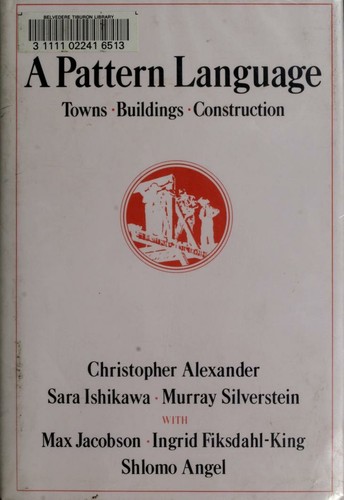
A Pattern Language: Towns, Buildings, Construction

by Christopher Alexander, Sara Ishikawa, Murray Silverstein, et al.

View on Amazon →

"Most of the wonderful places of the world were not made by architects but by the people. Architecture should be a language used for and by the people to help them build their own towns."

A revolutionary exploration of design as a language of patterns that can be applied at every scale from towns to buildings to details. Alexander documents 253 design patterns solving recurring problems in urban planning and architecture. Rather than prescribing solutions, patterns describe problems and possible approaches, inviting participation from communities and individuals.

Pattern thinking revolutionized how we understand design problems and solutions. This work demonstrates that good design emerges from understanding patterns in human behavior and spatial experience. Essential for understanding architecture beyond individual buildings to urban and community design.

  • Design patterns encode solutions to recurring problems
  • Patterns scale from urban planning to architectural details
  • Pattern language democratizes design beyond professional architects
  • Community participation strengthens place-making
  • Timeless patterns emerge from observation of human experience
  • Dense reference format requires sustained engagement
  • Some patterns feel culturally specific or dated
  • Limited guidance on implementing patterns in contemporary contexts

"Alexander's pattern language provided the foundation for rethinking urban spaces for people."

Janette Sadik-Khan, Urban Designer

"A remarkable synthesis of observation and pattern thinking that elevates design beyond aesthetics."

Jane Jacobs, Urban Theorist
02

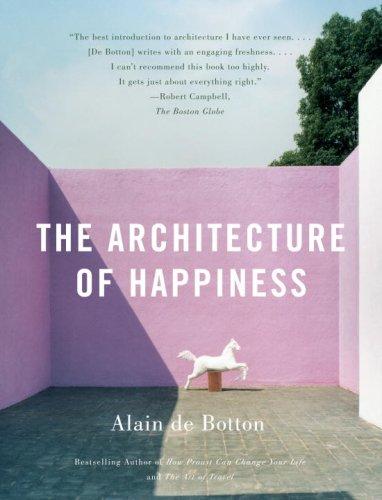
The Architecture of Happiness

by Alain de Botton

View on Amazon →

"Architecture is important because it shapes our feelings and thoughts. The buildings around us unconsciously influence our identities and moods."

A philosophical exploration of how architecture affects our emotional lives and sense of self. De Botton argues that our surroundings shape our moods, values, and relationships. He examines how aesthetic experience of buildings influences wellbeing and demonstrates that architecture matters not because it's beautiful but because it affects how we feel and behave.

Architecture is fundamentally about human experience, not aesthetic objects. De Botton articulates why the emotional and psychological impacts of buildings matter. Essential for understanding architecture's role in creating livable, satisfying human environments.

  • Architecture affects emotional wellbeing and psychological state
  • Surroundings unconsciously influence values and relationships
  • Aesthetic experience shapes human flourishing
  • Architectural meaning emerges from use and experience, not intention alone
  • Public and private spaces affect community and individual identity
  • Philosophical approach sometimes lacks architectural depth
  • Examples emphasize European architectural traditions
  • Limited technical guidance on creating emotionally resonant spaces

"De Botton reminds us why architecture matters to human life, not just professional reputation."

Rem Koolhaas, Architect
03

Towards a New Architecture

by Le Corbusier

View on Amazon →

"The house is a machine for living in. Form follows function. Decoration is crime against good design."

A modernist manifesto arguing that architecture should serve human needs through rational, functional design. Le Corbusier calls for machines à habiter (machines for living), rejecting ornament in favor of form following function. Though controversial and contested, this 1923 text remains foundational to understanding modernist design philosophy.

Modernism shaped twentieth-century architecture and design fundamentally. Understanding Le Corbusier's arguments for functional design, mass production, and rational planning is essential for understanding contemporary design practice. Even those who reject modernism must understand these foundational arguments.

  • Functional design serves human needs before aesthetic preferences
  • Standardization and mass production democratize architecture
  • Rationality and planning create order and efficiency
  • Ornament distracts from fundamental design problems
  • Architecture should reflect contemporary technological possibilities
  • Modernist ideology sometimes ignores cultural context and community
  • Functional reductionism can create sterile, inhuman spaces
  • Some predictions about standardization feel dated or problematic

"Whether you agree with Le Corbusier or not, his ideas shaped all subsequent architectural thinking."

Colin Rowe, Architectural Theorist
04

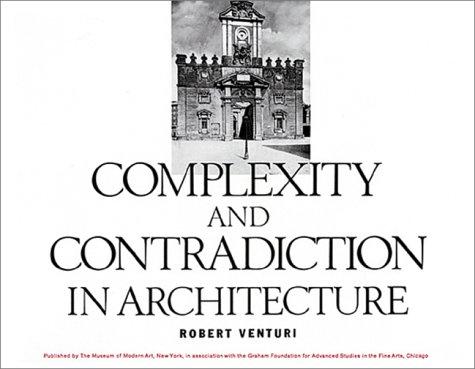
Complexity and Contradiction in Architecture

by Robert Venturi

View on Amazon →

"I prefer buildings and cities which are alive and working to those which pretend to purity. Complexity and contradiction express the ambiguities of modern experience."

A postmodern manifesto challenging modernist purity and advocating for complexity, contradiction, and ambiguity in architecture. Venturi argues that real buildings accommodate conflicting needs and meanings, making complexity inherent rather than flawed. This manifesto reintroduced historical reference, ornament, and symbolism into serious architectural discourse.

This text represents the philosophical rebellion against modernist simplification. Understanding Venturi's arguments for accommodating contradiction and embracing cultural complexity is essential for contemporary architectural thinking. Foundational to postmodern and contextual design approaches.

  • Complexity and contradiction reflect real human experience better than purity
  • Historical references and symbolism strengthen community meaning
  • Accommodating multiple functions and meanings creates richer architecture
  • Ornament and decoration can serve communicative purpose
  • Context and place-making matter in architectural design
  • Postmodern reaction sometimes swings too far from modernist discipline
  • Complexity argument can justify poor design choices
  • Contemporary architecture has moved beyond postmodern rhetoric

"Venturi fundamentally changed how architects think about complexity, context, and meaning."

Paul Goldberger, Architecture Critic
05

S, M, L, XL: Small, Medium, Large, Extra-Large

by Rem Koolhaas, Bruce Mau

View on Amazon →

"Bigness is an illusion created by the presence of certain conditions. All the principles of architecture are still valid, but they are all negotiated by the presence of large scale."

A monumental exploration of architectural scale and programmatic complexity. Koolhaas and Mau document realized projects, theoretical writings, and design approaches across scales from small houses to massive urban interventions. The format itself—monumental, dense, layered—mirrors the complexity of contemporary architectural practice.

Contemporary architecture operates at multiple scales simultaneously, addressing commercial, cultural, and social complexity. This work demonstrates how architectural thinking accommodates programmatic and contextual complexity. Essential for understanding contemporary architecture beyond individual buildings.

  • Scale fundamentally transforms architectural problems and solutions
  • Program complexity creates richness and possibility
  • Density and overlapping uses generate urban vitality
  • Architecture works at multiple temporal scales simultaneously
  • Contemporary context requires rethinking classical architectural principles
  • Dense format and scale challenging to engage with thoroughly
  • Celebration of big-scale development can obscure human experience
  • Some projects prove controversial in retrospect

"Koolhaas and Mau captured the complexity of contemporary architectural practice."

Beatriz Colomina, Architecture Historian
06

The Eyes of the Skin: Architecture and the Senses

by Juhani Pallasmaa

View on Amazon →

"Architecture is the art of reconciliation between ourselves and the world. Through the interaction of our senses in space, we experience architecture as a multisensory phenomenon."

A phenomenological exploration of how humans experience architecture through all senses, not just vision. Pallasmaa challenges ocularcentrism in architecture, arguing that touch, smell, sound, and proprioception are equally important to sight in shaping spatial experience. This 4th edition maintains the philosophical core while updating contemporary application.

Architecture is experienced through embodied presence, not images and drawings. Pallasmaa provides theoretical foundation for understanding sensory dimensions of architectural experience. Essential for moving beyond visual representation to designing spaces that engage the whole person.

  • Sensory experience—touch, sound, smell—shapes architectural meaning
  • Embodied experience differs from visual representation
  • Materials, textures, and acoustic properties matter fundamentally
  • Light and shadow create temporal and experiential variation
  • Intimate human-scale experience gets lost in spectacular design
  • Phenomenological approach sometimes feels abstract and philosophical
  • Limited practical guidance on designing for sensory experience
  • Examples emphasize philosophical concepts over technical solutions

"Pallasmaa articulates why architecture matters beyond visual spectacle—through sensory experience."

David Chipperfield, Architect
07

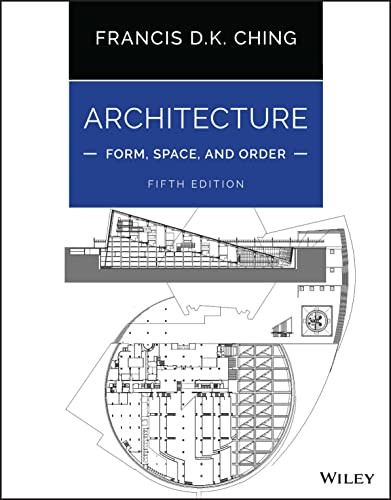
Architecture: Form, Space, and Order

by Francis D.K. Ching

View on Amazon →

"The primary concern of architecture is not shelter but the creation of meaningful spaces. Understanding form, space, and order enables creating spaces that enhance human experience."

A comprehensive visual guide to fundamental principles of architectural design. Ching systematically explains how buildings organize form, space, and circulation, using clear drawings and diagrams to make complex concepts immediately comprehensible. The fifth edition updates examples while maintaining focus on timeless organizational principles.

Understanding how buildings organize space is fundamental to architectural literacy. Ching's systematic approach to form, space, circulation, and structure provides vocabulary and frameworks for analyzing and designing buildings. Essential foundational text for architecture students and professionals.

  • Primary elements organize architectural space and meaning
  • Geometric organization creates visual harmony and order
  • Circulation shapes how people experience and understand buildings
  • Structural systems express architectural intention
  • Scale and proportion relate buildings to human experience
  • Reference format and drawing focus work better with hands-on engagement
  • Organizational principles sometimes feel abstract without real examples
  • Contemporary digital design tools change how architects practice

"Ching's systematic explanation of architectural principles remains indispensable."

Steven Holl, Architect
08

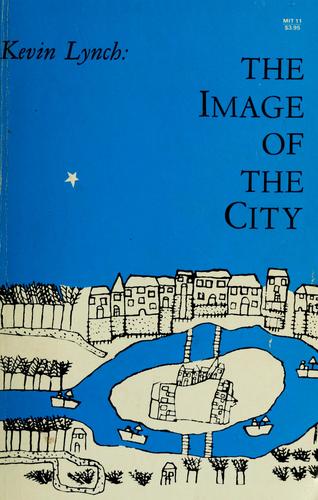
The Image of the City

by Kevin Lynch

View on Amazon →

"Legibility is important because it allows the citizen to feel secure and oriented in an urban environment. The ability to recognize and to organize the surrounding space is a basic human need."

A foundational work on urban perception and cognitive mapping. Lynch demonstrates how people understand and navigate cities, identifying key elements—paths, edges, districts, nodes, landmarks—that structure mental maps. This research-based approach revolutionized urban design and planning, shifting focus from abstract city planning to actual human experience.

Urban design shapes how people navigate and experience cities. Lynch provides frameworks for understanding urban wayfinding and creating legible cities. Essential for architects and planners seeking to design cities and neighborhoods that people can understand and navigate intuitively.

  • Urban mental maps organize perception and navigation
  • Legibility—the ease of understanding cities—affects wellbeing
  • Key elements (paths, nodes, landmarks) structure urban experience
  • Individual perception varies based on experience and familiarity
  • Urban design should support wayfinding and orientation
  • Research methodology reflects mid-twentieth-century context
  • Limited coverage of diverse urban forms and cultural contexts
  • Digital navigation tools change how people experience cities

"Lynch established the foundation for understanding how people actually experience cities."

Jan Gehl, Urban Designer
09

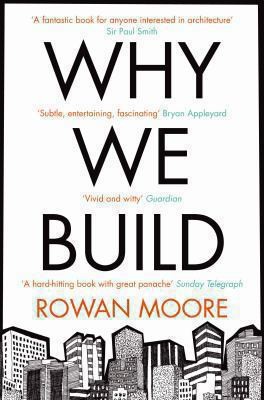
Why We Build

by Rowan Moore

View on Amazon →

"We build to satisfy fundamental human needs—shelter, certainly, but also meaning, identity, permanence, and transcendence. Architecture reveals what we value and who we are."

An exploration of architecture's motivations across history and geography. Moore examines why humans build—for shelter, meaning, expression, power, beauty—across cultures and centuries. Moving from ancient monuments to contemporary structures, Moore reveals architecture as a fundamental human act driven by diverse desires and purposes.

Understanding architecture's motivations across contexts enriches design thinking. Moore demonstrates that architecture serves psychological, cultural, and spiritual needs beyond functional shelter. Essential for understanding architecture's role in human culture and identity.

  • Architecture serves psychological and spiritual needs beyond shelter
  • Building motivations reveal cultural values and priorities
  • Permanence and monumentality shape human meaning-making
  • Spectacle and beauty coexist with functional requirement
  • Architecture connects individuals to community and history
  • Broad scope sometimes lacks depth on specific traditions or movements
  • Historical examples emphasize Western and monumental architecture
  • Contemporary architecture sometimes feels treated superficially

"Rowan Moore understands that architecture reveals fundamental things about human nature and desire."

Paul Goldberger, Architecture Critic
10

Atmospheres: Architectural Environments, Surrounding Objects

by Peter Zumthor

View on Amazon →

"Architecture is about creating atmospheres. It's about the feeling a space gives you—the way light falls, materials age, and spaces invite movement and presence."

A poetic meditation on architectural atmosphere and the emotional impact of built space. Zumthor, a acclaimed architect, explores how materials, light, sound, smell, and tactile experience combine to create specific atmospheres. Rather than prescriptive, the work invites contemplation of how design choices shape felt experience.

Architecture creates atmospheres—emotional qualities of space—that profoundly affect occupants. Zumthor articulates how seemingly technical decisions about materials, proportions, and detailing shape qualitative experience. Essential for understanding that good architecture engages emotion and sensation.

  • Atmosphere emerges from material, light, and proportion combinations
  • Emotional and sensory experience is central to architectural meaning
  • Materials age and develop patina that affects spatial character
  • Sound and silence shape how spaces feel and function
  • Architectural intention manifests through careful detail and material expression
  • Poetic approach sometimes lacks technical specificity
  • Limited discussion of sustainability or contemporary material concerns
  • Philosophical nature requires reflective engagement to apply

"Peter Zumthor articulates the poetry of architecture—how spaces move and inspire us."

David Chipperfield, Architect
Back to all lists