10 Best Artificial Intelligence Books

Essential Reads for Understanding the Present and Future of AI

This curated collection represents the most influential and insightful books on artificial intelligence, spanning technical foundations, ethical considerations, and societal implications. From foundational textbooks to visionary explorations of AI's future, these works provide comprehensive perspectives on one of humanity's most transformative technologies. Whether you're a technologist, policy maker, or curious reader, these books offer essential insights into AI's current state and profound potential.

01

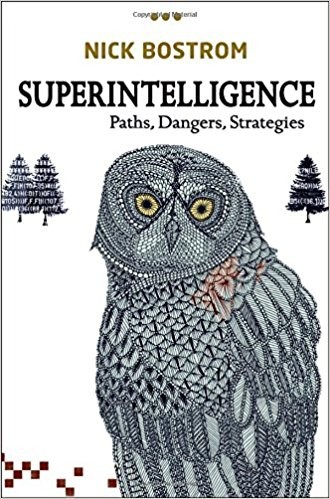
Superintelligence: Paths, Dangers, Strategies

by Nick Bostrom

View on Amazon →

"The first ultraintelligent machine is the last invention that man need ever make, provided that the machine is docile enough to tell us how to keep it under control."

A landmark philosophical and technical exploration of artificial superintelligence and existential risk. Bostrom examines the paths through which AI might achieve superintelligence, the potential dangers posed by an intellect orders of magnitude greater than human intelligence, and strategies for maintaining human control over increasingly powerful AI systems.

This book established the modern framework for thinking about existential AI risks and remains the definitive text on superintelligence. Bostrom's rigorous analysis of the control problem has shaped AI safety research and policy discussions worldwide, making it essential for anyone seeking to understand long-term AI challenges.

  • Superintelligence represents an existential risk requiring serious consideration
  • The control problem becomes critical when AI surpasses human intelligence
  • Multiple pathways could lead to superintelligence development
  • Robust AI alignment and safety measures are essential for beneficial outcomes
  • Some technical assumptions about AI development trajectories have been questioned by machine learning researchers
  • The book's focus on worst-case scenarios may overstate near-term risks relative to other perspectives
  • Limited discussion of beneficial applications and positive AI futures

"A landmark book that's essential reading for anyone concerned with the future of humanity."

Max Tegmark, MIT Physicist & Author of Life 3.0

"I think the development of full artificial intelligence could spell the end of the human race."

Stephen Hawking, Theoretical Physicist
02

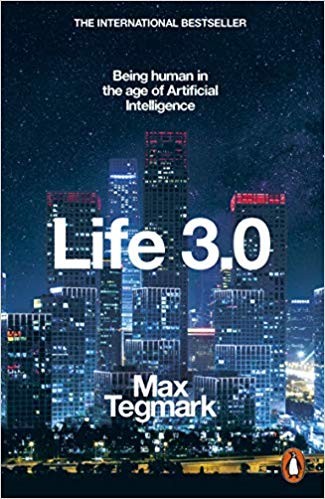
Life 3.0: Being Human in the Age of Artificial Intelligence

by Max Tegmark

View on Amazon →

"I think if we succeed in building machines that are smarter than us in all ways, it's going to be either the best thing ever to happen to humanity or the worst thing. I'm optimistic that we can create a great future with AI, but it's not going to happen automatically."

An accessible yet comprehensive exploration of how AI will reshape civilization, covering the technical foundations of AI, its near-term impacts on economics and jobs, and long-term existential considerations. Tegmark presents diverse perspectives on humanity's future in an age of advanced artificial intelligence.

Tegmark bridges the gap between technical AI literacy and policy implications, making this book indispensable for readers seeking to understand how AI will fundamentally alter society. His framework of Life 1.0, Life 2.0, and Life 3.0 provides a compelling narrative for thinking about humanity's future.

  • AI development is accelerating and will reshape economy, employment, and society
  • Technical understanding of AI capabilities and limitations is crucial for policy makers
  • Multiple possible futures exist depending on choices made today
  • Both existential opportunities and risks require serious consideration
  • Some sections may feel overly speculative about distant future scenarios
  • Technical explanations, while accessible, occasionally oversimplify complex ML concepts
  • Heavy emphasis on existential risks may not reflect current expert consensus on near-term timelines

"A tour de force: rigorous, humane, and mind-expanding."

Daniel Dennett, Philosopher, Tufts University

"The definitive book on the implications of AI for humanity's future."

Oren Etzioni, CEO, Allen Institute for AI
03

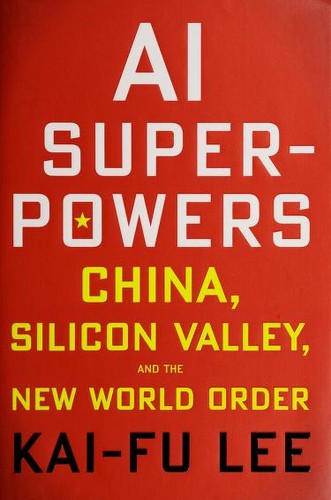
AI Superpowers: China, Silicon Valley, and the New World Order

by Kai-Fu Lee

View on Amazon →

"While the US has the advantage in AI research, China has the advantage in AI applications and implementation. The real race is about who will use AI more effectively to transform their industry and society."

An insider's perspective on the AI race between China and the United States, examining how different approaches to AI development, regulation, and business models are reshaping global power dynamics. Lee draws on decades of experience in both Silicon Valley and China to analyze the competitive landscape.

This book provides essential geopolitical context for understanding AI's development and deployment globally. Lee's unique perspective on how China and Silicon Valley approach AI differently offers crucial insights for anyone concerned with international competition, technology policy, and the global AI economy.

  • China and the US are developing AI using fundamentally different approaches and philosophies
  • AI will create massive economic value, concentrating wealth and power among leading companies
  • The transition to an AI-driven economy requires proactive planning to manage displacement
  • International cooperation on AI safety and ethics is increasingly critical
  • Some predictions about China's AI trajectory have been questioned as overstated
  • Limited discussion of other major AI players like Europe and Canada
  • Occasionally frames competition in zero-sum terms without exploring collaborative possibilities

"Truly one of the wisest and most surprising takes on AI. Kai-Fu Lee connects it with humans in a logical yet inspiring way."

Chris Anderson, Head of TED

"One of the founding fathers of China's AI industry tells the inside story of China's rise as an AI superpower."

Max Tegmark, MIT Physicist & Author
04

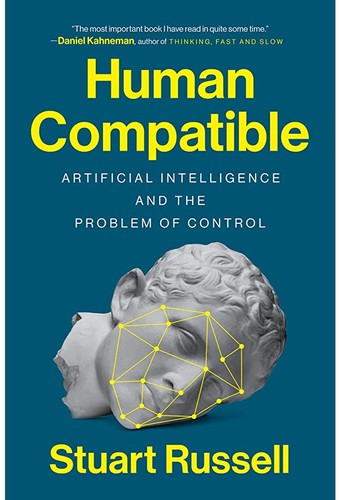
Human Compatible: Artificial Intelligence and the Problem of Control

by Stuart Russell

View on Amazon →

"The greatest risk in AI isn't malice, it's competence. We are building machines designed to achieve goals with ruthless efficiency, but we have become dangerously sloppy about defining those goals."

A groundbreaking examination of AI alignment and the fundamental problem of ensuring that increasingly powerful AI systems remain aligned with human values. Russell proposes a new paradigm where AI systems are uncertain about human preferences and learn them from observed behavior.

Russell, one of the world's leading AI researchers and co-author of the standard textbook, provides a rigorous yet accessible treatment of the alignment problem. His proposed solutions offer a fresh perspective on ensuring AI systems serve human interests, making this essential reading for understanding AI safety.

  • Standard AI optimization approaches create inherent alignment risks
  • Machines must be fundamentally uncertain about human preferences and learn from behavior
  • Inverse reinforcement learning offers promising technical approaches to alignment
  • International cooperation on AI safety is essential before superintelligence is achieved
  • Technical sections may be challenging for readers without ML background
  • Some proposed solutions remain theoretical without extensive real-world validation
  • Focuses more on long-term alignment than near-term AI safety concerns

"Essential reading for understanding the fundamental challenges in AI alignment."

Demis Hassabis, Co-founder & CEO, DeepMind

"The most comprehensive treatment of AI control and alignment to date."

Stuart Russell, UC Berkeley, AI Safety Expert
05

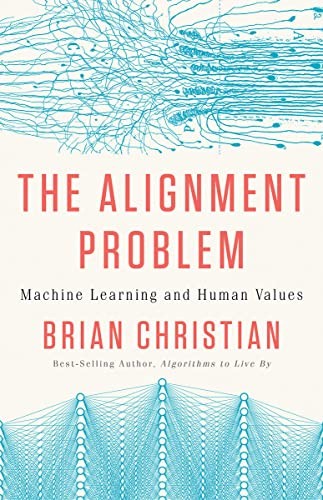
The Alignment Problem: Machine Learning and Human Values

by Brian Christian

View on Amazon →

"The disconnect between intention and results—between what mathematician Norbert Wiener described as 'the purpose put into the machine' and 'the purpose we really desire'—defines the essence of 'the alignment problem.'"

A narrative exploration of the challenge of aligning machine learning systems with human values. Christian examines real-world examples of algorithmic bias, unintended consequences, and the technical approaches researchers are developing to make AI systems more aligned with human intentions.

Christian translates complex AI alignment challenges into compelling narratives, making this an accessible entry point for understanding how AI systems can fail to reflect human values. The book is essential for policymakers and general readers concerned with AI's societal impacts.

  • Modern ML systems can optimize ruthlessly toward their stated objective while causing unintended harms
  • Inverse reinforcement learning and human feedback approaches are emerging solutions
  • Algorithmic bias reflects and amplifies human biases embedded in training data
  • Solving alignment requires collaboration between AI researchers, ethicists, and social scientists
  • Some technical explanations are oversimplified for AI researchers
  • Limited discussion of computational limits to alignment approaches
  • Narrative style, while engaging, occasionally sacrifices depth for accessibility

"A crucial examination of why AI systems so often fail to serve those they're meant to help."

Timnit Gebru, AI Ethics Researcher, DAIR

"Essential reading for understanding AI's real-world impacts on society."

Kate Crawford, Senior Researcher, USC Annenberg & Principal Researcher, Microsoft Research
06

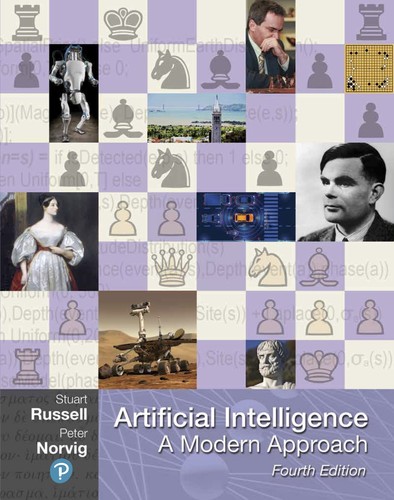
Artificial Intelligence: A Modern Approach

by Stuart Russell and Peter Norvig

View on Amazon →

"The classical example of multiple inheritance conflict is called the 'Nixon Diamond.' It arises from the observation that Nixon was both a Quaker (and hence a pacifist) and a Republican (and hence not a pacifist)."

The definitive comprehensive textbook on artificial intelligence, covering everything from search algorithms and knowledge representation to machine learning, robotics, and natural language processing. Now in its 4th edition with expanded coverage of deep learning, machine learning, and modern AI techniques.

This book is the foundation upon which modern AI education is built, used at over 1500 universities worldwide. It provides the technical depth and breadth necessary for anyone seeking serious understanding of AI's scientific and engineering foundations. Essential for students, practitioners, and researchers.

  • Search algorithms form the foundation for reasoning and decision-making in AI systems
  • Knowledge representation and reasoning remain critical for many AI applications
  • Machine learning and neural networks enable learning from data at scale
  • Modern AI combines multiple approaches: symbolic reasoning, statistical learning, and deep learning
  • The textbook's breadth sometimes limits depth in specific areas
  • Heavy technical content may be challenging without strong mathematical background
  • Rapid changes in deep learning mean some sections require supplementary materials

"The most comprehensive and authoritative AI textbook available."

Yann LeCun, Chief AI Scientist, Meta

"The gold standard reference for AI researchers and practitioners worldwide."

Google AI, Google Research
07

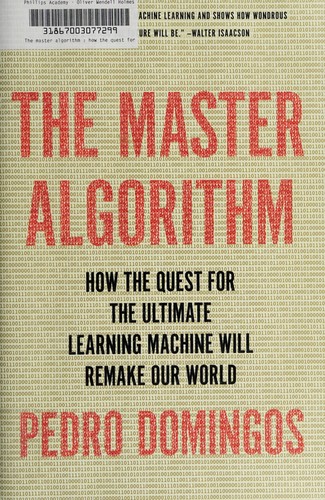
The Master Algorithm: How the Quest for the Ultimate Learning Machine Will Remake Our World

by Pedro Domingos

View on Amazon →

"People worry that computers will get too smart and take over the world, but the real problem is that they're too stupid and they've already taken over the world."

An engaging exploration of machine learning's five major schools of thought—symbolists, connectionists, evolutionaries, Bayesians, and analogizers—and their quest to discover a universal learning algorithm. Domingos explains both the science and the implications of machine learning in accessible terms.

Domingos provides essential conceptual frameworks for understanding different approaches to machine learning and AI. The book bridges technical depth and accessibility, making it invaluable for both aspiring ML practitioners and general readers seeking to understand AI's scientific foundations.

  • Five major schools of machine learning research represent different philosophies and approaches
  • No single algorithm can solve all problems; different approaches excel in different domains
  • Machine learning is rapidly transforming business, science, and society
  • Understanding ML foundations prepares us for AI's expanding role in society
  • Some technical explanations sacrifice precision for accessibility
  • Limited coverage of deep learning's recent dominance in practical applications
  • The 'Master Algorithm' concept, while intriguing, remains largely theoretical

"A brilliant guide to understanding machine learning and its implications for the future."

Chris Anderson, Former Editor, Wired

"A masterful explanation of how machine learning works and why it matters."

Steven Pinker, Cognitive Scientist, Harvard University
08

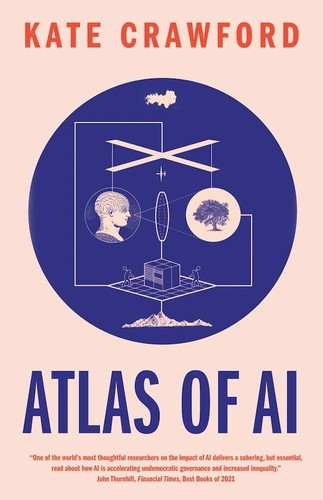
Atlas of AI: Power, Politics, and the Planetary Costs of Artificial Intelligence

by Kate Crawford

View on Amazon →

"AI is neither artificial nor intelligent. There is an enormous environmental footprint—the minerals, the energy, the water—that drives AI. This is the opposite of artificiality."

A critical examination of AI's material, political, and environmental costs. Crawford reveals the hidden infrastructure, labor, and resources behind AI systems, exposing how AI perpetuates power imbalances and environmental harm while challenging the notion that AI is immaterial or neutral.

This book is essential for understanding AI beyond its technological promise, examining the real-world social and environmental costs of AI development and deployment. Crawford's critical perspective balances the techno-optimism that often dominates AI discourse, making it vital for informed citizenship in an AI-driven world.

  • AI systems have massive material and environmental footprints hidden by abstraction
  • Thousands of human workers provide labeling, correction, and evaluation that enables AI
  • AI can perpetuate and amplify existing power imbalances and discrimination
  • Transparency and accountability mechanisms are essential for responsible AI deployment
  • Some chapters are more journalistic than technical in approach
  • Limited discussion of potential solutions beyond critique
  • Focus on negative impacts may underrepresent AI's beneficial applications

"A brilliant and essential investigation into the hidden costs of artificial intelligence."

Cass Sunstein, Harvard Law School

"Reveals the uncomfortable truths about AI's material and social foundations."

MIT Technology Review, Leading Tech Publication
09

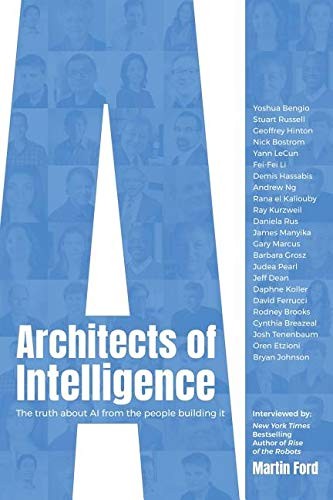
Architects of Intelligence: The Truth about AI from the People Building It

by Martin Ford

View on Amazon →

"We don't want machines with our type of intelligence. We actually want machines whose actions can be expected to achieve our objectives, not their objectives."

A collection of in-depth interviews with leading AI researchers, entrepreneurs, and thinkers, exploring the current state of AI, its future trajectory, and implications for society. Ford synthesizes diverse perspectives from the people actually building AI systems.

This book provides unfiltered insights directly from the architects of modern AI, making it invaluable for understanding the perspectives, hopes, and concerns of those at AI's forefront. The interview format offers nuanced perspectives that reveal both consensus and disagreement within the AI community.

  • Leading AI researchers hold diverse views on AI's timeline and potential risks
  • Economic disruption from automation is a near-term concern requiring policy attention
  • AI advancement is moving toward more capable systems, but with significant remaining challenges
  • Collaboration between technologists, policymakers, and ethicists is increasingly essential
  • Interview-based format means some topics lack comprehensive depth
  • Selection of interviewees reflects certain perspectives in AI community
  • Published in 2018, so misses recent developments in generative AI and large language models

"A fascinating window into the minds of those building the future of AI."

Eric Schmidt, Former CEO, Google

"Essential reading for understanding the current state of AI research and development."

Fei-Fei Li, Director, Stanford Human-Centered AI Institute
10

Co-Intelligence: Living and Working with AI

by Ethan Mollick

View on Amazon →

"You should try inviting AI to help you in everything you do, barring legal or ethical barriers. As you experiment, you may find that AI help can be satisfying, or frustrating, or useless, or unnerving."

A practical and forward-thinking guide to collaborating with AI systems in everyday work and life. Mollick provides frameworks for understanding AI capabilities and limitations, and offers concrete strategies for leveraging AI to enhance productivity, creativity, and problem-solving.

This book is essential for the present moment, helping readers and workers understand how to effectively collaborate with increasingly capable AI systems like large language models. Mollick's focus on practical co-intelligence rather than AI replacement offers a constructive approach to AI integration.

  • AI systems have different strengths than humans and can enhance human capabilities when used thoughtfully
  • Understanding AI's limitations—including hallucinations and overconfidence—is critical for safe use
  • Co-intelligence requires human oversight and judgment; AI should augment, not replace, human decision-making
  • Developing AI literacy skills is increasingly valuable for professional and personal success
  • Some advice may become outdated as AI capabilities rapidly evolve
  • Limited discussion of risks and downsides of AI augmentation
  • Focus on individual usage may underestimate systemic impacts of AI integration

"A practical guide for navigating AI's transformation of work and society."

Susan Lund, McKinsey Global Institute

"The definitive guide to working effectively with AI in the modern era."

Replit, AI-Powered Coding Platform
Back to all lists