10 Best Astronomy Books

Essential Reads for Understanding Our Universe

Journey through the cosmos with the most influential astronomy and space exploration books ever written. These 10 essential reads blend scientific rigor with accessible explanations, offering readers a deeper understanding of the universe, our place within it, and the future of human space exploration. From Carl Sagan's poetic meditations to contemporary astronaut memoirs, discover books that inspire wonder and transform perspective.

01

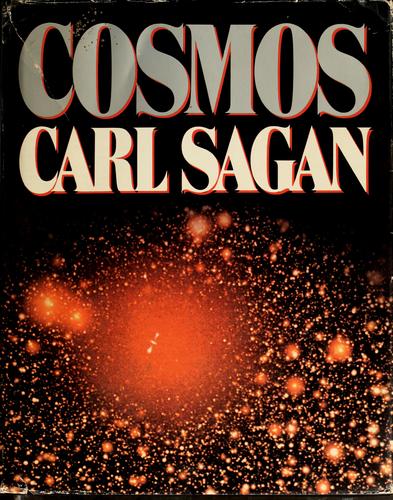
Cosmos

by Carl Sagan

View on Amazon →

"The nitrogen in our DNA, the calcium in our teeth, the iron in our blood, the carbon in our apple pies were made in the interiors of collapsing stars. We are made of starstuff."

Carl Sagan's groundbreaking work takes readers on a journey through space and time, exploring the structure of the universe and humanity's place within it. Beautifully written and profoundly moving, Cosmos combines scientific detail with poetic language to make complex astronomical concepts accessible to everyone. Published in 1980 and now available as an updated edition, it remains one of the most influential science books ever written.

Cosmos is the definitive gateway to astronomical thinking, establishing the modern approach to science communication. Sagan's eloquence and his ability to connect cosmic phenomena to human experience set the standard for all subsequent popular science writing. Its exploration of both our physical universe and our potential future makes it essential for anyone seeking to understand the cosmos.

  • The universe contains an incomprehensibly vast number of stars and galaxies
  • Humans are composed of material created inside stars, connecting us intimately to the cosmos
  • Science is a method of thinking rather than just a collection of facts
  • Understanding our cosmic history reshapes how we view our place in creation
  • Some historical anecdotes use anachronistic terminology
  • The book's perspective is occasionally Eurocentric
  • Sagan's critical stance toward organized religion may alienate some readers

"A cleverly written, imaginatively illustrated summary with iridescent style, with lights flashing upon unexpected juxtapositions of thought."

James Michener, Novelist, The New York Times Book Review

"There is not a book on astronomy – in fact not one on science – that comes close to the eloquence and intellectual sweep of Cosmos."

David Whitehouse, British Broadcasting Corporation
02

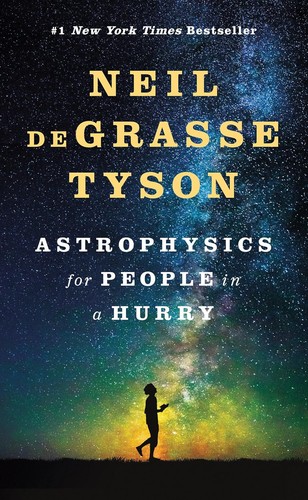
Astrophysics for People in a Hurry

by Neil deGrasse Tyson

View on Amazon →

"The atoms of our bodies are traceable to stars that manufactured them in their cores and exploded these enriched ingredients across our galaxy, billions of years ago."

Neil deGrasse Tyson distills the vast field of astrophysics into an engaging, accessible format perfect for busy readers. This concise yet comprehensive book covers the history of the universe, the nature of stars and planets, and the search for life beyond Earth. Tyson's characteristic enthusiasm and clarity make complex topics understandable, combining scientific rigor with conversational warmth that explains why the cosmos matters to our daily lives.

This book bridges the gap between comprehensive textbooks and brief introductions, offering substantial content without overwhelming detail. Tyson's ability to connect cosmic concepts to human experience demonstrates why astrophysics is relevant to everyone. For readers seeking solid scientific knowledge without extensive time investment, this is the definitive modern introduction to cosmic science.

  • The universe began with the Big Bang approximately 13.8 billion years ago
  • Atoms in our bodies were created inside stars, making us chemically connected to the cosmos
  • Most of the universe consists of dark matter and dark energy we cannot yet observe
  • The cosmic perspective reveals our atomic kinship with all existence
  • Information density may require careful reading despite the 'hurry' in the title
  • Limited depth for readers with existing astrophysics knowledge
  • Sparse citations and lack of comprehensive bibliography

"Included among the thirteen best science books for the general reader."

Steven Weinberg, Nobel Prize-winning physicist
03

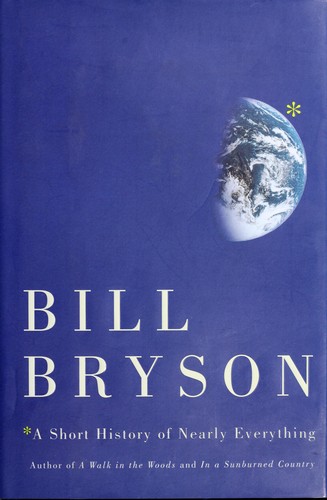
A Short History of Nearly Everything

by Bill Bryson

View on Amazon →

"For you to be here now trillions of drifting atoms had somehow to assemble in an intricate and intriguingly obliging manner to create you. It's an arrangement so specialized and particular that it has never been tried before and will only exist this once."

Bill Bryson's masterpiece explores the history of Earth, life, and the cosmos with his characteristic blend of humor, wonder, and rigorous research. From the formation of planets to the evolution of humanity, Bryson examines the extraordinary improbability of our existence. His engaging narrative style makes complex scientific concepts entertaining while maintaining intellectual integrity, proving that popular science can be both accurate and deeply enjoyable.

This book excels at explaining not just what we know about the universe and Earth, but emphasizing the remarkable improbability of our existence. Bryson's narrative brilliance makes the scientific method engaging, and his exploration of planetary formation provides essential context for understanding astronomy. The book won the Aventis Prize and became the biggest-selling popular science work of the twenty-first century for good reason.

  • The probability of our existence is so minuscule as to be almost miraculous
  • Earth's history involves countless chance events that shaped life's development
  • Our atoms are recycled through countless organisms across deep time
  • Science reveals both our insignificance in the universe and our remarkable individuality
  • More geology-focused than purely astronomical
  • Pays limited attention to the philosophy and epistemology of science
  • Some readers find the anecdotal structure occasionally scattered

"I doubt that a better book for the layman about the findings of modern science has been written."

Sunday Telegraph, UK Publication

"It's hard to imagine a better rough guide to science."

The Guardian, UK Newspaper
04

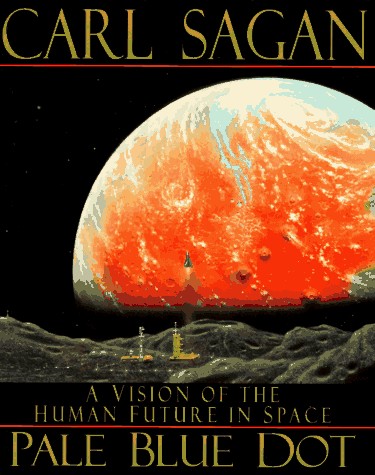
Pale Blue Dot

by Carl Sagan

View on Amazon →

"That's here. That's home. That's us. On it everyone you love, everyone you know, everyone you ever heard of, every human being who ever was, lived out their lives."

In this profound meditation on humanity's place in the cosmos, Carl Sagan reflects on a single photograph taken by Voyager 1 from four billion miles away. That pale blue dot is Earth, home to everyone who has ever lived. Sagan uses this humbling perspective to explore our cosmic history, the possibilities of interstellar travel, and how understanding our cosmic insignificance should inspire humility, wonder, and responsibility. This is Sagan's most personal and philosophical work.

Pale Blue Dot offers essential philosophical context for astronomy, transforming the study of the cosmos into a meditation on human values and priorities. The book's central image has become one of the most powerful tools for gaining cosmic perspective. For anyone seeking to understand not just the mechanics of space but its spiritual and existential implications, this book is indispensable.

  • A single photograph of Earth from space fundamentally changes human perspective
  • Our cosmic insignificance can inspire compassion rather than despair
  • Humanity must develop the wisdom to match our technological capabilities
  • The future of human civilization depends on embracing our cosmic kinship
  • Some sections lack specific plans for achieving interstellar civilization
  • The philosophical tone may feel less scientifically rigorous to some readers
  • Somewhat repetitive in emphasizing human insignificance

"Perhaps the best of Carl Sagan's books."

Washington Post Book World, Major U.S. Newspaper

"Selected in 2023 for preservation in the National Recording Registry as culturally, historically, or aesthetically significant."

Library of Congress, U.S. Government
05

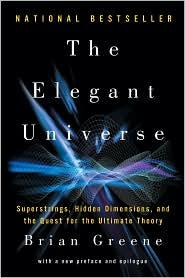
The Elegant Universe

by Brian Greene

View on Amazon →

"The boldness of asking deep questions may require unforeseen flexibility if we are to accept the answers."

Physicist Brian Greene unveils the revolutionary theory of strings and the hidden dimensions that may explain the universe's deepest mysteries. Through masterful use of analogy and metaphor, Greene makes superstring theory—one of the most complex frameworks in physics—accessible to general readers. This book explores how tiny vibrating strings compose all matter and energy, and how extra dimensions of space might exist beyond those we perceive.

The Elegant Universe represents the frontier of theoretical physics and transforms how we understand matter itself. Greene's lucid explanations of concepts like supersymmetry and extra dimensions are crucial for understanding modern physics. The book demonstrates how scientific concepts that seem impossible become comprehensible through patient explanation, and it explores the deepest questions about reality's fundamental nature.

  • String theory proposes that all particles are tiny vibrating loops of energy
  • Extra dimensions of space may exist beyond our everyday perception
  • Quantum mechanics and general relativity may be unified through string theory
  • The universe may be far more complex and multifaceted than our senses reveal
  • String theory remains unproven and lacks experimental confirmation
  • Some physicists argue the book oversells string theory's likelihood of being correct
  • The complexity of concepts may still challenge readers despite accessible writing

"Included among the thirteen best science books for the general reader."

Steven Weinberg, Nobel Prize-winning physicist

"The Elegant Universe is compulsively readable, and Greene threatens to do for string theory what Stephen Hawking did for black holes."

The New York Times, Major U.S. Newspaper
06

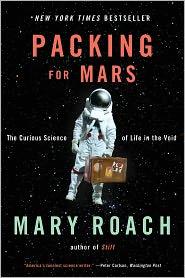
Packing for Mars

by Mary Roach

View on Amazon →

"Space doesn't just encompass the sublime and the ridiculous. It erases the line between."

Mary Roach brings her signature wit and curiosity to the practical side of space exploration in this hilarious and scientifically rigorous examination of how humans actually survive and function in space. From the intricacies of space toilets to the surprising challenges of weightlessness, Roach investigates the unglamorous realities of getting people to Mars. Her blend of humor, research, and respect for the scientists doing this work makes space exploration personal and delightfully human.

While other books explore theoretical astronomy, Packing for Mars addresses the essential practical challenges of human spaceflight. Understanding these real-world obstacles provides crucial context for assessing the feasibility of future space exploration. Roach's entertaining approach proves that science writing can be both informative and genuinely funny, expanding who astronomy books can reach.

  • Human spaceflight involves countless unglamorous but essential practical challenges
  • The human body behaves unexpectedly in microgravity, requiring creative solutions
  • International cooperation in space exploration represents extraordinary scientific and political achievement
  • The remarkable ingenuity required for space travel demonstrates human capability at its best
  • Occasionally prioritizes humor over rigorous analysis of certain issues
  • Some readers prefer more unified narrative structure rather than anecdotal collection
  • Mars receives less focus than the title might suggest

"Her fluffily lightweight style is at its most substantial — and most hilarious — in the zero-gravity realm that Packing for Mars explores."

Janet Maslin, The New York Times

"America's funniest science writer."

Washington Post, Major U.S. Newspaper
07

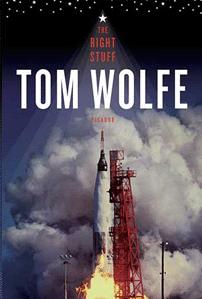
The Right Stuff

by Tom Wolfe

View on Amazon →

"The idea was to prove at every foot of the way up that you were one of the elected and anointed ones who had the right stuff and could move higher and higher."

Tom Wolfe's masterpiece of literary journalism explores the early American space program through the lens of those extraordinary men chosen to become astronauts. The book captures the competitive intensity, risk-taking culture, and personal drama of the Mercury Seven astronauts and their test-pilot predecessors. Wolfe's brilliant narrative style transforms the history of spaceflight into a gripping human drama while examining what qualities separate those with 'the right stuff' from ordinary mortals.

The Right Stuff provides essential context for understanding the social and psychological dimensions of space exploration. Rather than focusing on cosmic phenomena, Wolfe examines the human characters who made spaceflight possible. This book demonstrates how spaceflight achievement depends on psychology, competition, and human excellence as much as engineering. Its influence on how we understand space heroes has been profound and enduring.

  • Early space program success depended on finding pilots with exceptional psychological resilience
  • Competition and reputation management motivated astronauts as much as scientific curiosity
  • Military culture profoundly shaped the American approach to human spaceflight
  • Individual excellence and 'the right stuff' were impossible to define but unmistakable when present
  • Wolfe's elaborate narrative style may feel excessive to some readers
  • Some critics found his characterizations of military culture unflattering
  • Limited discussion of broader NASA institutional context

"Finalist for the National Book Critics Circle Award."

National Book Critics Circle, Major Literary Award

"One of the most romantic and thrilling books ever written about men who put themselves in peril."

The Boston Globe, Major U.S. Newspaper
08

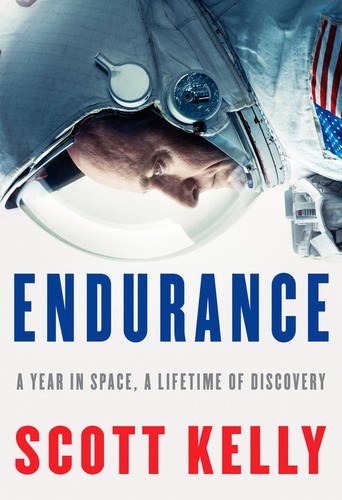
Endurance

by Scott Kelly

View on Amazon →

"I've learned that most problems aren't rocket science, but when they are rocket science, you should ask a rocket scientist."

Astronaut Scott Kelly recounts his unprecedented year living aboard the International Space Station, conducting experiments and observing Earth from orbit. More than a journey through space, this memoir is a meditation on persistence, preparation, and the perspective gained from seeing our planet from 250 miles away. Kelly's reflective account shows how scientific training meets human vulnerability, and how the experience of spaceflight transforms one's understanding of home, risk, and human potential.

Endurance provides contemporary astronaut perspective on both the technical and philosophical aspects of spaceflight. Unlike historical accounts, Kelly's memoir addresses modern space station operations and international cooperation in space. His thoughtful reflections on teamwork, preparation, and how spaceflight changes perspective offer valuable lessons beyond mere technical achievement, making space exploration personally meaningful to readers.

  • Preparation and expertise in specialized domains are essential for managing complex challenges
  • Modern spaceflight represents extraordinary international cooperation overcoming historical conflicts
  • Viewing Earth from space transforms perspective on environmental and human challenges
  • Achieving remarkable goals requires thousands of people coordinating effort over extended periods
  • Some descriptions of routine station operations lack the drama of earlier space program accounts
  • Less focus on cosmic science compared to human experience in space
  • Chris Hadfield's astronaut memoir captures the wonder of spaceflight somewhat more vividly

"A memoir of the right stuff that will hypnotize any space geek."

The New York Times Book Review, Major U.S. Publication

"Replete with humor, thrills, surreal details, and recurring moments of ordinary humanity."

Khaled Hosseini, Bestselling author
09

An Astronaut's Guide to Life on Earth

by Chris Hadfield

View on Amazon →

"There's really just one thing I can control: my attitude during the journey, which is what keeps me feeling steady and stable."

Canadian astronaut Chris Hadfield shares how spaceflight taught him to approach life's challenges with preparation, resilience, and perspective. Written with remarkable warmth and accessible philosophy, Hadfield explores how training for space teaches practical wisdom applicable to everyday life. From his early dreams of spaceflight to his stunning photographs of Earth from orbit, Hadfield's memoir demonstrates how pursuing excellence and maintaining flexibility enable extraordinary achievement. His infectious enthusiasm for space is matched only by his insight into human potential.

Hadfield uniquely combines technical expertise with genuine philosophical wisdom and infectious enthusiasm for space. His approach to fear management, preparation, and attitude-shifting provides practical lessons beyond spaceflight context. The book's international perspective and focus on international cooperation in space offer vision of how human differences can be bridged. Hadfield's warmth and accessibility make this essential reading for both space enthusiasts and general audiences seeking inspiration.

  • Preparation and competence substantially reduce fear in challenging situations
  • Maintaining a positive attitude shapes outcomes as much as technical expertise
  • International cooperation in space demonstrates how human differences can strengthen collective achievement
  • Viewing Earth from space generates perspective that inspires responsibility and wonder
  • Self-help philosophy may feel prescriptive to some readers
  • Some sections emphasize attitude and mindset over technical details
  • Less detail about specific scientific experiments conducted in space

"Mr. Hadfield has genuinely and refreshingly increased our understanding of how to thrive in both places."

The Wall Street Journal, Major U.S. Newspaper

"A page-turning memoir of life as a decorated astronaut."

Kirkus Reviews, Major Book Review Publication
10

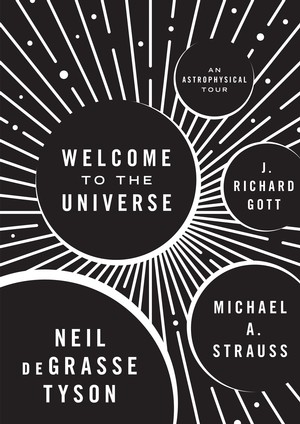
Welcome to the Universe

by Neil deGrasse Tyson, Michael Strauss, and J. Richard Gott

View on Amazon →

"Every time we make an argument that we're special in the cosmos, either that we are in the center or that the whole universe revolves around us, we learn that the opposite is true."

Three eminent astrophysicists from Princeton University offer a comprehensive yet accessible tour of the cosmos based on their popular introductory course. This book covers planetary science, stellar evolution, galaxies, cosmology, and the search for extraterrestrial life. With clear explanations, engaging illustrations, and the collaborative expertise of three leading scientists, the book provides an unparalleled overview of modern astronomy. The authors' conversational tone makes complex concepts welcoming to curious readers at all levels.

Welcome to the Universe represents the gold standard of contemporary astrophysics education, combining rigor with accessibility. Three distinguished astrophysicists collaboratively ensure comprehensive coverage and expert accuracy. This book is perfect for readers seeking a complete modern understanding of astronomy without textbook complexity. The diverse expertise of three authors provides multiple perspectives on cosmic phenomena, enriching understanding of how scientists approach astronomical questions.

  • Modern cosmology reveals Earth and humanity occupy a humble corner of an incomprehensibly vast universe
  • Stars, galaxies, and the universe itself follow understandable physical laws discoverable through observation
  • Life may exist elsewhere in the universe given the incomprehensible number of potential planetary systems
  • Understanding the cosmos requires embracing both scientific humility and wonder
  • Comprehensive coverage means some topics receive less depth than in specialized texts
  • Illustrated edition may not be available in all formats
  • Some readers find the breadth challenging without stronger subject guidance

"They may just have produced the best book about the universe in the universe."

New Scientist, International Science Magazine

"An accessible and comprehensive overview of our universe by three eminent astrophysicists."

Kirkus Reviews, Major Book Review Publication
Back to all lists