10 Best Biology Books

Foundational Works That Reveal the Secrets of Life and Evolution

Biology encompasses the study of life itself—from the molecular mechanisms of genes to the grand sweep of evolutionary history. These 10 essential books combine groundbreaking discoveries with elegant explanations, offering readers profound insights into how life originated, evolved, and functions at every scale. Whether exploring the selfish nature of genes, the structure of DNA, the symbiotic microbes within us, or humanity's evolutionary heritage, these works provide both intellectual rigor and the wonder of biological discovery.

01

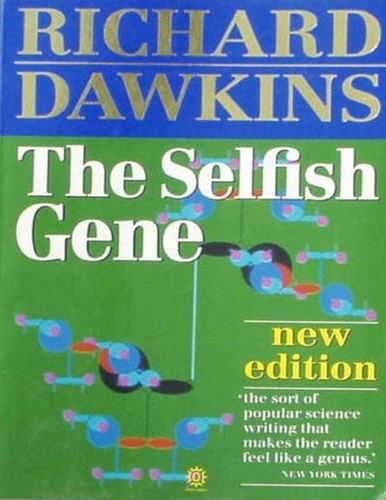
The Selfish Gene

by Richard Dawkins

View on Amazon →

"They are in you and in me; they created us, body and mind; and their preservation is the ultimate rationale for our existence. They have come a long way, those replicators. Now they go by the name of genes, and we are their survival machines."

Richard Dawkins revolutionizes our understanding of evolution by proposing that genes, not organisms, are the fundamental units of natural selection. Through the concept of replicators—self-copying molecules that compete for survival—Dawkins demonstrates that all life operates according to a simple principle: genes seek to perpetuate themselves. The book challenges conventional views of altruism, family bonds, and human nature by revealing how genetic self-interest underlies all biological behavior.

The Selfish Gene fundamentally reframed evolutionary biology by shifting focus from organisms to genes as the primary agents of evolution. This gene-centered perspective became foundational to modern molecular biology and has profoundly influenced how scientists understand inheritance, behavior, and adaptation. Dawkins' elegant theoretical framework provided new tools for thinking about life itself.

  • Genes, not organisms or species, are the primary unit of selection in evolution
  • All organisms are essentially survival machines built by genes to ensure their own replication
  • Natural selection operates at the level of self-replicating information molecules
  • Apparent altruism and cooperation can be explained by genetic self-interest and kin selection
  • The gene-centered view has been criticized for oversimplifying the complexity of biological inheritance and epigenetics
  • Some argue the theory underestimates the role of organisms and ecosystems in evolutionary processes
  • The metaphor of genes as 'selfish' has been misappropriated to justify social and moral positions Dawkins did not intend

"The Selfish Gene remains the best explanation we have for why genes exist at all"

Steven Pinker, Harvard Psychologist and Author

"A paradigm-shifting work that reshaped modern evolutionary thought"

Evolutionary Biology Consensus, Scientific Community

"An elegant and necessary reconception of the nature of living organisms"

Carl Sagan, Renowned Astrophysicist and Science Communicator
02

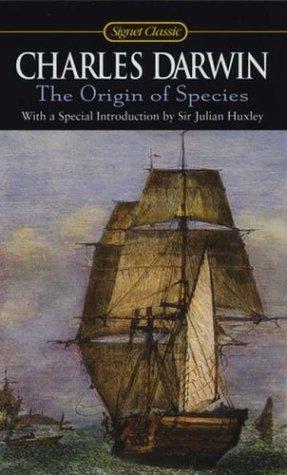
On the Origin of Species

by Charles Darwin

View on Amazon →

"There is grandeur in this view of life, with its several powers, having been originally breathed into a few forms or into one; and that, whilst this planet has gone cycling on according to the fixed law of gravity, from so simple a beginning endless forms most beautiful and most wonderful have been, and are being, evolved."

Charles Darwin's monumental work presents the theory of evolution through natural selection, demonstrating that species are not immutable creations but rather products of gradual change over vast time periods. Drawing on evidence from biogeography, paleontology, and comparative anatomy, Darwin argues that organisms with advantageous traits survive and reproduce more successfully, passing these traits to offspring. This mechanism—acting over millions of years—explains the diversity of life and the apparent design of nature.

Origin of Species is the foundational text of modern biology, establishing natural selection as the mechanism driving evolution. Darwin's theory unified biology by providing a coherent explanation for the origin of species, the fossil record, and the striking similarities among organisms. This single work revolutionized not only science but philosophy, theology, and human self-understanding.

  • Species evolve through the mechanism of natural selection acting on heritable variations
  • Organisms compete for limited resources, and advantageous traits accumulate over generations
  • The fossil record, biogeography, and comparative anatomy provide evidence for evolution from common ancestors
  • All life shares a common origin, diversifying through branching descent with modification
  • The book relies heavily on circumstantial evidence rather than direct observation of evolution in action
  • Some geological timescales and fossil evidence interpretations have been revised since publication
  • The mechanisms of inheritance were not understood in Darwin's time, limiting his explanatory power
  • Critics have noted the book's Eurocentric perspective and social biases of the Victorian era

"The most important book ever written for understanding the natural world"

Richard Dawkins, Evolutionary Biologist

"The foundation of modern biological science"

The Royal Society, World's Premier Scientific Academy

"The most important biological work ever published"

Ernst Mayr, Harvard Evolutionary Biologist
03

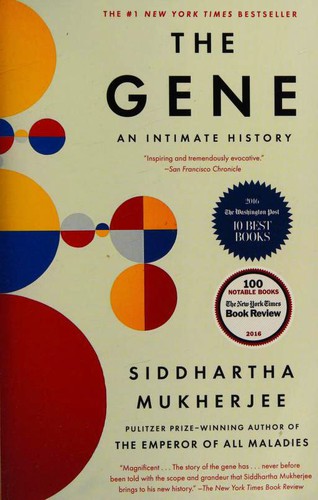
The Gene: An Intimate History

by Siddhartha Mukherjee

View on Amazon →

"If we define beauty as having blue eyes (and only blue eyes), then we will, indeed, find a gene for beauty. If we define intelligence as the performance on only one kind of test, then we will, indeed, find a gene for intelligence. The genome is only a mirror for the breadth or narrowness of human imagination."

Siddhartha Mukherjee weaves together the history of genetics—from Mendel's pea plants to CRISPR gene editing—into an epic narrative of scientific discovery. The book traces how scientists unraveled the nature of inheritance, the chemical structure of genes, and the implications of genetic knowledge. Mukherjee explores not just the science but the profound philosophical and ethical questions raised by understanding the genetic basis of human identity, disease, and potential.

The Gene provides the definitive modern history of genetics while remaining deeply humanistic about the science's implications. Mukherjee's narrative demonstrates how genetics emerged from multiple disciplines and cultures, challenging the notion of purely linear scientific progress. His examination of eugenics and genetic ethics is essential for understanding both biology's power and its potential for misuse.

  • Genetics emerged from diverse scientific traditions, from Mendel's mathematics to biochemistry to molecular biology
  • The discovery that DNA carries genetic information was the culmination of decades of experimentation and insight
  • Genes interact with environment in complex ways; genetic determinism oversimplifies human traits and diseases
  • Gene editing technologies like CRISPR raise profound ethical questions about human enhancement and designer babies
  • Some technical explanations may be oversimplified for clarity, potentially losing nuance
  • The book's length and narrative scope make it challenging for some readers
  • Coverage of recent developments in epigenetics and gene regulation could be more comprehensive

"Perhaps the greatest detective story ever told—a virtuoso performance in which Mukherjee braids science, history, and memoir into an epic"

Anthony Doerr, Pulitzer Prize-Winning Author

"Mukherjee has the uncanny ability to bring together science, history, and the future in a way that is understandable and riveting"

Ken Burns, Acclaimed Filmmaker

"A virtuoso performance in which he braids science, history, and memoir into an epic with all the range and biblical thunder of Paradise Lost"

New York Times, Major Publication
04

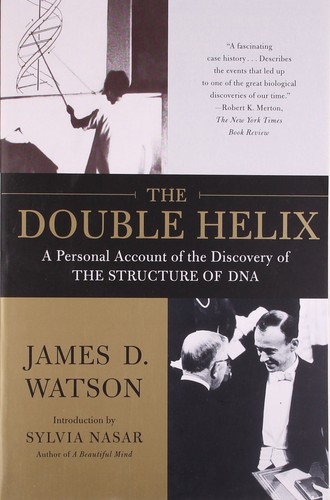
The Double Helix: A Personal Account of the Discovery of the Structure of DNA

by James D. Watson

View on Amazon →

"You look at it and you like it. Especially the Pauling model, with those triples of bases packed in a neat and very compact array. But look at it carefully and examine its internal consistency. It doesn't work."

James Watson offers an intimate, candid account of the race to discover DNA's double helix structure. Blending scientific detail with personal narrative, Watson describes the intense competition among laboratories, the crucial role of X-ray crystallography, and the flashes of insight that led to the 1953 breakthrough. The book captures the excitement and drama of scientific discovery while revealing the human personalities and occasional ethical complexities behind one of the twentieth century's greatest scientific achievements.

The Double Helix is essential as both a seminal scientific discovery and a crucial historical document. Watson's account reveals how the structure of DNA immediately suggested its mechanism for replication—the key to understanding inheritance at the molecular level. Despite its controversial aspects regarding credit attribution, the book remains the definitive personal narrative of one of science's greatest breakthroughs.

  • DNA's double helix structure was revealed through collaborative work combining X-ray crystallography, model-building, and chemical analysis
  • The complementary base-pairing in DNA's two strands immediately suggested how genetic information could be replicated
  • Scientific breakthroughs often involve competition, personality conflicts, and contributions from multiple researchers
  • Understanding DNA's structure was the foundation for all subsequent molecular biology and genetic engineering
  • The book has been criticized for inadequate credit given to Rosalind Franklin's crystallographic work and contributions
  • Watson's portrayals of colleagues, particularly women scientists, reflect and perpetuate gender biases of the era
  • Some historical details and personal judgments in the book have been disputed by other participants in the discovery
  • The narrative emphasizes individual genius over collaborative scientific effort

"A fascinating and candid account of the discovery of DNA"

Francis Crick, Co-discoverer of DNA Structure

"A lively and fascinating account of the birth of molecular biology"

Max Perutz, Nobel Prize-Winning Crystallographer

"The most important scientific discovery of the twentieth century, told by one of its discoverers"

Science Museum London, Premier Scientific Institution
05

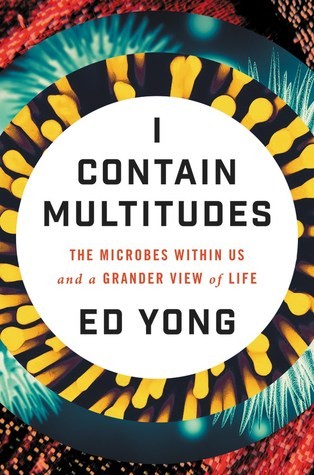
I Contain Multitudes: The Microbes Within Us and a Grander View of Life

by Ed Yong

View on Amazon →

"When Orson Welles said 'We're born alone, we live alone, we die alone', he was mistaken. Even when we are alone, we are never alone. We exist in symbiosis—a wonderful term that refers to different organisms living together."

Ed Yong revolutionizes our understanding of what it means to be an individual organism by revealing that every animal is an ecosystem unto itself. Drawing on cutting-edge research in microbiology, immunology, and genetics, Yong demonstrates how the trillions of microbes living in and on our bodies—the microbiome—profoundly shape our organs, immune systems, behaviors, and evolutionary fate. The book challenges the notion of clear boundaries between self and other, revealing symbiosis as central to all complex life.

I Contain Multitudes represents a paradigm shift in how we understand biology and individuality. The microbiome emerged as a revolutionary concept only in the last two decades, and Yong's work makes this crucial knowledge accessible to general readers. The book fundamentally changes how we think about health, disease, evolution, and the nature of living organisms.

  • Every animal contains trillions of microbes that are essential to its survival and functioning
  • Microbes sculpt our organs, educate our immune systems, break down food, and influence behavior
  • Symbiosis and cooperation between species are as important to evolution as competition
  • Understanding ourselves requires seeing humans not as isolated individuals but as ecosystems in miniature
  • The field of microbiome research is rapidly evolving, and some conclusions may be revised with new evidence
  • The book occasionally overclaims the extent of microbial influence on complex behaviors like mental health
  • Technical details are sometimes simplified to make the material accessible to general audiences

"A brilliant exploration of how microbes shape our lives and our world"

Royal Society Science Book Prize, Premier Scientific Book Award

"A revelatory exploration of a hidden world within us"

New York Times Book Review, Major Publication

"A fascinating read that will change how you think about yourself and other organisms"

Bill Gates, Philanthropist and Science Advocate
06

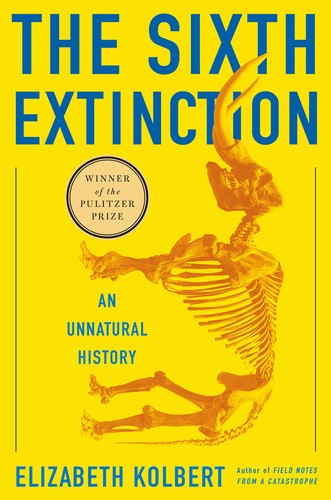
The Sixth Extinction: An Unnatural History

by Elizabeth Kolbert

View on Amazon →

"Right now, in the amazing moment that to us counts as the present, we are deciding, without quite meaning to, which evolutionary pathways will remain open and which will forever be closed. No other creature has ever managed this, and it will, unfortunately, be our most enduring legacy."

Elizabeth Kolbert examines Earth's five previous mass extinctions and argues that we are currently in the midst of a sixth—one caused not by asteroid impact or volcanic catastrophe but by human activity. Traveling the globe to observe biodiversity loss firsthand, Kolbert documents species in crisis from frogs to ocean acidification. The book combines cutting-edge science with compelling narrative, making the abstract concept of extinction viscerally real through specific endangered animals and ecosystems.

The Sixth Extinction is essential for understanding humanity's unprecedented ecological impact and our role in reshaping Earth's biosphere. Kolbert's Pulitzer Prize-winning work elevates extinction from a scientific concern to a central issue of our time. The book demonstrates how ecological changes unfold at scales that challenge human perception while remaining profoundly consequential.

  • Humans have triggered a sixth mass extinction event through habitat destruction, climate change, and pollution
  • Current extinction rates far exceed background extinction rates seen in the fossil record
  • Unlike previous extinctions, the current crisis is driven by a single species' transformation of the planet
  • Understanding extinction events reveals both human power and the fragility of complex ecosystems
  • Some critics argue the human role in extinction is overstated or not universally demonstrated for all species discussed
  • The book may reinforce despair about environmental issues without sufficiently exploring solutions
  • Certain data about extinction rates has been contested by researchers in the field

"A stunning work of scientific journalism and an unforgettable meditation on loss"

Pulitzer Prize Committee, Prestigious Awards Organization

"A book of extraordinary ambition and achievement—magisterial in scope and wonderfully precise"

David Quammen, Science Writer and Author

"A gripping and enlightening account of one of the greatest crises facing us today"

The Guardian, Major Publication
07

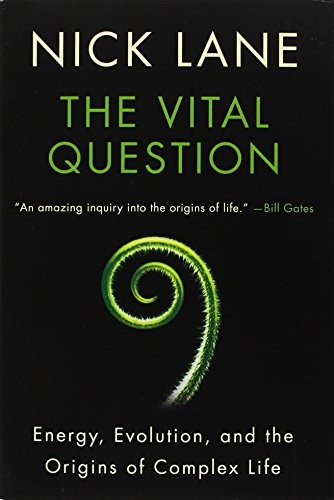
The Vital Question: Energy, Evolution, and the Origins of Complex Life

by Nick Lane

View on Amazon →

"We do not know why life is the way it is, but the answer lies in the provision of energy. All life on Earth lives off a voltage, one with the strength of a lightning bolt, and the history of life is in large part a history of handling this voltage more and more efficiently."

Nick Lane explores one of biology's deepest mysteries: why did complex life arise, and why only once? Drawing on biochemistry, evolutionary theory, and physics, Lane argues that the answer lies in energy. The formation of mitochondria—the cell's power stations—provided eukaryotic cells with enough energy to evolve complexity. Lane presents a novel understanding of cellular evolution and life's origins, demonstrating how energy constraints have shaped every major innovation in biology.

The Vital Question addresses one of the most profound gaps in evolutionary theory—the rapid emergence of eukaryotes and later complex multicellular life. Lane's energy-centered approach provides fresh insights into cell evolution that traditional natural selection accounts don't fully explain. The book bridges biochemistry and evolutionary biology in innovative ways.

  • Energy availability, not just genetic mutation and natural selection, drove the evolution of complex life
  • The acquisition of mitochondria through endosymbiosis provided the energy surplus necessary for cellular complexity
  • Chemiosmotic gradients across membranes power all life and constrain its evolution
  • Complex life's rarity in the universe may reflect the extreme improbability of specific energy-related evolutionary events
  • Some of Lane's hypotheses about prokaryotic-eukaryotic evolution remain speculative and contested among biologists
  • The book is dense with biochemistry, making it challenging for readers without scientific background
  • Not all evolutionary biologists accept the central role of energy in shaping major evolutionary transitions

"A thrilling immersion in a genuinely revolutionary scientific idea"

Richard Dawkins, Evolutionary Biologist

"Lane's energy-centered theory offers profound new insights into the origin of life and evolution"

Christof Koch, Neuroscientist and Chief Scientific Officer

"An illuminating exploration of how physics constrains the possibilities for life"

Physics Today, Scientific Journal
08

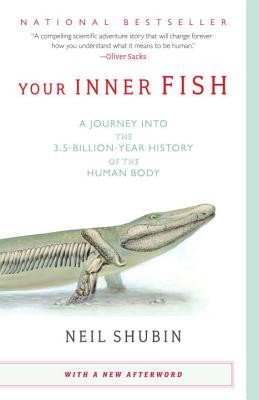
Your Inner Fish: A Journey Into the 3.5-Billion-Year History of the Human Body

by Neil Shubin

View on Amazon →

"We had a fish with a wrist. It had fingers. It's basically a tetrapod with a fish tail. The implications are staggering—this creature stands at the boundary between two worlds."

Neil Shubin explores our deep evolutionary heritage by tracing the history written in our own bodies. Drawing on paleontology, developmental biology, and genetics, Shubin demonstrates that humans are not separate from fish—we are fish, modified by millions of years of evolution. From our neck structure to our limbs' architecture, our bodies carry the blueprints of our aquatic ancestors. The discovery of Tiktaalik, a transitional fossil with fish fins and tetrapod-like limb joints, crystallizes this hidden history.

Your Inner Fish makes evolutionary developmental biology accessible while demonstrating how comparative anatomy reveals evolution. Shubin's landmark discovery of Tiktaalik provided fossil evidence for fish-to-tetrapod transition, illustrating how evolutionary understanding advances. The book reveals how human development recapitulates evolutionary history at the molecular level.

  • Humans share anatomical structures with fish, revealing our common evolutionary ancestry
  • Developmental biology shows how embryonic development recapitulates evolutionary history at the genetic level
  • The discovery of Tiktaalik demonstrated a transitional form between fish and tetrapods, confirming evolutionary predictions
  • Our limbs, necks, ears, and nervous systems all preserve ancient evolutionary solutions from aquatic ancestors
  • Some evolutionary biologists debate the precise interpretation of Tiktaalik's place in the fish-to-tetrapod transition
  • The book occasionally simplifies the complexity of evolutionary transitions and developmental genetics
  • Evidence for specific evolutionary claims sometimes relies on comparative biology rather than direct fossil evidence

"A brilliant illumination of how evolution shaped the human body"

National Academy of Sciences, Premier Scientific Institution

"A captivating exploration of our evolutionary past written in our own anatomy"

Carl Zimmer, Science Writer and Evolutionary Biologist

"A compelling journey through evolutionary time captured in our biology"

PBS, Public Broadcasting Service
09

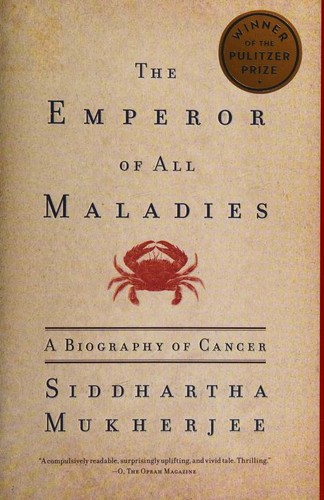
The Emperor of All Maladies: A Biography of Cancer

by Siddhartha Mukherjee

View on Amazon →

"Cancer is us. In remission, we succeed in the surgical or chemical suppression of the cells but the condition we are suppressing is one that springs, unbidden, from within. In full relapse, cancer, a disease of genetic mutations, meets our age: we are inheriting prolonged lifespans, inherited genetic mutations, and an environment drowning in carcinogens—the perfect, tragic recipe for the flowering of the disease."

Siddhartha Mukherjee traces the history of cancer from ancient times to modern molecular understanding, treating the disease as a biography rather than a medical textbook. The book weaves together history, science, and personal narratives to explore how cancer cells exploit evolution itself—mutating faster, growing stronger, and adapting to treatment. Mukherjee examines everything from radical surgery to chemotherapy to targeted genetic therapies, revealing how cancer emerged as a consequence of the same cellular machinery that enables life.

The Emperor of All Maladies won the Pulitzer Prize for its achievement in making cancer biology accessible while exploring the disease's cultural and scientific dimensions. Mukherjee's work demonstrates how understanding cancer requires simultaneously understanding evolution, genetics, and the history of medicine. The book reveals cancer as a cellular consequence of our own evolutionary heritage.

  • Cancer cells gain advantages through the same evolutionary mechanisms that shaped all life: mutation and natural selection
  • Treatment strategies evolved from crude amputation to increasingly sophisticated chemotherapy and targeted genetic therapies
  • Cancer's complexity arises from its evolution within the human body, requiring multiple genetic mutations
  • Understanding cancer requires integrating evolutionary biology, genetics, cell biology, and medical history
  • The book's length and scope make it challenging for some readers seeking specific medical information
  • Medical treatment details are sometimes presented historically rather than providing current clinical guidance
  • Some critics argue the narrative occasionally emphasizes individual pioneers over the collective scientific effort

"An elegant inquiry, at once clinical and personal, into the long history of an insidious disease"

Pulitzer Prize Committee, Prestigious Awards Organization

"A masterpiece about the human struggle against a disease that has shaped our civilization"

Malcolm Gladwell, Bestselling Author

"The definitive work on understanding cancer's history and science"

Paul Ehrlich, Nobel Prize-Winning Physician
10

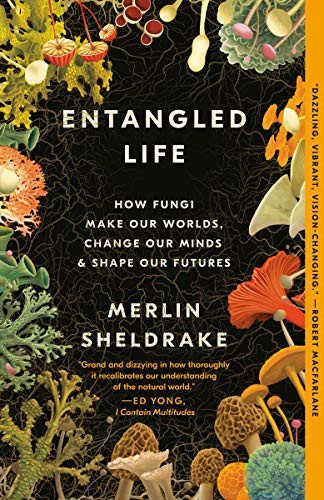
Entangled Life: How Fungi Make Our Worlds, Change Our Minds & Shape Our Futures

by Merlin Sheldrake

View on Amazon →

"The fungal networks that connect plants have been called the 'wood wide web'—an underground internet of symbiotic exchange. Through these networks, nutrients flow, chemical signals travel, and trees communicate with their neighbors in ways that challenge our understanding of plant intelligence."

Merlin Sheldrake reveals the hidden kingdom of fungi and their extraordinary role in ecosystems, evolution, and even animal behavior. The book explores the fungal networks that connect forests—the 'wood wide web'—through which plants exchange nutrients and chemical signals. Sheldrake demonstrates how fungi influence animal decision-making, create medicines, and challenge our assumptions about intelligence and individuality. From yeast to plant pathogens to the fungi that eat plastic, the book shows fungi as essential architects of life on Earth.

Entangled Life transformed fungal biology from a neglected field into a central concern of ecology and evolutionary biology. The discovery that fungi connect plants in underground networks fundamentally changed how we understand forest ecosystems and plant communication. Sheldrake's work demonstrates the richness of biological diversity beyond the animal-plant dichotomy.

  • Fungi form vast underground networks connecting trees and plants, enabling nutrient exchange and chemical communication
  • Fungal-plant symbioses are ancient partnerships that fundamentally shaped the evolution of terrestrial life
  • Some fungi influence animal behavior, alter ecosystem composition, and enable survival in extreme environments
  • Fungi represent a form of biological organization and problem-solving that operates on principles distinct from animals
  • Some claims about fungal 'intelligence' and plant communication through fungal networks have been debated among mycologists
  • The extent of nutrient transfer through fungal networks varies widely between ecosystems and conditions
  • Certain speculative claims about fungal influence on animal cognition lack robust experimental support

"A fascinating and revelatory exploration of fungi's hidden role in shaping life on Earth"

Royal Society Science Book Prize, Premier Scientific Book Award

"A remarkable book that transforms how we understand the living world beneath our feet"

The Guardian, Major Publication

"An illuminating exploration of the fungal networks that hold ecosystems together"

Paul Stamets, Mycologist and TED Speaker
Back to all lists