Classic Adventure

10 Essential Pre-1990 Adventure Novels

Journey through timeless tales of exploration, peril, and discovery. These ten essential classic adventure novels defined the genre and continue to captivate readers with their thrilling narratives, unforgettable characters, and exotic journeys to the far corners of the world.

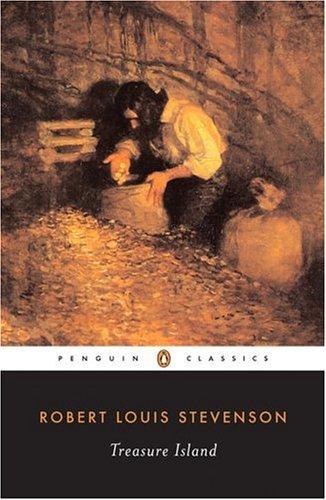
Treasure Island
01

Treasure Island

by Robert Louis Stevenson

"Fifteen men on the dead man's chest—Yo ho ho, and a bottle of rum!"

Young Jim Hawkins stumbles upon a mysterious treasure map and embarks on a thrilling voyage aboard the Hispaniola in search of buried treasure. Amid mutinies, betrayals, and the cunning Long John Silver, Jim discovers that the path to fortune is fraught with danger and moral complexity. This pioneering adventure novel became the template for generations of treasure-hunting narratives.

Treasure Island is foundational to the adventure novel genre, establishing key tropes and characters that became archetypes in fiction. Its influence extends across literature, film, and popular culture, making it essential for understanding how adventure stories shaped modern narrative. The novel's masterful blend of coming-of-age story and high-seas adventure demonstrates Stevenson's genius for compelling storytelling.

  • Moral ambiguity: characters are neither purely good nor evil; even villains possess charm and complexity
  • Survival and adventure require courage, wit, and quick thinking under pressure
  • Friendship and loyalty can be tested by greed and self-interest
  • Coming-of-age through perilous experience transforms innocence into wisdom
  • The narrative shifts perspective in later chapters, which some readers find jarring
  • Female characters are entirely absent from the narrative, reflecting period limitations

"Stevenson remains one of the best storytellers who ever lived"

Vladimir Nabokov, Russian-American Novelist

"Stevenson's work demonstrates the mastery of narrative craft that influenced generations of writers"

Ernest Hemingway, American Novelist

"Stevenson's tales possess an unforgettable quality that transcends time"

Jorge Luis Borges, Argentine Writer
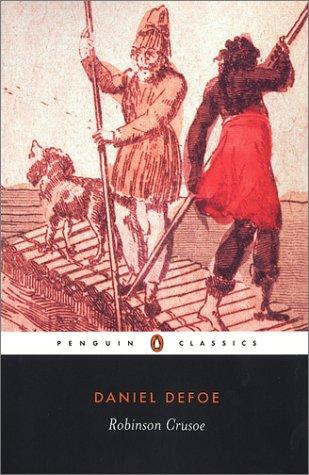
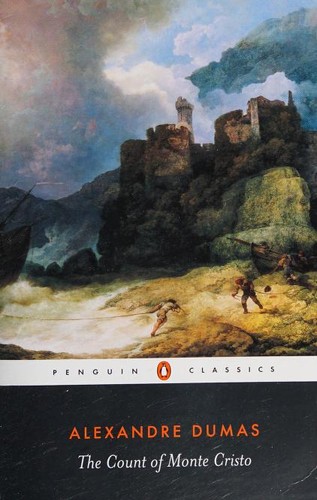
Robinson Crusoe
02

Robinson Crusoe

by Daniel Defoe

"But my hope was not so much in their hands who performed the work, as in the God who has the power to order and dispose of them all."

Robinson Crusoe is shipwrecked on a remote island where he must survive alone for nearly thirty years using ingenuity, faith, and determination. Through meticulous self-sufficiency and spiritual reflection, Crusoe transforms a barren island into a managed domain. His eventual discovery of Friday and rescue provide both companionship and redemption in this groundbreaking tale of isolation and survival.

Robinson Crusoe is recognized as the first English novel and has influenced literature more than nearly any other work, second only to the Bible in translations. It pioneered the novel form itself and established the castaway narrative that has been reimagined countless times. The work explores fundamental themes of human resilience, faith, and the desire to impose order on chaos.

  • Human resilience and ingenuity can overcome extreme isolation and deprivation
  • Spiritual faith provides meaning and purpose through hardship and despair
  • Order and routine are essential for psychological survival and maintaining hope
  • Redemption and personal growth emerge through self-reflection and moral accountability
  • The narrative pace is slow and includes lengthy religious meditations that modern readers find tedious
  • Crusoe is portrayed as arrogant and self-centered, making him an unsympathetic protagonist

"Robinson Crusoe ranks among the greatest novels in the English language"

Samuel Johnson, English Lexicographer and Critic

"There is no escaping Crusoe, just as there is no escaping the cardinal points of perspective"

Virginia Woolf, English Writer and Critic

"Defoe's work demonstrates the power of the novel form to capture human consciousness"

James Joyce, Irish Novelist
The Count of Monte Cristo
03

The Count of Monte Cristo

by Alexandre Dumas

"All human wisdom is contained in these two words - Wait and Hope."

Edmond Dantès is wrongfully imprisoned for a political crime he did not commit, separated from his beloved Mercédès and his future. After fourteen years in the Château d'If, he escapes and discovers a vast fortune, adopting the identity of the mysterious Count of Monte Cristo. He methodically orchestrates his revenge against those who betrayed him, while rewarding his former allies in a tale of justice, redemption, and transformation.

The Count of Monte Cristo is a masterpiece of plot construction and character development that defined the adventure romance genre. Its themes of justice, forgiveness, and redemption resonate across cultures and have inspired countless adaptations. The novel's exploration of vengeance and its consequences offers profound moral lessons while maintaining thrilling narrative momentum.

  • Patience and strategic planning can transform despair into triumph
  • Revenge pursued completely can destroy the avenger as much as the victim
  • Forgiveness and compassion provide deeper satisfaction than vindication
  • True wealth lies in friendship, love, and moral integrity rather than treasure
  • The novel's length and complexity can be overwhelming for some readers
  • The concluding section loses narrative momentum as Dantès' revenge unfolds

"This work represents the culmination of my efforts to create a tale of human resilience and redemption"

Alexandre Dumas, French Author

"The Count of Monte Cristo stands as one of the supreme achievements in fiction"

Arthur Conan Doyle, British Author

"A masterpiece of plotting and character that remains unsurpassed in adventure literature"

Frederick Forsyth, British Thriller Writer
The Call of the Wild
04

The Call of the Wild

by Jack London

"He was sounding the deeps of his nature, and of the parts of his nature that were deeper than he, going back into the womb of Time."

Buck, a domesticated dog stolen from his California home, is thrust into the harsh Yukon wilderness during the Gold Rush. As he passes through cruel masters and brutal conditions, Buck gradually sheds his civilized nature and answers the primal call of the wild. His transformation culminates in a profound freedom as he becomes the leader of a wolf pack, finally fulfilling his true nature.

The Call of the Wild is essential reading for understanding naturalism in literature and the philosophical exploration of civilization versus nature. London's novella explores themes of biological determinism and environmental influence that influenced scientific thought and literary tradition. Its unflinching portrayal of animal consciousness and suffering offers readers unique perspective and empathy.

  • Environmental pressures and survival needs fundamentally alter behavior and identity
  • The veneer of civilization masks primal instincts that emerge under stress
  • Freedom and self-actualization require shedding societal constraints
  • Animals possess consciousness, emotion, and dignity worthy of respect
  • The philosophical naturalism can overshadow character development
  • Some readers find the portrayal of animal suffering emotionally difficult

"The Call of the Wild remains London's masterpiece and a triumph of American naturalism"

Earle Labor, Jack London Scholar

"London's vision of nature and survival continues to resonate with readers"

John Steinbeck, American Novelist

"A powerful meditation on the duality of civilization and wild nature"

Carl Sandburg, American Poet
Journey to the Center of the Earth
05

Journey to the Center of the Earth

by Jules Verne

"Science, my boy, is made up of mistakes, but they are mistakes which it is useful to make, because they lead little by little to the truth."

Professor Lidenbrock deciphers an ancient manuscript revealing a secret passage through a volcano leading to the Earth's center. Accompanied by his nephew Axel and the steadfast guide Hans, the eccentric professor undertakes an audacious expedition through subterranean caverns filled with prehistoric wonders, mysterious forces, and unimaginable dangers. Their extraordinary journey challenges science, philosophy, and human courage.

Journey to the Center of the Earth is foundational to science fiction, pioneering the genre's themes of scientific exploration and technological adventure. Verne's imaginative vision of an inner world prefigured later SF innovations and demonstrated the literary potential of blending science with narrative. The novel remains essential for understanding how scientific speculation became central to modern fiction.

  • Scientific curiosity and knowledge can unlock mysteries about our world
  • Discovery requires courage, preparation, and willingness to challenge accepted limits
  • Nature contains wonders beyond current human understanding and imagination
  • Human resilience and determination can overcome seemingly impossible obstacles
  • The scientific speculations are outdated and inconsistent with modern geology
  • Character development is minimal compared to plot and descriptive passages

"The reason Verne is still read by millions today is simply that he was one of the best storytellers who ever lived"

Arthur C. Clarke, Science Fiction Author

"Verne has left us an extraordinary book that has brought delight to generations of readers"

Michael Crichton, American Novelist

"Verne's imagination and vision established the foundation for modern science fiction"

Isaac Asimov, Science Fiction Author
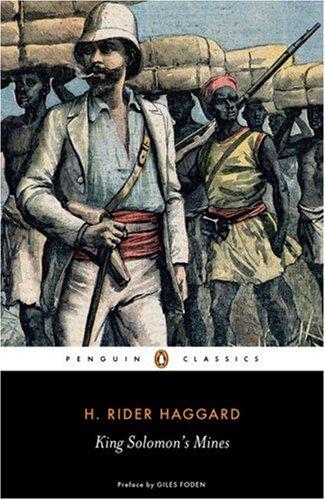
King Solomon's Mines
06

King Solomon's Mines

by H. Rider Haggard

"Out of the dark we came, into the dark we go. Like a storm-driven bird at night we fly out of the Nowhere; for a moment our wings are seen in the light of the fire, and, lo! we are gone again into the Nowhere."

Adventurer Allan Quatermain leads an expedition into unexplored Africa seeking a lost friend and the legendary diamond mines of the biblical King Solomon. Following an ancient and mysterious map, the party navigates treacherous mountains, vast deserts, and hostile territories. They encounter the cruel King Twala and discover a hidden civilization guarding vast riches in this groundbreaking adventure narrative.

King Solomon's Mines established the 'Lost World' literary genre and pioneered adventure narratives set in Africa. The novel's influence on subsequent adventure fiction is immeasurable, establishing conventions of exploration narratives and exotic settings. As the first major English adventure novel set in Africa, it shaped how that continent was portrayed in Western literature, though problematically.

  • Adventure and exploration demand courage, preparation, and moral integrity
  • Greed for material wealth can corrupt noble intentions and friendships
  • Hidden worlds and civilizations contain profound mysteries about human nature
  • Loyalty and friendship matter more than fortune in determining life's value
  • The portrayal of African characters relies on colonial stereotypes and racist language
  • Female characters are largely absent or marginalized in the narrative

"A peculiarly thrilling and vigorous tale of adventure displaying remarkable powers of invention and vision"

Andrew Lang, British Critic and Editor

"The Most Amazing Book Ever Written - announced across London with billboards and posters"

The Saturday Review, Victorian Literary Publication

"An immediate bestseller that achieved both popular and critical acclaim"

Rider Haggard's Contemporaries, Victorian Literary Establishment
The Three Musketeers
07

The Three Musketeers

by Alexandre Dumas

"All for one and one for all, united we stand divided we fall."

Young d'Artagnan arrives in Paris in 1625 seeking to become a musketeer and befriends three of the King's Musketeers: Athos, Aramis, and Porthos. Together they navigate court intrigue, love, honor, and betrayal in 17th-century France. The famous motto 'All for one, and one for all!' captures their unbreakable bond as they face dangerous enemies and impossible odds.

The Three Musketeers is the quintessential historical adventure novel that defined the swashbuckling adventure genre. Its vivid characters, intricate plotting, and themes of honor and friendship have made it a template for adventure stories across all media. The novel's enduring popularity across centuries demonstrates its timeless appeal and narrative mastery.

  • Friendship and loyalty are more valuable than personal advancement or safety
  • Honor and integrity define nobility more than birth or title
  • Wit and ingenuity can overcome physical danger and social obstacles
  • Cooperation and unity enable individuals to achieve impossible goals
  • The plot is extremely complex with numerous subplots that can confuse readers
  • Female characters are depicted through a male gaze and lack agency

"This work represents the epitome of historical adventure fiction"

Alexandre Dumas, French Novelist

"Translated into over one hundred languages and adapted nearly two hundred times for film"

Western Literary Tradition, Collective Assessment

"One of the most widely read works in world literature, continuously in print for nearly 200 years"

Readers Across Centuries, Popular Literature
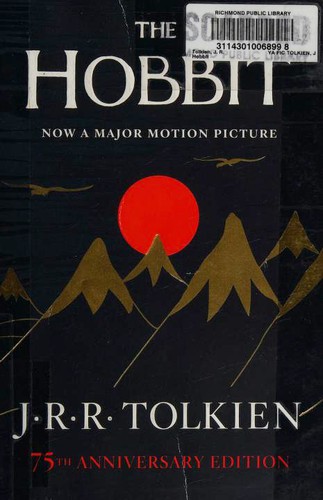
The Hobbit
08

The Hobbit

by J.R.R. Tolkien

"In a hole in the ground there lived a hobbit."

Bilbo Baggins, a respectable hobbit who craves adventure, is swept up by the wizard Gandalf and thirteen dwarves on a perilous quest to recover treasure from the dragon Smaug. Traveling through dark forests, treacherous mountains, and goblin-infested lands, Bilbo discovers his courage, resourcefulness, and capacity for both heroism and compassion. His journey transforms him from an ordinary hobbit into a legendary figure.

The Hobbit revolutionized fantasy literature and created the archetypal modern fantasy adventure novel. Its blend of whimsy, danger, and profound moral lessons established conventions for the genre that influenced generations of writers. The novel's success paved the way for The Lord of the Rings and demonstrated that fantasy could achieve serious literary merit.

  • Courage comes not from size or strength but from determination and integrity
  • Ordinary individuals can achieve extraordinary things when called upon
  • Personal growth requires stepping outside comfortable familiarity into danger
  • Loyalty to friends and moral principles matter more than personal gain
  • The narrative tone shifts between whimsical and serious, which some find inconsistent
  • Female characters are nearly absent from the story

"Tolkien's imaginative vision represents a major achievement in modern fantasy"

C.S. Lewis, British Author and Critic

"The Hobbit established the literary template for modern fantasy adventure"

Ursula K. Le Guin, Science Fiction and Fantasy Author

"Tolkien's work demonstrates the power of fantasy to explore universal human truths"

Stephen King, American Author
Twenty Thousand Leagues Under the Sea
09

Twenty Thousand Leagues Under the Sea

by Jules Verne

"The sea is everything. It covers seven tenths of the terrestrial globe. Its breath is pure and healthy. It is an immense desert, where man is never lonely, for he feels life stirring on all sides."

Professor Aronnax, his assistant Conseil, and the harpooner Ned Land are captured by the mysterious Captain Nemo aboard his revolutionary submarine, the Nautilus. They journey 20,000 leagues (approximately 60,000 miles) beneath the world's oceans, discovering underwater wonders and technological marvels while held captive by a man driven by revenge and idealism. The narrative blends scientific wonder with existential questions about freedom and morality.

Twenty Thousand Leagues Under the Sea is Jules Verne's most enduring and influential work, pioneering science fiction exploration of futuristic technology and scientific possibility. The novel's detailed descriptions of submarine technology prefigured modern maritime innovations and demonstrated how speculative science could drive compelling narrative. It remains essential for understanding how science fiction explores humanity's relationship with technology.

  • Technology can liberate individuals from societal constraints but may isolate them morally
  • Knowledge and scientific achievement do not guarantee wisdom or ethical behavior
  • Nature's vastness and mysteries inspire awe and humility in human observers
  • Isolation from human society exacts psychological and moral costs
  • Extensive passages of scientific description slow narrative momentum
  • Captain Nemo's motivations and characterization remain ambiguous and underdeveloped

"Verne's vision of underwater technology inspired generations of writers and inventors"

Ray Bradbury, Science Fiction Author

"Verne understood the power of science to transform human experience"

Isaac Asimov, Science Fiction Author and Scientist

"Verne's imaginative vision of ocean exploration continues to inspire modern innovation"

James Cameron, Filmmaker and Explorer
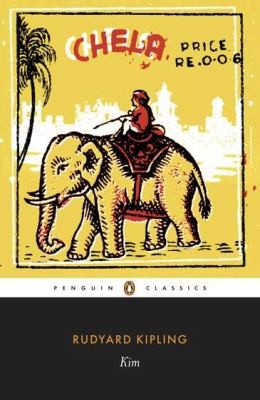
Kim
10

Kim

by Rudyard Kipling

"This is a brief life, but in its brevity it offers us some splendid moments, some meaningful adventures."

Kim, a half-British orphan raised in the streets of India, becomes a chela (disciple) to a Tibetan lama and undergoes a spiritual journey while working for the British Secret Service. As Kim navigates the complex landscape of colonial India, he experiences profound encounters with diverse peoples, religions, and philosophies. His coming-of-age story explores identity, loyalty, and the moral ambiguities of imperialism.

Kim is widely considered Kipling's masterpiece and represents the apex of his descriptive powers and narrative sophistication. The novel offers a nuanced exploration of colonial India and the encounter between Eastern and Western cultures that remains relevant to contemporary discussions of imperialism. Its psychological depth and complex characterization demonstrate the novel's capacity to explore serious moral and philosophical questions.

  • Identity is fluid and complex, shaped by cultural, religious, and political influences
  • Spiritual seeking transcends religious and cultural boundaries
  • Colonial power structures create moral ambiguities that complicate simple judgments
  • Coming-of-age requires integrating diverse experiences and perspectives into coherent selfhood
  • The novel's portrayal of British colonialism is sympathetic, reflecting problematic imperial attitudes
  • Female characters lack development and agency in the narrative

"Kim shines as bright as ever as the apotheosis of Victorian achievement"

Roger Sale, Critic of Children's Literature

"The best story in English about India, demonstrating Kipling's profound appreciation of Indian culture"

Nirad C. Chaudhuri, Indian Writer and Historian

"A key factor in Kipling's recognition as the laureate for literature in 1907"

Nobel Prize Committee, Swedish Academy
Back to all lists