10 Essential Dystopian Classics

The Most Influential Pre-2000 Dystopian Novels That Defined the Genre

Discover the 10 most essential classic dystopian novels published before 2000. These foundational works established the themes, conventions, and philosophical questions that continue to define dystopian literature. From Orwell's totalitarian nightmare to Huxley's pleasure-based control, explore the novels that shaped how we imagine oppressive futures.

1984
01

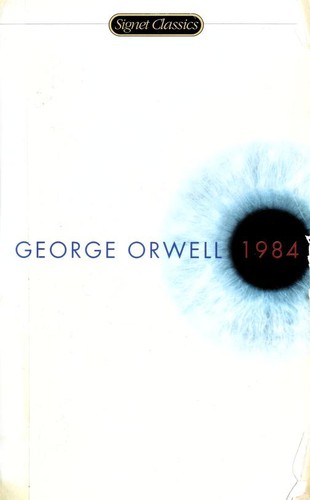
1984

by George Orwell

"Freedom is the freedom to say that two plus two make four. If that is granted, all else follows."

Set in the totalitarian superstate of Oceania, 1984 follows Winston Smith, a man caught in a web of state surveillance and psychological manipulation. The novel presents a chilling vision of a society where the Party controls not just actions, but thoughts and history itself. Big Brother watches everything, and the government rewrites reality through propaganda and doublethink.

1984 is the quintessential dystopian novel that popularized core themes of totalitarianism, mass surveillance, and the corruption of language and truth. Orwell's vision of a government controlling every aspect of citizens' lives has become the template against which all subsequent dystopias are measured. The novel's concepts like 'Big Brother,' 'Newspeak,' and 'thoughtcrime' have entered common usage and remain critically relevant to discussions of power and oppression.

  • Totalitarian governments maintain power through constant surveillance, propaganda, and the manipulation of truth and language
  • Individual thought and emotion are the primary targets of oppressive regimes seeking absolute control
  • History and information can be rewritten to serve the interests of those in power
  • Resistance to totalitarianism ultimately proves futile when the state controls all means of communication and information
  • The female characters are largely one-dimensional and serve primarily as plot devices to advance Winston's story
  • The ending is bleak to the point of nihilism, offering no hope or possibility of meaningful resistance to tyranny

"One of the 100 best English-language novels published from 1923 to 2005"

Time Magazine, Editorial Board

"Ranked #13 on the editors' list and #6 on the readers' list of 100 Best Novels"

Modern Library Editors, Literary Canon Committee

"Foreword contributor to the 75th Anniversary Edition"

Thomas Pynchon, Author & Foreword Contributor
Brave New World
02

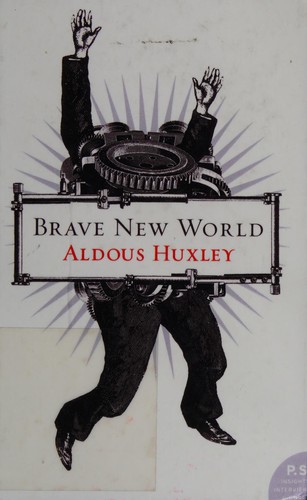
Brave New World

by Aldous Huxley

"But I don't want comfort. I want God, I want poetry, I want real danger, I want freedom, I want goodness. I want sin."

In the World State, a global civilization has achieved stability and happiness through genetic engineering, psychological conditioning, and the universal availability of a pleasure-inducing drug called soma. Citizens are scientifically engineered for their social roles and chemically numbed to accept their place in a strict caste system. When an outsider named John the Savage arrives from a reservation, he challenges the very foundations of this perfect society.

Brave New World presents a dystopia fundamentally different from Orwell's vision—one where people are enslaved through pleasure rather than pain. Huxley's insight that happiness engineered through manipulation poses a greater threat to human freedom than overt oppression remains profoundly relevant. The novel established the template for exploring how technology and chemistry can be used to control human consciousness and suppress individuality more effectively than traditional force.

  • Control through pleasure and satisfaction is more effective and insidious than control through fear and punishment
  • Genetic engineering and scientific conditioning can create populations perfectly suited to oppression while believing themselves free
  • The sacrifice of art, passion, philosophy, and spirituality is the hidden price of technological stability and comfort
  • True human experiences—struggle, growth, and meaning—are incompatible with engineered happiness and social conformity
  • The characterization feels somewhat flat and the dialogue lacks depth compared to literary fiction of the same era
  • The novel's portrayal of gender and sexuality reflects outdated attitudes that undermine some of its social commentary

"The most accomplished novel Huxley has yet written"

Rebecca West, Contemporary Critic

"Ranked #5 on the list of 100 Best Novels in English of the 20th century (1998/1999)"

Modern Library, Literary Council

"Mr Aldous Huxley has shown his usual masterly skill"

Bertrand Russell, Philosopher & Critic
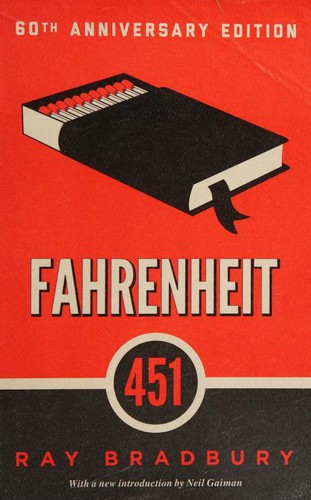
Fahrenheit 451
03

Fahrenheit 451

by Ray Bradbury

"There must be something in books, something we can't imagine, to make a woman stay in a burning house; there must be something there. You don't stay for nothing."

In a future American society, books are banned and 'firemen' burn any that are found. Guy Montag, a fireman who has always taken pride in his work, begins to question his role when he encounters a young woman who challenges his understanding of what books mean. As Montag secretly reads the books he should be burning, he awakens to the intellectual and emotional poverty of his world.

Fahrenheit 451 remains essential reading because it explores the dangers of censorship and the deliberate suppression of knowledge and critical thinking. Bradbury's vision of a society numbed by entertainment and stripped of literature speaks directly to ongoing debates about media, education, and intellectual freedom. The novel captures how dystopias can be created not through overt oppression but through the public's willing embrace of ignorance and entertainment.

  • Censorship and book burning represent the destruction of accumulated human knowledge, culture, and the ability to think critically
  • Dystopias can be created when populations willingly choose entertainment and distraction over genuine intellectual engagement
  • Technology can be weaponized to suppress free thought through the creation of addictive, numbing entertainment
  • Individual awakening and the preservation of books and knowledge are acts of resistance against systemic intellectual suppression
  • The character development is somewhat simplistic, and the portrayal of female characters is limited by mid-20th century attitudes
  • The ending is criticized for suggesting that only elite, educated men can preserve and appreciate literature while the masses are obliterated

"One of the most challenged and taught books in American schools due to its powerful critique of censorship"

American Library Association, Librarians' Organization

"Bradbury's masterpiece of controlled hysteria"

Stephen King, Author

"Thought-provoking, impactful, and startlingly timely—regularly appears on best novels of all time lists"

Literary Critics, Academic Consensus
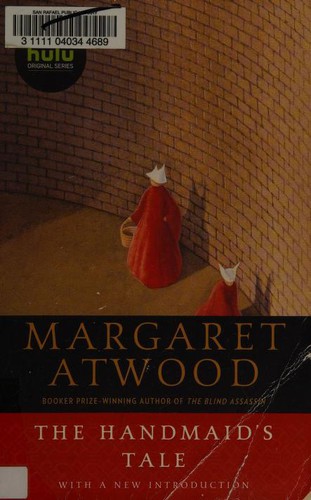
The Handmaid's Tale
04

The Handmaid's Tale

by Margaret Atwood

"Nolite te bastardes carborundorum. Don't let the bastards grind you down."

In the theocratic Republic of Gilead, a woman known only as Offred is forced into servitude as a 'handmaid'—valued only for her ability to bear children for the ruling elite. Stripped of her name, her autonomy, and her rights, Offred navigates a brutal patriarchal regime while maintaining her inner resistance and humanity. The novel weaves together her present subjugation with fragmented memories of her life before the Republic's ascension.

The Handmaid's Tale is essential as one of the most powerful feminist dystopian works ever written, exploring how authoritarian regimes specifically target women's autonomy and reproductive freedom. Atwood's meticulous worldbuilding and the psychological depth of her protagonist created a new template for dystopian fiction that centers marginalized perspectives. The novel's continued relevance—women's rights organizations adopted its imagery during political protests—demonstrates its importance as a warning about the vulnerability of supposedly secure freedoms.

  • Patriarchal totalitarianism targets women's bodies, sexuality, and reproductive capacity as instruments of state control
  • Individual identity and autonomy are systematically stripped away through dehumanization and the removal of personal choice
  • Inner resistance and the preservation of memory and individuality are acts of defiance in oppressive systems
  • Seemingly 'normal' societies can quickly descend into totalitarianism when fundamental rights are gradually eroded
  • Some readers find the non-linear narrative structure and fragmented memory sections confusing or slow-paced
  • The novel has been criticized for limited representation of women of color beyond stereotypical roles within Gilead

"Shortlisted for the 1986 Booker Prize"

Booker Prize Selection Committee, Literary Award

"Winner of the 1985 Governor General's Literary Award for English-language fiction"

Governor General's Literary Award, Canadian Literary Honors

"Book imagery became a feminist symbol during 2017 Women's Marches; 'Nolite te bastardes carborundorum' became a rallying cry"

Women's March Organizers, Political Activists
A Clockwork Orange
05

A Clockwork Orange

by Anthony Burgess

"What's it going to be then, eh?"

Alex, a fifteen-year-old delinquent with a taste for ultra-violence and classical music, narrates his descent into crime, arrest, and participation in an experimental behavioral modification program that strips him of his free will. Written in the invented slang 'Nadsat,' the novel follows Alex's journey from violent criminal through psychological reprogramming to a final, ambiguous spiritual awakening. Burgess created a linguistic marvel that captures the amorality and alienation of youth culture.

A Clockwork Orange is essential for its exploration of free will versus social control and its innovative use of language as both artistic expression and a tool of rebellion. Burgess's examination of whether a person can be truly moral if their capacity for evil has been removed raises profound philosophical questions about the nature of goodness, choice, and state power. The novel remains influential in discussions about violence in literature and the ethics of behavioral modification.

  • The capacity for choice—including the choice to do evil—is fundamental to human agency and moral development
  • Technological and psychological control methods can reduce humans to mere automata, destroying the essence of what makes us human
  • Youth alienation and social breakdown create conditions for violence that authorities then seek to control through dehumanization
  • Language and artistic expression are powerful forms of individual identity that transcend moral judgments about their content
  • The use of Nadsat slang, while innovative, makes the novel difficult to read and can obscure some of the narrative for readers unfamiliar with the invented language
  • Critics have argued the novel glorifies violence and that its moral message about free will is undermined by the anti-social nature of the protagonist

"I do not know of any other writer who has done as much with language as Mr. Burgess has done here"

William S. Burroughs, Author

"One of the 100 best novels of the 20th century"

Time Magazine, Editorial Board

"One of the 100 best novels of the 20th century"

Modern Library, Literary Canon
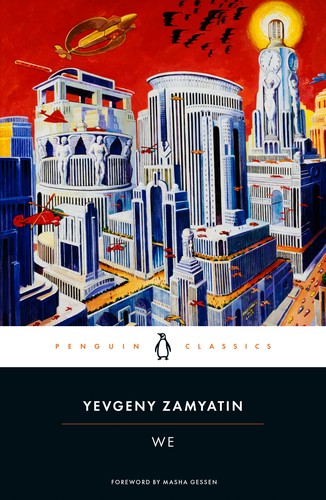
We
06

We

by Yevgeny Zamyatin

"A man is like a novel: until the very last page you don't know how it will end. Otherwise it wouldn't even be worth reading."

Written in 1920-1921 but not published in Russia until 1988, We is narrated by D-503, a citizen of the One State who lives in a society of perfect logical order where citizens are identified only by numbers. When D-503 encounters a woman named O-90, his ordered existence is disrupted by forbidden emotions and individuality. The novel is structured as a series of journal entries chronicling his internal rebellion against the state's absolute conformity.

We is foundational to the dystopian genre as the first modern dystopian novel that directly influenced both Orwell's 1984 and Huxley's Brave New World. Zamyatin's prescient vision of a totalitarian future based on mathematical logic and the elimination of individuality was remarkably ahead of its time. Published in 1924 in English before its Russian publication, the novel established the template for examining how totalitarianism attempts to erase human emotion and individuality in the name of social perfection.

  • Totalitarian systems attempt to reduce human beings to predictable, mathematical entities devoid of emotion and individuality
  • The awakening of human emotion and irrationality is inherently subversive to regimes based on pure logic and conformity
  • History and emotion are the greatest threats to a perfectly ordered, rational state
  • The cost of absolute social harmony is the destruction of everything that makes human existence meaningful and unique
  • The novel's mathematical and philosophical approach can feel abstract and distant, limiting emotional engagement with the protagonist
  • Some readers find the fragmented journal entries structure disjointed and difficult to follow

"Zamyatin's intuitive grasp of the irrational side of totalitarianism—human sacrifice, cruelty as an end in itself—makes We superior to Huxley's Brave New World"

George Orwell, Author of 1984

"Brave New World must be partly derived from We (acknowledged influence on the author's thinking)"

Aldous Huxley, Author of Brave New World

"The best single work of science fiction yet written"

Ursula K. Le Guin, Science Fiction Author
Anthem
07

Anthem

by Ayn Rand

"My happiness is not the means to any end. It is the end. It is its own goal. It is its own purpose."

In a distant future, a technologically regressed society has eliminated the concept of individuality, and citizens refer to themselves only in the plural 'we.' The protagonist, Equality 7-2521, is an intelligent young man assigned to work as a street sweeper by the Council of Vocations. When he falls in love with Liberty 5-3000 and secretly pursues electricity, he rediscovers the forbidden concept of 'I' and rebels against collective conformity.

Anthem is essential as a dystopian work that directly challenges collectivism and explores the power of individual achievement and ambition. While controversial for its libertarian ideology, the novella remains influential in philosophical discussions about individualism versus collectivism. Its exploration of how totalitarian systems suppress intellectual achievement and individual human potential presents a perspective distinct from other dystopian classics.

  • Collectivist systems that eliminate individual identity destroy human motivation, innovation, and the drive for achievement
  • The word 'I' and the concept of individual selfhood are the most dangerous ideas to totalitarian regimes based on collective conformity
  • Intellectual curiosity and the pursuit of knowledge are inherently revolutionary in societies designed to maintain ignorance
  • Individual achievement and happiness are incompatible with systems that subordinate the person to the collective
  • The novella's heavy-handed philosophical messaging and propagandistic tone diminish its literary impact and character complexity
  • Critics argue the work presents a false dichotomy between absolute individualism and total collectivism, with no nuance or middle ground

"It is only in Anthem that her message takes on its clear and distinctive form"

James T. Baker, Ayn Rand Scholar

"In relation to The Fountainhead, Anthem is like one of those preliminary sketches that artists draw for their future large canvases"

Shoshana Milgram, Literary Critic

"A compelling dystopian look at paranoia from one of the most unique and perceptive writers of our time"

New York Times, Book Review
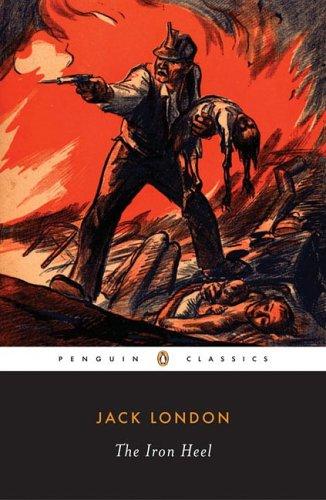
The Iron Heel
08

The Iron Heel

by Jack London

"All the dreams of the dreamers have been crushed, and I behold the reign of the Iron Heel."

Published in 1908, The Iron Heel is presented as fragments of a manuscript from the future, describing how the United States descended into a brutal oligarchic tyranny called the Iron Heel. Through the eyes of Everhard, a revolutionary, and his wife Avis, the novel chronicles the rise of a plutocratic dictatorship that crushes labor movements and individual freedoms. The narrative reveals how economic power concentrates into the hands of a few, destroying democracy.

The Iron Heel is essential as the earliest modern dystopian novel and a remarkably prescient warning about the rise of fascism, oligarchic control, and the concentration of wealth and power. Published a century before recent economic crises, London's vision of oligarchs consolidating power over the state proved strikingly prophetic. The novel is foundational to the science fiction tradition and directly influenced Orwell and subsequent dystopian writers.

  • Economic power and the concentration of wealth in the hands of a few inevitably leads to authoritarian political control
  • Democracy is fragile and can be destroyed when powerful economic interests consolidate control over government
  • Working-class movements and unions are systematically suppressed by oligarchic regimes seeking to maintain power
  • A society built on inequality and exploitation of labor contains the seeds of its own violent transformation into tyranny
  • The narrative framing device of future historians commenting on past events creates distance from the story and can feel contrived
  • Some of the socialist political messaging is heavy-handed and the characterizations are sometimes stereotypical

"A truer prophecy of the future than either Brave New World or The Shape of Things to Come"

George Orwell, Author of 1984

"The Iron Heel influenced Orwell's most famous novel Nineteen Eighty-Four"

Michael Shelden, Orwell Biographer

"Still more astonishing is the genuinely prophetic vision of the methods by which the Iron Heel will sustain its domination"

Leon Trotsky, Revolutionary Leader
This Perfect Day
09

This Perfect Day

by Ira Levin

"The perfect society: no wars, no poverty, no injustice. A perfect world, perfectly controlled."

In a future where a benevolent supercomputer named UniComp manages a globally unified society, every human life is planned and perfect—people are assigned their occupations, partners, and even their recreational activities. Chip, a man who begins to question this perfect existence, embarks on a dangerous journey to find freedom. The novel explores how technology can create comfortable servitude while eliminating genuine choice and individuality.

This Perfect Day is essential for its exploration of how technology can create systems of control that feel benevolent and comfortable rather than oppressive. Levin's vision of a technologically-managed perfect society that strips away human agency anticipated contemporary concerns about algorithmic control, data surveillance, and the loss of privacy. The novel deserves inclusion alongside Brave New World as an exploration of how comfort and security can mask the loss of freedom.

  • Technological systems designed to eliminate human suffering also eliminate genuine human choice, agency, and freedom
  • A perfectly managed, comfortable life may be a form of enslavement if it requires the surrender of autonomy and individuality
  • The illusion of contentment can mask the reality of systematic control and the loss of authentic human experience
  • Resistance to technological systems of control requires recognizing that true freedom includes the freedom to make mistakes
  • The characterization of Chip is somewhat passive and the romantic elements feel underdeveloped compared to the philosophical themes
  • The novel's ending is ambiguous to the point of being unsatisfying for readers seeking closure or clarity about the possibility of escape

"Ira Levin's Brave New World"

New York Times Book Review, Book Review

"Marvelously entertaining. A cross between Brave New World and Doctor No"

Look Magazine, Magazine Review

"Recipient of the Prometheus Award in 1992"

Libertarian Futurist Society, Literary Award
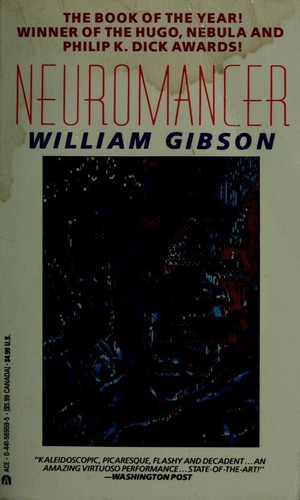
Neuromancer
10

Neuromancer

by William Gibson

"Cyberspace. A consensual hallucination experienced daily by billions of legitimate users in every nation, by children being taught mathematical concepts."

Published in 1984, Neuromancer introduced the concept of cyberspace and the cyberpunk genre. Case, a washed-up computer hacker, is hired by a mysterious artificial intelligence to participate in a dangerous heist in a gritty, high-tech future dominated by mega-corporations. The novel depicts a world where consciousness can be digitized, technology has merged with human bodies, and corporate power has replaced government authority.

Neuromancer is essential as the novel that created the cyberpunk genre and fundamentally shaped how contemporary fiction imagines the future relationship between technology, humanity, and corporate power. Gibson's prescient vision of cyberspace, hacking, and corporate dominance proved remarkably accurate as the internet emerged. The novel remains essential for understanding how technology dystopias conceptualize the merging of human consciousness with digital systems and corporate control.

  • Mega-corporations wielding technological power have replaced governments as the primary form of authority and control in dystopian futures
  • The merger of human consciousness with digital systems creates new forms of vulnerability, exploitation, and loss of bodily autonomy
  • Technology that enhances human capability also creates dependence and new vectors for control by powerful entities
  • In corporately-dominated dystopias, personal survival and profit drive human relationships more than solidarity or collective good
  • The dense technological jargon and worldbuilding details can make the novel difficult to follow for readers unfamiliar with computer terminology
  • Female characters are limited in development and largely function as support figures rather than protagonists with complex agency

"Winner of the 1985 Hugo Award for Best Novel"

Hugo Award, Science Fiction Award

"Winner of the Nebula Award for Best Novel"

Nebula Award, Science Fiction Award

"First novel ever to win the Philip K. Dick Award—achieved the triple crown of SF awards"

Philip K. Dick Award, Science Fiction Award
Back to all lists