Essential Classic Fantasy

The 10 Best Fantasy Novels That Shaped a Genre (Pre-1990)

These foundational fantasy classics form the bedrock of modern fantasy literature. From Tolkien's sprawling Middle-earth to Le Guin's philosophical Earthsea, these novels established the conventions, themes, and imaginative possibilities that continue to influence writers and readers today. Each represents a unique vision of secondary worlds and magical adventure that has captivated generations of readers.

The Lord of the Rings
01

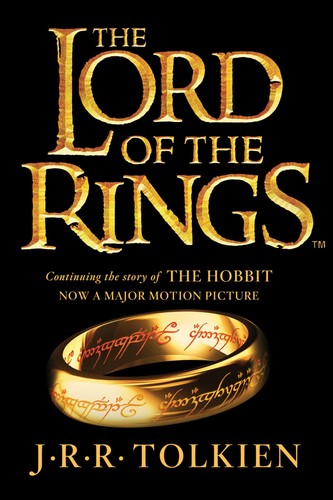
The Lord of the Rings

by J.R.R. Tolkien

"Many that live deserve death. And some that die deserve life. Can you give it to them? Then do not be too eager to deal out death in judgement. For even the very wise cannot see all ends."

Frodo Baggins embarks on a perilous journey across Middle-earth to destroy the One Ring in the fires of Mount Doom, accompanied by a fellowship of hobbits, men, dwarves, and an elf. This epic saga combines high adventure, intricate world-building, and mythic themes into a transformative narrative. The trilogy established modern fantasy's archetypal conventions and remains the most influential work in the genre.

The Lord of the Rings is the foundational text of modern fantasy, creating the template for all subsequent epic fantasy novels. Tolkien's creation of a fully realized secondary world with its own languages, histories, and mythologies demonstrated that fantasy could achieve literary depth and emotional resonance. No reader of fantasy can fully understand the genre's development without engaging with this essential work.

  • Epic quests require sacrifice, fellowship, and moral courage rather than individual heroism
  • Fully realized secondary worlds require attention to language, history, geography, and cultural detail
  • Fantasy can explore profound philosophical questions about power, mortality, and the nature of good and evil
  • The journey itself matters as much as the destination; character growth emerges through adversity
  • Pacing is uneven, with lengthy passages of travel, description, and genealogy that can overwhelm modern readers
  • The narrative continues too long after the Ring's destruction, with the Scouring of the Shire feeling anticlimactic to some readers

"Most probably, the best book that ever could be written. I wanted to write The Lord of the Rings, but the problem was that it had already been written."

Neil Gaiman, Author, American Gods

"Tolkien is the father of us all. The works of J.R.R. Tolkien set the standard for all modern fantasy literature."

Stephen King, Author
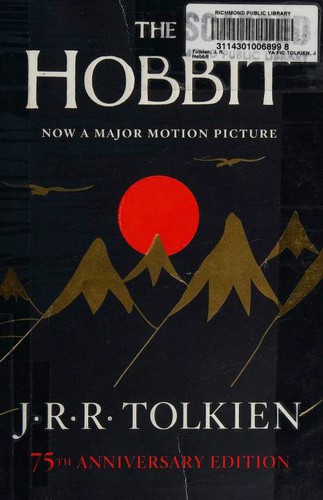
The Hobbit, or There and Back Again
02

The Hobbit, or There and Back Again

by J.R.R. Tolkien

"In a hole in the ground there lived a hobbit. Not a nasty, dirty, wet hole, filled with the ends of worms and an oozy smell, nor yet a dry, bare, sandy hole with nothing in it to sit down on or to eat: it was a hobbit-hole, and that means comfort."

Bilbo Baggins, a respectable hobbit thrust into unexpected adventure, joins a band of dwarves on a quest to reclaim their treasure from a dragon. The novel balances humor, danger, and profound themes through Bilbo's eyes as he discovers depths of courage and resourcefulness within himself. This prequel to The Lord of the Rings originated the fantasy genre as we know it today.

The Hobbit pioneered the fantasy novel and proved that the genre could reach both children and adults with genuine artistic merit. It established many conventions that define fantasy—quests, magical artifacts, secondary worlds—while maintaining a tone of joy and adventure. The novel demonstrates that fantasy can be whimsical and entertaining while exploring meaningful questions about growth, greed, and mortality.

  • Ordinary individuals can achieve extraordinary things when necessity demands courage they didn't know they possessed
  • Quests transform participants fundamentally; Bilbo returns home changed, unable to fully assimilate back into his old life
  • Greed and possession corrupt even the noble; the Ring's power reveals character rather than changing it
  • A quest narrative can entertain while exploring profound themes of home, belonging, and personal identity
  • The pacing is occasionally uneven, with some middle passages feeling like digressions rather than essential plot development
  • The protagonist's lack of agency at key moments—relying on luck and rescue rather than skill—can feel frustrating to modern readers

"I found a copy of The Hobbit in my school library when I was nine and bought it for a penny at a library sale. I still have it. Tolkien's joyful, delightful tone remains incomparable."

Neil Gaiman, Author, Neverwhere

"The Hobbit opened doors to other worlds. Tolkien created magic not as a gimmick but as a fundamental part of his world-building."

J.K. Rowling, Author, Harry Potter
The Chronicles of Narnia
03

The Chronicles of Narnia

by C.S. Lewis

"Wrong will be right, when Aslan comes in sight, At the sound of his roar, sorrows will be no more, When he bares his teeth, winter meets its death, And when he shakes his mane, we shall have spring again."

Seven interconnected novels chronicle adventures in Narnia, a magical realm where animals speak, dwarves and fauns dwell, and the great lion Aslan oversees the unfolding of the world's destiny. From The Lion, the Witch and the Wardrobe to The Last Battle, Lewis creates a fantasy universe that blends adventure with theological resonance. The series balances wonder and darkness, hope and tragedy across multiple centuries of Narnia's history.

The Chronicles of Narnia demonstrated that fantasy could function as a vehicle for exploring philosophical and spiritual questions while remaining genuinely entertaining. Lewis's work shows that fantasy worlds can have internal metaphysical rules that generate meaning and beauty. The series influenced generations of writers and remains essential to understanding how fantasy bridges the gap between entertainment and meaningful literature.

  • Fantasy worlds can embody philosophical and theological ideas through their metaphysical structure and characters
  • The best fantasy adventures combine individual character growth with cosmic significance
  • Innocence and courage matter more than military strength; children often prove more capable of heroic action than adults
  • Fantasy can explore sacrifice, redemption, and resurrection through mythic narrative rather than didactic preaching
  • Gender representation is problematic; female characters are often sidelined, and Susan's exclusion from the final book because of her interest in 'nylons and lipstick' feels deeply sexist
  • The heavy-handed religious allegory, particularly Aslan's resurrection paralleling Christ, limits the books' interpretive range and may alienate non-Christian readers

"C.S. Lewis showed us that children's fantasy could achieve literary seriousness and emotional depth without sacrificing wonder."

Neil Gaiman, Author, Coraline

"Lewis created worlds so vivid and real that entering a wardrobe to reach Narnia doesn't feel fantastical—it feels like coming home."

Stephen King, Author, The Dark Tower
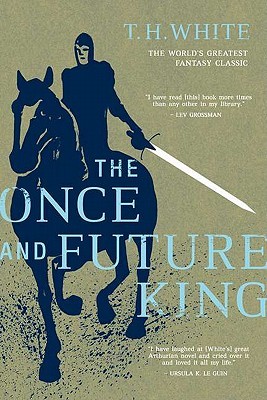
The Once and Future King
04

The Once and Future King

by T.H. White

"The best thing for being sad is to learn something. That's the only thing that never fails."

T.H. White's masterwork retells the Arthurian legend through four novels following Arthur from boyhood through the tragic dissolution of Camelot. Merlyn's wisdom guides young Arthur toward creating a kingdom based on might-is-right transformed into right-is-might. The narrative blends humor, philosophy, and heartbreak as White explores kingship, war, love, and the impossibility of perfecting human society through individual virtue.

The Once and Future King is the definitive modern Arthurian novel, demonstrating how fantasy can reinterpret familiar legends with psychological depth and philosophical sophistication. White's Arthur is neither the perfect king of legend nor a simple hero; he's a flawed man struggling against the limitations of his power and the intractability of human nature. The novel shows that fantasy literature can explore political philosophy and human tragedy with literary complexity.

  • Leadership requires wisdom, mercy, and the ability to learn continuously; no single person can solve systemic human problems
  • Love and duty often conflict irreconcilably; the greatest knights may destroy kingdoms through their passions
  • Violence and warfare corrupt even the noblest intentions; military might cannot create lasting peace or justice
  • Retelling ancient legends allows exploration of timeless human questions about power, love, and mortality
  • The novel's length and dense philosophical discussions can make it challenging; White's digressions, while meaningful, test reader patience
  • The treatment of female characters, though complex for its era, remains limited; women exist primarily in relation to male desire and need

"White's Merlyn is the wisest wizard in all of literature, and his gentle guidance of Arthur through impossible choices shows what fantasy can achieve."

Stephen King, Author, The Stand

"The Once and Future King shaped how we understand Arthurian legend in the modern age. White proved that fantasy could explore questions of justice and governance with philosophical rigor."

Marion Zimmer Bradley, Author, The Mists of Avalon
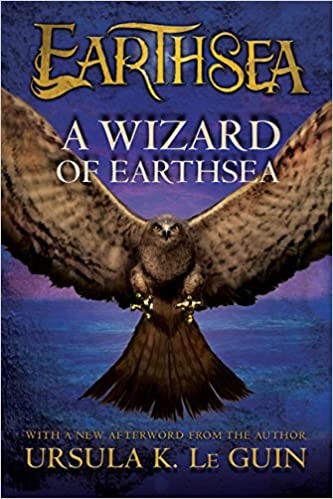
A Wizard of Earthsea
05

A Wizard of Earthsea

by Ursula K. Le Guin

"Ged was the greatest wizard in Earthsea, but in his youth he was the reckless Sparrowhawk. In his hunger for power and knowledge, he tampered with long-held secrets and loosed a terrible shadow upon the world."

Young wizard Ged, driven by pride and hunger for power, inadvertently releases a shadow creature upon the world and must pursue it across the archipelago of Earthsea to restore balance. Le Guin's novel follows Ged's maturation from arrogant youth through humiliation to wisdom, exploring themes of balance, identity, and the true nature of power. The narrative demonstrates that fantasy can explore Eastern philosophical concepts through Western adventure narrative.

A Wizard of Earthsea proved that fantasy could move beyond Tolkien's epic scale to explore intimate psychological and philosophical journeys. Le Guin's Taoist worldview—where power comes through understanding balance rather than domination—offered a fundamentally different approach to fantasy magic and heroism. The novel demonstrates that a coming-of-age story can achieve mythic resonance and that fantasy can embody sophisticated philosophical systems.

  • True power emerges from understanding balance and limitation, not from dominating external forces
  • Pride and hunger for power corrupt even the talented; self-knowledge matters more than magical prowess
  • Coming-of-age narratives can achieve mythic depth through internal transformation rather than external conquest
  • Fantasy worlds require internal consistency in their magical systems; names and words hold true power
  • The treatment of women is limited; Le Guin later acknowledged restricting magic to male characters in this first volume, reinforcing gender hierarchies
  • Some modern readers find the pacing slow; the first half involves extensive travel with minimal external conflict

"Ged is a superb creation—a protagonist who grows and changes unlike wizards in other fantasies. Le Guin created a wizard who could be genuinely young and genuinely foolish before becoming wise."

David Mitchell, Author, Cloud Atlas

"Le Guin's Earthsea shows that fantasy can embody profound philosophical truths. Her work elevated the genre's intellectual and artistic possibilities."

Neil Gaiman, Author, American Gods
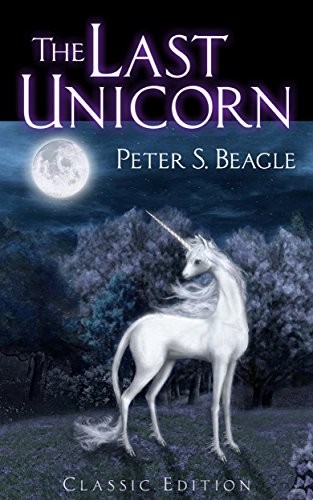
The Last Unicorn
06

The Last Unicorn

by Peter S. Beagle

"I was born mortal, and I have been immortal for a long, foolish time, and one day I will be mortal again; so I know something that a unicorn cannot know. Whatever can die is beautiful—more beautiful than a unicorn, who lives forever, and who is the most beautiful creature in the world."

When a solitary unicorn discovers she may be the last of her kind, she sets out on a quest to find her lost brethren, accompanied by a bumbling magician and a mortal band of adventurers. Beagle weaves a melancholic meditation on loss, mortality, and the fading of magic into a narrative of hope and determination. The novel explores what it means to be the final survivor of an age while maintaining faith that renewal is possible.

The Last Unicorn demonstrates that fantasy can achieve profound emotional depth while maintaining a sense of wonder and whimsy. Beagle's lyrical prose and philosophical meditations on mortality elevated fantasy's artistic possibilities. The novel proved that fantasy quests could be vehicles for exploring psychological truths about loss, memory, and the human condition rather than merely external adventures.

  • Fantasy can explore grief, loss, and the passage of time with poetic intensity and emotional authenticity
  • The most powerful quests are often driven by hope and love rather than conquest or redemption
  • Mortality gives beauty meaning; immortality without purpose becomes its own prison
  • A small band of unlikely companions can achieve what armies cannot through heart and determination
  • The narrative structure is episodic; some readers find the series of encounters meandering rather than progressive
  • The heavy melancholy and emphasis on loss, while thematically rich, can feel emotionally exhausting for some readers

"The Last Unicorn broke my heart in the best possible way. Beagle proved that fantasy could make readers weep for something beautiful passing away."

Stephen King, Author, The Stand

"In 1987, Locus ranked The Last Unicorn number five among the 33 'All-Time Best Fantasy Novels.' Its enduring emotional power transcends the fantasy genre."

Locus Magazine, Science Fiction and Fantasy Awards
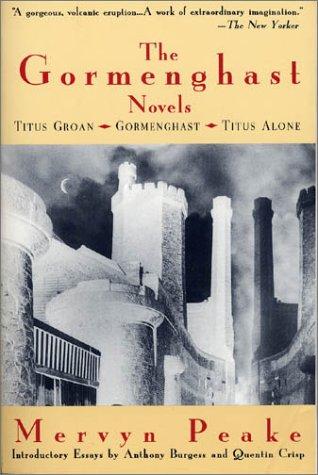
Gormenghast
07

Gormenghast

by Mervyn Peake

"This tower, patched unevenly with black ivy, arose like a mutilated finger from among the fists of knuckled masonry and pointed blasphemously at heaven."

The second novel in Peake's Gormenghast trilogy, this dark fantasy explores the sprawling castle and its inhabitants as protagonist Titus grows toward manhood within rigid hierarchies and meaningless ritual. Peake's intensely surrealist and gothic prose creates a world of decaying grandeur, grotesque characters, and philosophical nihilism. The narrative questions whether individual will can overcome the weight of tradition and inherited obligation.

Gormenghast represents fantasy's artistic frontier—a work that abandons adventure narratives for surrealist exploration of power, identity, and the corrupting weight of tradition. Peake's prose style revolutionized fantasy language, proving the genre could achieve poetic complexity rivaling literary fiction. The novel shows that fantasy can explore existential questions and psychological interiority without relying on plot-driven narrative momentum.

  • Fantasy worlds can be defined by atmosphere, decadence, and philosophical darkness rather than adventure or wonder
  • Inherited hierarchies and meaningless ritual can trap individuals as effectively as any external force
  • Prose style and descriptive language are as important as plot in creating memorable fantasy experiences
  • Fantasy can explore psychological complexity and philosophical nihilism alongside traditional adventure elements
  • Peake's baroque descriptive style is challenging; many readers find the dense prose overwhelming and impenetrable
  • The narrative lacks conventional plot progression; some readers cannot engage beyond the first chapter without effort

"Peake's books are actual additions to life; they give, like certain rare dreams, sensations we never had before, and enlarge our conception of the range of possible experience."

C.S. Lewis, Author, The Chronicles of Narnia

"There is nothing in literature like Mervyn Peake's remarkable Gormenghast novels. They were crafted by a master, who was also an artist."

Neil Gaiman, Author, Sandman
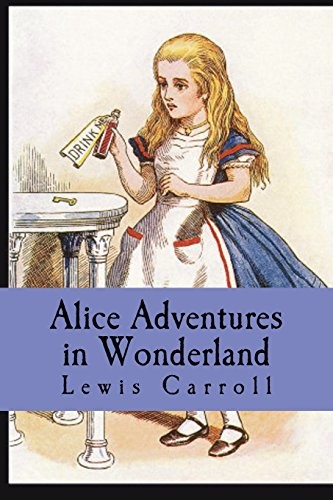
Alice's Adventures in Wonderland
08

Alice's Adventures in Wonderland

by Lewis Carroll

"When I used to read fairy-tales, I fancied that kind of thing never happened, and now here I am in the middle of one."

Young Alice tumbles down a rabbit hole into a fantastical realm where logic inverts, language games dominate, and identity becomes fluid. Carroll's novel uses nonsense, paradox, and linguistic play to create a critique of Victorian rationalism and social hierarchies. The narrative follows Alice's efforts to navigate a world where adult rules no longer apply and traditional wisdom proves useless.

Alice's Adventures in Wonderland is a foundational text that originated fantasy as we know it, influencing every work written after it. Carroll proved that fantasy literature could use logical paradox and linguistic complexity to explore philosophical questions about identity, knowledge, and power. The novel revolutionized children's literature by valuing imagination and playfulness over didacticism.

  • Fantasy can use nonsense and paradox to explore serious philosophical questions about logic, identity, and knowledge
  • Language and wordplay are as important to fantasy as plot; linguistic innovation can create wonder
  • Children's fantasy can achieve literary sophistication while maintaining genuine delight and entertainment
  • Inverting adult logic and social rules can reveal the arbitrary nature of society's conventions
  • The narrative is episodic and meandering; some modern readers find the lack of plot coherence frustrating
  • Victorian attitudes toward class and childhood persist throughout the work, despite its satire of other Victorian conventions

"Alice in Wonderland is a book of that extremely rare kind which will belong to all the generations to come until the language becomes obsolete."

Walter Besant, Victorian Literary Critic

"Carroll's linguistic inventiveness and philosophical playfulness opened doors for fantasy writers. Alice proved that children's fiction could be intellectually serious while remaining joyfully imaginative."

J.K. Rowling, Author, Harry Potter
The Sword of Shannara
09

The Sword of Shannara

by Terry Brooks

"Herein lies the heart and soul of the nations. Their right to be free men, Their desire to live in peace, Their courage to seek out truth, Herein lies the Sword of Shannara."

In a post-apocalyptic world where humanity struggles against a returning darkness, a young man discovers his bloodline connection to an ancient magic and accepts a quest to find the legendary Sword of Shannara. Brooks's sprawling epic combines adventure, world-building, and the eternal struggle between good and evil across a transformed earth. The novel launched an expansive fantasy series that demonstrated fantasy's commercial viability beyond Tolkien.

The Sword of Shannara proved that post-Tolkien fantasy could achieve commercial and critical success, revitalizing the genre in the 1970s. Brooks demonstrated that fantasy readers had enormous appetite for secondary-world adventures and established the template for the extended fantasy series. The novel showed that fantasy could explore apocalyptic transformation and spiritual warfare while maintaining epic scope and accessibility.

  • Post-apocalyptic settings can create secondary worlds as rich and detailed as fantasy realms
  • Extended fantasy series allow exploration of multiple generations and the long-term consequences of quests
  • Commercial success in fantasy requires balancing intellectual sophistication with accessibility and entertainment
  • Chosen-one narratives remain effective vehicles for exploring destiny, duty, and individual agency
  • Critics including Lin Carter noted the novel's heavy reliance on Tolkien's plot structure and character archetypes, calling it derivative
  • Some readers find the prose style somewhat simplistic compared to contemporary fantasy literature

"The Sword of Shannara became the first fantasy novel to appear on the New York Times trade paperback bestseller list, demonstrating that the post-Tolkien fantasy market was both real and substantial."

New York Times, Publishing Industry

"Brooks captured the post-Tolkien appetite for heroic fantasy at precisely the right moment. His commercial success opened doors for countless authors who followed."

Tom Shippey, Literary Scholar
Elric of Melniboné
10

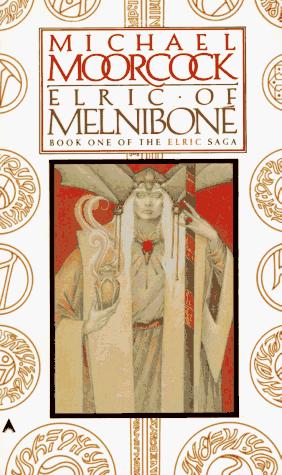
Elric of Melniboné

by Michael Moorcock

"Farewell, friend. I was a thousand times more evil than thou! So fate makes Elric a martyr that Law might rule the world, binding me to evil and to Chaos, in order that I may destroy evil and Chaos—but it does not make me some senseless dolt easily convinced and a willing sacrifice."

Elric, the last emperor of Melniboné, wields the cursed sword Stormbringer and struggles against his demonic nature as civilizations crumble and chaos encroaches. Moorcock's dark fantasy subverts the traditional hero archetype through Elric's moral ambiguity, drug addiction, and inevitable betrayal. The novel explores themes of fate, personal corruption, and the cyclical nature of civilization's rise and fall.

Elric of Melniboné revolutionized fantasy by creating an anti-hero protagonist whose darkness drives the narrative rather than opposing it. Moorcock demonstrated that fantasy heroes need not be virtuous, quests need not lead to victory, and magic systems could operate through chaos and entropy rather than order and control. The novel expanded fantasy's emotional and moral range profoundly.

  • Fantasy protagonists need not be heroes; moral ambiguity and corruption can generate compelling narratives
  • Fate and destiny can be destructive forces that trap characters rather than guide them toward meaningful ends
  • Fantasy worlds can operate according to principles of chaos, entropy, and cycles rather than progress and order
  • Magic systems based on corruption, addiction, and moral compromise create different emotional resonances than redemptive magic
  • Elric's passivity and reliance on Stormbringer's agency make him a frustrating protagonist for readers preferring active decision-making
  • The novel's dark nihilism and repetitive cycles of betrayal and loss can feel emotionally draining without hopeful counterbalance

"Moorcock created a fantasy hero who destroyed everything he touched. Elric's tragedy is that his power and his nature are inextricably linked, making redemption impossible."

Neil Gaiman, Author, The Sandman

"Moorcock proved that fantasy could explore moral darkness and cosmic nihilism with philosophical depth. Elric remains fantasy's most compelling anti-hero."

Fritz Leiber, Author, Fafhrd and the Gray Mouser
Back to all lists