10 Best Classic Mystery Novels

Essential Pre-1990 Detective Fiction

A curated collection of the 10 most essential classic mystery novels that defined the detective fiction genre. From Agatha Christie's ingenious plotting to Arthur Conan Doyle's iconic Sherlock Holmes, these masterworks established the templates for mystery writing. Includes hardboiled noir, locked-room puzzles, and groundbreaking feminist detective fiction.

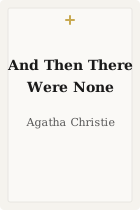
And Then There Were None
01

And Then There Were None

by Agatha Christie

"Ten little Soldier Boys went out to dine; One choked his little self and then there were nine."

Ten strangers are invited to an island, accused of crimes they may or may not have committed. As they are eliminated one by one following a sinister nursery rhyme, they realize the killer is among them. A masterpiece of suspense with an unforgettable twist ending.

The world's best-selling mystery novel with over 100 million copies sold, and ranked the World's Favourite Christie. It perfects the locked-room mystery formula and demonstrates how psychological tension can escalate through an ingeniously constructed plot. Essential reading for understanding the possibilities of mystery fiction.

  • Isolation amplifies suspicion and psychological breakdown
  • Revenge as a motive can unite seemingly disparate perpetrators
  • The unreliable narrator is a powerful tool for misdirection
  • Justice can exist outside official legal systems
  • Some modern readers find the pacing slow in the middle sections
  • The ending's finality, while brilliant, eliminates traditional detective closure and may frustrate some readers

"One of the most ingenious thrillers in many a day"

Time Magazine, Leading news publication

"Christie is at her most ingenious and most surprising... considerably above the standard of her last few works and close to the Roger Ackroyd level"

Toronto Daily Star, Canadian newspaper

"Named the World's Favourite Christie in 2015 to mark the author's 125th birthday"

Agatha Christie's Estate, Official recognition

"Ranked as one of the world's favourite mystery novels in the Top 100 Crime Novels of All Time"

British Crime Writers' Association, Professional organization
The Hound of the Baskervilles
02

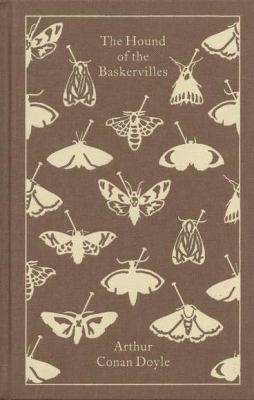
The Hound of the Baskervilles

by Arthur Conan Doyle

"Mr Holmes, they were the footprints of a gigantic hound!"

Holmes and Watson investigate a cursed family menaced by a supernatural hound on the bleak moors of Devonshire. Gothic atmosphere, impossible crimes, and the reveal that rational deduction conquers legend. Widely considered the best Holmes novel.

The finest of the four Sherlock Holmes novels, combining Gothic atmosphere with scientific detection. It set the standard for mystery writing with its intricate plotting, fast-paced narration, and the perfect balance between supernatural dread and logical explanation. Essential for understanding detective fiction conventions.

  • Atmospheric setting can enhance psychological terror and mystery
  • Scientific observation and deduction trump superstition and legend
  • The detective as hero operates through intellect rather than physical prowess
  • Multi-layered mysteries require patience and careful observation
  • Watson's narration sometimes slows the action in middle chapters
  • Some readers find the supernatural elements initially undermining the scientific method that Holmes ultimately validates

"Ranked 128 of 200 UK best-loved novels in 2003"

BBC's The Big Read, UK literature poll

"Ranked as the best of the four Holmes novels in 1999"

Sherlockians Poll, Sherlock Holmes enthusiasts

"Praised for its Gothic, foreboding setting and wonderfully delightful storytelling"

The Daily Telegraph, Major British newspaper

"Recognized as a foundational work in detective fiction"

Mystery Writers of America, Professional organization
Murder on the Orient Express
03

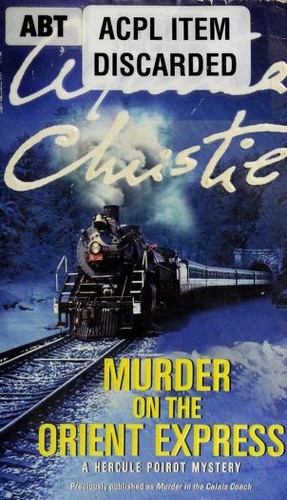
Murder on the Orient Express

by Agatha Christie

"The murderer is with us—on the train now."

A snowdrift traps the Orient Express and an American tycoon is found stabbed a dozen times in his locked compartment. Hercule Poirot must navigate twelve suspects with guilty secrets and determine which justice matters most. Christie's most famous mystery.

Ranked the second World's Favourite Christie and one of the most celebrated mysteries ever written. It showcases how a confined setting and limited suspects can create maximum suspense while exploring themes of justice versus mercy. Demonstrates how plot mechanics can serve deeper moral questions.

  • Group guilt and collective justice can supersede individual culpability
  • The detective's personal code may trump legal obligation
  • Locked settings intensify mystery and restrict investigation
  • Misdirection through multiple suspects requires intricate coordination
  • The resolution may feel contrived to some readers who expect traditional detective logic
  • The moral ambiguity of the ending could be seen as unsatisfying to those seeking clear justice

"Ranked as second in The World's Favourite Christie list"

Agatha Christie's Estate, Official recognition

"One of the most colossal achievements in mystery fiction history"

Crime Writers Association, British professional organization

"Widely acclaimed for its ingenious plot twists and character work"

Literary Critics, General critical consensus
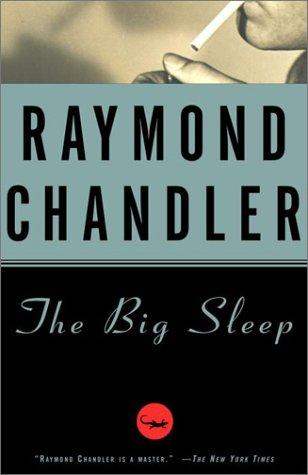
The Big Sleep
04

The Big Sleep

by Raymond Chandler

"What did it matter where you lay once you were dead? In a dirty sump or in a marble tower on the top of a high hill? You were dead, you were sleeping the big sleep, you were not bothered by things like that."

Private detective Philip Marlowe is hired to investigate blackmail involving a wealthy man's daughters, plunging into Los Angeles's criminal underworld. Sharp dialogue, complex plot, and a detective with a moral compass navigating a morally ambiguous world.

Introduced the iconic Philip Marlowe and redefined the hardboiled detective novel, establishing Chandler as a master of American noir. Its intricate plotting, sharp dialogue, and morally complex protagonist set the standard for detective fiction. Essential for understanding how literary merit elevates genre fiction.

  • Private morality can conflict with official law and justice
  • Los Angeles itself becomes a character reflecting moral decay
  • The detective's personal code matters more than solving the crime
  • Sophisticated prose and sharp dialogue elevate genre fiction
  • The labyrinthine plot can confuse readers, with multiple motivations competing for clarity
  • Some characters feel secondary to Marlowe's investigation and moral development

"Chandler created the culminating American hero: wised up, hopeful, thoughtful, adventurous, sentimental, cynical and rebellious"

Robert B. Parker, Mystery writer and critic

"Marlowe stands out as almost the only fundamentally decent person in a study of depravity"

The New York Times, Major publication

"Placed second on the poll of 100 best crime novels"

Crime Writers Association, British professional organization

"Drew the admiration of other writers for its masterful execution"

Ian Fleming, James Bond creator
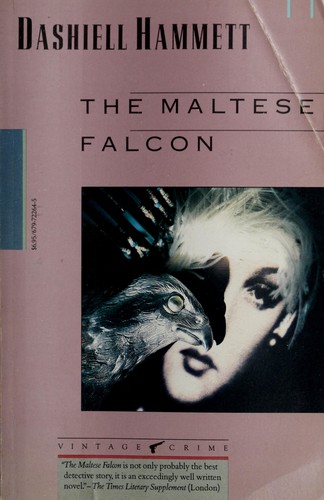
The Maltese Falcon
05

The Maltese Falcon

by Dashiell Hammett

"When a man's partner is killed he's supposed to do something about it. It doesn't make any difference what you thought of him. He was your partner and you're supposed to do something about it."

Sam Spade's partner is murdered, launching an investigation for a legendary jeweled falcon. Spade navigates double-crosses, seduction, and betrayal in a race against multiple criminals seeking the same prize. The definitive hardboiled detective novel.

Named one of Time's 100 Best Mystery and Thriller Books of All Time, Hammett's novel defined the hardboiled genre and influenced all detective fiction that followed. Sam Spade's iconic code of ethics and sharp wit established the template for the modern detective. Essential for understanding American crime fiction.

  • Personal loyalty supersedes individual morality in ethical codes
  • Appearance deceives; vulnerability hides lethal intent
  • The detective survives through wit and principles rather than force
  • Economical prose and sharp dialogue create maximum impact
  • Female characters, particularly Brigid O'Shaughnessy, are portrayed as manipulative and untrustworthy femme fatales
  • The violent resolution may feel abrupt to modern readers accustomed to more elaborate explanations

"The best detective story America has yet produced"

Alexander Woolcott, Literary critic

"Ranked number 10 on the Top 100 Crime Novels of All Time in 1990"

British Crime Writers' Association, Professional organization
"Ranked number 2 in their 1995 list of best crime novels"

Mystery Writers of America, Professional organization

"Called Hammett 'the dean of the hard-boiled school of detective fiction'"

The New York Times, Major publication
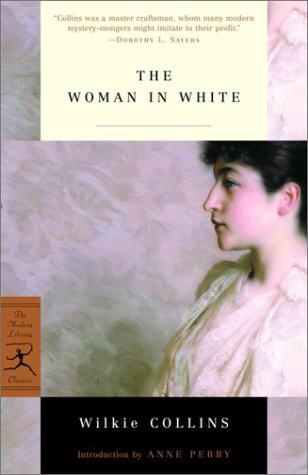
The Woman in White
06

The Woman in White

by Wilkie Collins

"I have never read a book so powerfully constructed, and so powerfully written. I have stopped in every chapter to notice some instance of ingenuity, or some happy turn of writing."

A mysterious woman in white warns of danger; years later, drawing master Walter Hartright must uncover a conspiracy involving forged identities, asylum confinement, and stolen inheritance. Widely considered the first modern mystery novel.

Generally recognized as the first English sensation novel and among the foundational works of mystery fiction. It pioneered the detection of crime through investigation rather than punishment, established complex plotting across multiple narrators, and influenced all subsequent mystery literature. Essential for understanding genre origins.

  • Multiple narrative perspectives can build suspense and reveal truth gradually
  • Institutional power can weaponize identity and suppress justice
  • Ordinary people can investigate extraordinary crimes through persistence
  • Women's vulnerability to legal and social systems drives emotional stakes
  • The epistolary and multi-narrative structure can feel slow to modern readers unfamiliar with Victorian serialization
  • Some secondary characters lack development relative to the main conspirators

"I have stopped in every chapter to notice some instance of ingenuity, or some happy turn of writing; and I am absolutely certain that you never did half so well yourself"

Charles Dickens, Author and editor of All the Year Round

"So captivated by the novel that he once canceled an evening appointment to finish it"

William Gladstone, British Prime Minister

"Collins introduced into fiction those most mysterious of mysteries, the mysteries which are at our own doors"

Henry James, Literary critic and novelist

"Ranked among TIME's 100 best mystery and thriller books of all time"

TIME Magazine, Major publication
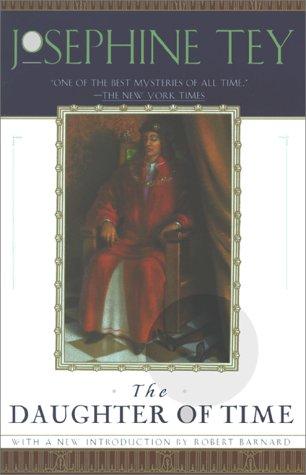
The Daughter of Time
07

The Daughter of Time

by Josephine Tey

"Truth is the daughter of time, not of authority."

Scotland Yard Inspector Alan Grant, bedridden with a broken leg, becomes obsessed with exonerating King Richard III from centuries of accusations. His historical investigation challenges established narratives and raises questions about truth and authority. A unique detective novel that investigates the past.

Voted the number one Crime Novel of All Time by the British Crime Writers' Association in 1990 and ranked fourth by the Mystery Writers of America in 1995. It revolutionized the detective novel by applying investigation to historical mystery, demonstrating that deduction and research can challenge accepted narratives. Essential for understanding innovative approaches to the genre.

  • Historical narratives can be biased and require re-examination
  • Absence of evidence differs fundamentally from evidence of absence
  • Character analysis can challenge centuries of historical consensus
  • The pursuit of truth transcends the boundaries of conventional detection
  • Tey takes considerable liberties with historical facts to support her Richard III thesis
  • The detective work consists primarily of reading and discussion rather than traditional investigation

"One of the permanent classics in the detective field, one of the best, not of the year, but of all time"

Anthony Boucher, Mystery critic and editor

"Not only one of the most important mysteries of the year, but of all years of mystery"

Dorothy B. Hughes, Mystery critic

"Voted number one in The Top 100 Crime Novels of All Time in 1990"

British Crime Writers' Association, Professional organization
"Ranked fourth in their 1995 compendium of best crime novels"

Mystery Writers of America, Professional organization
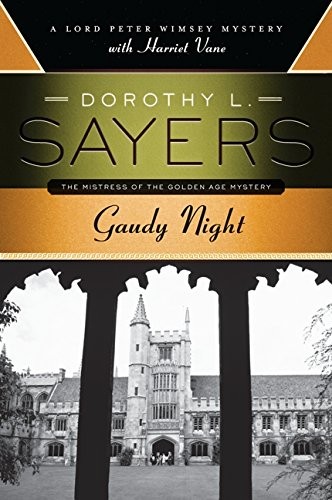
Gaudy Night
08

Gaudy Night

by Dorothy L. Sayers

"I have always maintained that a detective novelist should also be able to write a good straight novel. If he cannot, he had better stick to detection."

Harriet Vane, a mystery novelist and don, returns to her Oxford college for a reunion and encounters poison-pen messages and wanton vandalism. She and Lord Peter Wimsey investigate while grappling with intellectualism, love, and women's roles. A mystery that centers on female intellectual ambition.

The first feminist mystery novel that places women's intellectual achievement at the narrative center. Sayers weaves detective plot with profound exploration of women's agency, arguing for women's right to meaningful work. Essential for understanding how mystery fiction can address social justice while maintaining rigorous plotting.

  • Women's intellectual work and achievement deserve equal standing with men's
  • Romantic love need not require women to abandon professional identity
  • Academic communities have their own codes, secrets, and scandals
  • Mystery plot can serve larger arguments about social justice and equality
  • The extended romance subplot between Harriet and Peter may overshadow the mystery to some readers
  • Sayers's portrayal of 1930s women's colleges, while progressive for the era, reflects limitations in feminist consciousness

"Dorothy Sayers was such an exceptionally good detective story writer and a delightfully witty one"

Agatha Christie, Mystery novelist

"Described as the first feminist mystery novel with elegant prose and complex characterization"

Literary Critics, General consensus

"Successfully placed feminist questions before a widespread and atypical reading audience through a superlative work in a popular genre"

Feminist Scholars, Academic consensus
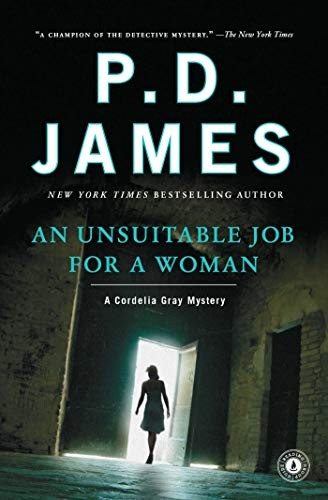
An Unsuitable Job for a Woman
09

An Unsuitable Job for a Woman

by P.D. James

"The truth is I believe I shall be quite good at it."

Young Cordelia Gray inherits a detective agency and takes her first case investigating the apparent suicide of a Cambridge student. As she uncovers class tensions, family secrets, and institutional corruption, she proves that detection is far from unsuitable for women.

Introduced the first female private investigator in a hardboiled detective novel and pioneered the modern feminist detective. James's elegant prose and psychological depth elevated the detective genre while fundamentally challenging gender assumptions about who can be a detective. Essential for understanding how mystery fiction evolved.

  • Women can excel in traditionally male-dominated professions through intellect and determination
  • Class and institutional power structures complicate seemingly simple investigations
  • The bildungsroman motif applies powerfully to the detective novel
  • Moral and ethical growth accompany professional development
  • Some readers find Cordelia's idealism regarding justice naive given the institutional obstacles she faces
  • The resolution requires accepting institutional injustice as preferable to legal prosecution

"Subverts traditional gender roles and suggests new models for heroism in detective fiction"

Feminist Literary Scholars, Academic consensus

"Gray's character suggests the form that heroism in the modern world might take"

Dennis Porter, Literary critic

"Recognized for developing innovative approaches within the detective genre"

Mystery Writers of America, Professional organization
The Roman Hat Mystery
10

The Roman Hat Mystery

by Ellery Queen

"The disappearance of the victim's top hat contained papers with which the victim was blackmailing the murderer."

A disreputable lawyer is poisoned in a theater box during a play performance; his missing hat becomes the crucial clue. Inspector Richard Queen and his son Ellery, a bibliophile and author, must navigate theater intrigue and blackmail. The first Ellery Queen mystery.

First published in 1929, this foundational work of the Golden Age established the 'fair play' mystery tradition where readers have access to all clues the detective possesses. Ellery Queen became the foremost American authors of detective fiction and influenced generations of mystery writers. Essential for understanding the mechanics of clue-based puzzles.

  • The smallest overlooked detail often contains crucial significance
  • Fair play mysteries require the reader have equal information to the detective
  • The detective's intellectual method takes precedence over action sequences
  • Theater settings provide both physical confinement and dramatic irony
  • The exposition can feel mechanical to modern readers accustomed to more subtle character development
  • Ellery Queen's later novels are considered superior in plotting and characterization

"A new Ellery Queen book has always been something to look forward to for many years"

Agatha Christie, Mystery novelist

"Ellery Queen is the American detective story"

Anthony Boucher, Mystery critic

"The rare distinction of the books is that this claim is accurate regarding their fair play mystery approach"

Julian Symons, Literary critic and historian

"One of the foundational works of the Golden Age of detective fiction"

Literary Historians, Academic consensus
Back to all lists