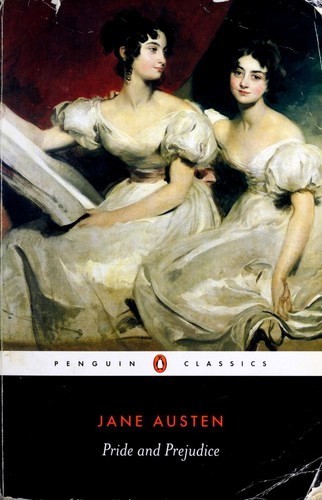
Pride and Prejudice
"It is a truth universally acknowledged, that a single man in possession of a good fortune, must be in want of a wife."
Published in 1813, this witty romance follows Elizabeth Bennet and Mr. Darcy in early 19th-century England as they navigate issues of class, marriage, and personal prejudice. Austen masterfully explores the complexities of courtship and family dynamics with sharp social commentary and memorable characters. The novel remains a cornerstone of romantic fiction and English literature.
Pride and Prejudice established the template for modern romance literature while offering incisive social critique of marriage and women's economic dependence. Elizabeth Bennet remains one of literature's most celebrated heroines for her independence and wit. The novel's enduring relevance stems from its exploration of how first impressions mislead us and the importance of self-awareness in relationships.
- First impressions can be dangerously misleading and require self-reflection to overcome
- Women's economic and social dependence on marriage is a central tension in society
- Wit and intelligence are superior to beauty or social status in matters of character
- Personal growth requires humility and willingness to acknowledge one's own faults
- Some modern readers find the pacing slow and the focus on marriage prospects dated
- The novel's resolution reinforces traditional marriage conventions rather than questioning them entirely
"The most perfect, the most truly novel of all novels ever written, wherein every effect is calculated and every fault is deliberate."
Reginald Farrer, Literary Critic"Miss Austen has a talent for describing the involvements and feelings and characters of ordinary life which is to me the most wonderful I ever met with."
Sir Walter Scott, Novelist and Contemporary"Pride and Prejudice is Austen's most assured and most perfectly executed novel, and Elizabeth Bennet is the most lively and attractive of her heroines."
Tony Tanner, Literary Scholar