10 Essential Classic Romance Novels

Timeless Love Stories That Shaped the Romance Genre

Experience the most foundational and beloved romance novels in English literature. From Jane Austen's witty social comedies to the Brontë sisters' passionate Gothic tales, these ten essential classics have captivated readers for generations and continue to define what romance literature can achieve. These are the books that established the conventions, broke the rules, and proved that love stories could be both deeply moving and intellectually sophisticated.

Pride and Prejudice
01

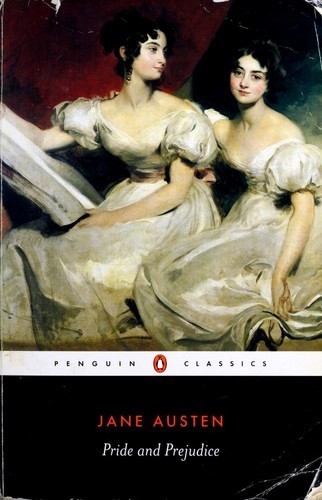
Pride and Prejudice

by Jane Austen

"It is a truth universally acknowledged, that a single man in possession of a good fortune, must be in want of a wife."

Elizabeth Bennet, a spirited young woman who values independence, encounters the proud and seemingly disagreeable Mr. Darcy. What begins as mutual contempt evolves into genuine love as both characters overcome their initial prejudices. This witty comedy of manners explores the social pressures surrounding marriage in Regency England.

Pride and Prejudice is the quintessential romance novel that established the template for romantic tension, character development, and the slow-burn love story. Its sharp social commentary, memorable dialogue, and complex characters make it essential reading for understanding how romance literature evolved. The novel's central relationship remains one of literature's greatest achievements.

  • Love requires overcoming pride and prejudice about both oneself and others
  • Social expectations and economic necessity shape romantic choices in ways that complicate genuine affection
  • True partnership requires mutual respect and intellectual equality between lovers
  • First impressions are often deceiving and can obscure a person's true character
  • Elizabeth's passivity has been criticized as not sufficiently feminist, with women waiting for men to act rather than taking charge of their own destinies
  • The novel's preoccupation with marriage as the ultimate goal for women reinforces rather than challenges conventional social structures of the era

"My own darling child"

Jane Austen, Author

"Part of a new trend in fiction which draws the characters and incidents from the current of ordinary life"

Sir Walter Scott, Contemporary Critic, Quarterly Review

"A timeless, witty comedy of manners, prized for its sharp social insight, memorable characters, and slow-burn romance that rewards rereading"

Literary Critics, Modern Scholarship
Jane Eyre
02

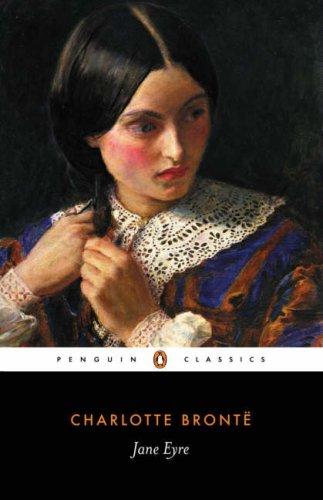
Jane Eyre

by Charlotte Brontë

"I am no bird; and no net ensnares me; I am a free human being, with an independent will."

An orphaned governess endures a harsh childhood at a charity school before finding employment at Thornfield Hall. There she encounters the brooding, mysterious Mr. Rochester and falls in love despite the dark secrets hidden in his mansion. This Gothic romance explores themes of independence, passion, and morality.

Jane Eyre revolutionized romance by presenting a heroine who refuses to compromise her principles for love and who demands equality in relationships. The novel combines Gothic atmosphere with psychological depth, creating a love story that is both thrilling and profoundly romantic. It established the template for the morally complex romantic hero.

  • A woman's independence and self-respect must not be sacrificed for love or security
  • True love requires honesty and the absence of deception between partners
  • Passion alone cannot sustain a relationship without mutual respect and integrity
  • Women deserve agency in choosing their own path and refusing unsuitable matches
  • The novel displays problematic racist attitudes, particularly regarding Bertha's characterization and Jane's fear of her dark complexion
  • Bertha Mason is silenced and portrayed as mad, perpetuating stigma around mental illness and reinforcing ableist narratives that undermine feminist messaging

"An instant success upon publication despite controversy, proving the novel's emotional power resonated with audiences"

Contemporary Readers, 1840s Reception

"The novel presents a woman who refuses to be confined by societal expectations and demands dignity"

Charlotte Brontë, Author

"A pioneering work of psychological fiction that deepened the possibilities of the romance genre"

Literary Scholars, Modern Criticism
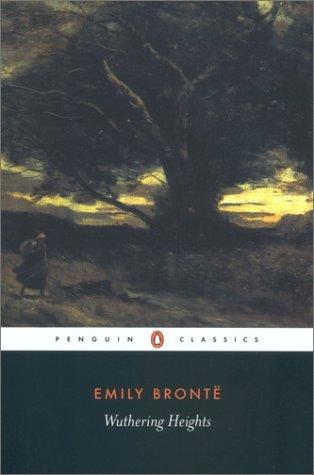
Wuthering Heights
03

Wuthering Heights

by Emily Brontë

"Nelly, I am Heathcliff! He's always, always in my mind: not as a pleasure, any more than I am always a pleasure to myself, but as my own being."

The intense and destructive relationship between Catherine Earnshaw and Heathcliff drives this Gothic masterpiece. Told through nested narratives, the novel reveals how childhood passion transforms into adult obsession and revenge across two generations. It explores love as both transcendent and corrosive.

Wuthering Heights redefined what romance literature could be by presenting love not as redemptive but as potentially destructive and tragic. The novel's unflinching portrayal of passion, class conflict, and moral ambiguity challenged Victorian sensibilities and expanded the emotional range of romantic fiction. Its influence on literature cannot be overstated.

  • Love can be both transcendent and destructive, capable of destroying those who experience it
  • Class prejudice and social barriers can poison even the deepest human connections
  • Childhood trauma and social rejection can distort personality and lead to revenge-driven behavior
  • Romantic obsession, when untempered by reason and morality, becomes a form of self-destruction
  • Victorian critics found the novel's depiction of abuse, violence, and moral corruption offensive and unsuitable for respectable readers
  • The novel's graphic portrayal of domestic violence and toxic relationships lacks moral framing or clear judgment against the cruelty depicted

"Emily's literary craft and meticulous planning of the novel disproved the notion that she was an unconscious artist"

Charles Percy Sanger, Literary Critic, 1926

"A work of tremendous and far-reaching influence that continues to challenge readers with its unflinching emotional honesty"

Modern Literary Scholars, Contemporary Criticism

"A Gothic masterpiece that expanded the possibilities of romantic fiction beyond conventional morality"

Literary Community, Enduring Recognition
Gone with the Wind
04

Gone with the Wind

by Margaret Mitchell

"I'll think of it tomorrow, at Tara. I can stand it then. Tomorrow, I'll think of some way to get him back. After all, tomorrow is another day."

Scarlett O'Hara, a Southern belle of ambition and determination, survives the Civil War and its aftermath by any means necessary. Her tumultuous relationship with Rhett Butler is set against the crumbling antebellum South. This sprawling epic tells a story of survival, desire, and the clash between personal ambition and social expectation.

Gone with the Wind is essential reading as the most commercially successful romance novel ever written and a cultural phenomenon that shaped American literature. Its portrayal of a complex female protagonist who refuses victimhood marked a significant evolution in romance heroines. The novel's scope and emotional power demonstrate romance's capacity for epic storytelling.

  • Survival and self-preservation can transcend conventional morality and social expectations
  • Romantic love must compete with personal ambition and the desire for security and power
  • Social upheaval and historical forces shape romantic relationships and individual agency
  • A woman's capacity for reinvention and resilience can be her greatest strength
  • The novel glorifies the Antebellum South and romanticizes slavery as a benign institution, ignoring the brutality and inhumanity of the system
  • Enslaved characters are portrayed through racist stereotypes as either devoted servants or dangerous threats, perpetuating harmful historical narratives

"Recognized as a major work of American literature worthy of the highest literary honor"

Pulitzer Prize Committee, 1937 Pulitzer Prize Winner

"Selected as the most favorite novel of 1938 by members of the American Booksellers Association"

American Book Buyers, National Book Award, 1938

"One of the bestselling novels of all time with enduring popular appeal across generations"

Literary Community, Publishing History
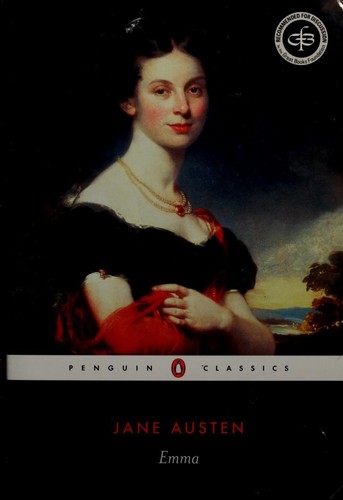
Emma
05

Emma

by Jane Austen

"If I loved you less, I might be able to talk about it more."

Emma Woodhouse, a clever and wealthy young woman who sees no need for marriage, delights in matchmaking for others while remaining blind to her own heart. Her well-intentioned schemes to arrange suitable matches create complications that force her to confront her own feelings. A witty comedy about self-deception and personal growth.

Emma is considered Austen's most technically accomplished novel and features one of literature's most complex heroines. The novel's exploration of a woman who must learn to see herself clearly and recognize love when it appears before her is both comic and deeply romantic. Its influence on the development of character-driven romance cannot be overstated.

  • Self-awareness and the ability to see oneself clearly are essential for happiness and genuine love
  • Meddling in others' romantic affairs from a position of ignorance about one's own heart leads to complications
  • True love often comes from unexpected places and requires humility to recognize
  • Personal growth requires acknowledging one's mistakes and being willing to change
  • Friends and family criticized the novel for its lack of action and romantic drama compared to Pride and Prejudice
  • Emma's heroine is often viewed as unlikable or excessively meddling, making her a less sympathetic protagonist than Austen's other heroines

"Representative of a new trend in fiction drawing from the current of ordinary life rather than extraordinary incident"

Sir Walter Scott, Contemporary Critic, Quarterly Review, 1815

"Perhaps the most technically accomplished of all Austen's novels and, after Pride and Prejudice, her most popular"

Austen Scholars, Modern Literary Criticism

"A masterwork of characterization and narrative technique"

Jennifer Egan, Contemporary Author
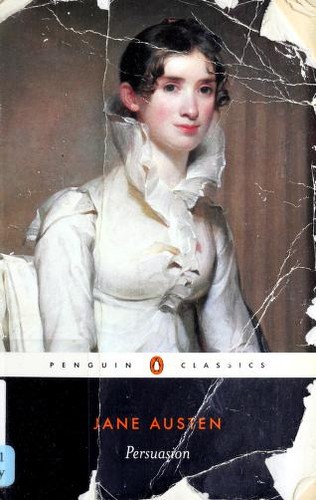
Persuasion
06

Persuasion

by Jane Austen

"You pierce my soul. I am half agony, half hope."

Eight years after being persuaded to break her engagement to the poor but honorable Captain Wentworth, Anne Elliot encounters him again when he rents her family's estate. Their reunion forces both to confront their enduring feelings and the consequences of lost time. A poignant exploration of second chances and constancy in love.

Persuasion is Austen's final completed novel and represents her most mature exploration of love's power to endure across time and separation. The novel's meditation on whether love can be rekindled and whether past mistakes can be overcome gives it a depth of emotional resonance. It presents one of literature's greatest examples of a love that persists despite circumstance.

  • True love can endure years of separation and circumstantial obstacles
  • The capacity to acknowledge and learn from past mistakes is essential for personal growth and second chances
  • Constancy in love, even when unrequited, demonstrates the depth of genuine affection
  • Life's greatest happiness may come from unexpected reunion and the opportunity to correct past wrongs
  • Austen herself had concerns about aspects of the novel's plot contrivance and removed chapters before publication
  • The narrative technique of allowing a character near-complete authority over the narrator's voice created strain on Austen's accustomed narrative tendencies

"Displays a degree of excellence that has not often been surpassed, showing realism in Austen's depictions of life"

British Critic, March 1818 Review

"Accepted as Austen's most maturely written novel, showing the refinement of a woman approaching forty"

Literary Community, Modern Reception

"A brilliant satire of vanity and pretension that is above all a love story tinged with heartache of missed opportunities"

Austen Scholars, Contemporary Analysis
The Age of Innocence
07

The Age of Innocence

by Edith Wharton

"His whole future seemed suddenly to be unrolled before him; and passing down its endless emptiness he saw the dwindling figure of a man to whom nothing was ever to happen."

Newland Archer, a respectable lawyer in Gilded Age New York, is engaged to the conventional May Welland when the arrival of her cousin Ellen Olenska disrupts his comfortable world. Ellen's passion and unconventionality challenge Archer's values and his understanding of love. A tragic exploration of duty versus desire in a society obsessed with propriety.

The Age of Innocence won the Pulitzer Prize and marks Edith Wharton as a major voice in American literature. The novel's anthropological examination of social rituals, its ironic portrayal of 'innocent' society hiding moral compromise, and its tragic central love story establish it as essential reading. Wharton's sophisticated analysis of class and constraint influenced generations of writers.

  • Social conventions and class expectations can override genuine emotional connection and authentic desire
  • The pursuit of respectability and duty often comes at the cost of personal happiness and authentic love
  • Society's appearance of innocence masks hypocrisy and the repression of genuine human emotion
  • Personal sacrifice for social stability is a form of slow death, regardless of external comfort
  • Gender dynamics are complex, with May Welland using duty and pregnancy as tools of control rather than being a sympathetic victim of circumstance
  • The novel's critique of restrictive society does not ultimately offer a liberatory alternative, leaving the reader with a sense of inevitable entrapment

"One of the best novels of the twentieth century and a permanent addition to literature"

Pulitzer Prize Committee, 1921 Pulitzer Prize

"Really is quite incredible, a great book executed by a writer at the top of her game"

Ta-Nehisi Coates, Contemporary Author and Critic, The Atlantic

"When I finished it, I held it to my chest and thought, 'I want to write like this'"

Roxane Gay, Contemporary Author
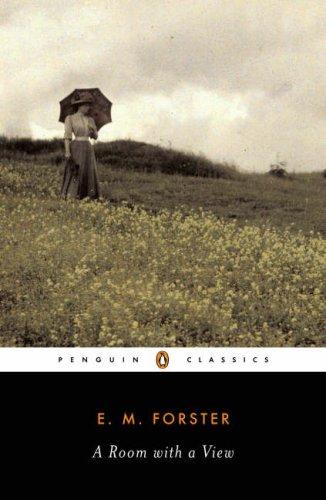
A Room with a View
08

A Room with a View

by E.M. Forster

"Passion should believe itself irresistible. It should forget civility and consideration and all the other curses of a refined nature."

Lucy Honeychurch, a young woman touring Italy, encounters the free-spirited George Emerson and experiences a passionate awakening at odds with her sheltered upbringing. Upon returning to England, she finds herself torn between the demands of her conventional family and the yearnings of her heart. A romantic comedy about authenticity versus social pretense.

A Room with a View is essential reading for its celebration of passion, authenticity, and the triumph of genuine emotion over social convention. Forster's sympathetic portrayal of sexual awakening and female agency makes this a crucial work in the development of romance as a vehicle for exploring selfhood. The novel's epigraph on the necessity of 'passion' establishes it as a manifesto for romantic authenticity.

  • Authenticity and genuine emotion must triumph over social propriety and conformity
  • Sexual and emotional awakening are essential experiences that cannot be denied without denying one's true self
  • The conventions of society often suppress rather than elevate human experience and genuine connection
  • True love requires courage to defy expectations and choose one's authentic desires
  • The novel's celebration of heterosexual passion, while progressive, reflects Forster's own struggle to express homosexual desire that would only appear explicitly in later works
  • Women like Charlotte are portrayed as victims of a restrictive society, but the novel's central solution remains within heterosexual romance rather than offering broader liberation

"A celebration of authentic emotion and the necessity of allowing oneself to feel and act on genuine desire"

E.M. Forster, Author

"A penetrating social comedy and brilliant study of contrasts in values and the ingenuity of fate"

Literary Critics, Modern Scholarship
"One of the richest depictions of heterosexual love in the English language"

Wendy Moffat, Forster Biographer
The Tenant of Wildfell Hall
09

The Tenant of Wildfell Hall

by Anne Brontë

"I can do without many things, but I cannot do without my own self-respect."

A mysterious woman and her son arrive at isolated Wildfell Hall, sparking the curiosity and eventually the affection of a neighboring gentleman. Through letters and narrative, the novel reveals her past: a marriage to a cruel and dissolute man from which she has fled. A daring exploration of a woman's right to escape an abusive marriage.

The Tenant of Wildfell Hall is now recognized as one of the first feminist novels and stands as essential reading for its radical exploration of a woman's right to independence and freedom from abuse. Anne Brontë's unflinching portrayal of marital cruelty and a woman's agency in leaving an unsuitable husband was revolutionary. The novel broadens what romance literature can encompass and critique.

  • A woman has the right to leave an abusive marriage and seek independence and safety
  • Romantic love entered into without full knowledge of a partner's character can lead to misery and moral compromise
  • Women's capacity for self-sacrifice should not extend to accepting cruelty and degradation
  • True romantic love must be based on respect and the absence of deception between partners
  • Contemporary critics condemned the novel's frank discussion of marital abuse and infidelity as unsuitable and immoral for female authors
  • The resolution, while affirming the heroine's independence, still relies on romantic union with a suitable man rather than complete autonomy

"One of the first feminist novels, a groundbreaking study of a woman's valiant struggle for independence"

Modern Literary Critics, Contemporary Scholarship

"A radical and necessary exploration of women's right to autonomy and freedom from domestic abuse"

Women's Literature Scholars, Feminist Criticism

"All novels should be written for both men and women to read, and no author should permit themselves to write anything that would be truly disgraceful to a woman"

Anne Brontë, Author
Rebecca
10

Rebecca

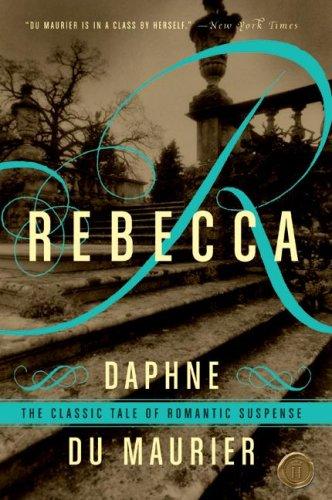
by Daphne du Maurier

"Last night I dreamt I went to Manderley again. It seemed to me I stood by the iron gate leading to the drive, and for a while I could not enter, for the way was barred to me."

An unnamed narrator, a poor but kind woman, meets and impulsively marries a wealthy widower only to discover that both he and his household are haunted by the memory of his first wife, the mysterious Rebecca. The novel explores obsession, insecurity, and the psychological torment of living in the shadow of a predecessor. A psychological Gothic romance of extraordinary power.

Rebecca is essential reading as a masterwork of psychological suspense merged with romantic love. Du Maurier's exploration of female insecurity, jealousy, and the power of memory over present happiness expands romance beyond conventional love stories into the realm of psychological complexity. The novel's influence on Gothic romance and romantic suspense is immeasurable.

  • Past loves and secrets can haunt present relationships and prevent authentic connection
  • Insecurity and doubt, even in the face of genuine affection, can poison a relationship from within
  • Identity and selfhood can be consumed by living in the shadow of another person or their memory
  • Love requires emotional honesty and the courage to confront painful truths
  • Initial reviews were mixed, with some critics dismissive of what they perceived as mere women's fiction or Gothic romance without literary merit
  • The resolution leaves ambiguity about the heroine's agency and whether she ultimately transcends her submissiveness or remains dependent on her husband

"The new Daphne du Maurier contains everything that the public could want"

Norman Collins, Publisher Editor, Gollancz

"Du Maurier is in a class by herself; this chilling, suspenseful tale is as fresh and readable as when first written"

Stephen King, Contemporary Author

"One of the most influential novels of the twentieth century, Rebecca has woven its way into the fabric of our culture"

Sarah Waters, Contemporary Author
Back to all lists