10 Most Essential Classic Short Story Collections

Masterworks That Revolutionized the Short Story Form

Discover the ten most influential and beloved classic short story collections that shaped modern literature. From Russian psychology to American minimalism, these timeless works showcase the finest achievements of the short story genre. Each collection presents unforgettable characters and transformative moments that capture the complexity of human experience. These essential works continue to inspire writers and captivate readers worldwide.

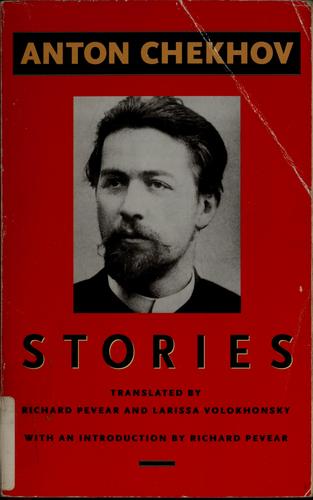
Selected Stories of Anton Chekhov
01

Selected Stories of Anton Chekhov

by Anton Chekhov

"Don't tell me the moon is shining; show me the glint of light on broken glass."

This collection brings together the masterful short stories of the Russian playwright and writer, including The Lady with the Dog, The Steppe, and other psychological masterpieces. Chekhov's stories explore the inner emotional lives of ordinary people with extraordinary depth and subtlety. His influence on modern literature is immeasurable, establishing new possibilities for the short story form.

Chekhov revolutionized the short story by moving away from plot-driven narratives toward character-driven explorations of human consciousness and emotion. His technique of showing rather than telling, combined with his compassionate treatment of flawed characters, set the standard for modern fiction. No serious study of literature can ignore his profound influence on writers from Kafka to contemporary authors.

  • Psychological realism and emotional truth matter more than external plot events
  • Ordinary people and mundane situations contain profound philosophical significance
  • Restraint and ambiguity in storytelling create deeper reader engagement than explicit conclusions
  • Human dignity and compassion should inform the writer's treatment of all characters
  • Some readers find the stories too introspective and lacking clear dramatic resolution
  • The emphasis on mood and psychology over action may feel slow-paced to plot-driven readers

"Chekhov has great talent and in his stories there is something new which is good, but he is wrong in his attitude toward faith and toward the miraculous."

Leo Tolstoy, Fellow Russian Master

"Chekhov is the greatest writer Russia has ever produced, and his stories are the best in all literature."

Katherine Anne Porter, American Writer

"Chekhov's stories taught me that the deepest truths about human nature emerge from silence and what goes unsaid."

James Baldwin, American Novelist
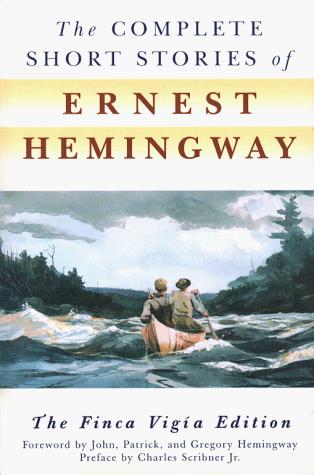
The Complete Short Stories of Ernest Hemingway: The Finca Vigia Edition
02

The Complete Short Stories of Ernest Hemingway: The Finca Vigia Edition

by Ernest Hemingway

"Everything that's supposed to be bad at one time or another is good. You can learn from everything."

Published posthumously in 1987, this comprehensive collection includes all 60 of Hemingway's short stories, from The Snows of Kilimanjaro and Hills Like White Elephants to seven previously unpublished tales. The collection showcases his distinctive spare prose style and mastery of economy in storytelling. These stories capture the essence of Hemingway's literary genius across his entire career.

Hemingway's short stories demonstrate that economy of language and emotional restraint can achieve maximum impact on readers. His influence on American prose style is unmatched, with his minimalist approach influencing generations of writers. Stories like Hills Like White Elephants and A Clean, Well-Lighted Place are essential exemplars of how subtext and dialogue can convey profound meaning without explicit statement.

  • Minimalist prose style and sparse dialogue can convey greater emotional depth than elaborate description
  • The iceberg principle: what is not stated is often more powerful than what is stated directly
  • Masculinity, courage, and grace under pressure are central themes worth exploring
  • Small moments of human connection reveal truths about love, loss, and mortality
  • Some stories read as fragments rather than complete narratives with satisfying resolutions
  • The focus on masculine perspectives and limited female character development reflects historical limitations

"Hemingway was an excellent writer of short stories, perhaps even better than he was a novelist, and these stories display his style in concentrated form."

Michael S. Reynolds, Hemingway Scholar, North Carolina State University

"Hemingway's short stories are the best American short stories of the age, which is saying a good deal."

F. Scott Fitzgerald, Contemporary Novelist

"When Hemingway's story and his style hit their stride, the effect is powerful and unforgettable."

David Mammer, Literary Critic
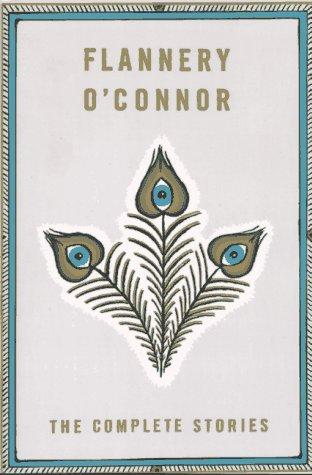
The Complete Stories
03

The Complete Stories

by Flannery O'Connor

"Violence is a force that is always a part of human nature, and I think it's a necessary part of any true story because consciousness of it brings conscience."

This definitive collection gathers all 32 of Flannery O'Connor's short stories, published posthumously in 1971. Including classics like A Good Man Is Hard to Find and Revelation, the collection showcases her distinctive blend of Southern Gothic grotesquerie and religious grace. O'Connor's sharp eye for moral hypocrisy and capacity to depict spiritual transformation make these stories unforgettable.

O'Connor's stories are essential for understanding how violence and grotesquerie can serve spiritual and moral purposes in fiction. Her work demonstrates that great short fiction must engage with fundamental religious and ethical questions. Winner of the 1972 National Book Award, her stories represent the apex of American short story writing and remain endlessly teachable texts.

  • Grace operates mysteriously through violence and disruption in the lives of the unprepared
  • Southern Gothic conventions can explore genuine spiritual and moral truths
  • Moral hypocrisy and self-deception deserve unflinching artistic exposure
  • Physical deformity and social marginalization often reveal spiritual significance
  • Some readers find the violence and grotesquerie excessive or gratuitous rather than purposeful
  • The heavy reliance on religious interpretation may alienate secular readers

"What we lost when O'Connor died is bitter. What we have is astonishing: the stories burn brighter than ever, and strike deeper."

Walter Clemons, Newsweek Critic

"Flannery O'Connor is among the great writers of the twentieth century, and her stories achieve a rare union of narrative brilliance and spiritual significance."

Joyce Carol Oates, American Writer

"Her fiction has the economy, the precision and the dreadful force of great art."

Robert Fitzgerald, Editor and Translator
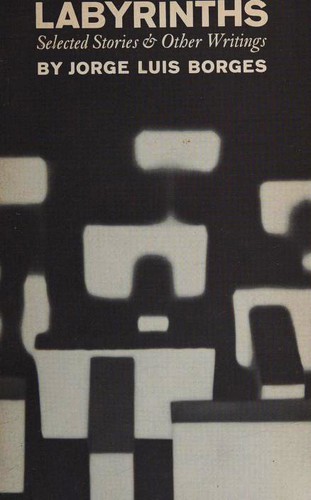
Labyrinths: Selected Stories and Other Writings
04

Labyrinths: Selected Stories and Other Writings

by Jorge Luis Borges

"The universe (which others call the Library) is composed of an indefinite, perhaps infinite number of hexagonal galleries."

Edited by Donald Yates and James Irby with a preface by André Maurois, this landmark 1962 collection introduced English-language readers to Borges's revolutionary fiction. Including The Library of Babel, The Garden of Forking Paths, and other metaphysical masterworks, the collection combines stories from Ficciones and The Aleph. These intellectually dazzling tales redefined possibilities for short fiction.

Borges fundamentally changed what short fiction could be by demonstrating that stories could be philosophical investigations, elaborate intellectual games, and artistic innovations simultaneously. His influence on postmodern literature and literary theory is incalculable. His multi-layered, self-referential style became so influential that Borgesian is now a standard literary term. These stories opened entirely new directions for writers and thinkers.

  • Fiction can explore philosophical ideas with the same rigor as formal philosophy
  • Labyrinthine structures, infinite regress, and paradox are legitimate fictional concerns
  • Literary self-consciousness and metafiction can achieve profound artistic effects
  • The relationship between author, reader, and text is endlessly complex and worth investigating
  • Some readers find the stories overly intellectual and insufficiently grounded in emotional human experience
  • The emphasis on formal experimentation may overshadow character development and narrative momentum

"Borges opened entirely new territories for fiction, creating stories that are simultaneously entertaining, intellectually rigorous, and profoundly strange."

William Gibson, Science Fiction Author

"Borges represents the highest achievement of the literary imagination working at the very limits of what language can do."

André Maurois, Literary Critic and Preface Author

"Borges shows us that fiction is not bound by the rules we think govern it; every story can become a gateway to infinite possibilities."

Italo Calvino, Italian Writer
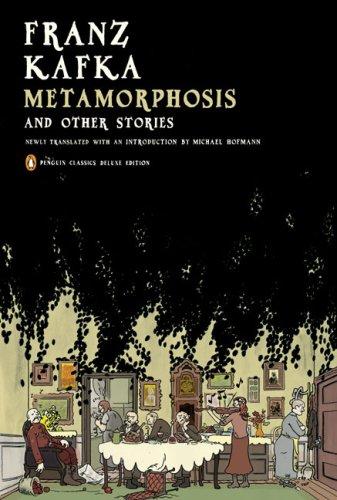
The Metamorphosis and Other Stories
05

The Metamorphosis and Other Stories

by Franz Kafka

"One morning, when Gregor Samsa woke from troubled dreams, he found himself transformed in his bed into a horrible vermin."

This essential collection brings together Kafka's most significant short works, centered on the masterpiece The Metamorphosis. Including In the Penal Colony, A Hunger Artist, and other stories, the collection showcases Kafka's distinctive blend of surreal transformation and bureaucratic nightmare. Originally published in German, these stories have become touchstones of twentieth-century literature.

Kafka's exploration of alienation, absurdity, and the individual confronting impersonal institutional forces feels increasingly relevant to contemporary experience. The Metamorphosis alone stands as one of the greatest short works ever written, and the supporting stories extend his examination of human isolation and moral paradox. His influence on literature, philosophy, and popular culture is profound and enduring.

  • Surreal transformation and absurdist premises can explore genuine existential and social truths
  • Bureaucratic systems and social institutions often dehumanize individuals in terrifying ways
  • Alienation from society, family, and one's own body reflects modern human experience
  • Suffering and transformation can reveal hidden truths about human nature and social structures
  • Some find the stories too dark and despairing without offering hope or redemption
  • The fragmentary nature of some works and unfinished quality may frustrate readers seeking closure

"Kafka is the greatest German writer of our time. Such poets as Rilke or such novelists as Thomas Mann are dwarfs or plaster saints in comparison to him."

Vladimir Nabokov, Modernist Writer

"Kafka's comic genius for understatement and restraint in depicting human anxiety and absurdity remains unmatched in modern literature."

Thomas Mann, Fellow German Writer

"Kafka understood the modern condition with uncanny precision; his stories are our mirror and our prophecy."

Milan Kundera, Contemporary Writer
Dubliners
06

Dubliners

by James Joyce

"Gazing up into the darkness I saw myself as a creature driven and derided by vanity; and my eyes burned with anguish and anger."

Published in 1914 after eight years of publication struggles, this collection of 15 stories depicts the lives of middle-class Dubliners with unprecedented psychological realism. Stories like Araby, Eveline, and The Dead create a portrait of a city and its inhabitants trapped in various forms of paralysis. The final story, The Dead, is widely considered one of the greatest short stories in English literature.

Joyce's Dubliners established new standards for literary realism and psychological depth in short fiction. The recurring theme of paralysis—moral, social, and spiritual—captures the human condition with devastating accuracy. T.S. Eliot's famous assessment that The Dead stands among the greatest short stories ever written in English remains authoritative. Joyce's influence on modernist literature and narrative technique is foundational.

  • Paralysis—spiritual, social, and moral—defines the human condition and traps individuals in unfulfilled lives
  • Epiphanic moments of sudden self-understanding can illuminate the truth of one's existence
  • The precise replication of speech patterns and interior monologue reveals character with extraordinary power
  • Cities and cultures shape individual destinies in inescapable ways
  • The stories are sometimes too ambiguous and fragmentary, leaving readers uncertain about meaning
  • Some stories end inconclusively without clear dramatic resolution, which can frustrate readers

"The Dead is among the finest short stories ever written in English, and demonstrates Joyce's unmatched psychological insight and stylistic mastery."

T.S. Eliot, Modernist Poet and Critic

"Joyce's mastery of the English language and his ability to capture the texture of lived experience place him among the greatest writers of our time."

Ezra Pound, Modernist Poet

"Dubliners is the favorite Joyce book of many readers, preferred for its accessible realism over the more experimental works of his mature period."

Gordon Bowker, Literary Biographer
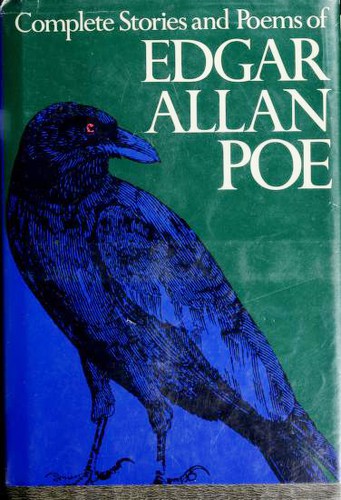
The Complete Tales and Poems of Edgar Allan Poe
07

The Complete Tales and Poems of Edgar Allan Poe

by Edgar Allan Poe

"True!— nervous— very, very dreadfully nervous I had been and am; but why will you say that I am mad?"

This comprehensive collection brings together all of Poe's short stories, from his most famous tales like The Tell-Tale Heart and The Fall of the House of Usher to lesser-known works exploring mystery, murder, and psychological terror. Poe's stories pioneered the modern detective story and revolutionized gothic fiction. His influence on horror and mystery literature is incalculable.

Poe invented the modern short story and established conventions of the detective story, psychological horror, and gothic fiction that remain vital today. His precise control of tone, his innovative use of unreliable narrators, and his exploration of the mind in states of extreme distress set new standards for the form. His influence extends from Baudelaire and the Symbolists to contemporary literature.

  • The exploration of psychological states—madness, obsession, guilt—can be intellectually and emotionally gripping
  • Unreliable narrators and distorted perspectives reveal profound truths about consciousness and guilt
  • Gothic atmosphere and careful attention to mood can evoke genuine terror and unease
  • The short story form can achieve concentrated emotional and psychological effects unavailable to longer works
  • Some find the emphasis on grotesque and horrific elements excessive or sensationalistic
  • Female characters are often portrayed as passive victims or objects of male obsession

"Poe is the supreme master of the weird tale and my god of fiction. His stories represent the highest achievement of the horror form."

H.P. Lovecraft, Horror Writer

"Poe achieved in short fiction what the greatest poets achieve in verse: he created works that transcend their medium to touch something eternal in the human spirit."

Charles Baudelaire, French Poet and Critic

"Poe is the architect of the modern short story; his techniques and innovations fundamentally shaped what the form could achieve."

Harold Bloom, Literary Critic
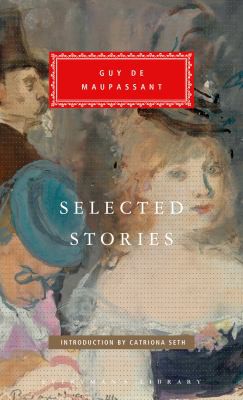
Selected Stories of Guy de Maupassant
08

Selected Stories of Guy de Maupassant

by Guy de Maupassant

"How strange and changeful is life! How small a thing is needed to make or ruin us!"

This collection brings together the finest stories of the master French writer, including The Necklace, Boule de Suif, and other tales of irony, social observation, and human folly. Maupassant wrote over 300 short stories in his brief career, and this selection showcases his distinctive blend of realistic detail, elegant prose, and devastating ironic twists. His influence on the short story tradition is profound and lasting.

Maupassant brought unprecedented realism and psychological insight to the short story while maintaining an entertaining narrative voice. His mastery of irony and his ability to puncture social pretension through clever plot construction established templates that writers continue to follow. His influence extends to Chekhov, Hemingway, Eudora Welty, and generations of subsequent writers seeking precision and elegance in short fiction.

  • Irony and surprise endings can reveal profound truths about social pretension and human nature
  • Precise realistic detail and careful observation of ordinary life reveal extraordinary significance
  • Social class, materialism, and human vanity are worthy subjects for serious literary treatment
  • Economic necessity and social constraint shape individual choices and destinies
  • The reliance on ironic twist endings can feel formulaic or mechanical to modern readers
  • Some stories reflect period attitudes toward women and gender that modern sensibilities find problematic

"Maupassant is the greatest short story writer who ever lived. His stories have the perfection of a diamond."

Anton Chekhov, Fellow Master of Short Fiction

"Maupassant's technical mastery and his ability to suggest human complexity through economical means remain unsurpassed in the short story form."

Eudora Welty, American Writer

"Maupassant's influence on the American short story at the turn of the century was profound and foundational to everything that followed."

Richard Fusco, Literary Scholar
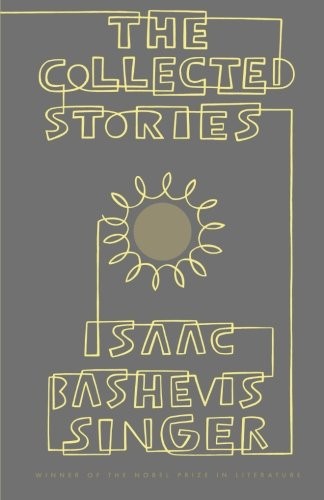
The Collected Stories of Isaac Bashevis Singer
09

The Collected Stories of Isaac Bashevis Singer

by Isaac Bashevis Singer

"Even Heaven makes mistakes."

This comprehensive three-volume collection (also available in single-volume editions) brings together nearly 200 stories by the Nobel Prize-winning writer. These tales range from intimate character studies to mystical and folkloric narratives, many set in the vanished world of Eastern European Jewish communities. Singer's distinctive voice blends realism with magical elements, tradition with modernist consciousness.

Singer's stories are essential for understanding the experience and consciousness of Eastern European Jewish communities and for their masterful blending of realism and the magical or supernatural. His explorations of faith, doubt, desire, and tradition offer profound insights into human nature and cultural identity. His 1978 Nobel Prize recognized the importance of his body of work to world literature.

  • Folklore, tradition, and the supernatural can coexist with psychological realism and modern consciousness
  • The inner lives of seemingly ordinary people contain profound spiritual and philosophical complexity
  • Cultural and religious tradition shapes identity and moral understanding in inescapable ways
  • Doubt, skepticism, and faith can coexist within individual consciousness
  • Some stories reflect attitudes toward gender and sexuality that modern readers find conservative or problematic
  • The balance between supernatural elements and realism can feel uneven in some works

"Singer possesses a remarkable gift for storytelling, combining the resources of a great imagination with the depth of a serious moral consciousness."

Irving Howe, Literary Critic

"Singer is among the great writers of the twentieth century, capable of moving from cosmic vision to intimate psychological portraiture in a single story."

Cynthia Ozick, American Writer

"Isaac Bashevis Singer has achieved renown as a writer of great narrative art. He draws inspiration from his people's rich cultural and spiritual treasure."

Nobel Prize Committee, Swedish Academy
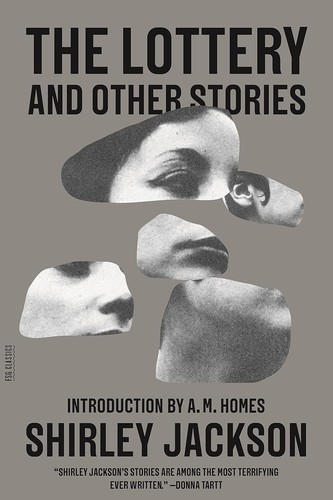
The Lottery and Other Stories
10

The Lottery and Other Stories

by Shirley Jackson

"The point of the lottery isn't really lost either. I suppose some people find the lottery amusing, others find it revolting."

Published in 1949, this collection of 25 stories includes Jackson's most famous work, The Lottery, along with other tales of suburban life, domestic horror, and social conformity. Jackson's sharp eye for social hypocrisy and her ability to find terror in ordinary situations make her stories powerfully unsettling. Her contributions to American short fiction have been increasingly recognized and celebrated.

The Lottery remains one of the most famous and frequently anthologized short stories in American literature, demonstrating how fiction can critique social conformity and unexamined tradition with devastating impact. Jackson's exploration of how ordinary people participate in systemic cruelty and how women navigate oppressive social expectations makes her work essential. Her stories have influenced generations of writers exploring the darkness beneath suburban normalcy.

  • Social conformity and unexamined tradition can perpetuate cruelty and injustice
  • Ordinary people are capable of extraordinary acts of casual violence and indifference
  • Domestic life and suburban normalcy can conceal psychological darkness and emotional damage
  • The casual cruelty of social rituals reflects deeper moral failures in communities
  • Some readers find the emphasis on psychological horror and darkness relentless and depressing
  • The satirical intent can be unclear to readers unfamiliar with Jackson's other work

"Jackson's stories cut to the heart of American darkness with surgical precision. The Lottery remains absolutely devastating in its social critique."

A.M. Homes, Contemporary Writer

"Shirley Jackson is one of the great masters of the American short story, capable of investing small domestic moments with tremendous psychological significance."

Joyce Carol Oates, American Writer

"The Lottery has become an American classic and standard anthology piece, recognized as a masterwork of short fiction."

Literary establishment, General recognition
Back to all lists