The Essential Guide to Climate Literature

10 Must-Read Books on the Climate Crisis and Solutions

This curated collection brings together the most influential and important books on climate change. From scientific explanations of the crisis to practical solutions and transformative visions of the future, these ten works provide comprehensive understanding of humanity's greatest challenge and the pathways to addressing it.

01

The Uninhabitable Earth

by David Wallace-Wells

View on Amazon →

"It is worse, much worse, than you think."

A visceral, deeply reported exploration of the consequences of global warming. Wallace-Wells examines how climate change threatens every aspect of human civilization, from food systems and supply chains to geopolitics and human habitability. This urgent account documents the cascading effects of warming across multiple domains of human experience.

Essential for understanding the full scope of climate impacts beyond simple temperature rises. Wallace-Wells compellingly demonstrates how warming threatens economic systems, public health, agriculture, and geopolitical stability. The book's integration of science with human consequences makes it a crucial wake-up call for anyone seeking to comprehend the urgency of climate action.

  • Climate impacts cascade across interconnected systems: food, water, health, economy, and geopolitics
  • Even with aggressive intervention, severe climate consequences are already locked in
  • The speed of warming is unprecedented in human history
  • Psychological denial and political inaction remain our greatest obstacles
  • Some reviewers argue the tone is excessively pessimistic and may lead to paralysis
  • A few scientific details received criticism from climate specialists as overstated
  • The focus on catastrophe may overshadow discussion of adaptation and resilience

"A truly terrifying book about the future that awaits us if we do not rapidly reduce emissions"

The Guardian, Major UK Publication

"The best single volume so far on the truly catastrophic impacts of climate change"

Bill McKibben, Climate Activist and Author

02

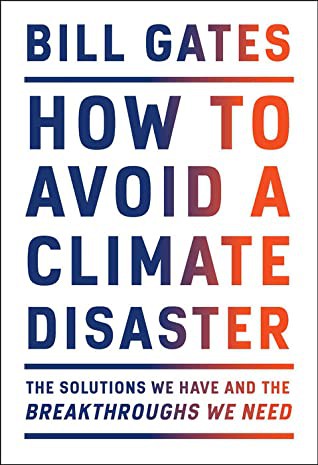
How to Avoid a Climate Disaster

by Bill Gates

View on Amazon →

"We need to get to zero greenhouse gas emissions. But first we need to understand where emissions come from."

An accessible, pragmatic roadmap for solving climate change through innovation and scale. Gates outlines the fifty-one products and practices that must be deployed to eliminate all 51 billion tons of greenhouse gases annually, organized by sector. This data-driven approach emphasizes technological solutions and economic incentives rather than lifestyle changes.

Provides essential perspective on the technological and economic innovations required for decarbonization. Gates' analysis of what we must change—electrification, alternative fuels, sustainable agriculture, industrial processes, and carbon removal—offers concrete targets and solutions. The book bridges the gap between understanding the problem and envisioning practical pathways forward.

  • Achieving net-zero emissions requires innovations across five sectors: electricity, agriculture, manufacturing, heating, and cooling
  • Many solutions already exist; others require continued innovation and investment
  • Economic incentives and policy are essential to scale technological solutions
  • Progress requires both developed nations leading and developing nations participating
  • Critics argue the focus on technological solutions downplays needed systemic and economic changes
  • Some environmental advocates believe the book underestimates the urgency of phasing out fossil fuels immediately
  • The emphasis on market-based solutions may not address equity and justice concerns

"Lucid explanations of the scientific aspects of climate change with pragmatic, forward-thinking solutions grounded in economic reasoning"

Science Magazine, Peer-Reviewed Journal

"A calm, reasoned, well-sourced explanation of the greatest challenge of our time and what we must change"

Associated Press, Major News Organization
03

The New Climate War

by Michael E. Mann

View on Amazon →

"The real threat isn't from the climate itself—it's from the forces arrayed against us taking action on the climate."

A powerful analysis of the battles blocking climate action and strategies to win them. Mann identifies the true enemies of climate progress—not individual carbon footprints, but the coordinated campaigns by fossil fuel interests and their allies to sow doubt and delay. The book outlines a battle plan for overcoming these obstacles and achieving victory in the climate fight.

Critical for understanding the political and social obstacles to climate action. Mann's analysis of misinformation campaigns, 'inactivism,' and coordinated delay tactics is essential knowledge for anyone wanting to understand why climate progress has stalled despite scientific consensus. His four-point battle plan offers pragmatic strategies for overcoming resistance.

  • Fossil fuel interests deploy sophisticated strategies to delay climate action, not just deny the science
  • Individual carbon footprint messaging distracts from systemic change needed
  • We must reject false narratives of doom and gloom that paralyze action
  • Collective action and policy change matter far more than personal consumption choices
  • Some climate activists argue the focus on battling opponents distracts from constructive solution building
  • Critics note that blame-laying can undermine unity needed for climate action
  • The book emphasizes obstacles, which some feel could inadvertently promote defeatism

"Few people bear more scars from the climate wars than Michael Mann—and few have fought longer and harder for a basic, rational approach to dealing with this greatest of crises"

Leonardo DiCaprio, Actor and Climate Advocate

"In The New Climate War, Michael Mann holds them to account, and shows us how we can take the bold steps we must all take together to win the battle to save this planet"

Greta Thunberg, Climate Activist
04

Under a White Sky

by Elizabeth Kolbert

View on Amazon →

"This has been a book about people trying to solve problems created by people trying to solve problems."

An exploration of humanity's attempts to engineer solutions to ecological problems created by our own engineering. Kolbert examines various technological and environmental interventions—from carbon capture to geoengineering to species preservation—questioning whether we can solve problems of control with more control. Her investigations reveal both the ingenuity and hubris of human attempts to fix nature.

Offers essential critical perspective on technological 'solutions' to climate change. Kolbert's investigations into carbon capture, solar geoengineering, and conservation efforts reveal the unintended consequences and trade-offs inherent in technological fixes. The book is vital for understanding that solutions are complex, contested, and may create new problems.

  • Technological solutions often create new unintended consequences and ecological problems
  • The Anthropocene forces us to choose between bad and worse options
  • Geoengineering and large-scale interventions carry risks that may exceed their benefits
  • We must think carefully about what we cannot restore and accept ecological losses
  • Some readers feel the book is overly pessimistic about technological possibilities
  • Critics argue Kolbert doesn't sufficiently distinguish between proven and speculative technologies
  • The focus on problems of solutions may discourage necessary climate innovation

"Masterfully reported and deeply human exploration of our attempts to engineer our way out of ecological crises"

The New York Times, Major Publication

"Kolbert's examination of environmental interventions demonstrates both the necessity and complexity of solutions"

Nature Magazine, Scientific Journal
05

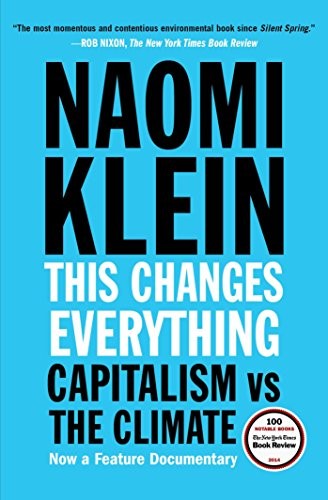
This Changes Everything

by Naomi Klein

View on Amazon →

"The really inconvenient truth is that it's not about carbon—it's about capitalism."

A transformative analysis arguing that climate change cannot be addressed within our current economic system. Klein demonstrates how neoliberal capitalism drives both climate change and prevents effective climate action. She explores the intersections between climate justice, indigenous rights, labor movements, and anti-war activism, proposing that solving the climate crisis requires fundamental economic restructuring.

Essential for understanding the systemic economic roots of the climate crisis. Klein's argument that climate change is fundamentally incompatible with unregulated market capitalism challenges readers to think beyond technological fixes to systemic transformation. The book connects climate action to broader justice movements and offers a compelling vision of alternatives.

  • Climate change is a symptom of a fundamentally unsustainable economic system
  • Neoliberal markets will not solve climate change; they deepen the crisis
  • Climate justice must center the rights and knowledge of indigenous peoples and frontline communities
  • Addressing climate change requires economic transformation aligned with principles of equity and sustainability
  • Some economists argue Klein oversimplifies the relationship between capitalism and climate change
  • Critics contend that her rejection of market mechanisms may limit viable climate solutions
  • The book has been criticized for prioritizing economic critique over concrete climate solutions

"The most momentous and contentious environmental book since Silent Spring"

The New York Times Book Review, Major Publication

"Winner of Canada's most prestigious award for non-fiction"

2014 Hilary Weston Writers' Trust Prize, Canadian Literary Award
06

All We Can Save

by Ayana Elizabeth Johnson and Katharine K. Wilkinson (Editors)

View on Amazon →

"There is a renaissance blooming in the climate movement: leadership that is more characteristically feminine and more faithfully feminist, rooted in compassion, connection, creativity, and collaboration."

A collection of essays and poems by approximately 50 female thought leaders exploring women's leadership in climate action. The anthology brings together scientists, artists, activists, lawyers, architects, and designers who are reshaping the climate movement. It demonstrates how greater inclusion of women and feminist values strengthens climate solutions and policy effectiveness.

Provides essential voices often missing from dominant climate conversations. Research presented in the book shows that women's participation in climate solutions increases effectiveness, and women's political representation correlates with stronger environmental policy. This anthology centers women's knowledge, creativity, and leadership as vital to solving the climate crisis.

  • Women bring essential perspectives and leadership to climate solutions
  • Greater representation of women in parliament increases likelihood of environmental treaty ratification
  • When women participate equally in climate policy, interventions are more effective
  • Climate solutions benefit from diverse voices, experiences, and approaches
  • Some readers wish for more explicit solutions and less personal narrative
  • Critics note the anthology is stronger on highlighting problems than proposing specific policies
  • A few essays are criticized for being more memoir than climate analysis

"A vital anthology centering the voices and solutions of women leaders in climate action"

The Washington Post, Major Publication

"Inspiring and essential reading on women's leadership in the climate movement"

NPR, Public Radio Network
07

The Sixth Extinction

by Elizabeth Kolbert

View on Amazon →

"If in your lifetime you watch a species go extinct, or plummet almost to the point of extinction, that is a sign that something really serious is going on."

A compelling examination of how human activity is driving species toward extinction at rates comparable to the catastrophic extinction event that killed the dinosaurs. Kolbert travels the world investigating biodiversity loss—from coral bleaching to amphibian die-offs to the impacts of invasive species—documenting how the Anthropocene is marked by human-caused ecological collapse alongside climate change.

Critical for understanding that climate change is intertwined with biodiversity loss and ecosystem collapse. Kolbert's investigations demonstrate that species extinction is accelerating due to human activity. The book shows that climate change impacts and biodiversity loss are interconnected crises requiring integrated solutions.

  • We are in the midst of a sixth mass extinction event caused by human activity
  • Species loss is accelerating due to habitat destruction, climate change, and pollution
  • Biological diversity is essential to ecosystem stability and human survival
  • The extinction crisis requires urgent action to protect remaining species and habitats
  • Some scientists argue specific extinction rate projections are based on incomplete data
  • Critics note the focus on extinction may feel overwhelming without solutions
  • A few chapters on specific extinctions could have included more about conservation efforts

"Winner of the Pulitzer Prize for General Nonfiction"

Pulitzer Prize, Major Literary Award

"A masterpiece of science writing that makes the sixth extinction viscerally real"

The New York Times, Major Publication
08

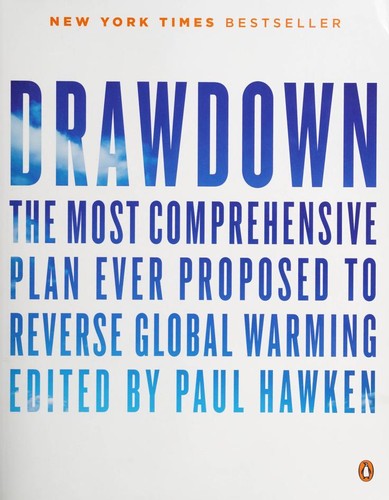
Drawdown

by Paul Hawken (Editor)

View on Amazon →

"We see global warming not as an inevitability, but as an invitation to build, innovate and effect change; a pathway that awakens creativity, compassion, and genius."

The most comprehensive plan ever proposed to reverse global warming, identifying and ranking 100 solutions to climate change. The book analyzes each solution's impact, feasibility, cost, and co-benefits, providing data-driven optimism that reversing global warming is possible through existing and emerging technologies, practices, and policies across all economic sectors.

Essential for understanding the breadth of available climate solutions. Drawdown's ranking of solutions by impact provides practical guidance for policymakers and individuals. The book shifts focus from the problem to actionable solutions, demonstrating that we have the technologies and knowledge needed to reverse warming if we scale solutions effectively.

  • One hundred proven and emerging solutions can reverse global warming when scaled
  • Solutions span energy, food, materials, water, and adaptation sectors
  • Many climate solutions also provide economic benefits and improved quality of life
  • Refrigeration efficiency, education, and renewable energy are among the highest-impact solutions
  • Some climate scientists argue certain solution impact projections are optimistic
  • Critics contend the book downplays the urgency of phasing out fossil fuels
  • A few rankings have been questioned by specialists in specific solution areas

"Hawken's comprehensive analysis of climate solutions offers genuine hope and practical pathways forward"

Bill Gates, Philanthropist and Climate Advocate

"An impressive and exhaustive inventory of solutions to global warming"

Scientific American, Science Publication
09

Speed & Scale

by John Doerr

View on Amazon →

"We will not solve this problem unless we harness markets. If we don't make the right outcome the profitable outcome, it won't be the probable outcome."

A practical action plan for solving the climate crisis, drawing on nearly two decades of investment in clean technology. Doerr outlines six critical objectives—electrifying transportation, fixing food systems, decarbonizing power, protecting nature, cleaning up industry, and removing atmospheric carbon. The book provides strategies for making climate action profitable and therefore probable.

Offers concrete, implementable strategies grounded in business and investment experience. Doerr's framework for climate action addresses both technology deployment and the financial incentives required to scale solutions. The book bridges the gap between climate science and economic reality, showing how markets can be harnessed for climate solutions.

  • Six critical sectors must be transformed: power, transportation, heat, agriculture, industry, and carbon removal
  • Scaling solutions requires combining technology innovation with favorable economic conditions
  • Markets can accelerate climate solutions when the right incentives are in place
  • Existing technologies can achieve significant emissions reductions immediately
  • Critics argue the focus on market mechanisms may not address equity and justice
  • Some climate advocates believe the book underemphasizes the need for rapid fossil fuel phase-out
  • Reviewers note the emphasis on investor perspective may limit discussion of other approaches

"A masterclass in climate strategy and entrepreneurial thinking about solving the climate crisis"

Fast Company, Business Publication

"Doerr's plan provides both inspiration and practical guidance for climate action"

Stanford Graduate School of Business, Academic Institution
10

The Ministry for the Future

by Kim Stanley Robinson

View on Amazon →

"It is easier to imagine the end of the world than to imagine the end of capitalism—but we must try."

A visionary climate fiction novel that imagines an international organization working to advocate for future generations' rights to a livable planet. Through multiple perspectives and experimental narrative forms, Robinson explores the next three decades of climate response, from adaptation and mitigation strategies to social movements and economic transformation. The novel offers both warnings and cautious hope.

Uniquely important for imagining how comprehensive climate action might unfold. Rather than depicting inevitable catastrophe, Robinson creates a speculative narrative showing how systemic change across economics, technology, and society could stabilize climate. The novel complements technical and political climate literature by exploring the human dimensions of transformation.

  • Climate solutions require transformation across multiple domains simultaneously: technology, policy, economy, and culture
  • Adaptation and justice considerations must accompany mitigation efforts
  • Both technological innovation and social movements are necessary for climate action
  • Hope and vision are essential motivators for collective climate action
  • Some readers find the experimental narrative structure challenging to follow
  • Critics note that the hopeful ending may seem unrealistic given current political inaction
  • A few reviewers argue certain proposed solutions lack sufficient grounding in current feasibility

"A scary but hopeful novel that imagines pathways to climate stability and justice"

Bill Gates, Philanthropist

"Robinson's most ambitious and important work, offering visionary thinking on climate futures"

The Guardian, Major Publication
Back to all lists