10 Best Communication Books

Essential Reading for Mastering Dialogue, Persuasion, and Human Connection

Discover the most influential communication books that teach practical techniques for effective dialogue, negotiation, and persuasion. From Dale Carnegie's timeless insights on winning friends to Chris Voss's negotiation secrets, these books provide frameworks and strategies for improving how you speak, listen, and connect with others.

01

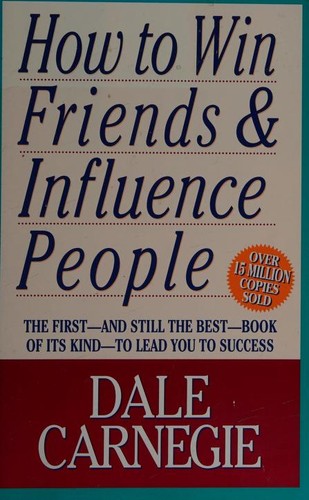
How to Win Friends and Influence People

by Dale Carnegie

View on Amazon →

"You can make more friends in two months by becoming interested in other people than you can in two years by trying to get other people interested in you."

Originally published in 1936, this classic work teaches fundamental principles of interpersonal communication and influence. Carnegie argues that success depends on your ability to manage relationships and persuade others through genuine interest and understanding. The book presents practical techniques that have transformed millions of lives and remain relevant nearly a century later.

This foundational work established the principles of persuasion and influence that underpin modern communication studies. Its insights on showing genuine interest in others, avoiding criticism, and encouraging people to talk about themselves are timeless communication cornerstones. No study of communication is complete without understanding Carnegie's philosophy.

  • Show genuine interest in others to build stronger relationships
  • Avoid direct criticism and focus on understanding perspectives
  • Let people talk about themselves to gain influence and likeability
  • Remember names and details to make people feel valued
  • Some techniques may feel manipulative in modern contexts
  • Dated examples and cultural references limit relatability for younger audiences
  • Oversimplifies complex interpersonal dynamics into formulaic approaches

"Carnegie's book is the best-selling self-improvement book of all time and has had a lasting impact on my life."

Warren Buffett, Berkshire Hathaway CEO

"This is the most important book on human relations ever written and remains as relevant today as when it was first published."

Brian Tracy, Sales and Personal Development Expert
02

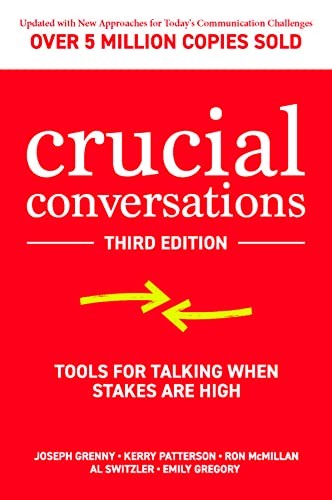
Crucial Conversations: Tools for Talking When Stakes Are High

by Kerry Patterson, Joseph Grenny, Ron McMillan, Al Switzler

View on Amazon →

"The quality of your life comes out of the quality of your dialogues and conversations. Here's how to instantly uplift your crucial conversations."

Now in its third edition, this comprehensive guide teaches readers how to navigate conversations where emotions run high and outcomes matter most. The authors provide evidence-based tools and frameworks for recognizing when conversations become crucial and offer practical methods to ensure dialogue stays productive. The book combines research, real-world examples, and actionable advice for improving dialogue in professional and personal settings.

Essential for anyone who needs to handle difficult conversations in leadership, conflict resolution, or relationship contexts. The framework for identifying and managing crucial conversations is widely adopted in corporate training and organizational development. Understanding these tools prevents miscommunication and escalation during high-stakes discussions.

  • Recognize when a conversation becomes crucial and emotions start controlling your words
  • Create safe space where others feel comfortable sharing opposing views
  • Master the skills of listening, asking questions, and paraphrasing to understand others
  • Move from defensiveness to curiosity by focusing on shared goals
  • Framework can feel formulaic when applied too rigidly
  • Some scenarios in the book feel simplified compared to real workplace complexity
  • Requires significant practice and commitment to internalize all techniques

"This book deserves to take its place as one of the key thought leadership contributions of our time."

Stephen R. Covey, Author of The 7 Habits of Highly Effective People

"The quality of your life comes out of the quality of your dialogues and conversations."

Mark Victor Hansen, Co-creator of Chicken Soup for the Soul Series
03

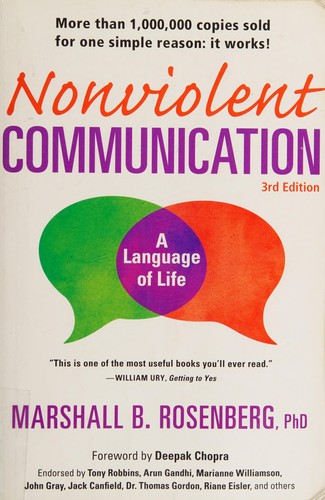
Nonviolent Communication: A Language of Life

by Marshall B. Rosenberg

View on Amazon →

"Everything we do is in service of our needs. We are trying to meet our needs and the needs of others."

Rosenberg's groundbreaking method teaches a four-part communication process designed to reduce conflict and increase compassion in all relationships. The framework focuses on observations without judgment, identifying feelings, understanding underlying needs, and making clear requests. This transformative approach has been applied in conflict resolution, parenting, education, and organizational settings worldwide.

NVC represents a paradigm shift in how we approach communication by emphasizing empathy and universal human needs over blame and judgment. The practical framework is applicable across personal relationships, workplace conflicts, and even international negotiations. It provides tools for resolving conflicts peacefully and authentically.

  • Separate observations from judgments to reduce defensive reactions
  • Identify and express feelings to create emotional authenticity
  • Recognize universal needs beneath all human behavior
  • Make clear, specific requests that serve everyone's wellbeing
  • Learning curve can be steep; the four-step process feels rigid initially
  • May be perceived as too soft or time-consuming in high-pressure environments
  • Some people find the methodical approach removes spontaneity from conversations

"Marshall Rosenberg offers us the most powerful tools for communication and peaceful resolution."

Deepak Chopra, Wellness Pioneer and Author

"NVC has transformed communication in families, schools, businesses, and communities worldwide."

Center for Nonviolent Communication, Global Organization for Conflict Resolution
04

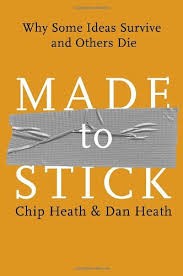
Made to Stick: Why Some Ideas Survive and Others Die

by Chip Heath, Dan Heath

View on Amazon →

"The most basic way to get people to care about your cause is to get them to care about people who are affected by your cause."

The Heath brothers reveal why some ideas become memorable and spread while others fade away. Through the SUCCESs framework—Simplicity, Unexpectedness, Concreteness, Credibility, Emotions, and Stories—they explain how to craft messages that stick in people's minds. Drawing from advertising, urban legends, politics, and business, the authors demonstrate how anyone can make their ideas more memorable and persuasive.

Essential for anyone who needs to communicate ideas effectively, from marketing professionals to executives to educators. The SUCCESs framework provides a proven methodology for evaluating and improving message design. Understanding why ideas stick is fundamental to persuasive communication in any field.

  • Simplicity forces you to identify the core message and discard complexity
  • Unexpectedness captures attention and keeps people engaged with your message
  • Concreteness makes ideas tangible and actionable for audiences
  • Stories create emotional resonance and memorable takeaways
  • SUCCESs framework sometimes oversimplifies the complexity of idea propagation
  • Corporate examples may feel disconnected from personal communication contexts
  • Doesn't adequately address how social media has changed idea spread dynamics

"Made to Stick is a masterclass in understanding why certain ideas capture our attention and imagination."

Harvard Business School, Leading Business Education Institution

"The Heath brothers have written a fascinating and enormously practical book about how ideas catch on."

Malcolm Gladwell, Author and Journalist
05

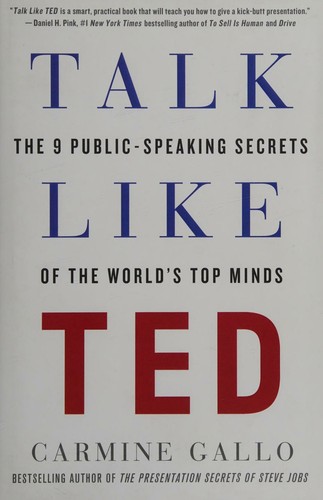
Talk Like TED: The 9 Public-Speaking Secrets of the World's Top Minds

by Carmine Gallo

View on Amazon →

"Ideas are the most powerful force shaping human culture and behavior. If you can plant a seed in someone's mind, you can change the way they think and act."

Gallo reveals the communication techniques behind TED's most successful talks, distilling years of observation into nine actionable principles. From storytelling and visual design to emotional delivery and audience connection, Gallo shows how anyone can craft presentations that inform, inspire, and move audiences. The book combines research on effective communication with real examples from TED speakers.

TED talks have become the gold standard for presentations, and understanding the principles behind their success provides a framework applicable to any public speaking situation. Gallo's techniques for storytelling, structure, and delivery are invaluable for leaders, educators, and professionals. This book translates abstract presentation advice into concrete, learnable skills.

  • Structure presentations around a compelling narrative arc
  • Deliver information through stories and emotional connection rather than data dumps
  • Practice deliberately to eliminate nervous habits and project confidence
  • Design visuals that complement rather than distract from your message
  • Some techniques may not translate well to business or technical presentations
  • Emphasizes entertainment value which could detract from substantive content
  • TED talk format differs significantly from other presentation contexts

"Carmine Gallo has captured the essence of what makes TED presentations so compelling and engaging."

TED Organization, Ideas Worth Spreading

"Essential reading for anyone who needs to influence, persuade, or inspire an audience."

Business Week, Business News Publication
06

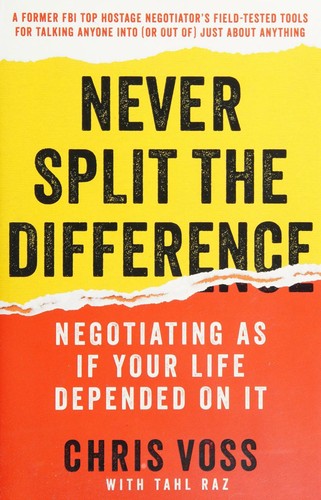
Never Split the Difference: Negotiating As If Your Life Depended On It

by Chris Voss, Tahl Raz

View on Amazon →

"Listening is the most active thing you can do. It balances the subtle behaviors of emotional intelligence and the assertive skills of influence, to gain access to the mind of another person."

Drawing from his experience as an FBI hostage negotiator, Voss reveals counterintuitive negotiation tactics that apply to everything from business deals to personal relationships. The book teaches active listening, tactical empathy, and strategic communication techniques that help you understand the other side's perspective and achieve better outcomes. Voss demonstrates how emotional intelligence and careful listening are more powerful than aggressive tactics.

Voss's negotiation framework has become essential for business professionals, sales leaders, and anyone involved in high-stakes discussions. His emphasis on active listening and tactical empathy represents a paradigm shift from traditional win-lose negotiation approaches. These techniques improve outcomes while building stronger relationships.

  • Active listening is a strategic tool that gives you control in negotiations
  • Tactical empathy means understanding the other side's perspective and motivations
  • Silence and patience often accomplish more than pushing for agreement
  • Mirroring and labeling emotions help defuse tension and build rapport
  • Techniques drawn from hostage negotiation may feel extreme in business contexts
  • Some methods could be perceived as manipulative if misapplied
  • Emphasis on silence and restraint may not suit all cultural communication styles

"Never Split the Difference is a masterclass in negotiation strategy and human psychology."

Daniel Pink, Author and Communications Expert

"Voss has written a masterpiece on negotiation that should be required reading for anyone in business."

Wall Street Journal, Financial News Publication
07

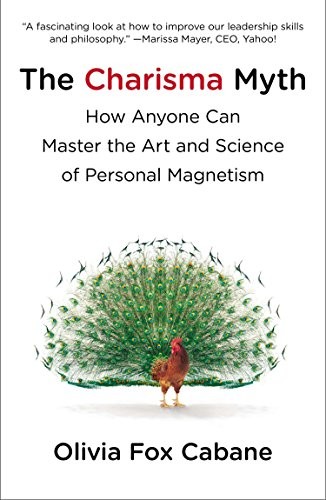
The Charisma Myth: How Anyone Can Master the Art and Science of Personal Magnetism

by Olivia Fox Cabane

View on Amazon →

"Presence is a learnable skill. You don't have to be naturally outgoing or change your personality."

Cabane argues that charisma is not an inborn trait but a learnable skill consisting of presence, power, and warmth. She provides specific techniques and practices for developing these components, demonstrating that anyone can become more charismatic. The book combines neuroscience, psychology, and practical exercises to help readers project confidence and connect authentically with others.

In a world where personal impact matters professionally and personally, understanding how to project charisma is valuable. Cabane's evidence-based approach debunks the myth that charisma is innate, offering actionable methods for anyone to enhance their presence and influence. Her framework applies to leadership, networking, and everyday interactions.

  • Presence comes from focused attention and authentic engagement with others
  • Power is demonstrated through confident body language and conviction in your message
  • Warmth involves genuine interest in others and emotional availability
  • Combine all three elements through specific vocal and behavioral practices
  • Some neuroscience claims are oversimplified or debated by researchers
  • Exercises may feel artificial or uncomfortable initially
  • Charisma myths debunked may not work equally well across different cultural contexts

"Cabane has provided practical tools for developing authentic charisma and influence."

Arianna Huffington, Founder of The Huffington Post

"Essential reading for anyone who wants to understand and develop their personal magnetism."

Fast Company, Business and Technology Magazine
08

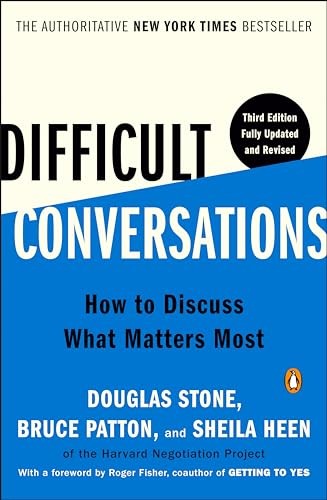
Difficult Conversations: How to Discuss What Matters Most

by Douglas Stone, Bruce Patton, Sheila Heen

View on Amazon →

"The challenge in difficult conversations is not to figure out how to deliver a hard message. It is to figure out what is actually going on underneath the conversation, and to have the courage to address it."

Now in its third edition with updates addressing modern communication challenges, this Harvard Negotiation Project classic teaches how to navigate conversations about relationship conflicts, differing values, and sensitive topics. The authors introduce the concept of three conversations—What Happened, Feelings, and Identity—showing that difficult exchanges involve multiple layers beneath the surface. The book provides practical tools for moving from defensiveness to genuine dialogue.

This framework has become foundational in conflict resolution, mediation, and organizational development. Understanding the three conversations model prevents miscommunication and helps people address underlying issues rather than surface disputes. Essential for anyone involved in resolving conflict professionally or personally.

  • Separate the relationship issue from the substantive disagreement
  • Identify the three conversations operating simultaneously in disputes
  • Manage your own identity and emotional stakes to remain open
  • Move from blame to curiosity about the other person's perspective
  • The three-conversations framework requires significant reframing of conflicts
  • May not address power imbalances adequately in some relationship contexts
  • Implementation requires emotional maturity and willingness from all parties

"This book has become essential reading for anyone involved in conflict resolution and negotiation."

Harvard Negotiation Project, Harvard Law School

"Stone, Patton, and Heen have created the definitive guide to having conversations that actually work."

Emotional Intelligence Institute, Research and Development Organization
09

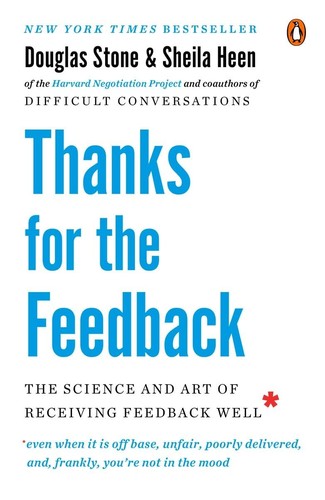
Thanks for the Feedback: The Science and Art of Receiving Feedback Well

by Douglas Stone, Sheila Heen

View on Amazon →

"Feedback is critical to our growth. You can't learn to do anything well unless you accept feedback."

While most leadership books focus on giving feedback, this groundbreaking work addresses the other side of the equation: receiving feedback with openness and growth mindset. Stone and Heen identify three types of feedback—appreciation, coaching, and evaluation—and teach techniques for extracting value from each. The book acknowledges the psychological challenges of receiving criticism and provides practical strategies for becoming a better feedback recipient.

Feedback is essential to personal and professional growth, yet most people struggle to receive it without defensiveness. This book recognizes that the bottleneck in learning is not the quality of feedback given but our capacity to receive it effectively. Essential for leaders, professionals, and anyone committed to continuous improvement.

  • Appreciate feedback recognizes your worth and motivates continued effort
  • Coaching feedback helps you learn and improve specific skills and behaviors
  • Evaluation feedback places you relative to standards or other people
  • Develop capacity to receive all three types with curiosity rather than defensiveness
  • Framework relies heavily on individual emotional regulation and openness
  • Doesn't adequately address feedback from biased or unreliable sources
  • May underemphasize systemic issues in organizational feedback cultures

"Stone and Heen have provided an essential guide for the often-difficult process of receiving feedback."

Susan David, Author of Emotional Agility

"This book transforms how leaders approach learning and development through feedback."

Center for Positive Organizations, University of Michigan
10

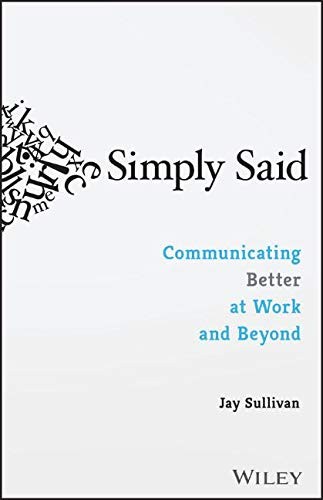
Simply Said: Communicating Better at Work and Beyond

by Jay Sullivan

View on Amazon →

"Focus less on yourself and more on other people. When communicating, audiences are listening to hear one thing: what does this mean for me?"

Sullivan's practical guide strips away communication complexity and teaches the fundamentals of clear, effective messaging. Grounded in the philosophy that great communication serves the audience rather than the speaker, the book covers everything from email writing to presentations. Sullivan provides frameworks and specific techniques for identifying your core message and delivering it in ways audiences can understand and act upon.

In an era of communication overload, clarity is a competitive advantage. Sullivan's audience-centered approach to communication applies across email, meetings, presentations, and interpersonal conversations. His emphasis on simplicity and service-oriented messaging makes this book essential for professionals across industries.

  • State your core message in one sentence with fewer than 10 words
  • Organize information to serve audience needs rather than your own preferences
  • Use structure and signposting to help audiences follow your thinking
  • Reduce jargon and complexity to improve clarity and retention
  • Emphasis on simplicity may sometimes oversimplify complex topics
  • May feel too straightforward for discussions requiring nuance
  • Some professionals may find the one-sentence core message limiting

"Simply Said provides the essential tools for professionals who want to communicate with impact."

Exec|Comm, Executive Communication Coaching Firm

"Sullivan's practical guidance makes this essential reading for business communicators."

American Management Association, Professional Development Organization
Back to all lists