The Culinary Library

Essential texts on technique, science, and the art of nourishment

Cooking combines science, creativity, tradition, and care into nourishment and pleasure. This collection gathers wisdom from renowned chefs, food scientists, and thoughtful observers of culinary culture. These books move beyond mere recipes to explore how food transforms under heat, how flavors combine, and what it means to feed ourselves and others with intention and skill.

01

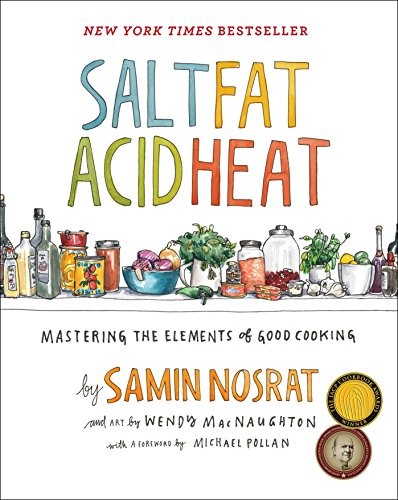
Salt Fat Acid Heat: Mastering the Elements of Good Cooking

by Samin Nosrat

View on Amazon →

"To be a great cook, all you need to know is how to control four things: salt, fat, acid, and heat. Understanding those means you will always be able to make delicious food, no recipes required."

Nosrat teaches that all good cooking flows from understanding four cardinal elements: salt which enhances flavor, fat which carries flavor and creates texture, acid which balances and brightens, and heat which determines the final texture. Rather than recipes, she teaches principles that enable improvisation and understanding across all cuisines.

Too many cooks follow recipes mechanically, unable to adapt when ingredients vary or intuition suggests adjustment. Nosrat's approach—understanding the core principles governing all cooking—transforms cooks from recipe-followers into creative practitioners able to improvise, adapt, and troubleshoot. This knowledge liberates cooking from dependence on specific recipes.

  • How salt enhances and transforms flavor
  • The role of fat in flavor and texture creation
  • Acid's function in balancing and brightening dishes
  • How heat determines final texture and doneness
  • Focuses on principles rather than specific recipes
  • Limited coverage of non-Western cooking traditions
  • Requires comfort with improvisation and experimentation

"Nosrat's revolutionary approach to teaching cooking through principles rather than recipes has transformed culinary education worldwide."

Culinary Educators and Chefs, Cooking Education
02

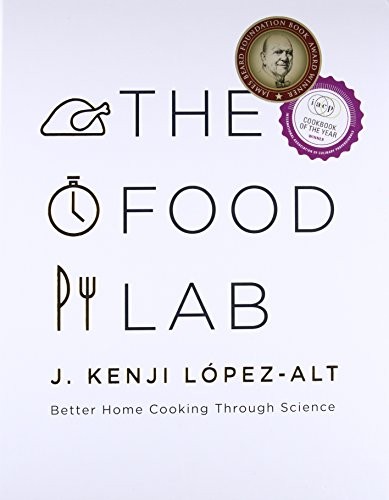
The Food Lab: Better Home Cooking Through Science

by J. Kenji López-Alt

View on Amazon →

"Science is not an end in itself, but a path to help you discover the underlying order of the world and to use those discoveries to predict how things will behave. Good ingredients plus good equipment plus good technique equals good food."

López-Alt reveals the science underlying cooking techniques—why searing browns meat, how salting changes meat texture, what happens when you rest meat, why pan temperature matters. Through rigorous testing and clear explanation, he empowers home cooks to understand their ingredients and techniques rather than blindly following instructions.

Understanding why techniques work transforms cooking from memorization into mastery. López-Alt's scientific approach—testing variables, explaining results, connecting science to practical cooking—enables home cooks to troubleshoot problems and adapt techniques to their specific conditions. Essential for cooks seeking to understand rather than just execute.

  • The science of heat and how it transforms food
  • Why searing, resting, and other techniques work
  • Protein structure and how cooking changes it
  • The relationship between temperature, timing, and doneness
  • Science-heavy approach may overwhelm some readers
  • Assumes interest in technical understanding
  • Less coverage of flavor development and intuition

"López-Alt's rigorous scientific approach has made food science accessible and practical for home cooks worldwide."

Food Scientists and Home Cooks, Food Science and Cooking
03

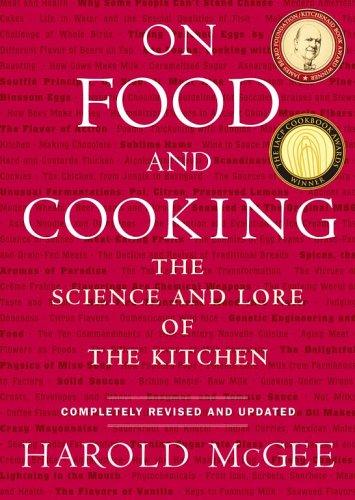
On Food and Cooking: The Science and Lore of the Kitchen (Revised Edition)

by Harold McGee

View on Amazon →

"An understanding of what food is and how cooking works does no violence to the art of cuisine, destroys no delightful mystery."

McGee's comprehensive encyclopedia combines food science with culinary tradition. From understanding what food is made of to how cooking transforms ingredients, this reference explains the 'why' behind cooking practices while respecting centuries of culinary tradition. Essential reference for curious cooks and professional chefs.

Understanding the science and history of food elevates cooking from mere execution to informed creativity. McGee's combination of scientific explanation and cultural context provides foundation for cooks seeking to understand not just how but why food behaves as it does. Essential reference for lifetime cooking development.

  • The science and lore of major food categories
  • How cooking transforms food at molecular level
  • The history and cultural context of cooking practices
  • The relationship between science and culinary tradition
  • Comprehensive reference rather than instructional guide
  • Dense with technical information requiring study
  • Less practical day-to-day application than other books

"McGee's work has been called 'the Rosetta stone of the culinary world' by leading chefs including Daniel Boulud and Heston Blumenthal."

Renowned Chefs and Food Scientists, Professional Cooking and Food Science
04

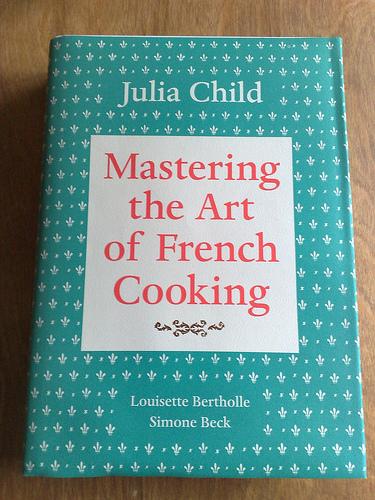
Mastering the Art of French Cooking, Volume One (50th Anniversary Edition)

by Julia Child, Louisette Bertholle, Simone Beck

View on Amazon →

"The only real stumbling block is fear of failure. In cooking you've got to have a what-the-hell attitude."

Child, Bertholle, and Beck present French cuisine not as mysterious and unattainable but as learnable discipline. Through detailed instruction, thoughtful explanation, and careful progression from fundamentals to advanced techniques, they demonstrate that anyone willing to practice can master classic cooking methods.

French cooking represents the foundation of Western culinary tradition. This book's meticulous instruction, clear explanations, and respectful approach to technique provides essential grounding in proper foundational methods. Child's insistence that cooking requires only willingness to learn and practice has inspired generations of cooks.

  • Foundational French cooking techniques and methods
  • The discipline and organization of classical cuisine
  • How to properly execute classic recipes and techniques
  • The relationship between technique mastery and culinary freedom
  • Focuses exclusively on French cuisine
  • Very comprehensive, requires sustained engagement
  • Some techniques may feel dated to contemporary cooks

"Child's revolutionary approach to making French cooking accessible has inspired generations of cooks and remains foundational in culinary education."

Professional Chefs and Culinary Educators, Culinary Education
05

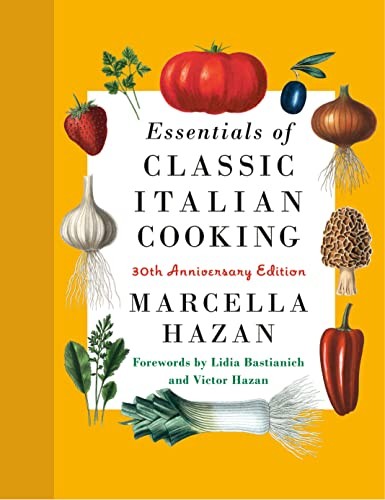
Essentials of Classic Italian Cooking (30th Anniversary Edition)

by Marcella Hazan

View on Amazon →

"You will be a happier cook if you understand that good cooking is a craft, not an art. It requires common sense and experience, not inspiration and genius."

Hazan presents Italian cooking with clarity and conviction, prioritizing genuine technique and authentic flavor over modern novelty. She emphasizes the importance of proper ingredients, correct method, and respect for tradition, demonstrating that mastery comes through understanding fundamentals rather than seeking shortcuts.

Italian cooking's apparent simplicity masks profound technique and understanding. Hazan's insistence on doing things correctly—using proper ingredients, respecting traditional methods—reveals that authentic cooking requires commitment to quality. Her reverence for tradition combined with clear instruction provides essential foundation for Italian cooking.

  • Authentic Italian cooking fundamentals and traditions
  • How to select and use quality ingredients properly
  • The discipline and joy of respecting culinary tradition
  • Regional Italian cooking variations and their foundations
  • Focuses exclusively on Italian cuisine
  • Assumes some cooking knowledge and familiarity
  • May feel overly traditional to some contemporary cooks

"Hazan's reverence for authentic Italian cooking has educated generations of cooks in the importance of tradition and proper technique."

Italian Cooking Community and Chefs, Italian Culinary Tradition
06

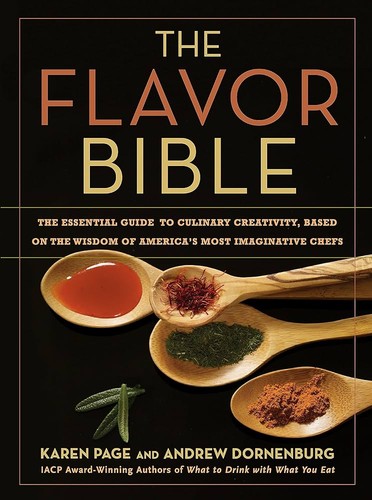
The Flavor Bible: The Essential Guide to Culinary Creativity

by Karen Page and Andrew Dornenburg

View on Amazon →

"Understanding the flavor relationships between foods allows you to pair ingredients intuitively and create dishes that taste balanced and harmonious."

Rather than recipes, this reference explores flavor affinities—which ingredients naturally complement each other. Through interviews with acclaimed chefs and systematic flavor analysis, Page and Dornenburg reveal how professional chefs approach flavor pairing, enabling home cooks to create sophisticated flavor combinations.

Intuitive flavor pairing elevates cooking beyond recipe-following. The Flavor Bible's systematic exploration of how ingredients combine reveals the professional secret: understanding flavor affinities enables creative improvisation and sophisticated flavor development. Essential reference for cooks seeking to develop palate and intuition.

  • Flavor affinities and why certain ingredients complement each other
  • How professional chefs approach flavor development
  • Regional flavor profiles and ingredient relationships
  • Techniques for creating balance in dishes
  • Reference rather than instructional book
  • Assumes some cooking knowledge and familiarity
  • Limited guidance on technique or method

"The Flavor Bible has become the standard reference for professional chefs and serious home cooks seeking to understand flavor relationships."

Professional Chefs and Food Writers, Professional Cooking
07

The Joy of Cooking: Fully Revised and Updated (Current Edition)

by Irma Rombauer, Marion Rombauer Becker, and contributors

View on Amazon →

"In cooking, as in all the arts, simplicity is the sign of perfection. The ability to prepare a perfect omelet or to make a fine soup are certain indications that you can cook."

For generations, The Joy of Cooking has served as America's most comprehensive cookbook—combining recipes across cuisines and difficulty levels with clear instruction and practical knowledge. More than recipes, it teaches fundamental technique and approach, making it an educational resource as much as recipe collection.

The Joy of Cooking represents the democratic vision of cooking education—that anyone can learn to cook well through clear instruction and practice. Its comprehensive approach to recipes and techniques, combined with its accessibility and encouragement, has taught generations of Americans to cook. Essential for foundational cooking knowledge.

  • Comprehensive fundamental cooking techniques and methods
  • Recipe diversity across cuisines and skill levels
  • Approach to mise en place and kitchen organization
  • Problem-solving and ingredient substitution
  • Massive reference requiring careful navigation
  • Approaches can feel dated to contemporary cooks
  • Emphasis on technique over innovation

"The Joy of Cooking remains America's most trusted cookbook, teaching millions of home cooks the fundamentals and joy of cooking."

American Cooking Community, Foundational Cooking Education
08

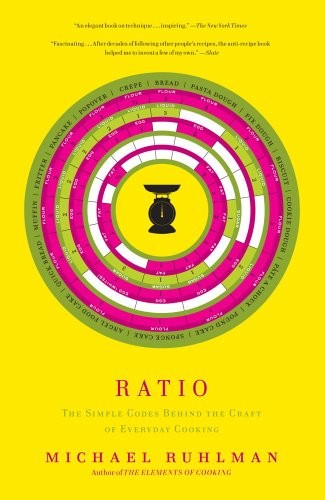
Ratio: The Simple Codes Behind the Craft of Everyday Cooking

by Michael Ruhlman

View on Amazon →

"Understanding ratios is like understanding the underlying structure of cooking. Once you recognize these proportions, you can create endless variations and innovations."

Ruhlman reveals that much of cooking depends on ratios—the mathematical relationships between ingredients. By understanding these proportions (like bread dough's flour to water ratio), cooks can create endless variations while maintaining structural integrity. This enables creative cooking without recipes.

Recipes create dependence and false limitations. Understanding ratios liberates cooks to create endless variations while maintaining quality. Ruhlman's systematic exploration of fundamental ratio relationships—for bread, pastries, sauces, stocks—provides the intellectual framework enabling confident improvisation and creative cooking.

  • Fundamental ratios for bread, pastry, stocks, and sauces
  • How ratios enable creative variation and improvisation
  • The mathematical relationships underlying successful dishes
  • Problem-solving through understanding underlying structure
  • Concept-heavy approach requires system thinking
  • Limited specific recipe guidance
  • Assumes comfort with percentages and ratios

"Ruhlman's approach to teaching cooking through ratios has revolutionized how professional chefs and educators approach culinary instruction."

Professional Chefs and Cooking Educators, Professional Cooking
09

Kitchen Confidential: Adventures in the Culinary Underbelly (Updated Edition)

by Anthony Bourdain

View on Amazon →

"If the chef is anything like me, the cooks are a dysfunctional, mercenary lot, fringe-dwellers motivated by money, lifestyle, and grim pride. Good food comes from good people, and good people work hard."

Bourdain's memoir documents life as a line cook and chef—the long hours, intense pressure, camaraderie, and pride of professional kitchens. Beyond practical wisdom, he offers candid perspective on cooking culture, the distinction between cooking professionally and home cooking, and how food connects to risk and adventure.

Professional cooking involves realities home cooks rarely encounter—speed, consistency, pressure, and teamwork. Bourdain's honest account of kitchen culture provides valuable perspective on cooking's human dimensions. His insistence that cooking is about risk and adventure, not safety or shortcuts, offers philosophical foundation for approaching food.

  • Professional kitchen culture and dynamics
  • Line cooking fundamentals and pressure situations
  • The distinction between home cooking and professional work
  • Food, risk, and adventure as interconnected
  • Memoir rather than instructional content
  • Professional kitchen culture may not apply to home cooks
  • Focus on restaurant hierarchy and dynamics

"Bourdain's candid account of kitchen culture has influenced how the profession is understood and respected globally."

Professional Chefs and Cooking Community, Professional Cooking Culture
10

An Everlasting Meal: Cooking with Economy and Grace

by Tamar Adler

View on Amazon →

"To eat is to live, and to cook is to acknowledge those people who must eat, those people you love, and the ground they stand on."

Adler reflects on cooking as spiritual practice and expression of care. She explores how cooking connects to seasons, economy, gratitude, and love—how feeding ourselves and others is fundamentally an act of respect and presence. Rather than recipes, she offers meditations on the meaning of food.

In an era of convenience and disconnection, Adler's insistence that cooking is a spiritual practice rooted in gratitude and care provides antidote to utilitarian approaches. Her philosophical perspective—treating food preparation as worthy of presence and attention—elevates cooking from necessity to meaningful practice.

  • Cooking as spiritual practice and expression of care
  • The relationship between food, seasons, and gratitude
  • Economy and resourcefulness in cooking
  • Food preparation as meditation and presence
  • Philosophical/literary approach rather than instructional
  • Limited practical guidance on technique
  • Assumes interest in cooking as spiritual practice

"Adler's philosophical approach to cooking has resonated with the slow food movement and influenced contemporary thinking about food and care."

Food Writers and Slow Food Movement, Culinary Philosophy and Slow Food
Back to all lists