10 Best Cybersecurity Books

Essential Reading for Security Professionals and Enthusiasts

Explore the most influential cybersecurity books covering hacking, security engineering, social engineering, and cyber warfare. This curated collection features timeless works by industry pioneers and modern authorities that provide both technical depth and strategic insight into protecting systems and understanding threats in an interconnected world.

The Art of Invisibility: The World's Most Famous Hacker Teaches You How to Be Safe in the Age of Big Brother and Big Data
01

The Art of Invisibility: The World's Most Famous Hacker Teaches You How to Be Safe in the Age of Big Brother and Big Data

by Kevin Mitnick

"Whenever you write an e-mail, no matter how inconsequential, and even if you delete it from your inbox, remember that there's an excellent chance that a copy of those words and images will be scanned and will live on—maybe not forever, but for a good long while."

The world's most famous hacker teaches practical privacy techniques to protect personal data from corporate tracking and government surveillance. Mitnick draws on decades of experience to guide readers through real-world security threats and actionable countermeasures for the digital age.

This book bridges the gap between hacker mindset and defensive security, showing how attackers think and exploit human behavior. Essential for understanding privacy as a fundamental right and learning practical techniques to maintain digital invisibility in an increasingly surveilled world.

  • Encryption is essential for protecting communications from surveillance and interception
  • Social engineering remains one of the most effective attack vectors because people are more vulnerable than systems
  • Privacy requires constant vigilance and proactive measures in the digital world
  • Understanding attacker psychology helps develop more effective defensive strategies
  • Some techniques described may be outdated as privacy tools and threat landscapes evolve quickly
  • Primarily focused on defensive measures rather than explaining underlying technical mechanisms

"Kevin's book is the must read in this new world."

Steve Wozniak, Apple Co-founder

"Who better than Mitnick—internationally wanted hacker turned Fortune 500 security consultant—to teach you how to keep your data safe?"

Esquire Magazine, Media Publication
Ghost in the Wires: My Adventures as the World's Most Wanted Hacker
02

Ghost in the Wires: My Adventures as the World's Most Wanted Hacker

by Kevin Mitnick

"Social engineering—the casual or calculated manipulation of people to influence them to do things they would not ordinarily do—remains the most effective hacking tool."

An autobiographical account of Kevin Mitnick's career as one of the world's most notorious hackers, evading the FBI and conducting social engineering attacks. The book chronicles his technical exploits, psychological tactics, and eventual capture in a thrilling narrative of cat-and-mouse espionage.

This essential cybersecurity memoir reveals the human side of hacking and demonstrates why social engineering is more powerful than technical skills. Understanding Mitnick's methods provides critical insight into how attackers think and the vulnerabilities in human judgment that pose the greatest security risks.

  • Social engineering exploits human psychology and trust more effectively than technical hacking methods
  • Attackers use information gathering and reconnaissance extensively before attempting technical breaches
  • People are often the weakest link in security, not technology or systems
  • Authorization is the difference between a hacker and a legitimate security consultant
  • Some critics note Mitnick lacks sympathy for his victims and minimizes the damage caused
  • The narrative occasionally glorifies hacking rather than taking a balanced ethical approach

"A true Internet pioneer in a terse and snappy presentation."

John Perry Barlow, Electronic Frontier Foundation Co-founder

"Intriguing, insightful and extremely educational about social engineering."

Frank W. Abagnale, Author of Catch Me if You Can
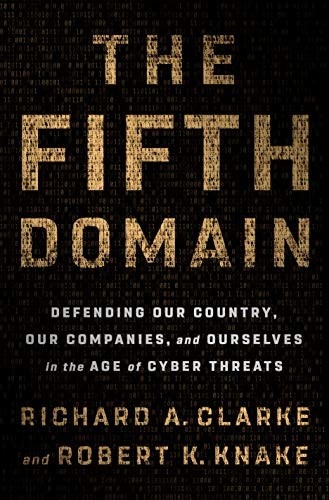
The Fifth Domain: Defending Our Country, Our Companies, and Ourselves in the Age of Cyber Threats
03

The Fifth Domain: Defending Our Country, Our Companies, and Ourselves in the Age of Cyber Threats

by Richard A. Clarke and Robert K. Knake

"We want to make our defenses so good, and our architectures so strong, that we do not care about whether we are being attacked most of the time because the attacks have no serious effects."

A strategic examination of cyberspace as the fifth domain of warfare alongside land, air, sea, and space. Clarke and Knake provide policy recommendations for government, corporations, and individuals to defend against cyber attacks while building resilience into critical infrastructure.

This book is essential for understanding cybersecurity beyond technical defenses. It addresses national security implications, corporate responsibilities, and individual actions needed to defend critical infrastructure and mitigate the growing threat of cyber warfare from hostile nation-states.

  • Cyber resilience—not just prevention—is the key to managing persistent cyber threats effectively
  • The advantage is shifting toward defense, making proactive architectural improvements more valuable than reactive measures
  • Achieving cybersecurity requires national consensus, organizational will, and prioritization across all sectors
  • Critical infrastructure protection requires coordination between government, private companies, and individual responsibility
  • Authors don't adequately address the difficulties or counterarguments to their policy recommendations
  • Some factual errors noted, such as incorrect details about Mondelez cyber insurance claims, raise accuracy concerns

"Clarke and Knake have some important ideas about how we can avoid cyberwar for our country, prevent cybercrime against our companies, and reduce resentment and division."

Bill Clinton, Former US President

"Richard Clarke and Robert Knake are issuing a strong wake-up call about the critical necessity of cybersecurity."

Leon Panetta, Former Secretary of Defense
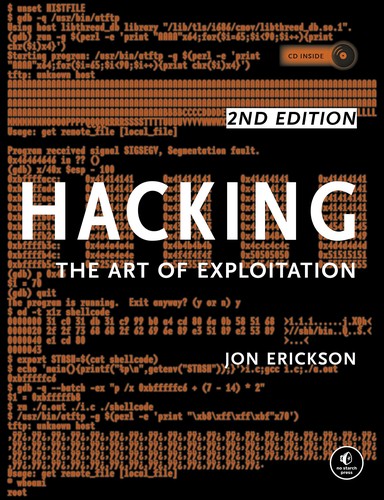
Hacking: The Art of Exploitation, 2nd Edition
04

Hacking: The Art of Exploitation, 2nd Edition

by Jon Erickson

"Hacking is the art of creative problem solving, whether that means finding an unconventional solution to a difficult problem or exploiting holes in sloppy programming."

A comprehensive technical guide to fundamental hacking concepts and exploitation techniques using C, assembly, and networking. Erickson demonstrates buffer overflows, memory corruption, cryptography, and defensive countermeasures through detailed code examples and practical exercises.

This seminal work teaches the foundational principles of how hacking actually works at the lowest technical levels. Essential for security professionals to understand exploit mechanisms, memory vulnerabilities, and the technical mindset required to both attack and defend systems effectively.

  • Understanding memory management, buffers, and pointers is critical to grasping exploitation techniques
  • Assembly language knowledge reveals how code operates at the processor level where vulnerabilities exist
  • Network protocols and packet manipulation are essential tools for reconnaissance and attack
  • Defense requires understanding attacker techniques at the fundamental code and hardware level
  • The book is extremely technical and difficult to follow even for experienced programmers, with inconsistent difficulty levels
  • Examples focus on old C/C++-based exploits and Linux kernel vulnerabilities that have limited real-world applicability today
  • Lacks coverage of modern attack vectors like cross-site scripting, SQL injection, and exploitation frameworks such as Metasploit

"Probably the most detailed, thorough, and lucid coverage of the fundamental techniques of serious hacking."

Linux Pro Magazine, Technology Publication

"This book will take any programmer well beyond the usual programming techniques covered in conventional programming books."

Electronic Design, Technology Publication
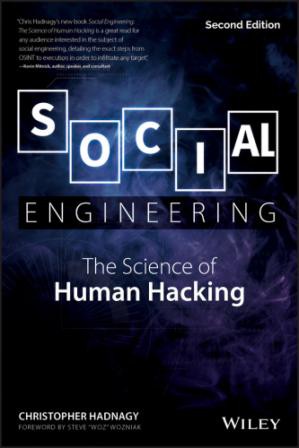
Social Engineering: The Science of Human Hacking, 2nd Edition
05

Social Engineering: The Science of Human Hacking, 2nd Edition

by Christopher Hadnagy

"The real trick to social engineering is listening. Never underestimate the power of social engineering; it remains the most effective hacking tool."

The definitive guide to understanding and defending against social engineering attacks. Hadnagy teaches how attackers manipulate psychology, use information gathering, read microexpressions, and exploit human vulnerability to gain unauthorized access and sensitive information.

Social engineering is the most effective attack vector because humans are more vulnerable than systems. This essential book teaches both attack and defensive perspectives, providing security professionals with frameworks to identify manipulation tactics and implement human-centered security controls.

  • Psychological manipulation and rapport building are more effective than technical hacking for gaining access
  • Information gathering through public sources provides attackers with detailed targeting information
  • Recognizing microexpressions and body language helps identify when social engineering is being attempted
  • Defense requires training employees to recognize manipulation tactics and establish verification procedures
  • Author's charm-driven approaches may not work against people from different cultures with varying communication styles
  • The methodology of using dominant senses for social engineering is inexact and unreliable
  • Author was permanently banned from DEF CON in 2022 for code of conduct violations, raising some ethical questions

"Chris Hadnagy has penned the ultimate text on social engineering. Meticulously researched and teeming with practical applications, this brilliant book offers solutions to very real problems."

Kevin Hogan, Author of The Science of Influence
Countdown to Zero Day: Stuxnet and the Launch of the World's First Digital Weapon
06

Countdown to Zero Day: Stuxnet and the Launch of the World's First Digital Weapon

by Kim Zetter

"Stuxnet proved that code could escape the digital realm and wreak actual, physical destruction—in this case, on an Iranian nuclear facility."

An exhaustively researched account of Stuxnet, the first known digital weapon deployed against Iran's nuclear program. Zetter chronicles the creation, discovery, and impact of this sophisticated cyberattack, exploring its implications for cyber warfare and international security.

This book demonstrates that cyber warfare has already begun and has real-world consequences. Understanding Stuxnet's technical sophistication, geopolitical origins, and impact reveals the urgent need for cybersecurity governance and highlights the intersection of technology, politics, and military strategy.

  • Nation-states can weaponize cyber capabilities to achieve military and political objectives without traditional armed conflict
  • Zero-day vulnerabilities are valuable strategic assets that can be exploited for years before discovery
  • A successful cyber weapon requires extensive reconnaissance, multiple attack vectors, and technical sophistication
  • Cyber warfare raises new questions about international law, attribution, and escalation risks
  • The book heavily emphasizes a U.S.-centric perspective on the attack and its implications
  • Some historical context about Ukraine may be excessive for understanding the Stuxnet threat

"An ambitious, comprehensive, and engrossing book that should be required reading for anyone who cares about cyber threats."

Kevin Mitnick, Author and Hacker

"Zetter not only explains the weapon and chronicles its discovery, but explains the motives and mechanics behind the attack."

Bruce Schneier, Cryptographer and Author
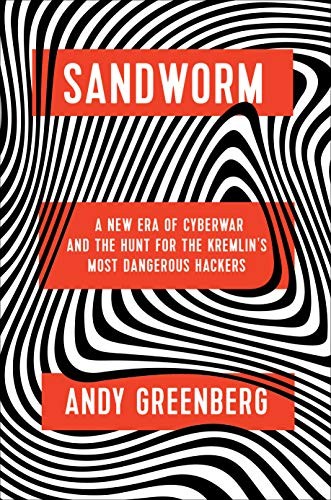
Sandworm: A New Era of Cyberwar and the Hunt for the Kremlin's Most Dangerous Hackers
07

Sandworm: A New Era of Cyberwar and the Hunt for the Kremlin's Most Dangerous Hackers

by Andy Greenberg

"NotPetya caused an unprecedented ten billion dollars in damage and demonstrated that nation-states are willing to weaponize malware at scale with devastating collateral impact."

An investigative account of Sandworm, a Russian military intelligence hacking group responsible for major cyberattacks including BlackEnergy, NotPetya, and Olympic Destroyer. Greenberg traces their activities across Ukraine, the U.S. elections, and global infrastructure, documenting a new era of state-sponsored cyber warfare.

Sandworm demonstrates how cyber warfare impacts real people and critical infrastructure in real time. This essential book reveals the geopolitical dimensions of cyberattacks, the capability of hostile nation-states, and the urgent need for international cyber norms and defensive capabilities.

  • Cyber warfare is active now, conducted by organized military and intelligence units with state resources
  • Cyberattacks can have massive unintended consequences affecting civilians and critical infrastructure far beyond intended targets
  • Attribution of cyber attacks remains technically and diplomatically challenging, complicating responses and deterrence
  • International coordination and cyber defense capabilities are necessary to protect against persistent state-sponsored threats
  • The book maintains a strong U.S.-Russia perspective, with Ukraine primarily contextualized for U.S. concerns
  • Greenberg's narrative occasionally shifts focus, jumping between systems and historical context rather than sustained character portraits
  • The author's insertion into the narrative may weaken objectivity, with sources almost exclusively condemning Russian actions

"A gripping account of cyber warfare and nation-state cyber operations."

Cory Doctorow, New York Times Bestselling Author

"An essential examination of how nations are conducting cyber warfare."

Richard Clarke, Former White House Counterterrorism Coordinator
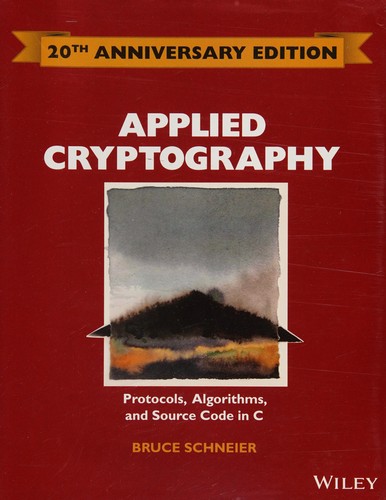
Applied Cryptography: Protocols, Algorithms and Source Code in C, 20th Anniversary Edition
08

Applied Cryptography: Protocols, Algorithms and Source Code in C, 20th Anniversary Edition

by Bruce Schneier

"The best protection against bad cryptography is good cryptography, built on strong principles and properly implemented."

A comprehensive reference on cryptographic protocols, algorithms, and their implementation in C. Schneier covers symmetric and asymmetric cryptography, digital signatures, key exchange, and cryptographic protocols essential for secure communication and data protection.

This seminal reference book is essential for understanding the cryptographic foundations of modern security. Required reading for developers, security architects, and professionals implementing encryption, as it covers both the theory and practical considerations of cryptographic systems.

  • Cryptographic algorithms alone are insufficient; proper implementation and protocol design are critical
  • Understanding algorithm strengths, weaknesses, and appropriate use cases is essential for secure system design
  • Key management is as important as the cryptographic algorithm itself in ensuring security
  • Cryptographic protocols must be designed carefully to avoid subtle implementation flaws that compromise security
  • Some algorithms and protocols described are outdated and no longer suitable for modern security requirements
  • The book has been criticized for making cryptography too accessible, leading to insecure implementations in commercial products
  • Schneier recommends Cryptography Engineering for more current guidance on modern cryptographic best practices

"Easily ranks as one of the most authoritative in its field."

PC Magazine, Technology Publication

"The best introduction to cryptography I've ever seen—the book the National Security Agency wanted never to be published."

Wired Magazine, Technology Publication
Penetration Testing: A Hands-On Introduction to Hacking
09

Penetration Testing: A Hands-On Introduction to Hacking

by Georgia Weidman

"Communication skills are essential for penetration testers beyond technical abilities, particularly being able to convey technical information in a way that can be understood by non-security people."

A practical, hands-on guide to penetration testing covering reconnaissance, vulnerability assessment, exploitation, and post-exploitation techniques. Weidman uses a virtual lab environment with Kali Linux, Metasploit, and vulnerable systems to teach the complete assessment lifecycle.

This essential practical guide teaches the complete methodology and tools used in real-world penetration testing. Required for security professionals and developers who need to understand how to identify and exploit vulnerabilities, test defenses, and improve organizational security posture.

  • Penetration testing follows a structured methodology from reconnaissance through post-exploitation and reporting
  • Understanding attacker tactics and tools helps defenders identify and patch vulnerabilities before exploitation
  • Mobile devices and applications present unique security challenges requiring specialized penetration testing approaches
  • Effective penetration testing requires both technical skills and communication ability to convey findings to stakeholders
  • Some exercises and tools described may require significant time investment and resources to set up properly
  • The book emphasizes practical execution over deep technical explanation of underlying vulnerability mechanisms

"An excellent hands-on introduction to ethical hacking and penetration testing methodology."

No Starch Press, Publisher
Practical Malware Analysis: The Hands-On Guide to Dissecting Malicious Software
10

Practical Malware Analysis: The Hands-On Guide to Dissecting Malicious Software

by Michael Sikorski and Andrew Honig

"Malware analysis is a cat-and-mouse game with rules that are constantly changing, so make sure you have the fundamentals."

A comprehensive guide to malware analysis techniques, tools, and methodology for dissecting malicious code. Sikorski and Honig teach how to set up safe analysis environments, overcome obfuscation and anti-analysis techniques, and extract indicators of compromise from malware samples.

Understanding malware is critical for incident response, threat intelligence, and defensive security. This essential book teaches the methodology and tools needed to analyze malware samples, understand attacker tactics, and develop effective detection and remediation strategies.

  • Setting up a proper isolated lab environment is critical for safe malware analysis without risking infection
  • Malware authors use obfuscation, packing, and anti-analysis techniques to evade detection and analysis
  • Dynamic analysis combined with static analysis provides comprehensive understanding of malware behavior and capabilities
  • Indicators of compromise extracted from malware enable detection and blocking of malware in production environments
  • Some analysis tools and techniques described may be outdated as malware evolution requires constant methodology updates
  • The book focuses on Windows-based malware, with limited coverage of malware targeting other platforms

"A valuable resource for malware analysis professionals and those learning the discipline."

Mandiant, Cybersecurity Firm
Back to all lists