10 Best Data Science Books

Essential Reading for Data Scientists and Analytics Professionals

Discover the most influential and practical data science books that have shaped the field. From foundational Python programming to advanced statistical methods and ethical considerations, this curated collection covers the essential knowledge every data scientist needs. Whether you're beginning your journey or advancing your expertise, these ten books provide comprehensive guidance across all aspects of modern data science.

01

Python for Data Analysis

by Wes McKinney

View on Amazon →

"Data wrangling and cleaning is a critical skill that takes up the majority of data scientists' time."

The definitive guide to data manipulation and analysis using Python, pandas, NumPy, and Jupyter. This third edition provides comprehensive coverage of data wrangling, transformation, and visualization techniques. Essential for anyone working with data in Python, it covers importing, cleaning, transforming, and analyzing real-world datasets.

Python has become the primary language for data science, and this book is the authoritative resource written by the creator of pandas. It provides practical, hands-on instruction for the tools that 90% of data scientists use daily. Every data scientist working with Python should master the concepts in this book.

  • Master pandas for data manipulation and transformation
  • Work with NumPy for numerical computing
  • Learn data visualization best practices
  • Understand data cleaning and preparation workflows
  • Focuses heavily on Python; less coverage of statistics and modeling
  • Some advanced topics could be explained more thoroughly
  • Code examples may require updating as libraries evolve

"The go-to reference for pandas and Python data manipulation in the data science community."

Technology Leaders, Data Science Community

"Recommended as essential reading for new data scientists joining major technology companies."

Major Tech Companies, Silicon Valley

"Used as the primary textbook in data science courses across universities worldwide."

University Instructors, Computer Science Departments
02

Data Science from Scratch

by Joel Grus

View on Amazon →

"Data science is actually just a fancy name for a set of tools that can help you understand the world."

A hands-on introduction to data science that builds all major concepts from first principles using pure Python. This second edition covers data manipulation, visualization, statistics, machine learning, and neural networks with clear explanations and practical code examples. Perfect for those who want to understand the underlying mathematics without relying on libraries.

Understanding data science fundamentals from scratch is crucial for developing intuition about algorithms and techniques. This book demystifies complex concepts by implementing them from the ground up, making it invaluable for anyone seeking deep comprehension rather than just library usage.

  • Build data science algorithms from first principles
  • Understand probability, statistics, and linear algebra concepts
  • Implement machine learning models without relying on frameworks
  • Develop problem-solving intuition for data challenges
  • Not a reference for production-level implementations
  • Code examples are slower than optimized libraries
  • May overwhelm beginners due to mathematical depth

"An excellent, excellent intro to data science that builds understanding from the ground up."

Oren Etzioni, AI2 Research Institute

"A really excellent primer that makes data science concepts accessible and intuitive."

Paul Smaldino, UC Davis

"An especially fun read with a refreshingly functional approach to data science fundamentals."

Trey Causey, Data Science Community
03

Storytelling with Data

by Cole Nussbaumer Knaflic

View on Amazon →

"The story should ultimately be about your audience, not about you."

A comprehensive guide to communicating data insights through effective visualization and narrative. This book teaches the principles of visual design, color theory, and storytelling to transform raw data into compelling stories that influence decisions. Packed with practical examples and exercises to master the art of data communication.

Data is only valuable when it influences decisions, and effective communication is often more important than analysis. This book fills a critical gap by teaching the storytelling and visualization skills that separate good data scientists from great communicators. Essential for anyone presenting findings to stakeholders.

  • Design visualizations that highlight key insights
  • Eliminate chart junk and cognitive load
  • Craft narratives that drive action and decision-making
  • Choose appropriate chart types for different data stories
  • More design-focused than technical; limited programming content
  • Examples are primarily business-oriented
  • Could benefit from more advanced visualization techniques

"An excellent complement to data visualization pioneers, offering clarity and practical guidance for communicating with data."

Alberto Cairo, University of Miami

"Cole understands that data slides are about the meaning, not the numbers, and her guide helps anyone connect effectively with their audience."

Nancy Duarte, Duarte, Inc.
04

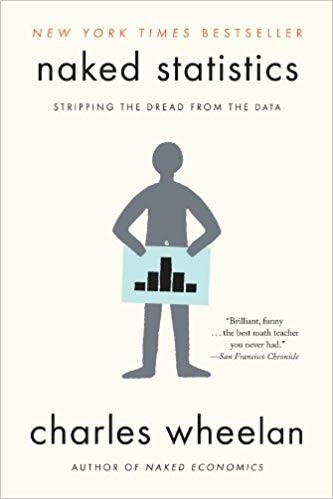
Naked Statistics

by Charles Wheelan

View on Amazon →

"It's easy to lie with statistics, but it's hard to tell the truth without them."

A witty and accessible introduction to statistics that strips away the intimidation factor. Wheelan uses engaging real-world examples from sports, politics, and business to illustrate statistical concepts. The book covers probability, regression, polling, and the dangers of misused statistics in clear, humorous prose.

Understanding statistics is fundamental to data science, yet many resources make it unnecessarily complex. This book makes statistics intuitive and fun while teaching critical thinking about data claims. It's perfect for building statistical intuition before diving into technical implementations.

  • Understand core statistical concepts through real-world examples
  • Learn to identify and debunk statistical misleading claims
  • Grasp probability and its applications in prediction
  • Develop skepticism about data-driven claims in media
  • Limited technical depth and mathematical rigor
  • Lacks Python/R implementations for concepts
  • Best suited for conceptual understanding rather than applied work

"A well written, surprisingly funny, and enthusiastic primer on statistics."

Austan Goolsbee, University of Chicago

"Wheelan makes statistics interesting and fun for everyone."

Hal Varian, Google

"Brilliant, funny...the best math teacher you never had."

San Francisco Chronicle, Media
05

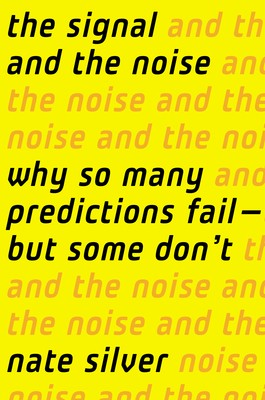
The Signal and the Noise

by Nate Silver

View on Amazon →

"Distinguishing the signal from the noise requires both scientific knowledge and self-knowledge: the serenity to accept the things we cannot predict, the courage to predict the things we can, and the wisdom to know the difference."

An exploration of prediction and forecasting across domains from weather to politics to terrorism. Nate Silver examines why most predictions fail and what separates accurate forecasters from poor ones. Drawing on examples from poker, baseball, earthquakes, and climate science, the book teaches probabilistic thinking and Bayesian methods.

Prediction is at the heart of machine learning and data science. This book provides crucial insight into what makes predictions succeed or fail, the role of uncertainty, and the dangers of overconfidence. Understanding the philosophical foundations of prediction is essential for building better models.

  • Learn Bayesian approaches to prediction and uncertainty
  • Understand why most predictions fail in practice
  • Develop probabilistic thinking and intuition
  • Apply lessons from successful forecasters across domains
  • Heavy focus on non-technical prediction examples
  • Limited practical machine learning content
  • Some chapters are more narrative than instructional

"Illustrates prediction principles through fascinating essays examining how predictions are made across fields from baseball to climate science."

New York Times, Media

"Silver's breezy style makes difficult statistical material accessible through painstakingly researched arguments and examples."

Wall Street Journal, Media
06

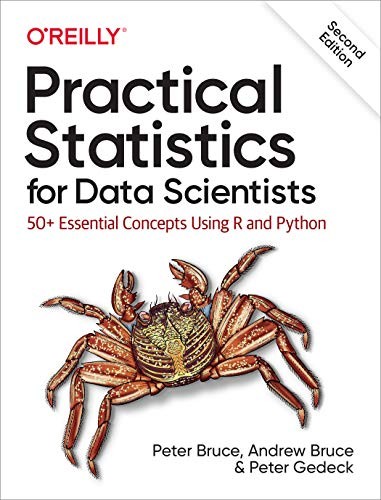
Practical Statistics for Data Scientists

by Peter C. Bruce and Andrew Bruce

View on Amazon →

"Understanding statistical concepts is critical for avoiding common pitfalls in data analysis and machine learning."

A practical guide to 50+ essential statistical concepts for data scientists, covering hypothesis testing, regression, resampling, and more. The second edition includes comprehensive Python and R examples, making it ideal for practitioners who need to apply statistics to real-world problems. Each concept is explained with practical code and real datasets.

Statistics is the foundation of data science, yet many data scientists lack formal statistical training. This book bridges that gap by teaching practical statistics as it applies to modern data science problems. It covers the concepts most relevant to business analytics and machine learning applications.

  • Master hypothesis testing and p-values in context
  • Apply regression and regularization techniques
  • Understand resampling and bootstrap methods
  • Learn classification metrics and evaluation techniques
  • Fast-paced; may be challenging for complete beginners
  • Focuses on fundamentals rather than advanced topics
  • Code examples could be more comprehensive

"Provides an excellent collection of statistical concepts with practical code examples for data science applications."

Peter Bruce, Statistics.com

"A really good reference book with practical code examples for common data science and machine learning scenarios."

Data Science Practitioners, Industry
07

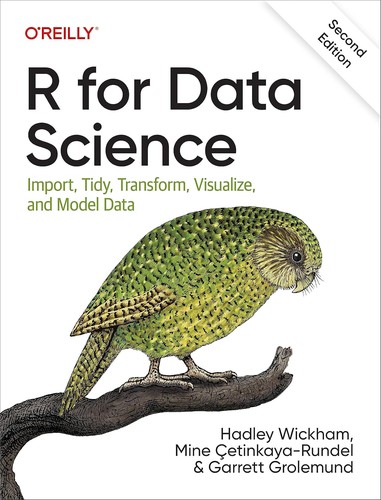
R for Data Science

by Hadley Wickham, Garrett Grolemund, and Mine Çetinkaya-Rundel

View on Amazon →

"The tidyverse is a cohesive system of packages designed to work together in data analysis."

The comprehensive guide to data science in R, covering import, tidying, transformation, visualization, and modeling. The second edition teaches the tidyverse ecosystem of packages designed to work together seamlessly. Ideal for R users who want to adopt modern data science workflows and best practices.

R is essential for statistical computing and data science. This book, written by the creator of ggplot2 and the tidyverse, teaches the modern R way of working with data. It's the definitive resource for learning professional data science in R.

  • Import and tidy messy real-world data
  • Transform data with dplyr and related tools
  • Create publication-quality visualizations with ggplot2
  • Build predictive models with appropriate workflows
  • R-specific; not useful for Python-focused practitioners
  • Assumes some programming background
  • Second edition is large and covers many topics

"The new bible for R that transformed how we use R and accelerated its capabilities significantly."

Hadley Wickham, R Community Leader

"If you use R, you must read this book regardless of experience level; an invaluable resource for any data scientist."

Data Science Community, R Users
08

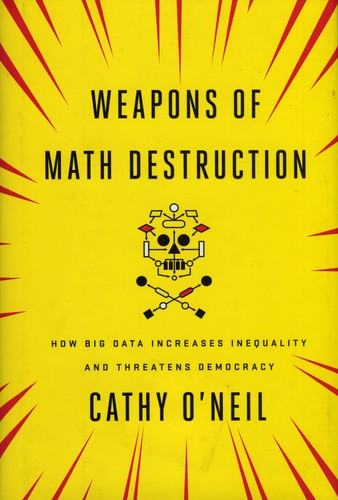
Weapons of Math Destruction

by Cathy O'Neil

View on Amazon →

"Like gods, these mathematical models were opaque, invisible to all but specialists, their verdicts beyond dispute or appeal, tending to punish the poor while making the rich richer."

A critical examination of how algorithms and big data models can perpetuate inequality and threaten democracy. O'Neil exposes flawed algorithms in criminal justice, education, employment, and finance that harm vulnerable populations. The book argues for transparency, accountability, and auditing of algorithmic systems.

As data scientists build models that affect millions of lives, understanding their ethical implications is paramount. This book reveals how seemingly objective algorithms can encode bias and discrimination. Essential reading for anyone with responsibility for data-driven systems and decision-making.

  • Understand how algorithms perpetuate inequality
  • Learn to identify bias in data-driven systems
  • Recognize the impact of models on vulnerable populations
  • Develop ethical frameworks for data science projects
  • Heavy focus on problems; lighter on solutions
  • Some examples feel dated as practices have evolved
  • May be pessimistic view of algorithmic systems

"O'Neil does a masterly job explaining the pervasiveness and risks of algorithms that regulate our lives."

Clay Shirky, New York Times

"An unusually lucid and readable discussion of how algorithms shape society and concentrate power."

Kirkus Reviews, Media
09

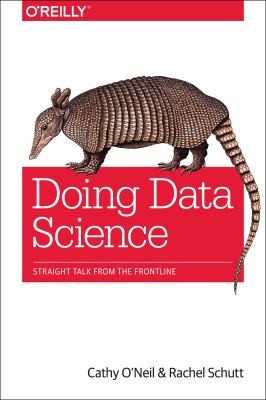
Doing Data Science

by Rachel Schutt and Cathy O'Neil

View on Amazon →

"Doing Data Science might just be the book that defines data science for a generation."

Based on a course taught at Columbia University, this book presents data science as a messy, open-ended practice. It covers the full lifecycle of data science projects including problem definition, data collection, analysis, and deployment. Features insights from leading practitioners and addresses the cultural and social context of data science work.

Data science in practice is messier and more complex than textbooks suggest. This book bridges the gap between theory and reality by presenting real-world case studies and discussing the soft skills, domain knowledge, and judgment required. Essential for understanding data science as it's actually practiced.

  • Understand the full data science project lifecycle
  • Learn from real-world case studies and practitioner insights
  • Develop skills beyond statistics and programming
  • Understand data science in its cultural and business context
  • Organization could be more structured
  • Heavy reliance on external contributions creates inconsistency
  • Some examples are specific to particular industries

"This book might just define data science by presenting it as a coalescing practice across multiple disciplines."

Joseph Rickert, Revolutions Analytics

"Based on a successful course teaching data science through real-world projects and guest lectures."

Columbia University, Academia
10

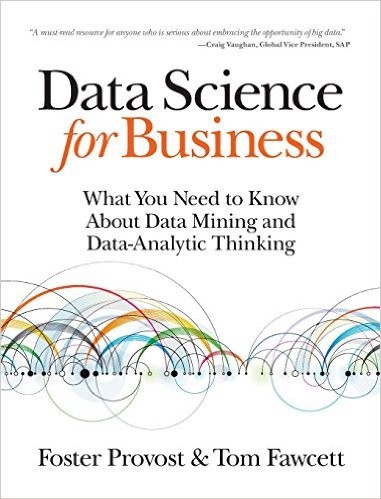
Data Science for Business

by Foster Provost and Tom Fawcett

View on Amazon →

"Data science is fundamentally about using data analytic thinking to drive business decisions and create value."

A business-focused guide to data science fundamentals, data mining, and analytic thinking. Provost and Fawcett explain how to frame business problems for data science solutions, evaluate model performance, and communicate results to stakeholders. The book bridges the gap between technical data science and business strategy.

Data science is only valuable when it addresses real business problems and drives decisions. This book teaches the critical skill of translating business needs into data science projects. It provides frameworks for problem formulation, evaluation metrics, and success measurement that are essential for practitioners.

  • Frame business problems as data science opportunities
  • Understand and apply fundamental machine learning concepts
  • Evaluate models using business metrics not just accuracy
  • Communicate data science results to non-technical stakeholders
  • Less technical implementation detail than other books
  • Fewer code examples compared to programmer-focused texts
  • Some concepts could benefit from deeper mathematical treatment

"Teaches data science thinking as it applies to real business problems and decision-making."

Foster Provost, NYU Stern School of Business

"Essential reading for executives and strategists seeking to leverage data science for competitive advantage."

Business Leaders, Industry
Back to all lists