10 Best Decision Making Books

Master the art and science of making better choices

These essential decision-making books explore how humans think, judge, and choose. From cognitive psychology to behavioral economics, these works reveal the hidden forces shaping our decisions and provide frameworks to improve judgment, avoid common pitfalls, and make choices that lead to better outcomes in work and life.

01

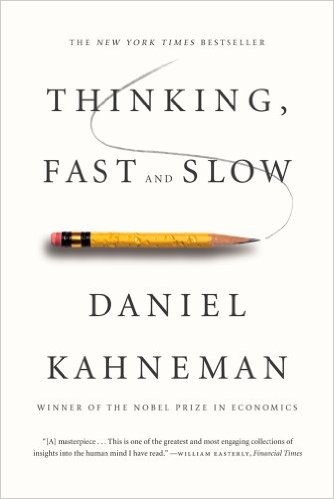
Thinking, Fast and Slow

by Daniel Kahneman

View on Amazon →

"A reliable way to make people believe in falsehoods is frequent repetition, because familiarity is not easily distinguished from truth."

Nobel laureate Daniel Kahneman explores the two cognitive systems that drive human thought: fast, intuitive thinking and slow, deliberate reasoning. Through decades of research, he reveals how these systems interact and produce systematic biases in judgment. The book explains why we often make irrational decisions despite our best intentions.

This foundational work is essential for understanding the psychological roots of decision-making errors. Kahneman's research on cognitive biases has revolutionized how we understand human judgment. Every serious student of decision-making must understand System 1 and System 2 thinking.

  • System 1 (fast) thinking is intuitive but prone to bias
  • System 2 (slow) thinking requires effort but is more rational
  • Anchoring, availability heuristics, and overconfidence distort our judgments
  • We underestimate randomness and overestimate our ability to predict
  • Dense and academic in places, challenging for casual readers
  • Some experimental findings have faced replication challenges
  • Less practical guidance on how to actually improve decision-making

"Daniel Kahneman is among the most influential psychologists in history, and the appearance of Thinking, Fast and Slow is a major event."

Steven Pinker, Harvard College Professor

"A landmark book in social thought, in the same league as The Wealth of Nations and The Interpretation of Dreams."

Nassim Taleb, Author of The Black Swan

"A masterpiece—a brilliant and engaging intellectual saga by one of the greatest psychologists and deepest thinkers of our time."

Daniel Gilbert, Harvard University Psychology Professor
02

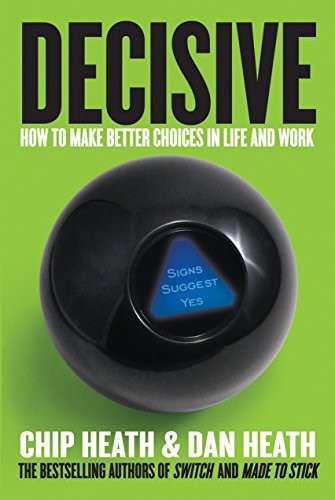
Decisive: How to Make Better Choices in Life and Work

by Chip Heath and Dan Heath

View on Amazon →

"When you make a decision, follow the WRAP process: Widen your Options, Reality-test your assumptions, Attain distance before deciding, and Prepare to be wrong."

The Heath brothers translate behavioral psychology into actionable frameworks for real-world decision-making. They identify four villains that sabotage our choices: narrow framing, confirmation bias, short-term emotion, and overconfidence. The book introduces the WRAP process—a practical method for widening options, reality-testing assumptions, attaining distance, and preparing for being wrong.

While Kahneman explains why we make bad decisions, the Heaths show us how to make better ones. This book bridges theory and practice, offering concrete tools you can apply immediately. It's the most actionable guide in decision-making literature.

  • The WRAP framework prevents decision-making villains
  • Widen options by considering do-nothing alternatives and outside views
  • Reality-test assumptions by seeking disconfirming evidence
  • Prepare for being wrong through pre-mortems and contingency planning
  • Framework is somewhat simplistic for highly complex decisions
  • Heavy emphasis on group decision-making may not apply to individual choices
  • Some strategies feel more applicable to business than personal life

"The Heath brothers explain how to navigate the land mines laid by our irrational brains and improve chances of good outcomes."

Inc. Magazine, Business Publication

"The Heath brothers have expertly explored decision-making and broken it down into small action steps that anyone can benefit from."

USA Today, Major Publication

"Debuted at #1 on the Wall Street Journal bestseller list, offering practical frameworks that readers can apply immediately to their lives."

Wall Street Journal Bestseller, Business Bestseller
03

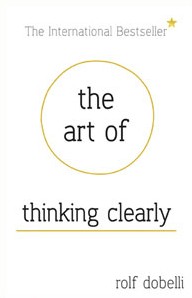
The Art of Thinking Clearly

by Rolf Dobelli

View on Amazon →

"Our thinking is riddled with systematic errors. We consistently make flawed judgments in predictable ways. But if we become aware of our cognitive biases, we can protect ourselves from them."

Swiss writer Rolf Dobelli distills decades of psychology and behavioral economics research into digestible chapters on 99 thinking errors. Each chapter addresses a specific cognitive bias or reasoning fallacy with practical examples and clear explanations. The book is designed for busy readers wanting to understand flawed thinking patterns without heavy academic theory.

This book catalogs the specific thinking errors we all commit. It serves as both an educational resource and a reference guide you can return to when facing decisions. The accessible writing style makes complex concepts memorable and actionable.

  • 99 specific thinking errors and cognitive biases are documented with examples
  • Survivorship bias leads us to learn from wrong sources and models
  • The narrative fallacy makes us create false coherence from random events
  • We underestimate uncertainty and overestimate our predictive abilities
  • Some errors receive superficial treatment due to the book's breadth
  • Limited practical solutions beyond awareness of the problems
  • Organization feels somewhat arbitrary with 99 separate ideas

"A catalog of specific thinking errors and cognitive biases that serves as both educational resource and accessible reference guide."

Psychology Educators, Academic Community

"Makes complex psychological concepts memorable and actionable through clear explanations with practical examples."

Decision-Making Professionals, Business Community

"An accessible guide to the 99 thinking errors we all make, helping readers protect themselves from cognitive biases in daily life."

General Readers, Popular Audience
04

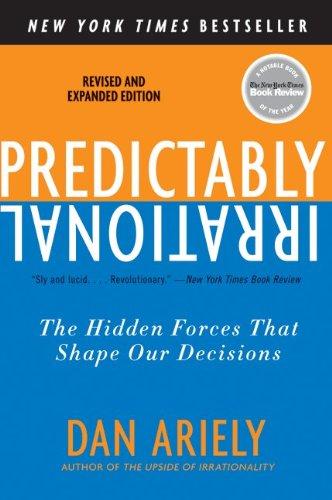
Predictably Irrational: The Hidden Forces That Shape Our Decisions

by Dan Ariely

View on Amazon →

"We don't have an internal value meter that tells us how much things are worth. Rather, we focus on the relative advantage of one thing over another and estimate value accordingly."

Behavioral economist Dan Ariely presents the unexpected ways humans violate economic rationality through creative experiments and real-world examples. He demonstrates that our irrationality is not random but systematic and predictable—we make the same types of mistakes repeatedly. The book reveals how irrational behaviors stem from our basic psychology and brain wiring.

Ariely proves that traditional economics' assumption of rational actors is fundamentally flawed. His experiments provide compelling evidence for how social norms, emotions, and anchoring shape decisions in ways we never suspect. Essential for understanding hidden decision-making forces.

  • Irrational behavior is systematic and predictable, not random
  • Anchoring effects cause us to rely too heavily on initial information
  • The endowment effect makes us overvalue things we own
  • Social norms are more powerful motivators than financial incentives
  • Some experiments are artificial and may not reflect real-world decisions
  • Focuses more on demonstrations than solutions for improvement
  • Later editions added experiments with mixed replication success

"Proves that traditional economics' assumption of rational actors is fundamentally flawed through creative experiments and real-world examples."

Behavioral Economics Community, Academic Field

"Provides compelling evidence for how social norms, emotions, and anchoring shape decisions in predictable yet unexpected ways."

Decision Scientists, Research Community

"Essential for understanding how irrational behavior is systematic and predictable, revealing hidden forces that drive decision-making."

Psychology and Finance, Professional Fields
05

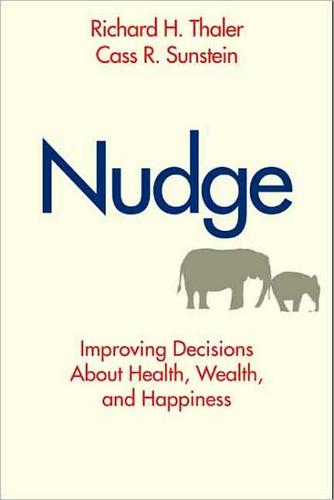
Nudge: Improving Decisions About Health, Wealth, and Happiness

by Richard H. Thaler and Cass R. Sunstein

View on Amazon →

"A nudge is any form of choice architecture that alters people's behavior in a predictable way without restricting options or significantly changing their economic incentives."

This groundbreaking book introduces libertarian paternalism—the idea that choice architecture can be designed to guide people toward better decisions without restricting freedom. Thaler and Sunstein show how small changes in how options are presented can dramatically improve outcomes for health, retirement, and finances. The book inspired the creation of 400+ behavioral-insights teams globally.

Nudge combines behavioral science with practical application. It demonstrates that how choices are framed matters enormously. For anyone designing systems, policies, or interfaces, understanding choice architecture is essential. This book has had real-world impact on policy and practice.

  • Choice architecture—how options are presented—profoundly affects decisions
  • Default options have enormous power and should be chosen carefully
  • Automatic enrollment increases retirement savings participation dramatically
  • Disclosure, reminders, and easy-to-use platforms improve financial decisions
  • Some 'nudges' blur the line between paternalistic and truly neutral design
  • Limited discussion of nudges in developing countries or different cultures
  • Focus on behavioral interventions may overlook structural economic problems

"Marvelous: funny, useful, and wise—a masterpiece of behavioral science applied to practical problems."

Daniel Kahneman, Nobel Prize Winner

"Nudge has changed the way we think about both business's and society's biggest problems through better choice architecture."

Eric Schmidt, Former CEO of Google

"The revised edition is even better than the original, providing timely insights into how design shapes human behavior."

Adam Grant, Bestselling Author
06

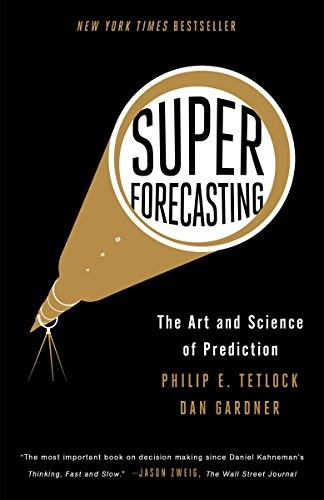
Superforecasting: The Art and Science of Prediction

by Philip E. Tetlock and Dan Gardner

View on Amazon →

"Superforecasters treat beliefs as hypotheses to be tested, rather than sacred possessions to be guarded."

Tetlock and Gardner reveal that some people have genuine foresight, even as traditional experts perform only slightly better than chance. Through the Good Judgment Project studying thousands of forecasters, they identify the specific skills and attitudes that distinguish superforecasters. The book shows that forecasting ability is learnable through practice and metacognition.

In an uncertain world, the ability to make predictions and acknowledge uncertainty is invaluable. This book proves that superior forecasting comes from humility, numerical thinking, and actively open-minded belief updating. Essential for anyone making consequential forecasts.

  • Superforecasting is a learnable skill, not an innate talent
  • Foxes (who know many things) outforecast hedgehogs (who know one big thing)
  • Breaking complex questions into smaller, measurable components improves accuracy
  • Actively updating beliefs based on evidence and embracing being wrong are crucial
  • The ten commandments for superforecasters can feel prescriptive
  • Requires significant time investment for the probabilistic reasoning techniques
  • Some techniques are better suited to geopolitical forecasting than business decisions

"The most important scientific study I've ever read on prediction, revolutionizing how we think about forecasting and uncertainty."

Cass R. Sunstein, Harvard Law School Professor

"The most important book on decision making since Daniel Kahneman's Thinking, Fast and Slow."

Jason Zweig, Wall Street Journal

"A common-sense guide to thinking about decision-making by a man who knows this terrain like no one else."

Steven Pinker, Harvard University Professor
07

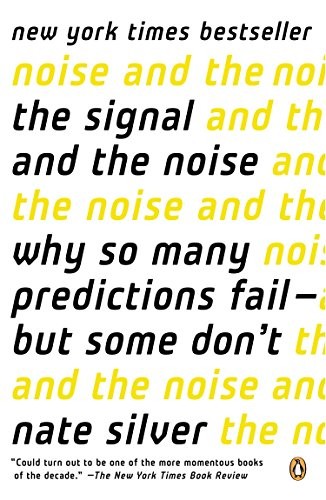
The Signal and the Noise: Why So Many Predictions Fail—But Some Don't

by Nate Silver

View on Amazon →

"Distinguishing the signal from the noise requires both scientific knowledge and self-knowledge: the serenity to accept the things we cannot predict, the courage to predict the things we can, and the wisdom to know the difference."

FiveThirtyEight founder Nate Silver explores why most predictions fail and why some succeed across fields from poker to weather to politics. He argues that signal (useful information) is often drowned out by noise (random variation). The book teaches readers to think probabilistically, embrace uncertainty, and avoid common prediction pitfalls that mislead even experts.

Silver demonstrates that predictive failure is endemic—from earthquake forecasters to financial analysts. This book teaches how to distinguish signal from noise and make decisions under uncertainty. Especially valuable for understanding why expert predictions often fail.

  • Most predictions fail because experts confuse signal with noise
  • Probabilistic thinking beats binary yes-or-no predictions
  • Bayesian reasoning—updating beliefs based on evidence—improves accuracy
  • Overconfidence and cherry-picking successes lead to worse forecasts
  • Some chapters feel tangential to core prediction themes
  • Less actionable than other decision-making books for individuals
  • Heavy focus on statistical thinking may overwhelm non-technical readers

"Named one of the ten best nonfiction books of 2012, offering essential reading in the era of Big Data."

The Wall Street Journal, Major Business Publication

"Features lively prose and interesting essays that examine how predictions are made across diverse fields from chess to weather."

The New York Times, Major Publication

"Essential reading in the era of Big Data that touches every business, sports event, and policymaker's decisions."

Forbes, Business Magazine
08

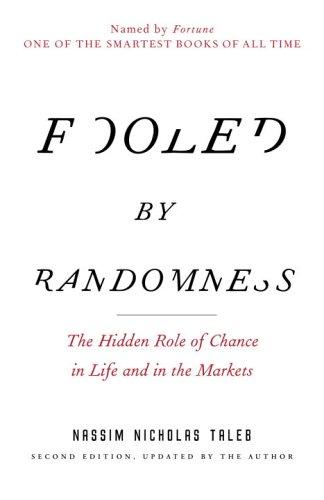
Fooled by Randomness: The Hidden Role of Chance in Life and in the Markets

by Nassim Nicholas Taleb

View on Amazon →

"No matter how sophisticated our choices, how good we are at dominating the odds, randomness will have the last word."

Nassim Taleb explores how randomness and chance shape outcomes far more than we admit, yet we construct narratives that give events false coherence. He argues that our brains are hardwired to see patterns where none exist and to overestimate our control over outcomes. The book challenges the assumption that past success predicts future performance.

This book is critical for understanding survivorship bias and the role of luck in success. It explains why high-confidence experts are often wrong and why we should be skeptical of narratives about causation. Essential for anyone in finance, investing, or business.

  • Randomness plays a far larger role in outcomes than we acknowledge
  • Survivorship bias leads us to study successes and ignore failures
  • The narrative fallacy makes us create false stories of cause and effect
  • Success stories often reflect luck more than skill or strategy
  • Writing style is dense and sometimes digressive
  • Taleb's confrontational tone alienates some readers
  • Less prescriptive about what to do with these insights

"Essential reading for anyone in finance and investing, fundamentally challenging assumptions about success and causation."

Financial Community, Investment Professionals

"A provocative exploration of survivorship bias and the role of randomness in business outcomes that reshapes thinking about success."

Business Leaders, Corporate Executives

"A brilliant challenge to the narratives we construct about causation, revealing how much of success owes to luck rather than skill."

Skeptical Community, Critical Thinkers
09

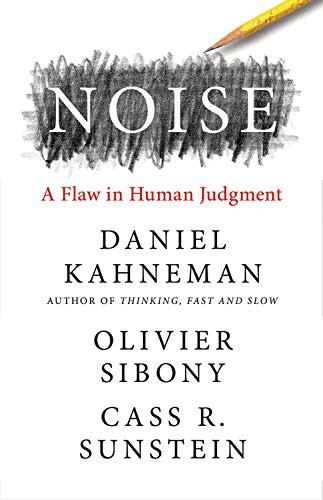
Noise: A Flaw in Human Judgment

by Daniel Kahneman, Olivier Sibony, and Cass R. Sunstein

View on Amazon →

"Wherever there is judgment, there is noise. And more of it than you think."

In this follow-up to their groundbreaking work, Kahneman, Sibony, and Sunstein examine noise—the variability in judgment that goes unnoticed and unmanaged in organizations and decisions. They argue that noise is a silent killer causing injustice, inefficiency, and waste. The book provides concrete strategies for identifying and reducing noise in systems.

While bias gets all the attention, noise is equally destructive yet largely ignored. This book reveals that inconsistent judgments cause enormous costs in healthcare, law, and business. Understanding and reducing noise is essential for improving decision systems.

  • Noise (variability) is as important as bias in understanding judgment errors
  • Inconsistent decisions across similar cases cause injustice and waste
  • Noise can be reduced through guidelines, checklists, and structured processes
  • Organizations systematically underestimate the amount of noise in their decisions
  • More academic and dense than Thinking Fast and Slow
  • Primarily focused on organizational rather than personal decision-making
  • Solutions feel incremental and manageable but not transformative

"A critical examination of how inconsistent judgments create injustice and waste in organizations, offering practical solutions for improvement."

Business Community, Corporate Leaders

"Reveals how noise in legal decisions and sentencing leads to injustice, providing evidence-based strategies for reducing variability."

Justice System, Legal Professionals

"Demonstrates how noise in medical judgments and diagnoses affects patient care, offering methods to create more consistent decision-making."

Healthcare Professionals, Medical Community
10

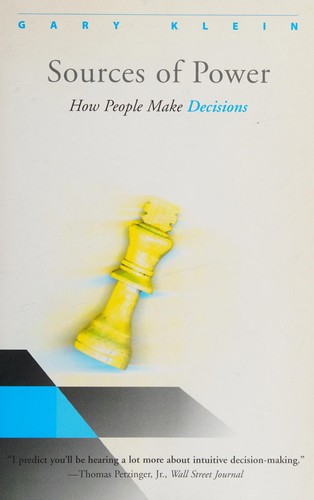
Sources of Power: How People Make Decisions

by Gary A. Klein

View on Amazon →

"When skilled people become experts, they don't have to make decisions between options. Instead, they can draw on experience and patterns to recognize what to do."

Gary Klein pioneered naturalistic decision-making research by studying how people actually make choices in high-stakes, time-pressured situations like firefighting and nursing. He proposes the Recognition-Primed Decision model, showing that experienced professionals draw on patterns and intuition rather than consciously weighing options. The book challenges the assumption that good decisions require systematic analysis.

This book explains how experts make split-second decisions in complex situations without formal analysis. It validates intuition while explaining its basis in pattern recognition. Essential for understanding expertise and decision-making in real-world high-pressure contexts.

  • Expert intuition is based on pattern recognition developed through experience
  • Recognition-primed decisions are faster and often more accurate than analytical choice
  • Mental simulation helps experts anticipate consequences before deciding
  • Expertise development requires feedback and diverse experience
  • Less applicable to novel decisions where pattern recognition fails
  • Emphasizes intuition in ways that may discourage needed analysis
  • Research heavily focused on specific professions; generalizability unclear

"Essential reading for understanding how experienced professionals make critical split-second decisions based on pattern recognition and intuition."

Emergency Services, Firefighting and Police

"Provides insight into how military commanders develop expertise and make decisions rapidly in complex, time-pressured situations."

Military Leadership, Defense Community

"A groundbreaking study of naturalistic decision-making that revolutionized understanding of expertise and intuitive judgment."

Cognitive Science, Research Community
Back to all lists