10 Best Economics Books

Essential Readings That Shape How We Understand Markets, Behavior, and Society

Economics explores the fundamental forces that shape our world—from individual decision-making to global wealth distribution. These 10 essential books combine timeless theory with modern insights, offering readers a comprehensive understanding of how economies work and why people make the choices they do. Whether you're interested in behavioral psychology, classical economics, inequality, or institutional theory, these works provide both intellectual rigor and surprising accessibility.

01

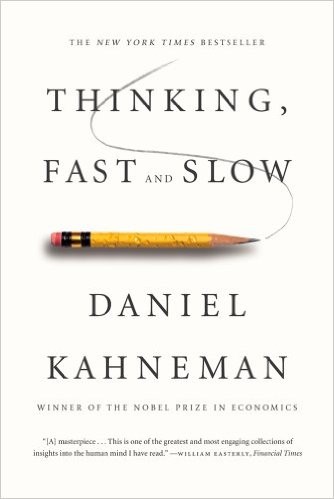
Thinking, Fast and Slow

by Daniel Kahneman

View on Amazon →

"A reliable way to make people believe in falsehoods is frequent repetition, because familiarity is not easily distinguished from truth."

Nobel laureate Daniel Kahneman distills decades of psychological research into an accessible exploration of how our minds work. The book reveals the two systems of thinking that drive all human behavior: the fast, intuitive system and the slow, deliberate system. Through vivid examples and surprising experiments, Kahneman demonstrates how understanding these mental processes can help us make better decisions in economics, finance, and everyday life.

This foundational work revolutionized economics by introducing psychological insights into economic decision-making. Kahneman's research on cognitive biases and heuristics fundamentally changed how economists understand human behavior, making it essential for anyone studying modern economics or behavioral finance. It bridges psychology and economics in ways that remain unparalleled.

  • Humans rely on two distinct thinking systems: fast and intuitive (System 1) and slow and deliberate (System 2)
  • Cognitive biases and mental shortcuts systematically influence our decisions in predictable ways
  • Anchoring, availability heuristic, and representativeness bias shape our judgments about probability and value
  • Understanding our thinking patterns can help us make better financial and life decisions
  • Some of the underlying studies supporting the book's claims have faced reproducibility challenges
  • The book occasionally oversimplifies complex psychological phenomena for accessibility
  • Later chapters exploring economic implications are less rigorously developed than earlier sections

"A landmark book in social thought"

Nassim Taleb, Author of The Black Swan

"Passages that deal with the economic and political implications of the research are gripping"

Kirkus Reviews, Literary Review Publication

"An essential book for understanding how humans actually make decisions"

The New York Times, Major Publication
02

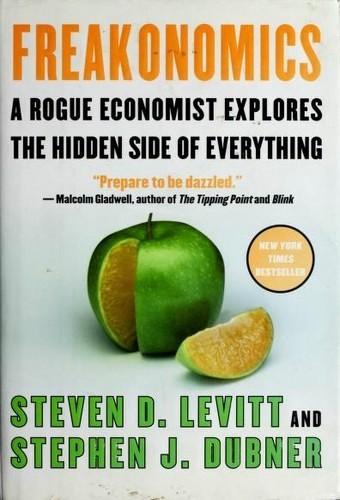
Freakonomics: A Rogue Economist Explores the Hidden Side of Everything

by Steven D. Levitt and Stephen J. Dubner

View on Amazon →

"An incentive is a bullet, a key: an often tiny object with astonishing power to change a situation"

Steven Levitt, a maverick economist, and collaborator Stephen Dubner reveal how economic thinking can unlock surprising truths about the everyday world. From sumo wrestlers to drug dealers, teachers to naming conventions, they apply economic incentives and data analysis to the most unexpected human behaviors. The book demonstrates that economics is not about money—it's about understanding human motivation and incentive structures.

Freakonomics democratized economic thinking for mainstream audiences while modeling the empirical approach that defines modern applied economics. Levitt's focus on real-world data rather than theoretical models helped shift economics toward practical problem-solving. The book's engaging narrative style proved that rigorous economic analysis could be both entertaining and illuminating.

  • Incentives are the cornerstone of human behavior and explain seemingly irrational actions
  • Empirical data often contradicts conventional wisdom and received assumptions
  • Economics provides tools to understand any human behavior, not just markets and money
  • Information asymmetry and hidden incentives create opportunities for insight across all domains
  • Some analyses lack sufficient methodological rigor and rely on correlation without establishing causation
  • The book glosses over important details, presenting conclusions without showing analytical work
  • Certain case studies have been criticized for oversimplification and unexamined assumptions
  • Levitt's conclusions have sometimes been disputed by other researchers using the same data

"If Indiana Jones were an economist, he'd be Steven Levitt"

Wall Street Journal, Major Financial Publication

"The trivia alone is worth the cover price"

New York Times Book Review, Book Review Publication

"Freakonomics challenges conventional wisdom and makes for fun reading"

Book Sense Picks, Literary Selection Organization
03

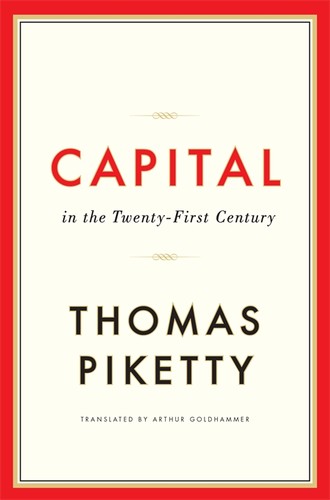
Capital in the Twenty-First Century

by Thomas Piketty

View on Amazon →

"When the rate of return on capital exceeds the rate of growth of output and income, as it did in the nineteenth century and seems quite likely to do again in the twenty-first, capitalism automatically generates arbitrary and unsustainable inequalities that radically undermine the meritocratic values on which democratic societies are based."

Thomas Piketty's monumental work combines historical analysis with cutting-edge data to examine wealth inequality across centuries. Drawing on a comprehensive global database of income and wealth, Piketty argues that when the rate of return on capital exceeds economic growth, wealth concentrates dangerously. He presents evidence that today's inequality mirrors the levels of the nineteenth century and proposes solutions including progressive taxation and international cooperation.

This work fundamentally reshaped contemporary debates about inequality, wealth, and capitalism. Piketty's extensive historical data and his central inequality formula (r > g) became pivotal in policy discussions worldwide. Whether accepted or debated, the book's rigorous empirical approach and direct engagement with distributional questions elevated inequality to a central concern in economics.

  • Historical data shows that wealth concentration has cyclical patterns driven by the relationship between capital returns and economic growth
  • When r (return on capital) exceeds g (growth rate), inequality naturally increases and concentrates wealth among owners
  • Progressive taxation, wealth taxes, and international cooperation are necessary to address inequality sustainably
  • Understanding capital flows across time periods is essential to understanding modern economic inequality
  • Financial Times editor Chris Giles identified data errors in Piketty's wealth statistics and methodology
  • Critics argue the book's predictions about future inequality are less rigorously supported than its historical analysis
  • Some economists question whether the r > g framework is sufficient to explain complex inequality dynamics
  • The policy recommendations, while thoughtful, may not be politically feasible in practice

"One of the watershed books in economic thinking"

Branko Milanović, Former Senior Economist, World Bank

"A truly path-breaking book offering a hard-hitting and well-founded critique of capitalism"

Dani Rodrik, Institute for Advanced Study

"The most important economics book of the year—and maybe of the decade"

The Guardian, Major Publication
04

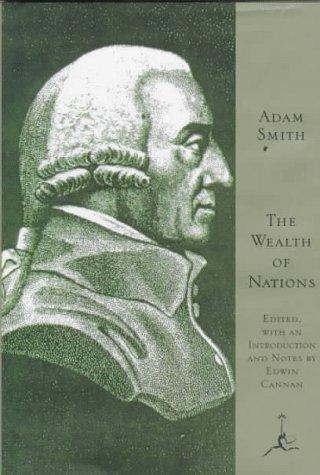
The Wealth of Nations

by Adam Smith

View on Amazon →

"It is not from the benevolence of the butcher, the brewer, or the baker that we expect our dinner, but from their regard to their own self-interest."

Adam Smith's 1776 masterpiece established the foundations of modern economics through careful observation of human nature and economic behavior. Smith argues that self-interest, channeled through market mechanisms and the division of labor, produces prosperity more effectively than central planning. His exploration of how markets coordinate behavior without conscious direction and his analysis of productivity growth through specialization remain remarkably relevant to understanding contemporary economies.

The Wealth of Nations is the foundational text of modern economics, introducing concepts of the division of labor, specialization, and market coordination that remain central to economic thought. Smith's insights about how individual self-interest can serve the broader public good through market mechanisms informed all subsequent economic theory. No serious study of economics can skip this essential original source.

  • The division of labor and specialization dramatically increase productivity and create wealth
  • Markets coordinate behavior through self-interest without requiring central direction or authority
  • Prices communicate information and align incentives in ways that produce efficient outcomes
  • Commerce and the pursuit of profit are compatible with social benefit and public welfare
  • Some interpretations of Smith emphasize self-interest while overlooking his extensive discussions of moral sentiments
  • Smith's examples are drawn from eighteenth-century manufacturing and may not apply to modern knowledge economies
  • His analysis predates modern finance, corporations, and globalized supply chains
  • The book's length and style make it challenging for contemporary readers without historical context

"The most important economics book ever written"

Friedrich Hayek, Economist and Philosopher

"The Wealth of Nations is the most influential economics book ever"

Paul Samuelson, Nobel Laureate Economist

"A book that has shaped the modern world"

The Economist, Economics Publication
05

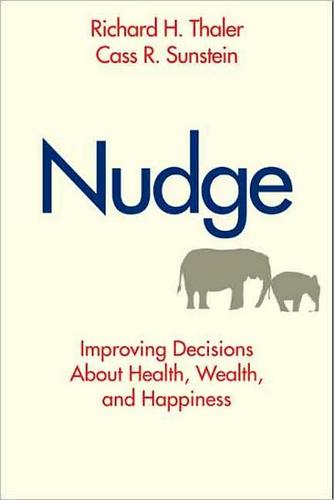
Nudge: Improving Decisions About Health, Wealth, and Happiness

by Richard H. Thaler and Cass R. Sunstein

View on Amazon →

"A nudge is any form of choice architecture that alters people's behaviour in a predictable way without restricting options or significantly changing their economic incentives."

Richard Thaler and Cass Sunstein introduce the concept of 'choice architecture'—the structure of options from which people choose. They show how subtle changes to how choices are presented can significantly influence decisions without restricting options or changing incentives. From retirement savings to healthcare decisions, they demonstrate how thoughtful design can help people make better choices while respecting their freedom and autonomy.

Nudge bridged behavioral economics and policy, showing how insights about human behavior could improve real-world decision-making. The concept of libertarian paternalism—guiding people toward better choices without limiting their freedom—became influential in policy circles worldwide. The book demonstrated that economics could be both rigorous and practical.

  • Choice architecture fundamentally shapes decisions; defaults, framing, and presentation matter enormously
  • Small, low-cost changes can produce significant improvements in outcomes for health, wealth, and happiness
  • Libertarian paternalism respects freedom while using insights about behavior to improve choices
  • Default options and opt-out structures are more powerful than opt-in approaches
  • Critics argue that choice architecture can be manipulative and raise questions about who defines 'better' outcomes
  • Some nudges may not be transparent to those being influenced, raising ethical concerns about autonomy
  • The effectiveness of nudges often depends on context, and results don't always generalize across populations
  • The book occasionally lacks rigorous evidence for some recommended nudges

"Essential reading for anyone interested in decision-making and public policy"

Steven Pinker, Psychologist and Author

"A brilliant and entertaining exploration of how we make choices"

The New York Times, Major Publication
"This book will change the way you think about decision-making"

Daniel Kahneman, Nobel Laureate
06

Why Nations Fail: The Origins of Power, Prosperity, and Poverty

by Daron Acemoglu and James A. Robinson

View on Amazon →

"Poor countries are poor because those who have power make choices that create poverty. They get it wrong not by mistake or ignorance but on purpose."

Acemoglu and Robinson present a sweeping analysis of why some nations prosper while others stagnate, arguing that the answer lies not in geography, culture, or resources but in institutions. They contrast extractive institutions that concentrate power and limit opportunity with inclusive institutions that distribute power and opportunity broadly. Through case studies from ancient Rome to modern-day Nogales, they demonstrate how institutional quality determines long-run economic success.

Why Nations Fail provided a powerful institutional framework for understanding development economics and historical patterns. The book elevated institutions to central importance in development economics and challenged geographical and cultural determinism. Its emphasis on how political institutions shape economic institutions became influential in policy and academic circles worldwide.

  • Inclusive institutions that distribute power broadly create incentives for innovation and broad-based prosperity
  • Extractive institutions concentrate power and limit opportunity, stifling development despite resource wealth
  • Political institutions determine what economic institutions exist; politics shapes economics
  • Historical institutional patterns create path dependence that is difficult to overcome
  • The framework, while powerful, may oversimplify complex historical and institutional dynamics
  • Some critics argue the book underestimates the importance of cultural and geographical factors
  • The causal mechanisms linking institutions to development could be more precisely specified
  • Critics note the book's examples sometimes seem cherry-picked to support the institutional thesis

"A magnificent achievement that fundamentally transforms our understanding of development"

Dani Rodrik, Harvard Kennedy School

"A masterpiece of social science that will shape thinking for decades"

Steven Levitt, Author of Freakonomics

"Ambitious, magisterial, and deeply learned"

The Financial Times, Major Financial Publication
07

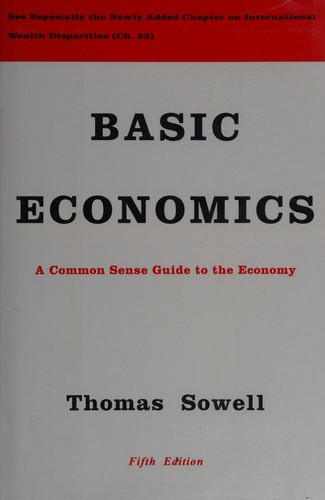
Basic Economics: A Common Sense Guide to the Economy

by Thomas Sowell

View on Amazon →

"The first lesson of economics is scarcity: There is never enough of anything to fully satisfy all those who want it. The first lesson of politics is to disregard the first lesson of economics."

Thomas Sowell provides an accessible and comprehensive introduction to economic thinking without advanced mathematics or jargon. He emphasizes that economics is fundamentally about understanding how choices and constraints shape behavior, and that consequences matter more than intentions. Sowell applies economic reasoning to diverse topics from housing and environment to education and healthcare, revealing how policies often produce unintended consequences.

Basic Economics proves that rigorous economic thinking can be both accessible and practical. Sowell's emphasis on consequences and incentives over good intentions provides essential intellectual discipline. The book demonstrates how economic reasoning illuminates real-world policy debates, making it valuable for citizens navigating economic and political discussions.

  • Scarcity is the fundamental economic constraint; resources are always limited relative to wants
  • Prices communicate information and incentives more efficiently than most alternatives
  • Unintended consequences often undermine well-intentioned policies because incentives matter
  • Economic trade-offs are inescapable; 'free' goods and services involve real costs borne by someone
  • Some critics argue Sowell's perspectives are ideologically conservative and favor free-market solutions
  • The book may oversimplify market failures and external effects that justify government intervention
  • Sowell's critiques of government sometimes lack equal scrutiny of market failures
  • Complex modern issues sometimes require more nuance than the book's focus on basic principles allows

"The clearest explanation of economic principles for the general reader"

Walter Williams, Economist and Columnist

"Essential reading for understanding how economies actually work"

The Wall Street Journal, Major Financial Publication

"Sowell's best book and one of the finest introductions to economics"

Judge Richard Posner, Federal Judge and Economist
08

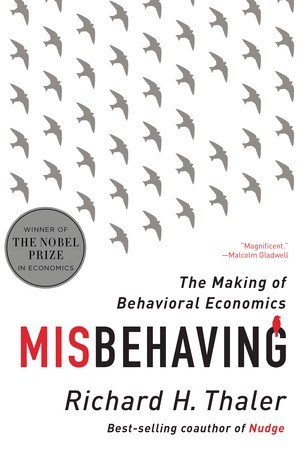
Misbehaving: The Making of Behavioral Economics

by Richard H. Thaler

View on Amazon →

"Rather, the problem is with the model being used by economists, a model that replaces homo sapiens with a fictional creature called homo economicus. We live in a world of Humans, not Econs."

Richard Thaler traces the intellectual journey that led to the creation of behavioral economics. He recounts his observations of real human behavior that violated economic assumptions: people leaving money on tables, overvaluing what they own, and making systematically irrational choices. Thaler's engaging narrative reveals how psychologists' insights about human cognition revolutionized economics and spawned a new field dedicated to understanding how Humans—not Econs—actually behave.

Misbehaving documents the intellectual revolution that introduced psychology to economics. Thaler's personal narrative makes the evolution of behavioral economics accessible and shows how questioning assumptions can reshape an entire field. The book demonstrates that rigorous science sometimes requires challenging established dogma and being willing to study 'misbehavior.'

  • Traditional economic models assume perfectly rational actors (Econs) that bear little resemblance to actual humans
  • Real humans exhibit systematic patterns of 'misbehavior' including loss aversion and mental accounting
  • Mental accounting helps explain why people treat money differently depending on source and intended use
  • Psychological insights about decision-making can improve economics' predictive power and realism
  • Some traditional economists argue behavioral findings are marginal exceptions rather than fundamental challenges
  • Critics note that behavioral findings sometimes conflict with each other and don't always generalize
  • The book occasionally prioritizes engaging narrative over rigorous demonstration of findings
  • Some argue that behavioral economics still lacks a unified theoretical framework

"A brilliant and entertaining account of how behavioral economics was born"

Daniel Kahneman, Nobel Laureate Psychologist

"Thaler's memoir is as entertaining as it is enlightening"

The Economist, Economics Publication

"A delightful and instructive tour of the revolution in economic thinking"

Steven Pinker, Cognitive Scientist
09

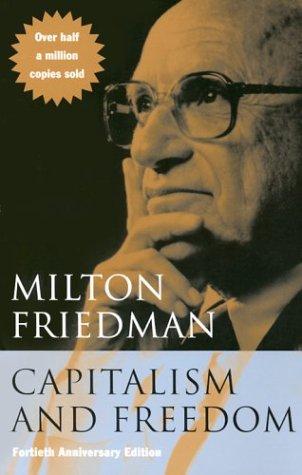
Capitalism and Freedom

by Milton Friedman

View on Amazon →

"A society that puts equality before freedom will get neither. A society that puts freedom before equality will get a high degree of both."

Milton Friedman argues that economic freedom and political freedom are inextricably linked and that competitive capitalism is the most effective engine of prosperity and liberty. He contends that free markets solve problems more efficiently than government intervention and that the role of government should be limited to enforcing contracts and protecting property rights. Friedman's elegant essays demonstrate how markets coordinate complex activity and why government attempts to manage economies often produce unintended consequences.

Capitalism and Freedom is essential reading in the defense of free-market economics and remains influential in policy debates. Friedman's arguments for economic freedom as a prerequisite for political freedom shaped decades of economic thought and policy. The book's clarity and moral reasoning make it central to understanding modern debates about the appropriate role of government in the economy.

  • Economic freedom is a necessary condition for political freedom; they are mutually reinforcing
  • Competitive markets are more efficient than government intervention at coordinating activity and allocating resources
  • Government action often produces unintended consequences worse than the problems it seeks to solve
  • The proper role of government is to establish and enforce rules, not to manage economic outcomes
  • Critics argue Friedman underestimates market failures including monopoly power, externalities, and information asymmetries
  • Some contend his framework gives insufficient weight to distributional concerns and poverty reduction
  • The book lacks sustained engagement with arguments for progressive taxation and social safety nets
  • Modern financial crises suggest that fully deregulated markets may produce systemic instability

"Milton's finest work, combining economic wisdom with moral clarity"

George Stigler, Nobel Laureate Economist

"The most important defense of free-market capitalism"

The Wall Street Journal, Major Financial Publication

"A landmark contribution to political and economic philosophy"

Economist, Economics Publication
10

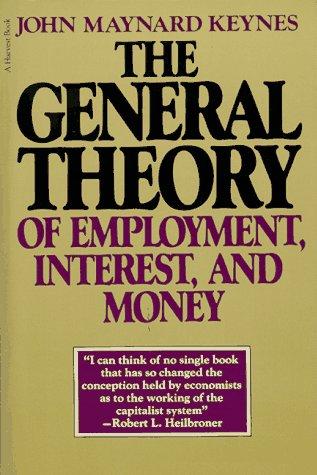
The General Theory of Employment, Interest and Money

by John Maynard Keynes

View on Amazon →

"The ideas of economists and political philosophers, both when they are right and when they are wrong, are more powerful than is commonly understood. Practical men, who believe themselves to be quite exempt from any intellectual influences, are usually the slaves of some defunct economist."

John Maynard Keynes revolutionized economics by explaining how aggregate demand drives employment and output. He challenged the prevailing belief that markets automatically return to full employment, arguing instead that economies can settle into equilibrium with persistent unemployment. Keynes introduced concepts like the multiplier and emphasized the roles of uncertainty, expectations, and 'animal spirits' in economic behavior, fundamentally reshaping how economists understand macroeconomics and policy.

The General Theory fundamentally transformed macroeconomics and economic policy. Keynes's insights about how demand shocks propagate through economies and how expectations influence outcomes remain central to modern macroeconomics. His arguments for active fiscal policy to combat unemployment shaped post-war policy and remain essential to understanding modern monetary economics and financial crises.

  • Aggregate demand, not the supply of money alone, determines employment and output levels
  • Economies can settle into equilibrium with involuntary unemployment, contradicting classical assumptions
  • Uncertainty and expectations shape behavior in ways that markets may not automatically correct
  • Active fiscal and monetary policy can help stabilize economies and reduce unemployment
  • Keynes's writing style is notoriously difficult, making the book challenging for contemporary readers
  • Some economists argue his theoretical framework has been superseded by modern macroeconomic models
  • Critics contend his policy recommendations led to excessive government intervention and inflation
  • Post-Keynesian scholars argue that mainstream interpretations have betrayed Keynes's original insights

"The most important economics book of the twentieth century"

Paul Samuelson, Nobel Laureate Economist

"Still essential reading for understanding how modern economies work"

Janet Yellen, Former Federal Reserve Chair

"The book that founded modern macroeconomics"

The Economist, Economics Publication
Back to all lists