The 10 Best Emotional Intelligence Books

Master Your Emotions and Transform Your Life with Essential EQ Wisdom

Emotional intelligence is the foundation of personal success, meaningful relationships, and effective leadership. This curated collection presents the 10 most essential books on emotional intelligence, featuring pioneering works from leading psychologists and contemporary thinkers. These books provide the science, frameworks, and practical strategies you need to develop self-awareness, manage emotions, build stronger relationships, and lead with greater impact.

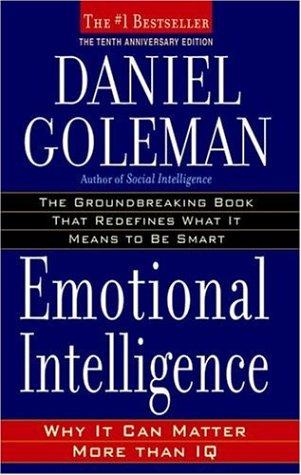
Emotional Intelligence: Why It Can Matter More Than IQ
01

Emotional Intelligence: Why It Can Matter More Than IQ

by Daniel Goleman

"If your emotional abilities aren't in hand, if you don't have self-awareness, if you are not able to manage your distressing emotions, if you can't have empathy and have effective relationships, then no matter how smart you are, you are not going to get very far."

The groundbreaking book that introduced emotional intelligence to the mainstream, arguing that EQ is as important as IQ for success. Goleman explores the five core dimensions of emotional intelligence: self-awareness, self-management, motivation, empathy, and social skills. This seminal work spent over 18 months on The New York Times bestseller list and has been translated into 40 languages.

This is the foundational text that established emotional intelligence as a critical life skill. Goleman's research demonstrates that success depends not just on cognitive ability but on the ability to recognize, understand, and manage emotions in ourselves and others. No study of emotional intelligence is complete without understanding this pioneering work that changed how we think about intelligence itself.

  • Emotional intelligence comprises five core dimensions: self-awareness, self-regulation, motivation, empathy, and social skills
  • EQ is learnable and can be developed throughout life, unlike IQ which is largely fixed
  • Emotions shape every decision and interaction, influencing success more than traditional intelligence measures
  • Self-awareness is the cornerstone of emotional intelligence and the foundation for all other EQ competencies
  • Critics argue Goleman's definition is too broad, containing up to 20 competencies that diverge from scientific psychology standards
  • The original claim that EQ accounts for 80% of success is misleading; Goleman himself acknowledged this exaggeration in 2005
  • Scholars Salovey and Mayer contend the term is applied too broadly in business and overlaps significantly with established personality-trait research

"Ranked Daniel Goleman as one of the 10 most influential business thinkers"

The Wall Street Journal, Major Business Publication

"Named Emotional Intelligence as one of the 25 most influential business management books"

TIME Magazine, Publication
Emotional Intelligence 2.0
02

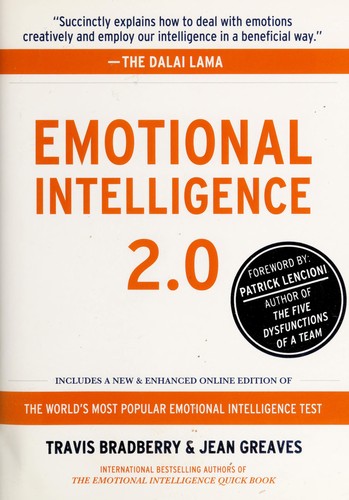
Emotional Intelligence 2.0

by Travis Bradberry and Jean Greaves

"The four core EQ skills are self-awareness, self-management, social awareness, and relationship management—and they can all be improved with practice."

A practical, hands-on guide that teaches the four core EQ skills through self-assessment and 66 actionable strategies. This updated bestseller includes an online assessment code for the Emotional Intelligence Appraisal that measures your current EQ level. With over 3 million copies sold, it remains the number one best-selling EQ book.

This is essential reading for anyone seeking practical, immediately applicable strategies to improve emotional intelligence. Unlike theoretical books, EI 2.0 combines research with action-oriented techniques that help you identify your emotional blind spots and develop concrete skills. The included assessment tool makes it the most comprehensive practical guide for EQ development.

  • EQ consists of four learnable skills: self-awareness, self-management, social awareness, and relationship management
  • Brain processes emotions before rational thought, making emotional intelligence a key predictor of success in all job types
  • 66 practical strategies provide specific techniques to improve each of the four EQ competencies
  • The Emotional Intelligence Appraisal assessment identifies which strategies will be most beneficial for individual development
  • Academic critics note that major claims lack inline citations, though citations exist in the back notes section
  • The book claims EQ accounts for 58% of performance in all job types, which some researchers consider overstated
  • The simplification of EQ into four components may oversimplify the complexity of emotional processes

"This book can drastically change the way you think about success...read it twice."

Patrick Lencioni, Bestselling author, The Five Dysfunctions of a Team

"Emotional Intelligence 2.0 succinctly explains how to deal with emotions creatively and employ our intelligence in a beneficial way."

The Dalai Lama, Spiritual Leader

"A fast read with compelling anecdotes and good context in which to understand and improve."

Newsweek, Publication
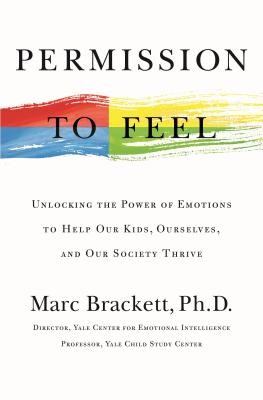
Permission to Feel: The Power of Emotional Intelligence to Achieve Well-Being and Success
03

Permission to Feel: The Power of Emotional Intelligence to Achieve Well-Being and Success

by Marc Brackett

"Rather, emotion regulation starts with giving ourselves and others the permission to own our feelings—all of them."

A groundbreaking book that presents Marc Brackett's RULER framework for emotional intelligence, developed through 25 years of emotion science research. The book combines psychological research with compelling stories and innovative strategies for developing emotional intelligence in both children and adults. Translated into 22 languages and adopted by over 5,000 schools worldwide.

Permission to Feel bridges the gap between scientific research and practical application, offering the most evidence-based framework for emotional intelligence development available. Brackett's RULER method has been proven to reduce stress, improve school climate, and enhance academic achievement. This book is essential for understanding how to create emotionally intelligent communities and organizations.

  • RULER framework: Recognize emotions, Understand emotions, Label emotions, Express emotions, Regulate emotions
  • When we suppress emotions, they build up like a dark force that poisons everything we do
  • Giving ourselves and others permission to feel all emotions is the foundation of emotional regulation
  • Creating emotionally intelligent schools and organizations starts with helping adults develop their own EQ first
  • Some argue the RULER framework, while evidence-based, may require significant institutional change that's difficult for schools to implement
  • The book's emphasis on emotional expression may be misinterpreted as validation of unhealthy emotional behavior
  • Critics suggest more attention could be given to cultural differences in emotional expression and regulation

"Marc Brackett's Permission to Feel is groundbreaking, eye-opening, and perhaps even life-changing"

Brené Brown, Bestselling author and researcher

"Marc regularly consults with Fortune 500 companies on best practices for integrating emotional intelligence principles into the workplace"

Fortune 500 Companies, Business Leaders (Google, Amazon, Microsoft)
Emotional Agility: Get Unstuck, Embrace Change, and Thrive in Work and Life
04

Emotional Agility: Get Unstuck, Embrace Change, and Thrive in Work and Life

by Susan David

"Emotions are data but not directives."

A revolutionary approach to navigating life's challenges through emotional agility—the ability to be present with emotions while remaining true to your values. Based on 20+ years of research, Susan David teaches a science-based method for achieving well-being and success despite complexity and change. Her TED talk on emotional agility has been viewed by over 12 million people.

Emotional Agility provides the essential framework for thriving in an uncertain world. David's concept moves beyond traditional emotional intelligence to teach resilience, authenticity, and values-alignment. Her research-backed approach has been recognized by Harvard Business Review as a Management Idea of the Year, making it indispensable for modern leadership and personal development.

  • Emotional agility is the ability to be with your emotions with curiosity, compassion, and courage to take values-connected steps
  • The tyranny of positivity—viewing natural emotions as good or bad—prevents authentic living and resilience
  • Emotions provide valuable data about our values and needs, but should not dictate our actions
  • Courage is not the absence of fear; courage is fear walking forward toward what matters
  • Some readers find the concepts abstract and wish for more concrete, step-by-step applications
  • The emphasis on personal values may be culturally biased toward Western individualistic frameworks
  • Critics note the book could provide more guidance on how to implement emotional agility in organizational settings

"Named Emotional Agility a Management Idea of the Year"

Harvard Business Review, Academic and Business Publication

"An accessible, reader-friendly voyage"

Daniel Goleman, Author of Emotional Intelligence

"Susan David's TED Talk on emotional agility has been viewed by over 12 million people"

TED.com, Global Speaking Platform
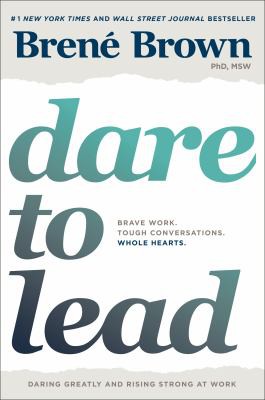
Dare to Lead: Brave Work. Tough Conversations. Whole Hearts.
05

Dare to Lead: Brave Work. Tough Conversations. Whole Hearts.

by Brené Brown

"You can't get to courage without rumbling with vulnerability."

A transformative guide to courageous leadership grounded in vulnerability research. Brown spent seven years studying transformative leaders and conducting interviews with 150 global C-level executives to identify the ingredients of brave leadership. The book teaches that daring leadership requires showing up courageously, vulnerable, and whole-hearted.

Dare to Lead is essential for anyone in a leadership position who wants to create psychologically safe, authentic organizations. Brown's research-backed approach challenges the myth that leaders must be invulnerable, teaching instead that vulnerability is the birthplace of courage. In an era of rapid change and uncertainty, this framework for values-driven, emotionally intelligent leadership is indispensable.

  • Daring leadership requires showing up courageously, openly, and with whole hearts—not with armor
  • Vulnerability is not weakness; it is the foundation of courage and authentic connection
  • Armor—protective thoughts, emotions, and behaviors—moves us out of alignment with our values and erodes trust
  • Creating courageous cultures requires making brave work, tough conversations, and whole hearts the expectation
  • Some argue the emphasis on vulnerability may be misinterpreted as sharing everything indiscriminately
  • The framework may be less applicable in highly hierarchical or formal organizational cultures
  • Critics suggest the book could provide more specific guidance on balancing vulnerability with professional boundaries

"A practical and insightful guide to courageous leadership"

Sheryl Sandberg, COO, Facebook

"Dare to Lead is the skillful and empowering Jedi training we have all been waiting for"

Danielle Kretek, Founder, Google Empathy Lab
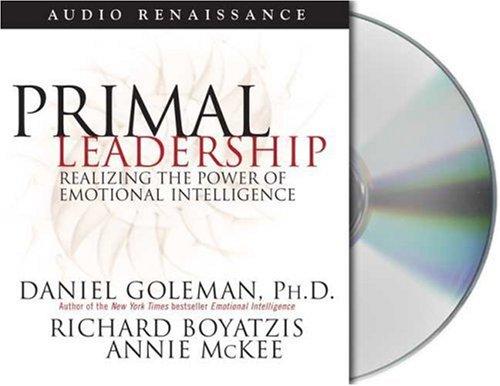
Primal Leadership: Unleashing the Power of Emotional Intelligence
06

Primal Leadership: Unleashing the Power of Emotional Intelligence

by Daniel Goleman, Richard E. Boyatzis, and Annie McKee

"Great leaders excel not just through skill and smarts, but by connecting with others using emotional intelligence competencies like empathy and self-awareness."

A landmark book that established emotional intelligence as the foundation of great leadership. Drawing from decades of research in world-class organizations, the authors show that leaders excel through emotional intelligence competencies like empathy and self-awareness. The book outlines six leadership styles and how emotional intelligence drives their effectiveness.

Primal Leadership is the definitive work on emotional intelligence in leadership contexts. The concept of emotional resonance—how leaders' emotions affect their teams—is crucial for anyone in a leadership role. The book's framework for understanding different leadership styles and their emotional foundations has become standard in MBA programs and executive training worldwide.

  • A leader's emotions are contagious—positive energy resonates through organizations while negativity undermines performance
  • Six leadership styles exist: Visionary, Coaching, Affiliative, Democratic, Pacesetting, and Commanding
  • Emotional intelligence determines a leader's ability to create resonance and drive positive organizational outcomes
  • Great leaders can fluidly interchange among different leadership styles based on situational demands
  • Some researchers dispute the causal link between leader emotions and organizational performance
  • The framework's universality across cultures has been questioned by organizational behavior scholars
  • Critics argue the book oversimplifies the relationship between emotional intelligence and leadership effectiveness

"Named Primal Leadership one of the 25 most influential business management books"

TIME Magazine, Publication
"Now used routinely in universities, business schools, and professional training programs globally"

Business Schools Worldwide, Academic Institutions
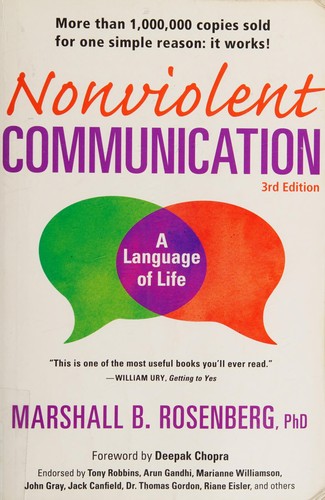
Nonviolent Communication: A Language of Life
07

Nonviolent Communication: A Language of Life

by Marshall B. Rosenberg

"Empathy lies in our ability to be present without opinion."

A transformative guide to compassionate communication based on the principles of nonviolence and humanistic psychology. Rosenberg presents the four-part NVC process: observation, feelings, needs, and requests. The book teaches how to express yourself authentically and listen empathically to foster voluntary cooperation and resolve conflicts.

Nonviolent Communication is the premier how-to guide for developing empathy, one of emotional intelligence's fundamental competencies. The NVC framework has been adopted worldwide for conflict resolution, organizational communication, and relationship building. This book provides concrete, step-by-step techniques for the emotional intelligence skills that emotional awareness must accompany.

  • The four NVC components are: observation (facts without judgment), feelings (authentic emotions), needs (underlying values), and requests (specific actions)
  • Empathy requires being fully present and understanding another's feelings and needs without trying to fix or judge
  • All violence stems from people tricking themselves into believing their pain derives from others who deserve punishment
  • The objective of NVC is to establish relationships based on honesty and empathy that fulfill everyone's needs
  • Some argue the NVC formula can feel stilted or artificial when first applied, reducing natural communication
  • Critics suggest the approach may be too optimistic about humans' willingness to engage empathically in conflict
  • The method's effectiveness depends heavily on both parties' willingness to participate, which may not always be realistic

"Endorses Marshall Rosenberg's work on nonviolent communication"

Deepak Chopra, Bestselling author and wellness expert

"CEO Satya Nadella distributed the book to executives as part of corporate culture development"

Microsoft, Technology Company Leadership
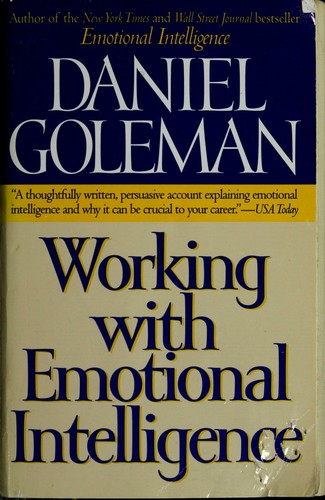
Working with Emotional Intelligence
08

Working with Emotional Intelligence

by Daniel Goleman

"In determining star performance in every field, emotional intelligence matters twice as much as IQ or technical expertise."

A practical guide showing how emotional intelligence determines star performance in the workplace. Goleman identifies 25 emotional intelligence competencies and explains their importance across different professional roles. The book documents that emotional intelligence matters twice as much as IQ or technical expertise in determining career success.

Working with Emotional Intelligence bridges the gap between EQ theory and practical workplace application. It provides the most comprehensive framework for understanding which emotional skills matter most in different professional contexts. This book is essential for managers, professionals, and organizational leaders seeking to understand and develop the emotional competencies that drive performance.

  • 25 emotional intelligence competencies can be organized into four categories: self-awareness, self-management, social awareness, and relationship management
  • Star performers in every field possess strong emotional intelligence regardless of their technical expertise or IQ
  • Self-regulation, empathy, and social skill are the most critical emotional competencies for workplace success
  • Emotional intelligence can be developed through targeted practice and feedback, making it essential for career advancement
  • The 25 competencies model is criticized as overly broad and lacking theoretical coherence
  • Critics argue the book makes claims about EQ's importance without sufficient empirical validation in all job types
  • The mixed model of emotional intelligence combines abilities and personality traits in ways that blur important distinctions

"Recognized as foundational work on emotional intelligence in professional contexts"

Harvard Business Review, Business Publication
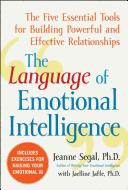
The Language of Emotional Intelligence: The Five Essential Tools for Building Powerful and Effective Relationships
09

The Language of Emotional Intelligence: The Five Essential Tools for Building Powerful and Effective Relationships

by Jeanne Segal

"The five essential tools of emotional intelligence form a bridge between your inner world and your relationships with others."

A practical guide presenting five essential tools for developing emotional intelligence in personal and professional relationships. Segal's step-by-step program shows how to recognize emotions, manage them effectively, and use emotional awareness to enhance connections with others. The book emphasizes that emotional intelligence is learnable and applicable across all life domains.

The Language of Emotional Intelligence provides accessible, actionable tools for improving relationships through emotional awareness. Segal's five-tool framework makes emotional intelligence concepts concrete and practical for everyday use. This book is essential for anyone seeking to improve communication, resolve conflicts, and build stronger relationships through emotional intelligence.

  • Five essential tools form the foundation of emotional intelligence: awareness, understanding, management, expression, and empathy
  • Emotional awareness begins with recognizing and naming emotions accurately in yourself and others
  • Effective communication requires expressing emotions without blame while remaining open to others' perspectives
  • These five tools can be applied across all relationships: personal, professional, and family
  • Some critics argue the five-tool framework oversimplifies the complexity of emotional processes
  • The book may benefit from more diverse cultural perspectives on emotion expression and management
  • Critics note it could provide more guidance on handling emotionally challenging or toxic relationships

"Recommended by therapists and counselors as a practical guide for emotional awareness in relationships"

Relationship Counselors, Mental Health Professionals
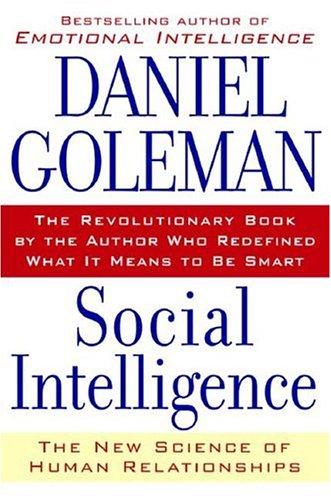
Social Intelligence: The New Science of Human Relationships
10

Social Intelligence: The New Science of Human Relationships

by Daniel Goleman

"We are 'wired to connect' and the surprisingly deep impact of our relationships affects every aspect of our lives."

A groundbreaking synthesis of neuroscience and psychology revealing how we are neurologically wired for connection. Goleman explores the brain's social circuits and demonstrates that our relationships fundamentally shape our health, happiness, and success. The book extends emotional intelligence into the broader realm of how we connect with others at a neural level.

Social Intelligence provides the neuroscientific foundation for understanding why relationships matter so profoundly. Goleman explains that humans are literally designed for social connection and that our brains engage in a neural dance with those around us. This book is essential for understanding the biological basis of emotional intelligence and why developing strong relationships is fundamental to thriving.

  • Humans are neurologically designed for social connection with constant brain-to-brain interactions occurring through the 'neural ballet'
  • The quality of our relationships directly impacts our physical health, emotional well-being, and longevity
  • Mirror neurons enable us to empathetically understand others and emotionally resonate with them
  • Social awareness and relationship management skills are rooted in our fundamental neurological wiring for connection
  • Some neuroscientists argue Goleman oversimplifies the role of mirror neurons in empathy and social understanding
  • Critics suggest the book makes broader claims about social connection's effects than current neuroscience fully supports
  • The book may blur important distinctions between neural mechanisms and behavioral outcomes

"Recognized for synthesizing neuroscience research on social connection and human relationships"

Neuroscience Community, Scientific Research
Back to all lists