10 Essential Entrepreneurship Books

The most critical reads for founders and business builders

Discover the 10 most essential books that have shaped modern entrepreneurship. From lean startup methodology to venture capital fundamentals, these curated reads cover the core principles, strategies, and mindsets required to build successful companies. Each book offers unique insights into different aspects of the entrepreneurial journey, from ideation and execution to scaling and raising capital.

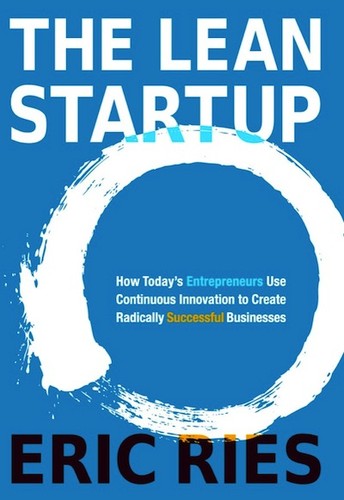
The Lean Startup
01

The Lean Startup

by Eric Ries

"The only metrics that entrepreneurs should invest energy in collecting are those that help them make decisions."

The Lean Startup introduces a revolutionary methodology for building startups that emphasizes continuous innovation, rapid experimentation, and validated learning. The book argues that traditional business plans are obsolete and that startups should focus on testing hypotheses and iterating based on customer feedback rather than executing detailed pre-planned strategies.

This book fundamentally changed how startups approach product development and business validation. It provides a practical framework for reducing waste, accelerating learning, and increasing the probability of startup success. Essential reading for anyone building a company in an environment of uncertainty.

  • Focus on validated learning through experimentation rather than following detailed business plans
  • Distinguish between vanity metrics that look impressive and actionable metrics that inform real decisions
  • Iterate quickly based on customer feedback using the build-measure-learn feedback loop
  • The minimum viable product (MVP) is a tool for learning, not a final product
  • The methodology is heavily biased toward software and internet-based businesses with limited applicability to regulated industries or hardware startups
  • Early customer input may not be effective for truly novel technologies and can mislead entrepreneurs about revolutionary innovations
  • Overly simplistic treatment of technical debt and scalability issues that can result from rushing to build MVPs

"I make all our managers read The Lean Startup."

Jeffrey Immelt, Former CEO, General Electric

"Eric has created a science where previously there was only art. A must read for every serious entrepreneur."

Marc Andreessen, Co-founder, Andreessen Horowitz

"The Lean Startup is the book whose lessons I want every entrepreneur to absorb and apply."

Mitchell Kapor, Founder, Lotus Development Corporation
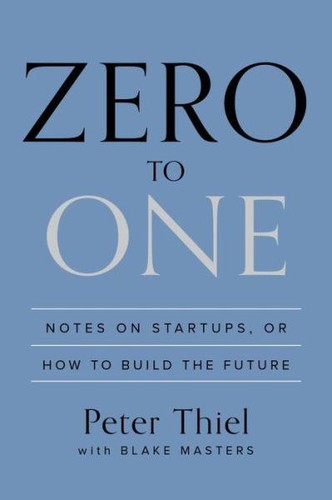
Zero to One
02

Zero to One

by Peter Thiel and Blake Masters

"The next Bill Gates will not build an operating system. The next Larry Page or Sergey Brin won't make a search engine. If you are copying these guys, you aren't learning from them."

Zero to One challenges conventional wisdom about startups by arguing that entrepreneurs should focus on creating unique, innovative businesses rather than copying successful companies. Thiel presents contrarian thinking about competition, monopolies, and how to build companies that matter in a supposedly technologically stagnant world.

This book provides essential contrarian frameworks that distinguish truly innovative startups from incremental improvements. It challenges entrepreneurs to think differently about value creation, competition, and the nature of progress, making it crucial reading for ambitious founders seeking to build something genuinely new.

  • Strive to build monopolies through technological innovation rather than competing in crowded markets
  • Every great business is built around a secret that's hidden from the outside world
  • Focus on vertical progress (zero to one) rather than horizontal progress (one to n)
  • Distribution is as important as product; brilliant ideas without distribution channels fail
  • Contains logical inconsistencies and oversimplified arguments about competition and technological progress
  • The 'zero to one' framework is criticized as impractical since most innovations build incrementally on existing technologies
  • Thiel's critiques of education and formal training appear hypocritical given his own extensive education and expertise

"Read it, accept Peter's challenge, and build a business beyond expectations."

Jeffrey Immelt, Former Chairman and CEO, General Electric

"Peter Thiel's new book, Zero to One, shines like a laser beam and offers a relentlessly thought-provoking articulation of capitalism."

Derek Thompson, Writer, The Atlantic
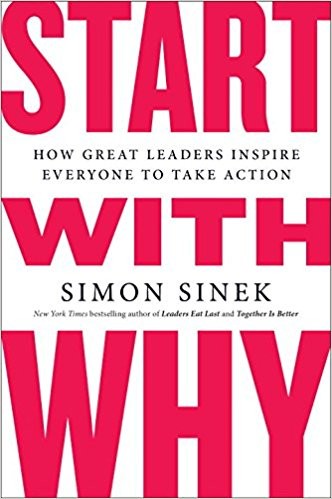
Start with Why
03

Start with Why

by Simon Sinek

"People don't buy what you do; they buy why you do it. And what you do simply proves what you believe."

Start with Why explores how the most successful leaders and companies inspire their teams and customers by clearly articulating their purpose and core beliefs. Sinek introduces the Golden Circle model, arguing that great leaders inspire action by communicating their 'why' before their 'what' and 'how.'

Understanding how to communicate purpose and inspire teams is fundamental to building a sustainable company. This book provides a simple but powerful framework for developing organizational culture and attracting talent that believes in your mission, making it essential reading for founders.

  • The Golden Circle (why, how, what) reveals that great leaders inspire by communicating purpose first
  • Culture and purpose attract customers and employees who align with your values
  • Clear differentiation comes from a compelling purpose, not just superior products or services
  • Consistency between stated purpose and actions builds trust and loyalty
  • Sinek's brain science claims lack scientific basis; the mapping of 'what' to neocortex and 'why' to limbic system is not neurologically accurate
  • The framework relies heavily on anecdotal examples (Apple, TiVo) and retrofits existing successes rather than predictively identifying winners
  • Overemphasizes purpose and inspiration while downplaying practical business factors like timing, resources, and competitive advantage

"A powerful and penetrating exploration of what separates great companies and great leaders from the rest."

Polly LaBarre, Co-author, Mavericks at Work
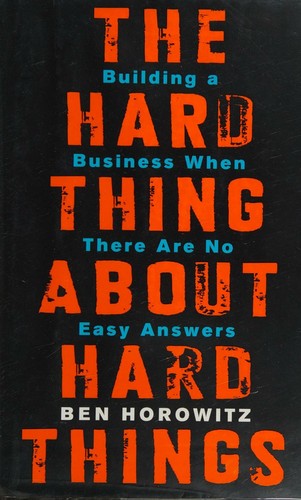
The Hard Thing About Hard Things
04

The Hard Thing About Hard Things

by Ben Horowitz

"Hard things are hard because there are no easy answers or recipes. They are hard because your emotions are at odds with your logic."

The Hard Thing About Hard Things provides candid, unflinching guidance on the difficult decisions founders face when building companies. Horowitz covers the messy realities of entrepreneurship including layoffs, leadership challenges, managing through crises, and the emotional toll of building a business.

Most entrepreneurship books focus on the exciting parts of building companies. This book is essential because it addresses the difficult realities that most founders actually face—how to make hard decisions, manage through adversity, and lead effectively when there are no good options.

  • The hardest part of entrepreneurship is navigating situations with no clear right answers where emotions conflict with logic
  • Effective leadership during crisis requires honest communication, bold decision-making, and willingness to take responsibility
  • Building company culture is as important as building product, especially during difficult organizational changes
  • Personal relationships and having true friends who want your success are crucial support systems for founders
  • Heavily focuses on high-growth venture-backed startups, with limited applicability to bootstrapped or lifestyle businesses
  • Some management approaches described (aggressive leadership during crises) may not be appropriate for all organizational cultures
  • The book's emphasis on personal anecdotes over systematic frameworks limits its utility as a comprehensive management guide

"Ben Horowitz knows no recipe guarantees success, and with The Hard Thing About Hard Things, he has written the first true guide for protecting a startup from self-sabotage."

Peter Thiel, Co-founder, PayPal

"The most valuable book on startup management, hands down."

PandoDaily, Online news publication
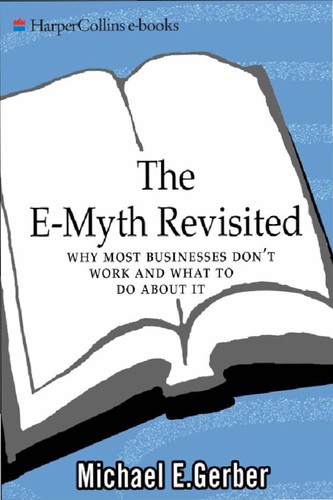
The E-Myth Revisited
05

The E-Myth Revisited

by Michael E. Gerber

"The difference between a business that works and one that doesn't is the entrepreneur's ability to separate the role of entrepreneur from the role of manager and technician."

The E-Myth Revisited explains why most small businesses fail and provides a framework for building businesses that work without you. Gerber argues that entrepreneurs must transition from working 'in' their business to working 'on' their business by systematizing operations and separating key roles.

This book is essential for founders who want to build scalable, sustainable businesses. It addresses the critical transition from founder-dependent operations to systematized enterprises that can survive and thrive beyond the founder's direct involvement.

  • Systematization and documented processes are essential for creating a business that can scale beyond the founder
  • Separate the three critical roles: entrepreneur (vision), manager (operations), and technician (execution)
  • Most small business failures result from treating a business like a job rather than building a system
  • Effective delegation requires clear processes, training, and accountability systems
  • Gerber's writing style is verbose and repetitive, belaboring points with unnecessary fragments and long autobiographical anecdotes
  • The approach to systematization and standardization can be overly rigid and impractical for creative industries requiring flexibility
  • Some strategies and examples feel dated and may not apply to modern businesses, particularly those based on knowledge work

"Voted The E-Myth Revisited as the #1 business book"

Inc. 500 CEOs, Inc. Magazine

"Michael E. Gerber is the World's #1 Small Business Guru"

Inc. Magazine, Business publication
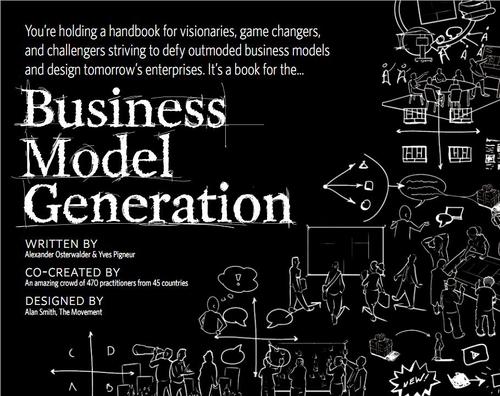
Business Model Generation
06

Business Model Generation

by Alexander Osterwalder and Yves Pigneur

"A business model describes the rationale of how an organization creates, delivers, and captures value."

Business Model Generation introduces the Business Model Canvas, a visual tool for designing, analyzing, and communicating business models. The book provides a practical framework for entrepreneurs to map out their value proposition, customer segments, revenue streams, and operational model.

The Business Model Canvas has become an essential tool for entrepreneurs and is widely used in startup accelerators and business schools. This book provides the foundational methodology for systematically thinking through all components of a business model in a single visual framework.

  • The Business Model Canvas provides a structured visual framework for capturing all nine elements of a business model
  • Focus on value creation, delivery, and capture as the three fundamental pillars of any business
  • Iterate and test business model assumptions rather than spending months on detailed business plans
  • Visual communication of your business model improves team alignment and stakeholder understanding
  • The canvas tends to become a filling-in exercise without deep strategic thinking due to its fixed architecture
  • The framework lacks depth in competitive analysis and doesn't explicitly account for market conditions or regulatory environment
  • Financial analysis is superficial; the revenue streams and cost structure sections don't provide detailed financial modeling
  • The static nature of the canvas doesn't capture how business models evolve or the complex interactions between components

"There's not a single business model... There are really a lot of opportunities and a lot of options and we just have to discover all of them."

Tim O'Reilly, CEO, O'Reilly Media
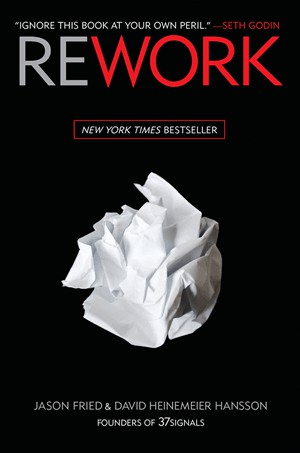
Rework
07

Rework

by Jason Fried and David Heinemeier Hansson

"Most obstacles are simply excuses to not get started. Decisions are temporary. You can always change your mind and do something else."

Rework challenges conventional business wisdom by presenting a series of unconventional insights about building a successful business. Fried and Hansson, founders of Basecamp, argue that many business practices are unnecessary obstacles, and that simplicity and focus are more important than most entrepreneurs believe.

This book provides essential contrarian thinking about how to approach business building. For founders overwhelmed by conventional wisdom about business plans, investor meetings, and rapid scaling, Rework offers a refreshing perspective on building profitable businesses on your own terms.

  • Focus on solving real problems for real customers rather than building complex features nobody needs
  • Constraints breed creativity; limitations can be your greatest asset in product design
  • Revenue and profitability are more important than growth at all costs
  • Remote work and asynchronous communication can be advantages in building products and companies
  • The advice is primarily applicable to small, internet-based businesses with little relevance to larger organizations or regulated industries
  • The dismissal of traditional business practices like business planning may be impractical for businesses requiring significant capital or facing complex markets
  • Limited applicability to industries where processes, compliance, and standardization are critical business requirements

"Jason Fried and David Hansson follow their own advice in Rework, laying bare the surprising philosophies at the core of 37signals' success."

Scott Rosenberg, Co-founder, Salon.com

"The brilliance of Rework is that it inspires you to rethink everything you thought you knew about strategy, customers, and getting things done."

William C. Taylor, Founding Editor, Fast Company
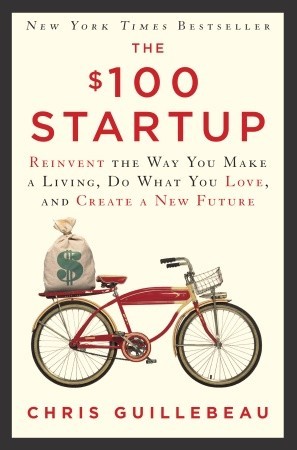
The $100 Startup
08

The $100 Startup

by Chris Guillebeau

"Value is created when a person makes something useful and shares it with the world."

The $100 Startup shows how ordinary people can build sustainable businesses with minimal capital investment. Guillebeau provides a practical blueprint for identifying profitable micro-businesses by finding the intersection between what you're good at and what people will pay for.

For aspiring entrepreneurs without significant capital or access to venture funding, this book is essential reading. It demonstrates that starting a business doesn't require a massive investment, lengthy planning, or sophisticated infrastructure—just clarity on value creation.

  • Find the intersection between a skill you have, a problem you can solve, and what people are willing to pay
  • Start lean by testing your business idea with minimal investment before scaling
  • Focus on consistent cashflow and profitability from day one rather than chasing growth metrics
  • Success comes from solving real problems for real people, not from having a perfect product or business plan
  • Limited depth in addressing scalability; the book focuses on micro-businesses that may not scale beyond the founder's capacity
  • May oversimplify the challenges of business growth, supply chain management, and operational complexity
  • The examples are primarily service-based businesses; limited guidance for product-based or technology businesses

"The $100 Startup is a twofer: It's a kick in the pants to get started on your dream and a road map for finding your way once you begin."

Daniel H. Pink, Author, Drive

"In this valuable guide Chris Guillebeau shows that transforming an idea into a successful business can be easier than you think."

Tony Hsieh, CEO, Zappos

"Thoughtful, funny, and compulsively readable, this guide shows how ordinary people can build solid livings, with independence and purpose."

Gretchen Rubin, Author, The Happiness Project
Venture Deals
09

Venture Deals

by Brad Feld and Jason Mendelson

"I encourage entrepreneurs not to take valuation personally. Just because VCs say their take is that your business is worth $6 million doesn't mean they lack appreciation for you."

Venture Deals demystifies the venture capital fundraising process by explaining the terms, structures, and dynamics of venture capital financing. Feld and Mendelson provide entrepreneurs with the knowledge to negotiate effectively with investors and understand the implications of investment terms.

For any founder planning to raise venture capital, this book is essential reading. It provides insider knowledge from experienced VCs and helps entrepreneurs understand the dynamics, incentives, and mechanics of venture financing to negotiate better deals and avoid unfavorable terms.

  • Understand the key terms in venture capital agreements (liquidation preferences, anti-dilution, vesting, etc.)
  • Recognize the different incentives between entrepreneurs and investors to negotiate more effectively
  • Build relationships with investors before you need capital; fundraising is a long-term process
  • The terms of your investment matter as much as the valuation and amount of capital raised
  • The book is dense and technical, requiring significant time investment to understand venture capital mechanics
  • While comprehensive, it focuses primarily on US venture capital with limited guidance for international fundraising
  • Some strategies and market conditions described may be outdated as the venture capital landscape continues to evolve

"I give this book to all founders I back. Venture Deals is a fundamental resource for both entrepreneurs and venture capitalists."

Fred Wilson, Managing Partner, Union Square Ventures

"Brad and Jason have written a required read for high-growth company entrepreneurs and early stage investors."

Katie Rae, CEO, The Engine
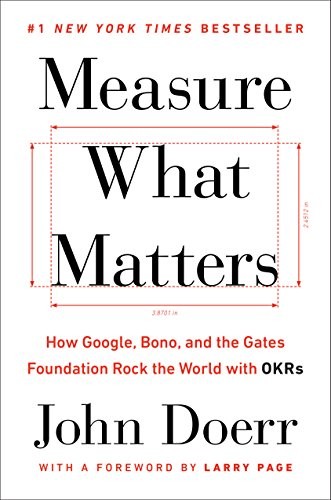
Measure What Matters
10

Measure What Matters

by John Doerr

"Ideas are easy. Execution is everything. OKRs speak to something more powerful, the intrinsic value of the work itself."

Measure What Matters reveals how Objectives and Key Results (OKRs) have driven exponential growth at companies including Intel, Google, and Amazon. Doerr explains the framework for setting ambitious goals and tracking progress with transparency and accountability throughout an organization.

OKRs have become the standard goal-setting framework across successful startups and established companies. This book provides essential guidance for implementing a system that aligns teams, maintains focus, and enables rapid progress—making it crucial for any growing organization.

  • The OKR framework enables focus by limiting objectives to the few most important goals for a period
  • Key Results should be ambitious, measurable, and tied to business outcomes, not just activity metrics
  • Transparency in goal-setting and progress tracking builds accountability and team alignment
  • The four OKR superpowers are focus, align, track, and stretch
  • OKRs can become bureaucratic if not implemented with flexibility and good judgment
  • The framework emphasizes quantifiable metrics, which may not capture qualitative progress or cultural impact
  • Implementation requires significant organizational discipline and commitment; many companies struggle with consistent execution

"Measure What Matters shows how any organization or team can aim high, move fast, and excel."

Sheryl Sandberg, COO, Meta

"A must read for anyone motivated to improve their organization."

Al Gore, Former Vice President of the United States

"A crisp and colorful book combining fascinating case studies with insightful personal stories to show how OKRs can add magic to organizations."

Walter Isaacson, Biographer and author
Back to all lists