The 10 Best Espionage Books

Essential Nonfiction on Spycraft, Intelligence History, and Espionage Operations

Explore the definitive collection of essential espionage literature covering Cold War intelligence operations, World War II codebreaking, and the history of spycraft. These ten nonfiction masterpieces reveal untold stories of famous spies, intelligence agencies, and the real-world tradecraft that shaped modern history.

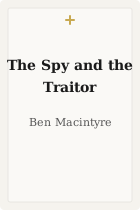
The Spy and the Traitor
01

The Spy and the Traitor

by Ben Macintyre

"The essence of successful agent running is the maintenance of trust, the supplanting of one allegiance by another, higher, loyalty."

The gripping true story of Oleg Gordievsky, a Soviet KGB colonel who became one of the West's most valuable double agents. Macintyre chronicles Gordievsky's secret work for British intelligence from 1973 onward, and his role in preventing nuclear war during the Cold War's most dangerous moments, including the pivotal Able Archer incident of 1983.

Widely considered the greatest modern espionage narrative, this book exemplifies how individual spy operations can alter the course of history. Macintyre's masterful storytelling combines meticulous research with the psychological depth of espionage, making it essential reading for understanding Cold War intelligence and the human cost of spying.

  • Understanding how double agents are recruited and the psychological factors that motivate spies
  • The critical role of human intelligence in Cold War tensions and near-catastrophic nuclear incidents
  • How paranoia and confirmation bias in intelligence agencies can distort decision-making at the highest levels
  • The personal toll of living a double life and maintaining espionage cover over decades
  • Some readers feel the narrative occasionally prioritizes dramatic effect over detailed analysis of tradecraft
  • The focus on Gordievsky means other important Cold War intelligence operations receive less coverage

"The best true spy story I have ever read."

John le Carré, Legendary Spy Novelist

"If any spy writer were to put it in a novel, it would not be believed. But, blow by blow, trick by trick, it is all in Macintyre's book."

Frederick Forsyth, Author and Former Intelligence Officer

"A captivating espionage tale with clarity and propulsive verve that often feels like a thriller."

Kirkus Reviews, Book Review Publication

Code Girls
02

Code Girls

by Liza Mundy

"Women were more than placeholders for the men. Women were active war agents. Through their brainwork, the women had an impact on the fighting that went on."

The remarkable true story of more than ten thousand American women who served as codebreakers during World War II. These brilliant women worked in classified facilities in Washington DC and Arlington, Virginia, cracking crucial Japanese codes that directly influenced major battles including Midway, reshaping the war in the Pacific.

This book restores a critical but long-hidden chapter of intelligence history, revealing how women played decisive roles in World War II codebreaking. Essential for understanding both espionage tradecraft and the overlooked contributions of women to intelligence operations during wartime.

  • The strategic importance of codebreaking intelligence in determining military outcomes during WWII
  • How women were systematically recruited and trained as intelligence professionals despite prevailing gender discrimination
  • The mathematical and linguistic skills required for breaking complex enemy codes and the rigorous security protocols governing this work
  • The decades-long secrecy surrounding women's contributions to intelligence operations and their historical erasure
  • Some military historians argue the book overstates the direct influence of codebreaking on combat decisions
  • The large cast of characters can be challenging for readers unfamiliar with WWII history to track

"As riveting as any thriller, and as hard to put down."

The New York Times Book Review, Major Book Publication

"A compelling saga of a remarkable woman whose persistence was honed early on by her battles against low gender expectations."

USA Today, National Newspaper

"Finally gives due to the courageous women who worked in the wartime intelligence community."

Smithsonian Magazine, Cultural Institution
Spycraft
03

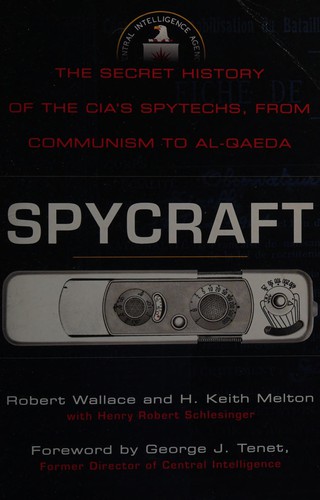
Spycraft

by Robert Wallace and H. Keith Melton

"The CIA's Office of Technical Service grappled with challenges such as: What does it take to build a quiet helicopter? How does one embed a listening device in a cat?"

An unprecedented history of the CIA's Office of Technical Service and its revolutionary spy gadgetry from the Cold War through the war on terror. This fully-authorized account reveals the innovations that made espionage possible, including miniature cameras, invisible inks, specialized disguises, and cutting-edge surveillance technology.

This is the definitive work on the technical and technological dimensions of espionage. Essential for readers who want to understand not just spy operations but the ingenious tools and tradecraft that enabled intelligence officers to conduct operations successfully against sophisticated adversaries.

  • The critical role of specialized technology in enabling successful espionage operations against highly motivated adversaries
  • How intelligence agencies innovate in response to operational challenges and changing geopolitical threats
  • The intersection of tradecraft, engineering, and psychology in designing tools for espionage and counterintelligence
  • The evolution of spy technology from mechanical devices in the Cold War to digital systems in the modern intelligence era
  • Some readers find the technical descriptions overly detailed and heavy on specifications rather than operational storytelling
  • The book is heavily illustrated but can feel more like a catalog than a narrative history at times

"The first comprehensive look at the technical achievements of American espionage from the 1940s to the present."

Wired Magazine, Technology Publication

"This is a story I thought could never be told."

James M. Olson, Former Chief of CIA Counterintelligence

"Documents how ingenious techies turned the CIA's lab into the greatest toy shop in the world."

Pete Earley, Spy Author, Comrade J
A Woman of No Importance
04

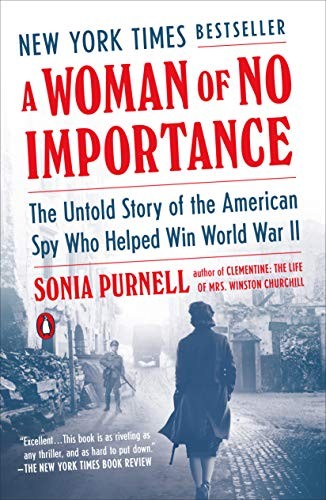
A Woman of No Importance

by Sonia Purnell

"Many of my friends were killed for talking too much."

The gripping biography of Virginia Hall, an American spy who became the most wanted Allied agent in Nazi-occupied France. Despite being disabled with a wooden leg, Hall pioneered guerrilla warfare tactics, coordinated Resistance networks, and orchestrated sabotage operations that crippled German supply lines, earning her the codename 'the Limping Lady'.

This book reveals a previously overlooked figure in World War II intelligence history and demonstrates how women spies operated in the field under extreme danger. Essential for understanding female contributions to wartime espionage and resistance operations.

  • The operational tactics and security practices required for spies to survive extended missions in occupied enemy territory
  • How disabled individuals navigated intelligence work and combat operations despite systemic barriers and discrimination
  • The critical role of women in wartime espionage and Resistance movements, often exceeding their male counterparts in effectiveness
  • The challenges of recognition and historical documentation of female intelligence officers whose contributions were systematized suppression
  • Some readers find the prose dense and plodding in places, with insufficient explanation of SOE operations for readers unfamiliar with WWII
  • The large number of resistance network members and locations can be difficult to track without external references

"As riveting as any thriller, and as hard to put down."

The New York Times Book Review, Major Book Publication

"2019 Biography finalist recognizing exceptional historical narrative and research."

National Book Critics Circle, Literary Organization

"A compelling biography of a masterful spy, and a reminder of what can be done with a few brave people—and a little resistance."

NPR, National Public Radio
Spy Handler
05

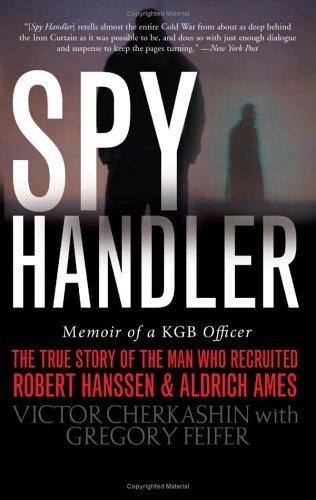
Spy Handler

by Victor Cherkashin

"Most agents are volunteers who recruit themselves, and almost every spy signs on for personal, selfish reasons rather than ideological reasons."

The memoir of Victor Cherkashin, the KGB officer who recruited America's most damaging spies: CIA turncoat Aldrich Ames and FBI agent Robert Hanssen. Cherkashin provides a rare insider's view of KGB operations, tradecraft, and the psychological dynamics between intelligence officers and their agents during the Cold War's final decade.

This is the authoritative insider account of KGB recruitment and handling operations written by the officer responsible for two of the most significant American intelligence breaches. Essential for understanding Soviet intelligence tradecraft and the motivations of major Cold War defectors.

  • The KGB's recruitment methodology and the psychological vulnerabilities they exploited to turn American intelligence officers
  • How intelligence agencies identify, approach, and cultivate potential agents across hostile intelligence services
  • The role of personal grievance, financial motivation, and career dissatisfaction in driving espionage rather than ideology alone
  • The operational security practices and compartmentalization that allowed major spies to remain undetected for years
  • Cherkashin sometimes appears as an apologist for KGB actions and shows limited moral questioning of his own role in the operations
  • Readers should be cautious about Cherkashin's commentary on American motives, which may reflect KGB propaganda perspectives

"Mr. Cherkashin's story provides a gripping account of the KGB's successes in the spy war."

The Wall Street Journal, Major Financial Newspaper

"Provides valuable insights into the inner world of the KGB and its operational practices."

CIA Studies in Intelligence, CIA Publication

"An important Cold War memoir with significant historical relevance."

Publishers Weekly, Book Industry Publication
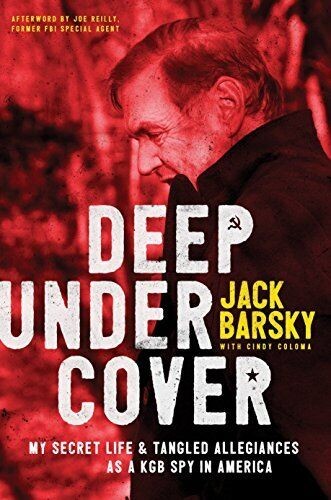
Deep Undercover
06

Deep Undercover

by Jack Barsky

"We are not, and cannot be, good as autonomous selves. Try as we might, without guidance from God we have no moral focal point and no consistent frame of reference to determine what is good and what is not."

The astonishing memoir of Jack Barsky, born Albrecht Dittrich, who was trained as a KGB deep cover agent and embedded in the United States under false identity for a decade. Barsky details his secret life working for an insurance company, his marriage and family, and his eventual decision to defect when his cover was compromised.

This is the only comprehensive memoir from a KGB deep cover operative embedded in America, offering rare insight into the psychological challenges and daily tradecraft of long-term espionage operations. Essential for understanding the human dimensions of Cold War intelligence competition.

  • The psychological pressures and moral conflicts faced by deep cover agents living false identities for extended periods
  • How KGB training shaped recruitment, tradecraft, and operational security protocols for long-term embedded agents
  • The compartmentalization required to maintain separate families, identities, and loyalties across different continents
  • How the collapse of the Soviet Union affected ongoing KGB operations and enabled defections that were previously impossible
  • Some readers found the early chapters on East German life and final religious conversion sections less relevant to espionage instruction
  • Barsky's philosophical reflections, while insightful, sometimes interrupt the narrative flow of operational details

"An intriguing inside look at international espionage from a KGB deep cover operative."

Kirkus Reviews, Book Review Publication
"One of the most compelling firsthand accounts of Cold War spying ever recorded."

Jordan Harbinger, Podcast Host and Interviewer

"A crucial primary source document for understanding Soviet intelligence operations."

Cold War Museum, Historical Institution
The Secret War
07

The Secret War

by Max Hastings

"Bletchley was an increasingly important weapon, but it was not a magic sword."

A comprehensive examination of World War II espionage, codebreaking, and secret operations across all belligerents. Hastings argues that intelligence successes and failures—not just tactical operations—decisively shaped the war's outcome, revealing lesser-known stories of spies, codes, and guerrillas that influenced military strategy.

This is the definitive single-volume analysis of WWII intelligence operations, essential for anyone seeking to understand how espionage influenced modern warfare. Hastings' revisionist perspective challenges popular myths about intelligence's role in the war and provides crucial context for all subsequent Cold War operations.

  • How intelligence successes in codebreaking, particularly Ultra and other signals intelligence, influenced tactical and strategic decisions throughout WWII
  • The relative contributions of espionage versus signals intelligence in determining military outcomes across different theaters of war
  • The international dimension of intelligence operations, including cooperation and competition between Allied services and intelligence gathering against Japan
  • How overreliance on intelligence can create blind spots and how intelligence failures contributed to strategic setbacks
  • Some historians argue Hastings dismisses the importance of espionage operations too casually and overstates the dominance of Bletchley Park intelligence
  • The book is densely packed with detail and covers such broad geographic scope that some sections feel rushed

"Weighty, measured, and compelling - an authoritative account of WWII intelligence."

The Sunday Times, Major British Newspaper

"A sweeping examination of one of the most important yet underexplored aspects of World War II."

Kirkus Reviews, Book Review Publication
"Tells the remarkable story of World War II espionage with scholarly authority and compelling narrative."

Christian Science Monitor, News Publication
Defend the Realm
08

Defend the Realm

by Christopher Andrew

"MI5 could not have wanted a better historian than him. This book is unlikely to be surpassed for another 100 years."

The authorized history of MI5, Britain's Security Service, from its foundation in 1909 through the present day. Andrew, given unprecedented access to classified files, reveals the real story of British counterintelligence operations, including major Cold War cases and internal security challenges that shaped the modern intelligence apparatus.

This is the only fully authorized and comprehensive history of MI5, making it essential reading for understanding British intelligence operations and counterintelligence tradecraft. Andrew's scholarship sets the standard for institutional intelligence history and provides crucial context for Anglo-American intelligence cooperation.

  • The evolution of British counterintelligence practices from imperial times through the nuclear age and modern terrorism threats
  • How institutional cultures, bureaucratic structures, and political oversight shaped intelligence operations and strategy
  • The complex relationship between MI5 and other British intelligence services, law enforcement, and international partners
  • How the agency dealt with penetrations, moles, and security breaches while maintaining operational effectiveness
  • At over 1000 pages, the book's sheer length makes it challenging to navigate without substantial time commitment
  • Some readers feel Andrew's official status as authorized historian may have limited his critical analysis of controversial operations

"Magisterial, authoritative, balanced, readable—full of wry humour and with an eye for the absurd."

The Daily Telegraph, Major British Newspaper

"Not only a work of meticulous scholarship but also a series of riveting and true spy stories."

Ben Macintyre, The New York Times Book Review

"A scholarly and hugely entertaining account that is often enthralling."

Spectator, British Magazine
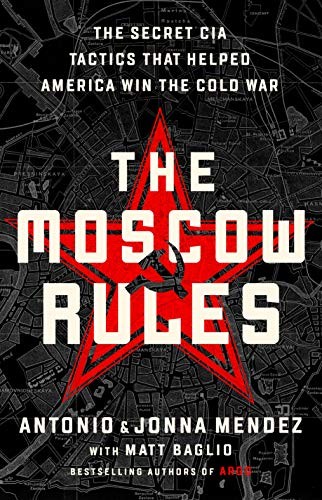
The Moscow Rules
09

The Moscow Rules

by Antonio J. Mendez and Jonna Mendez

"Assume nothing. Everyone is potentially under opposition control. Never go against your gut. Do not look back; you are never completely alone."

The insider account of CIA officers Antonio and Jonna Mendez, who pioneered operational tradecraft for conducting espionage in the most dangerous Cold War posting: Moscow. The couple reveals the tactics, disguises, and evasion techniques that allowed CIA officers to outwit KGB surveillance during the height of the Cold War.

This is the definitive guide to practical espionage tradecraft from two of the CIA's most accomplished operations officers. Essential reading for understanding how intelligence agencies operate in hostile territory and the specific techniques required to counter sophisticated foreign intelligence services.

  • The specific tradecraft rules and operational practices required for CIA officers to conduct espionage in Moscow against KGB surveillance
  • How disguise, misdirection, and deception were weaponized to enable intelligence collection in the most denied environments
  • The psychological and physical preparation required for officers to survive prolonged operations in hostile intelligence services
  • The partnership between CIA technical officers and case officers in designing operational plans that balanced tradecraft security with intelligence collection objectives
  • Some readers found the operational details occasionally vague due to continued classification restrictions on specific tradecraft methods
  • The book's heavy focus on technical tradecraft sometimes comes at the expense of strategic context and intelligence impact

"The legendary Tony and Jonna Mendez were vital to creating the highest-level CIA tradecraft—their riveting insider account is unlike any spy story ever published."

Joe Weisberg, Creator/Executive Producer, The Americans (TV Series)

"Tony and Jonna were two of the stars of the Office of Technical Service and key to the agency's successes in Moscow during the Cold War."

Jack Downing, Former Deputy Director for Operations, CIA

"Devilishly fun and reveals the incredible resourcefulness of American intelligence officers."

The New York Times Book Review, Major Book Publication
Good Hunting
10

Good Hunting

by Jack Devine

"Good hunting requires knowledge of the terrain, the quarry, and the hunter's own capabilities and limitations."

The memoir of Jack Devine, a 32-year veteran who served at the highest levels of the CIA's clandestine operations. Devine commanded intelligence operations in Chile, Afghanistan, Colombia, and elsewhere, providing an insider perspective on how the CIA conducts covert action and the moral dilemmas of intelligence work.

This is the most comprehensive memoir from a senior CIA operations officer, revealing the strategic thinking and tradecraft behind major Cold War and post-Cold War operations. Essential for understanding CIA organizational culture and the decision-making processes that shape covert action.

  • The strategic planning and resource allocation required for conducting sustained covert action in multiple countries across decades
  • How CIA headquarters balanced operational security, political objectives, and ethical considerations in approving covert action
  • The relationships between CIA leadership and policymakers, and how political pressure influences intelligence operations
  • The personal cost of clandestine service and the moral ambiguities inherent in covert operations
  • Some readers felt Devine defends CIA actions too readily without adequate critical examination of controversial operations
  • The writing style can be dense and the organizational structure sometimes jumps between time periods and locations

"A sophisticated, deeply informed account of real life in the real CIA that adds immeasurably to public understanding of espionage culture."

Bob Woodward, Investigative Journalist, Washington Post

"Gives an inside look at the CIA—the good and the bad."

R. James Woolsey, Former CIA Director

"An intelligent and patriotic account that illustrates why the CIA is most successful with espionage operations."

David Ignatius, Columnist, Washington Post
Back to all lists