The 10 Essential Books on Evolution

From Darwin's Revolutionary Theory to Modern Evolutionary Biology

Evolution is one of the most important concepts in all of science, fundamentally transforming how we understand life on Earth. This curated list presents the ten most essential books on evolution and evolutionary biology, spanning from Charles Darwin's groundbreaking 1859 work to contemporary explorations of genomics and paleontology. Whether you're seeking foundational understanding, detailed scientific evidence, or engaging narratives of evolutionary discovery, these works provide indispensable reading for comprehending how life changes and adapts across generations.

On the Origin of Species
01

On the Origin of Species

by Charles Darwin

"There is grandeur in this view of life, with its several powers, having been originally breathed into a few forms or into one; and that, whilst this planet has gone cycling on according to the fixed law of gravity, from so simple a beginning endless forms most beautiful and most wonderful have been, and are being, evolved."

Darwin's revolutionary work, first published in 1859, introduces the scientific theory of natural selection and the evolution of species. Through careful observation and compelling evidence, Darwin demonstrates how populations of organisms change over time through the survival and reproduction of individuals with advantageous traits.

This foundational text is the cornerstone of modern biology. Darwin's theory of evolution by natural selection remains the central organizing principle of all biological sciences, and no serious study of evolution is possible without engaging directly with his original arguments and evidence.

  • Natural selection acts as a mechanism for evolutionary change, favoring traits that enhance survival and reproduction
  • Organisms exhibit variation within populations, and much of this variation is heritable across generations
  • All living organisms share common ancestry through descent with modification from earlier species
  • Complex adaptations can develop gradually through the accumulation of small, incremental changes over vast time periods
  • Limited discussion of the mechanisms of heredity, which were not understood in Darwin's time
  • Some original examples have been refined or corrected by modern research, though the core theory remains valid

"How extremely stupid not to have thought of that! The beauty of the argument is its simplicity."

Thomas Huxley, Biologist, Defender of Darwin's Theory

"The Origin of Species is a biological work of outstanding importance, and its influence on biological science cannot be overstated."

Ernst Mayr, Evolutionary Biologist, Harvard University

The Selfish Gene
02

The Selfish Gene

by Richard Dawkins

"We are survival machines – robot vehicles blindly programmed to preserve the selfish molecules known as genes. They swarm in huge colonies, safe inside gigantic lumbering robots, sealed off from the outside world, communicating with it by tortuous indirect routes, manipulating it by remote control."

Published in 1976, Dawkins revolutionizes our understanding of evolution by arguing that natural selection acts primarily on genes rather than organisms or species. He proposes that organisms are essentially 'vehicles' created by genes to ensure their own survival and replication, introducing the now-famous concept of 'memes' as cultural analogs of genes.

The Selfish Gene fundamentally reshaped evolutionary thinking and sparked decades of productive debate. It introduced the gene-centered perspective that dominates modern evolutionary biology and provides essential insight into how selection operates at the molecular level, influencing everything from animal behavior to human culture.

  • Genes, not organisms, are the primary units of natural selection, competing to replicate themselves
  • Organisms evolved to maximize their fitness because they serve as vehicles for gene replication
  • Evolutionary stable strategies explain why certain behavioral patterns persist in animal populations
  • Cultural transmission of ideas ('memes') follows principles similar to genetic evolution, introducing a new framework for understanding human culture
  • Critics argue the book oversimplifies the relationship between genes and organisms, underestimating the role of development and epigenetics
  • Some contend that applying selfish gene logic to human behavior relies on 'just-so stories' without adequate empirical support

"Dawkins has done more than anyone else now writing to make evolutionary biology comprehensible and acceptable to a general audience."

John Maynard Smith, Evolutionary Biologist, University of Sussex

"The Selfish Gene remains the best popular explanation of Darwinian evolution, and its insights continue to illuminate human nature."

Steven Pinker, Cognitive Scientist, Harvard University
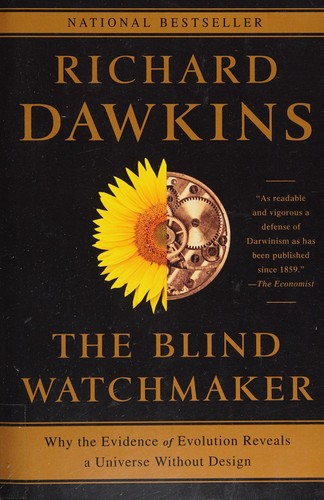
The Blind Watchmaker
03

The Blind Watchmaker

by Richard Dawkins

"Natural selection is the blind, unconscious, automatic process which Darwin discovered, and which we now know is the explanation for the existence and apparently purposeful form of all life."

In this 1986 work, Dawkins provides a comprehensive defense of Darwinian evolution, refuting the design argument used by creationists and intelligent design proponents. He demonstrates how natural selection, though operating without consciousness or foresight, produces the appearance of purposeful design found throughout nature.

The Blind Watchmaker serves as an essential bridge between Darwin's foundational work and contemporary evolutionary science. It directly addresses philosophical objections to evolution while showcasing the explanatory power of natural selection, making it invaluable for understanding how evolution resolves the apparent paradox of apparent design in nature.

  • Natural selection operates as an automatic, unconscious process without design or foresight, yet produces complex adaptations
  • Apparent design in nature can be fully explained by natural selection without invoking divine creation or external planning
  • Computer models and mathematical analysis demonstrate that gradual selection can accumulate changes to produce substantial complexity
  • The fossil record and biogeographical distribution of species provide compelling evidence for the creative power of evolution
  • Some philosophers argue that Dawkins does not adequately address consciousness and subjective experience in evolutionary terms
  • Critics suggest the book emphasizes mathematical abstraction over detailed biological mechanisms

"The best general account of evolution I have read in recent years."

E. O. Wilson, Evolutionary Biologist, Harvard University
"A magnificent book: Richard Dawkins combines an artist's wonder at the virtuosity of nature with a scientist's understanding of how it comes to be."

Matt Ridley, Science Writer and Evolutionary Biologist
Why Evolution Is True
04

Why Evolution Is True

by Jerry A. Coyne

"Evolution is not just an idea anymore. It's proven fact, as securely demonstrated as any scientific truth."

Published in 2009, Coyne presents a comprehensive case for evolution by synthesizing evidence from paleontology, molecular biology, anatomy, and biogeography. This accessible book explains why evolution is an incontrovertible fact and explores the implications of evolutionary science for understanding life and our place within it.

Why Evolution Is True excels at presenting the convergent evidence from multiple scientific disciplines that collectively demonstrate evolution's validity. It is essential reading for understanding modern evolutionary biology's empirical foundations and for appreciating how diverse fields of science reinforce the evolutionary framework.

  • Evidence from paleontology, anatomy, molecular biology, and biogeography converges to demonstrate that evolution is a scientific fact
  • Transitional fossils and intermediate forms document the historical pathways of evolutionary change
  • The distribution of species across geographic regions reflects evolutionary history and the effects of speciation and dispersal
  • Molecular genetics reveals the nested hierarchies of relatedness between organisms, providing a genetic basis for evolutionary relationships
  • Some critics contend that the book presents evidence selectively and does not adequately address controversies within evolutionary theory
  • Certain sections could provide more nuance regarding mechanisms of speciation and macroevolutionary processes

"Coyne's primary object in writing this book is to present the incontrovertible evidence that evolution is a physical fact of the history of life on Earth. In this he is entirely successful."

Richard C. Lewontin, Evolutionary Biologist, Harvard University
"For anyone who wishes a clear, well-written explanation of evolution by one of the foremost scientists working on the subject, Why Evolution Is True should be your choice."

E. O. Wilson, Evolutionary Biologist, Harvard University
"Coyne's knowledge of evolutionary biology is prodigious, his deployment of it as masterful as his touch is light."

Richard Dawkins, Evolutionary Biologist, Oxford University
Wonderful Life: The Burgess Shale and the Nature of History
05

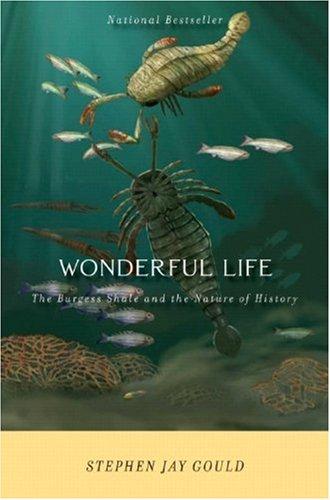
Wonderful Life: The Burgess Shale and the Nature of History

by Stephen Jay Gould

"I call this experiment 'replaying life's tape.' You press the rewind button and, making sure you thoroughly erase everything that actually happened, go back to any time and place in the past—say, to the seas of the Burgess Shale. Then let the tape run again and see if the repetition looks at all like the original."

This 1989 classic explores the Burgess Shale fauna of the Canadian Rockies, examining 530-million-year-old fossils that reveal the diversity of early animal life. Gould argues that contingency and historical accident—not inevitable progress—shaped the course of evolution, challenging our assumptions about life's development.

Wonderful Life transforms how we think about evolutionary history by emphasizing contingency and the role of chance. It is essential for understanding debates about evolutionary direction, the nature of paleontological evidence, and competing interpretations of the fossil record, and it explores profound philosophical implications of evolution.

  • The Burgess Shale preserves a diverse fauna of unusual body plans from the Cambrian period, representing evolutionary experimentation
  • Contingency—the role of random historical events—plays a central role in determining which lineages survive and diversify
  • If evolution were replayed from an earlier point, the outcome would likely be dramatically different, with humans being vanishingly improbable
  • The appearance of inevitable progress or direction in evolution is a retrospective illusion, not a fundamental feature of the process
  • Some paleontologists have questioned Gould's interpretations of specific fossil reconstructions and the degree of diversity in the Burgess fauna
  • Critics argue that convergence and constraints limit contingency's scope, making certain outcomes more likely than others

"A remarkable book that reshapes our understanding of evolutionary history with elegance and insight."

Richard Leakey, Paleontologist, Kenya National Museum

"Gould brings the Burgess Shale to life with a narrative that illuminates the accidental nature of evolutionary success."

James Watson, Molecular Biologist, Nobel Prize Winner
The Greatest Show on Earth: The Evidence for Evolution
06

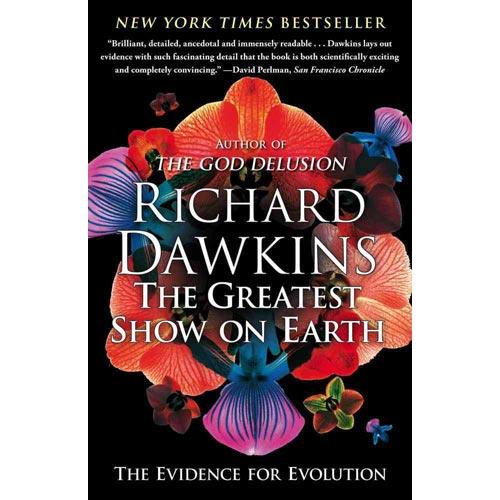
The Greatest Show on Earth: The Evidence for Evolution

by Richard Dawkins

"This is the greatest show on earth—a real show, not a spectacle. A show, moreover, of unique proportions. Nothing will be found to match it in the record of human achievements."

Published in 2009, Dawkins provides an encyclopedic survey of evolutionary evidence, drawing on paleontology, biogeography, molecular biology, and direct observation. He demonstrates evolution's explanatory power across diverse domains while responding to objections from evolutionary skeptics.

The Greatest Show on Earth consolidates an enormous range of empirical evidence demonstrating evolution's validity, making it essential for anyone seeking a comprehensive understanding of evolutionary biology's evidential foundation. It exemplifies how evolution unifies and explains phenomena across all biological disciplines.

  • Direct observation of rapid evolution in real-time (fossil record, Darwin's finches, antibiotic resistance) confirms evolutionary mechanisms
  • Homologous structures, vestigial organs, and embryological development provide anatomical evidence for common ancestry
  • Geographic distribution of species reflects evolutionary diversification and the effects of continental drift and speciation
  • Molecular evidence—DNA sequencing and protein similarities—provides genetic documentation of evolutionary relationships across all life
  • Critics contend that Dawkins is dismissive and acerbic toward creationists and intelligent design advocates rather than engaging substantively with philosophical arguments
  • Some argue that the book's emphasis on presenting evidence may not persuade those with strong religious or ideological commitments against evolution

"This is a magnificent book of wonder: Richard Dawkins combines an artist's wonder at the virtuosity of nature with a scientist's understanding of how it comes to be."

Matt Ridley, Science Writer and Evolutionary Biologist

"Dawkins presents a comprehensive and compelling case for evolution, drawing on evidence from every domain of biology."

Nicholas Wade, Science Journalist, New York Times
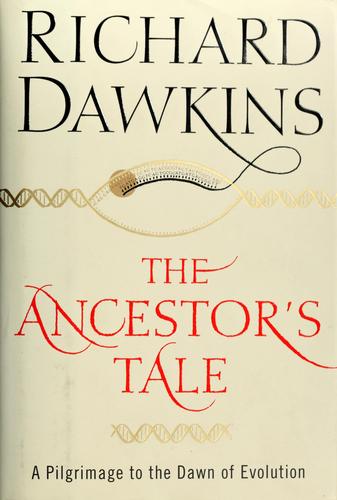
The Ancestor's Tale: A Pilgrimage to the Dawn of Evolution
07

The Ancestor's Tale: A Pilgrimage to the Dawn of Evolution

by Richard Dawkins with Yan Wong

"The universe could so easily have remained lifeless and simple, and the fact that life evolved out of nearly nothing is a fact so staggering that I would be guilty of gross understatement if I said that it challenges human understanding."

First published in 2004 and updated in 2016, this work traces evolutionary history backward in time, from humans to the origins of life. Organized around forty 'rendezvous points' where lineages meet their common ancestors, Dawkins and Wong create a unique narrative journey through four billion years of evolutionary history.

The Ancestor's Tale offers an innovative perspective on evolutionary history by journeying backward through time, allowing readers to trace human origins through successive ancestors. This approach is invaluable for visualizing evolutionary relationships and understanding how all organisms are connected through deep time.

  • All organisms share common ancestors through an unbroken chain of descent spanning four billion years
  • Humans are connected to all life through specific evolutionary relationships that can be traced through fossil and molecular evidence
  • Key innovations—such as eyes, limbs, and nervous systems—evolved multiple times independently through convergent evolution
  • The tree of life illustrates how speciation and divergence have generated the diversity of life from common ancestors
  • Some readers find the backward chronological approach unconventional and potentially confusing compared to traditional forward-time narratives
  • Certain sections simplify complex evolutionary events, potentially missing important paleontological nuances

"To read The Ancestor's Tale is to be amazed at the multiplicity and ingenuity that results. Dawkins's capacity for clear explanation is formidable."

Quentin de la Bédoyère, Catholic Herald Book Review

"A clever approach to our extended family tree, bursting with information and ideas—one of Dawkins's best."

Matt Ridley, Science Writer and Evolutionary Biologist
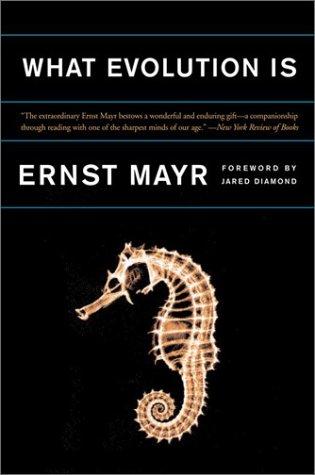
What Evolution Is
08

What Evolution Is

by Ernst Mayr

"The searching human mind is not satisfied merely to discover facts. We also want to know how things happen and why."

Published in 2001, this work by the renowned evolutionary biologist Ernst Mayr provides a authoritative overview of evolution theory and evidence. Mayr synthesizes decades of evolutionary biology research while critiquing competing frameworks and clarifying misconceptions about how evolution operates.

As one of the twentieth century's most influential evolutionary biologists, Mayr's synthesis is essential for understanding both the history of evolutionary thought and its modern applications. His analysis of natural selection mechanisms and critique of alternative views provides crucial context for understanding contemporary evolutionary debates.

  • Natural selection operates through differential reproduction of individuals with advantageous traits within populations
  • Speciation occurs through reproductive isolation and the accumulation of genetic differences between populations over time
  • The randomness of variation is responsible for the enormous diversity of living organisms and their bizarre forms
  • Evolutionary theory integrates evidence from multiple disciplines and provides a unified framework for understanding all of biology
  • Some modern researchers argue that Mayr's synthesis, though comprehensive, did not fully anticipate developments in molecular evolution and genomics
  • Critics note that Mayr's critique of Dawkins' gene-centered view, while thoughtful, may underestimate the utility of that perspective

"Ernst Mayr stands as the preeminent figure in evolutionary biology. His synthesis remains the essential reference for serious students of evolution."

Edward O. Wilson, Evolutionary Biologist, Harvard University
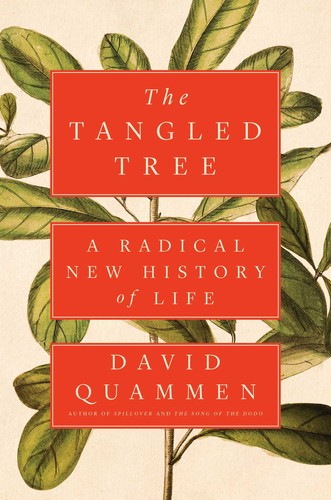
The Tangled Tree: A Radical New History of Life
09

The Tangled Tree: A Radical New History of Life

by David Quammen

"Rather, the important transmitted variation that leads to evolutionary novelty comes from the acquisition of genomes."

Published in 2018, this narrative-driven work chronicles the revolutionary discoveries in molecular biology and evolutionary microbiology, particularly horizontal gene transfer and endosymbiosis. Quammen traces how Lynn Margulis's maverick ideas about microbial evolution fundamentally transformed our understanding of life's history.

The Tangled Tree is essential for understanding how recent discoveries in molecular biology and microbiology have expanded evolutionary theory beyond Darwin's original framework. It reveals how horizontal gene transfer and symbiotic mergers among organisms reshape our evolutionary tree, making it essential for modern evolutionary literacy.

  • Horizontal gene transfer between distantly related organisms is far more common than previously recognized and significantly impacts evolution
  • Endosymbiosis—the merger of distinct organisms into single cells—was responsible for major transitions in evolutionary history, including the origin of eukaryotes
  • Evolutionary relationships among microorganisms are complex and reticulate, with genetic exchange creating networks rather than simple branching trees
  • Lynn Margulis's revolutionary hypothesis about symbiotic evolution transformed our understanding of how life diversified and organized at the cellular level
  • Some critics argue that while the book emphasizes Margulis's insights, it may not sufficiently address ongoing scientific debates about the frequency and significance of horizontal gene transfer
  • The narrative focus on Margulis sometimes obscures the contributions of other molecular biologists to understanding these phenomena

"Quammen tells the fascinating story of how molecular biology revealed a far more intricate tree of life than Darwin could have imagined."

Sean Carroll, Evolutionary Developmental Biologist, University of Wisconsin

"A brilliant and engaging exploration of how hidden connections between organisms reshape evolutionary history."

The New York Times Book Review, Major Literary Publication
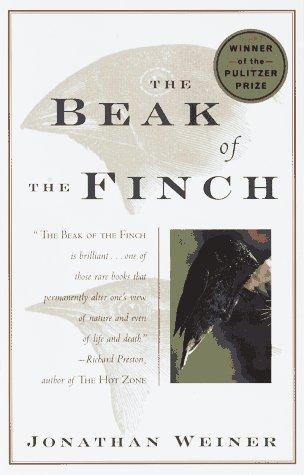
The Beak of the Finch: A Story of Evolution in Our Time
10

The Beak of the Finch: A Story of Evolution in Our Time

by Jonathan Weiner

"Behavior is the product of forces, contending forces that are still contending today, struggling within each generation. The borders between species are continually tested and redefined by the outcome of each member of each generation's luck in love."

This 1994 Pulitzer Prize-winning work chronicles the decades-long research of Peter and Rosemary Grant on Darwin's finches in the Galápagos Islands. Weiner narrates how scientists directly observed and documented evolution in action, witnessing natural selection producing measurable changes in finch populations within years.

The Beak of the Finch provides unparalleled insight into evolution's mechanisms through contemporary research demonstrating real-time evolutionary change. It bridges the gap between Darwin's historical observations and modern evolutionary science, showing how rigorous fieldwork continues to reveal evolution's creative power.

  • Evolution operates on measurable timescales observable within a human lifetime, as demonstrated by changes in finch beak size in response to environmental fluctuations
  • Natural selection causes population-level changes in heritable traits when environmental conditions favor certain phenotypes
  • Speciation mechanisms can be studied through changes in reproductive isolation and behavioral barriers developing between diverging populations
  • The interaction between organisms and their environments drives evolutionary change through the differential success of individuals
  • Some critics contend that observations from finches may not universally apply to larger organisms with longer generation times and more complex genetics
  • Certain analyses of population dynamics could incorporate more sophisticated statistical methodologies

"This remarkable book will forever change your sense of the pace of nature—once you've read Weiner's elegant and absorbing account, the world will seem infinitely more fluid, shifting, alive."

Bill McKibben, Environmental Writer and Author of The End of Nature

"A masterwork of scientific exposition that demonstrates evolution's power through compelling narrative and rigorous observation."

Pulitzer Prize Committee, Pulitzer Prize for General Nonfiction, 1995
Back to all lists