The Filmmaking Essentials

Foundational texts from legendary filmmakers that illuminate the craft of cinema

Film synthesizes narrative, visual language, performance, and technical precision into a unified emotional experience. This collection gathers wisdom from accomplished screenwriters, directors, editors, and theorists who have shaped modern cinema. These books provide both practical craft knowledge and philosophical frameworks for understanding how stories transform into moving images.

01

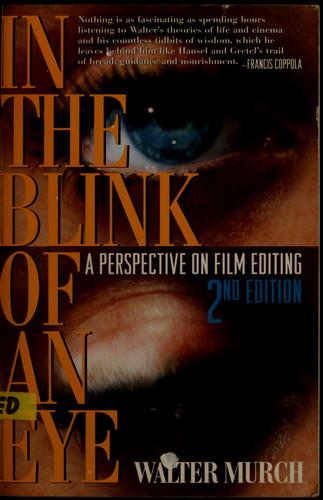
In the Blink of an Eye: A Perspective on Film Editing (Revised 2nd Edition)

by Walter Murch

View on Amazon →

"The task of the editor is not to assemble shots in continuity, but to assemble them in the way that best serves the emotional truth of the film."

Murch, the legendary editor of The Godfather, Apocalypse Now, and The English Patient, explores the philosophy and practice of film editing. He examines how editors create emotional continuity, the relationship between blinks and cuts, digital editing's implications, and the subtle arts of pacing and emotional truth.

Editing is invisible when done well—audiences feel its effects without recognizing its mechanics. Murch's insights into how cuts mimic human perception, how editing shapes emotional response, and how technical decisions serve emotional and thematic needs are essential for anyone seeking to understand how films achieve their power.

  • Emotion as the primary criterion for editing decisions
  • The relationship between the eye's blink and film cuts
  • Continuity and discontinuity in creating emotional resonance
  • Digital editing implications and evolution of the craft
  • Technical discussion assumes editing familiarity
  • Limited coverage of specific software or technical tools
  • Philosophical approach may frustrate those seeking step-by-step procedures

"Murch's perspective on editing from first principles remains the most influential contemporary voice in understanding how editors shape emotional truth."

American Cinema Editors, Professional Editing Guild
02

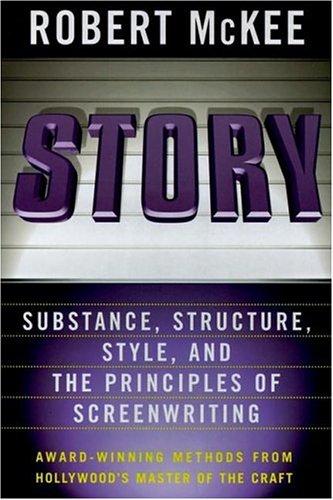
Story: Substance, Structure, Style and the Principles of Screenwriting

by Robert McKee

View on Amazon →

"A story is an act of faith. The writer must believe that there is something worth telling, something universal beneath the particular that an audience will recognize and respond to emotionally."

McKee provides the most comprehensive examination of narrative structure and screenwriting fundamentals. He explores how stories evoke emotion through character, scene, structure, and dialogue, teaching writers to think in terms of value changes, causality, and the deep architecture underlying compelling narratives.

Story structure is not formula but the essential framework that enables meaningful human communication through cinema. McKee's rigorous analysis of how scenes turn on value changes, how archetype differs from stereotype, and how theme guides every creative decision forms the intellectual foundation for professional screenwriting.

  • Scene structure and how scenes turn on value changes
  • The role of theme in guiding all creative decisions
  • Character development through action and choice
  • Dialogue as character revelation rather than exposition
  • Dense, theoretical framework requires careful study
  • Assumes mature understanding of narrative and film
  • Comprehensive approach can feel overwhelming to beginners

"McKee's seminars and book remain the gold standard for serious screenwriting study, influencing generations of professional screenwriters."

Screenwriting Community and Academia, Professional Screenwriting Education
03

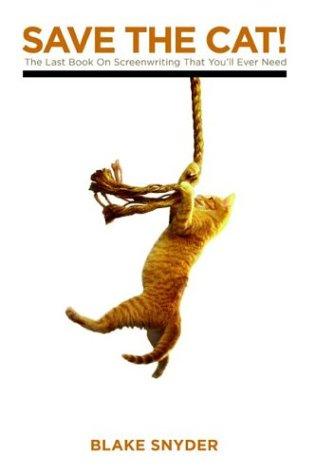
Save the Cat!: The Last Book on Screenwriting You'll Ever Need

by Blake Snyder

View on Amazon →

"The Save the Cat beat sheet is a template that works for most Hollywood movies and many indie films because it mirrors the way we respond to stories emotionally."

Snyder presents a practical, genre-based approach to screenwriting that demystifies structure through the 15-beat Blake Snyder Beat Sheet. He analyzes successful films across genres to reveal pattern-based templates that help writers understand dramatic turns, audience expectations, and how to craft satisfying narratives.

While McKee emphasizes principles, Snyder provides specific tools—the beat sheet, genre archetypes, and movie loglines—that transform abstract theory into applicable craft. This practical framework has become industry standard and helps writers organize their thinking and ensure narratively satisfying structures.

  • The 15-beat narrative structure and how it applies across genres
  • The 'Save the Cat' moment establishing likability
  • Midpoint false victories and raising stakes
  • How genre conventions guide audience expectations
  • Template-based approach may feel formulaic to some writers
  • Heavily focused on Hollywood commercial structures
  • May oversimplify complex narrative needs

"Snyder's beat sheet has become an industry standard tool used in development meetings, pitches, and writing workshops worldwide."

Screenwriting Industry, Professional Screenwriting
04

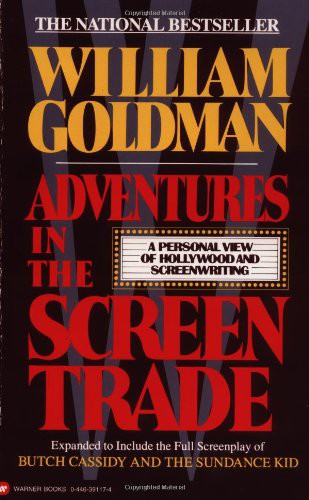
Adventures in the Screen Trade: A Personal View of Hollywood and Screenwriting

by William Goldman

View on Amazon →

"Nobody knows anything. Not one person in the entire motion picture field knows for a certainty what's going to work. Every time out, it's a guess."

Goldman's memoir combines Hollywood insider perspective with screenwriting craft wisdom. He candid discusses the business realities, creative compromises, and personal experiences of writing Butch Cassidy and the Sundance Kid, All the President's Men, and other classics, while sharing pragmatic insights about narrative and character.

Theory and craft knowledge alone are insufficient without understanding Hollywood's commercial and political realities. Goldman's honest account of how scripts are developed, pithed, greenlit, and compromised provides essential context for screenwriters navigating the professional film industry while maintaining artistic integrity.

  • The film industry's creative and commercial realities
  • How successful screenwriters navigate pitches and development
  • The relationship between dramatic structure and box office
  • Personal narrative and character-driven storytelling
  • Memoir format less instructional than pure craft books
  • Focused on Hollywood studio system realities
  • Less applicable to independent or international filmmaking

"Goldman's perspective on both craft and industry remains essential reading for writers seeking to understand Hollywood's decision-making."

Professional Screenwriters Guild, Screenwriting Profession
05

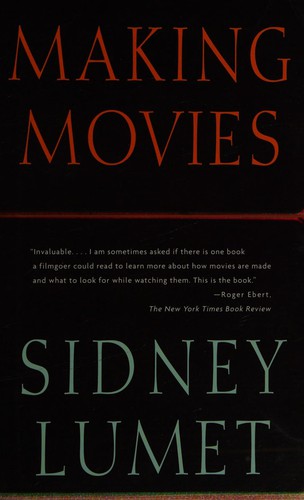
Making Movies

by Sidney Lumet

View on Amazon →

"Good camera work is not pretty pictures. It should augment and reveal the theme as fully as the actors and directors do. The theme will decide the specifics of every selection made."

Lumet, director of 12 Angry Men, Dog Day Afternoon, and Network, explores the comprehensive craft of directing films. He examines the director's role in shepherding a script to completion, the relationship between cinematography and theme, casting, communication with actors, and the technical orchestration of filmmaking.

Directing extends far beyond framing shots—it involves understanding how every department contributes to a unified artistic vision. Lumet's insistence that all technical choices serve thematic intent, his emphasis on clarity of vision, and his practical wisdom about managing complex productions provide essential perspective for aspiring directors.

  • Theme as the guiding principle for all directorial decisions
  • Casting and actor management for authentic performance
  • Cinematography in service of narrative and theme
  • The director's role coordinating all artistic departments
  • Assumes understanding of production logistics
  • Limited coverage of specific technical cinematography
  • Focused on theatrical drama, less on other genres

"Lumet's approach to directing based on thematic clarity and artistic clarity remains foundational in directing education."

Directors Guild and Film Schools, Professional Directing
06

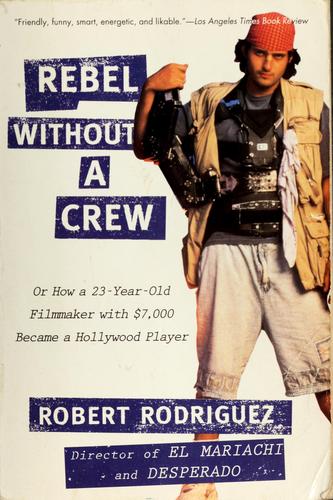
Rebel Without a Crew: How a 23-Year-Old Filmmaker with $7,000 Became a Hollywood Player

by Robert Rodriguez

View on Amazon →

"You have to make a choice: Are you going to work in the film industry, or are you going to be a filmmaker? Because they're not the same thing."

Rodriguez documents his journey creating El Mariachi on a minimal budget, later sold to Columbia Pictures, establishing himself as a filmmaker. He shares practical lessons about resourcefulness, problem-solving, technological innovation, and creative determination—demonstrating that powerful filmmaking need not require studio resources.

In an era when filmmaking technology is democratized and financing is accessible to determined creators, Rodriguez's story proves that creative vision, technical skill, and determination matter more than budgets. His practical insights into maximizing limited resources and creative problem-solving are essential for independent filmmakers.

  • Low-budget filmmaking techniques and creative solutions
  • Self-sufficiency and multi-disciplinary filmmaker skills
  • Pitching and developing projects on limited budgets
  • Technology as democratizing force in filmmaking
  • Focuses on action filmmaking primarily
  • Budget constraints may not apply to all filmmakers
  • Limited coverage of narrative theory or script development

"Rodriguez's example has inspired generations of independent filmmakers to pursue their visions without waiting for studio approval."

Independent Filmmaking Community, Low-Budget Film Production
07

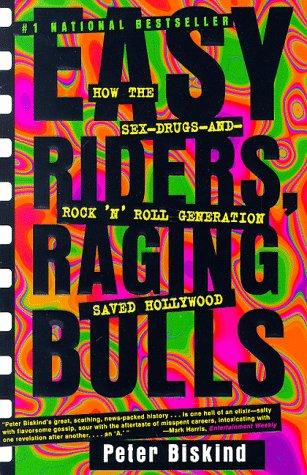
Easy Riders, Raging Bulls: How the Sex-Drugs-and-Rock 'N' Roll Generation Saved Hollywood

by Peter Biskind

View on Amazon →

"The New Hollywood directors understood something the old guard didn't: audiences wanted to see the world as it actually was, not as the studios wanted to represent it."

Biskind chronicles the transformation of American cinema in the 1970s through the careers and personal dramas of iconic directors including Coppola, Scorsese, Altman, and others. He explores how a new generation of filmmakers challenged studio conventions, revolutionized visual storytelling, and created cinema's greatest era.

Understanding how filmmaking transforms requires historical perspective. Biskind's detailed account of how a generation of auteurs seized creative control from studios, how artistic vision shaped popular culture, and how economic and creative forces intersected during American cinema's greatest period provides essential context for contemporary filmmakers.

  • 1970s transformation of American cinema and auteur theory
  • How generational change disrupts industries and creates innovation
  • The relationship between artistic vision and commercial success
  • Historical context for understanding contemporary filmmaking
  • Historical narrative rather than instructional craft
  • Focused on specific era and generation
  • Limited practical guidance for contemporary filmmaking

"Biskind's comprehensive history of the New Hollywood remains the definitive account of cinema's greatest transformational period."

Film Historians and Critics, Film History and Criticism
08

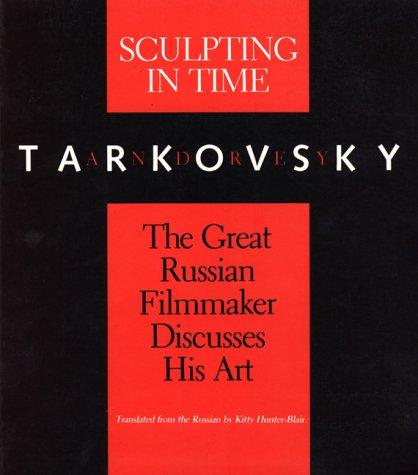
Sculpting in Time: Reflections on the Cinema

by Andrei Tarkovsky

View on Amazon →

"The task of the author is to find in reality those features which are most important and most typical, and to show them in their true relationships and proportion."

Tarkovsky, the visionary Russian filmmaker, offers philosophical meditations on cinema's essential nature. He argues that film's primary material is time itself, explores how rhythm and pacing create spiritual experiences, and defines cinema's unique capacity to evoke consciousness and emotion through sustained observation.

While much film education emphasizes narrative and spectacle, Tarkovsky's meditation on cinema as an art of time, rhythm, and consciousness provides essential counterbalance. His insistence that cinema operates through duration and observation rather than merely plot offers alternative frameworks for filmmakers seeking depth beyond conventional storytelling.

  • Cinema as the art of time and rhythm
  • Pacing and duration in creating emotional and spiritual resonance
  • The relationship between observation and consciousness
  • Cinema's unique capacity for evoking interior experience
  • Philosophical and abstract, limited technical guidance
  • Applies primarily to art cinema, not commercial filmmaking
  • Requires contemplative approach to film theory

"Tarkovsky's philosophical approach to cinema remains foundational for filmmakers pursuing artistic cinema beyond commercial frameworks."

Art Cinema and Film Theory Community, Avant-Garde and Art Cinema
09

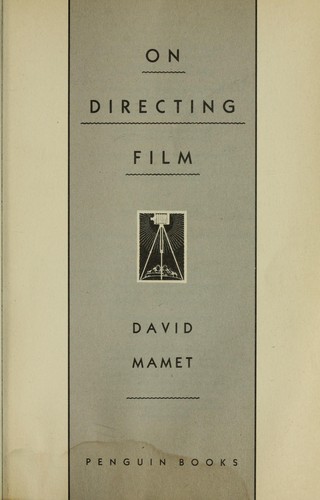
On Directing Film

by David Mamet

View on Amazon →

"The director's job is not to have ideas, but to be ruthlessly clear about communicating the idea the author had."

Mamet applies rigorous logical analysis to directing, examining how directors communicate intent to actors, how to break down scenes into essential actions, and how to maintain artistic clarity amid complex production. He emphasizes that directing is about control, clarity, and serving the story rather than indulgence.

Mamet's approach—reducing direction to essential principles, eliminating unnecessary complication, and focusing on clarity—provides antidote to contemporary filmmaking's tendency toward over-complication. His insistence that directors serve story rather than ego offers practical wisdom for maintaining artistic integrity.

  • Breaking down scenes into essential actions and intentions
  • Communication with actors using precise language
  • Eliminating unnecessary complication and maintaining clarity
  • The director's responsibility to serve the story
  • Sparse, aphoristic style less detailed than some prefer
  • Minimalist approach not applicable to all filmmaking styles
  • Assumes already-developed understanding of film production

"Mamet's principles of clarity and communication remain essential guidance for directors seeking to work effectively with actors."

Film Directors and Acting Coaches, Professional Directing
10

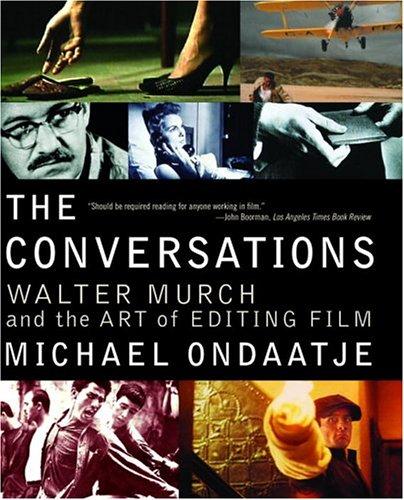
The Conversations: Walter Murch and the Art of Editing Film

by Michael Ondaatje

View on Amazon →

"An editor is like a midwife helping a story that wants to be born. You listen carefully to what the material is telling you."

Through extended conversations between author Ondaatje and legendary editor Walter Murch, this book explores editing philosophy, the transition from analog to digital editing, decision-making in the editing suite, and the emotional and technical dimensions of the editor's craft across films like The English Patient and Cold Mountain.

While Murch's In the Blink of an Eye provides philosophical framework, these conversations offer practical insight into real editing decisions, problem-solving in complex productions, and how editors navigate creative disputes. The dialogue format provides accessibility while maintaining intellectual rigor.

  • The editor's decision-making process in complex productions
  • Analog to digital editing transition and implications
  • Communication between editors, directors, and producers
  • Emotional intuition combined with technical precision
  • Conversation format less structured than instructional texts
  • Specific to Murch's approach, not universal editing principles
  • Assumes understanding of editing terminology

"Ondaatje's conversations with Murch provide invaluable insight into the thinking of one of cinema's greatest editors."

Film Critics and Editors, Film Editing and Criticism
Back to all lists