10 Best Greek Classics

Essential Works of Ancient Greek Literature

Explore the foundational texts of Western civilization. This curated collection presents the ten most essential and influential works of ancient Greek literature, spanning epic poetry, tragic drama, philosophy, and history. These works have shaped Western thought, literature, and culture for nearly three millennia.

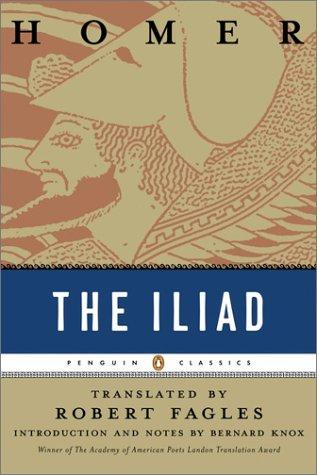
The Iliad
01

The Iliad

by Homer

"Like the generations of leaves, the lives of mortal men. Now the wind scatters the old leaves across the earth, now the living timber bursts with the new buds and spring comes round again."

The cornerstone of Western literature, this epic poem recounts the siege of Troy and the wrath of Achilles during the Trojan War. Composed around the 8th century BCE, the Iliad explores themes of heroism, honor, and the tragic costs of conflict through vivid battle scenes and complex character development.

The Iliad represents the birth of Western literature and establishes foundational concepts of heroism and tragedy that influence all subsequent writing. Understanding the epic is essential for comprehending references that permeate Western culture, art, and philosophy. It demonstrates Homer's unparalleled skill in portraying both divine and human perspectives on war and fate.

  • Fate and human agency coexist; characters struggle against destiny they cannot control
  • Honor and glory are central to Greek values, even when they come at terrible cost
  • The gods are invested in human affairs and frequently intervene in mortal conflicts
  • War is destructive and tragic, with no victors truly unscathed despite military success
  • Plato criticized Homer for portraying gods and heroes in morally questionable ways unsuitable for education
  • The historical authorship of the Iliad remains debated; scholars question whether one author composed the entire epic

"The Iliad at once defines a culture and subjects it to a set of fundamental criticisms."

Bernard Knox, Former Director, Center for Hellenic Studies

"Homer's Iliad, along with its companion-piece, the Odyssey, was venerated by the ancient Greeks themselves as the cornerstone of their civilization."

Gregory Nagy, Harvard University, Classics Department

"The Iliad demonstrates unparalleled excellence in the imitation of serious action, setting the standard for all subsequent epic composition."

Aristotle, Ancient Greek Philosopher
The Odyssey
02

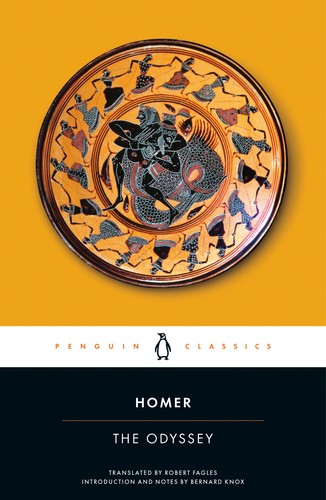
The Odyssey

by Homer

"Take courage, my heart: you have been through worse than this."

This epic poem follows Odysseus's ten-year journey home after the Trojan War, depicting his encounters with mythical creatures and divine beings. The Odyssey shifts focus from martial heroism to perseverance, cunning, and the rewards of loyalty and homecoming.

The Odyssey complements the Iliad by exploring different aspects of heroism—cunning over strength, perseverance over glory, and the domestic virtues of loyalty and love. It introduces foundational narrative techniques and explores the human condition through adventure and hardship. The work remains vital for understanding narrative structure and character development in Western literature.

  • Perseverance and intelligence matter as much as physical strength in overcoming obstacles
  • Loyalty to family and home provides meaning and purpose beyond glory or power
  • The journey of self-discovery requires endurance through suffering and temptation
  • Cunning and strategic thinking can triumph over brute force in both small and large conflicts
  • Modern scholars debate whether the same author composed both the Iliad and Odyssey, as they differ in moral perspective and language
  • Some critics argue the work contains implausible magical elements that detract from its realism

"The Odyssey captures the full spectrum of human experience through Odysseus's remarkable journey, from divine intervention to intimate domestic reunion."

Robert Fagles, Translator, Former Princeton University Faculty

"Homer's Odyssey remains the foundational text for understanding Western narrative traditions and the complexities of human desire and return."

Timothy B. Shutt, Historian, Teaching Scholar
Oedipus the King
03

Oedipus the King

by Sophocles

"How dreadful the knowledge of the truth can be When there's no help in truth."

This masterpiece of Greek tragedy tells the story of King Oedipus, who investigates a terrible crime only to discover that he himself is the guilty party. Through a tightly constructed plot of revelation and irony, Sophocles explores themes of fate, knowledge, and the limits of human understanding.

Oedipus the King is universally recognized as the greatest achievement of Greek tragic drama and a template for all subsequent tragedy. Aristotle held it as the perfect example of tragic structure with its ideal employment of reversal and recognition. Understanding this play is essential for comprehending Western dramatic theory and the concept of tragic irony that permeates literature and film.

  • Dramatic irony: the audience knows truths the protagonist desperately seeks but cannot yet face
  • Fate cannot be escaped; Oedipus's attempts to avoid prophecy ensure it is fulfilled
  • Self-knowledge comes at tremendous cost, often destroying the illusions we construct
  • The search for truth is noble but dangerous; some knowledge brings only pain
  • Some modern critics argue the play reflects outdated ideas about fate and divine determinism
  • The treatment of female characters is limited; Jocasta's role becomes marginal in the latter acts

"Oedipus the King represents the pinnacle of tragic achievement, demonstrating perfect structural unity and psychological depth unmatched in ancient drama."

Bernard Knox, Classical Scholar, Director Center for Hellenic Studies

"This tragedy achieves the perfect balance of reversal and recognition, representing the ideal form toward which all tragic composition should aspire."

Aristotle, Ancient Greek Philosopher
"Oedipus the King expresses a universal human wish and thereby compels recognition from audiences across ages and cultures."

Sigmund Freud, Psychoanalyst
The Republic
04

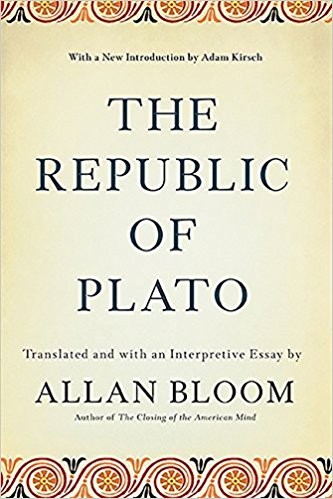
The Republic

by Plato

"The society we have described can never grow into a reality...till philosophers become rulers in this world, or till those we now call kings and rulers really and truly become philosophers."

This foundational philosophical dialogue features Socrates and other Athenian philosophers discussing justice, virtue, and the ideal state. Through Socratic questioning, Plato explores the nature of knowledge, the structure of the soul, and the philosopher's role in society.

The Republic is one of the most influential texts in Western philosophy and political theory, shaping centuries of philosophical thought. It introduces fundamental concepts including Plato's Theory of Forms and explores the relationship between individual virtue and justice in society. Every educated person benefits from engaging with Plato's profound questions about how to live well and organize society justly.

  • Justice consists of each person performing the function for which they are naturally suited
  • The ideal state reflects the structure and harmony of the individual soul
  • Education and culture are the greatest advantages one can carry to the next world
  • Knowledge is preferable to opinion; the pursuit of truth is the philosopher's highest calling
  • Aristotle critiqued Plato's proposal of communal living as unrealistic and potentially destructive to human relationships
  • The ideal state described is utopian; critics argue it rests on unrealistic assumptions about human nature and psychology

"Plato's Republic, while flawed in its practical proposals, represents the most ambitious and comprehensive inquiry into justice and the ideal state."

Aristotle, Ancient Greek Philosopher
"No written constitution or laws can compare in importance to the philosophical principles that govern a just society, as explored in Plato's dialogues."

Thomas Jefferson, American Founding Father, Philosopher

"The Republic remains essential reading despite its dangers; understanding Plato's arguments is crucial for defending open societies against authoritarian ideals."

Karl Popper, Philosopher, Political Theorist
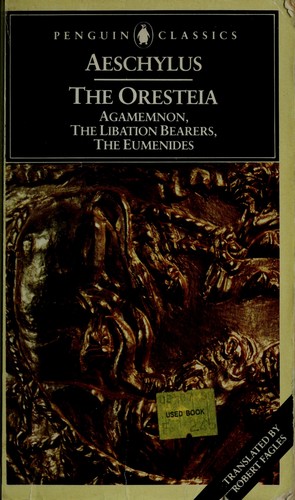
The Oresteia
05

The Oresteia

by Aeschylus

"Even in our sleep, pain which cannot forget falls drop by drop upon the heart until, in our own despair, against our will, comes wisdom through the awful grace of God."

This is the only surviving trilogy of Greek drama, consisting of Agamemnon, The Libation Bearers, and The Eumenides. The cycle traces the curse of the House of Atreus across three generations, culminating in the establishment of justice through law rather than blood revenge.

The Oresteia represents the highest achievement of Greek tragic drama and explores profound themes of justice, revenge, and the transition from primitive to civilized law. As the only complete tragic trilogy to survive antiquity, it offers unique insight into how the Greeks imagined complex moral development across time. The work's final vision of justice achieved through democratic institutions makes it essential for understanding Western legal and political philosophy.

  • Justice evolves from personal vendetta and blood revenge toward rational law and community
  • Suffering produces wisdom; pain teaches what reason alone cannot convey
  • Reconciliation and integration are possible when justice is properly administered
  • The transition from chaos to order requires the establishment of legitimate institutions
  • The resolution in The Eumenides is viewed by some critics as politically motivated, reflecting Athenian ideology rather than universal truth
  • The treatment of female characters, particularly the Furies and Clytemnestra, raises questions about misogyny in the text

"The Oresteia demonstrates Aeschylus's unparalleled ability to marry political vision with profound tragic intensity across an entire trilogy."

Robert Fagles, Translator, Literary Scholar

"The Oresteia represents the culmination of Greek tragic achievement and remains unsurpassed in its exploration of justice and the rule of law."

W.B. Stanford, Classical Scholar, Trinity College Dublin
Medea
06

Medea

by Euripides

"I would rather stand three times with a shield in battle than give birth once."

This shocking tragedy presents Medea, betrayed by her husband Jason, as she plots her terrible revenge. Euripides portrays a deeply human protagonist driven by passion and wounded pride to commit unspeakable acts, challenging audience sympathy and moral judgment.

Medea is essential reading for understanding the range of Greek tragedy and Euripides' unique approach to characterization. The play challenges modern audiences with its complex portrayal of a woman driven to infanticide by betrayal and injustice. It explores the destructive power of passion, the vulnerability of women in patriarchal society, and the limits of justice, making it profoundly relevant to contemporary discussions of gender and revenge.

  • Passion and emotion can override reason, leading to self-destructive choices
  • Women in patriarchal society are vulnerable to abandonment and betrayal with little legal recourse
  • Revenge may satisfy wounded pride but destroys the avenger as much as the victim
  • Euripides portrays complex characters with mixed motives rather than simple moral categories
  • Modern audiences may find Medea's act of infanticide so extreme as to defy sympathy or moral understanding
  • Some scholars argue the play's portrayal of female rage, while compelling, risks reinforcing stereotypes about women's irrationality

"Medea remains one of the most psychologically complex characters in all of drama, and Euripides' portrayal of her passion continues to challenge and disturb audiences in productive ways."

Diane J. Rayor, Translator, Classical Scholar

"Euripides captures the full intensity of Medea's emotional journey with language that captures both the beauty and terror of her transformation."

Charles Martin, Translator, Poet
History of the Peloponnesian War
07

History of the Peloponnesian War

by Thucydides

"Right, as the world goes, is only in question between equals in power, while the strong do what they can and the weak suffer what they must."

This groundbreaking historical narrative chronicles the 27-year conflict between Athens and Sparta that devastated the Greek world. Thucydides pioneered modern historiography through rigorous methodology, eyewitness accounts, and analytical depth, moving beyond mythology to factual documentation.

Thucydides established the standards for historical writing that endure today. His analysis of power, causation, and human nature remains acute and relevant, influencing political scientists and strategists for centuries. The work's famous passages, including Pericles' Funeral Oration and the Melian Dialogue, offer profound insights into political philosophy, ethics, and the nature of power that continue to shape contemporary discourse.

  • Power dynamics drive international relations more than justice or morality
  • Accurate historical documentation requires eyewitness testimony and rigorous analysis
  • The unpredictable nature of war means outcomes cannot be determined by rational calculation alone
  • Understanding history requires examining underlying causes and human psychology, not just events
  • Thucydides rarely names sources and strives to create a seamless narrative, limiting readers' ability to verify claims
  • His deterministic argument that Athenian power growth made war inevitable has been challenged by modern scholars who find his causal analysis oversimplified
  • The text employs difficult language with neologisms and abstractions that even ancient readers found challenging

"Thucydides remains the gold standard for historical narrative, combining factual detail with analytical insight in ways few historians have matched."

Donald Kagan, Historian, Yale University

"Thucydides' approach to history as a rational investigation of cause and effect fundamentally shaped Western intellectual traditions."

Robin Waterfield, Translator, Classical Scholar

"The Peloponnesian War remains indispensable for understanding not just ancient Greece but the nature of historical documentation itself."

Mary Beard, Classicist, Cambridge University
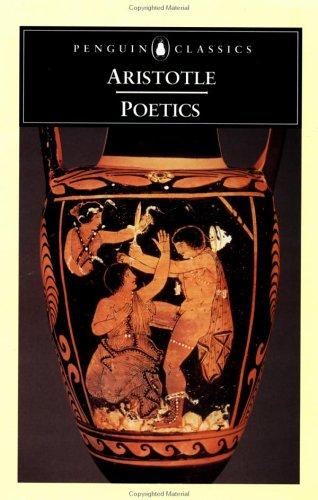
Poetics
08

Poetics

by Aristotle

"Tragedy is an imitation of an action that is serious, complete, and of a certain magnitude; in language embellished with each kind of artistic ornament, the several kinds being found in separate parts of the play; in the form of action, not of narrative; through pity and fear effecting the proper purgation of these emotions."

This seminal work of literary theory analyzes tragedy, comedy, and epic poetry, establishing frameworks for understanding dramatic structure. Aristotle defines tragedy, catharsis, and the concepts of reversal and recognition that remain central to dramatic analysis.

Poetics is the foundational text of Western literary criticism and dramatic theory. Aristotle's definitions and analytical framework have shaped literary education and criticism for two millennia. Understanding concepts like catharsis, hamartia, peripeteia, and anagnorisis is essential for analyzing literature and drama. The work itself exemplifies philosophical method through close analysis of literary practice.

  • Plot is the most important element of drama; character is secondary to the structure of events
  • Tragedy works through the emotions of pity and fear to achieve catharsis—a purification through emotional release
  • Reversal and recognition are the most powerful tragic devices for creating emotional impact
  • The tragic hero must be neither perfectly virtuous nor completely evil, but fail through a flaw or error of judgment
  • Aristotle's narrow focus on Greek drama may not apply universally to all dramatic or literary forms
  • His concept of catharsis remains philosophically contested; later thinkers have disagreed about its precise meaning

"Aristotle's Poetics remains the most penetrating analysis of how tragedy achieves its effects and continues to illuminate literary analysis."

Stephen Halliwell, Translator, Classical Scholar

"The Poetics provides essential vocabulary and concepts for understanding not just ancient drama but all narrative and artistic forms."

Malcolm Heath, Translator, Philosopher

"Aristotle's analytical method in the Poetics exemplifies philosophy at its best—careful observation leading to universal principles."

Anthony Kenny, Philosopher, Oxford University
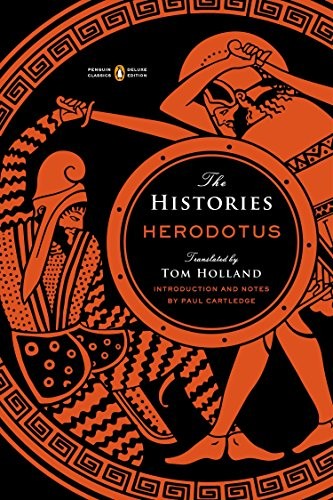
Histories
09

Histories

by Herodotus

"These are the historical findings of Herodotus of Halicarnassus, being an account of his inquiries, undertaken so that the great deeds of Greeks and barbarians alike should not be lost in the mists of time."

Often called the Father of History, Herodotus presents a narrative account of the Persian Wars and earlier events, including extensive descriptions of Egyptian, Persian, and Scythian cultures. His work combines historical inquiry with ethnographic curiosity and engaging storytelling.

Herodotus established history as a form of written inquiry into human affairs and cultural diversity. His work preserves invaluable information about ancient Near Eastern cultures and demonstrates the power of narrative to convey historical understanding. Reading Herodotus is essential for appreciating how ancient peoples viewed themselves and others, and for understanding the foundations of Western historical consciousness.

  • History can be constructed through inquiry and documentation, not merely mythological tradition
  • Understanding other cultures requires curiosity about their customs, beliefs, and institutions
  • Historical narrative should preserve the deeds of all peoples, not just the victors
  • Eyewitness testimony and multiple accounts provide the foundation for historical knowledge
  • Herodotus includes questionable accounts and exaggerations; he was criticized even in antiquity for unreliability
  • His methodology of recording whatever was told to him without verification is problematic by modern historical standards
  • Some accounts, like gold-digging ants in India, strain credibility, though later research has explained these stories as misunderstandings

"Herodotus remains unmatched in bringing the ancient world to life through vivid narrative and genuine curiosity about human diversity."

Tom Holland, Translator, Historian

"The Histories provides an irreplaceable window into how the ancient Greeks understood their own history and the wider world."

Paul Cartledge, Historian, Cambridge University

"Herodotus rightly deserves the title 'Father of History,' having pioneered the disciplined inquiry into past events that define historical writing."

Cicero, Roman Orator and Philosopher
Poems and Fragments
10

Poems and Fragments

by Sappho

"To me he seems to be like the gods, that man whosoever sits opposite you and near hears you sweetly speaking and laughing...for whenever I see you briefly, speech fails me, my tongue breaks, and at once a delicate fire has run beneath my skin."

Sappho's lyric poetry, preserved in fragments from ancient papyri, captures moments of intense emotion—love, desire, longing, and jealousy. Her verses are characterized by vivid sensory imagery, emotional immediacy, and extraordinary technical skill in Greek meter and language.

Sappho represents the voice of an ancient woman poet whose intimate, emotional verses transcend the centuries with remarkable power. Her influence on Western poetry is immeasurable, yet most of her nine papyrus rolls were lost to history. Reading Sappho is essential for understanding female perspectives in ancient Greek culture and appreciating how poetry captures the intensity of human emotion. Her innovations in meter and language shaped lyric poetry permanently.

  • Lyric poetry captures momentary emotional intensity through vivid sensory detail
  • Women's voices and experiences are worthy subjects for serious artistic attention
  • Technical mastery of language and form serves emotional and psychological depth
  • The fragmentary nature of surviving texts reveals the accidents of history and time
  • Most of Sappho's work survives only as fragments, making complete interpretation difficult
  • Modern readers sometimes impose contemporary identity categories on her poetry in ways that may not reflect ancient understanding

"Sappho's fragments, though incomplete, reveal a poet of unmatched emotional intensity and technical mastery whose influence shaped all subsequent lyric poetry."

Diane J. Rayor, Translator, Classical Scholar

"The gaps and fragments that survive from Sappho are not limitations but features—they reflect the way desire and beauty exist in incomplete moments."

Anne Carson, Poet, Classics Scholar

"Sappho's surviving verses demonstrate that women poets of antiquity achieved technical sophistication and emotional depth that remains unmatched."

Josephine Balmer, Translator, Poet
Back to all lists