10 Best Habits Books

Master Life-Changing Strategies for Building Better Habits and Breaking Bad Ones

Explore the most influential books on habit formation and personal development. From atomic changes to elastic flexibility, these ten essential reads provide proven frameworks for transforming your daily routines and achieving lasting success. Each book offers unique insights backed by research, expert coaching, and real-world applications.

01

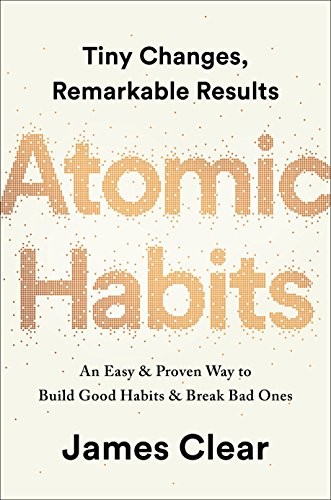
Atomic Habits

by James Clear

View on Amazon →

"You don't rise to the level of your goals. You fall to the level of your systems."

This bestselling guide teaches you how tiny changes can lead to remarkable results through the power of habit stacking and environmental design. Clear breaks down the science of how habits work and provides practical strategies to build good habits while breaking bad ones. The core philosophy is that 1% improvements compound over time to create extraordinary results.

Atomic Habits has become the modern standard for habit formation literature, offering accessible, science-backed methods that anyone can implement immediately. Its focus on systems over goals and small marginal gains provides a foundational framework that complements all other habit books. Clear's research into behavioral psychology and habit loops makes this essential reading for understanding habit mechanics.

  • Focus on systems and processes rather than goals
  • Build 1% better habits through incremental improvements that compound over time
  • Use habit stacking by attaching new habits to existing routines
  • Design your environment to make good habits obvious and easy
  • Some concepts oversimplify complex behavioral psychology
  • Heavy reliance on habit loop model may not work for all people
  • Limited discussion of why habits fail or how to handle setbacks

"Clear provides a practical framework for understanding how small, consistent improvements compound into remarkable results."

Bill Gates, Microsoft Founder

"An exceptionally useful and well-researched guide to habit change that combines scientific rigor with practical wisdom."

Daniel Goleman, Emotional Intelligence Researcher
02

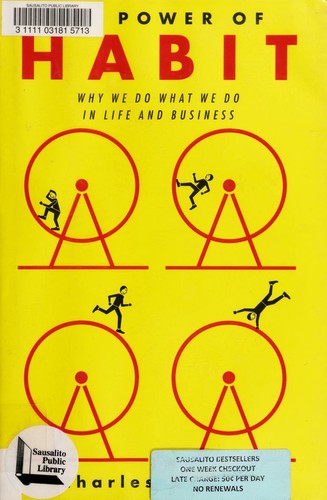
The Power of Habit

by Charles Duhigg

View on Amazon →

"When cue and a behavior and a reward become neurologically intertwined, what is actually happening is a neural pathway is developing that links those three things together."

A groundbreaking exploration of the habit loop structure consisting of cue, routine, and reward, this book uses compelling case studies from corporate and personal life to demonstrate habit science. Duhigg reveals how understanding these neurological patterns can help you change addictive behaviors and create lasting transformation in your life. The Golden Rule of habit change provides a powerful framework for modifying even deeply entrenched behaviors.

The Power of Habit established the foundational habit loop model (cue, routine, reward) that underpins modern habit science and is referenced in virtually all subsequent habit literature. Duhigg's journalistic approach and real-world case studies make complex neuroscience accessible and applicable. Understanding this model is essential before exploring more specialized habit strategies.

  • Habits follow a neurological loop: cue triggers routine, which produces reward
  • To change habits, keep the cue and reward but replace the routine
  • Keystone habits create domino effects that transform other areas of life
  • Willpower is a limited resource that can be built like a muscle
  • Some case studies lack rigorous scientific evidence or proper context
  • Oversimplifies complex behavioral issues and habit formation
  • Contains selective presentation of research and unverified causal claims

"Charles Duhigg's insights have helped me understand the forces that shape our daily lives and the habits that define us."

Oprah Winfrey, Media Mogul

"A masterwork on habit formation that reveals the profound power of understanding ourselves better."

The New York Times, Major Publication
03

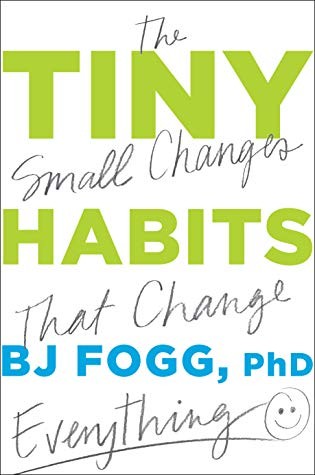
Tiny Habits

by BJ Fogg, PhD

View on Amazon →

"You don't change what you don't measure, and you don't measure what you don't celebrate."

Based on twenty years of Stanford research, this book introduces the Fogg Behavior Model (B=MAP) showing that motivation is unreliable and simplicity drives lasting change. Fogg teaches you to make behaviors so small they don't require willpower, anchoring them to existing routines for effortless habit formation. His method prioritizes celebrating tiny wins to build momentum and emotional reinforcement.

Tiny Habits provides the most research-backed approach to behavior change with Stanford credentials, offering practical alternatives to motivation-dependent strategies. The emphasis on making behaviors small enough to succeed eliminates the willpower problem that defeats most people. This book is essential for anyone who has failed at habit formation due to ambitious initial goals.

  • Behavior requires motivation, ability, and a prompt to occur simultaneously
  • Make new habits incredibly small so they don't require motivation to start
  • Celebrate immediately after completing tiny habits to build emotional reinforcement
  • Anchor new habits to existing routines rather than trying to create from scratch
  • May oversimplify some complex behavioral issues
  • The tiny habits approach might feel too slow for people wanting rapid change
  • Limited discussion of how to scale habits once they become automatic

"BJ Fogg's work is transformative. We use Tiny Habits at Amen Clinics with our patients, online students, and readers. It is simple, easy-to-implement, and it works."

Daniel G. Amen, MD, Psychiatrist and Bestselling Author

"Fogg's research on tiny habits leading to big breakthroughs has changed how I approach personal transformation."

Maria Shriver, Journalist and Bestselling Author
04

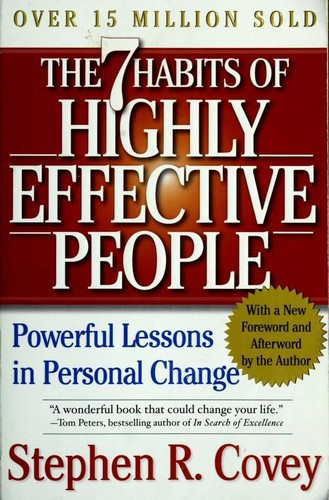
The 7 Habits of Highly Effective People

by Stephen R. Covey

View on Amazon →

"The main thing is to keep the main thing the main thing. Begin with the end in mind."

A transformational framework covering personal effectiveness through seven foundational habits: being proactive, beginning with the end in mind, putting first things first, thinking win-win, seeking to understand, creating synergy, and sharpening the saw. Covey connects personal character development with professional success, showing how responsibility and integrity form the foundation of all achievement. This classic work has influenced millions and shaped leadership philosophy worldwide.

The 7 Habits remains the most influential business and personal development book ever written, providing a holistic philosophy that goes beyond individual habit mechanics. Covey's emphasis on character ethics and principle-centered living offers a moral framework missing from other habit books. Understanding these seven habits provides context for all subsequent personal development strategies.

  • Be proactive and take responsibility for your choices and responses
  • Start with a clear vision of what you want to achieve (end in mind)
  • Prioritize activities based on importance rather than urgency
  • Seek first to understand others before attempting to be understood
  • Some habits feel outdated given social and technological changes since 1989
  • Heavy emphasis on individual responsibility may not account for systemic barriers
  • Christian values woven throughout may not resonate with all readers

"Those who live the 7 Habits perhaps have a higher likelihood of becoming Level 5 leaders, those rare transformational figures."

Jim Collins, Good to Great Author

"Clinton invited Covey to Camp David to counsel on integrating the book's ideas into his presidency."

President Bill Clinton, Former U.S. President
05

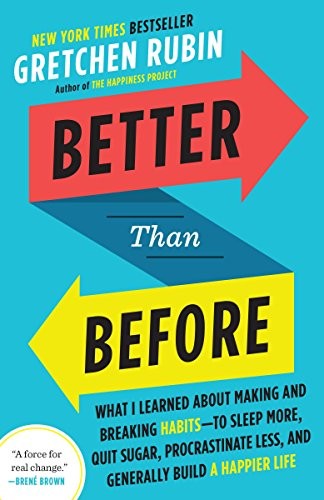
Better Than Before

by Gretchen Rubin

View on Amazon →

"The best way to change your habits is to know yourself. To know your Tendency. And the most important step in changing a habit is to know yourself."

Rather than offering one-size-fits-all solutions, Rubin identifies four personality tendencies that determine how people respond to expectations and structure habits accordingly. Upholders, Questioners, Obligers, and Rebels each require different strategies for lasting habit change. The book includes twenty-one scientifically-backed strategies to make and break habits personalized to your unique personality type.

Better Than Before uniquely recognizes that habit strategies must match individual personality types, filling a critical gap in habit literature that often assumes everyone responds to the same approaches. Understanding your Tendency is the essential prerequisite to choosing effective habit strategies. This personalization approach makes it indispensable for people frustrated with generic advice.

  • Identify your Tendency: Upholder, Questioner, Obliger, or Rebel
  • Tailor habit strategies to your personality type, not against it
  • External accountability works for Obligers; internal motivation works for Questioners
  • One person's strategy may be another person's obstacle
  • The four categories may oversimplify human personality and behavior
  • Limited neuroscience or physiological backing compared to other habit books
  • Some strategies feel generic despite personality framework

"Rubin is a force for real change. Her work on understanding ourselves better is transformative."

Brené Brown, Bestselling Author

"Gretchen's personalized approach to habit formation is innovative and deeply practical."

Charles Duhigg, The Power of Habit Author
06

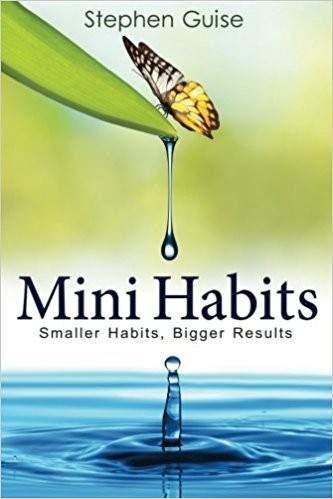
Mini Habits

by Stephen Guise

View on Amazon →

"A mini habit is a very small positive behavior that you force yourself to do every day. Its too-small-to-fail nature makes it weightless, deceptively powerful, and a superior habit-building strategy."

This book challenges the myth that you need motivation to build habits and introduces the too-small-to-fail strategy with mini habits so tiny that failure becomes nearly impossible. Guise demonstrates how consistency matters more than intensity, and how starting impossibly small leads to sustainable, lasting change that compounds over years. The practical framework has made this a worldwide bestseller translated into seventeen languages.

Mini Habits offers the most effective approach for people with busy schedules, low willpower, or history of failed attempts because the barrier to entry is essentially zero. The focus on deconstructing goals into truly mini components is unique and powerfully practical. This book excels at answering how to actually maintain consistency when motivation inevitably wanes.

  • Make habits so small that failure is nearly impossible
  • Consistency matters far more than the magnitude of each action
  • Small steps work every time because they don't require sustained motivation
  • Build mini habits into larger systems for exponential compound effects
  • The approach feels too minimal for people seeking rapid transformation
  • Limited coverage of how to scale from mini habits to more substantial actions
  • May under-emphasize the environmental and social factors in habit success

"This book is a game-changer. Every single person who struggles with living a healthier lifestyle must read this book."

Personal Trainers, Fitness Professionals

"Guise's mini habits approach is an excellent complement to understanding how small changes compound."

James Clear, Atomic Habits Author
07

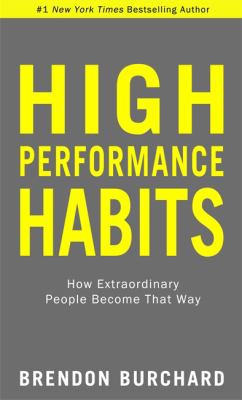
High Performance Habits

by Brendon Burchard

View on Amazon →

"Slow down, be more strategic, and say no more often. High performers are happy. We all want to be happy, but many people are unhappy achievers."

Drawing from research on what makes high performers exceptional, Burchard identifies six deliberate habits that create sustained excellence: seeking clarity, generating energy, raising necessity, increasing productivity, developing influence, and demonstrating courage. This book bridges personal habits and professional achievement, showing how daily practices build the psychological and social foundation for consistent high performance across all life domains.

High Performance Habits uniquely connects daily habit practices to measurable professional and personal achievement outcomes, making it essential for career-focused individuals. The emphasis on energy management and necessity connects habits to motivation and meaning in ways other books overlook. The framework applies to both individuals and organizations seeking sustained excellence.

  • Seek clarity about who you are and what matters most to you
  • Generate energy through physical health, mental focus, and emotional positivity
  • Raise necessity by connecting habits to deeply meaningful reasons
  • Develop influence by building trust and helping others succeed
  • Some concepts feel market-focused rather than universally applicable
  • The six habits framework may overlap with other models
  • Limited depth on how to integrate all six habits simultaneously

"Brendon's framework for high performance is research-backed and immediately applicable to achieving excellence."

Ed Mylett, Performance Coach

"High Performance Habits provides the roadmap that separates extraordinary achievers from the rest."

SUCCESS Magazine, Leading Success Publication
08

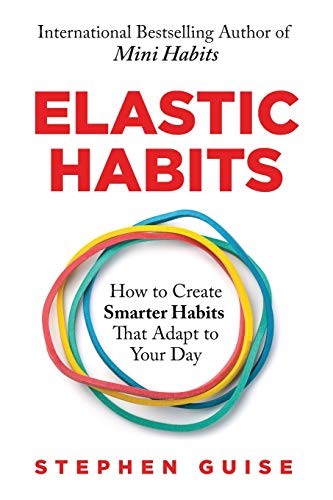
Elastic Habits

by Stephen Guise

View on Amazon →

"If a person puts flexibility and resiliency at the core of their habit-forming strategy, they can easily bend these habits and adapt according to what suits their day."

Building on Mini Habits principles, Elastic Habits introduces flexibility and adaptability to habit systems through three-tier options for each habit. Rather than rigid daily commitments, elastic habits expand or contract based on your daily capacity while maintaining core consistency. This innovative approach solves the problem where inflexible systems collapse under life's inevitable disruptions and unpredictability.

Elastic Habits addresses the primary reason habits fail: rigid systems that break when life circumstances change. The three-tier flexibility approach is unique in habit literature and particularly valuable for anyone with variable schedules, chronic illness, or unpredictable commitments. This book shows how to maintain habit streaks through genuine life challenges rather than abandoning habits entirely.

  • Design habits with three difficulty levels to maintain consistency despite life changes
  • Flexibility in intensity strengthens rather than weakens long-term habit maintenance
  • Identity shifts happen through small changes, even on low-capacity days
  • A 50% effort day still maintains your habit streak and momentum
  • The book contains significant repetition and could be much shorter
  • The last section heavily promotes the author's products and apps
  • Too much flexibility might reduce accountability and follow-through

"Guise's flexible approach to habit formation is particularly valuable for people managing chronic conditions."

HealthyWomen Organization, Women's Health Advocates

"The evolution from Mini Habits to Elastic Habits shows how to maintain habits through real life circumstances."

Stephen Guise Readers, Mini Habits Community
09

Superhuman by Habit

by Tynan

View on Amazon →

"New habits are things that you do, but old habits are things that you are. If you want to improve yourself permanently, you must develop more old habits."

This book demonstrates that superhuman results come not from superhuman effort but from superhuman habits, systematically built and maintained over years. Tynan provides both philosophical foundations for understanding habit-driven transformation and practical implementation details for dozens of specific habits across productivity, social, health, and lifestyle domains. The second half catalogs concrete habits you can immediately adopt with implementation guidance.

Superhuman by Habit provides one of the most practical genre applications of habit science, offering specific habit implementations across multiple life areas with detailed pros, cons, and progression paths. The book answers the critical question: after understanding habit mechanics, what specific habits should you actually build? The philosophical foundation connecting habits to identity is particularly valuable.

  • Superhuman results come from superhuman habits, not superhuman effort
  • Build identity around habits rather than treating habits as temporary changes
  • Specific habit examples across productivity, fitness, social, and mindset domains
  • Use 30-day implementation cycles to evaluate and refine new habits
  • Lacks academic research backing for claims about habit formation
  • The specific habits suggested are primarily for advanced practitioners
  • Limited discussion of how to handle habit failure or setbacks

"Besides Atomic Habits, Superhuman by Habit is a must-read for understanding how to build lasting habits."

James Clear, Atomic Habits Author

"Tynan shares his understanding of forming long-lasting habits from experience better than anyone else."

Tynan Community, Life Improvement Practitioners
10

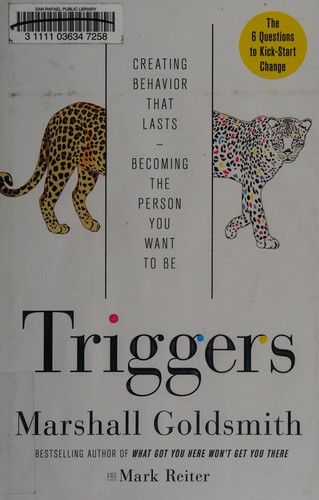
Triggers

by Marshall Goldsmith

View on Amazon →

"If we do not create and control our environment, our environment creates and controls us."

Goldsmith reveals how environmental and psychological triggers derail our best intentions and shows how deliberately designing your environment can support lasting behavioral change. Rather than relying on willpower alone, this book teaches you to anticipate and prepare for triggers that undermine your goals. Goldsmith's decades of executive coaching experience provide real-world examples of how successful people eliminate behavior-sabotaging triggers.

Triggers uniquely emphasizes environmental design as the foundation for behavior change, complementing the internal strategies in other habit books. Goldsmith's practical approach to identifying and managing triggers is essential for anyone who succeeds temporarily but struggles with sustained change. The executive coaching perspective offers insights on professional habit change that most other books overlook.

  • Identify the specific triggers that cause unwanted behaviors
  • Design your environment to support desired behaviors and avoid negative triggers
  • Anticipate challenges and prepare responses before you encounter triggers
  • Create accountability systems and support structures to maintain changes
  • Some concepts overlap with environmental design in other habit books
  • Heavy focus on elite executives may limit relatability for general audiences
  • Could offer more specific implementation frameworks for average readers

"Reading Triggers is like talking with Marshall. You get clear, practical, and actionable suggestions for behavior change."

Alan Mulally, CEO of the Year

"Triggers is recognized as one of the 100 Best Leadership & Success Books Ever Written."

Amazon, Major Retailer
Back to all lists