The 10 Best Investing Books of All Time

Essential reads that shaped modern investment strategy and influenced the world's greatest investors

These ten seminal works represent the foundation of modern investment wisdom. From Benjamin Graham's groundbreaking value investing principles to contemporary perspectives on market behavior and behavioral finance, these books have guided investors through market cycles and shaped investment philosophy for generations. Whether you're a novice investor or seasoned professional, these essential reads provide timeless principles applicable to any market condition.

01

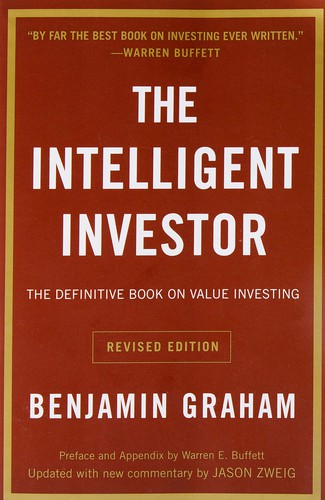
The Intelligent Investor

by Benjamin Graham

View on Amazon →

"To distill the secret of sound investment into three words, we venture the motto, MARGIN OF SAFETY."

First published in 1949, this foundational text introduces the concept of value investing and the margin of safety principle. Graham teaches investors how to analyze securities rationally and protect themselves against costly mistakes. The revised editions include commentary from Jason Zweig and a preface by Warren Buffett, making it as relevant today as when first written.

This is the definitive guide to value investing and the framework upon which modern investment discipline is built. Graham's principles of buying securities at a discount to intrinsic value have been proven effective across market cycles. Warren Buffett credits this book with changing his life, calling it 'by far the best book on investing ever written.'

  • Margin of safety is the central concept of intelligent investing
  • Distinguish between investment and speculation based on thorough analysis
  • Mr. Market metaphor: use market volatility to your advantage, not disadvantage
  • Dividend yield and asset value matter as much as growth potential
  • Some strategies are outdated due to modern market changes and technology
  • Heavy emphasis on fundamental analysis may overwhelm beginner investors
  • Less coverage of diversification and international investing compared to modern needs

"By far the best book on investing ever written. I read the first edition in 1950 when I was nineteen. I thought then that it was by far the best book about investing ever written. I still think it is."

Warren Buffett, CEO, Berkshire Hathaway

"Graham's margin of safety concept is the most important investment principle ever developed."

Seth Klarman, Founder, Baupost Group
02

A Random Walk Down Wall Street

by Burton G. Malkiel

View on Amazon →

"A blindfolded chimpanzee throwing darts at the Wall Street Journal could select a portfolio that would do as well as the experts."

Now in its 13th edition, Malkiel's classic explains the efficient market hypothesis and argues that most investors cannot consistently beat market averages. The book challenges active management while advocating for a buy-and-hold strategy with low-cost index funds. It provides both academic rigor and practical advice for individual investors navigating market dynamics.

This essential counterpoint to active investing provides the intellectual foundation for passive index investing. Malkiel's evidence-based arguments demonstrate why most professional managers fail to consistently outperform markets. Understanding the random walk theory is crucial for developing realistic investment expectations and avoiding costly mistakes.

  • Markets are highly efficient and quickly reflect all available information
  • Most active managers underperform due to fees and transaction costs
  • Low-cost index funds provide superior risk-adjusted returns for most investors
  • Behavioral biases lead investors to buy high and sell low
  • Dismisses fundamental analysis utility in identifying mispriced securities
  • Market efficiency assumptions have been challenged by behavioral finance research
  • Less emphasis on market anomalies and factor-based investing strategies
  • Rapid technological change has altered information dissemination since publication

"Malkiel's groundbreaking work fundamentally changed how we think about market efficiency and investor performance."

Paul Samuelson, Nobel Prize Economist

"An essential read for understanding why passive investing wins for most investors."

John Bogle, Founder, Vanguard Group
03

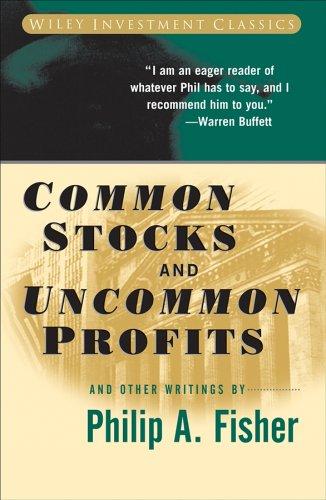
Common Stocks and Uncommon Profits

by Philip A. Fisher

View on Amazon →

"It is equally astonishing how much can be learned from both the vendors and customers about the real nature of the people with whom they deal."

This pioneering work introduces the 'scuttlebutt' method of investment research, where investors gather qualitative information from customers, competitors, and employees. Fisher emphasizes finding high-quality growth companies and holding them for the long term. Published in 1957, it remains a cornerstone of growth investing philosophy.

Fisher's approach to qualitative analysis complements Graham's quantitative value investing, creating a complete investing framework. The scuttlebutt method remains one of the most effective techniques for discovering competitive advantages and management quality. His emphasis on understanding business fundamentals through direct research is timeless and highly practical.

  • Scuttlebutt method: gather qualitative information from all sources about a company
  • Quality of management and competitive moat matter more than low valuation alone
  • Growth companies warrant holding periods of many years for true value realization
  • Financial analysis must be combined with deep understanding of business fundamentals
  • The scuttlebutt method is labor-intensive and requires significant time commitment
  • Less quantitative rigor compared to Graham's valuation-focused approach
  • Growth investing strategy can lead to expensive valuations and losses
  • Some guidance is dated given modern business landscape changes

"I've borrowed many ideas from Phil Fisher. His research methods and focus on quality are outstanding."

Warren Buffett, CEO, Berkshire Hathaway

"Phil Fisher taught us to look for businesses with sustainable competitive advantages and management quality."

Charles Munger, Vice Chairman, Berkshire Hathaway
04

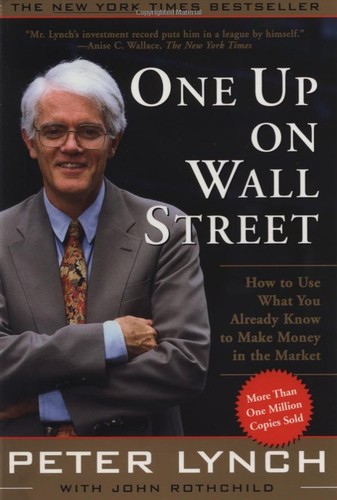
One Up on Wall Street

by Peter Lynch

View on Amazon →

"Any normal person using the customary three percent of the brain can pick stocks just as well, if not better, than the average Wall Street expert."

Lynch, legendary manager of the Magellan Fund, shares practical stock-picking strategies accessible to individual investors. He emphasizes doing your own research, understanding companies you own, and investing in what you know. The book combines his investment philosophy with real examples and witty storytelling about Wall Street culture.

Lynch's philosophy that ordinary investors can beat professionals by doing their homework remains profoundly important. His practical approach and emphasis on finding undiscovered companies before Wall Street recognizes them is actionable for individual investors. The book demystifies investing and proves that success comes from research and discipline, not special access.

  • You have an edge as an individual investor due to proximity to valuable information
  • Invest in companies you understand and whose products you use
  • Different stocks require different holding periods based on business type
  • Do your own research and don't blindly follow Wall Street recommendations
  • His exceptional track record has rarely been replicated by other fund managers
  • Stock picking guidance may encourage overtrading and transaction costs
  • Emphasizes individual company research which is time-consuming for average investors
  • Some advice is anecdotal rather than systematically tested

"Peter Lynch has done an outstanding job explaining his investment approach. Both amateurs and professionals can learn from his methodology."

Warren Buffett, CEO, Berkshire Hathaway

"Peter's practical wisdom about stock selection is invaluable for investors willing to do the work."

John Bogle, Founder, Vanguard Group
05

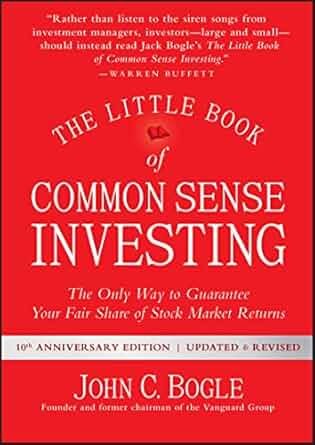
The Little Book of Common Sense Investing

by John C. Bogle

View on Amazon →

"Don't look for the needle in the haystack. Just buy the haystack!"

Bogle, founder of Vanguard Group, distills investing wisdom into this accessible guide advocating for low-cost index fund investing. He argues that most investors would be better served by simply buying the entire market through index funds rather than selecting individual stocks or paying active managers. The updated edition reflects lessons from the 2008 financial crisis and subsequent market changes.

This book makes the compelling case that index investing is the optimal strategy for most investors, backed by decades of historical evidence. Bogle's philosophy has fundamentally transformed the investing landscape, saving investors billions in unnecessary fees. His emphasis on low costs and long-term commitment is especially crucial in today's complex financial world.

  • Low-cost index funds provide superior long-term returns for most investors
  • Fees and expenses are the primary drag on investment returns
  • Time in market beats timing the market for long-term wealth building
  • Investment simplicity and discipline are more important than complexity
  • Index investing may underperform during strong market rallies for certain sectors
  • Dismisses active management entirely despite occasional superior performers
  • Less guidance for investors needing concentrated wealth in specific opportunities
  • Market concentration risks in index funds increasingly debated

"If a statue is ever erected to honor the person who has done the most for American investors, the hands-down choice should be Jack Bogle. For decades, Jack has urged investors to invest in ultra-low-cost index funds."

Warren Buffett, CEO, Berkshire Hathaway

"Bogle's reasoned precepts can enable a few million of us savers to become in twenty years the envy of our suburban neighbors."

Paul Samuelson, Nobel Laureate Economist
06

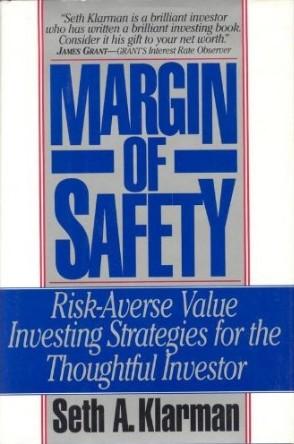
Margin of Safety

by Seth A. Klarman

View on Amazon →

"The avoidance of loss is the surest way to ensure a profitable outcome."

Klarman extends Graham's margin of safety principle with modern examples and practical risk management strategies. He emphasizes buying securities at significant discounts to intrinsic value and maintaining discipline during market euphoria. The book combines value investing theory with real-world market experiences and behavioral psychology insights.

This book bridges classical value investing with behavioral finance, providing essential risk management framework. Klarman demonstrates how margin of safety protects investors during inevitable market downturns and corrections. His pragmatic approach to identifying and exploiting market inefficiencies remains relevant across market cycles and investment types.

  • Margin of safety is the discipline of buying at significant discount to value
  • Risk management and loss avoidance should guide investment decisions
  • Market cycles create opportunities for disciplined contrarian investors
  • Portfolio construction should emphasize protection over maximum return
  • Focus on downside protection may result in missed market gains during rallies
  • Discount requirements may lead to long periods without investment opportunities
  • Some strategies depend on market dislocations that may not always occur
  • Limited discussion of diversification and asset allocation approaches

"Klarman's Margin of Safety represents the highest tradition of value investing philosophy."

Benjamin Graham, Value Investing Pioneer

"Seth Klarman's thoughtful approach to investing and risk management sets the gold standard for value investors."

Howard Marks, Founder, Oaktree Capital
07

Security Analysis

by Benjamin Graham and David Dodd

View on Amazon →

"The investor should act as though he were buying a whole business rather than simply purchasing stock."

The seminal 1934 classic that established the foundation of fundamental security analysis. Graham and Dodd provide comprehensive methodology for analyzing stocks and bonds, examining financial statements, competitive positioning, and management quality. Revised editions include modern commentary from investment leaders, bridging historical insights with contemporary applications.

This foundational text established security analysis as a rigorous discipline with proven methodologies. Graham and Dodd's framework remains the intellectual foundation for all value investing practitioners. Understanding their analytical approach provides the historical context and detailed techniques essential for any serious investor committed to fundamental analysis.

  • Securities should be analyzed as claims on business assets and earnings
  • Thorough financial statement analysis reveals true earnings power and value
  • Price paid relative to intrinsic value determines investment risk and return potential
  • Comprehensive due diligence reduces investment risk significantly
  • Extremely dense and technical, challenging for most individual investors
  • Published in 1934, some examples and data are outdated
  • Less emphasis on growth stocks and modern business models
  • Requires significant financial literacy and analytical skills to apply effectively

"Security Analysis is a roadmap for investing that I have been following for 57 years. It changed my life."

Warren Buffett, CEO, Berkshire Hathaway

"Graham and Dodd's Security Analysis remains the bible of value investing and fundamental analysis."

Seth Klarman, Founder, Baupost Group
08

Investment Valuation

by Aswath Damodaran

View on Amazon →

"Valuation is not a science; it is an art. The value that you obtain is dependent on the assumptions you make."

Damodaran, NYU's foremost valuation expert, provides comprehensive coverage of valuation tools and techniques applicable to any asset class. The book bridges academic theory with practical application, offering frameworks for valuing stocks, bonds, derivatives, and complex securities. Each revised edition incorporates new valuation challenges and technological changes.

This comprehensive reference provides the quantitative analytical framework for serious security analysis. Damodaran's systematic approach to valuation translates theoretical principles into actionable methodologies. Understanding multiple valuation approaches enables investors to identify pricing anomalies and assess security values with confidence across different market conditions.

  • Multiple valuation approaches exist; each has appropriate applications
  • Sensitivity analysis reveals how valuation changes with assumption modifications
  • Market prices reflect collective investor expectations and emotion
  • Historical multiples provide context but not prediction of future value
  • Highly technical and mathematical, requires strong finance background
  • Sensitive to small changes in assumptions leading to wide valuation ranges
  • Extensive framework may suffer from analysis paralysis in practice
  • Models depend on data quality and forward-looking accuracy

"Aswath Damodaran is simply the best valuation teacher around. If you are interested in the theory or practice of valuation, you should have Damodaran on Valuation on your bookshelf."

Michael J. Mauboussin, Chief Investment Strategist, Legg Mason Capital

"Damodaran's work has influenced generations of finance students and practitioners worldwide."

Columbia University, Educational Institution
09

The Bogleheads' Guide to Investing

by Taylor Larimore, Mel Lindauer, and Michael LeBoeuf

View on Amazon →

"The Vanguard Diehards—a.k.a. the 'Bogleheads'—are easily the planet's most well-informed, congenial, and successful group of individual investors."

Written by devoted practitioners of Bogle's philosophy, this practical guide translates low-cost index investing into actionable strategy. The book covers portfolio construction, asset allocation, tax-efficient investing, and behavioral discipline. It represents the collective wisdom of thousands of experienced individual investors from the Bogleheads community.

This book translates passive investing philosophy into step-by-step implementation guidance for real investors. The Bogleheads represent proof that ordinary individuals achieve superior returns through disciplined, simple, and low-cost approaches. Their collective experience across market cycles provides invaluable perspective on maintaining investment discipline during volatility.

  • Simple, diversified portfolio construction outperforms complexity
  • Asset allocation discipline matters more than security selection
  • Tax efficiency significantly impacts long-term wealth accumulation
  • Behavioral discipline prevents costly emotional investment decisions
  • May oversimplify investment approach for different life circumstances
  • Less guidance for investors with significant wealth concentration needs
  • Index investing may underperform during structural market changes
  • Limited discussion of alternative assets and non-traditional investments

"The Bogleheads embody the investment discipline and common sense that lead to superior returns."

John Bogle, Founder, Vanguard Group

"If you're about to retire, are planning to retire, or are even thinking of retiring, you can't afford not to read this book."

William J. Bernstein, Cofounder, Efficient Frontier Advisors
10

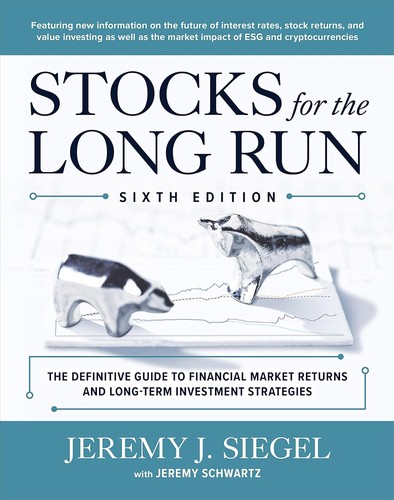
Stocks for the Long Run

by Jeremy J. Siegel

View on Amazon →

"The data clearly show that equities have provided the highest returns of any financial asset class over the past century."

Siegel, Wharton finance professor, provides comprehensive historical analysis demonstrating stocks' long-term superiority over bonds and cash. The book combines historical data with forward-looking analysis, examining equity risk premium and realistic return expectations. Successive editions incorporate new market cycles and economic conditions affecting equity valuations.

This historical perspective on long-term equity performance provides essential context for investment strategy development. Siegel's evidence-based approach demonstrates why equities belong in every long-term portfolio. Understanding historical market performance and volatility patterns enables realistic return expectations and appropriate risk tolerance assessment.

  • Equities have provided superior long-term returns compared to all other asset classes
  • Time horizon determines appropriate equity allocation and risk management
  • Dividend-paying stocks provide inflation protection and total returns
  • Market volatility is the price of admission for superior equity returns
  • Past performance does not guarantee future results given economic changes
  • High equity allocations may not suit all risk profiles and time horizons
  • Less emphasis on downside protection during extended bear markets
  • Demographic and structural changes may reduce historical return assumptions

"Siegel's historical analysis provides valuable perspective on equity investing and long-term wealth building."

Vanguard Group, Investment Management Company

"Stocks remain the best long-term investment for those with patience and discipline."

Warren Buffett, CEO, Berkshire Hathaway
Back to all lists