10 Best Machine Learning Books

Essential Texts for Understanding Modern Machine Learning

Master machine learning with this curated collection of the 10 most influential and comprehensive books in the field. From foundational statistical methods to cutting-edge deep learning, these texts provide both theoretical rigor and practical implementation guidance. Whether you're beginning your journey or advancing your expertise, these books represent the essential knowledge required to understand and apply modern machine learning techniques.

01

Hands-On Machine Learning with Scikit-Learn, Keras, and TensorFlow

by Aurélien Géron

View on Amazon →

"In Machine Learning this is called overfitting: it means that the model performs well on the training data, but it does not generalize well."

A practical guide that seamlessly bridges theory and implementation, teaching machine learning concepts through hands-on projects using scikit-learn, Keras, and TensorFlow. The book covers both classical algorithms and modern deep learning techniques with real-world datasets and code examples. Each chapter includes intuitive explanations followed by fully implemented Python solutions.

This book excels at translating complex machine learning concepts into practical, working code. Géron's experience as a practitioner shines through clear explanations and realistic techniques for building production-ready ML systems. The third edition (2022) incorporates modern deep learning frameworks and best practices essential for contemporary ML development.

  • Build end-to-end machine learning projects from data acquisition to deployment
  • Master both classical algorithms and deep neural networks with practical code
  • Understand train/test splits, cross-validation, and proper model evaluation techniques
  • Learn advanced topics including convolutional networks, recurrent networks, and reinforcement learning
  • Math concepts are sometimes simplified for practitioners, potentially limiting depth for theoretical researchers
  • Some advanced mathematical foundations are glossed over in favor of practical implementation
  • The breadth of coverage means each topic receives less exhaustive treatment than specialized books

"Hands-On Machine Learning is by far the best text for learning practical ML, serving both as a comprehensive textbook and a practical tutorial for implementing methods in production."

ML Community Consensus, Industry Standard
02

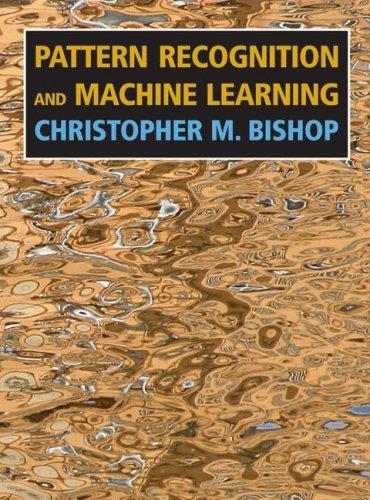
Pattern Recognition and Machine Learning

by Christopher M. Bishop

View on Amazon →

"The goal of machine learning is to make predictions based on data collected from previous similar situations."

A comprehensive 738-page textbook presenting machine learning from a Bayesian perspective, combining classical pattern recognition with modern probabilistic approaches. The book emphasizes graphical models and probabilistic inference as unifying concepts across diverse machine learning topics. Rich with mathematical exposition and geometric illustrations that provide deep intuition.

Bishop pioneered presenting machine learning through the lens of Bayesian probability, providing a principled framework for understanding why algorithms work. The extensive use of graphical models offers intuition that purely algorithmic treatments lack. This perspective is essential for rigorous machine learning research and advanced applications.

  • Understand machine learning through probabilistic graphical models and Bayesian inference
  • Master the mathematical foundations including probability theory and calculus optimization
  • Learn how diverse algorithms (regression, classification, clustering) unify under probabilistic frameworks
  • Develop intuition through geometric illustrations and visual explanations of complex concepts
  • Requires strong mathematical background; not suitable for readers without solid linear algebra foundation
  • Dense mathematical notation may slow reading pace for less experienced practitioners
  • Implementation examples are minimal; primarily theoretical with limited code samples
  • Some content predates modern deep learning developments from 2006 publication date

"A marvelous book that provides a comprehensive introduction to pattern recognition and machine learning. Highly recommended."

C. Tappert, CHOICE Magazine

"This impressive and interesting book has strong geometric illustration and intuition. It would form the basis of several advanced statistics courses."

John Maindonald, Journal of Statistical Software
03

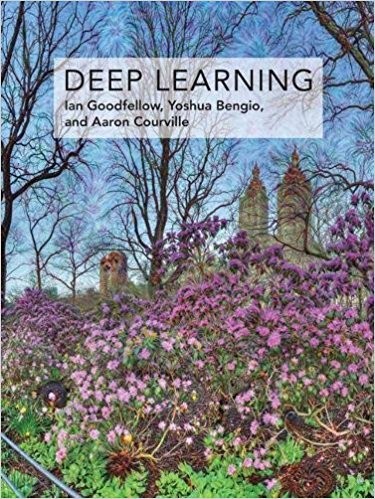
Deep Learning

by Ian Goodfellow, Yoshua Bengio, Aaron Courville

View on Amazon →

"Deep Learning is a representation learning method with multiple levels of representation, obtained by composing simple but non-linear modules that each transform its input into slightly more abstract and composite representation."

The definitive 800-page textbook on deep learning covering neural networks, convolutional networks, recurrent networks, and advanced optimization techniques. Written by three leading researchers who pioneered many deep learning techniques, it provides both mathematical rigor and practical insights. The book offers comprehensive coverage from fundamentals to research-level material.

As the authoritative reference on deep learning, this book is essential for understanding modern neural networks that power state-of-the-art AI applications. The authors' direct involvement in major deep learning breakthroughs ensures accuracy and insider perspectives. The systematic progression from fundamentals to advanced research topics makes it both accessible and comprehensive.

  • Master fundamental deep learning architectures including fully connected, convolutional, and recurrent networks
  • Understand optimization algorithms (SGD, momentum, Adam) critical for training deep models
  • Learn advanced techniques including regularization, batch normalization, and dropout
  • Explore specialized architectures for vision, language, and reinforcement learning applications
  • Dense mathematical presentation demands significant linear algebra and calculus background
  • Published in 2016; some recent architectures like Transformers and Vision Transformers receive limited coverage
  • Lacks extensive code examples; primarily focuses on mathematical exposition
  • Breadth sometimes comes at the expense of depth in specific advanced topics

"Written by three experts in the field, Deep Learning is the only comprehensive book on the subject. It provides much-needed broad perspective and mathematical preliminaries for software engineers and students entering the field."

Elon Musk, Entrepreneur/AI Advocate

"The AI bible... the text should be mandatory reading by all data scientists and machine learning practitioners to get a proper foothold in this rapidly growing area."

Daniel D. Gutierrez, insideBIGDATA
04

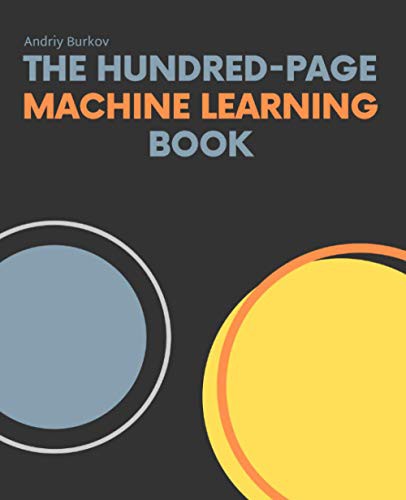
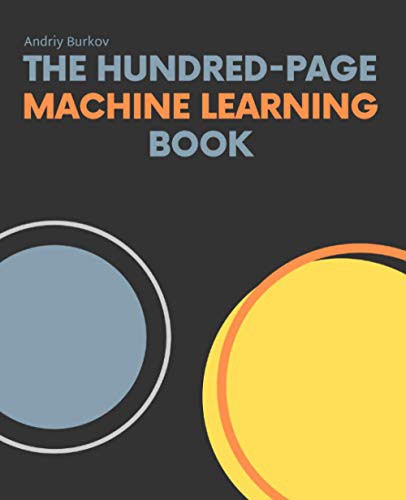
The Hundred-Page Machine Learning Book

by Andriy Burkov

View on Amazon →

"All models are wrong, but some are useful. (George Box, with Burkov's emphasis on model selection trade-offs)"

A remarkably concise yet comprehensive introduction to machine learning that distills essential concepts, algorithms, and best practices into just 100 pages. The book balances mathematical rigor with intuitive explanations, making it perfect for busy professionals and as a reference guide. Clear visualizations and practical advice on model selection complement the dense theoretical content.

This book serves as an ideal starting point for newcomers and as a rapid reference for practitioners. Burkov's unique ability to convey complex concepts in minimal space without sacrificing accuracy makes this essential for time-constrained learners. It's especially valuable as a 'cheat sheet' covering the breadth of modern ML in digestible form.

  • Rapidly survey the entire machine learning landscape and key algorithms
  • Understand when to use supervised vs. unsupervised vs. reinforcement learning
  • Learn practical tips for building, evaluating, and selecting appropriate models
  • Reference concise explanations of algorithms, metrics, and common pitfalls
  • Extreme brevity necessarily omits mathematical details and formal proofs
  • Limited code examples; assumes readers can implement from descriptions
  • Too compressed for readers preferring thorough explanations and derivations
  • Single-book approach may not suffice for deep understanding of complex topics

"Burkov has undertaken a very useful but impossibly hard task in reducing all of machine learning to 100 pages. He succeeds well in choosing both theory and practice that will be useful to practitioners."

Peter Norvig, Research Director, Google

"The breadth of topics covered is amazing for just 100 pages. Burkov doesn't hesitate to go into math equations—that's one thing short books usually drop."

Aurélien Géron, Senior AI Engineer

"A great introduction to machine learning from a world-class practitioner. He managed to find a good balance between algorithm mathematics, intuitive visualizations, and easy-to-read explanations."

Karolis Urbonas, Head of Data Science, Amazon
05

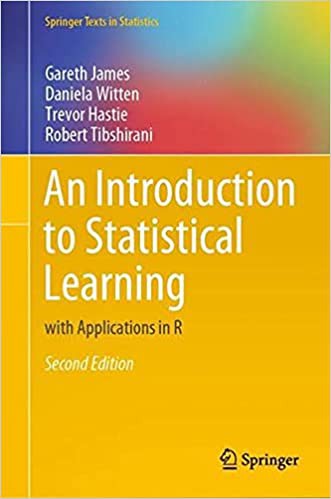
An Introduction to Statistical Learning

by Gareth James, Daniela Witten, Trevor Hastie, Robert Tibshirani

View on Amazon →

"The task is to predict the response Y using a set of predictor variables X1, X2, ..., Xp. This task is referred to as supervised learning."

An accessible yet rigorous introduction to statistical learning written by leading statisticians. The book covers classical statistical methods through modern machine learning techniques with emphasis on intuition and practical application. Each chapter includes embedded R code examples and datasets, making concepts immediately reproducible and concrete.

As the accessible counterpart to ESL, ISLR bridges theory and practice exceptionally well for learners without deep mathematical backgrounds. The integrated R labs directly implement each concept, reinforcing understanding through practice. The book's emphasis on statistical thinking provides crucial context often missing from ML-focused texts.

  • Master classical statistical methods including regression, classification, and resampling techniques
  • Understand cross-validation, bootstrap, and other model assessment approaches
  • Learn about model selection, bias-variance tradeoff, and regularization (ridge, lasso)
  • Apply concepts through R programming with real datasets in integrated lab sections
  • R focus; Python examples are absent (though Python version now available separately)
  • Less mathematically rigorous than ESL; some derivations are omitted
  • Covers foundational methods with limited deep learning coverage
  • Assumes comfort with basic statistics concepts

"The definitive 'how to' manual for statistical learning. Anyone who wants to intelligently analyze complex data should own this book."

Larry Wasserman, Carnegie Mellon University

"The most intuitive and relevant books on how to do statistics with modern technology. Written by statistics professors from Stanford, University of Washington, and USC."

Dan Kopf, Data Scientist/Journalist, Quartz
06

Machine Learning Yearning

by Andrew Ng

View on Amazon →

"Don't try to hand-engineer the features. Let the neural network learn the features. But if you are working on a non-deep-learning project, hand-engineering features is still the way to go."

A practical guide to structuring machine learning projects and building successful ML systems. Unlike algorithmic textbooks, this book focuses on the strategic and tactical decisions that separate successful ML teams from struggling ones. Short, focused chapters address real-world challenges: data labeling, debugging algorithms, error analysis, and deploying systems.

This unique book bridges the gap between understanding algorithms and successfully applying them in real products. Ng's decades of experience leading ML projects at scale provides irreplaceable wisdom on practical decision-making. It's essential reading for anyone building production systems, not just studying algorithms.

  • Structure ML projects to maximize team efficiency and model performance
  • Master debugging techniques: error analysis, data issues, algorithm problems
  • Make data labeling decisions and understand quality vs. quantity tradeoffs
  • Deploy systems effectively with proper performance metrics and monitoring
  • Minimal mathematics; not suitable for readers seeking theoretical grounding
  • Heavy focus on computer vision; less relevant for other ML domains
  • Some advice specific to Ng's experiences may not generalize to all contexts
  • Originally freely distributed online; value proposition differs from premium-priced books

"Andrew Ng's smooth, informal writing style maintains precision while presenting the most complex concepts in simplest terms. This book sets standards and conventions for a rapidly evolving discipline."

ML Engineering Community, Industry Practice
07

Probabilistic Machine Learning: An Introduction

by Kevin P. Murphy

View on Amazon →

"Machine learning is the science of learning from data. The goal is to detect patterns in the data and use them to make predictions on new, unseen data."

A modern, comprehensive treatment of machine learning built on probabilistic foundations. Murphy's recent work (2022) reflects dramatic advances since his earlier book, particularly deep learning and modern generative models. The text systematically presents machine learning through probability theory, making connections between diverse methods explicit and intuitive.

This represents the state-of-the-art in probabilistic machine learning, incorporating recent developments while maintaining Murphy's exceptional ability to make complex topics digestible. The probability-centric approach provides essential understanding for advancing beyond cookbook ML. It's the definitive reference for researchers and advanced practitioners.

  • Build intuition for machine learning through probability theory and Bayesian inference
  • Understand neural networks, deep learning, and generative models within probabilistic framework
  • Master information theory, graphical models, and variational inference
  • Connect classical statistical methods to modern deep learning approaches
  • Requires strong mathematical foundation in probability and linear algebra
  • Dense presentation; substantial time commitment to work through material
  • Heavy notation may intimidate readers without advanced mathematics background
  • Extremely comprehensive; covering everything may overwhelm those seeking specific topics

"A superbly written, comprehensive treatment of the field built on probability theory. Rigorous yet readily accessible, it's a must-have for anyone seeking deep understanding of machine learning."

Chris Bishop, Microsoft Research

"The most comprehensive and accessible book on modern machine learning by a large margin. It will remain the reference book our field needs on every respected researcher's desk."

Max Welling, University of Amsterdam

"Kevin Murphy has a phenomenal ability to go deep while making topics digestible to a broad audience. I'm excited to use this as a primary textbook."

Fei-Fei Li, Stanford University
08

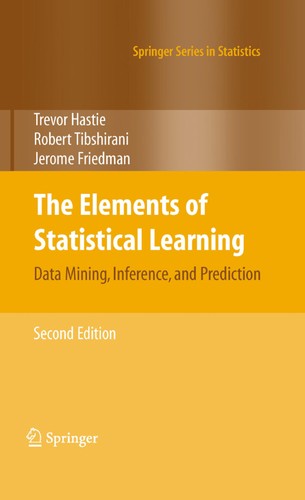
The Elements of Statistical Learning

by Trevor Hastie, Robert Tibshirani, Jerome Friedman

View on Amazon →

"Statistical learning refers to a set of tools for understanding data. These tools can be classified as supervised or unsupervised."

The authoritative reference on statistical learning methods covering regression, classification, and unsupervised learning from a statistical perspective. This 750+ page tome provides comprehensive treatment of classical and modern methods with mathematical rigor, detailed algorithms, and practical guidance. The book unifies diverse techniques under statistical frameworks.

ESL remains the definitive reference combining rigorous statistics with practical machine learning. Its comprehensive coverage of classical methods provides essential grounding, while the treatment of modern techniques ensures contemporary relevance. For serious practitioners and researchers, it's an indispensable desk reference.

  • Master classical statistical methods including regression, classification trees, and ensemble methods
  • Understand bias-variance tradeoff, cross-validation, and bootstrap resampling
  • Learn model selection, regularization, and dimension reduction techniques
  • Explore unsupervised methods: clustering, PCA, and association rules
  • Mathematical density demands strong statistics and linear algebra background
  • Limited deep learning coverage due to 2009 publication (though updated in 2019)
  • Minimal code examples; assumes mathematical competency
  • Length and comprehensiveness can overwhelm readers seeking focused topics

"The definitive reference combining rigorous statistics with practical machine learning guidance. Serves as the essential desk reference for researchers and advanced practitioners."

Statistical Learning Community, Academic Standard
09

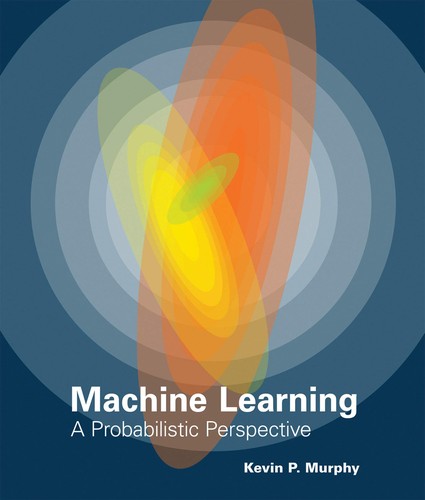
Machine Learning: A Probabilistic Perspective

by Kevin P. Murphy

View on Amazon →

"Machine learning is essentially a form of applied statistics with increased emphasis on the use of computers to statistically estimate complicated functions."

Murphy's seminal 2012 text presenting machine learning through probabilistic models and Bayesian inference. The comprehensive 1000-page work unifies diverse algorithms through probabilistic thinking, making fundamental connections across supervised learning, unsupervised learning, and reinforcement learning. Mathematical rigor combines with intuitive explanations and numerous worked examples.

This foundational work revolutionized how the ML community thinks about algorithms by emphasizing probabilistic perspectives. Murphy's comprehensive treatment provides deep understanding unavailable from narrower algorithmic texts. It remains essential for researchers and practitioners seeking to understand why algorithms work.

  • Understand supervised learning through probabilistic regression and classification models
  • Master Bayesian inference, graphical models, and parameter estimation techniques
  • Learn unsupervised methods within probabilistic frameworks: clustering, dimensionality reduction, matrix factorization
  • Explore latent variable models and hierarchical Bayesian approaches
  • Requires advanced mathematics background including probability, linear algebra, and calculus
  • Dense presentation and length (1000 pages) demand significant time commitment
  • Some recent deep learning developments post-2012 receive limited treatment
  • Comprehensive scope means individual topics less exhaustively covered than specialized texts

"An astonishing machine learning book: intuitive, full of examples, fun to read but still comprehensive, strong, and deep!"

Jan Peters, Darmstadt University/Max-Planck Institute

"Hits the 4 c's: clear, current, concise, and comprehensive. Deserves a place alongside statistical classics."

Steven Scott, Google Inc.

"An amazingly comprehensive survey covering basic theory and cutting edge research. Richly illustrated, loaded with examples and exercises."

Max Welling, UC Irvine
10

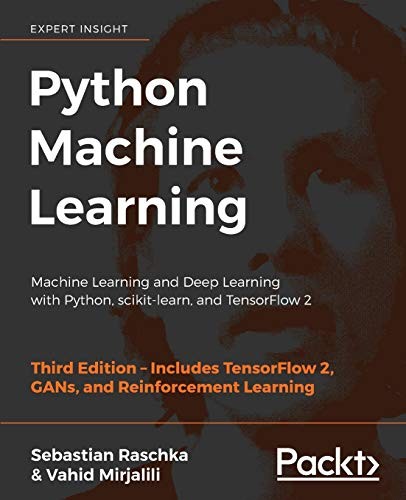
Python Machine Learning

by Sebastian Raschka, Vahid Mirjalili

View on Amazon →

"Understanding the fundamental concepts that underpin machine learning algorithms provides you with the intuition to apply these algorithms effectively to solve real-world problems."

A comprehensive guide to practical machine learning and deep learning using Python, scikit-learn, and TensorFlow. The third edition (2019) combines theory with extensive code examples, walking through algorithms from scratch before leveraging libraries. Strong emphasis on understanding concepts before applying black-box tools.

Raschka's unique approach of implementing algorithms from scratch before using libraries provides deep understanding that library-only approaches lack. The book bridges the gap between mathematical theory and practical Python implementation. It's essential for practitioners who want to understand rather than merely apply ML.

  • Implement ML algorithms from scratch in Python to understand underlying mechanics
  • Master scikit-learn for rapid prototyping of classical algorithms
  • Build neural networks with TensorFlow and Keras for deep learning
  • Learn best practices for data preprocessing, model evaluation, and hyperparameter tuning
  • Heavy code orientation means less mathematical rigor than purely theoretical texts
  • Some mathematical derivations simplified for accessibility
  • Focus on popular libraries means limited coverage of alternative approaches
  • Breadth over depth in some specialized topics

"I give this book my most enthusiastic endorsement!"

Jim Kyung-Soo Liew, Johns Hopkins Carey Business School

"On each page, Sebastian shares not only extensive knowledge but also the passion and curiosity that mark true expertise."

Chris Albon, The Wikimedia Foundation
Back to all lists