The 10 Best Mathematics Books

Essential readings that illuminate the beauty, power, and human story behind mathematics

Mathematics is both an art and a science, revealing the hidden structures of the universe while exploring the deepest workings of the human mind. This curated collection of ten essential mathematics books spans from foundational problem-solving techniques to profound explorations of consciousness and creativity. Whether you seek to master mathematical thinking, understand the dramatic history of mathematical discovery, or appreciate mathematics as a cultural achievement, these books offer transformative insights for readers of all backgrounds.

01

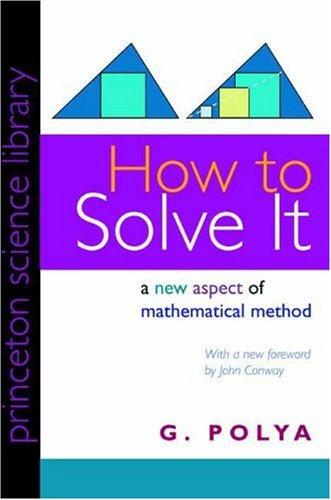
How to Solve It

by George Polya

View on Amazon →

"If you can't solve a problem, then there is an easier problem you can solve: find it."

A seminal work on problem-solving methodology that has influenced mathematics education worldwide. Polya presents his four-step framework for approaching mathematical problems: understanding the problem, making a plan, carrying out the plan, and looking back. The book combines practical guidance with elegant examples that demonstrate how systematic thinking can unlock solutions to seemingly intractable problems.

This foundational text revolutionized how mathematics is taught and learned. Polya's problem-solving framework transcends pure mathematics, applying to scientific inquiry, engineering, and everyday decision-making. The book's influence on mathematics pedagogy over eight decades proves its enduring value and essential place in mathematical literacy.

  • Four-step problem-solving process
  • Understanding precedes solution
  • Mathematical thinking is learnable
  • Looking back improves future problem-solving
  • Conversational style can feel dated to modern readers
  • Advice is sometimes generic
  • Learning problem-solving requires practice beyond textbook study

"Exposition and illustrative material are of a disarmingly elementary character, but very carefully thought out and selected."

Herman Weyl, Mathematical Review

"Every mathematics student should experience and live this book."

Mathematics Magazine, Educational Publication

"A timeless classic that teaches the art of mathematical thinking."

John H. Conway, Mathematician
02

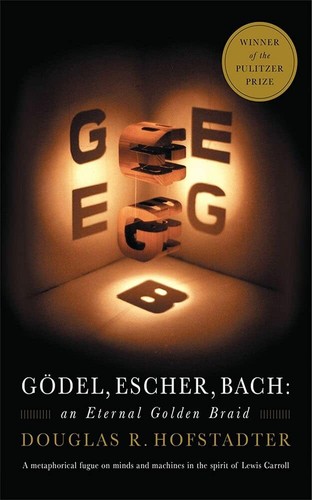
Gödel, Escher, Bach: An Eternal Golden Braid

by Douglas R. Hofstadter

View on Amazon →

"The basic idea is that representations are used to stand for things, but they are themselves things too.""

A groundbreaking exploration of the connections between mathematics, art, and music that uses these three luminaries as a lens for understanding consciousness itself. Hofstadter weaves together dialogues, puns, and metamathematical discussions to illustrate his central thesis: that consciousness arises from self-referential processes. The book's innovative structure mirrors its content, with form and meaning inextricably linked.

Winner of both the Pulitzer Prize and National Book Award, this masterpiece transcends traditional mathematics writing to explore fundamental questions about mind and meaning. It has profoundly influenced computer science, philosophy, and cognitive science, making it essential for understanding how mathematical thinking connects to creativity and consciousness.

  • Strange loops underlie consciousness
  • Self-reference creates meaning across disciplines
  • Form and content are inseparable
  • Mathematics reveals deep patterns in art and music
  • Extremely dense and difficult for general readers
  • Metamathematical sections impenetrable to non-specialists
  • Length can be intimidating and requires sustained engagement

"Every few decades, an unknown author brings out a book of such depth, clarity, range, wit, beauty and originality that it is recognized at once as a major literary event."

Martin Gardner, Scientific American

"I have never seen anything quite like this book. It has a youthful vitality and a wonderful brilliance."

Jeremy Bernstein, Science Writer

"Gödel, Escher, Bach is the most awesome book that I have ever read."

Eliezer Yudkowsky, AI Researcher
03

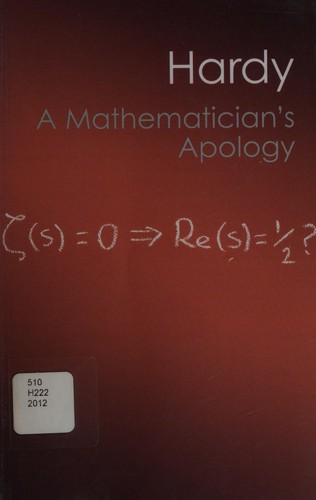
A Mathematician's Apology

by G. H. Hardy

View on Amazon →

"A mathematician, like a painter or poet, is a maker of patterns. If his patterns are more permanent than theirs, it is because they are made with ideas.""

A profoundly moving essay that defends the pursuit of mathematics for its own sake, written by one of the twentieth century's greatest mathematicians at the end of his career. Hardy eloquently argues that mathematics possesses beauty comparable to painting and poetry, exploring what makes mathematical ideas enduring and worth pursuing independent of practical application. The work includes autobiographical reflection on a life devoted to mathematical discovery.

Essential reading for understanding mathematics as a cultural and artistic endeavor rather than merely utilitarian knowledge. Hardy's passionate defense of pure mathematics resonates as a critique of instrumental thinking and offers profound insights into the mathematician's mind. The book remains relevant for anyone considering the purpose and value of intellectual pursuits.

  • Mathematics is an art form with intrinsic beauty
  • Practical applications are secondary to pure discovery
  • Mathematical elegance and simplicity are paramount
  • The life of mathematics is profoundly meaningful and rewarding
  • Written from a privileged European male perspective
  • Some arguments about mathematical beauty lack objectivity
  • The author's pessimism about aging and mathematics may limit relevance

"One of the best accounts of what it was like to be a creative artist, comparable to Henry James's notebooks."

Graham Greene, Novelist

"One of the best insights into the mind of a working mathematician written for the layman."

Cambridge University, Academic Institution

"A literary masterpiece that defines what it means to be a mathematician."

Mathematical Community, Academic Tradition
04

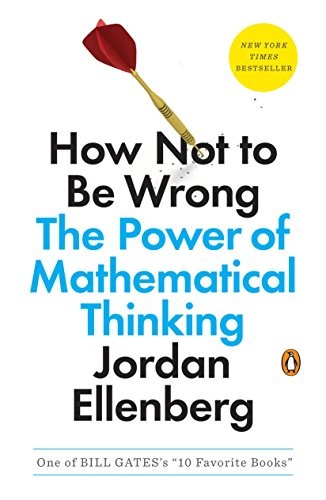
How Not to Be Wrong: The Power of Mathematical Thinking

by Jordan Ellenberg

View on Amazon →

"Math is an atomic-powered prosthesis that you attach to your common sense, vastly multiplying its reach and strength.""

A contemporary exploration of how mathematical thinking reveals hidden structures in everyday life and protects against faulty reasoning. Ellenberg demonstrates through numerous real-world examples how understanding mathematics—from basic statistics to geometric intuition—helps navigate complex decisions about economics, politics, health, and relationships. The book makes the case that mathematical literacy is as essential as reading and writing.

In an era of misinformation and statistical manipulation, this book provides essential tools for critical thinking. Ellenberg shows that mathematical reasoning isn't about computation but about understanding structure and meaning. It's indispensable for anyone seeking to make informed decisions in an increasingly data-driven world.

  • Mathematics reveals hidden biases and assumptions
  • Statistical thinking protects against manipulation
  • Context determines mathematical meaning
  • Mathematical literacy shapes better decision-making
  • Some chapters feel tangential to core theme
  • Mathematical concepts simplified for accessibility may lose nuance
  • Examples occasionally dated in current context

"A New York Times Bestseller that transforms how readers understand mathematics."

New York Times, Publishing

"Essential reading for understanding statistics and avoiding data misinterpretation."

Data Science Community, Professional Field

"Demonstrates why mathematical thinking is fundamental to informed citizenship."

Critical Thinking Educators, Academic Field
05

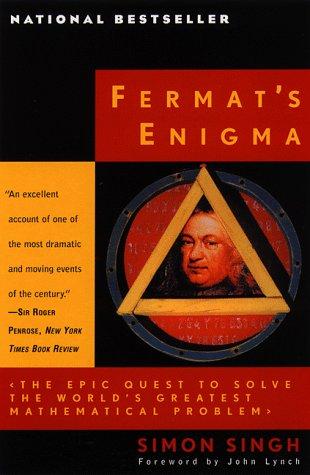
Fermat's Enigma: The Epic Quest to Solve the World's Greatest Mathematical Problem

by Simon Singh

View on Amazon →

"I had this very rare privilege of being able to pursue in my life what had been my childhood dream.""

A gripping narrative history of the three-hundred-year quest to prove Fermat's Last Theorem, from Pierre de Fermat's cryptic margin note to Andrew Wiles's triumphant proof. Singh masterfully weaves together the lives and work of brilliant mathematicians across centuries, building toward the dramatic climax of Wiles's solution. The book makes accessible the mathematical concepts behind one of history's greatest intellectual achievements.

This book demonstrates that mathematics has human drama, cultural significance, and historical depth. It shows how mathematical problems can captivate minds across generations and cultures, and how persistence, creativity, and collaboration drive mathematical progress. Essential for understanding how mathematics is actually created and the passions that drive mathematicians.

  • Mathematical problems transcend time and culture
  • Proof requires rigor and logical consistency
  • Mathematical creativity is passionate and personal
  • Interdisciplinary knowledge advances mathematics
  • Mathematical depth sacrificed for dramatic narrative
  • Some historical facts unclear or debatable
  • Focus on personalities over technical mathematics

"The foundation for acclaimed documentary The Proof, winning BAFTA award in 1997."

PBS NOVA, Documentary Production

"First mathematics book to become number-one bestseller in the United Kingdom."

British Publishing, Cultural Achievement

"Accurately captures the 358-year journey to mathematical proof."

Andrew Wiles, Mathematician
06

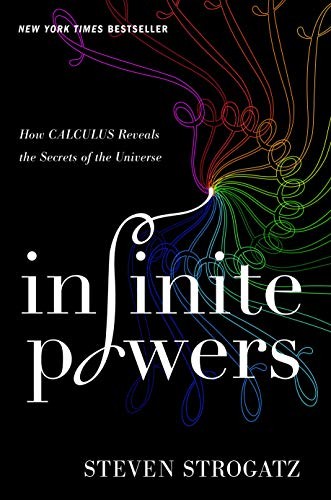
Infinite Powers: How Calculus Reveals the Secrets of the Universe

by Steven Strogatz

View on Amazon →

"First comes intuition. Rigor comes later.""

A sweeping historical narrative of calculus development from ancient Greece to modern technology, showing how this mathematical framework reveals the secrets of motion, change, and the universe itself. Strogatz traces calculus's evolution through the contributions of mathematicians across cultures and centuries, demonstrating how each generation built on previous insights. The book captures the wonder and power of mathematical discovery.

Essential for understanding the mathematics underlying modern technology and science. Strogatz demonstrates that calculus is not merely technical knowledge but a profound way of understanding reality. The book shows how mathematical thinking emerged from centuries of human effort, making it invaluable for appreciating both mathematics and scientific progress.

  • Calculus emerged from cross-cultural mathematical contributions
  • Mathematics simplifies complex phenomena
  • Infinity is both a tool and mystery
  • Calculus explains the physical universe
  • Amateur historical approach with occasional dubious attributions
  • Mathematical explanations insufficient for innumerate readers
  • Gaps in explanation of key mathematical leaps
  • Advocacy for calculus rather than critical evaluation

"Steve Strogatz is, at present, the best mathematician among writers and the best writer among mathematicians."

William Dunham, Mathematician, Bryn Mawr College

"An elegant and ebullient book that speaks to everyone."

Lisa Randall, Harvard Physics Professor

"Warning: this book is dangerous. It will make you love mathematics."

Nassim Nicholas Taleb, Risk Analyst
07

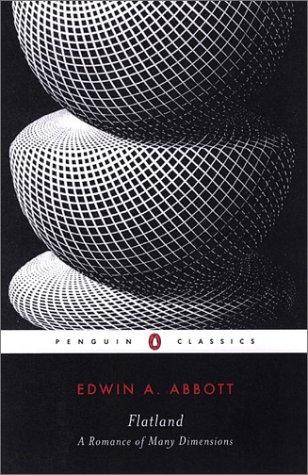
Flatland: A Romance of Many Dimensions

by Edwin A. Abbott

View on Amazon →

"In One Dimension, did not a moving Point produce a Line? In Two Dimensions, did not a moving Line produce a Square? In Three Dimensions, did not a moving Square produce a Cube?""

A satirical novella that uses the fictional two-dimensional world of Flatland to explore concepts of higher dimensions and critique Victorian social hierarchies. Abbott's protagonist, a square living in a two-dimensional world, encounters beings from one, three, and higher dimensions, forcing him to question his understanding of reality. The work brilliantly uses mathematical geometry as an allegory for social and intellectual rigidity.

This classic novella introduced higher-dimensional geometry to general readers while serving as biting social satire. It demonstrates how mathematical concepts can illuminate social structures and limitations. Essential for understanding the intersection of mathematics, science fiction, and social commentary. Its exploration of dimensions anticipates modern physics.

  • Dimensions structure physical reality
  • Social hierarchies limit understanding
  • Perspective determines perception
  • Imagination transcends dimensional limitations
  • Gender representation reflects problematic Victorian attitudes
  • Women portrayed as intellectually inferior (though satirically intended)
  • Some mathematical explanations overly simplified
  • Class and caste systems endorsed despite satirical framing

"A foundational work introducing higher dimensions to popular audiences."

Mathematical Community, Science and Mathematics

"A masterwork of scientific satire and social critique."

Literary Scholars, Academic Tradition

"Foundational text for dimensional science fiction and exploration of spatial geometry."

Science Fiction Pioneers, Literary Genre
08

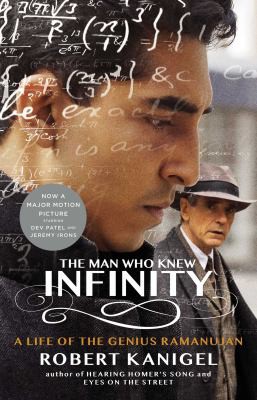
The Man Who Knew Infinity: A Life of the Genius Ramanujan

by Robert Kanigel

View on Amazon →

"An equation for me has no meaning unless it expresses a thought of God.""

A gripping biography of the self-taught Indian mathematical genius Srinivasa Ramanujan and his improbable collaboration with Cambridge mathematician G. H. Hardy. Kanigel vividly portrays Ramanujan's journey from poverty in Madras to Cambridge University during World War I, his extraordinary mathematical insights, and the tragic circumstances of his early death. The narrative illuminates how mathematical talent transcends formal education and cultural boundaries.

This biography demonstrates that mathematical genius can flourish outside traditional institutions and that diverse perspectives enrich mathematics. Ramanujan's life shows the human dimensions of mathematics and the profound connections between culture, spirituality, and mathematical insight. Essential for understanding mathematics as a global and deeply human endeavor.

  • Mathematical genius transcends formal education
  • Intuition and rigor complement each other
  • Cultural diversity strengthens mathematics
  • Collaboration connects distant mathematical worlds
  • Western perspective emphasizes Hardy as 'saviour' rather than equal partner
  • Limited engagement with racism faced by Ramanujan in Britain
  • Insufficient attention to Indian mathematical tradition
  • Colonial context underexplored in original edition

"Named a finalist for its extraordinary biographical achievement."

National Book Critics Circle, Literary Award

"Recognized as a major achievement in biography."

Los Angeles Times Book Prize, Literary Recognition

"Selected as a Book to Remember for its lasting significance."

New York Public Library, Cultural Institution
09

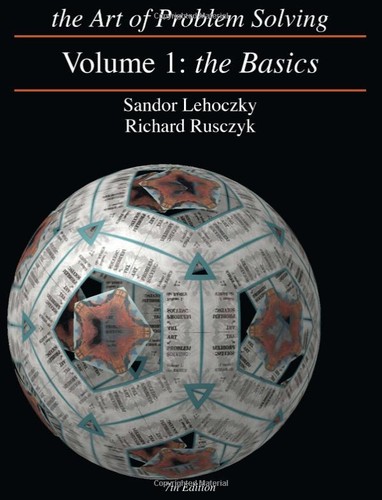
The Art of Problem Solving, Vol. 1: The Basics

by Richard Rusczyk and Sandor Lehoczky

View on Amazon →

"Unless you have been much more fortunate than we were, this book is unlike anything you have used before.""

A comprehensive textbook designed for mathematically talented students that emphasizes problem-solving over rote computation. The book presents elegant mathematical principles through carefully selected problems, encouraging deep understanding and creative approaches. Authored by mathematics competition champions, it reflects decades of experience developing mathematical problem-solvers at the highest levels.

Essential for students seeking to develop competition-level mathematical thinking and for educators wanting to inspire genuine mathematical understanding. The book has trained over 100,000 mathematics enthusiasts and remains the gold standard for advanced mathematical development. It demonstrates that problem-solving is a teachable skill that transcends memorization.

  • Deep understanding surpasses rote memorization
  • Elegant problems reveal mathematical principles
  • Problem-solving is a learnable art
  • Mathematical creativity develops through practice
  • Assumes significant prior mathematical knowledge
  • Difficulty level exceeds standard curriculum
  • Better suited for advanced students than general learners
  • Requires substantial time commitment and motivation

"Over 100,000 mathematics enthusiasts have used this series to master problem-solving."

Richard Rusczyk, USAMO Winner, Paul Erdős Award Recipient

"The definitive resource for preparing serious mathematics competitors."

Math Competition Community, MATHCOUNTS, AIME, USAMO

"Sets the standard for competition mathematics and creative problem-solving."

Advanced Mathematics Education, Educational Philosophy
10

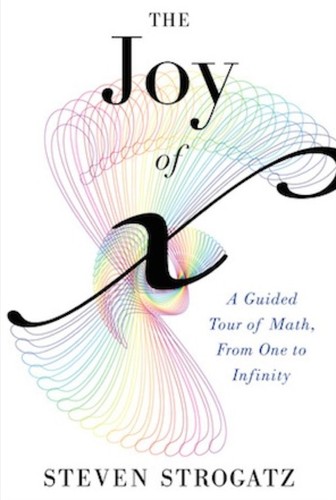
The Joy of x: A Guided Tour of Math, from One to Infinity

by Steven Strogatz

View on Amazon →

"The teaching of math should be more like the teaching of music or art. You don't learn to play music by studying music theory. You learn by playing."

Strogatz takes readers on a tour of the greatest ideas in mathematics, from basic arithmetic to calculus to group theory, showing how math illuminates everything from pop culture to medicine. Written as an expansion of his popular New York Times column, the book makes abstract mathematical concepts feel intuitive and relevant.

This is one of the most successful popular mathematics books of the 21st century, demonstrating that math is not an isolated academic discipline but a lens for understanding the world. Strogatz's gift for analogy and storytelling makes concepts accessible without sacrificing rigor, making it an ideal gateway for reluctant math readers.

  • Mathematics is a creative, living discipline—not a static collection of rules to memorize.
  • Numbers, shapes, and patterns are embedded in everyday life from rock-paper-scissors to Google's PageRank algorithm.
  • Calculus is fundamentally about breaking hard problems into infinitely many easy pieces.
  • Group theory reveals hidden symmetries that unify seemingly unrelated phenomena across nature and art.
  • The book's breadth means it can only scratch the surface of each topic, potentially leaving readers wanting more depth on subjects that interest them.
  • Some chapters feel disconnected from each other, as the book originated as standalone newspaper columns rather than a unified narrative.
  • Advanced readers or math students may find the explanations overly simplified and the pacing too slow for their level.

"A wonderful, informative, entertaining book for math lovers and math-phobes alike."

The New York Times, Book Review

"A beautifully written exploration of some of the most important ideas in mathematics."

Mario Livio, Astrophysicist and author of The Golden Ratio

"Strogatz has a talent for illustrating mathematical concepts in accessible and surprising ways."

Publishers Weekly, Book Review
Back to all lists