10 Best Mindfulness Books

Essential Guides to Meditation, Awareness, and Inner Peace

Mindfulness has become increasingly important in our fast-paced world. These ten exceptional books offer practical guidance, scientific insights, and timeless wisdom from leading teachers and researchers. Whether you're a beginner exploring meditation for the first time or an experienced practitioner seeking deeper understanding, this curated collection provides transformative approaches to cultivating presence, reducing stress, and discovering lasting peace.

01

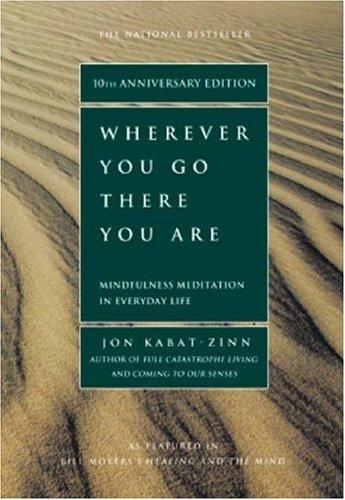
Wherever You Go, There You Are

by Jon Kabat-Zinn

View on Amazon →

"Mindfulness is a way of paying attention, on purpose and non-judgmentally, to what goes on in the present moment in your body, mind and the world around you."

Jon Kabat-Zinn's groundbreaking introduction to mindfulness meditation emphasizes the power of present-moment awareness in everyday life. This accessible classic distills eight years of MBSR (Mindfulness-Based Stress Reduction) teaching into practical guidance anyone can implement immediately. The book combines personal anecdotes, scientific research, and meditative instruction to show how mindfulness can transform our relationship with stress, pain, and illness.

This seminal work established mindfulness in mainstream consciousness and created the foundation for evidence-based meditation practice. Kabat-Zinn's MBSR program has been studied in hospitals and clinics worldwide, making this essential reading for understanding how ancient wisdom meets modern science. Its practical, non-religious approach makes mindfulness accessible to everyone.

  • Present moment awareness is always available regardless of circumstances
  • Mindfulness involves observing thoughts without judgment or attachment
  • Meditation is not about achieving a blank mind but observing your mind's nature
  • Mindfulness transforms our relationship with pain, stress, and difficult emotions
  • Dense with technical details that may overwhelm beginners
  • Some exercises feel dated despite its contemporary relevance
  • Limited discussion of secular vs. spiritual applications of mindfulness

"This book represents the distilled essence of eight years of work teaching people in a hospital-based stress reduction clinic."

Jon Kabat-Zinn, Founder, Center for Mindfulness in Medicine

"A remarkable and comprehensive guide to mindfulness and meditation practice."

Daniel Goleman, Author of Emotional Intelligence
02

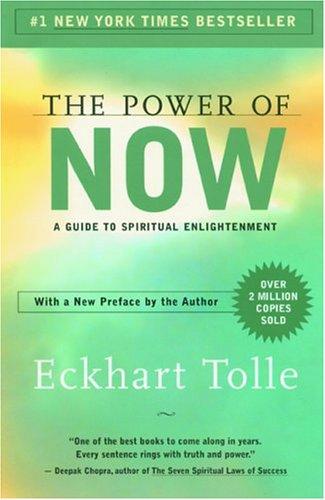
The Power of Now

by Eckhart Tolle

View on Amazon →

"Realize deeply that the present moment is all you have. Make the NOW the primary focus of your life."

Eckhart Tolle's transformative guide offers a spiritual approach to transcending the ego and living in present consciousness. The book explains how excessive focus on past and future creates psychological suffering, and demonstrates how present-moment awareness liberates us from anxiety and negativity. Through philosophical insights and practical exercises, Tolle presents a path to spiritual enlightenment accessible to modern readers.

The Power of Now became a global phenomenon, translated into dozens of languages and endorsed by Oprah Winfrey as the most important book she'd selected for her book club. Its revolutionary perspective on time and consciousness has influenced millions seeking peace and purpose. This book fundamentally reshapes how readers understand their relationship with the present moment.

  • Psychological suffering stems from excessive focus on past and future
  • The present moment is the only point of power you truly possess
  • Ego dissolution through present-moment awareness reveals authentic self
  • Pain is inevitable but suffering is optional and rooted in resistance
  • Philosophical concepts may feel abstract without practical application
  • Repetitive message structure makes the book feel lengthy
  • Some spiritual claims lack scientific validation or empirical support

"This is the most important book I have selected for my book club. This book has the power to transform consciousness itself."

Oprah Winfrey, Media Executive and Book Club Founder

"Carried The Power of Now during her 2007 jail sentence as a source of comfort and inspiration."

Paris Hilton, Celebrity
03

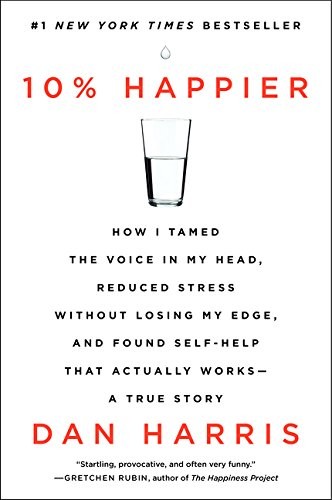
10% Happier

by Dan Harris

View on Amazon →

"Mindfulness is the ability to know what's happening in your head at any given moment without getting carried away by it."

Dan Harris, a skeptical ABC news anchor, documents his personal journey from anxiety and panic to meditation. This honest, humorous memoir chronicles his initial resistance to mindfulness before discovering its genuine benefits for managing stress and emotional regulation. Harris combines personal narrative with interviews from renowned teachers, making meditation accessible to rational skeptics.

Unlike many spiritual books, 10% Happier addresses the perspective of the skeptic and achiever, making meditation relevant for busy professionals and high-performers. Harris's journalistic approach and transparent vulnerability about his struggles make mindfulness feel achievable rather than mystical. This book has introduced meditation to countless people who previously dismissed it as impractical.

  • Meditation doesn't require belief in anything spiritual or mystical
  • The goal is not bliss but acceptance and awareness of present experience
  • Consistent practice creates measurable improvements in stress and anxiety
  • Mindfulness complements rather than replaces therapy or psychiatric treatment
  • Heavy focus on the author's personal story may distract from meditation instruction
  • Limited practical guidance compared to dedicated meditation manuals
  • Somewhat Western-centric interpretation of Buddhist philosophy

"A delightfully practical exploration of the benefits of mindfulness and meditation."

The New York Times, Major News Publication

"Honest, hilarious, and deeply human—Harris brings credibility to meditation for the skeptic."

Psychology Today, Psychology Magazine
04

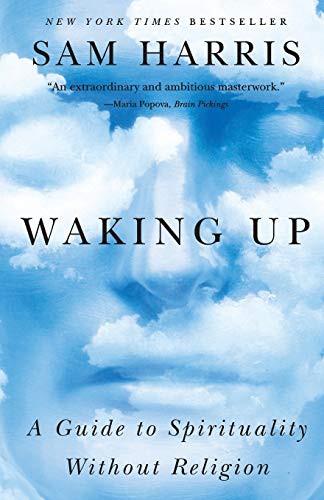
Waking Up

by Sam Harris

View on Amazon →

"Everything we do is for the purpose of altering consciousness. We form friendships so that we can feel love and avoid loneliness."

Sam Harris, a neuroscientist and philosopher, explores the nature of consciousness and spirituality without religious doctrine. The book examines how meditation reveals the illusory nature of the self and presents contemplative practices that can be understood through both spiritual and scientific frameworks. Harris draws from his three decades of meditation experience and studies with renowned Buddhist teachers worldwide.

Waking Up bridges neuroscience and contemplative practice, offering intellectual rigor to spiritual exploration. Harris's scientific background provides credibility while his meditation expertise ensures authentic instruction. This book is essential for those seeking spiritual development grounded in reason and empirical understanding.

  • Consciousness is fundamental to all experience yet often overlooked
  • The self is more fluid and constructed than we typically assume
  • Meditation reveals direct insights into the nature of consciousness and suffering
  • Spirituality can be practiced independent of religious belief systems
  • Dense philosophical content may challenge non-academic readers
  • Limited structured meditation instructions compared to practice-focused books
  • Complex concepts require careful, repeated reading for comprehension

"Harris has written a book that deserves the widest possible audience—a genuine philosophical achievement."

Daniel Dennett, Philosopher and Cognitive Scientist

"A brilliant exploration of consciousness, spirituality, and the nature of being human."

Deepak Chopra, Wellness Author
05

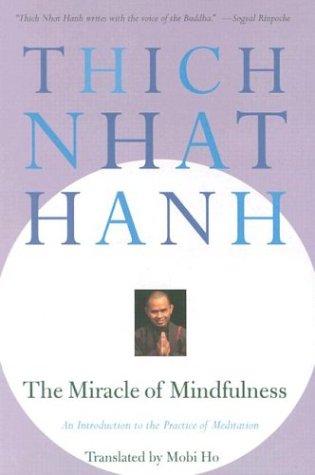
The Miracle of Mindfulness

by Thich Nhat Hanh

View on Amazon →

"Mindfulness is the miracle by which we master and restore ourselves. Mindfulness is like that—it is the miracle which can call back in a flash our dispersed mind and restore it to wholeness."

Zen master Thich Nhat Hanh presents mindfulness as a practical gateway to peace in a letter-based format addressing a monastic friend. The book demonstrates how presence can be cultivated through everyday activities—washing dishes, walking, eating—rather than through exotic practices. Hanh's gentle, poetic approach reveals how the miraculous exists in ordinary moments when fully experienced.

This seminal text from one of the twentieth century's most influential Zen masters offers accessible wisdom that transformed global perceptions of mindfulness in daily life. Thich Nhat Hanh's unique format and focus on ordinary activities make this book invaluable for understanding mindfulness beyond meditation cushions. His life of peace activism demonstrates mindfulness in action.

  • Mindfulness is available in every moment of daily life, not just formal meditation
  • Ordinary activities become sacred when performed with full presence and attention
  • The body and breath anchor awareness to the present moment
  • Mindfulness practice leads naturally to compassion and ethical living
  • Letter format may feel fragmented to some readers
  • Some practices are culturally specific to monastic life
  • Limited scientific discussion of mindfulness mechanisms

"Thich Nhat Hanh's ideas for peace, if applied, would build a monument to ecumenism, to world brotherhood, to humanity."

Martin Luther King Jr., Civil Rights Leader

"He has immense presence and both personal and Buddhist authority. If there is a candidate for Living Buddha on earth today, it is Thich Nhat Hanh."

Roshi Richard Baker, Zen Teacher and Author
06

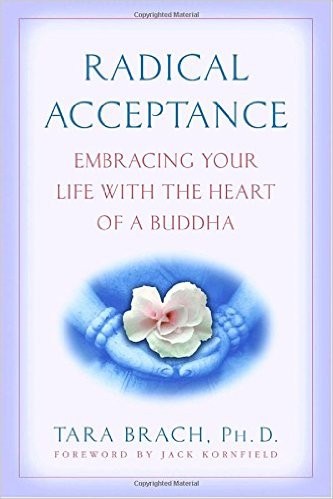
Radical Acceptance

by Tara Brach

View on Amazon →

"Clearly recognizing what is happening inside us, and regarding what we see with an open, kind and loving heart, is what I call Radical Acceptance."

Tara Brach integrates Buddhist psychology with contemporary therapeutic approaches to address how fear and shame contract our lives. Through case studies and guided practices, she reveals how radical acceptance—fully embracing ourselves and reality without resistance—liberates us from suffering. The book offers concrete tools for transforming the protective mechanisms that once served us but now limit our freedom.

Radical Acceptance fills a crucial gap by addressing the emotional and psychological roots of suffering from a Buddhist perspective validated by Western psychology. Brach's compassionate approach and accessible language make deep psychological work available to general readers. This book is essential for anyone struggling with self-judgment, shame, or fear-based patterns.

  • Resistance and judgment intensify suffering; acceptance is liberating
  • Fear and shame create protective patterns that ultimately limit freedom
  • Self-compassion and awareness are more transformative than self-criticism
  • Acceptance doesn't mean condoning harmful behavior or passivity
  • Some readers find the emphasis on psychological wounding repetitive
  • Clinical case studies may feel heavy for casual readers
  • The integration of multiple traditions could feel disjointed at times

"Tara Brach teaches with both wisdom and deep compassion. This beautiful book offers powerful transformation."

Jack Kornfield, Buddhist Teacher and Author

"A masterful guide to healing through radical acceptance and self-compassion."

Kristin Neff, Self-Compassion Researcher
07

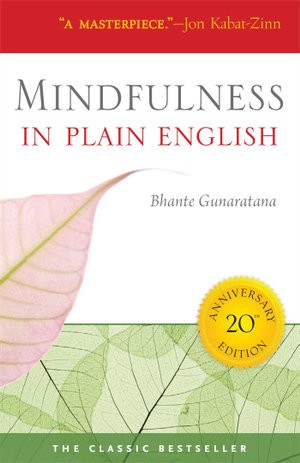
Mindfulness in Plain English

by Bhante Gunaratana

View on Amazon →

"Mindfulness gives you time. Time gives you choices. Choices, skillfully made, lead to freedom."

Bhante Henepola Gunaratana, a Sri Lankan Buddhist monk, offers a straightforward, jargon-free guide to vipassana (insight) meditation. The book demystifies meditation by explaining exactly what to do and what to expect, including uncomfortable mental states. With humor and honesty, Gunaratana addresses common obstacles and misconceptions, making authentic Buddhist practice accessible to Western practitioners.

This book remains one of the most practically useful meditation guides precisely because it avoids spiritual romanticism and addresses real practice challenges. Gunaratana's 40+ years of meditation experience and his ability to translate Theravada Buddhist teachings into plain language make this essential for anyone serious about daily practice. The 20th Anniversary Edition includes updated material reflecting modern insights.

  • Meditation practice involves repeatedly returning attention to the present moment
  • Distracting thoughts are normal; the practice is observing them without engagement
  • Patience with yourself is essential for profound meditation practice
  • Regular practice gradually reveals the nature of suffering and liberation from it
  • Some chapters are quite technical for true beginners
  • Buddhist terminology, while explained, may still feel foreign to secular readers
  • The book emphasizes Theravada tradition over other meditation approaches

"An excellent introduction to mindfulness meditation that combines clarity with depth."

The Dalai Lama, Spiritual Leader

"The standard reference for vipassana meditation practice in the West."

Insight Meditation Community, Meditation Center Network
08

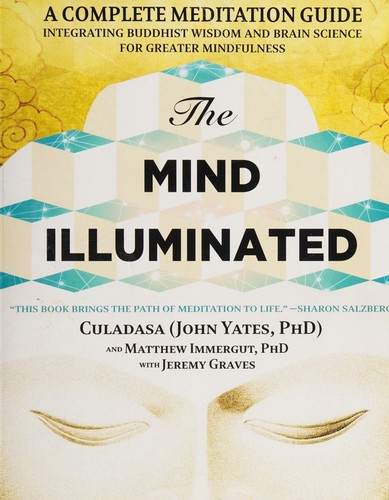
The Mind Illuminated

by Culadasa (John Yates)

View on Amazon →

"True happiness comes from within, which means we can always find joy, in both good times and bad. Although pain and pleasure are an inevitable part of human life, suffering and happiness are entirely optional."

Culadasa presents a comprehensive, stage-by-stage meditation framework that integrates Buddhist wisdom with modern neuroscience. This technical guide maps a detailed 10-stage progression of meditation practice, explaining what happens psychologically and neurologically at each stage. The book offers unprecedented clarity about meditation's mechanisms and how to navigate the deep psychological changes that arise through consistent practice.

The Mind Illuminated is the most systematic and scientifically-informed meditation manual available, making it indispensable for serious practitioners. Culadasa's four decades of meditation training combined with his academic background in neuroscience provides unparalleled authority. This book transforms meditation from mysterious practice into an intelligible, progressive journey.

  • Meditation follows a predictable progression through 10 distinct stages
  • Understanding neurological changes in meditation helps practitioners navigate challenges
  • Attention and metacognition are developed and refined through systematic practice
  • Advanced meditation practice reveals fundamental truths about consciousness and reality
  • Dense technical content requires sustained attention and study
  • Not ideal as an introductory meditation book for absolute beginners
  • The 10-stage framework may feel rigid or overly structured to some practitioners

"A masterwork. The most comprehensive guide to meditation ever written, combining ancient wisdom with modern science."

Daniel Kolak, Philosopher of Mind

"This groundbreaking book brings unprecedented clarity and accessibility to the deepest stages of meditation."

Tara Brach, Mindfulness Teacher
09

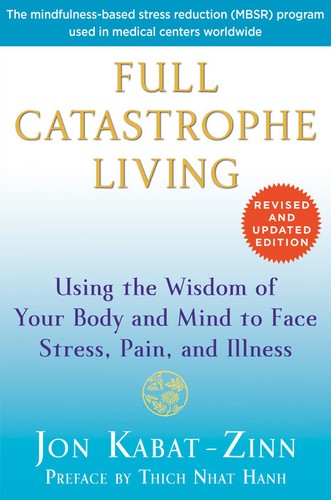
Full Catastrophe Living

by Jon Kabat-Zinn

View on Amazon →

"You can't stop the waves, but you can learn to surf."

Jon Kabat-Zinn's comprehensive guide describes the Mindfulness-Based Stress Reduction (MBSR) program developed at the University of Massachusetts Medical School. The revised edition incorporates two decades of scientific validation of MBSR's effectiveness for chronic pain, illness, and stress. The book combines meditation instruction with real patient stories, demonstrating mindfulness as medicine for the whole person.

Full Catastrophe Living is the definitive guide to evidence-based mindfulness for those facing health challenges, chronic stress, or major life difficulties. The MBSR program it describes has been scientifically validated and adopted in hospitals worldwide. This book proves that mindfulness isn't luxury wellness but practical medicine for surviving and transcending life's catastrophes.

  • Mindfulness-based stress reduction has been clinically validated for numerous health conditions
  • Chronic illness and stress can become gateways to deeper presence and peace
  • Meditation works synergistically with medical treatment, not as a replacement
  • Mindfulness transforms our relationship with pain from enemy to information
  • Very comprehensive length may intimidate readers seeking quick guidance
  • Scientific studies referenced are somewhat dated despite the revised edition
  • Clinical focus may feel heavy for those not facing acute health crises

"A landmark work. The most important book I have read in the past decade."

Herbert Benson, Harvard Medical School, Mind/Body Medicine Pioneer

"This book is essential reading for anyone seeking to reclaim health and wholeness."

Christiane Northrup, Women's Health Doctor and Author
10

Why Buddhism Is True

by Robert Wright

View on Amazon →

"Ultimately, happiness comes down to choosing between the discomfort of becoming aware of your mental afflictions and the discomfort of being ruled by them."

Evolutionary biologist Robert Wright argues that Buddhist philosophy's diagnosis of human suffering is scientifically validated by modern psychology and neuroscience. The book demonstrates how natural selection shaped minds prone to craving and suffering, and how meditation corrects these biologically-embedded patterns. Wright synthesizes evolutionary theory, psychology, and Buddhist teaching to show why Buddhism's prescriptions still work.

Why Buddhism Is True is crucial for intellectually-oriented readers who want mindfulness grounded in modern science rather than ancient religion. Wright's evolutionary framework explains why meditation works and why its insights remain valid in contemporary life. This book legitimizes Buddhist practices through the lens of evolutionary biology and cognitive science.

  • Evolution shaped human minds for survival, not happiness, creating suffering patterns
  • Buddhist diagnosis of suffering through craving and attachment is neurologically accurate
  • Mindful observation bypasses automatic reactivity patterns installed by natural selection
  • Meditation reveals that the self is less substantial and permanent than it appears
  • Dense evolutionary and neurological concepts require scientific background
  • Some Buddhist scholars critique Wright's interpretation of classic texts
  • The 'scientific validation' framing may oversimplify Buddhism's philosophical depth

"A brilliant synthesis of neuroscience, psychology, and Buddhist philosophy."

The Guardian, Major News Publication

"Robert Wright has written an extraordinary book. This is important reading."

Steven Pinker, Harvard Psychologist and Author
Back to all lists