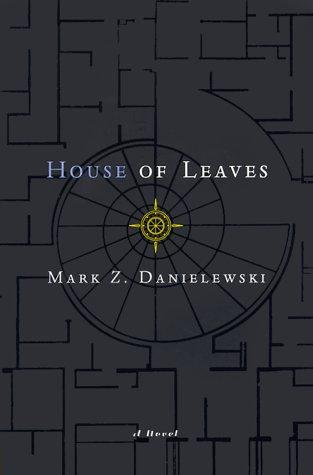
10 Best Modern Horror Books

Essential Contemporary Horror Novels Post-1990

A curated collection of the 10 most essential and celebrated modern horror novels published after 1990, featuring groundbreaking works that have redefined the genre with innovative narratives, psychological depth, and unforgettable scares.

The Cabin at the End of the World
01

The Cabin at the End of the World

by Paul Tremblay

"The end times are coming, and there's nothing we can do to stop it—and they may be offering us a choice."

An apocalyptic horror novel set in a remote cabin where a family is confronted by four strangers who claim the end times are coming. The narrative oscillates between the present siege and glimpses of the family's past, exploring how ordinary people respond to extraordinary supernatural threat. Tremblay creates mounting dread through psychological intensity and theological ambiguity rather than gore.

The Cabin at the End of the World demonstrates contemporary horror's ability to merge intimate family drama with cosmic existential threats. Tremblay's work, finalist for the Bram Stoker Award, exemplifies how horror can interrogate religious faith, family bonds, and the limits of human agency. The novel proved that post-apocalyptic horror could achieve literary sophistication while maintaining genuine terror.

  • Apocalypse as internal struggle—survival narratives become examinations of how people respond to the breakdown of everything they assumed to be permanent
  • Faith and skepticism create irresolvable tensions when confronted by apparent supernatural evidence
  • Family relationships are tested and transformed under the pressure of existential threat
  • Ambiguity about reality creates more sustained horror than definitive answers
  • The apocalyptic premise and relentless family trauma create exhausting dread that some readers find overwhelming rather than engaging
  • The ambiguous ending frustrates readers seeking resolution; the theological implications remain deliberately unsettling and may leave audiences dissatisfied

"A genuinely terrifying novel that doesn't rely on cheap scares"

Stephen King, Bestselling Author

"A masterpiece of contemporary horror"

The New York Times, Major Publication

"Finalist for Best Novel in contemporary horror"

Bram Stoker Award Committee, Prestigious Horror Award

"Starred review—One of the year's most important horror novels"

Publishers Weekly, Major Publication
Mexican Gothic
02

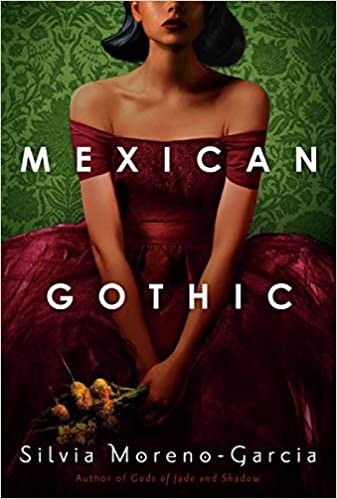
Mexican Gothic

by Silvia Moreno-Garcia

"He's dying, is still trying to save her, because he's not going to let Jade die in these waters like his daughter did. It's what dads do. It's what they're supposed to do."

Set in 1950s Mexico, this gothic horror novel follows Noemí Taboada, a young socialite who travels to a remote mansion in the mountains to rescue her cousin from a potentially poisoned husband. What unfolds is a deliciously atmospheric tale of family secrets, biological horror, and a house that harbors sinister supernatural forces rooted in scientific experimentation.

Mexican Gothic represents modern horror's embrace of diverse voices and cultural perspectives while maintaining classic gothic conventions with fresh innovation. Moreno-Garcia's work demonstrated that horror could be both commercially successful and literarily significant, inspiring a wave of contemporary horror fiction from underrepresented authors. Its success proved that horror audiences craved nuanced protagonists and atmospheric tension over gore.

  • Female agency and resistance to patriarchal authority are forms of power—Noemí actively challenges gender expectations and refuses submission despite systemic pressures
  • Colonialism's legacy creates ongoing psychological and physical horror—the mansion represents how historical exploitation continues to poison present generations
  • The body itself becomes a site of control and violation—themes of eugenics, biological engineering, and parasitic invasion show how power operates at a cellular level
  • Atmospheric dread transcends explicit violence—the novel proves that slow-burn tension and psychological unease can be more effective than graphic horror
  • Pacing follows gothic conventions perhaps too faithfully with slow buildup and rushed climax, with the first 150 pages moving slowly before establishing clear narrative direction
  • Predictable plot developments that rely heavily on gothic tropes familiar to genre-savvy readers, with major revelations occurring earlier than the narrative timing suggests

"Mexican Gothic terrified and fascinated me. Moreno-Garcia proves once again that she's a genre-jumping wizard, one of the most exciting and necessary authors writing today."

Charlie Jane Anders, Award-winning Author

"Mexican Gothic is the subversive, seductive, satisfying haunted house story I didn't know I needed. I genuinely couldn't put it down."

Alix E. Harrow, Author

"It's Lovecraft meets the Brontës in Latin America, and after a slow-burn start Mexican Gothic gets seriously weird."

The Guardian, Major Publication

"One of the 100 Best Mystery and Thriller Books of All Time"

TIME Magazine, Major Publication
Bird Box
03

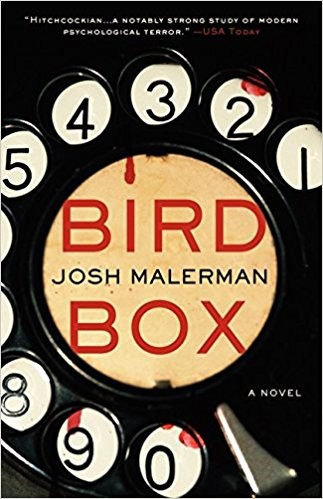
Bird Box

by Josh Malerman

"It's better to face madness with a plan than to sit still and let it take you in pieces."

In this post-apocalyptic thriller, an unseen presence causes anyone who sees it to go violently mad. A mother must navigate a dangerous river journey with her two children while they all wear blindfolds, never able to see the threat pursuing them. The novel builds relentless tension through the power of what remains hidden and unseen.

Bird Box demonstrated that modern horror could achieve massive mainstream success while maintaining genuine literary merit and psychological sophistication. Malerman's concept—that the unknown is more terrifying than explicit revelation—has become foundational to contemporary horror philosophy. The novel inspired a major film adaptation and proved horror's commercial and cultural vitality in the 21st century.

  • Imagination as horror—by never revealing the threat visually, the novel forces readers to fear their own mental projections, making imagination more frightening than any description
  • Motherhood as survival instinct—Malorie's journey represents the lengths a parent will go to protect their children, transforming fear into purpose
  • Sight as liability rather than necessity—the blindfolds become symbols of enlightenment rather than handicap, suggesting that perception requires more than physical vision
  • The unseen as unstoppable—the novel proves that ambiguity and mystery create more durable horror than explicit threat, haunting readers long after they finish
  • Character development is thin and underwhelming, with most characters remaining one-dimensional archetypes rather than evolving through the narrative
  • The ending is anticlimactic and overly happy, feeling inconsistent with the grim tone of the rest of the novel and providing little sense of genuine resolution

"One of the best horror novels not only of the past ten years, but of the 21st century."

Kirkus Reviews, Major Review Publication

"A gripping post-apocalyptic thriller that exemplifies the power of less being more."

Publishers Weekly, Major Publication
"Malerman has received comparisons to Stephen King and Jonathan Carroll for his ability to terrify through implication."

Stephen King, Bestselling Author

"Adapted into a major film (2018) and spawned a sequel, proving the concept's enduring appeal"

Netflix, Film Adaptation
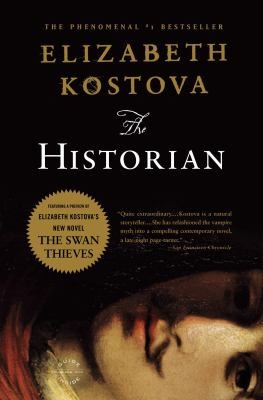
The Historian
04

The Historian

by Elizabeth Kostova

"As a historian, I have learned that, in fact, not everyone who reaches back into history can survive it. And it is not only reaching back that endangers us; sometimes history itself reaches inexorably forward for us with its shadowy claws."

A sweeping gothic novel that reimagines the Dracula legend, following a young woman who discovers that her family has been haunted by a scholarly obsession with the true history of Vlad the Impaler for generations. The narrative weaves through multiple time periods and Eastern European locations, blending historical research with supernatural horror.

The Historian revitalized literary vampire fiction for a new generation while proving that horror could exist within scholarly, intellectual frameworks. Kostova's meticulous historical research and literary sophistication elevated contemporary horror's respectability. The novel influenced the vampire renaissance in urban fantasy and paranormal romance, making it essential to understanding how horror intersects with academic and romantic genres.

  • History as active force—the past is not static but reaches forward to shape and endanger the present, suggesting that evil transcends temporal boundaries
  • Knowledge as dangerous currency—the pursuit of historical truth carries real psychological and physical peril, making scholarship itself a form of horror
  • Identity threatened by otherness—the vampire represents the terror of losing oneself, of having one's humanity consumed by a fundamentally alien force
  • Libraries and archives as liminal spaces—places of both protection and threat where secrets are preserved and pursued with obsessive intensity
  • The pacing is slow with a lengthy buildup before escalating to genuine horror, requiring substantial patience from readers unfamiliar with gothic conventions
  • The novel is quite long and dense, requiring commitment that some readers find disproportionate to the payoff

"Refashioned the vampire myth into a compelling contemporary novel, a late-night page-turner."

San Francisco Chronicle, Major Publication

"Part thriller, part history, part romance... Kostova has a marvelous tale to tell."

The Baltimore Sun, Major Publication

"An innovative retelling of the Dracula story."

The New Yorker, Major Publication

"Genuinely terrifying."

Boston Globe, Major Publication
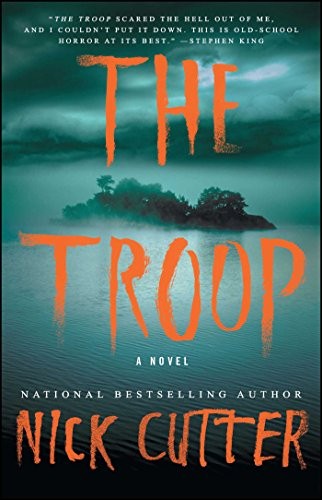
The Troop
05

The Troop

by Nick Cutter

"The parasitic horror of the tapeworm infected not just bodies but minds and morals."

A group of Boy Scouts and their Scoutmaster become stranded on a remote island where they encounter a brilliant but psychopathic scientist who has released a bioengineered tapeworm that induces rapid weight loss—with grotesque consequences. The novel descends into a nightmare of body horror, survival horror, and the collapse of civilization.

The Troop exemplifies modern horror's embrace of graphic intensity and visceral body horror while maintaining narrative sophistication. Stephen King's endorsement established it as essential contemporary horror, and the novel won the inaugural James Herbert Award for Horror Writing. It proved that extreme horror could achieve critical legitimacy and demonstrated the post-2000s renaissance of visceral genre fiction.

  • The body as battleground—parasitic infection transforms the human body into an alien landscape where internal biology wars against conscious will
  • Civilization's fragility—when authority figures fail and communication breaks down, social structures collapse with startling rapidity, revealing primal human behavior
  • Scientific hubris—the novel critiques the unchecked pursuit of scientific advancement without ethical consideration, showing how technology becomes weaponized
  • Hunger as primal force—the spreading infection transforms the infected into beings driven by incomprehensible hunger, erasing identity and humanity
  • Horror relies almost entirely on graphic gore and shock value with minimal atmospheric dread, feeling more like a series of escalating disgusting incidents than cumulative terror
  • All Boy Scout characters are unlikeable and stereotypical archetypes (the bully, the nerd, the overweight one), providing little investment in their fates

"The Troop scared the hell out of me, and I couldn't put it down. This is old-school horror at its best. Not for the faint-hearted, but for the rest of us sick puppies, it's a perfect gift for a winter night."

Stephen King, Bestselling Author

"Winner of the inaugural James Herbert Award for Horror Writing"

James Herbert Award, Inaugural Award Winner

"Lord of the Flies meets Cabin Fever—unrelenting survival horror."

Entertainment Weekly, Major Publication

"A masterpiece of body horror and psychological terror."

Publishers Weekly, Major Publication
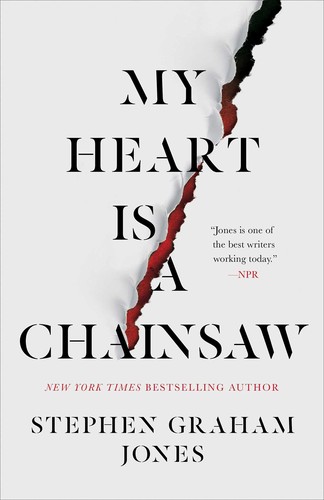
My Heart Is a Chainsaw
06

My Heart Is a Chainsaw

by Stephen Graham Jones

"My heart is a chainsaw, yes, but you're the one who starts it."

The first book in The Indian Lake Trilogy follows Jade, a poor, traumatized Indigenous teenager obsessed with slasher films, living in a small Idaho town. When a real killer begins targeting her community, Jade's encyclopedic knowledge of horror tropes becomes uncomfortably relevant, blurring the line between her cinematic obsession and violent reality.

My Heart Is a Chainsaw demonstrates horror's potential to serve as social critique and personal coping mechanism while winning the Bram Stoker Award. Jones's innovative approach of embedding academic analysis of slasher tropes within a narrative that deconstructs and celebrates them simultaneously has become essential to understanding contemporary horror's literary legitimacy. The novel expanded horror's scope to address Indigenous trauma and systemic violence.

  • Horror as survival mechanism—Jade uses slasher films as a framework to understand and process real-world trauma, transforming entertainment into psychological necessity
  • Trauma and mental health in horror—the novel doesn't shy away from depicting serious psychological damage and its effects on behavior and perception
  • Genre deconstruction as commentary—by analyzing slasher tropes, the novel shows how horror conventions reflect and reinforce real social patterns and power dynamics
  • Marginalization and visibility—Jade's status as poor, Indigenous, traumatized, and female makes her simultaneously invisible to her community and hyper-visible as a target
  • The pacing is slow until the final chapters, with Jade's stream-of-consciousness narration becoming tedious and repetitive for some readers
  • Jade's characterization is problematic—her destruction of crime scene evidence and gleeful response to potential murder make her supremely unlikeable in ways that undermine emotional investment

"A magnum opus that has the power to send readers scrambling for more."

Kirkus Reviews, Major Review Publication

"A deconstruction of slasher films that celebrates everything about them."

NPR, Major Publication

"Winner of the 2021 Bram Stoker Award for Best Novel"

Bram Stoker Award, Prestigious Award

"Final Girls and Fantasies—an essential contemporary horror work."

Los Angeles Review of Books, Literary Publication
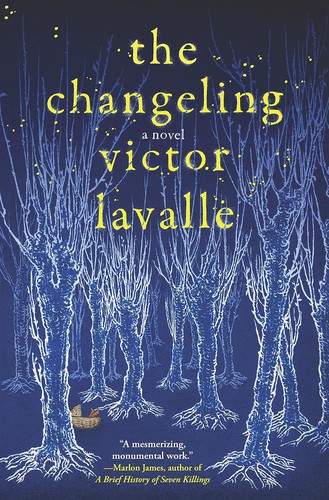
The Changeling
07

The Changeling

by Victor LaValle

"When you have to save the one you love, you will become someone else, something else. You will transform. The only real magic is the things we'll do for the ones we love."

A Harlem-set horror novel about a man who flees his home after his wife places their newborn daughter in the woods as a fairy tale changeling. Desperate to protect his child and uncover the truth about his wife's mental state, he encounters fairy tale mythology, trolls, and the darker aspects of parenting, love, and sacrifice.

The Changeling represents modern horror's expansion into fairy tale reimagining while maintaining genuine psychological horror and literary sophistication. LaValle's exploration of fatherhood, race, technology, and mythology elevated horror's thematic ambitions. The novel won multiple prestigious awards (American Book Award, Locus Award, World Fantasy Award) and demonstrated that horror could achieve mainstream literary recognition while remaining authentically scary.

  • Love as transformative and dangerous force—the lengths one will go for loved ones can lead to both heroism and moral compromise
  • Parenthood as horror—the novel treats parenting as genuinely terrifying, with stakes that feel primal and existential
  • Myth as explanatory framework—fairy tale and folklore provide both comfort and terror, allowing characters to make sense of inexplicable trauma
  • Technology as invading force—contemporary devices (phones, computers) function as modern threats to privacy and autonomy, replacing traditional fairy tale dangers
  • The magical elements from Norwegian folklore feel disconnected from the protagonist's African heritage, with Norwegian mythology receiving minimal mention until the final third
  • Some plot elements feel unresolved, with unanswered questions about character motivation and backstory that create narrative frustration

"Like the work of Haruki Murakami and Ralph Ellison."

Anthony Doerr, Pulitzer Prize-Winning Author (All the Light We Cannot See)

"A dark fairy tale of New York, full of magic and loss, myth and mystery, love and madness."

Marlon James, Pulitzer Prize Finalist (A Brief History of Seven Killings)

"Four out of four stars—Like a woke Brothers Grimm."

USA Today, Major Publication

"Frequently startled by The Changeling's piercingly beautiful insights into parenthood, childhood, and adulthood."

Janet Maslin, The New York Times Critic
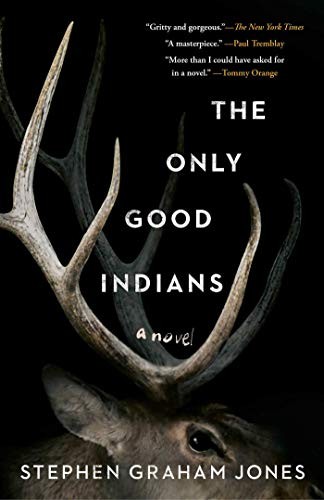
The Only Good Indians
08

The Only Good Indians

by Stephen Graham Jones

"Grief and guilt spawn horrors in unexpected ways."

Four members of the Blackfeet Nation, half of whom have left the reservation, are haunted by the vengeful spirit of a pregnant elk they killed illegally while hunting ten years earlier. As the spirit pursues them with relentless supernatural violence, the novel explores themes of guilt, cultural identity, tradition, and the consequences of abandoning one's heritage.

The Only Good Indians represents the critical and commercial success of Indigenous horror voices in contemporary literature, winning the Shirley Jackson Award. Stephen King's endorsement and the novel's appearance on major bestseller lists demonstrated that horror audiences were hungry for diverse perspectives and authentic cultural narratives. The book elevated horror's capacity to address historical trauma and systemic injustice.

  • Cultural identity and tradition as protective force—the novel suggests that abandoning heritage leaves one spiritually vulnerable and ethically compromised
  • Supernatural justice as metaphor—the elk's spirit represents consequences that cannot be escaped or rationalized away, suggesting moral accountability
  • Intergenerational trauma—the hunting incident's trauma ripples through families and communities, affecting those who weren't even present at the crime
  • Honor and shame as supernatural forces—the novel treats cultural shame and obligation as having genuine power to haunt and transform
  • The novel strains to balance robust character studies with horror plotting, creating tension between literary ambition and genre conventions that don't fully reconcile
  • Some readers felt the prose's smoothness inadvertently diminishes the horror's edginess, with lyrical writing undermining the brutality of the supernatural violence

"Scary good. Stephen Graham Jones is one of our most talented and prolific living writers."

Stephen King, Bestselling Author

"One of the best writers working today regardless of genre."

NPR, Major Publication

"The most American horror novel I've ever read."

Grady Hendrix, New York Times Bestselling Author

"Winner of the 2021 Shirley Jackson Award"

Shirley Jackson Award, Prestigious Award
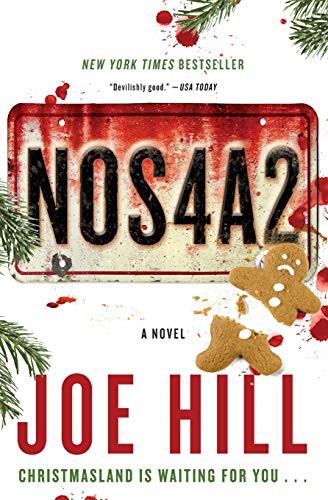
NOS4A2
09

NOS4A2

by Joe Hill

"He is absolutely the good guy. He has dedicated his life to saving children from death, from shame, and all the painful stuff that comes with adulthood. The only problem is it's cost them their souls."

A spine-tingling novel about Charlie Manx, an immortal being who drives a 1938 Rolls-Royce and ferries children away to Christmasland, a magical realm where they never grow old but lose their souls in the process. The story follows Vic McQueen, a young woman with supernatural abilities, who must confront Manx and save the children he has stolen.

NOS4A2 won multiple major awards (including TIME's best books of the year) and was voted Goodreads' best horror book of the 21st century, establishing Joe Hill as a major horror voice in his own right. The novel's blend of supernatural horror, coming-of-age narrative, and deconstructed fairy tale mythology became foundational to understanding contemporary horror's literary aspirations. It demonstrated that horror could achieve massive critical and commercial success simultaneously.

  • Evil as subjective perception—Charlie Manx genuinely believes he is saving children, illustrating how destructive intentions can be rationalized as benevolent
  • Immortality's psychological cost—Manx's eternal life comes with emotional emptiness and inability to experience genuine connection, making him monstrous despite his supernatural power
  • Coming of age as horror—the transition to adulthood carries genuine loss and trauma that Christmasland promises to erase, revealing why Manx's offer appeals to suffering children
  • Psychic connection as supernatural inheritance—Vic's abilities suggest that some individuals are born with inexplicable power to perceive and combat otherworldly threats
  • The novel is extremely long with extensive backstory and character development that some readers find dilutes horror with excessive narrative indulgence
  • The resolution, while satisfying character-wise, provides less cosmic horror payoff than genre readers might anticipate

"One of the ten best books of 2013."

TIME Magazine, Major Publication

"A masterwork of horror."

Lev Grossman, TIME Magazine Critic

"Starred review—After reading this book, readers will never hear Christmas carols in quite the same way again."

Library Journal, Major Review Publication

"One of the best books of the year."

A.V. Club, Major Publication
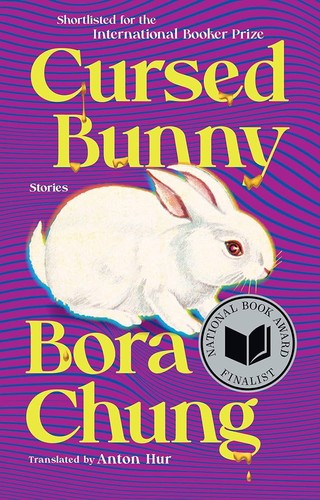
Cursed Bunny
10

Cursed Bunny

by Bora Chung

"Where what we fear is true and what is true meet and separate and re-meet, the resulting stories are indelible, haunting, and terrifying."

A genre-defying collection of short stories by Korean author Bora Chung that blurs the lines between magical realism, horror, and science fiction. The stories address the horrors of patriarchy, capitalism, and modern life through surreal, unsettling narratives that linger with unsettling psychological impact.

Cursed Bunny expanded the international reach of contemporary horror, introducing English-language readers to Korean horror sensibilities. The book was shortlisted for the International Booker Prize and nominated for the National Book Award in Translated Literature, proving that horror from non-English traditions could achieve major literary recognition. The collection demonstrated that horror's power lies in its ability to make the everyday uncanny.

  • The mundane as inherently horrific—Chung finds genuine horror in ordinary contemporary life (work, relationships, social pressure) rather than supernatural elements
  • Women's experiences as central to horror—the stories often focus on female perspectives experiencing systemic patriarchal violence and social alienation
  • Surrealism as horror tool—impossible and dreamlike logic creates disorientation more effective than explicit threat
  • Capitalism as dehumanizing force—many stories depict how economic systems transform people into commodities, creating psychological horror through systemic oppression
  • The surreal and abstract nature of many stories means they lack conventional narrative closure, which some readers find frustrating
  • Translated prose may occasionally feel distant or stylistically challenging to readers unfamiliar with Korean literary conventions

"Chung's Cursed Bunny mines those places where what we fear is true and what is true meet. The resulting stories are indelible, haunting, funny, gross, terrifying."

Alexander Chee, Author (How to Write an Autobiographical Novel)

"Like the work of Carmen Maria Machado and Aoko Matsuda, Chung's stories are wonderfully, blisteringly strange and powerful."

Kelly Link, Bestselling Author

"Shortlisted for the International Booker Prize"

International Booker Prize, Prestigious Literary Award

"Finalist for the National Book Award in Translated Literature"

National Book Award, Prestigious Award
Back to all lists