10 Best Modern Sci-Fi Books

Essential Science Fiction Novels (Post-1990)

A curated collection of the most influential and acclaimed science fiction novels from 1990 to present. These works define modern sci-fi with groundbreaking ideas, compelling narratives, and lasting cultural impact.

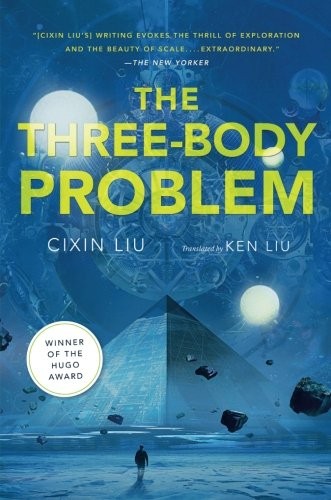
The Three-Body Problem
01

The Three-Body Problem

by Liu Cixin

"The universe is a dark forest. Every civilization is an armed hunter stalking through the trees like a ghost, gently pushing aside branches that block the path and trying to tread without sound."

A groundbreaking hard science fiction novel spanning China's Cultural Revolution to humanity's encounter with an alien civilization. The narrative weaves together physics, philosophy, and geopolitics as humanity faces the arrival of the Trisolaran fleet. This Hugo Award-winning work introduces the concept of the Dark Forest theory, fundamentally challenging how civilizations interact across the cosmos.

As the first Asian science fiction work to win the Hugo Award, it brought non-Western perspectives to science fiction and introduced revolutionary concepts about cosmic sociology. The Dark Forest theory has become a seminal idea in science fiction, and the novel's exploration of civilization survival, technological advancement, and moral relativism makes it essential reading for understanding modern sci-fi.

  • Civilizations in a cosmos will inevitably conflict due to mutual suspicion and survival imperatives
  • Scientific advancement comes at profound moral and social cost
  • Chinese perspectives on science fiction expand the genre beyond Western paradigms
  • Individual choices can reshape humanity's cosmic fate
  • Characters are underdeveloped and lack emotional depth; most feel like vehicles for philosophy rather than complex individuals
  • Heavy reliance on scientific exposition and technical terminology can be challenging for general readers; pacing feels uneven as philosophy overwhelms narrative

"Wildly imaginative"

Barack Obama, Former President of the United States

"A breakthrough book"

George R.R. Martin, Author of A Song of Ice and Fire

"A mind-bending epic"

The New York Times, Major American newspaper

"War of the Worlds for the 21st century"

The Wall Street Journal, Major American newspaper
Blindsight
02

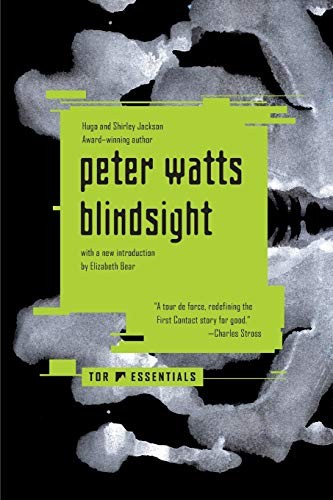
Blindsight

by Peter Watts

"Every concert pianist knows that the surest way to ruin a performance is to be aware of what the fingers are doing... You are all sleepwalkers."

A revolutionary hard science fiction novel featuring first contact with an alien intelligence and explores consciousness itself as an evolutionary dead-end. The narrative follows a crew including a resurrected soldier, an AI, and a linguist who encounter the Firefly, a vast alien being that challenges every assumption about intelligence and awareness. Watts, a marine biologist, brings scientific rigor to philosophical questions about consciousness.

Blindsight fundamentally challenges readers' understanding of consciousness and intelligence through hard science and unsettling ideas. It won multiple award nominations and established Watts as a master of conceptual science fiction that merges hard science with philosophical inquiry. The novel's exploration of consciousness as potentially disadvantageous to survival is groundbreaking and profoundly unsettling.

  • Consciousness may be an evolutionary artifact, not an advantage
  • Intelligence does not require self-awareness or subjective experience
  • First contact scenarios must grapple with truly alien forms of being
  • The nature of consciousness remains deeply mysterious and potentially incomprehensible
  • Watts's writing style is deliberately obscure and confusing; he employs unusual descriptions and scientific references that alienate readers unfamiliar with technical terminology
  • The narrative pacing is uneven with too much philosophical overload; the vampires and existential themes sometimes feel disconnected from the main plot

"A magnificent, darkly gleaming jewel of a book that hurdles the contradictions inherent in biochemistry, consciousness, and human hearts without breaking stride"

Elizabeth Bear, Award-winning science fiction author

"State-of-the-art science fiction: smart, dark and it grabs you by the throat from page one"

Charles Stross, Acclaimed science fiction author

"A shocking and mesmerizing performance, a tour-de-force of provocative and often alarming ideas"

Karl Schroeder, Science fiction author and futurist

"Nominated for Best Novel"

Hugo Award, Premier science fiction award
Leviathan Wakes
03

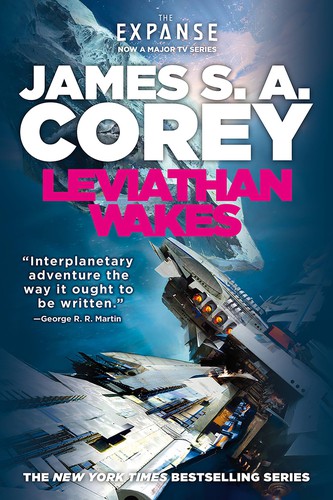
Leviathan Wakes

by James S.A. Corey

"Holden had never been the sort of man to refuse help when the world was ending. Even if the help had a price."

The first novel in The Expanse series, blending noir detective fiction with space opera across the solar system. Detective James Holden investigates the disappearance of a missing woman in the Belt, uncovering a conspiracy that threatens interplanetary peace. The novel balances political intrigue, hard science, and character-driven storytelling in a vast, scientifically plausible solar system.

Leviathan Wakes revitalized space opera for modern audiences by combining rigorous scientific accuracy with compelling personal narratives and political complexity. It launched The Expanse franchise, which became a defining space opera for the 2010s and proved that hard science fiction and engaging storytelling could coexist. The novel's influence on contemporary sci-fi and television is immense.

  • Political conflicts between planets drive human drama as much as technological innovation
  • Hard science combined with character-focused storytelling creates compelling space opera
  • Solar system colonization presents complex sociological and political challenges
  • Personal integrity and justice matter even amid large-scale cosmic events
  • The prose has a textureless, bland quality typical of mass-market paperbacks; dialogue feels functional rather than organic
  • The novel features problematic gender representation and casual sexism; world-building relies heavily on exposition rather than immersive discovery

"Interplanetary adventure the way it ought to be written"

George R.R. Martin, Author of A Song of Ice and Fire

"An excellent space operatic debut in the grand tradition of Peter F. Hamilton"

Charlie Stross, Acclaimed science fiction author

"If you like science fiction with great characters and set in real space, you'll enjoy this one"

Jo Walton, Science fiction author and critic

"A riveting introduction to a major new SF series"

Kirkus Reviews, Major literary review publication
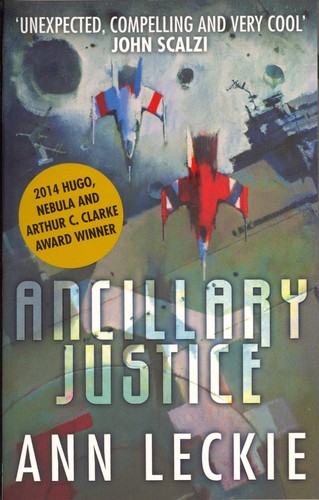
Ancillary Justice
04

Ancillary Justice

by Ann Leckie

"Luxury always comes at someone else's expense. One of the many advantages of civilization is that one doesn't generally have to see that, if one doesn't wish."

A groundbreaking space opera about Breq, the only remaining fragment of a spaceship AI torn apart by imperial decree. Seeking revenge against the autocratic leader responsible for her fragmentation, Breq navigates a universe where gender is culturally feminine and explores what constitutes individual identity when consciousness spans multiple bodies. The novel won every major science fiction award.

Ancillary Justice revolutionized modern science fiction by winning the Hugo, Nebula, Arthur C. Clarke, and BSFA awards—the only novel to achieve this feat. Its innovative treatment of gender through pronoun usage and its exploration of AI consciousness as personhood established new possibilities for science fiction. The novel expanded discussions about identity and representation in the genre.

  • Identity and consciousness persist even when separated across multiple bodies
  • Language and pronoun choice shape how we understand gender and personhood
  • Revenge and retribution are deeply personal even in vast interstellar conflicts
  • Empires maintain power through cultural dominance as much as military force
  • The novel's treatment of gender through universal she/he pronouns feels like worldbuilding designed to discomfort rather than explore, lacking depth in its sociological implications
  • Narrative pacing suffers from frequent asides explaining why dialogue is significant rather than showing it naturally; the pronoun convention proves distracting to some readers

"Unexpected, compelling and very cool. Ann Leckie nails it...I've never met a heroine like Breq before"

John Scalzi, Award-winning science fiction author

"Establishes Leckie as an heir to Banks and Cherryh"

Elizabeth Bear, Science fiction author and editor

"Assured, gripping, and stylish"

Genevieve Valentine, NPR Books critic

"The mind-blowing space opera you've been needing"

io9, Science fiction and fantasy blog
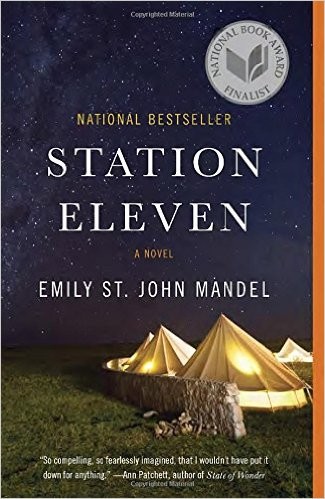
Station Eleven
05

Station Eleven

by Emily St. John Mandel

"Hell is the absence of the people you long for."

A post-apocalyptic narrative that follows interconnected lives before, during, and after a devastating flu pandemic that wipes out 99% of humanity. Rather than focusing on survival mechanics, the novel explores how art, music, and literature sustain humanity's spirit in a shattered world. Mandel traces how people's fates intertwine through chance and choice across decades and continents.

Station Eleven redefined post-apocalyptic science fiction by prioritizing human connection and cultural meaning over survival drama. The novel's non-linear structure and focus on art's importance marks a significant shift in how science fiction explores catastrophe. Its National Book Award nomination and cultural resonance make it essential to understanding contemporary literary science fiction.

  • Art and music are as essential to humanity as food and shelter
  • Interconnected lives reveal how distant people shape each other's fates
  • Post-apocalyptic worlds need not focus on survival at the expense of meaning
  • Memory and stories preserve human identity and connection
  • The character Jeevan appears at two major plot points as both paparazzi and paramedic, a preposterous coincidence that undermines credibility
  • The Prophet, introduced as the chief antagonist, feels hastily conceived and lacks coherent motivation; the ending revelation about Leander minimizes important plot points

"My book of the year"

Karen Joy Fowler, Award-winning novelist

"It is a brilliant novel, and Emily St. John Mandel is astonishing"

Emma Straub, Bestselling author

"Emily St. John Mandel conjures indelible visuals, and her writing is pure elegance"

Patrick deWitt, Acclaimed novelist

"Everything is a miracle"

NPR, National Public Radio
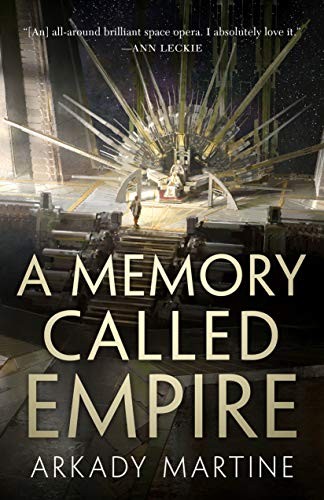
A Memory Called Empire
06

A Memory Called Empire

by Arkady Martine

"Information is a form of power, and power is a form of information."

A sophisticated space opera about Mahit Dzmare, an ambassador from a small star nation who arrives at the capital of an expansionist empire to uncover her predecessor's mysterious death. Featuring intricate political intrigue, a fragmentary AI consciousness, and profound exploration of cultural colonialism, the novel weaves mystery with meditation on assimilation and resistance. Winner of the 2020 Hugo Award.

A Memory Called Empire represents a new wave of literary science fiction that marries political complexity with philosophical depth. The novel's Hugo Award win and sophisticated worldbuilding establish it as essential for understanding contemporary sci-fi that prioritizes ideas and character psychology over action. Martine's work elevates space opera as a vehicle for examining power and identity.

  • Cultural assimilation and imperial dominance operate through subtle mechanisms of language and tradition
  • Individual agency persists even within overwhelming power structures
  • Political loyalty and personal identity create irresolvable tensions
  • Exile and displacement offer unique perspectives on power and belonging
  • Mahit lacks distinctive character traits beyond serving as an audience proxy; she feels designed for reader identification rather than presenting genuine foibles
  • The novel stands back from its thematic concerns rather than fully exploring them; it points at colonialism and cultural hegemony without substantive engagement

"Arkady is one of the best new voices in speculative fiction"

Adrian Tchaikovsky, Award-winning author of Children of Time

"A remarkable space opera, sans explosions; rich in big ideas about colonization and culture"

Esquire, Major magazine

"2020 Winner for Best Novel"

Hugo Award, Premier science fiction award
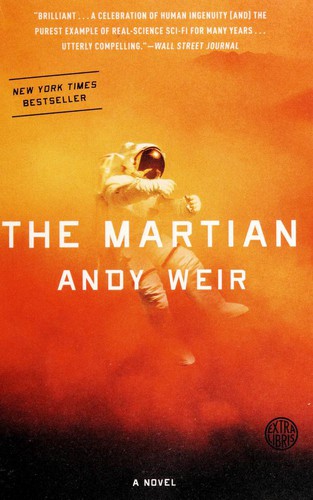
The Martian
07

The Martian

by Andy Weir

"I'm pretty much f***ed. That's my considered opinion. Six days into what should be the greatest month of my life, and I'm f***ed."

A gripping survival narrative about Mark Watney, an astronaut stranded on Mars who must use ingenuity and science to survive until rescue. Told primarily through Watney's personal logs, the novel documents his attempts to grow food, repair equipment, and traverse the Martian landscape. Weir's commitment to scientific accuracy and Watney's dark humor create an engaging exploration of human resilience and problem-solving.

The Martian pioneered a modern approach to hard science fiction that emphasizes scientific accuracy and practical problem-solving over space-based wonder. The novel's bestseller status and film adaptation brought science fiction to mainstream audiences, and its influence on subsequent Mars narratives and hard science fiction is substantial. It demonstrates how rigorous science can serve compelling storytelling.

  • Human ingenuity and persistence can overcome seemingly insurmountable odds
  • Scientific knowledge and problem-solving are acts of survival and self-preservation
  • Humor and personality sustain psychological resilience in isolation
  • Technology extends human capability but depends on careful understanding of physics and engineering
  • Over-researched and under-written; the copious scientific minutiae become the story itself rather than serving it
  • Watney's unrealistic cheerfulness and constant problem-solving prevent genuine tension; the repetitive 'problem-solution' pattern lacks emotional depth

"Smart, funny, and white-knuckle intense, The Martian is everything you want from a novel"

Hugh Howey, Bestselling science fiction author

"Brilliant…a celebration of human ingenuity; the purest example of real-science sci-fi"

Entertainment Weekly, Major entertainment publication

"Weir displays a virtuosic ability to write about highly technical situations without leaving readers far behind"

Kirkus Reviews, Major literary review publication
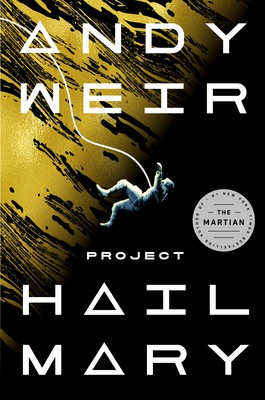
Project Hail Mary
08

Project Hail Mary

by Andy Weir

"If you're alone and you look up at the stars, you're looking at an infinite cosmic ocean. If you're with friends, you're looking at something beautiful and mysterious that makes you feel small, but part of something bigger."

A hard science fiction novel featuring Ryland Grace, a solitary astronaut with amnesia awoken aboard a spacecraft on a desperate mission to prevent humanity's extinction. Grace discovers he must travel to Venus's upper atmosphere to stop a biological phenomenon consuming Earth's solar energy. The narrative balances scientific problem-solving with themes of connection and sacrifice across vast distances.

Project Hail Mary demonstrates Andy Weir's mastery of hard science fiction while expanding beyond purely survival narratives to explore cooperation and communication across species boundaries. The novel's commercial success and critical acclaim establish it as contemporary science fiction's most effective blend of rigorous science with emotional resonance. It marks a significant evolution in Weir's storytelling.

  • Communication and cooperation transcend species and biological differences
  • Scientific ingenuity requires understanding first principles and fundamental physics
  • Isolation shapes perspective differently than shared experience
  • Individual sacrifice can serve humanity's greater survival
  • Pedestrian language and limited characterization; protagonist's voice feels deliberately sanitized with euphemisms replacing organic expression
  • Supporting characters are two-dimensional and stereotypical; the problem-solution structure crowds out emotional and narrative complexity

"One of the most original, compelling, and fun voyages I've ever taken"

Ernest Cline, Bestselling author of Ready Player One

"I loved The Martian, but I actually find Project Hail Mary to be Mr. Weir's finest work to date"

Brandon Sanderson, Bestselling fantasy author

"If you like a lot of science in your science fiction, Andy Weir is the writer for you"

George R.R. Martin, Bestselling author

"One of the most plausible science fiction books I've ever read"

Tim Peake, ESA Astronaut
Recursion
09

Recursion

by Blake Crouch

"Time is a loop. Life is a loop. Every memory is a doorway."

A mind-bending science fiction thriller exploring the nature of memory, time, and reality itself. The novel follows a young woman who discovers a technology allowing people to access their memories as if entering alternate timelines, which leads her down a rabbit hole of temporal paradoxes and multiple branching realities. Crouch combines hard science concepts with visceral action and emotional stakes, creating a narrative that challenges readers' understanding of causality.

Recursion became a #1 New York Times bestseller and exemplifies contemporary science fiction's ability to achieve mainstream commercial success while exploring sophisticated concepts. The novel's exploration of memory, identity, and branching timelines addresses fundamental questions about consciousness in an accessible yet intellectually rigorous manner. Crouch's work demonstrates how hard science fiction can serve compelling thriller narratives.

  • Memory defines identity more fundamentally than linear progression through time
  • Consciousness persists across branching timelines and alternate realities
  • The pursuit of personal or historical redemption can create paradoxes with catastrophic consequences
  • Technology that extends human capability introduces existential risks that science alone cannot resolve
  • The complex temporal mechanics become convoluted in the second half, leaving readers confused about which timeline is truly 'real'
  • Character development suffers under the weight of plot mechanics; protagonists feel like tools for exploring the concept rather than fully realized people

"#1 Bestseller"

New York Times, Major newspaper

"Brilliantly imagined"

James Patterson, Bestselling author

"A mind-bending thriller that redefines science fiction possibilities"

Publishers Weekly, Major publishing publication

"Blake Crouch at his most inventive and ambitious"

Kirkus Reviews, Major review publication
Children of Time
10

Children of Time

by Adrian Tchaikovsky

"The Old Empire was dying. Something new had to be born."

A sweeping science fiction epic spanning millennia, following humanity's last ark ship and a group of uplifted spiders as they navigate a hostile universe. Tchaikovsky weaves together hard science concepts with character-driven storytelling, exploring themes of evolution, consciousness, and species survival. The novel presents a radically different perspective on intelligence and civilization through the lens of non-human protagonists.

Children of Time won the Hugo Award and established Tchaikovsky as one of contemporary science fiction's most innovative voices. The novel's exploration of non-human consciousness and its ambitious scope across evolutionary timescales makes it essential to understanding 21st-century hard science fiction. Its success proved that alien intelligences could serve as compelling protagonists in mainstream science fiction.

  • Non-human consciousness and intelligence challenge anthropocentric assumptions about sentience and society
  • Evolution and adaptation shape both individual and civilizational destiny
  • Cooperation across species boundaries is possible despite profound biological differences
  • Humanity's legacy persists through the civilizations that follow, transformed and reimagined
  • The human characters are underdeveloped compared to the uplifted spiders, making it difficult to maintain emotional investment in the ark ship's survival arc
  • The premise of uplifted spiders as protagonists alienates some readers who cannot overcome arachnophobic reactions despite the intelligence angle

"2016 Winner for Best Novel"

Hugo Award Committee, Premier science fiction award

"An ambitious, mind-bending novel that expands what science fiction can achieve"

Stephen King, Bestselling author

"A stunning achievement in hard science fiction"

The Guardian, Major literary publication

"Winner of the Locus Award for Best Science Fiction Novel"

Locus Award Committee, Science fiction award
Back to all lists