10 Best Negotiation Books

Master the art of negotiation with books that transformed how people deal

Negotiation is the cornerstone of successful business and personal relationships. This curated collection of the 10 best negotiation books explores proven frameworks used by Fortune 500 companies, government agencies, and top negotiators worldwide. From Harvard's principled negotiation approach to an FBI hostage negotiator's tactical empathy methods, these essential reads provide practical tools, psychological insights, and tested strategies for navigating complex negotiations in any situation.

01

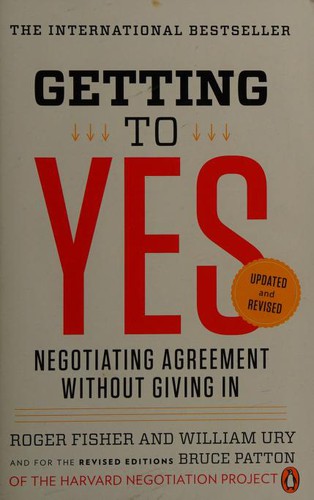
Getting to Yes: Negotiating Agreement Without Giving In

by Roger Fisher, William Ury & Bruce Patton

View on Amazon →

"The problem is not whether they are intelligent or stupid, experienced or inexperienced, that is not the point. The point is that the other side is every bit as human as we are."

This seminal work from Harvard Law School's Program on Negotiation introduces principled negotiation, a method that separates people from problems and focuses on underlying interests rather than positions. With over 15 million copies sold in 35+ languages, it remains the gold standard for negotiation methodology. The book's framework has become foundational to conflict resolution and business negotiation worldwide.

Getting to Yes established the modern foundation for negotiation theory and practice. Its four core principles—separate people from problems, focus on interests not positions, invent options for mutual gain, and insist on objective criteria—have become essential knowledge for anyone involved in business, diplomacy, or conflict resolution. This book essentially created the field of principled negotiation.

  • Focus on underlying interests rather than stated positions
  • Separate people from the problem to enable collaborative problem-solving
  • Generate multiple options before deciding on solutions
  • Use objective criteria and standards to justify agreements
  • Assumes both parties are willing to engage in principled negotiation
  • May be less effective with highly adversarial or intransigent negotiators
  • Can require more time than hardball negotiation tactics

"Over 15 million copies sold worldwide and translated into 35+ languages"

Harvard Law School Program on Negotiation, Academic Institution

"Widely adopted as the standard framework for negotiation training across major corporations"

Fortune 500 Companies, Corporate Leaders
02

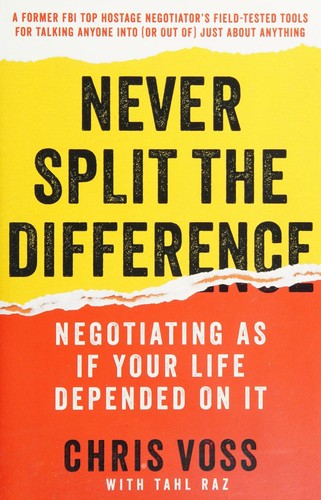
Never Split the Difference: Negotiating As If Your Life Depended On It

by Chris Voss & Tahl Raz

View on Amazon →

"Tactical empathy is listening as a martial art, balancing the subtle behaviors of emotional intelligence and the assertive skills of influence, to gain access to the mind of another person."

Based on Chris Voss's experience as an FBI hostage negotiator, this book presents tactical empathy as the key to successful negotiation. Voss teaches readers how to use mirroring, labeling emotions, and strategic silence to build rapport and uncover hidden interests. The book combines real-world negotiation cases with actionable techniques that readers can apply immediately in both professional and personal situations.

Never Split the Difference brings the real-world expertise of an elite FBI negotiator into the boardroom. Its tactical empathy framework fills a gap in negotiation literature by emphasizing emotional intelligence and psychological principles discovered through high-stakes hostage negotiations. The book's practical techniques have proven effective across diverse negotiation contexts.

  • Use mirroring to build rapport and encourage disclosure
  • Label emotions to validate the other party's feelings and defuse tension
  • Master strategic silence to let the other side fill the void
  • Ask calibrated questions to reveal hidden interests and concerns
  • FBI tactics may not translate smoothly to all business contexts
  • Some techniques can feel manipulative if not used authentically
  • Emphasis on emotional control may minimize the value of genuine emotional expression

"A riveting read, full of instantly actionable advice—not just for high-stakes situations, but also for handling everyday conflicts at work and at home"

Adam Grant, Bestselling Author

"Bestseller recognized as essential reading for negotiation professionals"

New York Times & Wall Street Journal, Media Recognition
03

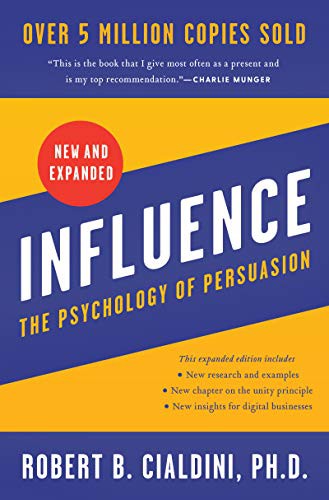
Influence: The Psychology of Persuasion (Revised Edition)

by Robert B. Cialdini

View on Amazon →

"People tend to be consistent with things they have already committed to. As a result, we will be more persuaded by information that is consistent with our prior commitments."

Dr. Cialdini's groundbreaking research identifies six universal principles of influence: reciprocity, commitment and consistency, social proof, authority, liking, and scarcity. Based on 35 years of peer-reviewed research, this book explains why people say yes and how to apply these insights ethically in negotiation and persuasion. The expanded edition includes his seventh principle and reflects decades of behavioral science discoveries.

Understanding the psychology behind influence is essential for effective negotiation. Cialdini's principles explain the subconscious triggers that drive decision-making and agreement. This knowledge enables negotiators to structure proposals and interactions that align with human psychology, making agreements more likely and sustainable.

  • Reciprocity: People feel obligated to return favors and reciprocate gestures
  • Commitment: Consistency drives people to honor their stated positions and commitments
  • Social Proof: People look to others' actions to determine their own behavior
  • Authority: People trust and follow credible experts and authority figures
  • Can be viewed as manipulative if applied without ethical consideration
  • Some principles work better in certain cultural contexts than others
  • Focus on psychological triggers may oversimplify complex human decision-making

"Election to prestigious academies recognizing lifetime contributions to psychology and influence research"

National Academy of Sciences & American Academy of Arts & Sciences, Academic Recognition

"Distinguished Scientific Achievement Award recipient for groundbreaking research"

American Psychological Association, Professional Organization
04

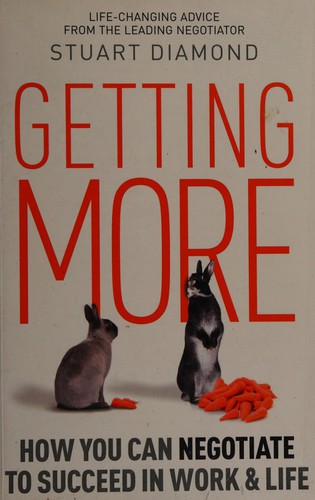
Getting More: How You Can Negotiate to Succeed in Work and Life

by Stuart Diamond

View on Amazon →

"Emotions and perceptions are far more important than power and logic in dealing with others. The best negotiators are problem-solvers who create new, creative, and better ways to solve both their problems and the other people's problems."

Drawing on 30 years of research with 40,000 people across 60 countries, Stuart Diamond presents a revolutionary approach emphasizing emotions, perceptions, and collaboration over power and logic. Diamond's model shows that skilled negotiators create four times more value by understanding and addressing the other party's emotional needs first. Practical case studies from multinational negotiations demonstrate how this approach works in complex real-world situations.

Getting More uniquely emphasizes the centrality of emotions and perceptions in negotiation, a dimension often underemphasized in other negotiation books. Diamond's global research base provides cross-cultural validation of his principles. His practical model for addressing emotional needs before positions makes this essential for anyone dealing with complex interpersonal negotiations.

  • Address emotions and perceptions before focusing on positions and proposals
  • Find commonalities to build rapport and collaborative spirit
  • Think of yourself as the least important person in the negotiation
  • Create multiple options that address both parties' emotional and practical needs
  • Heavy emphasis on emotions may not work with highly rational, analytical negotiators
  • Global examples may not always translate directly to specific local contexts
  • Emotional focus requires significant self-awareness and emotional intelligence

"Speaker at 80 Fortune 100 companies; advice sought by executives from 200+ Fortune 500 companies"

Fortune 500 Leadership, Corporate Executives

"#1 career book recommendation by WSJ; named best negotiation book of all time by Inc. Magazine"

Wall Street Journal & Inc. Magazine, Media Recognition
05

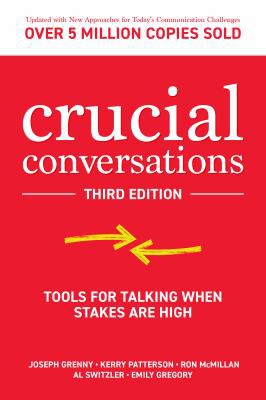
Crucial Conversations: Tools for Talking When Stakes Are High

by Kerry Patterson, Joseph Grenny, Ron McMillan & Al Switzler

View on Amazon →

"The pool of shared meaning is the birthplace of synergy. The best teams, families, and organizations share the experience of engaging in crucial conversations."

This practical guide provides tools for navigating conversations where stakes are high, opinions vary, and emotions run strong. The authors define crucial conversations as discussions that affect outcomes, relationships, and organizational success. Through case studies and step-by-step techniques, readers learn how to master dialogue, create psychological safety, and build a shared pool of meaning with difficult conversation partners.

Crucial Conversations is essential for leaders and professionals who must navigate emotionally charged, high-stakes discussions. The book provides specific, teachable techniques for creating psychological safety and managing emotions during tense conversations. Its emphasis on dialogue as a shared space for meaning-making is crucial for modern team-based work.

  • Recognize when conversations become crucial and require special attention
  • Create psychological safety to encourage honest dialogue
  • Master the skill of asking questions and truly listening to understand
  • Build shared meaning through open dialogue rather than positional debate
  • Techniques require practice and emotional intelligence to implement effectively
  • May require significant culture change in some organizations to adopt
  • Framework is most effective when both parties are willing to engage authentically

"Widely adopted framework in corporate training programs for leadership development and team dynamics"

Corporate Leadership Development, Professional Training

"Recognized as essential tools for high-performance teams and organizational effectiveness"

Stephen R. Covey, Leadership Thought Leader
06

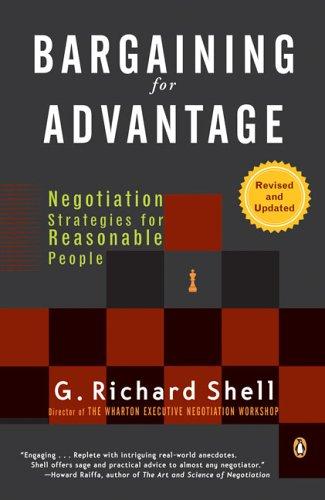
Bargaining for Advantage: Negotiation Strategies for Reasonable People

by G. Richard Shell

View on Amazon →

"People who expect more generally get more. Your goal should be the most aggressive bid for which you have a reasonable argument, and you should be able to justify your expectations to the other side with a straight face."

Professor Shell from the Wharton Executive Negotiation Workshop offers a systematic approach to negotiation built on six negotiating foundations: bargaining style, goals and expectations, authoritative norms and standards, relationships, the other party's interests, and leverage. The book emphasizes negotiating authentically as who you are rather than adopting a false persona. Practical examples show how to apply these principles across diverse negotiation scenarios.

Bargaining for Advantage provides a comprehensive framework that goes beyond single-issue deals to address the full complexity of real-world negotiations. Shell's emphasis on working with your authentic bargaining style and understanding the six foundations makes this book invaluable for sustained negotiating success across different contexts.

  • Develop awareness of your natural bargaining style and leverage it authentically
  • Set goals based on reasonable research and justifiable standards
  • Understand the six foundations that underlie every negotiation
  • Maintain long-term relationships by negotiating in ways consistent with who you are
  • Framework may be complex for negotiators seeking quick, simple solutions
  • Emphasis on authenticity may not work against highly aggressive, inauthentic negotiators
  • Requires substantial preparation and self-awareness to implement effectively

"Developed and taught by leading Wharton faculty; case studies drawn from actual negotiations"

Wharton Executive Negotiation Workshop, Academic Institution

"Core text in negotiation courses across leading business schools"

Business School Curriculum, Educational Standard
07

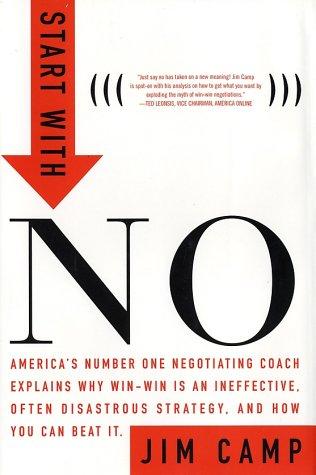
Start with No: The Negotiating Tools That the Pros Don't Want You to Know

by Jim Camp

View on Amazon →

"The best negotiators aren't interested in yes—they prefer no. They never rush to close, are never needy, create a blank slate to ask questions and listen, have a clear mission and purpose, and understand the four budgets: time, energy, money, and emotion."

Jim Camp, an internationally recognized negotiation coach, presents a contrarian approach that challenges the prevailing 'win-win' negotiation paradigm. His decision-based negotiation system teaches negotiators to prefer 'no' to 'yes,' eliminate neediness, control emotions through decision-making, and understand four key budgets: time, energy, money, and emotion. Camp argues that professional negotiators use 'win-win' language to exploit compromises, and his system provides an alternative based on deliberate decisions rather than emotional reactions.

Start with No offers a provocative counter-perspective to consensus negotiation wisdom. Camp's emphasis on staying in control, maintaining alternatives, and making deliberate decisions rather than reacting emotionally is valuable for negotiators dealing with highly aggressive counterparts. His framework of understanding the four budgets provides practical structure for decision-making.

  • Maintain the right to say 'no' and protect your decision-making autonomy
  • Never rush to agreement; control the pace and timing of negotiations
  • Eliminate neediness and desperation from your negotiating posture
  • Understand and manage the four budgets for yourself and the other party
  • Approach may damage long-term relationships if applied too rigidly
  • Emphasis on 'no' and caution can appear unnecessarily defensive
  • Less emphasis on creating genuine value and collaborative solutions

"Used by negotiation professionals and organizations seeking decision-based negotiation frameworks"

International Negotiation Community, Professional Practice

"Published by major publisher and maintained as essential negotiation resource"

Penguin Random House, Major Publisher
08

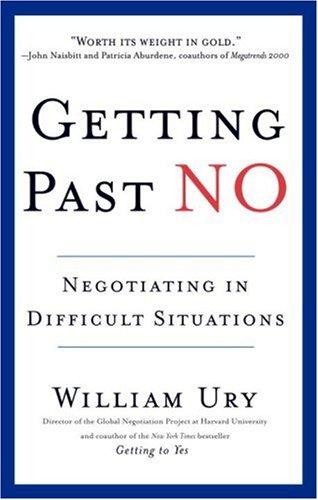
Getting Past No: Negotiating in Difficult Situations

by William Ury

View on Amazon →

"Don't react. Go to the balcony. When facing a difficult opponent, keep your mental equilibrium by distancing yourself emotionally and viewing the situation objectively."

William Ury from Harvard Law School's Program on Negotiation presents his breakthrough negotiation approach for overcoming obstacles and turning adversaries into negotiating partners. The five-step method—go to the balcony, step to their side, change the game, build them a golden bridge, and make it hard to say no—provides a structured approach to de-escalation and agreement. Real-world case studies demonstrate how these techniques work in genuinely difficult negotiations.

Getting Past No addresses the critical challenge of negotiating with difficult, entrenched opponents who resist reasonable solutions. Ury's five-step method provides a tactical framework for converting antagonism into cooperation. This book is essential for professionals who must negotiate with resistant or hostile counterparts in organizational, family, or international contexts.

  • Maintain emotional control by metaphorically stepping back to gain perspective
  • Disarm opponents by stepping to their side and showing understanding
  • Reframe disputes in terms of interests rather than positions
  • Build agreement pathways by making solutions easy to accept
  • Five-step approach may feel artificial or seem to require extensive practice
  • Emphasis on patience and de-escalation may be seen as weakness by aggressive negotiators
  • Success requires counterpart willingness to eventually negotiate in good faith

"Developed by leading Harvard negotiation researcher; used in conflict resolution worldwide"

Harvard Program on Negotiation, Academic Institution

"Widely adopted for government, corporate, and international negotiations"

International Negotiation Community, Professional Practice
09

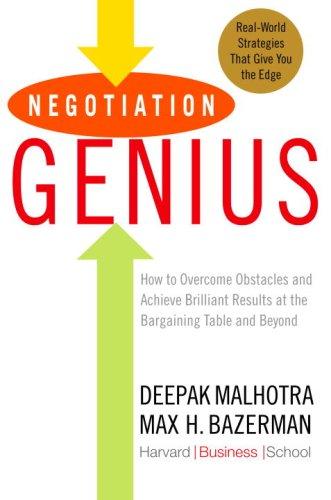
Negotiation Genius: How to Overcome Obstacles and Achieve Brilliant Results at the Bargaining Table and Beyond

by Deepak Malhotra & Max Bazerman

View on Amazon →

"The biggest mistake negotiators make is assuming they understand the other party's motivations without exploring them. Most negotiators get stuck trying to bargain around their own position rather than understanding the reasons 'why' the other party wants what they want."

Professors Malhotra and Bazerman from Harvard Business School present research-based strategies for overcoming common negotiation obstacles. The book addresses blind spots that cause negotiators to misunderstand their counterparts' motivations, fail to create value, and get trapped in positional thinking. With frameworks and case studies, the authors show how to break through these obstacles to achieve brilliant negotiation results.

Negotiation Genius is essential for understanding the cognitive errors and blind spots that prevent successful negotiations. The book's emphasis on investigative questioning and understanding the 'why' behind positions addresses a critical gap in negotiation practice. This research-based approach helps negotiators avoid common traps and unlock hidden value.

  • Recognize blind spots and cognitive biases that distort negotiation perception
  • Investigate the other party's motivations through careful questioning
  • Create value by understanding underlying interests and constraints
  • Avoid positional bargaining that leaves money on the table
  • Framework assumes reasonable, information-sharing counterparts
  • May require sophisticated questioning skills to implement effectively
  • Less prescriptive than some other negotiation books

"Research-based approach validated by leading business school faculty"

Harvard Business School, Academic Institution

"Featured in Program on Negotiation resources and publications"

Harvard Program on Negotiation, Academic Institution
10

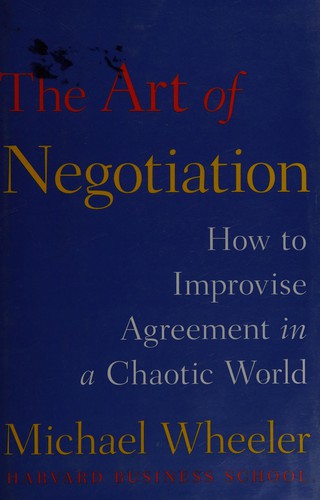
The Art of Negotiation: How to Improvise Agreement in a Chaotic World

by Michael Wheeler

View on Amazon →

"Negotiation is like jazz. It is improvisation on a theme. You know where you want to go, but you don't know how to get there. It's not linear."

Harvard Business School Professor Michael Wheeler applies improvisation principles from jazz and theater to negotiation. Rather than rigid negotiation plans, Wheeler argues that successful negotiators thrive in chaos through agility, adaptability, and ongoing learning. The book shows how master negotiators understand when to solo and when to harmonize, creating flexible strategies that adapt to emerging opportunities and obstacles.

The Art of Negotiation provides essential perspective on the improvisational nature of real-world negotiation. In unpredictable, complex situations, rigid plans often fail. Wheeler's framework for adaptive negotiation—knowing when to adjust, when to listen, and when to lead—is essential for negotiators operating in ambiguous environments. This book complements structured approaches with necessary flexibility.

  • Develop agility to adapt strategies as new information emerges
  • Learn when to lead (solo) and when to support (harmonize) the negotiation
  • Embrace exploration and discovery rather than rigid predetermined plans
  • Build ongoing learning into your negotiation approach
  • Improvisation framework may seem less structured than methodical approaches
  • Requires significant emotional intelligence and adaptability to implement
  • May provide less guidance for negotiators seeking step-by-step procedures

"Taught by Harvard Business School faculty as essential to understanding negotiation dynamics"

Harvard Business School, Academic Institution

"Featured in Program resources as innovative approach to negotiation"

Program on Negotiation at Harvard Law School, Academic Institution
Back to all lists