10 Best Neuroscience Books

Essential Reads on Brain Science, Consciousness, and Human Behavior

Explore the mysteries of the human brain through these 10 essential neuroscience books. From neuroplasticity to consciousness, phantom limbs to unconscious processes, these works bridge cutting-edge brain science with accessible narratives. Discover how your brain shapes your identity, how it rewires itself, and what drives human behavior.

01

The Man Who Mistook His Wife for a Hat

by Oliver Sacks

View on Amazon →

"If a man has lost a leg or an eye, he knows he has lost a leg or an eye; but if he has lost a self—himself—he cannot know it, because he is no longer there to know it."

A collection of fascinating clinical tales that reveal the extraordinary diversity of human neurological experience. Through accounts of patients with unusual neurological conditions, Sacks explores how the brain constructs perception, identity, and our sense of self. These deeply humanistic narratives transform complex neurology into compelling personal stories.

This seminal work introduced millions to the wonders and mysteries of neurology through narrative medicine. Sacks' compassionate approach to neurological cases established the foundation for understanding that neurological differences reveal fundamental truths about how our brains construct reality. It remains essential reading for understanding the relationship between brain, perception, and identity.

  • The brain actively constructs perception rather than passively receiving it
  • Neurological conditions reveal how different brain systems create our experience of reality
  • Each person's neurological story is unique and deserves empathetic exploration
  • Understanding the brain requires both scientific precision and human compassion
  • Some cases have been disputed as embellished or inaccurate by Sacks himself in later years
  • May be overly focused on rare and unusual cases rather than typical brain function
  • Limited discussion of underlying neuroscience mechanisms compared to modern standards

"The lucidity and power of a gifted writer."

New York Times Book Review, Major Publication

"One sees a wise, compassionate and very literate mind at work in these 20 stories, nearly all remarkable."

Chicago Sun-Times, Major Publication
02

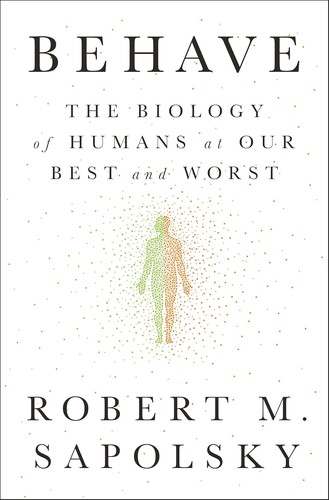
Behave: The Biology of Humans at Our Best and Worst

by Robert Sapolsky

View on Amazon →

"Culture matters. We carry it with us wherever we go."

A comprehensive exploration of human behavior that traces its roots across multiple timeframes and biological levels. Sapolsky investigates how neurons, hormones, evolution, genetics, culture, and personal history combine to determine our actions. From violence and altruism to tribalism and compassion, this 800-page masterpiece offers unprecedented insights into what makes us human.

This magnum opus synthesizes decades of neuroscience, endocrinology, psychology, and evolutionary biology into a unified framework for understanding human behavior. Sapolsky's unique ability to bridge molecular neuroscience with complex social phenomena makes it essential for anyone seeking to understand the biological bases of human morality and behavior at every scale.

  • Human behavior emerges from the interaction of multiple biological systems operating at different timescales
  • Understanding context is essential—the same neural pattern can produce different behaviors depending on circumstances
  • Compassion and violence both have deep biological and cultural roots
  • Nature and nurture are inseparably intertwined in shaping human behavior
  • The book's extreme length and dense material may be overwhelming for some readers
  • Some arguments spanning evolutionary psychology remain debated in the scientific community
  • Heavy emphasis on human dysfunction may leave readers wanting more discussion of optimal human functioning

"A miraculous synthesis of scholarly domains."

The Guardian, Major Publication

"An exemplary work of popular science, challenging but accessible."

Kirkus Reviews, Book Review Publication

"A stunning achievement and an invaluable addition to the canon of scientific literature."

Star Tribune, Major Publication
03

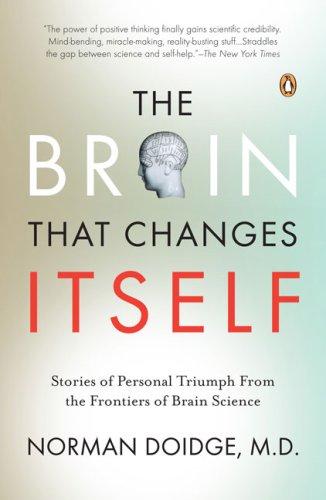
The Brain That Changes Itself

by Norman Doidge

View on Amazon →

"Nature has given us a brain that survives in a changing world by changing itself."

A groundbreaking exploration of neuroplasticity through remarkable true stories of recovery and transformation. Doidge presents case studies of individuals who have rewired their brains to overcome paralysis, deafness, dyslexia, and other conditions previously considered permanent. The book demonstrates that the brain is far more malleable and capable of change than neuroscience previously believed.

This book fundamentally changed how we understand the adult brain's capacity for change. By presenting compelling evidence that neuroplasticity continues throughout life, Doidge challenged decades of neuroscience dogma and opened new possibilities for treatment and recovery. It's essential for understanding that our brains are not hardwired but continuously rewiring themselves.

  • The brain possesses neuroplasticity—the ability to physically rewire itself in response to experience and practice
  • Recovery from brain injury is possible even years after the initial damage through intensive, focused practice
  • The distinction between 'first nature' and 'second nature' becomes blurred as the brain rewires itself
  • Mental exercises and intentional practice can create lasting physical changes in brain structure
  • Some case studies lack rigorous scientific documentation and have been questioned by neuroscientists
  • The book may overstate the pace and extent of neuroplasticity compared to current research
  • Limited discussion of the neurobiological mechanisms underlying neuroplastic change

"Beautifully written and brings life and clarity to a variety of neuropsychiatric problems that affect children and adults."

Michael M. Merzenich, Ph.D., Francis Sooy Professor, UC San Francisco Keck Center

"A remarkable and hopeful portrait of the endless adaptability of the human brain."

Oliver Sacks, MD, Renowned Neuroscientist
04

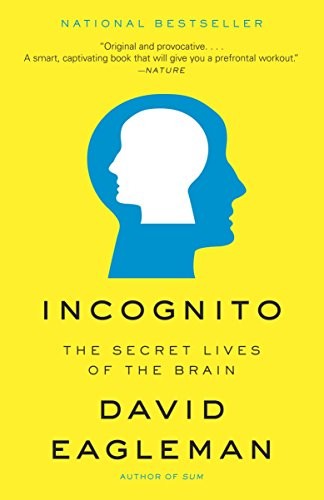
Incognito: The Secret Lives of the Brain

by David Eagleman

View on Amazon →

"If the conscious mind is just the tip of the iceberg, what is the rest doing?"

An illuminating journey into the unconscious mind and its vast influence over our thoughts, feelings, and behaviors. Eagleman reveals that consciousness is merely the tip of the iceberg, with the majority of our brain's processing occurring completely outside our awareness. The book explores how unconscious processes shape decision-making, perception, and personality in ways we rarely recognize.

This book provides essential insight into what cognitive neuroscience has discovered about the relationship between conscious and unconscious processes. Eagleman's accessible writing makes complex neuroscience approachable while challenging the reader's assumptions about free will, perception, and self-awareness. It's crucial for understanding the true architecture of the mind.

  • Consciousness is a small, selective part of overall brain processing—most mental activity occurs unconsciously
  • Your brain continuously constructs your perception of reality from fragmented sensory inputs
  • The conscious mind takes credit for decisions made by unconscious processes
  • Understanding unconscious processing is key to understanding human behavior and decision-making
  • Some interpretations of unconscious processing oversimplify complex neuroscience
  • The implications for free will and responsibility remain philosophically contentious
  • Limited discussion of conscious processes and their adaptive advantages

"Named a Best Book of 2011 by Amazon, the Boston Globe, and the Houston Chronicle."

New York Times, Major Publication

"Appealing and persuasive science writing."

Wall Street Journal, Major Publication
05

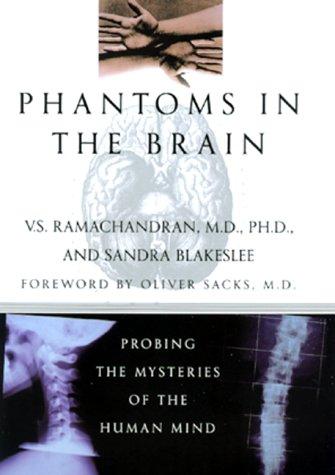
Phantoms in the Brain

by V.S. Ramachandran and Sandra Blakeslee

View on Amazon →

"How can a three-pound mass of jelly that you can hold in your palm imagine angels, contemplate the meaning of infinity, and even question its own place in the cosmos?"

A fascinating exploration of neurological mysteries revealed through case studies of unusual brain conditions. Ramachandran examines phantom limbs, the Capgras delusion, hemispatial neglect, and other neurological phenomena that illuminate how the brain constructs body image, consciousness, and our sense of self. Each case becomes a window into the fundamental architecture of the brain.

This pioneering work demonstrates how studying neurological disorders can unlock fundamental truths about normal brain function. Ramachandran's innovative experimental approaches and engaging case studies established him as a leading figure in cognitive neuroscience. It remains essential for understanding how the brain represents and constructs the body and self.

  • Neurological disorders reveal the hidden mechanisms by which the brain constructs perception and reality
  • The brain actively constructs body image and body awareness rather than simply receiving sensory input
  • Mirror therapy and other perceptual tricks can provide relief from neurological symptoms
  • Understanding rare disorders illuminates fundamental principles of normal brain function
  • Some experimental findings and interpretations have been questioned in subsequent research
  • The book may overstate the explanatory power of case studies for understanding general brain mechanisms
  • Limited neurobiological mechanisms are discussed in favor of phenomenological descriptions

"Foreword to the book praising Ramachandran's work on brain mysteries."

Oliver Sacks, MD, Renowned Neuroscientist

"Ramachandran named one of the world's most influential people (2011 Time 100 list)."

Time Magazine, Major Publication
06

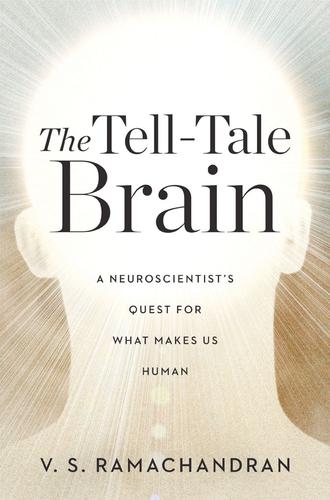
The Tell-Tale Brain

by V.S. Ramachandran

View on Amazon →

"It's as if each of us is hallucinating all the time and what we call perception involves merely selecting the one hallucination that best matches the current input."

A deeper investigation into what makes humans unique from a neuroscientific perspective. Ramachandran explores how the brain generates language, consciousness, creativity, and moral sense. Using case studies and elegant experiments, he demonstrates how understanding neurological disorders and brain evolution illuminates the essence of human nature and what distinguishes our species.

This book takes Ramachandran's insights to a broader scale, addressing fundamental questions about human uniqueness and the nature of consciousness. It combines evolutionary neuroscience, neuropsychology, and philosophy to create a comprehensive view of what makes us human. It's essential for anyone seeking to understand the brain basis of human consciousness and creativity.

  • Key neurological structures and capacities distinguish humans from other species
  • Human consciousness, language, and moral sense are products of brain evolution
  • The brain fundamentally constructs reality through selective perception and interpretation
  • Understanding rare neurological conditions reveals insights about typical human cognition
  • Some claims about human uniqueness may be overstated compared to recent comparative neuroscience findings
  • The philosophical arguments about consciousness may seem speculative to some readers
  • The book covers broad territory which may prevent deep exploration of some topics

"A neuroscientist's quest for what makes us human—exploring the brain basis of uniquely human capacities."

V.S. Ramachandran, Distinguished Professor, UCSD Center for Brain and Cognition
07

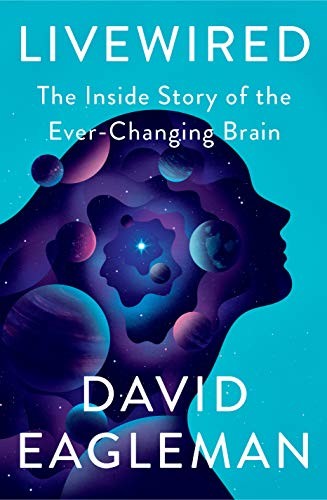
Livewired: The Inside Story of the Ever-Changing Brain

by David Eagleman

View on Amazon →

"The magic of the brain is not found in the parts it's made of but in the way those parts unceasingly reweave themselves in an electric, living fabric."

An exploration of how the brain constantly rewires itself to match the demands of the environment and body. Eagleman presents fascinating discoveries about neuroplasticity, synesthesia, dreams, and sensory augmentation through wearable neurotech. The book demonstrates that the brain is not hardwired but 'livewired'—a dynamic, continuously adapting system defined by transformation.

This book synthesizes Eagleman's research on neuroplasticity and sensory perception into a compelling narrative about the brain's fundamental dynamism. By covering everything from development to sensory augmentation, Eagleman demonstrates that understanding the brain's malleability is essential for understanding human potential and our future. It's vital for grasping how experience literally reshapes the physical brain.

  • The brain constantly modifies its own circuitry in response to experience and environmental demands
  • Brain plasticity is not limited to childhood but continues throughout life
  • The brain can incorporate new inputs and tools into its sensory world through practice
  • Our capacity for change is one of the most remarkable features of human neurobiology
  • The scope is broad, which may limit depth of treatment for specific topics
  • Some claims about neural adaptation lack extensive supporting evidence
  • The implications for technology augmentation remain speculative and futuristic

"The brain is livewired, not hardwired—exploring how constant change defines neural function."

David Eagleman, Stanford Neuroscientist
08

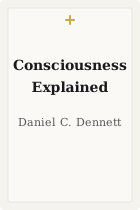
Consciousness Explained

by Daniel C. Dennett

View on Amazon →

"To explain is to explain away—consciousness explained in terms of unconscious processes."

A groundbreaking philosophical and neuroscientific investigation into the nature of consciousness. Dennett challenges the assumption that consciousness is a unified, centralized phenomenon occurring at a single location. Instead, he proposes the 'multiple drafts' model, arguing that consciousness is distributed across many parallel processes throughout the brain, with no single privileged moment where experience crystallizes.

This influential work fundamentally reshaped how neuroscientists and philosophers think about consciousness. Dennett's multiple drafts theory provides an empirical framework for understanding consciousness that avoids the pitfalls of dualism while taking subjective experience seriously. It's essential for understanding contemporary debates about the neural basis of consciousness.

  • Consciousness is not a unified phenomenon but emerges from distributed parallel processing
  • There is no single moment or location where conscious experience crystallizes
  • The brain constructs multiple drafts of experience, with consciousness representing selected final versions
  • Understanding consciousness requires bridging philosophy, neuroscience, and cognitive science
  • The theory remains controversial and disputed by many philosophers and neuroscientists
  • Critics argue it may underestimate the reality of subjective conscious experience
  • Some technical arguments are philosophical rather than empirically grounded

"A seminal work in consciousness studies that reshaped theoretical frameworks for understanding awareness."

Philosophy of Mind Scholars, Academic Community
09

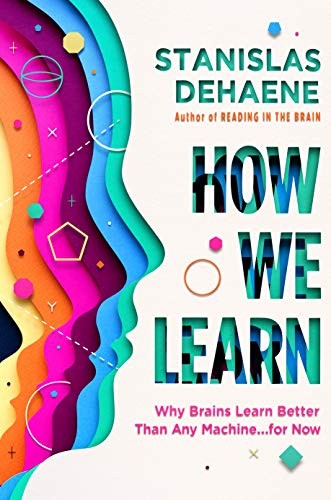
How We Learn: Why Brains Learn Better Than Any Machine... for Now

by Stanislas Dehaene

View on Amazon →

"The brain learns efficiently only if it is attentive, focused, and active in generating mental models."

An exploration of the biological mechanisms of learning based on decades of cognitive neuroscience research. Dehaene decodes the neuronal, synaptic, and molecular processes underlying learning and reveals four pillars of brain learning: attention, active engagement, error feedback, and consolidation. The book bridges cutting-edge neuroscience with practical implications for education.

As a leading cognitive neuroscientist, Dehaene provides authoritative insights into how the brain learns. This book is essential for understanding the neurobiological basis of education and learning at all ages. It combines rigorous neuroscience with practical wisdom, making it vital reading for educators, students, parents, and anyone seeking to optimize their own learning.

  • Learning is the formation of internal models of the external world through the brain's learning algorithm
  • Four pillars drive brain learning: attention, active engagement, error feedback, and consolidation through sleep
  • Brain plasticity continues into adulthood, though it is maximal during childhood
  • Understanding how the brain learns can optimize educational practices and personal learning strategies
  • Some educational applications remain to be experimentally validated in real-world classroom settings
  • The focus on formal learning may understate the importance of implicit and informal learning
  • Limited discussion of individual differences in learning styles and cognitive abilities

"A neuroscientific exploration of the four pillars of learning discovered through decades of brain research."

Stanislas Dehaene, Chair of Experimental Cognitive Psychology, Collège de France
10

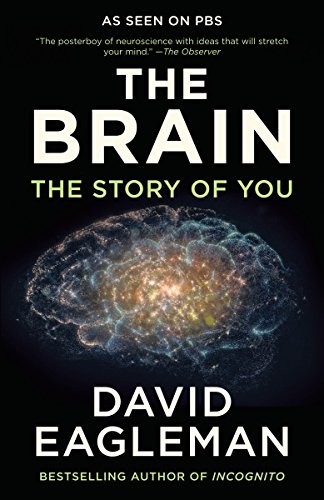
The Brain: The Story of You

by David Eagleman

View on Amazon →

"The process of becoming who you are is defined by carving back the possibilities that were already present—you become who you are not because of what grows in your brain, but because of what is removed."

A companion volume to the Emmy-nominated PBS series that explores how the brain shapes identity and how experience shapes the brain. Eagleman guides readers through extreme sports, criminal justice, facial expressions, robotics, and the search for immortality, revealing how your brain literally writes the story of your life through neuronal processes and experience.

This accessible introduction to neuroscience demonstrates how brain science applies to real-world human experiences. Eagleman's engaging narrative style and diverse examples make neuroscience relevant to everyday life while maintaining scientific accuracy. It's essential for understanding how your brain creates your unique identity and shapes your future.

  • Your brain constructs your subjective experience and sense of self through neural processes
  • Experience literally changes the physical structure and function of your brain
  • The brain is built through a process of selective pruning and refinement rather than pure addition
  • Understanding brain science illuminates fundamental questions about identity, responsibility, and human nature
  • The breadth of topics may prevent deep exploration of individual neuroscience domains
  • Some examples are presented more for narrative interest than scientific depth
  • The book is introductory and may offer limited novel insights for neuroscience experts

"Companion to the Emmy-nominated series exploring how your brain shapes your life."

PBS, Television Network
Back to all lists