Essential Nutrition Books

Transform your understanding of food and health through evidence-based nutrition science

This curated collection explores the science behind nutrition, food systems, and dietary approaches that promote lasting health. From plant-based research to metabolic concepts, these works challenge conventional wisdom and provide practical frameworks for making informed dietary choices. Written by leading medical doctors and researchers, each book offers unique insights into how what we eat shapes our bodies and minds.

01

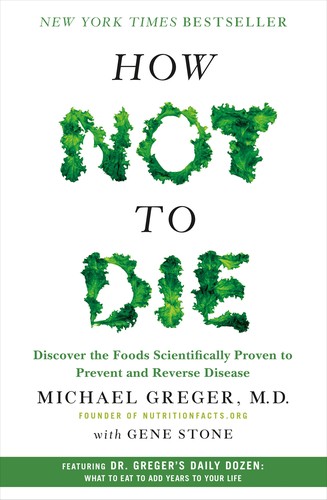
How Not to Die

by Michael Greger, M.D.

View on Amazon →

"The primary reason diseases tend to run in families may be that diets tend to run in families."

This groundbreaking work synthesizes decades of nutritional research to reveal foods proven to prevent and reverse the fifteen leading causes of death. Greger systematically examines the scientific evidence for plant-based nutrition, demonstrating how dietary choices directly impact longevity and disease prevention. The book combines accessibility with rigorous scientific rigor, making complex nutritional science comprehensible for everyday readers.

Essential for understanding the direct link between food choices and mortality. Greger's evidence-based approach challenges pharmaceutical reliance and emphasizes prevention through nutrition. This work has influenced millions to reconsider their dietary habits based on solid scientific foundations.

  • Plants can prevent and reverse leading causes of death
  • Whole food plant-based diets offer maximum health benefits
  • Evidence-based nutrition trumps supplement marketing
  • Prevention through diet is more effective than treatment
  • Dense with research citations requiring significant reading effort
  • Some may find prescriptive recommendations overly restrictive
  • Agricultural and economic factors affecting food access underexplored

"Absolutely the best book I've read on nutrition and diet"

Dan Buettner, Author, The Blue Zones Solution

"This book may help those who are susceptible to illnesses that can be prevented"

His Holiness the Dalai Lama, Religious Leader
02

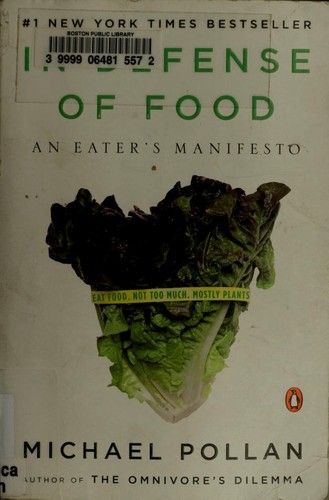
In Defense of Food

by Michael Pollan

View on Amazon →

"Eat food. Not too much. Mostly plants."

Pollan distills complex nutritional science into a simple yet profound principle: eat real food, not too much, mostly plants. This philosophical exploration examines how modern processed food systems have distorted our relationship with eating and created an epidemic of diet-related disease. Through accessible prose, Pollan critiques nutritionism and advocates for food-centered thinking that reconnects us with natural eating practices.

Foundational for questioning the industrial food system and nutritional mythology. Pollan's eater's manifesto offers liberation from diet pseudoscience while grounding readers in practical, evidence-based eating principles. This work catalyzed a cultural shift toward whole foods and food awareness.

  • Nutritionism has distorted our food culture and health
  • Real food is fundamentally different from processed alternatives
  • Simplicity in eating principles leads to better health outcomes
  • Food culture and tradition matter as much as nutrients
  • May oversimplify complex nutritional science
  • Doesn't adequately address food access and economic inequality
  • Some recipes and suggestions not practical for all populations

"Michael Pollan is the designated repository for the nation's food conscience"

Frank Bruni, The New York Times

"A tough, witty, cogent rebuttal to the entire Western diet"

Janet Maslin, The New York Times
03

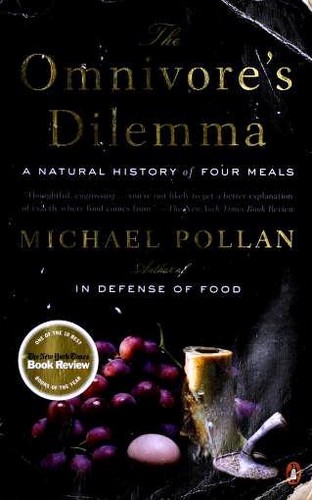
The Omnivore's Dilemma

by Michael Pollan

View on Amazon →

"How and what we eat determines to a great extent the use we make of the world and what is to become of it."

Pollan traces four meals from their origins to the table, exposing the industrial agriculture system's environmental and health consequences. This narrative journey examines corn-based industrial agriculture, organic farming, and hunting practices, revealing the hidden costs of modern food production. The work combines investigative journalism with philosophical inquiry into humanity's relationship with food systems.

Critical for understanding food production's environmental and ethical implications. Pollan's detailed investigation of the industrial food chain connects personal dietary choices to larger ecological and social systems. This book fundamentally altered how millions think about the food they consume.

  • Corn monoculture dominates the American food system
  • Industrial agriculture conceals significant environmental costs
  • Food production shapes entire ecosystems and economies
  • Consumer awareness drives agricultural transformation
  • Focused primarily on American food systems
  • Solutions remain somewhat individualized rather than systemic
  • Could provide more guidance on practical dietary alternatives

"Thoughtful, engrossing, and the best explanation of where your food comes from"

The New York Times Book Review, Literary Review

"Outstanding and a wide-ranging invitation to think through moral implications of eating habits"

The New Yorker, Magazine
04

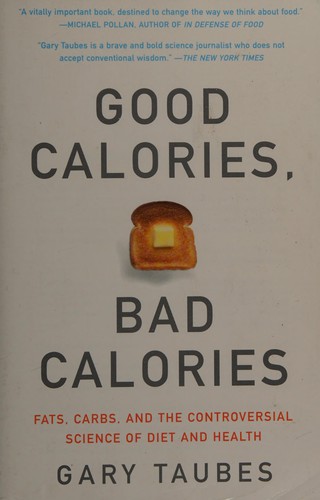
Good Calories, Bad Calories

by Gary Taubes

View on Amazon →

"There is always an easy solution to every human problem—neat, plausible, and wrong."

Taubes challenges conventional dietary wisdom by reexamining the scientific evidence on fats, carbohydrates, and disease. This meticulously researched work argues that refined carbohydrates, not dietary fat, drive obesity and chronic disease. Taubes combines historical analysis with contemporary nutritional science to demonstrate how flawed research became nutritional dogma.

Essential for questioning mainstream nutritional recommendations and understanding how science becomes distorted by economics and politics. Taubes' rigorous examination of the fat-vs-carbohydrate debate provides crucial context for evaluating competing dietary claims.

  • Carbohydrate-restricted diets offer superior weight control
  • Scientific consensus on dietary fat was built on flawed evidence
  • Insulin regulation determines metabolic health
  • Economic interests distort nutritional research
  • Dense with scientific detail challenging for general readers
  • Some conclusions remain scientifically controversial
  • Limited practical guidance for dietary implementation

"Rigorous challenge to nutritional orthodoxy with compelling historical analysis"

Scientific Community, Nutrition Research
05

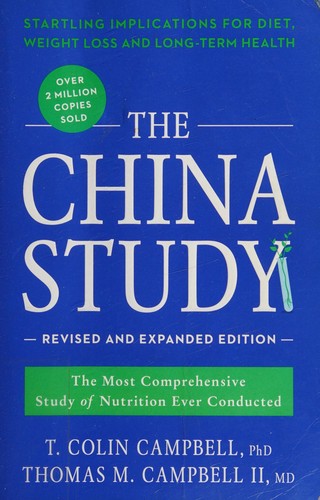
The China Study

by T. Colin Campbell, Ph.D.

View on Amazon →

"Eating a whole foods, plant-based diet is the most effective way to reverse disease and prevent chronic illness."

Campbell presents findings from an unprecedented epidemiological study linking plant-based diets to optimal health and the prevention of chronic disease. This comprehensive examination of nutrition data across populations demonstrates the superior health outcomes of whole food plant-based eating. The work combines decades of research with compelling case studies of dietary transformation.

Landmark nutritional research providing strong evidence for plant-based eating patterns and disease prevention. Campbell's work influenced major figures including Bill Clinton to adopt plant-based diets. Essential reading for understanding protein and disease relationships based on large-scale population studies.

  • Plant-based whole foods prevent chronic diseases
  • Protein from animal sources associates with disease risk
  • Populations eating traditional plant-based diets show optimal health
  • Whole systems approach proves more effective than isolated nutrients
  • Some statistical interpretations remain contested in nutrition science
  • May oversimplify individual nutritional needs and variations
  • Limited exploration of complementary animal product benefits

"Changed the way people all over the world eat"

Bill Clinton, Former U.S. President

"A life changer"

Joel Fuhrman, M.D., Physician, Author of Eat to Live
06

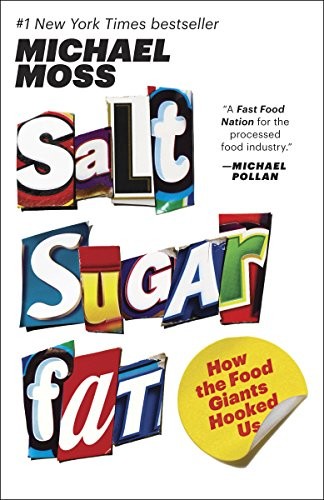
Salt Sugar Fat

by Michael Moss

View on Amazon →

"The food industry has long been deliberately creating products that override the brain's satiety signals, making it nearly impossible to resist."

Moss investigates how major food corporations engineer products to maximize consumption through strategic combinations of salt, sugar, and fat. This exposé reveals the scientific manipulation of taste and the deliberate creation of foods designed to override satiety signals. Moss interviews food executives who frankly admit their mission is maximizing profits, not promoting health.

Critical for understanding the intentional engineering of food addiction and the food industry's role in obesity epidemics. Moss' investigative journalism exposes tactics that harm public health while remaining technically legal. Essential reading for informed consumer decision-making.

  • Food companies intentionally engineer products for maximum consumption
  • Salt, sugar, and fat combinations exploit neurological vulnerabilities
  • Industry profit motives directly conflict with public health
  • Understanding food engineering empowers consumer choices
  • Could provide more practical alternatives and solutions
  • Some arguments border on oversimplification of complex food chemistry
  • Limited discussion of socioeconomic factors in food access

"Compellingly reveals the food industry's complicity in obesity epidemic"

The Washington Post, News Organization

"Executives reveal their only job is maximizing sales and profits"

Marion Nestle, Nutritionist, Food Policy Expert
07

Ultra-Processed People

by Chris van Tulleken

View on Amazon →

"Ultra-processed foods are fundamentally different from food. They are industrial formulations designed to be hyper-palatable and habit-forming."

Van Tulleken examines the scientific evidence demonstrating that ultra-processed foods cause obesity, depression, and disease independent of calories. This work explores the global food system's transformation and its health consequences, presenting research showing processed foods damage health through multiple mechanisms beyond simple caloric excess. The author combines personal experimentation with rigorous scientific analysis.

Contemporary essential work documenting the distinction between processed and ultra-processed foods and their distinct health impacts. Van Tulleken's scientific approach to understanding food processing's effects on human health provides crucial framework for dietary decision-making in modern food environments.

  • Ultra-processed foods cause disease through multiple mechanisms
  • Processing destroys nutritional integrity independent of ingredient changes
  • Food industry classification systems obscure health risks
  • Recognizing ultra-processing enables informed dietary choices
  • Focus on developed world food systems and access patterns
  • Limited exploration of practical alternatives in limited-access communities
  • Some conclusions about specific additives remain debated

"If you only read one diet or nutrition book in your life, make it this one"

Bee Wilson, Food Writer and Historian

"A devastating, witty and scholarly destruction of the shit food we eat and why"

Adam Rutherford, Scientist and Author
08

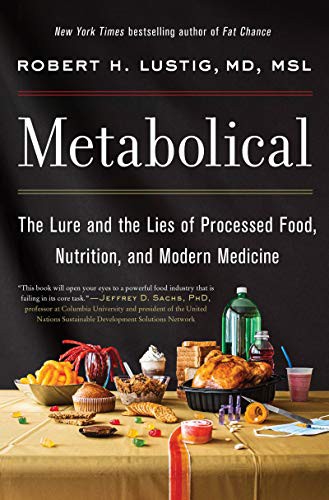
Metabolical

by Robert Lustig, M.D.

View on Amazon →

"Processed food is killing humanity. Real food is the only right choice for our health, our food supply, our wallets, and our planet."

Lustig exposes the manipulation underlying processed food, nutrition, and modern medicine, demonstrating how the metabolic dysfunction epidemic stems from deliberate food industry practices and public health failures. This work combines endocrinology expertise with investigative analysis of how corporate interests corrupt nutritional science. Lustig argues that metabolic health requires systemic change alongside individual dietary choices.

Essential for understanding metabolic disease etiology and the systemic factors driving the obesity and diabetes epidemic. Lustig's medical perspective combined with public health analysis provides comprehensive framework for understanding nutrition's relationship to health. His explanation of how manufactured food kills is both scientifically rigorous and urgently relevant.

  • Metabolic dysfunction results from processed food, not laziness
  • Sugar and processed ingredients corrupt hormonal regulation
  • Public health failures stem from industry influence on policy
  • Real food restoration requires individual and systemic change
  • Dense with biochemistry that challenges general readers
  • Systemic solutions remain somewhat abstract and difficult to implement
  • Emphasis on sugar could oversimplify other problematic ingredients

"Manufactured food is killing humanity and real food is the only right choice"

David Perlmutter, M.D., Neurologist and Author

"A modern Copernicus with the courage to tell the truth about processed food"

Dale Bredesen, M.D., Neuroscientist
09

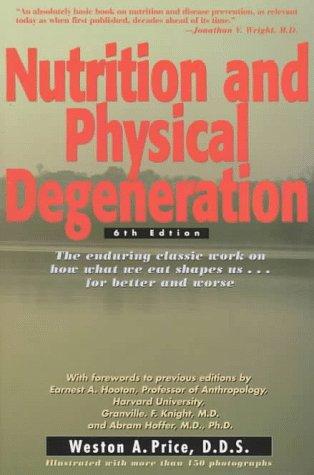
Nutrition and Physical Degeneration

by Weston A. Price, D.D.S.

View on Amazon →

"Nutrition is the foundation of the physical being and therefore of character and of the whole life of an individual and of a race."

Price documents his research comparing the health and physiology of isolated traditional populations with modern industrialized societies. This pioneering work, combining anthropology with dental and medical observations, reveals how dietary patterns profoundly affect physical development, dental health, and disease resistance. Price's extensive photographic documentation provides compelling visual evidence of nutrition's impact on human development.

Foundational work demonstrating the profound effects of traditional nutritional patterns on human health and development. Price's research established the concept that food quality directly impacts physical development and disease susceptibility. This work remains highly influential in nutritional medicine and ancestral health movements.

  • Traditional diets provided superior nutrition and health outcomes
  • Processed foods cause rapid physical and dental degeneration
  • Fat-soluble vitamins are essential for physical development
  • Nutrition affects not just disease but human development
  • Some conclusions based on limited sample sizes and modern analysis standards
  • Lacks contemporary biochemical explanations for observed phenomena
  • Cultural assumptions may influence some interpretations

"Pioneering work establishing nutrition's foundational role in health"

Nutritional Medicine Community, Practitioners and Researchers
10

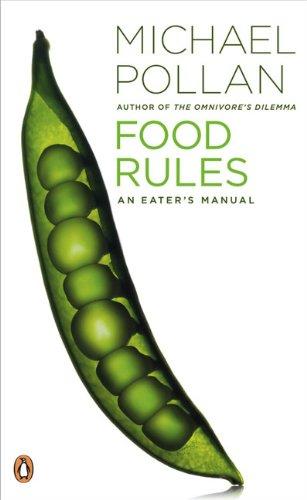
Food Rules

by Michael Pollan

View on Amazon →

"You are what you eat, but also where that food comes from and how it was grown and processed."

Pollan offers sixty-four simple rules for eating well, distilled from decades of nutritional science and food wisdom. This concise, beautifully illustrated guide provides practical guidance for navigating modern food environments while maintaining traditional eating principles. The rules combine cultural food wisdom, scientific evidence, and philosophical reflection into memorable principles for daily eating decisions.

Provides practical implementation framework for sound nutritional principles in a digestible, memorable format. Pollan's rules transform abstract nutritional knowledge into actionable guidance for everyday eating. Essential companion to his longer works, offering pragmatic daily application.

  • Simple food principles beat complex nutritional rules
  • Food tradition and culture guide better eating than theory
  • Eating involves choices about values and relationships
  • Mindful eating practices improve both health and satisfaction
  • Brevity prevents deep exploration of underlying principles
  • Rules assume certain food availability and economic access
  • May feel oversimplified for those seeking detailed nutritional guidance

"Practical wisdom distilled into memorable and actionable principles"

Food Culture Experts, Nutritionists and Food Writers
Back to all lists