The Essential Parenting Collection

Science-backed guides to raising emotionally intelligent, resilient, and compassionate children

This carefully selected collection represents the most transformative parenting literature, combining neuroscience, psychology, and practical wisdom. These books address the full spectrum of parenting challenges—from infancy through childhood—while emphasizing emotional development, secure attachment, and intrinsic motivation. Whether you're seeking communication strategies, understanding brain development, or exploring alternative parenting philosophies, these evidence-based guides provide research-backed approaches that respect both children's developing minds and parents' real-world constraints.

01

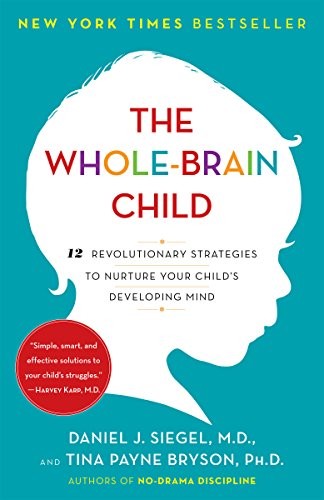
The Whole-Brain Child: 12 Revolutionary Strategies to Nurture Your Child's Developing Mind

by Daniel J. Siegel, MD and Tina Payne Bryson, PhD

View on Amazon →

"Children's brains are under construction, and this construction project will continue into the mid-20s. By understanding how children's brains work, we can respond to them in ways that build resilience and emotional intelligence rather than shame or punishment."

Neuroscience experts Siegel and Bryson explain how a child's brain develops and how parents can nurture integrated brain function. The book introduces 12 practical strategies for handling meltdowns, teaching emotional regulation, and fostering resilience. It combines cutting-edge neuroscience with accessible parenting advice, explaining why children behave as they do and how to respond effectively.

Revolutionary for parents because it explains the 'why' behind children's behavior from a neuroscientific perspective. Understanding that children's brains are still developing helps parents respond with empathy rather than frustration. The 12 strategies are evidence-based and immediately applicable to daily parenting challenges.

  • Children's brains are still developing, and the prefrontal cortex—responsible for logic and impulse control—isn't fully developed until the mid-20s
  • Integrating the left brain (logical) and right brain (emotional) through connection and narrative helps children develop emotional regulation
  • Responding to meltdowns with empathy while setting boundaries teaches children both emotional awareness and self-control
  • Narratives and stories help children integrate traumatic or confusing experiences into coherent understanding
  • Some readers find the neuroscience explanations overly complex; others want more depth
  • The strategies, while practical, aren't revolutionary—many align with traditional attachment parenting
  • Implementation requires significant parental emotional regulation and patience, which the book understates

"Essential reading for any parent. Understanding how children's brains work transforms how you parent."

Arianna Huffington, Wellness and Media Entrepreneur
02

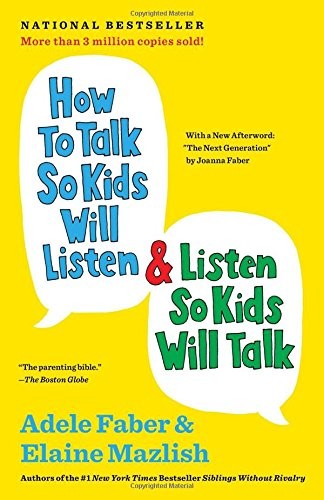
How to Talk So Kids Will Listen & Listen So Kids Will Talk

by Adele Faber and Elaine Mazlish

View on Amazon →

"The skills of listening, acknowledging feelings, and helping children problem-solve create a foundation for respectful relationships that lasts into adulthood."

A classic guide to improving parent-child communication through specific techniques that acknowledge children's feelings while setting boundaries. Faber and Mazlish provide tools for handling tantrums, encouraging cooperation, and fostering mutual respect. The book uses cartoons and real-life scenarios to illustrate how small changes in language create dramatic improvements in family dynamics.

A parenting classic for over 40 years because the communication strategies work remarkably well. Unlike books offering one-size-fits-all advice, this book teaches flexible approaches that respect both children's emotional needs and parental authority. The language techniques are simple yet profoundly effective.

  • Acknowledging children's feelings with words ('I see you're frustrated') doesn't mean you'll give in to demands, but it validates their emotional experience
  • Giving children choices within boundaries empowers them while maintaining parental guidance
  • Engaging children in problem-solving rather than imposing solutions builds cooperation and teaches decision-making
  • Praising effort and process rather than innate abilities builds intrinsic motivation and resilience
  • Some strategies can feel manipulative if not implemented with genuine respect for children's feelings
  • The book's examples are somewhat dated (published in 1980), though core principles remain relevant
  • Effectiveness varies depending on children's temperaments and parents' consistency in implementation

"One of the most influential parenting books ever written, with techniques that work across different ages and temperaments."

The New York Times, Major Publication
03

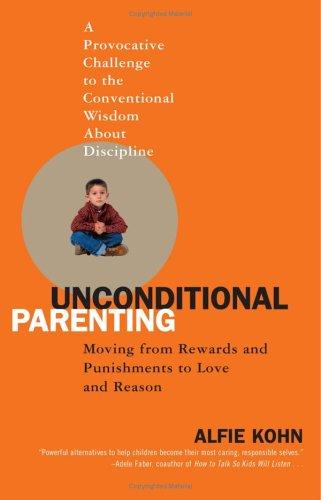
Unconditional Parenting: Moving from Rewards and Punishments to Love and Reason

by Alfie Kohn

View on Amazon →

"The question is not 'How can I get my kids to do what I want?' but rather 'How can I work with my kids to solve problems that affect us?'"

Educational psychologist Alfie Kohn challenges the effectiveness of traditional rewards and punishments, presenting evidence that conditional parenting—'do this and get that'—undermines intrinsic motivation and secure relationships. The book explores how to parent from a place of unconditional regard while still setting limits and guiding behavior.

Critically important counterpoint to behavior-modification approaches. Kohn's research-backed argument that rewards and punishments backfire for long-term development is liberating for parents questioning conventional discipline. The framework of unconditional regard fundamentally shifts parent-child relationships toward trust and authenticity.

  • Rewards and punishments condition children to behave to get rewards, not because they understand why behavior matters
  • Children whose parents use rewards are less likely to develop intrinsic motivation or internal moral compasses
  • Unconditional parenting—maintaining love and respect regardless of behavior—creates safety for genuine growth
  • Problem-solving together with children, rather than imposing solutions, teaches them both competence and moral reasoning
  • Critics argue that eliminating all consequences removes necessary accountability
  • Implementing unconditional parenting in a society that operates on rewards/punishments is challenging
  • Some readers find Kohn's critique of behavior modification so strong that practical implementation isn't addressed thoroughly

"Kohn articulates what loving parents intuitively know—that manipulation through rewards backfires. This book provides the evidence and the alternative."

Barbara Coloroso, Educational Consultant and Author
04

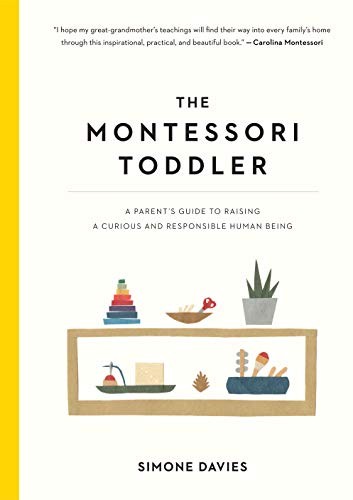
The Montessori Toddler: A Parent's Guide to Raising a Curious and Responsible Human Being

by Simone Davies

View on Amazon →

"The child's greatest need is the freedom to develop naturally within an environment thoughtfully prepared for him by a devoted adult."

Montessori educator Simone Davies translates Montessori principles for home use, showing parents how to create an environment where toddlers develop independence, concentration, and responsibility. The book covers preparing the home environment, choosing appropriate activities, handling challenges, and fostering the Montessori values of respect and self-direction.

Essential for parents seeking to foster independence and intrinsic motivation from infancy. The Montessori approach, with its emphasis on following the child's interests and fostering self-sufficiency, contrasts sharply with more directive parenting. Davies makes accessible what was previously known mainly to Montessori school parents.

  • A prepared environment with child-sized tools and accessible activities encourages independence and responsibility
  • Following the child's natural interests and pace of learning builds intrinsic motivation and love of learning
  • Allowing children to work through challenges with minimal adult intervention builds problem-solving skills and confidence
  • Montessori principles—order, respect, freedom within limits—create cooperative, self-directed children
  • The Montessori approach requires significant investment in preparing the home environment
  • Some parents find the minimal-intervention approach conflicts with safety concerns or their cultural values
  • The approach can feel rigid if interpreted too strictly, losing the flexibility that Montessori principles actually allow

"Davies beautifully bridges home and school, making Montessori principles accessible and practical for any parent seeking to raise independent, joyful learners."

Ronda Helseth, Montessori Educator
05

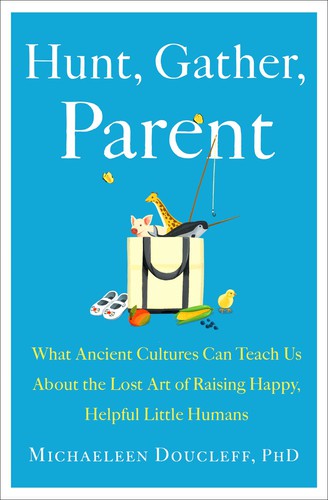
Hunt, Gather, Parent: What Ancient Cultures Can Teach Us About the Lost Art of Raising Happy, Helpful Little Humans

by Michaeleen Doucleff

View on Amazon →

"The key insight is that children become responsible when they have genuine responsibilities—not chores assigned for compliance, but actual contributions to family wellbeing that children recognize as necessary."

NPR parenting correspondent Michaeleen Doucleff spent years in Morocco, Japan, and other cultures studying how parents raise cooperative, responsible children with minimal whining or power struggles. The book reveals parenting principles from cultures worldwide that develop resilience, responsibility, and intrinsic motivation. Doucleff combines anthropological research with practical strategies.

Offers perspectives beyond Western developmental psychology, showing that parenting approaches emphasizing resilience, contribution to family, and play-based learning produce well-adjusted children across cultures. The research-backed strategies feel fresh and are often easier to implement than Western approaches focused on intensive parental involvement.

  • Children in many cultures are given real responsibility for family functioning, which builds competence and self-esteem
  • Play—especially outdoor, unstructured play—is essential for developing resilience, creativity, and problem-solving
  • Parents who model the behavior they want to see, rather than endlessly instructing, raise children who naturally follow suit
  • Community and extended family involvement in childcare reduces parental burnout and provides children with multiple secure attachments
  • The anthropological examples are necessarily brief and may oversimplify complex cultural practices
  • Implementing strategies from non-Western cultures in individualistic Western societies requires significant adaptation
  • The research is relatively recent and long-term outcome data for implementation in Western families isn't yet available

"Doucleff reveals how other cultures solve parenting challenges we thought were unique to the West. The strategies work because they're developmentally aligned."

Laura Markham, PhD, Clinical Psychologist and Parenting Expert
06

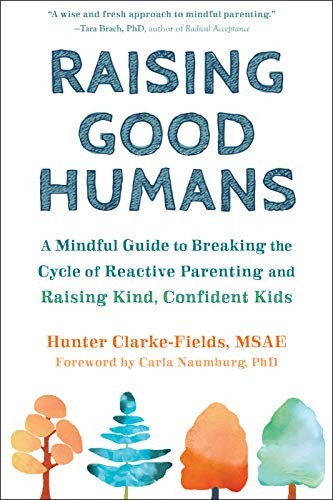
Raising Good Humans: A Mindful Guide to Breaking the Cycle of Reactive Parenting and Raising Kind, Confident Kids

by Hunter Clarke-Fields, MSAE

View on Amazon →

"Our children are mirrors showing us our own patterns and triggers. By becoming aware of our reactions, we have the power to choose different responses."

Mindfulness educator Hunter Clarke-Fields provides practical strategies for breaking reactive parenting patterns and creating more intentional responses to children's behavior. The book combines mindfulness practices with attachment-based parenting, addressing common triggers, building emotional regulation in parents, and fostering kindness and confidence in children.

Uniquely addresses parental emotional regulation as essential to effective parenting—you can't model calm regulation if you're dysregulated. Clarke-Fields provides meditation and mindfulness practices that are short, realistic, and integrate into daily life. This book is essential for parents recognizing their own reactive patterns.

  • Parental emotional regulation directly influences children's emotional development and behavior
  • Mindfulness practices help parents pause before reacting, creating space for intentional responses
  • Breaking intergenerational patterns of reactivity requires awareness of triggers and compassionate self-understanding
  • Regular mindfulness practice reduces parental stress and improves parent-child relationships measurably
  • Mindfulness practices, while evidence-based, require consistent practice that busy parents may struggle to maintain
  • The book focuses on parental transformation, which, while powerful, is demanding work
  • Some readers want more specific behavioral strategies beyond mindfulness for addressing particular challenges

"Hunter's mindful parenting approach recognizes that our greatest tool in raising healthy children is our own awareness and presence."

Dr. Shefali Tsabary, Clinical Psychologist and Parenting Expert
07

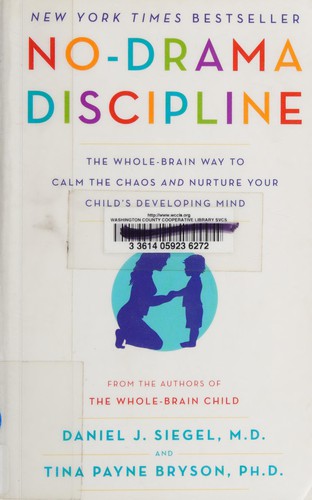
No-Drama Discipline: The Whole-Brain Way to Calm the Chaos and Nurture Your Child's Developing Mind

by Daniel J. Siegel, MD and Tina Payne Bryson, PhD

View on Amazon →

"Discipline isn't about punishing children; it's about teaching them. We discipline our children so they will learn, not to make them suffer."

Siegel and Bryson extend their Whole-Brain Child work with a discipline-focused guide showing how to address misbehavior in ways that teach rather than shame. The book explains why traditional punishment fails and provides brain-based strategies for responding to misbehavior while maintaining connection and teaching responsibility.

Addresses the perennial parenting challenge of discipline from a neuroscience perspective. Rather than asking 'How do I get my child to obey?', the book asks 'How do I use this misbehavior as an opportunity for learning?' This reframe transforms discipline from power struggle to teaching moment.

  • Traditional punishment activates the survival brain rather than the learning brain, making children defensive rather than reflective
  • Responding to misbehavior by connecting first—acknowledging feelings—and then redirecting teaches both emotional intelligence and responsibility
  • The '4 S's' of supporting a child's developing brain during discipline: stays calm, stays present, shows support, and shows that the relationship is safe
  • Children learn to internalize values when they understand the reasoning behind rules, not through fear of punishment
  • Staying calm and connected during misbehavior requires significant parental emotional regulation
  • The approach is time-intensive and can feel impossible when parenting multiple children or under stress
  • Some parents worry that explaining reasoning teaches children to negotiate rather than obey

"This book transformed how I think about discipline—moving from punishment to teaching, from compliance to understanding."

Dr. Laura Markham, Clinical Psychologist
08

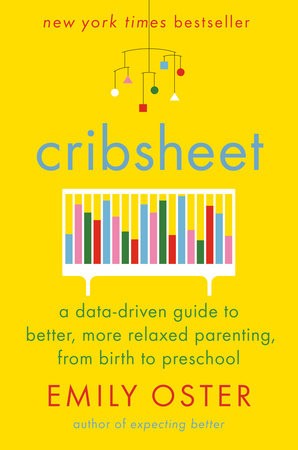
Cribsheet: A Data-Driven Guide to Better, More Relaxed Parenting, from Birth to Preschool

by Emily Oster

View on Amazon →

"The goal is not to find 'the right way' to parent, but to make informed choices that align with your values and your family's needs."

Economist Emily Oster applies data analysis to common parenting decisions—sleep training, pacifiers, breast vs. bottle feeding—separating scientific evidence from parenting myths. The book empowers parents to make informed choices aligned with their values rather than following dogmatic advice, covering every major parenting decision in the early years.

Liberating for parents overwhelmed by conflicting advice. Oster's training in interpreting research data means she can separate what science actually supports from what's based on tradition or marketing. The book respects parental autonomy while providing evidence, allowing parents to make decisions that fit their families.

  • Many parenting recommendations are based on tradition or single studies, not strong scientific consensus
  • Sleep training, pacifier use, and feeding methods have evidence supporting multiple approaches—no single 'right' way
  • Understanding the actual evidence behind recommendations empowers parents to choose approaches fitting their family
  • Parental stress, sleep, and wellbeing often matter more for child outcomes than which specific method you choose
  • Some parents find the focus on data limiting—parenting involves values and intuition beyond data analysis
  • The book covers early childhood primarily; limited guidance on older children
  • Oster sometimes presents uncertain evidence with too much confidence in one direction

"Cribsheet is refreshingly practical, using data to liberate parents from parenting dogma and guide evidence-based decisions."

The New York Times, Major Publication
09

Parenting from the Inside Out: How a Deeper Self-Understanding Can Help You Raise Children Who Thrive

by Daniel J. Siegel, MD and Mary Hartzell, M.Ed.

View on Amazon →

"To help our children thrive, we must first understand how our own past shapes our present parenting."

Siegel and Hartzell guide parents toward understanding their own childhood experiences and how these shape their parenting. Through self-reflection exercises, the book helps parents break inherited patterns, understand triggers, and develop an integrated sense of self that translates to more effective and compassionate parenting.

Essential for parents realizing they're repeating their parents' patterns or struggling to parent differently than they were parented. The book's focus on parental self-understanding and healing is profound—changing how you parent requires understanding yourself first. This is foundational work that amplifies effectiveness of other parenting strategies.

  • Parents' own childhood experiences and attachment patterns directly influence how they respond to their children
  • Developing a coherent narrative about your own life and family history helps you parent intentionally rather than reactively
  • Understanding your triggers—what about your child's behavior provokes strong reactions—reveals unhealed wounds from your own past
  • Intentional parenting requires continuous self-reflection and willingness to examine your own patterns
  • The self-reflection exercises require significant emotional work and introspection
  • For parents with unresolved trauma, the work may require therapeutic support beyond what the book can provide
  • The focus on self-understanding, while important, is less immediately practical than other parenting books

"Siegel and Hartzell show us that to raise healthy children, we must first understand ourselves. This book is essential inner work."

Harville Hendrix, Relationship Therapist and Author
10

The Gardener and the Carpenter: What the New Science of Child Development Tells Us About the Relationship Between Parents and Children

by Alison Gopnik

View on Amazon →

"The job of parents is not to shape our children into predetermined forms, but to give our children chances and to see what wonderful and unexpected things they do with them."

Developmental psychologist Alison Gopnik challenges the Western parenting model of parents as 'carpenters' shaping children toward predetermined outcomes. She presents evidence that parents function more like 'gardeners'—creating conditions for optimal growth while allowing children to develop according to their nature. The book explores what science reveals about children's learning, play, and autonomy.

Fundamentally reframes the parenting project in liberating ways. Rather than viewing parenting as sculpting your child toward your goals, gardening metaphor acknowledges children as autonomous beings with their own interests and developmental trajectories. This perspective reduces parental anxiety while potentially improving outcomes.

  • Children's brains are designed for variation and exploration; trying to shape them toward predetermined outcomes often backfires
  • Play—particularly unstructured, risky play—is how children learn, develop resilience, and discover their interests
  • Secure attachment is foundational, but overly involved, directive parenting can undermine autonomy and intrinsic motivation
  • Evolutionary perspective suggests children are designed to learn through exploration, imitation, and play rather than direct instruction
  • The gardening metaphor, while poetic, may leave parents uncertain about what 'gardening' actually looks like in practice
  • Gopnik's emphasis on autonomy can be misinterpreted as permissiveness or lack of boundaries
  • The evolutionary psychology framework, while evidence-based, is sometimes reductionist about complex human development

"Gopnik's revolutionary insights into child development will transform how parents think about their role."

Steven Pinker, Cognitive Scientist and Author
Back to all lists