The Personal Finance Canon: 10 Books That Will Transform Your Relationship with Money

Essential reading for building wealth, achieving financial independence, and mastering the psychology of money

Personal finance is less about spreadsheets and stock picks than it is about behavior, psychology, and values. The ten books assembled here represent the most influential and enduring works in the field—spanning budgeting, investing, debt elimination, and the deeper question of what money actually means in a well-lived life. Whether you are just starting out or recalibrating after decades of earning, these titles provide the intellectual and practical foundation for lasting financial health.

01

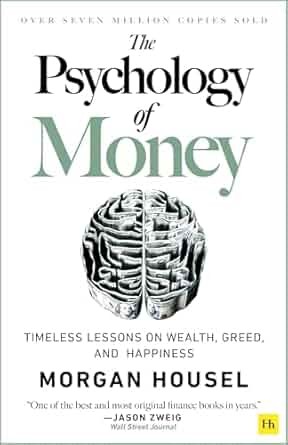
The Psychology of Money

by Morgan Housel

View on Amazon →

"Money's greatest intrinsic value—and this can't be overstated—is its ability to give you control over your time."

Through 19 short stories, Housel explores the strange and often irrational ways people think about money. The book argues that financial success is driven far more by behavior and temperament than by technical knowledge or intelligence, making it one of the most accessible and widely recommended finance books of the last decade.

Housel reframes personal finance as a psychological discipline rather than a mathematical one. This perspective shift is foundational—understanding why you make the financial decisions you do is the prerequisite to making better ones. It consistently ranks as the #1 personal finance book on bestseller lists worldwide.

  • Financial success depends more on how you behave than what you know about markets or investing.
  • Compounding works best when you give it long, uninterrupted periods of time—patience is your greatest asset.
  • Wealth is what you don't see: the cars not bought, the upgrades declined, the money saved and invested.
  • Having enough is a powerful concept—knowing when to stop moving the goalposts prevents lifestyle inflation from eroding real wealth.
  • The book lacks specific actionable strategies for investing or financial planning, focusing instead on behavioral principles without concrete implementation steps.
  • Some readers find the anecdotal, story-based approach less rigorous than a more technical treatment of financial concepts would provide.
  • Critics argue the book oversimplifies complex financial decisions by attributing most outcomes to behavior and psychology rather than acknowledging the role of systemic advantage and luck.

"One of the best finance books I've read. Morgan Housel makes complex ideas feel simple and obvious."

Mark Cuban, Entrepreneur and investor

"Everyone should read this book. It's one of the best and most original finance books in years."

James Clear, Author of Atomic Habits

"Morgan Housel is one of the finance world's great storytellers. The Psychology of Money is essential reading."

Howard Marks, Co-Chairman, Oaktree Capital Management
02

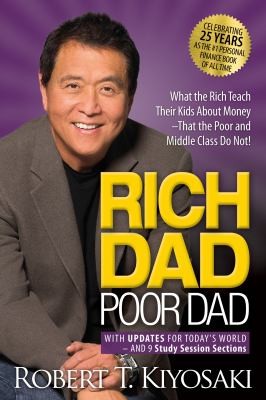
Rich Dad Poor Dad

by Robert T. Kiyosaki

View on Amazon →

"The poor and the middle-class work for money. The rich have money work for them."

Kiyosaki contrasts the financial philosophies of his two father figures—his biological father (the 'poor dad') who valued job security and formal education, and his best friend's father (the 'rich dad') who valued financial literacy and asset-building. The book challenges conventional wisdom about earning, saving, and investing.

As the #1 bestselling personal finance book of all time, Rich Dad Poor Dad has introduced millions of readers to the distinction between assets and liabilities. Its core insight—that financial education is more valuable than a high salary—remains a gateway concept for anyone beginning their financial journey.

  • Understand the difference between assets and liabilities: assets put money in your pocket, liabilities take money out.
  • Financial literacy—not a high income—is the foundation of wealth building.
  • The fear of losing money keeps most people trapped in the rat race; overcoming that fear is essential to financial growth.
  • Mind your own business: focus on building and acquiring income-generating assets alongside your day job.
  • The book's primary business lessons are drawn from the author's personal experiences (the 'rich dad' stories), which critics argue are anecdotal and lack empirical validation or academic rigor.
  • Financial experts have critiqued the book's investment advice, particularly regarding real estate investing strategies and the treatment of liabilities, as oversimplified and occasionally misleading.
  • Some reviewers note that the 'rich dad' lessons focus disproportionately on real estate while dismissing other proven wealth-building approaches, limiting the book's applicability to readers not interested in property investment.

"Rich Dad Poor Dad is a starting point for anyone who wants to gain control of their financial future."

Will Smith, Actor and entrepreneur

"Required reading for anyone who wants to understand how money really works."

Daymond John, Founder, FUBU; Shark Tank investor

"Featured on the Oprah Winfrey Show as a must-read for financial empowerment."

Oprah Winfrey, Media executive and philanthropist
03

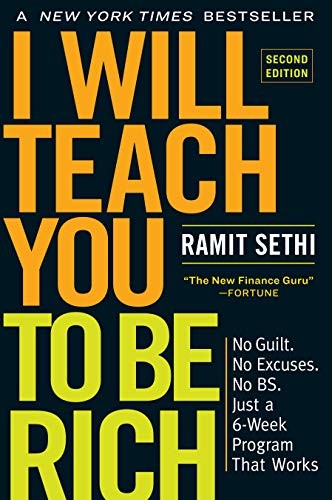
I Will Teach You to Be Rich

by Ramit Sethi

View on Amazon →

"Frugality, quite simply, is about choosing the things you love enough to spend extravagantly on—and then cutting costs mercilessly on the things you don't love."

Sethi delivers a no-nonsense, six-week personal finance program covering banking, saving, budgeting, and investing. The book rejects deprivation-based budgeting in favor of conscious spending—cutting ruthlessly on things you don't care about so you can spend extravagantly on things you love.

This is the single best action-oriented personal finance book for people in their 20s and 30s. Sethi provides specific scripts for negotiating fees, automating finances, and choosing the right accounts. Its practical, guilt-free approach has made it a perennial bestseller and a favorite recommendation among financial advisors.

  • Automate your finances so that saving, investing, and bill-paying happen without willpower or manual effort.
  • Conscious spending means directing money toward what you genuinely value and eliminating waste elsewhere.
  • Getting started matters more than optimizing—a good-enough investment plan executed today beats a perfect one never started.
  • Negotiate your salary, bank fees, and recurring bills—small wins compound into thousands of dollars over time.
  • The six-week timeframe is unrealistic for implementing complex financial habits; readers often feel pressured by the condensed timeline despite Sethi's intentions to make it accessible.
  • Some critics argue that the book's emphasis on conscious spending and automation assumes readers already have stable income and emergency savings, limiting its relevance for those living paycheck-to-paycheck.
  • The investment section is relatively brief and lacks depth compared to dedicated investing books, potentially leaving readers wanting more sophisticated portfolio construction guidance.

"Ramit Sethi is a rock star. This book is packed with tips that actually work."

Tim Ferriss, Author of The 4-Hour Workweek

"Ramit's approach is refreshing—he actually tells you what to do, step by step."

Seth Godin, Author and entrepreneur

"Named one of the best personal finance books for its practical, action-oriented approach."

CNBC Select, Financial media
04

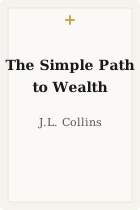
The Simple Path to Wealth

by J.L. Collins

View on Amazon →

"You own the things you own and they in turn own you. Money can buy many things, but nothing more valuable than your freedom."

Originally written as a series of letters to his daughter, Collins distills decades of investing wisdom into a clear, no-jargon guide to financial independence. The book advocates a strikingly simple strategy: spend less than you earn, avoid debt, and invest in low-cost index funds.

Collins' book has become the unofficial bible of the FIRE (Financial Independence, Retire Early) movement. Its power lies in its radical simplicity—stripping away the complexity that the financial industry profits from and showing that wealth-building need not be complicated. It is consistently cited as the single best book for someone who wants to understand investing.

  • Invest in a single, low-cost total stock market index fund and let compounding do the heavy lifting over decades.
  • Debt is a wealth destroyer—eliminate it aggressively before focusing on investment growth.
  • F-You Money is the ultimate financial goal: enough wealth to walk away from any situation that compromises your values or happiness.
  • The financial industry profits from complexity; simplicity is both the best strategy and the hardest to sell.
  • The book's philosophical focus on freedom and index investing leaves limited practical guidance for tax-loss harvesting, account types, and specific implementation details that readers may need.
  • Some critics note that Collins' personal lifestyle examples (van-dwelling and extreme frugality) may alienate readers with different values, making the philosophy feel less universally applicable.
  • The book assumes readers are comfortable with a passive investing strategy; those interested in more active portfolio management or alternative investments may find the approach oversimplified.

"JL Collins wrote the foreword-worthy book on investing. This is the one I recommend to everyone."

Mr. Money Mustache (Pete Adeney), FIRE movement pioneer and blogger

"A clear, accessible, and powerful guide to financial independence."

Vicki Robin, Author of Your Money or Your Life

"Widely regarded as one of the best introductions to index investing and the philosophy behind it."

The Bogleheads community, Investment forum inspired by John C. Bogle
05

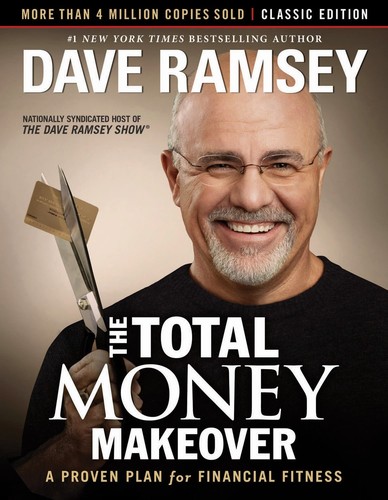
The Total Money Makeover

by Dave Ramsey

View on Amazon →

"If you will live like no one else, later you can live like no one else."

Ramsey presents a step-by-step plan for getting out of debt and building wealth, structured around his famous 'Baby Steps' framework. The book emphasizes gazelle-intensity debt payoff, emergency fund building, and a cash-only lifestyle as the foundation for long-term financial fitness.

For anyone buried in debt, Ramsey's aggressive, no-excuses approach has proven transformative for millions. The Baby Steps framework provides a clear, sequential roadmap that removes decision paralysis. While some of his investment advice is debated, his debt-elimination methodology is widely considered the gold standard.

  • Build a $1,000 starter emergency fund before attacking any debt—this prevents new debt from derailing your progress.
  • Use the debt snowball method: pay off debts smallest to largest for psychological momentum, regardless of interest rates.
  • Winning with money is 80% behavior and 20% head knowledge—discipline matters more than financial sophistication.
  • Avoid debt entirely as a lifestyle choice: if you can't pay cash, you can't afford it.
  • Financial advisors and economists have criticized Ramsey's debt snowball method, noting that mathematically, the debt avalanche method (paying highest interest first) results in less total interest paid, making the emotional boost of the snowball inefficient.
  • The book's advice to avoid all debt and insist on cash-only living is criticized as overly rigid and potentially suboptimal for building credit scores, leveraging low-interest debt, or achieving other financial goals.
  • Critics note that Ramsey's investment recommendations (avoiding index funds in favor of mutual funds with higher fees) contradict modern portfolio theory and cost-conscious investing principles.

"My dad's Baby Steps changed our family's life and have helped millions of others get out of debt."

Rachel Cruze, Author and financial educator

"The Total Money Makeover gives people a proven plan to win with money—it's the playbook for financial peace."

Chris Hogan, Author of Everyday Millionaires

"A perennial bestseller that has helped millions of Americans eliminate debt and build wealth."

USA Today, National media
06

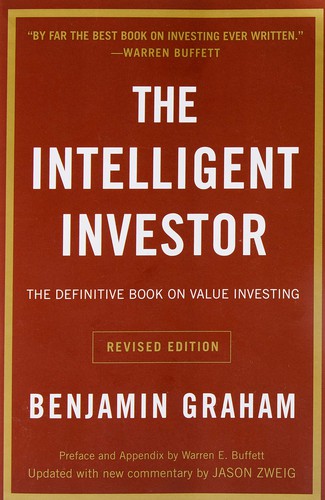
The Intelligent Investor

by Benjamin Graham

View on Amazon →

"In the short run, the market is a voting machine but in the long run, it is a weighing machine."

First published in 1949, Graham's masterwork lays out the principles of value investing—buying securities at prices below their intrinsic worth and maintaining the emotional discipline to hold through market volatility. The revised edition includes updated commentary by financial journalist Jason Zweig.

Warren Buffett calls it 'by far the best book on investing ever written.' Graham's concepts—margin of safety, Mr. Market, and the distinction between investing and speculation—form the intellectual bedrock of modern investment theory. No serious investor's education is complete without it.

  • Always invest with a margin of safety—buy assets for less than their intrinsic value to protect against errors in judgment.
  • Mr. Market is your servant, not your guide: use the market's emotional swings to buy low and sell high rather than following the crowd.
  • Distinguish between investing and speculation—true investing requires thorough analysis, safety of principal, and adequate return.
  • Emotional discipline during market downturns is more important than picking the right stocks.
  • The book is dense and technical, requiring financial knowledge to understand concepts like intrinsic value calculation and margin of safety, making it less accessible than some newer personal finance books.
  • Graham's examples rely heavily on outdated historical data and company valuations, and some critics argue the specific analytical frameworks are less relevant in modern, efficient markets.
  • The original 1949 edition reflects mid-20th century conditions; while Jason Zweig's updated commentary helps, some fundamental assumptions about market inefficiencies and company analysis have shifted significantly.

"By far the best book on investing ever written."

Warren Buffett, Chairman, Berkshire Hathaway

"Graham's principles are as relevant today as when he first wrote them. This book is timeless."

Jason Zweig, Wall Street Journal columnist

"The Intelligent Investor is the definitive text on value investing and sound financial principles."

John C. Bogle, Founder, Vanguard Group
07

The Millionaire Next Door

by Thomas J. Stanley & William D. Danko

View on Amazon →

"If you make a good income each year and spend it all, you are not getting wealthier. You are just living high. Wealth is what you accumulate, not what you spend."

Based on extensive research into America's millionaires, Stanley and Danko reveal that most wealthy individuals are not flashy spenders but disciplined savers living well below their means. The book shatters the popular image of millionaires and replaces it with a data-driven portrait of frugality, hard work, and strategic investing.

This book fundamentally redefines what wealth looks like. Its research-backed insights expose the gap between perceived and actual wealth, demonstrating that high income does not equal high net worth. The profiles of real millionaires provide a practical, achievable model for wealth accumulation that anyone can follow.

  • Most millionaires live far below their means—frugality, not high income, is the primary driver of wealth accumulation.
  • Wealth is measured by net worth, not income or lifestyle; many high earners are actually poor savers.
  • Economically productive time allocation matters: wealthy people spend more time planning finances than consuming status goods.
  • Providing excessive financial gifts to adult children (economic outpatient care) undermines their ability to build wealth independently.
  • The research is based on outdated millionaire profiles from the 1980s-90s; wealth-building patterns have shifted significantly with internet businesses, technology wealth, and modern market conditions.
  • Critics argue the book undervalues the role of inheritance, intergenerational wealth transfer, and systemic advantages, implying that all millionaires achieved wealth purely through discipline and frugality regardless of background.
  • Some readers find the repetitive case studies and data analysis tedious, and the core insight—that wealthy people save more than they spend—is relatively intuitive and could be conveyed more concisely.

"The ideas are simple but powerful: spend less than what you make, save money every month."

Lawrence Pon, Certified Financial Planner

"A groundbreaking study that spent three consecutive years on the New York Times bestseller list."

The New York Times, National media

"One of the most important books ever written on building real, lasting wealth."

Dave Ramsey, Financial educator and author
08

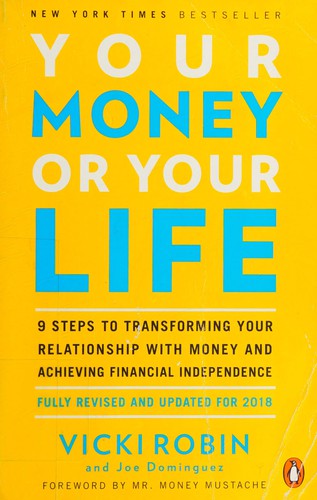
Your Money or Your Life

by Vicki Robin & Joe Dominguez

View on Amazon →

"Money is something we choose to trade our life energy for."

Robin and Dominguez present a nine-step program for transforming your relationship with money by reframing it as 'life energy'—the hours of your life traded in exchange for income. The book guides readers to calculate the true cost of their spending, align expenses with values, and ultimately achieve financial independence.

First published in 1992, this book essentially launched the modern financial independence movement. Its philosophical depth sets it apart from purely tactical finance books—it asks not just how to manage money, but why. The life-energy framework remains one of the most powerful mental models for evaluating spending decisions.

  • Calculate your real hourly wage by factoring in commuting, work clothes, decompression time, and other hidden costs of employment.
  • Track every cent that enters or leaves your life to build genuine awareness of your spending patterns.
  • Evaluate each expense by asking whether it aligns with your values and whether it delivered fulfillment proportional to the life energy spent.
  • Financial independence is achieved when passive investment income exceeds monthly expenses—the crossover point.
  • The nine-step program is philosophical and introspective rather than procedural; readers often struggle to translate the life-energy framework into concrete financial actions without additional practical guidance.
  • The tracking exercises (especially tracking every single expenditure) are labor-intensive and impractical for many people, contributing to high abandonment rates even among motivated readers.
  • Critics argue the book is somewhat dated (first published 1992) and doesn't adequately address modern financial tools, digital spending, subscription services, or automated finances that have become ubiquitous.

"Wrote the foreword to the updated edition, calling it the foundational text of the financial independence movement."

Mr. Money Mustache (Pete Adeney), FIRE movement pioneer and blogger

"Featured on the Oprah Winfrey Show as a life-changing guide to rethinking money."

Oprah Winfrey, Media executive and philanthropist

"A perennial bestseller that has been called the most influential personal finance book of its generation."

The New York Times, National media
09

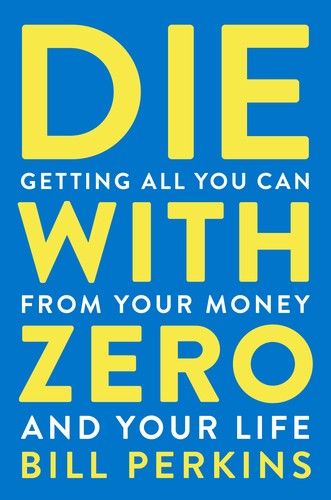
Die with Zero

by Bill Perkins

View on Amazon →

"In the end, the business of life is the acquisition of memories."

Perkins challenges the conventional wisdom of relentless saving by arguing that the purpose of money is to fund life experiences, not to accumulate the largest possible estate. The book provides a framework for optimally allocating money across your lifetime so you maximize fulfillment rather than dying with unspent wealth.

This book is the essential counterbalance to the 'save everything' mentality prevalent in personal finance. Perkins forces readers to confront the opportunity cost of over-saving: missed experiences, delayed generosity, and a life optimized for a future that may never arrive. It is especially valuable for disciplined savers who need permission to enjoy their wealth.

  • Time-bucket your life experiences: some adventures have expiration dates tied to health, age, and energy levels.
  • Give money to your children and charities while you are alive and they can benefit most, rather than through inheritance.
  • Your peak earning years and your peak experience years rarely overlap—plan accordingly rather than deferring all enjoyment.
  • Calculate your 'net worth at death' target: dying with zero means you perfectly converted your earnings into lived experiences.
  • The 'die with zero' concept is impractical for most people; it assumes predictable lifespans and health trajectories, and creates anxiety about running out of money prematurely, which contradicts core financial security principles.
  • Critics argue the book is written for affluent readers who have already achieved significant wealth; the framework provides little value to those struggling to cover basic living expenses or build emergency savings.
  • Some financial planners note that the framework for calculating 'life experiences by age' is subjective and difficult to implement precisely, making the book more motivational than actionable.

"A provocative and necessary book that challenges everything you think you know about saving and spending."

Graham Duncan, Co-founder, East Rock Capital

"Bill Perkins makes a compelling case for rethinking how we allocate the most finite resource we have: time."

Annie Duke, Author of Thinking in Bets

"Named one of the must-read personal finance books for its unconventional approach to wealth and fulfillment."

CNBC, Financial media
10

The Bogleheads' Guide to Investing

by Taylor Larimore, Mel Lindauer & Michael LeBoeuf

View on Amazon →

"Index investing is an investment strategy that Walter Mitty would love. It takes very little investment knowledge, no skill, practically no time or effort—and outperforms about 80 percent of all investors."

Written by devoted followers of Vanguard founder John C. Bogle, this comprehensive guide translates the Bogleheads' investing philosophy into a practical, step-by-step manual. Covering everything from asset allocation to tax-efficient investing, it makes the case that a simple portfolio of low-cost index funds is the optimal strategy for the vast majority of investors.

This is the most complete and practical implementation guide for passive index investing. While The Intelligent Investor provides the theoretical foundation and The Simple Path to Wealth offers the philosophical case, the Bogleheads' Guide delivers the detailed how-to: which accounts to open, how to allocate across asset classes, and how to rebalance over time.

  • Keep investing costs as low as possible—expense ratios, trading fees, and taxes are the primary controllable drag on returns.
  • Diversify broadly across asset classes and geographies using index funds rather than trying to pick individual winners.
  • Start investing early, contribute consistently, and never try to time the market—time in the market beats timing the market.
  • Choose tax-advantaged accounts strategically and practice tax-loss harvesting to maximize after-tax returns.
  • The book is dense and comprehensive, covering extensive topics from asset allocation to tax strategy, which can overwhelm beginners seeking a simpler introduction to investing fundamentals.
  • Critics note that while the Bogleheads philosophy works well for long-term buy-and-hold investors, the book offers limited guidance for those interested in tactical rebalancing, dynamic asset allocation, or alternative investments.
  • Some readers find the detailed historical performance data and mathematical discussions feel dated or overly technical, preferring a more narrative-driven approach to learning investment concepts.

"Wrote the foreword, endorsing the book as a faithful and practical expression of his investing philosophy."

John C. Bogle, Founder, Vanguard Group

"A superb primer on investing that deserves a place on every investor's bookshelf."

William Bernstein, Author of The Four Pillars of Investing

"Recommended as one of the best first investing books for beginners and experienced investors alike."

US News & World Report, Financial media
Back to all lists