10 Best Politics Books

Essential Readings in Political Philosophy and Theory

A curated collection of the most influential works in political thought, spanning from ancient philosophy to contemporary analysis. These books explore fundamental questions about governance, power, democracy, liberty, and the nature of political systems. From classical texts that shaped Western thought to modern examinations of totalitarianism and institutional failure, these works provide essential frameworks for understanding politics.

01

The Prince

by Niccolò Machiavelli

View on Amazon →

"Everyone sees what you appear to be, few experience what you really are."

Written in the 16th century, this seminal work presents a pragmatic view of power and statecraft that breaks from medieval moral philosophy. Machiavelli argues that effective rulers must sometimes act against traditional morality to maintain power and protect the state. His emphasis on practical results over idealistic principles fundamentally changed political thought.

Essential for understanding realist approaches to politics and power. Machiavelli's insights into human nature and leadership remain relevant across centuries. The book's unflinching examination of how politics actually operates—rather than how it should operate—makes it indispensable for anyone seeking to understand political systems.

  • Power maintenance requires pragmatic decision-making, not moral idealism
  • Fear can be more effective than love in governance
  • Understanding human nature is crucial for political success
  • Appearance and perception matter more than underlying reality in politics
  • Promotes an amoral approach to leadership that some view as dangerous
  • Reflects the political context of Renaissance Italy rather than universal principles
  • Often misinterpreted as advocating for tyranny and ruthlessness without nuance

"A handbook for tyrants and a manual of political realism that cannot be ignored."

Bertrand Russell, Philosopher and historian

"This is the only book of politics that is worth anything."

Napoleon Bonaparte, Military leader and emperor

02

Democracy in America

by Alexis de Tocqueville

View on Amazon →

"The greatness of America lies not in being more enlightened than any other nation, but rather in her ability to repair her faults."

This 19th-century analysis of American democracy remains one of the most insightful examinations of democratic societies. Tocqueville, a French political thinker, traveled through America and observed both the strengths and potential dangers of democratic systems. His work explores how democracy shapes society, culture, and individual behavior.

Tocqueville provides unparalleled insights into how democratic societies actually function beyond their ideals. His observations about the tyranny of the majority, the role of civil associations, and the relationship between democracy and equality remain deeply relevant. Understanding his perspective is crucial for comprehending modern democracies.

  • Democracy relies on active participation from citizens and civil society
  • The tyranny of the majority poses a serious threat to democracy
  • Social mobility and equality are defining features of democratic societies
  • Religion and morality are essential foundations for democracy to function properly
  • Written from a 19th-century perspective, some observations are dated
  • Tocqueville's views on slavery and race are products of his time
  • His analysis may romanticize certain aspects of American democracy

"The most profound and penetrating analysis of democracy that has ever been written."

Isaiah Berlin, Political philosopher

"A work of such clarity and insight that it deserves the attention of every thoughtful citizen."

James Madison, Founding Father of the United States
03

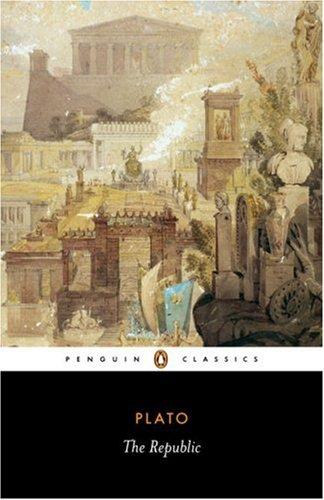
The Republic

by Plato

View on Amazon →

"Until philosophers are kings, or kings are philosophers, cities will never cease from evils."

The foundational text of Western political philosophy, Plato's Republic explores the nature of justice, the ideal state, and the philosopher's role in governance. Through dialogues featuring Socrates, Plato examines how society should be organized and what makes a just political system. The work remains remarkably relevant to contemporary political debates.

As the origin point of Western political philosophy, The Republic is essential for understanding the entire tradition. Plato's exploration of justice, leadership, and the ideal state established frameworks that all subsequent political thought builds upon. Its examination of competing visions of government remains profoundly instructive.

  • Justice is both a personal and social principle requiring harmony of all parts
  • Different individuals are suited for different roles in society
  • Education is central to creating virtuous citizens and rulers
  • The pursuit of wealth and power corrupts the soul and state
  • Proposes an authoritarian system with limited individual freedom
  • The caste-based system described is inherently undemocratic
  • Some arguments about human nature and society are considered outdated
  • The complete suppression of private life is ethically problematic

"The safest general characterization of the Western philosophical tradition is that it consists of a series of footnotes to Plato."

Alfred North Whitehead, Mathematician and philosopher

"We must study Plato to understand the fundamental questions of politics and justice."

Aristotle, Ancient Greek philosopher
04

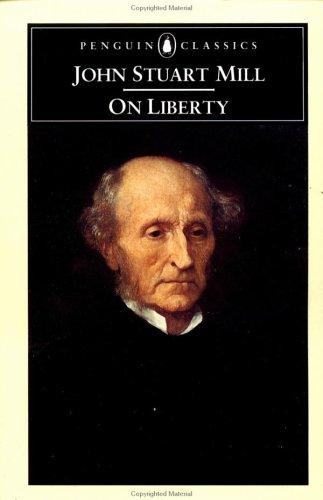
On Liberty

by John Stuart Mill

View on Amazon →

"Over himself, over his own body and mind, the individual is sovereign."

Mill's seminal work articulates the harm principle, which has become foundational to liberal political theory. He argues that individual liberty should only be restricted when someone's actions cause harm to others. The book defends freedom of thought, expression, and action as essential to human development and social progress.

On Liberty provides the philosophical foundation for modern liberalism and individual rights. Mill's harm principle is central to contemporary debates about government's proper role and the limits of individual freedom. Understanding this work is essential for comprehending modern democratic values.

  • Individual liberty should be restricted only to prevent harm to others
  • Freedom of thought and expression are essential for personal development and social progress
  • Minority opinions and unconventional lifestyles deserve protection
  • Diversity of thought strengthens society and prevents stagnation
  • The harm principle can be difficult to apply in practice with ambiguous harms
  • Mill may underestimate how individual actions affect others indirectly
  • His optimism about progress through liberty may be naive
  • The work primarily addresses educated male citizens, not universal humanity

"Mill provides the most eloquent defense of individual liberty ever written."

Isaiah Berlin, Political philosopher

"Essential reading for anyone concerned with human freedom and dignity."

Martha Nussbaum, Contemporary philosopher
05

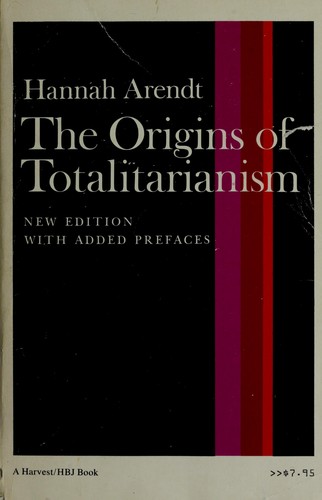
The Origins of Totalitarianism

by Hannah Arendt

View on Amazon →

"The ideal subject of totalitarian rule is not the convinced Nazi or the convinced Communist, but people for whom the distinction between fact and fiction no longer exists."

Hannah Arendt's monumental work traces the historical roots of totalitarianism and its unprecedented threat to human dignity. She examines how imperialism, antisemitism, and nationalism combined to create the totalitarian systems of the 20th century. Arendt explores how totalitarianism seeks to destroy individuality and manipulate truth itself.

Essential for understanding how totalitarian systems emerge and operate. Arendt's analysis of totalitarianism's destruction of truth and human agency remains critical for recognizing and resisting authoritarian movements. Her insights into how propaganda and ideology supplant reality are increasingly relevant.

  • Totalitarianism represents an unprecedented form of political domination
  • The destruction of truth and reality is central to totalitarian control
  • Imperialism and nationalism created the conditions for totalitarianism to emerge
  • Totalitarian systems seek to eliminate individuality and human spontaneity
  • Some historical interpretations have been challenged by later scholars
  • The work is extremely dense and difficult to read
  • Critics argue Arendt oversimplifies the causes of totalitarianism
  • Her analysis may focus too heavily on European examples

"The most important work for understanding the threats to democracy and human rights."

Samantha Power, U.S. Ambassador to the United Nations

"Arendt's analysis of totalitarianism remains unsurpassed in its penetrating insight."

Ian Kershaw, Historian of Nazi Germany
06

Why Nations Fail

by Daron Acemoglu and James Robinson

View on Amazon →

"Poor countries are poor because those who have power make choices that create poverty."

This contemporary classic argues that nations fail not because of geography, culture, or ignorance, but because of extractive political and economic institutions. Acemoglu and Robinson provide evidence from throughout history showing how inclusive institutions foster prosperity while extractive ones concentrate power and prevent economic growth.

Essential for understanding modern economics and development. Why Nations Fail provides a powerful framework for analyzing why some countries prosper while others remain poor, based on institutional differences rather than inherent factors. Its insights are crucial for contemporary policy and global analysis.

  • Economic success depends on inclusive institutions, not geography or culture
  • Political institutions determine whether economic institutions will be inclusive or extractive
  • Extractive institutions concentrate power and wealth, stifling innovation and growth
  • Institutional change is difficult because those in power resist losing their advantages
  • The book may oversimplify complex historical and economic processes
  • Some historical interpretations are disputed by scholars
  • The framework, while useful, cannot explain all national differences
  • Critics argue culture and geography play larger roles than the authors acknowledge

"A refreshingly ambitious attempt to explain the nature of prosperity and poverty across centuries and continents."

The Economist, International magazine

"A genuinely important work that offers powerful insights into how nations succeed or fail."

Niall Ferguson, Historian
07

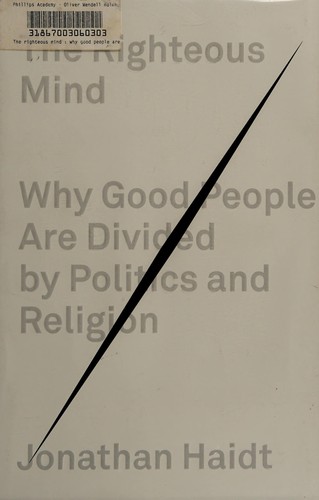
The Righteous Mind

by Jonathan Haidt

View on Amazon →

"Morality binds and blinds—binds us into ideological teams and blinds us to the weaknesses in our own position."

Haidt uses psychological research to explain why people across the political spectrum are genuinely convinced of their moral rightness. He argues that moral judgments arise from intuition, not reasoning, and that different groups prioritize different moral foundations. Understanding these differences is essential for bridging political divides.

Critical for understanding contemporary political polarization and how people think about morality. Haidt's insights into why good people disagree on politics help explain persistent disagreements and offer paths toward greater empathy. Essential reading for anyone trying to understand modern political conflict.

  • Moral intuitions precede moral reasoning, not the reverse
  • Different political groups prioritize different moral foundations
  • Liberals and conservatives have genuinely different moral perspectives, not different facts
  • Empathy across moral divides is possible but requires understanding others' moral worldviews
  • Some critics argue Haidt's moral foundations framework is culturally biased
  • The book may give insufficient weight to reasoning in moral judgment
  • Psychological research cited has been questioned by other scholars
  • The work may inadvertently justify tolerance of immoral positions in the name of moral diversity

"A brilliant and important book that changed the way I think about politics and morality."

Bill Gates, Philanthropist and Microsoft founder

"Haidt provides profound insights into the psychology of moral judgment and political division."

Paul Bloom, Psychologist
08

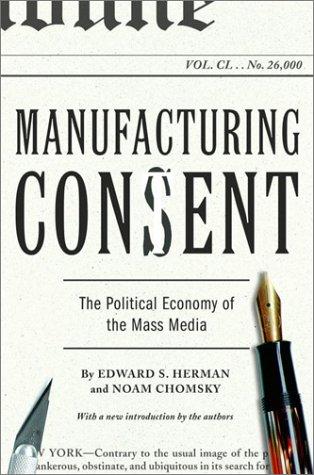
Manufacturing Consent

by Edward S. Herman and Noam Chomsky

View on Amazon →

"The mass media serve as a system for communicating messages to inculcate individuals with the values, beliefs, and codes of behavior that will integrate them into institutional structures."

Chomsky and Herman develop their 'propaganda model,' arguing that mass media in capitalist societies function as propaganda tools for elite interests. They analyze how media serves to inform and entertain while subtly shaping political consciousness in ways that support existing power structures and business interests.

Essential for understanding how media influences politics and shapes public opinion. Manufacturing Consent provides critical tools for analyzing media bias and recognizing propaganda in supposedly free media. Understanding these mechanisms is crucial for informed citizenship in contemporary democracies.

  • Media outlets concentrate power in ways that shape public opinion
  • Economic interests often determine which stories receive coverage
  • Manufactured consent shapes what people believe to be possible in politics
  • Critical media literacy is essential for recognizing propaganda and bias
  • The propaganda model may be too deterministic about media influence
  • Some of their historical examples have been disputed
  • The model may underestimate the role of professional journalism standards
  • Critics argue individual journalists often operate independently of elite interests

"The definitive analysis of how media power shapes democracy in capitalist societies."

Robert McChesney, Media scholar

"A crucial work for understanding how consent is manufactured in modern democracies."

Tariq Ali, Author and broadcaster
09

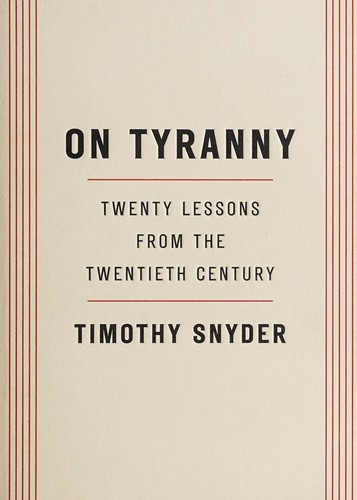
On Tyranny

by Timothy Snyder

View on Amazon →

"Post-truth is pre-fascism."

A brief, urgent guide to resisting tyranny written in the context of contemporary authoritarianism. Snyder offers twenty lessons drawn from 20th-century history, showing how ordinary citizens can recognize and resist the gradual erosion of democracy and freedom. The work emphasizes the importance of individual action and moral courage.

Essential for understanding how democracies can be undermined and how citizens can resist authoritarianism. Snyder's lessons from history provide practical guidance for recognizing and resisting tyrannical movements. Increasingly relevant as democratic norms face pressure globally.

  • Authoritarians exploit crises and fear to consolidate power
  • The destruction of truth is a prerequisite for tyranny
  • Individual actions matter in resisting authoritarianism
  • Defending institutions and rule of law is crucial for preserving democracy
  • The brevity may oversimplify complex historical situations
  • Some critics view it as alarmist about contemporary threats
  • The emphasis on individual action may underestimate need for collective organizing
  • Some lessons are tailored to specific historical contexts and may not universally apply

"Snyder provides essential wisdom for preserving democracy in our dangerous times."

Anne Applebaum, Historian and journalist

"A vital work that every citizen should read to understand threats to democracy."

The New York Times, Major newspaper
10

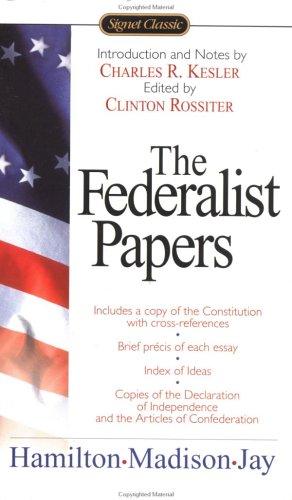
The Federalist Papers

by Alexander Hamilton, James Madison, and John Jay

View on Amazon →

"It is the delegation of government to a small number of citizens elected by the rest that defines a republic, and this delegation may be extended over a larger region than a pure democracy."

A series of essays written to persuade New York to ratify the U.S. Constitution, these papers articulate the theoretical foundations of American government. Hamilton, Madison, and Jay explain the structure of government, the separation of powers, and the federalist system. The papers remain essential to understanding American political thought.

Foundational to understanding the American constitutional system and federalism. The Federalist Papers provide unparalleled insight into the intentions of the Constitution's framers and the philosophical principles underlying American government. Essential for comprehending American politics and constitutional law.

  • The separation of powers and checks and balances prevent tyranny
  • Federalism allows for both local and national levels of government
  • Representation refines popular will through educated citizens
  • The Constitution requires ratification and represents a social contract
  • Written to defend a specific document and may present biased arguments
  • The authors' views on slavery and women's rights are deeply problematic
  • Some promised protections in the Constitution proved ineffective in practice
  • The papers reflect 18th-century concerns and may not address modern political questions

"The most important exposition of the Constitution and founding principles ever written."

Supreme Court Justice Antonin Scalia, U.S. Supreme Court

"The most instructive and systematic of all commentaries on the Constitution."

Clinton Rossiter, Constitutional scholar
Back to all lists