10 Best Productivity Books

Master Your Time, Build Better Habits, and Achieve Extraordinary Results

Discover the most influential productivity books that have transformed millions of lives. From David Allen's GTD methodology to James Clear's atomic habits framework, these essential reads provide practical strategies to optimize your workflow, eliminate distractions, and achieve meaningful results in work and life.

01

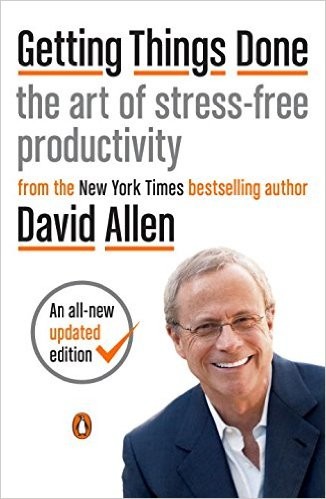
Getting Things Done: The Art of Stress-Free Productivity

by David Allen

View on Amazon →

"You can manage a process, but you must lead people. The bottom line is that you cannot improve what you cannot measure."

David Allen's revolutionary GTD system provides a comprehensive framework for capturing, organizing, and acting on everything in your life. The method centers on achieving a state of mind that Allen calls 'mind like water'—a relaxed yet engaged state where you respond appropriately to demands without stress or distraction. This timeless classic has influenced productivity systems worldwide and remains the gold standard for personal task management.

GTD is the foundational system that spawned the entire modern productivity movement. Allen's methodology has been adopted by millions across Fortune 500 companies and individuals alike. Understanding GTD principles is essential for anyone seeking to implement systematic productivity and reduce cognitive load through external capture systems.

  • Capture all tasks and ideas externally to free mental energy
  • Organize tasks into actionable projects with clear next steps
  • Review systems regularly to maintain context and perspective
  • Achieve 'mind like water' by trusting your system completely
  • The system can be overly complex and time-consuming to implement initially
  • Some users find the administrative overhead of GTD counterproductive
  • Digital tool ecosystems for GTD have become fragmented and expensive

"David Allen's Getting Things Done is the productivity system that influenced my own work methodologies and continues to be relevant decades after publication."

Tim Ferriss, Bestselling Author and Podcast Host
02

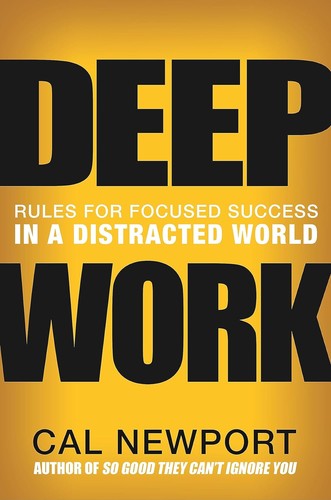
Deep Work: Rules for Focused Success in a Distracted World

by Cal Newport

View on Amazon →

"The ability to perform deep work is becoming increasingly rare at the same time it's becoming increasingly valuable in the economy. Those who cultivate this skill and leverage it to produce work that is actually valuable are in an especially strong position to thrive."

Cal Newport explores the increasing rarity and value of deep, focused work in our distracted age. He argues that the ability to concentrate without distraction on cognitively demanding tasks is a superpower that most people have abandoned. Deep Work provides actionable rules and strategies for cultivating sustained concentration and producing work of exceptional quality, backed by case studies of high achievers from Bill Gates to J.K. Rowling.

In an era of constant digital distraction and shallow engagement, deep work has become the differentiating factor for professional success. Newport's framework is essential for knowledge workers who want to produce meaningful results and build valuable expertise. The book addresses the modern attention crisis directly.

  • Deep work—focused, undistracted professional activity—is increasingly rare and valuable
  • Create business and personal conditions that support long periods of uninterrupted concentration
  • Strategically eliminate shallow activities and digital distractions from your schedule
  • Network and reputation building matter, but not at the expense of substantive work
  • The book assumes privileged work conditions many employees don't have control over
  • Limited practical advice for those in highly collaborative or interrupt-driven roles
  • Some strategies like digital sabbaticals aren't realistic for many modern professionals

"Gates practices 'Think Weeks' twice yearly to isolate himself for focused reading and strategic thinking—a perfect example of deep work principles in action at the highest level."

Bill Gates, Microsoft Founder
03

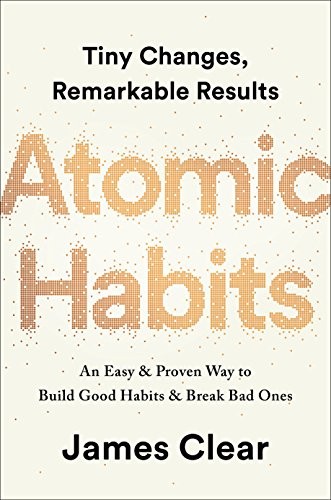
Atomic Habits: An Easy & Proven Way to Build Good Habits & Break Bad Ones

by James Clear

View on Amazon →

"If you get 1% better each day for one year, you'll end up thirty-seven times better by the time you're done."

James Clear demonstrates how tiny behavioral changes can produce remarkable results through the power of compound growth. Rather than focusing on massive transformation, Atomic Habits shows how a 1% improvement in daily behavior compounds into extraordinary outcomes over time. Clear provides a framework for building better habits by making them obvious, attractive, easy, and satisfying—the foundation of lasting behavioral change.

Atomic Habits directly addresses the productivity paradox: successful people aren't necessarily more motivated, but they've designed better systems and habits. Clear's 1% improvement concept is scientifically sound and psychologically empowering. The book has sold over 20 million copies, making it the modern definitive work on habit formation.

  • Success comes from tiny incremental improvements compounded over time, not radical change
  • Habits are more effective than motivation—design your environment and systems to support desired behaviors
  • Track progress and celebrate small wins to reinforce new habits and build momentum
  • Identity-based habits are stronger than outcome-based ones; think about who you want to become
  • The 1% improvement concept is oversimplified and doesn't account for diminishing returns
  • Some habit stacking advice lacks scientific rigor despite the book's general evidence-based approach
  • Less applicable to people who need transformative change rather than incremental improvement

"Atomic Habits brilliantly simplifies the science of habit formation and provides a practical system anyone can implement."

BJ Fogg, Behavioral Scientist, Stanford University
04

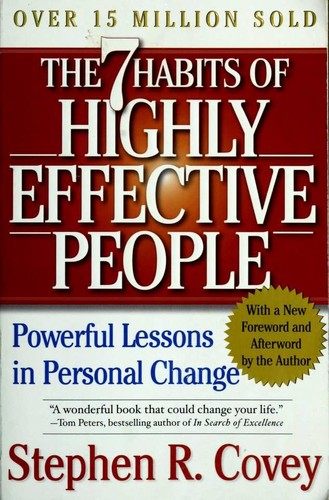
The 7 Habits of Highly Effective People: Powerful Lessons in Personal Change

by Stephen R. Covey

View on Amazon →

"Begin with the end in mind means to start with a clear understanding of your destination. It means to know where you're going so that you better understand where you are now and so that the steps you take are always in the right direction."

Stephen Covey's foundational work outlines seven interdependent habits organized around principles of personal development, interpersonal effectiveness, and self-renewal. Beginning with personal responsibility and vision through ending with continuous improvement, Covey's framework integrates time management, communication, and character ethics. This book has shaped leadership thinking for over three decades and sold over 25 million copies worldwide.

The 7 Habits provides the philosophical and ethical foundation that modern productivity methods often lack. Covey emphasizes that effectiveness requires both efficiency and alignment with values. His habit framework addresses not just what to do but who to become. This book is essential reading for leaders and anyone seeking lasting personal transformation.

  • Personal effectiveness requires moving from dependence to independence to interdependence
  • Begin with clear vision and values aligned with what matters most in your life
  • Balance productivity with relationship maintenance and personal renewal
  • Seek first to understand others before expecting to be understood yourself
  • The book is quite lengthy with some concepts that could be stated more concisely
  • Heavily influenced by religious and values-based thinking that may not resonate with all readers
  • Some habits feel more aspirational than immediately actionable

"Covey created a coherent conceptual framework focused on timeless principles and building character rather than quick wins."

Jim Collins, Author, Good to Great
05

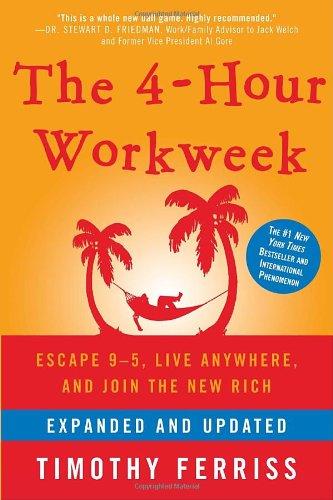
The 4-Hour Workweek: Escape 9-5, Live Anywhere, and Join the New Rich

by Timothy Ferriss

View on Amazon →

"Never automate something that can be eliminated, and never delegate something that can be automated or streamlined."

Tim Ferriss challenges conventional work wisdom by introducing the DEAL framework: Definition, Elimination, Automation, and Liberation. Rather than optimizing an unsustainable lifestyle, Ferriss advocates eliminating what doesn't matter, automating what remains, and leveraging geographic arbitrage to live anywhere. This provocative book spent four years on the New York Times bestseller list and inspired a generation of entrepreneurs and remote workers.

The 4-Hour Workweek fundamentally questioned the productivity premise that you need to work more efficiently within the system. Instead, Ferriss advocates questioning the system itself. His concepts of automation and outsourcing have become standard practices. The book is essential for anyone considering alternative work arrangements or lifestyle design.

  • Define your ideal lifestyle and reverse-engineer the income needed to support it
  • Eliminate tasks that don't move you toward goals through delegation or elimination
  • Automate recurring tasks and business processes to reduce workload dramatically
  • Use geographic arbitrage and location independence to dramatically increase quality of life
  • Many of Ferriss's strategies assume privilege and aren't applicable to all income levels or industries
  • The 4-hour workweek is largely aspirational; most readers can't achieve that extreme reduction
  • Some advice on outsourcing and automation is dated as platforms and labor costs have evolved

"This is a long-overdue manifesto for the mobile lifestyle. This will be huge."

Jack Canfield, Co-creator, Chicken Soup for the Soul
06

Essentialism: The Disciplined Pursuit of Less

by Greg McKeown

View on Amazon →

"The way of the Essentialist is the relentless pursuit of less but better. It doesn't mean occasionally giving a nod to the principle. It means pursuing it in a disciplined way."

Greg McKeown teaches that the essence of productivity is not doing more, but doing what truly matters. Essentialism is a discipline for identifying your highest-value activities and ruthlessly eliminating everything else. McKeown challenges the productivity trap of busyness and provides frameworks for making intentional choices about where to invest your finite time and energy, resulting in disproportionate impact.

In a world of increasing demands and infinite opportunities, the ability to say no and focus is increasingly valuable. Essentialism addresses the paradox that saying yes to everything means saying no to what matters most. This book is essential for leaders and professionals drowning in commitments and seeking clarity on priorities.

  • Not all things matter equally; identify the 20% of activities producing 80% of results
  • Clarity on values enables easier decision-making and more authentic no's
  • Design your life proactively to align with essentials rather than reactively managing chaos
  • Small acts done at the right place and right time can produce disproportionate results
  • The concept of finding your 'essentials' is easier said than done in complex organizational environments
  • Lacks specific tools and frameworks compared to more tactical productivity books
  • May feel preachy or overly philosophical for readers seeking immediate practical solutions

"Essentialism provides a refreshing counterpoint to the constant pressure to do more and be more."

Jeff Weiner, Former CEO, LinkedIn
07

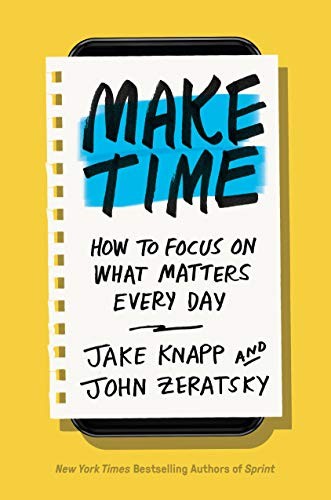
Make Time: How to Focus on What Matters Every Day

by Jake Knapp and John Zeratsky

View on Amazon →

"Time is the most finite resource you have. You cannot make more of it. You cannot buy it. You can only spend it."

Jake Knapp and John Zeratsky, design partners at Google, share tactical time management strategies in Make Time. Rather than comprehensive systems, they offer a menu of 'time hacks'—specific techniques you can experiment with to find your own best practices. The book emphasizes that time is your most finite resource and provides ninety-plus actionable techniques for protecting it and directing it toward meaningful work.

Make Time fills a gap between philosophical productivity books and overly complex systems. The experimental approach—try techniques and keep what works for you—respects individual differences in work style. Perfect for readers overwhelmed by other systems or seeking practical quick wins. The book acknowledges that perfect solutions don't exist.

  • Identify and protect time for your 'highlight'—the most important thing you want to accomplish daily
  • Experiment with different tactics and keep what works; no one system is universal
  • Understand how attention and energy work to design your day around your peak hours
  • Technology is a tool for your goals, not your master; design your relationship with it intentionally
  • The collection of tactics feels somewhat scattered without a unified underlying framework
  • Limited depth on any single topic means some readers may want more detailed guidance
  • Some tactics are obvious or may not translate well across different work environments

"Essential reading for anyone who wants to create a happier, more successful life."

Gretchen Rubin, Bestselling Author, The Happiness Project
08

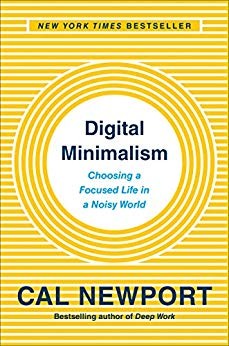
Digital Minimalism: Choosing a Focused Life in a Noisy World

by Cal Newport

View on Amazon →

"A philosophy of technology use in which you focus your online time on a small number of carefully selected and optimized activities that strongly support things you value, and then happily miss out on everything else."

Cal Newport addresses our fractured attention in an age of constant digital connectivity. Digital Minimalism advocates intentionally curating your technology use to support what you value rather than mindlessly consuming whatever platforms offer. Newport provides a practical declutter process: clear away digital noise and rebuild your technology life from scratch with careful intention. The result is reclaimed focus and mental peace in an overconnected world.

Productivity is impossible in an environment of constant digital distraction. Digital Minimalism addresses the foundational issue: your relationship with technology itself. Unlike extreme unplugging recommendations, Newport proposes a realistic middle path of intentional use. This book is essential for anyone struggling with phone addiction, social media overuse, or digital fatigue.

  • Aggressive reduction of digital noise improves focus and subjective well-being measurably
  • Rebuild your technology ecosystem intentionally to align with your values rather than defaults
  • Understand how platforms are designed to maximize engagement, often at the expense of your attention
  • Solitude and absence of digital connectivity are essential for deep thought and restoration
  • Assumes readers have flexibility in technology use that many modern workers don't possess
  • The declutter approach may be too extreme for those whose work depends on constant digital availability
  • Less comprehensive than Deep Work for addressing workplace distraction specifically

"Cal Newport has discovered a cure for the techno-exhaustion that plagues our always-on, digitally caffeinated culture."

Joshua Fields Millburn, Co-founder, The Minimalists
09

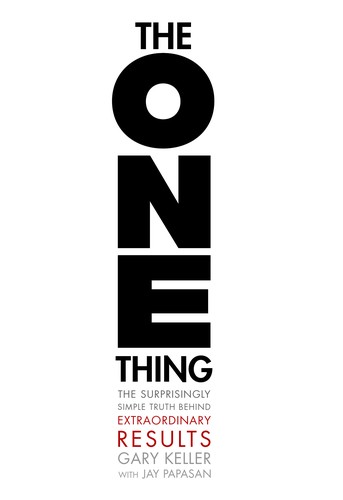
The One Thing: The Surprisingly Simple Truth About Extraordinary Results

by Gary Keller and Jay Papasan

View on Amazon →

"Doing the most important thing is always the most important thing."

Gary Keller and Jay Papasan focus on the power of singular focus—identifying and completing the one thing that will make everything else easier or unnecessary. Rather than trying to balance multiple priorities equally, The One Thing advocates for sequential focus on the highest-leverage activities. The book has sold nearly 2.5 million copies and transformed how millions approach work and goal-setting.

The One Thing distills complex productivity philosophy into a simple, actionable principle: extraordinary results come from narrow focus, not broad effort. Keller's research on goal achievement demonstrates that most people fail not from lack of effort but from diffused effort. This book is essential for anyone setting goals or managing multiple competing priorities.

  • Extraordinary results are determined by how narrow you can make your focus
  • Ask 'What is the ONE thing I can do that makes everything else easier or unnecessary?'
  • Success often comes from sequential focus on one priority at a time, not constant juggling
  • Time blocking your most important work is non-negotiable, not nice-to-have
  • Oversimplifies complex leadership challenges that require managing multiple priorities simultaneously
  • The sequential focus approach isn't feasible in many modern collaborative team environments
  • Limited nuance on how to navigate organizational pressures for constant multitasking

"The One Thing gets to the heart of what matters most: focusing your efforts on the activities that deliver the highest return."

Brian Tracy, Bestselling Author and Productivity Expert
10

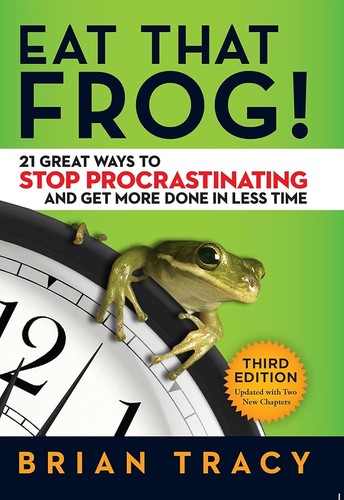
Eat That Frog!: 21 Great Ways to Stop Procrastinating and Get More Done in Less Time

by Brian Tracy

View on Amazon →

"The difference between high performers and low performers is largely determined by what they choose to procrastinate on."

Brian Tracy introduces practical strategies for overcoming procrastination and increasing productivity through the metaphor of 'eating the frog'—tackling your most important, difficult task first. Drawing on Mark Twain's observation that if you must eat a frog, it's best done first thing in the morning, Tracy provides twenty-one tactical techniques for prioritization and task completion. The book has sold over 1.5 million copies worldwide.

Procrastination is the primary productivity killer, and Tracy's direct, no-nonsense approach to overcoming it is invaluable. The 'eat the frog' metaphor is intuitive and memorable, making it easy to implement. Tracy's techniques are immediately actionable and focus on the most common productivity obstacles individuals face in daily work.

  • Do your most difficult or important task first to build momentum and confidence
  • Clear prioritization through methods like ABCDE analysis prevents wasting time on low-value work
  • Task completion itself is motivating; start with small wins and build momentum
  • Procrastination often stems from unclear expectations; clarify exactly what done looks like
  • The 'eat the frog' metaphor may not resonate with all personality types and work styles
  • Some techniques feel dated or oversimplified in modern complex work environments
  • Limited discussion of why people procrastinate psychologically or how to address root causes

"If the first thing you do each morning is to eat a live frog, you can go through the day with the satisfaction of knowing that it is probably the worst thing that is going to happen to you all day long."

Mark Twain, American Writer and Humorist
Back to all lists