10 Best Psychology Books

Essential Reads on Human Behavior, Cognition, and Well-being

Explore the most influential psychology books that have shaped our understanding of the human mind. From cognitive biases to trauma healing, emotional intelligence to the psychology of persuasion, these timeless works provide profound insights into what drives human behavior. Whether you're seeking personal growth, professional development, or intellectual enrichment, this curated collection offers essential knowledge from leading psychologists and researchers.

01

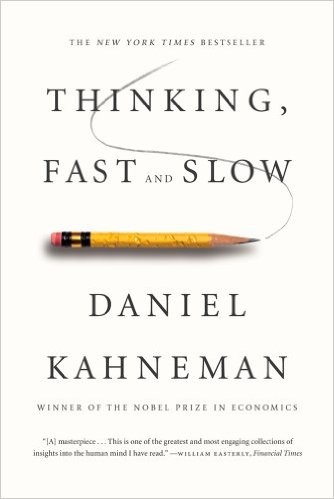
Thinking, Fast and Slow

by Daniel Kahneman

View on Amazon →

"Nothing in life is as important as you think it is, while you are thinking about it."

Kahneman explores the two systems of thought that drive human decision-making: System 1, the fast intuitive mind, and System 2, the slow deliberate mind. Drawing on decades of psychological research, he reveals how cognitive biases and heuristics shape our judgments and decisions. The book examines anchoring effects, availability bias, overconfidence, and the illusion of understanding that influence everything from personal choices to economic decisions.

Nobel Prize-winning work that fundamentally changed how we understand decision-making and cognitive biases. Essential for anyone seeking to understand their own thinking patterns and those of others. Has influenced fields from psychology to behavioral economics, making it foundational reading for modern understanding of the mind.

  • Fast thinking (System 1) is intuitive and automatic, but prone to errors and biases
  • Slow thinking (System 2) requires effort and concentration but is more reliable
  • Anchoring, availability bias, and overconfidence systematically distort our judgments
  • Understanding cognitive biases helps us make better decisions in life and work
  • Some scientific studies cited in the book have not replicated well in modern research
  • Dense writing style makes certain sections challenging for general readers
  • Focuses heavily on Western decision-making patterns with limited cultural diversity

"An outstanding book, distinguished by beauty and clarity of detail, precision of presentation and gentleness of manner."

Galen Strawson, The Guardian

"Selected as one of the ten best books of 2011 and winner of the Los Angeles Times Book Prize."

The New York Times, Book Review

"Winner of the Best Book Award for its groundbreaking contribution to psychology."

National Academy of Sciences, Award Committee
02

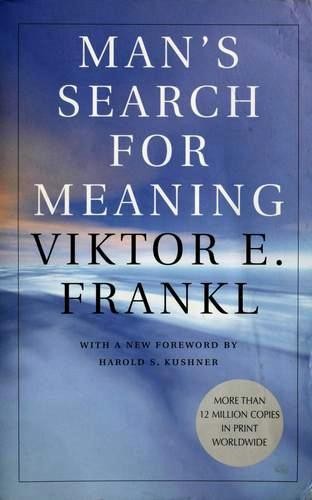
Man's Search for Meaning

by Viktor E. Frankl

View on Amazon →

"Those who have a 'why' to live, can bear with almost any 'how.'"

Frankl's powerful memoir recounts his experiences as a prisoner in Nazi concentration camps during the Holocaust and introduces logotherapy, his therapeutic method based on finding meaning in life. He argues that the will to meaning is the primary human motivation, and that people can endure almost any suffering if they find purpose in their lives. The book combines personal narrative with psychological insight to explore resilience and the human capacity for growth.

One of the most influential psychology books ever written, addressing fundamental questions about meaning, suffering, and the human condition. Frankl's insights have impacted millions and remain profoundly relevant for anyone facing adversity. A cornerstone text in existential psychology and philosophy that transcends academic psychology.

  • Meaning can be found in any circumstance, even in the most difficult suffering
  • The primary human motivation is the search for meaning, not pleasure or power
  • Freedom of attitude remains even when external freedom is stripped away
  • Taking responsibility for one's life is essential to psychological well-being
  • Some psychological claims lack empirical support from modern research standards
  • The philosophical framework may feel dated to contemporary readers
  • Limited discussion of other therapeutic approaches or alternative perspectives

"One of the outstanding contributions to psychological thought in the last fifty years."

Carl Rogers, Influential Psychologist

"A gem of a dramatic narrative, focused upon the deepest of human problems."

Gordon W. Allport, Harvard University

"One of the ten most influential books in America."

The Library of Congress, American National Institution
03

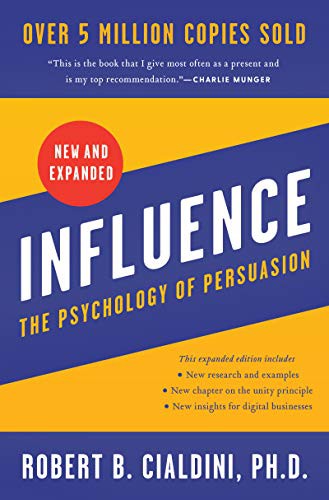
Influence: The Psychology of Persuasion

by Robert B. Cialdini

View on Amazon →

"People simply like to have reasons for what they do."

Cialdini reveals the psychological principles that guide human behavior and decision-making through persuasion. Drawing on decades of research, he identifies six universal principles of influence: reciprocity, commitment and consistency, social proof, authority, liking, and scarcity. The book combines scientific research with real-world examples showing how these principles work in sales, marketing, negotiation, and everyday interactions.

A bestselling work that decodes the hidden triggers of influence operating in daily life. Essential for understanding how people are persuaded and how to ethically apply these principles in business and personal relationships. Has become required reading in marketing, sales, and business psychology globally.

  • Reciprocity: People feel obligated to return favors and repay debts
  • Social proof: We assume others know something we don't and follow their lead
  • Authority: Perceived experts significantly influence our decisions
  • Liking, commitment, consistency, and scarcity complete the six universal principles of influence
  • Some research cited is dated and may not reflect current behavioral science
  • Examples are primarily drawn from Western consumer culture
  • Limited discussion of individual and cultural differences in susceptibility to influence

"A marvelously rich and engaging account of the subtle power that people exert on each other."

Daniel Kahneman, Nobel Prize Laureate

"The most important book about the science of persuasion."

Angela Duckworth, Author of Grit

"If there is only one book you'll ever read, it should be this book."

Adam Grant, New York Times Bestselling Author
04

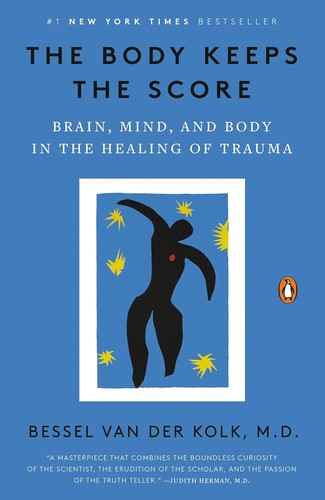
The Body Keeps the Score: Brain, Mind, and Body in the Healing of Trauma

by Bessel van der Kolk

View on Amazon →

"Trauma is not what happens to you, but what happens inside you as a result of what happens to you."

Van der Kolk explores how trauma becomes embedded in the body and brain, affecting how people perceive danger, regulate emotions, and relate to others. Through neuroscience research and case studies, he demonstrates that trauma fundamentally reorganizes the brain and body, and outlines evidence-based approaches to healing including neurofeedback, yoga, EMDR, and other somatic therapies. The book challenges conventional understanding of trauma treatment.

A groundbreaking work that integrates neuroscience with psychology to understand trauma's profound impact on the body and mind. The book has spent over 376 weeks on the New York Times bestseller list, reflecting its enormous influence on trauma psychology and treatment. Essential for mental health professionals and anyone interested in healing.

  • Trauma is encoded in the brain and body, not just memory
  • The brain's threat detection system becomes sensitized, leading to hypervigilance
  • Traditional talk therapy alone is insufficient; somatic and body-based approaches are essential
  • Safe relationships are fundamental to trauma recovery and mental health
  • Some claims about treatment efficacy have been questioned by scientific critics
  • Promotes certain therapies that lack strong empirical evidence bases
  • Some neuroscience descriptions are oversimplified or debated in the field

"Van der Kolk's masterpiece on trauma and the body."

Judith Herman, M.D., Harvard Medical School

"Provides innovative ways to work with trauma through yoga, movement, and theater."

Jon Kabat-Zinn, UMass Medical School

"376 weeks on the New York Times bestseller list for paperback nonfiction."

The New York Times, Bestseller List
05

Flow: The Psychology of Optimal Experience

by Mihaly Csikszentmihalyi

View on Amazon →

"The best moments usually occur when a person's body or mind is stretched to its limits in a voluntary effort to accomplish something difficult and worthwhile."

Csikszentmihalyi defines flow as a state of complete absorption and enjoyment during an activity where skills match challenges. Through research spanning cultures and professions, he shows how flow contributes to happiness and fulfillment. The book explains the conditions necessary for achieving flow and demonstrates how understanding flow can transform work, relationships, creativity, and overall quality of life.

A seminal work that revolutionized understanding of happiness, motivation, and optimal performance. The concept of flow has become fundamental to positive psychology, sports psychology, education, and organizational development. This book provides a scientifically-grounded framework for achieving genuine satisfaction in life.

  • Flow occurs when skills perfectly match the challenge at hand
  • Clear goals and immediate feedback are essential for achieving flow
  • Control of consciousness determines the quality of life experience
  • Flow can be cultivated in any activity, work, or relationship
  • Western-centric focus with limited examination of cross-cultural variations
  • Some methodology criticisms regarding how flow states were measured
  • Limited discussion of negative consequences of excessive flow-seeking

"Foundational work that revolutionized understanding of happiness and motivation."

Positive Psychology Community, Academic Psychology

"A classic that has influenced how organizations approach employee engagement."

Fortune Magazine, Business Publication

"Referenced as influential to innovation and creative thinking."

Steve Jobs, Apple Founder
06

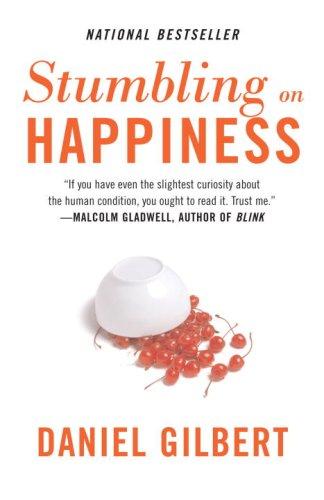
Stumbling on Happiness

by Daniel Gilbert

View on Amazon →

"Among life's cruellest truths is this one: wonderful things are especially wonderful the first time they happen, but their wonderfulness wanes with repetition."

Gilbert investigates why humans are remarkably poor at predicting what will make them happy. Using research in psychology, neuroscience, and philosophy, he demonstrates that our imaginations systematically mislead us about future happiness. The book explores the impact bias, immune neglect, and focalism, showing how our brains construct happiness in the present through rationalization and adaptation.

A fascinating exploration of one of psychology's greatest puzzles: why our predictions about future happiness are so often wrong. Gilbert's accessible writing and clever insights make complex psychological research entertaining while revealing fundamental truths about human nature. Essential for understanding decision-making and well-being.

  • We consistently overestimate how much future events will impact our happiness
  • Our brains use imagination to predict happiness, but imagination is inherently unreliable
  • We adapt to circumstances more quickly than we expect, through rationalization
  • The present moment determines happiness more than predicted future outcomes
  • Some research cited has limitations in current scientific standards
  • Anecdotal examples sometimes outweigh empirical evidence
  • Limited exploration of cultural and individual differences in happiness prediction

"A brilliant, funny exploration of one of life's greatest mysteries: why we're so bad at predicting our own happiness."

The New York Times, Book Review

"Consistently rated as one of the most engaging and thought-provoking psychology books."

Amazon Readers, Customer Reviews

"Based on decades of research by a prominent Harvard psychologist."

Harvard University, Academic Institution
07

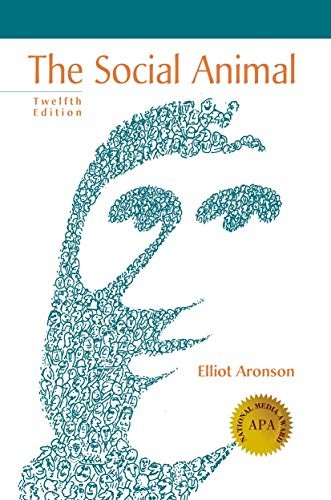
The Social Animal

by Elliot Aronson

View on Amazon →

"The more similar a person seems to you in attitudes, opinions, and interests, the more you like the person."

Aronson's comprehensive textbook explores the fundamental principles of social psychology. Covering conformity, persuasion, attraction, aggression, prejudice, and group dynamics, the book combines compelling real-world examples with rigorous experimental research. It shows how the social environment shapes human behavior, attitudes, and beliefs, and how understanding these principles can improve relationships and decision-making.

Winner of the American Psychological Association's award for excellence in teaching, this is the most widely used social psychology textbook. Essential for understanding how social context shapes human behavior and why people often act against their own interests in group settings. Fundamental knowledge for psychology, business, education, and social sciences.

  • Conformity and social influence profoundly shape our behavior and beliefs
  • Attraction is driven by proximity, similarity, and physical attractiveness
  • Groups can amplify individual tendencies through social facilitation and group polarization
  • Prejudice stems from cognitive categorization and intergroup competition
  • Textbook format may be dense for general readers seeking casual reading
  • Some classic studies have faced replication challenges
  • Emphasis on experimental methodology may overshadow real-world complexities

"Award winner for excellence in social psychology teaching."

American Psychological Association, Professional Organization

"Most widely adopted social psychology textbook in universities globally."

College Textbook Adoptions, Academic Institutions

"Praised for combining rigorous research with engaging, accessible writing."

Psychology Educators, Academic Community
08

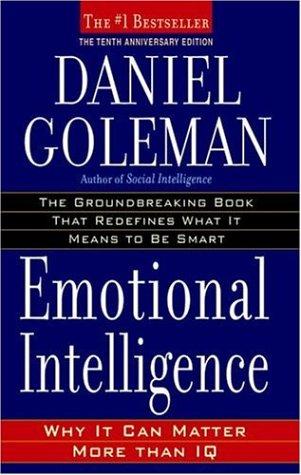
Emotional Intelligence: Why It Can Matter More Than IQ

by Daniel Goleman

View on Amazon →

"In a very real sense we have two minds, one that thinks and one that feels."

Goleman introduces the concept of emotional intelligence—the ability to recognize, understand, and manage emotions in ourselves and others. Drawing on neuroscience research, he demonstrates that EI is more important than IQ for success in life and work. The book covers self-awareness, self-regulation, motivation, empathy, and social skills, showing how these capabilities determine leadership effectiveness and personal fulfillment.

Groundbreaking work that expanded understanding of intelligence beyond IQ and established emotional intelligence as critical for success. The concept has transformed education, business management, and psychology. Essential reading for anyone seeking to understand human effectiveness in personal and professional contexts.

  • Emotional intelligence comprises self-awareness, self-regulation, motivation, empathy, and social skills
  • EQ is twice as important as IQ for success in most careers
  • Emotions provide valuable information that should guide decision-making
  • Leadership and relationship quality depend heavily on emotional intelligence
  • The concept of EI has been questioned by some researchers for lacking clear definition
  • Measurement of emotional intelligence remains debated and inconsistent
  • Some claims about EI's superiority to IQ are overstated

"Revolutionary framework that transformed organizational development and leadership training."

International Business Community, Corporate World

"Inspired widespread integration of emotional learning into curricula."

Educational Institutions, Schools and Universities

"Brought emotional competencies into mainstream psychology and practice."

Psychologists and Researchers, Academic Community
09

The Interpretation of Dreams

by Sigmund Freud

View on Amazon →

"The interpretation of dreams is the royal road to a knowledge of the unconscious activities of the mind."

Freud's seminal work presents his theory that dreams are disguised wish fulfillments revealing the unconscious mind. He develops the concept of dream analysis as a window into unconscious desires, repressed thoughts, and hidden conflicts. Though many of Freud's specific theories have been superseded by modern psychology, his method of dream analysis and emphasis on the unconscious remain influential in psychoanalysis and popular psychology.

Foundational text that established psychoanalysis and the study of the unconscious mind. While modern psychology has critiqued many of Freud's specific claims, his influence on psychology, literature, and culture is immense. Essential for understanding the historical development of psychology and the continuing influence of psychoanalytic concepts.

  • Dreams are meaningful psychological structures, not random neural noise
  • Dreams represent unconscious wishes and desires in disguised form
  • Dream analysis reveals repressed thoughts, conflicts, and personal symbolism
  • The unconscious mind has a profound influence on behavior and psychology
  • Many of Freud's specific theoretical claims have not been supported by modern research
  • The concept of wish fulfillment is overly simplistic according to contemporary dream science
  • Heavy reliance on interpretation can lead to subjective and unfalsifiable claims
  • Limited cross-cultural perspective and gender bias in analysis

"Foundational work that established the field of psychoanalysis and unconscious psychology."

Psychology Foundation, Historical Authority

"Profoundly influenced 20th-century art, literature, and philosophy."

Literary and Cultural Scholars, Humanities

"Remains a cornerstone text for psychoanalytic training despite theoretical updates."

Modern Psychoanalysts, Clinical Practice
10

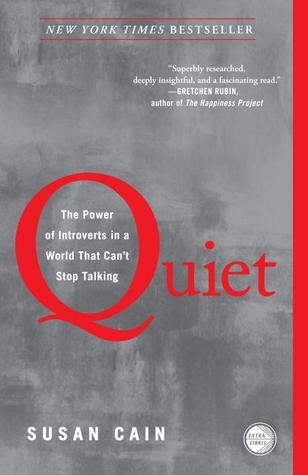
Quiet: The Power of Introverts in a World That Can't Stop Talking

by Susan Cain

View on Amazon →

"There's zero correlation between being the best talker and having the best ideas."

Cain challenges the cultural bias toward extroversion and reveals the unique strengths and potential of introverts. Drawing on psychological research, historical examples, and personal stories, she shows how introverted traits—thoughtfulness, sensitivity, depth of thought—are undervalued in modern society. The book advocates for recognizing and cultivating introversion as a source of power and innovation.

Revolutionary work that changed how society views introversion and personality diversity. Cain's research demonstrates that many world-changing innovations came from introverts, challenging the Extrovert Ideal. Essential reading for introverts seeking validation and for anyone working to understand different personality types in education, business, and relationships.

  • Introversion is not shyness or pathology; it is a normal personality variation
  • Introverts process information more deeply and produce creative insights
  • Modern culture overvalues extraversion while underestimating introversion's strengths
  • Schools and workplaces should accommodate diverse working and learning styles
  • The introversion-extroversion spectrum is more nuanced than the book sometimes suggests
  • Some research cited has been questioned or faced replication issues
  • May underestimate how much introverts benefit from social engagement and networking

"A fascinating exploration that will resonate with anyone who thinks of themselves as quieter."

The New York Times, Publication

"Essential reading that challenges and changes how we think about personality and potential."

Sheryl Sandberg, Meta Executive

"Widely referenced in discussions of workplace and classroom diversity and inclusion."

Educational and Corporate Leaders, Institutional World
Back to all lists