The 10 Most Essential Real Estate Books

Master real estate investing with these industry-leading guides trusted by professional investors worldwide

Real estate investment offers a proven pathway to financial independence and wealth creation. These 10 essential books represent the collective wisdom of successful investors, industry experts, and financial strategists. Whether you're a beginner building your first property portfolio or an experienced investor scaling your operations, these guides provide actionable strategies, proven frameworks, and real-world insights to navigate the complexities of real estate markets, financing, property management, and strategic growth.

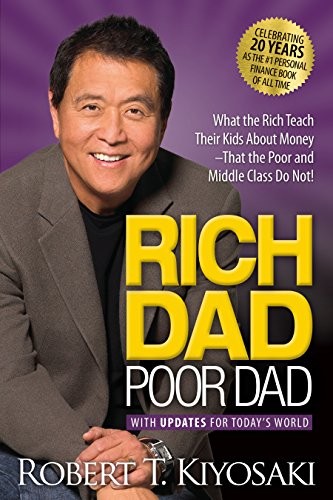
Rich Dad Poor Dad: What the Rich Teach Their Kids About Money That the Poor and Middle Class Do Not!
01

Rich Dad Poor Dad: What the Rich Teach Their Kids About Money That the Poor and Middle Class Do Not!

by Robert T. Kiyosaki

"The poor and the middle class work for money. The rich have money work for them."

Kiyosaki shares his story of growing up with two father figures—his biological father and his friend's wealthy father—revealing how their contrasting financial perspectives shaped his understanding of money and investing. The book challenges conventional wisdom about earning a high income to become wealthy, emphasizing that true financial independence comes from building assets and understanding the difference between active and passive income. Translated into 51 languages and sold over 32 million copies, it remains a foundational text in financial education.

Rich Dad Poor Dad revolutionized how millions approach wealth and financial literacy, particularly regarding real estate as an asset-building tool. It establishes the fundamental mindset shift required for successful investing—moving from linear income to asset accumulation. For real estate professionals and investors, understanding Kiyosaki's framework of assets versus liabilities is essential for evaluating property investments and structuring sustainable wealth.

  • Distinguish between assets that generate income and liabilities that drain wealth
  • Build a mindset focused on wealth accumulation through investments rather than employment
  • Understand the critical importance of financial education in making sound investment decisions
  • Real estate is a primary vehicle for creating passive income and long-term financial security
  • The book's identity of the 'rich dad' mentor remained ambiguous for years, raising questions about narrative authenticity
  • Critics argue some financial advice is overly simplified and doesn't account for individual circumstances or risk tolerance
  • Several reviewers noted factual inaccuracies and claim the book contains 'much wrong advice and some dangerous advice'

"I've known Robert for years. He's smart and he understands the real estate market. Rich Dad Poor Dad is a good read."

Donald Trump, Real Estate Developer and Former U.S. President

"Rich Dad Poor Dad inspired me to teach my children about financial independence through real estate and asset building."

Will Smith, Actor and Producer

"The #1 Personal Finance book of all time, translated into dozens of languages and sold around the world."

The New York Times, Leading Global News Organization

The Millionaire Real Estate Investor
02

The Millionaire Real Estate Investor

by Gary Keller, Dave Jenks, and Jay Papasan

"Successful investing isn't about luck. It's about having and executing a plan."

Based on extensive research and interviews with over 120 self-made millionaire real estate investors, this book reveals the specific strategies, models, and mindsets that separate successful investors from the rest. The authors present a clear three-stage framework—Think a Million, Buy a Million, and Own a Million—that guides readers through developing investor mentality, property selection and acquisition, and portfolio management. The book emphasizes that investing by definition is not risky when you employ time-tested strategies and avoid speculation.

This book distills the accumulated wisdom of more than 120 millionaire investors into actionable principles that any serious investor can implement. Gary Keller's research methodology and presentation of proven investment models make it essential for understanding professional-level real estate investing practices. It bridges the gap between motivation and execution, providing the specific frameworks that separate casual landlords from true wealth builders.

  • Track net worth as your primary financial metric and success indicator for investment strategy
  • Master the four stages of investment maturity: thinking like an investor, selecting properties, managing portfolios, and creating passive income systems
  • Understand the importance of building a professional team including brokers, lenders, and advisors
  • Focus on cash-flowing properties that provide both appreciation and immediate income generation
  • Some readers find the book's framework overly simplistic for experienced investors seeking advanced strategies
  • The examples and case studies, while numerous, are sometimes criticized for being generic and not reflecting all market conditions
  • Critics note the book emphasizes residential property heavily and provides limited guidance on commercial or alternative property types

"This book presents a new paradigm for real estate and should be required reading for real estate professionals everywhere."

Robert T. Kiyosaki, Author of Rich Dad Poor Dad

"Whether you are just getting started or a veteran in the business, The Millionaire Real Estate Investor is the step-by-step handbook for seeking excellence in your profession and in your life."

Mark Victor Hansen, Co-author of Chicken Soup for the Soul

"Filled with practical workable advice for anyone wanting to build wealth."

Mike Summey, Co-author of The Weekend Millionaire's Secrets to Investing in Real Estate

"On my scale of one to 10, it rates a solid 10."

Robert J. Bruss, Inman News
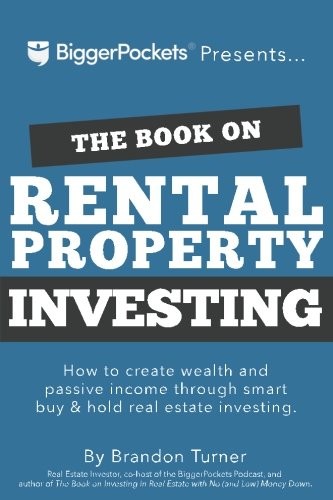
The Book on Rental Property Investing: How to Create Wealth With Intelligent Buy and Hold Real Estate Investing
03

The Book on Rental Property Investing: How to Create Wealth With Intelligent Buy and Hold Real Estate Investing

by Brandon Turner

"Rental property investment has a tendency to take over your life."

Written by a BiggerPockets co-host and active investor, this practical guide breaks down every stage of the rental property investment process into manageable, understandable steps. Turner covers property selection, analysis, financing, management, and portfolio scaling with both theoretical frameworks and real-world examples. The book doesn't shy away from the challenges, candidly addressing the lifestyle demands and potential pitfalls while providing proven strategies for maximizing long-term returns through appreciation, cash flow, tax advantages, and loan paydown.

For anyone serious about building long-term wealth through buy-and-hold rental properties, this book provides the most comprehensive and accessible roadmap available. Turner's down-to-earth approach and emphasis on foundational principles makes complex concepts digestible for beginners while offering enough depth for experienced investors. It's widely recognized as the definitive guide for rental property investors seeking to build sustainable, income-producing portfolios.

  • Understand the four primary wealth-building mechanisms in rental property: cash flow, appreciation, loan paydown, and tax advantages
  • Learn systematic property analysis techniques including cap rates, cash-on-cash returns, and cash flow projections
  • Develop professional tenant screening and management practices to protect long-term returns
  • Master the discipline of thinking in terms of percentages and strategic allocation rather than individual property prices
  • Some readers noted mathematical discrepancies in the book's examples, particularly in Chapter 5 regarding cash flow projections
  • Certain budget and cost estimates are reported as outdated, potentially leading readers to underestimate expenses in their own markets
  • A few investors found the book overly focused on the beginning stages and desired more advanced strategies for scaling portfolios

"Brandon Turner's The Book on Rental Property Investing does that, and does it in a way that puts financial freedom through real estate within reach of anyone who wants it."

J. Scott, Author of The Book on Flipping Houses

"This is a great reference for beginners and experienced rental owners!"

Al Williamson, LeadingLandlord.com

"Turner plainly lays out the steps to investing at any level without shying away from doses of reality."

Kirkus Reviews, Independent Book Review Organization
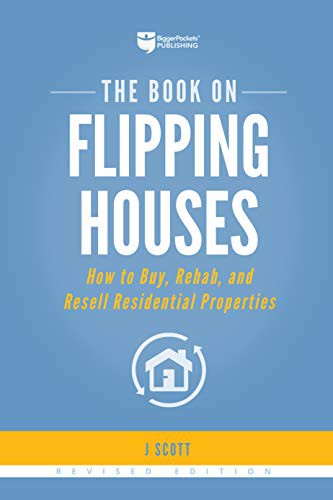
The Book on Flipping Houses: How to Buy, Rehab, and Resell Residential Properties
04

The Book on Flipping Houses: How to Buy, Rehab, and Resell Residential Properties

by J. Scott

"Your job as a business owner has nothing to do with rehabbing and selling houses. Your job has to do with creating systems and processes to allow your business to rehab and sell more houses."

This comprehensive guide from a successful house flipper who has transacted over $60 million in properties provides a detailed roadmap for executing profitable property flips. Scott covers the complete process from initial property search and due diligence through rehabilitation planning, contractor management, and final sale. With over 350 pages of step-by-step instruction, real examples, and practical tools, the book addresses both the business fundamentals and the operational realities of house flipping, making it accessible to newcomers while valuable for experienced investors.

House flipping represents one of the most dynamic and profitable real estate strategies when executed properly, and this book provides the most comprehensive guide to mastering the mechanics. Scott's emphasis on systems, processes, and repeatable methods rather than luck distinguishes this from purely anecdotal accounts. For anyone considering fix-and-flip properties, understanding Scott's framework for deal analysis, renovation budgeting, and market timing is essential to avoiding costly mistakes.

  • Build a systematic approach to identifying, analyzing, and executing profitable flips rather than relying on individual deals
  • Master the mathematics of flip profitability including accurate renovation estimation and after-repair value calculations
  • Develop relationships with reliable contractors, inspectors, and vendors to ensure quality work and protect margins
  • Understand market timing and recognize when flipping conditions are favorable versus when to shift to alternative strategies
  • Some experienced investors feel the examples are somewhat idealized and don't fully capture the challenges of dealing with unexpected renovation issues
  • Critics note that the book is property-type and market-focused on single-family residential flips, with limited guidance on multifamily or commercial flipping
  • A few readers mentioned the extensive checklists and forms, while useful, can feel overwhelming for those seeking a conceptual overview

"When it comes to the house flipping business, there are only a few people I trust and J Scott is one of them. The Book on Flipping Houses is an excellent guide that can help you understand the inner workings of a very complex and lucrative business."

Brandon Turner, Author of The Book on Rental Property Investing

"J Scott is one of the premier real estate investing writers in the industry with a knack for delivering top-notch content in a way that is easily understood by everyone."

BiggerPockets Publishing, Leading Real Estate Publishing Platform
What Every Real Estate Investor Needs to Know About Cash Flow: And 36 Other Key Financial Measures
05

What Every Real Estate Investor Needs to Know About Cash Flow: And 36 Other Key Financial Measures

by Frank Gallinelli

"Numbers don't lie. If you can't run the numbers on a deal, you're not ready to make the investment."

From a Yale graduate and commercial real estate expert with 50+ years in the industry, this updated edition teaches the mathematics and financial analysis essential to professional-level real estate investing. Gallinelli covers 37 critical financial formulas including Discounted Cash Flow, Net Present Value, Internal Rate of Return, Cap Rate, Cash-on-Cash Return, and Debt Service Coverage Ratio. The updated edition includes detailed investment case studies demonstrating how to apply these metrics to real-world property analysis and decision-making.

Many real estate investors fail not from lack of deal flow but from poor analysis—selecting properties that appear profitable on surface but destroy wealth when examined properly. Gallinelli's book provides the mathematical literacy necessary to evaluate investments like professional institutional investors. Understanding these 37 financial measures is the difference between amateur guessing and professional analysis, making it essential for serious wealth building.

  • Master the core financial metrics that determine property profitability and investment suitability
  • Understand the difference between cash flow metrics and true return calculations including taxes and appreciation
  • Learn how to compare different investment opportunities using standardized financial measures
  • Apply professional investment analysis techniques to avoid overpriced deals and identify exceptional opportunities
  • Some readers find the mathematical approach dense and may require finance background or calculator support for full comprehension
  • The book emphasizes numerical analysis heavily while providing less guidance on the qualitative factors of property selection
  • Critics note the case studies, while illustrative, use simplified assumptions that may not reflect complex real-world scenarios

"The updated edition maintains the essentials that have made this book a staple among serious investors while adding new, detailed investment case studies."

Frank Gallinelli, Founder of RealData Inc., Real Estate Investment Software

"Frank Gallinelli's expertise has made this book an essential resource for professional real estate investment analysis."

Columbia University, Academic Institution

"Essential reading for anyone serious about evaluating real estate investments at a professional level."

Real Estate Investment Industry, Professional Community
The Millionaire Real Estate Agent: It's Not About the Money It's About Being the Best You Can Be
06

The Millionaire Real Estate Agent: It's Not About the Money It's About Being the Best You Can Be

by Gary Keller, Dave Jenks, and Jay Papasan

"There is no failure. You win or you learn. Either one is okay."

From the founder of Keller Williams Realty, this book reveals how top-performing real estate agents build million-dollar businesses. Keller breaks down the three economic drivers of successful agencies: lead generation, conversion, and leverage. The book presents a practical framework covering earning models, organizational structure, business systems, and the critical importance of specialization in listings. Published in 2004, it became a million-copy bestseller and remains essential reading for real estate professionals seeking to scale their business.

For real estate agents and brokers, understanding how to build a sustainable, high-income business is just as important as understanding property investment itself. Keller's emphasis on systems, team building, and lead generation provides the business framework that separates agents with modest incomes from those earning seven figures. The book is particularly valuable for its insights into the real estate business model and what truly drives profitability.

  • Master the three pillars of agent success: generating leads, converting prospects to transactions, and leveraging your time through team building
  • Understand that specializing in listings rather than equally pursuing buyers and sellers dramatically increases earning potential
  • Build business systems and processes that free you from daily operations to focus on high-value activities
  • Recognize that consistency and frequency of marketing messaging matter more than creative sophistication
  • Some readers feel the book is heavily tailored to individual agents rather than addressing brokerage leadership challenges
  • Critics note the emphasis on traditional real estate models may not fully address technological disruption and digital marketing evolution
  • A few investors found less applicable content for commercial real estate or investment property specialists

"This book presents a new paradigm for real estate and should be required reading for real estate professionals everywhere."

Robert T. Kiyosaki, Author of Rich Dad Poor Dad

"Whether you are just getting started or a veteran in the business, The Millionaire Real Estate Agent is the step-by-step handbook for seeking excellence in your profession and in your life."

Mark Victor Hansen, Co-author of Chicken Soup for the Soul

"The definitive guide for building a million-dollar real estate business through systems, team, and specialization."

Keller Williams Realty, Largest Privately Held Real Estate Company in the U.S.
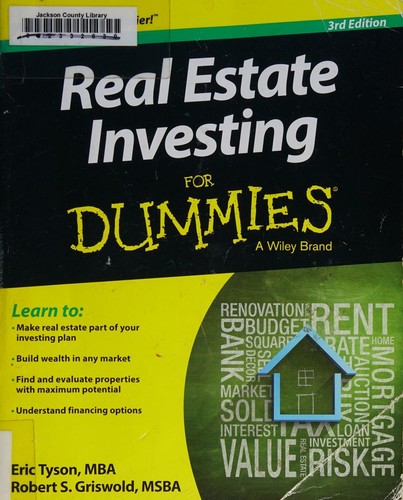
Real Estate Investing For Dummies
07

Real Estate Investing For Dummies

by Eric Tyson and Robert S. Griswold

"Real estate investing is more than just buying properties and collecting rent. Success requires understanding the business fundamentals, managing your finances wisely, and avoiding common pitfalls."

Written by Eric Tyson (MBA personal finance expert) and Robert Griswold (successful investor and property manager), this comprehensive guide demystifies real estate investing for beginners while maintaining value for experienced investors. The book covers property evaluation, financing strategies, management practices, tax implications, and risk management in accessible language. Now in its fourth edition, it continues to be a top recommendation for those seeking a thorough foundation in real estate fundamentals without overwhelming jargon.

For someone just beginning their real estate investing journey, this book provides the breadth of knowledge needed to understand the major categories of real estate investment and the key decisions required at each stage. Unlike books that focus on single strategies, the For Dummies approach provides a 360-degree overview that helps beginners understand where their specific investment type fits in the broader context and what factors deserve attention.

  • Understand the major real estate investment types and which align best with your financial situation and goals
  • Learn the critical importance of property evaluation metrics and how to calculate whether a deal makes financial sense
  • Master the financing landscape including conventional mortgages, creative financing options, and how financing decisions impact returns
  • Develop knowledge of property management, tax strategies, and the business operations of real estate investment
  • Some advanced investors find the breadth-focused approach lacks the depth needed for specialized strategy execution
  • The 'For Dummies' brand, while accessible, is sometimes criticized as oversimplifying complex concepts that warrant more detailed treatment
  • Critics note that examples, while helpful, may become dated relatively quickly given real estate market evolution

"Proven, practical, and actionable advice for anyone who wants to invest in income-producing properties."

Eric Tyson, Bestselling Personal Finance Author, MBA

"This book provides the foundational knowledge that helps new investors avoid the costly mistakes many make in their first years."

Robert S. Griswold, Successful Real Estate Investor and Property Manager

"The definitive real estate investing guide for beginners seeking comprehensive understanding without overwhelming jargon."

Wiley Publishing, Leading Educational Publisher
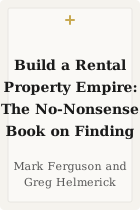
Build a Rental Property Empire: The No-Nonsense Book on Finding Deals, Financing the Right Way, and Managing Wisely
08

Build a Rental Property Empire: The No-Nonsense Book on Finding Deals, Financing the Right Way, and Managing Wisely

by Mark Ferguson and Greg Helmerick

"Below-market deals are created, not found. You have to develop the skills and networks to identify and create opportunities that others miss."

From an investor who owns over 180,000 square feet of rental properties and has sold over 1,000 homes as a broker, this practical guide cuts through the noise to address the core challenges of building a successful rental portfolio. Ferguson covers the essentials: finding deals below market value, analyzing properties correctly, securing appropriate financing, managing tenants professionally, and scaling the business. With over 20 years of active investing experience, Ferguson emphasizes real-world lessons from both successes and failures.

While many books explain the theory of rental properties, Ferguson provides the street-level intelligence that separates profitable investors from those who struggle. His emphasis on finding deals below market value, understanding local markets deeply, and managing properties operationally provides practical wisdom that comes only from hands-on experience. For investors serious about building meaningful portfolios, Ferguson's perspective on what actually works is invaluable.

  • Master the techniques for finding below-market properties through multiple channels and local market expertise
  • Learn proper property analysis including cap rates, cash flow projections, and long-term appreciation potential
  • Understand creative financing options and when to use them to maximize deals and returns
  • Build systems for professional property management that ensure long-term profitability and tenant satisfaction
  • Some readers noted the book assumes readers have access to mortgage financing and provides less guidance for alternative funding strategies
  • Critics mention the examples are heavily focused on Ferguson's specific markets and geographic characteristics may limit applicability
  • A few investors felt the book could include more on advanced portfolio strategies and optimization

"This book represents the lessons learned from 20+ years of active investing and managing a real estate portfolio built on proven principles."

Mark Ferguson, Owner of 180,000+ sq ft Rental Properties, Blue Steel Real Estate

"A practical, no-nonsense guide that provides actionable advice from someone who is actively investing in real estate today."

BiggerPockets Community, Real Estate Investor Community
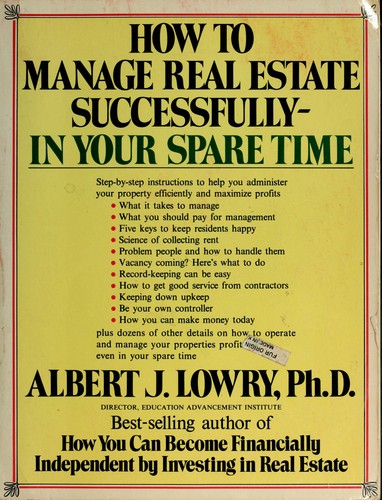
How to Manage Real Estate Successfully: In Your Spare Time
09

How to Manage Real Estate Successfully: In Your Spare Time

by Albert J. Lowry

"The secret to successful rental property ownership isn't in finding deals—it's in managing those deals wisely year after year."

From a self-made real estate millionaire with 15+ years of hands-on property management experience, this comprehensive guide addresses the operational side of rental property ownership. Lowry covers the critical topics that separate casual landlords from professional property managers: cost control, maintenance efficiency, tenant screening and relations, lease structuring, record keeping, and financial tracking. The book emphasizes that successful rental property ownership is as much about sound operations as it is about property selection and financing.

Many investors focus exclusively on acquisition and analysis but stumble in execution and operations. Lowry's emphasis on the management fundamentals that protect profitability and tenant relationships is essential for building long-term wealth. His insights into proper lease structures, problem tenant management, and cost control represent the operational discipline that separates successful landlords from those who struggle with problem properties. This book should be read by every landlord before acquiring their first rental property.

  • Establish professional property management systems including tenant screening, lease enforcement, and maintenance protocols
  • Master cost control techniques that maximize net operating income without compromising property quality or tenant relationships
  • Understand the financial record-keeping and tax documentation that enables both compliance and optimization
  • Develop problem-tenant management approaches that protect your investment while maintaining legal and ethical standards
  • Published in 1979, some readers note certain operational practices and legal frameworks have evolved since publication
  • Critics mention the book is property-management-focused and provides limited guidance on acquisition or financial analysis
  • Some investors felt the book could benefit from more modern technology solutions for property management

"His seminars instruct sellout audiences across the country how to buy a first house and also how to make money by investing in real estate."

Nancy Farber, Publishing Professional

"For years, Dr. Lowry has been showing investors how to keep the down payment low and then finance the rest as painlessly as possible."

Robert Runde, Money Magazine

"Dr. Albert Lowry shows it is possible to buy a house with little or no down payment if you know where to look and how to do it."

Angela Haines, Financial Education Expert
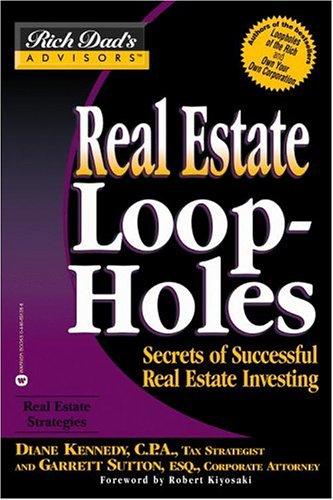
Real Estate Loopholes: Secrets of Successful Real Estate Investing
10

Real Estate Loopholes: Secrets of Successful Real Estate Investing

by Diane Kennedy, Robert T. Kiyosaki, and Garrett Sutton

"Taxes are often the biggest expense in real estate investing. Understanding the loopholes available to real estate investors can dramatically improve your bottom line."

Part of the Rich Dad's Advisors series, this book addresses the tax and liability protection strategies that separate casual investors from serious wealth builders. Co-authored by Diane Kennedy (CPA and tax strategist), Robert Kiyosaki (bestselling author), and Garrett Sutton (attorney and real estate expert), the book examines the three critical pillars of successful real estate investing: property selection, tax optimization, and liability protection. With real examples and case studies, it demonstrates how wealthy investors legally minimize tax burden while protecting assets from liability.

The tax and liability implications of real estate investment can dramatically impact long-term wealth accumulation. Many investors focus exclusively on deal analysis and cash flow while leaving tens of thousands of dollars in unnecessary taxes on the table. This book bridges the gap between investment strategy and advanced tax planning, making it essential for investors serious about maximizing returns and protecting assets through proper structuring.

  • Master the tax-advantaged structures and strategies available exclusively to real estate investors
  • Understand entity selection (LLC, S-Corp, C-Corp) and how it impacts tax liability and asset protection
  • Learn depreciation strategies, cost segregation, and other tax deductions that reduce taxable income from rentals
  • Protect real estate assets through proper insurance, entity structuring, and liability management strategies
  • Tax laws change frequently and some of the strategies discussed may have evolved since 2003 publication
  • Critics note the book is complex and may require consultation with a CPA for proper implementation
  • Some readers found the focus on tax strategies somewhat reduced attention to fundamental investment principles

"Real estate investors who understand and implement these tax strategies legally keep significantly more of their profits."

Diane Kennedy, CPA, Tax Strategist, Co-author

"This book reveals the legal strategies wealthy real estate investors use to minimize taxes and protect assets."

Robert T. Kiyosaki, Author of Rich Dad Poor Dad

"Proper entity structuring and tax planning in real estate can mean hundreds of thousands of dollars difference in wealth accumulation over a career."

Garrett Sutton, Attorney and Real Estate Expert
Back to all lists