The Relationship Mastery Collection

Evidence-based guides to deeper connection, authentic communication, and thriving partnerships

This curated selection of relationship literature combines research from attachment theory, neuroscience, and couples therapy with practical wisdom for building and sustaining meaningful connections. These books address communication breakdowns, attachment styles, boundary-setting, sexuality, and the ongoing work of maintaining passion and trust. Whether you're navigating new romance, deepening existing partnerships, or healing from relationship wounds, these evidence-backed guides provide frameworks for creating relationships of genuine intimacy and mutual respect.

01

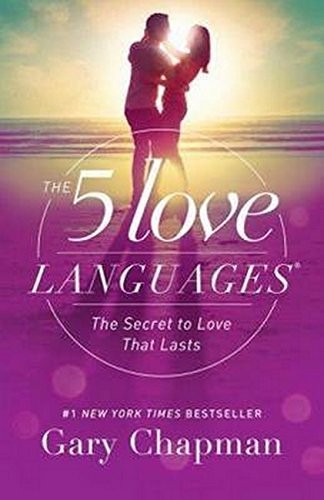
The 5 Love Languages: The Secret to Love that Lasts

by Gary Chapman

View on Amazon →

"We tend to express love in the language we understand best. But if your spouse's love language differs from yours, you might consistently fail to communicate love effectively."

Best-selling relationship expert Gary Chapman presents the concept that people give and receive love through different 'languages': Words of Affirmation, Quality Time, Acts of Service, Receiving Gifts, and Physical Touch. Understanding your partner's primary love language and communicating in that language dramatically improves relationship satisfaction. The book provides assessment tools and practical examples for each language.

Revolutionary because it acknowledges that people express and perceive love differently. Many relationship conflicts stem from misaligned expectations about what love looks like, not from lack of love itself. Learning your partner's language and vice versa creates immediate improvements in intimacy and satisfaction.

  • Five distinct love languages exist, and most people have a primary language that makes them feel most loved
  • Many couples experience conflict because they express love in their own language, not their partner's
  • Speaking your partner's love language doesn't require big gestures—small consistent acts in their language create profound connection
  • Understanding love languages reduces assumptions and misinterpretations, replacing them with intentional, effective communication
  • The five languages are somewhat reductive—human preferences are more nuanced and contextual than the framework suggests
  • Some critics argue the book oversimplifies complex relationship issues into a personality framework
  • The assessment tools, while useful, are not psychometrically validated with scientific rigor

"Chapman's framework has transformed millions of relationships by helping couples understand each other's emotional needs."

The New York Times, Major Publication
02

Attached: The New Science of Adult Attachment and How It Can Help You Find—and Keep—Love

by Amir Levine, MD and Rachel Heller, MA

View on Amazon →

"Your attachment style is a deep-rooted template for how you relate to other people. It determines what you need to feel loved and secure in a relationship."

Levine and Heller apply attachment theory—traditionally studied in children—to adult romantic relationships. The book identifies three attachment styles (Secure, Anxious, and Avoidant) and explains how these styles influence relationship patterns, conflict, and satisfaction. Understanding your attachment style and your partner's enables you to navigate relationship challenges with greater awareness.

Provides crucial insight into why we relate the way we do in romantic relationships. Attachment theory is one of the most robust frameworks in psychology, and applying it to adults reveals patterns many people have never understood about themselves. This knowledge is liberating and enables genuine change.

  • Three primary attachment styles—Secure, Anxious, and Avoidant—develop from childhood experiences and influence adult relationships
  • Anxiously attached people fear abandonment and need constant reassurance; avoidantly attached people fear engulfment and need independence
  • Secure people are comfortable with intimacy and autonomy, making them better relationship partners
  • Awareness of your style and your partner's enables compassionate understanding of different needs and behaviors
  • Categorizing people into three attachment styles is reductive of the spectrum nature of attachment
  • Some research suggests attachment styles are more fluid than the book presents, changing based on relationships and life circumstances
  • The framework can become self-fulfilling if people use it to justify unhealthy patterns rather than change them

"Levine and Heller bring clarity to the confusing world of romantic attachment, making attachment theory accessible and applicable."

Harriet Lerner, Author and Relationship Expert
03

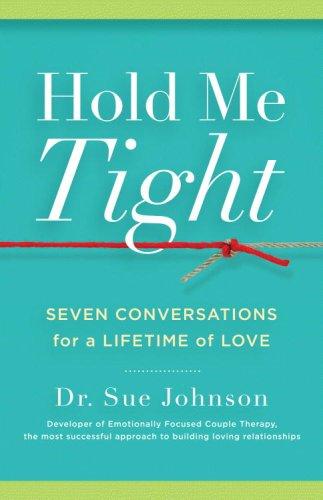
Hold Me Tight: Seven Conversations for a Lifetime of Love

by Dr. Sue Johnson, EdD

View on Amazon →

"In a world of uncertainties, having someone who is absolutely there for you is the most powerful survival mechanism we have."

Emotionally Focused Therapy (EFT) pioneer Sue Johnson identifies seven crucial conversations that couples must have to maintain a strong, connected relationship. Drawing from thousands of couple sessions, Johnson shows how to move beyond surface-level issues to address emotional needs and create secure attachment. The book is structured around conversations to have at different life stages.

Johnson's EFT approach has the strongest research support of any couples therapy model. The 'seven conversations' framework provides a roadmap for maintaining emotional intimacy and security throughout relationship evolution. Rather than 'fixing' problems, the approach focuses on deepening connection.

  • Emotional safety and connection are the foundation of lasting relationships; when these are present, other issues become manageable
  • Specific conversations about needs, dreams, vulnerabilities, and commitment create and maintain emotional intimacy
  • Many relationship conflicts are actually attachment bids—attempts to connect that are misinterpreted as criticism
  • Knowing how to 'repair' connection after disconnection or conflict is as important as preventing disconnection
  • The seven conversations framework, while helpful, may feel prescriptive to couples preferring organic evolution
  • EFT relies on emotional vulnerability and communication skills that some people find difficult to access
  • The book is less practical for couples with significant power imbalances or abusive dynamics

"Sue Johnson's work on emotional attachment in adult relationships is revolutionary and grounded in solid research."

John Gottman, Relationship Researcher
04

The Seven Principles for Making Marriage Work: A Practical Guide from the Country's Foremost Relationship Expert

by John M. Gottman, PhD and Nan Silver

View on Amazon →

"The difference between happy and unhappy couples is not whether they have conflicts. It's how they handle those conflicts."

Renowned relationship researcher John Gottman distills decades of empirical research into seven principles for maintaining strong marriages. Based on longitudinal studies predicting divorce with 90% accuracy, the book explains what keeps couples together and provides concrete exercises for implementing each principle. Topics include managing conflict, fostering fondness, and creating shared meaning.

Gottman's research is the most comprehensive empirical study of what makes marriages succeed or fail. His ability to predict divorce with 90% accuracy is based on measurable patterns, not intuition. The seven principles translate this research into actionable practices that couples can implement.

  • Couples can predict divorce with remarkable accuracy through specific patterns: criticism, contempt, defensiveness, and stonewalling
  • Maintaining a culture of 'fondness and admiration' provides resilience through inevitable conflicts
  • Learning to handle conflict constructively—focusing on the issue, not character attacks—predicts relationship longevity
  • Creating shared meaning and purpose strengthens marriage beyond resolving specific problems
  • Gottman's research is primarily based on heterosexual couples; applicability to LGBTQ+ relationships is less established
  • Some of the seven principles are more complex to implement than the book acknowledges
  • The predictive power, while impressive, doesn't necessarily mean implementing the principles guarantees relationship success

"Gottman's empirical research and practical principles have helped countless couples understand and strengthen their relationships."

The New York Times, Major Publication

05

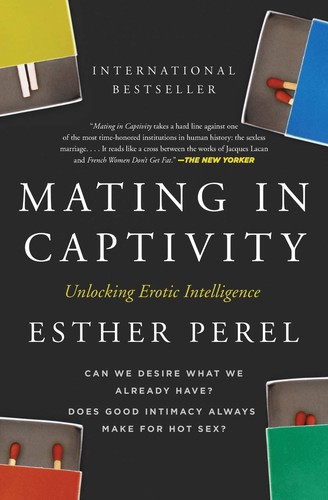
Mating in Captivity: Unlocking Erotic Intelligence

by Esther Perel

View on Amazon →

"Love is a biological drive, but desire is different—desire requires novelty, mystery, and a degree of uncertainty. Modern marriage asks for both comfort and passion, a difficult combination."

Therapist Esther Perel explores the paradox of modern marriage: we expect our partners to provide both domestic security and erotic intensity. The book examines how long-term couples can maintain desire and passion while building trust and commitment. Perel draws from her work with couples worldwide, exploring cultural perspectives on love, commitment, and sexuality.

Directly addresses the decline of desire in long-term relationships, a universal challenge couples face. Perel's insights that passion requires mystery and separateness alongside intimacy offer counterintuitive wisdom. Her exploration of desire across cultures expands perspectives beyond Western relationship models.

  • Desire differs from love and attachment; maintaining all three requires distinct intentional efforts
  • The comfort and security necessary for attachment can inadvertently erode the mystery and novelty necessary for desire
  • Some degree of separateness and autonomy in couples actually strengthens both intimacy and desire
  • Understanding cultural perspectives on love and sexuality expands possibilities for what couple relationships can be
  • Perel's perspective on erotic desire may feel uncomfortable or irrelevant to couples with different sexual values
  • The book focuses on desire dynamics more than practical steps for addressing desire loss
  • Critics argue that maintaining mystery and separateness can conflict with emotional intimacy and secure attachment

"Perel brilliantly captures the modern couple's paradox and offers profound wisdom on maintaining both security and desire."

The Guardian, Major Publication
06

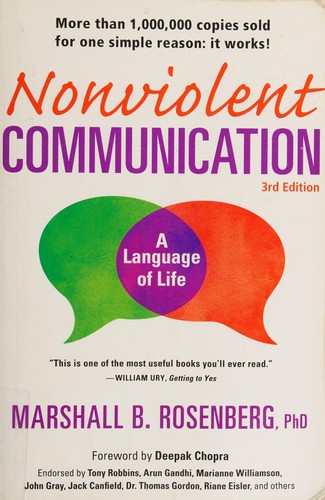
Nonviolent Communication: A Language of Life: Life-Changing Tools for Healthy Relationships

by Marshall B. Rosenberg, PhD

View on Amazon →

"The most important thing is to hear what needs are behind people's words. When we understand someone's needs, we're close to their hearts."

Psychologist Marshall Rosenberg presents Nonviolent Communication (NVC), a framework for expressing needs and resolving conflicts with compassion for all parties. The NVC process—identifying observations, feelings, needs, and requests—transforms defensive communication patterns into genuine dialogue. The book provides tools for couples, families, and communities to communicate authentically.

NVC provides a structured approach to vulnerable communication that transforms relationships. By shifting from blame and defensiveness to honest expression of needs, couples move from conflict to genuine understanding. The framework is applicable across all relationships—couples, families, workplaces, and communities.

  • Most communication problems stem from unmet needs being expressed as blame or criticism rather than honest requests
  • The NVC four-step process—observation, feeling, need, request—transforms defensive dialogue into genuine understanding
  • Compassionate listening involves seeking to understand the needs behind someone's words, not just refuting their arguments
  • Expressing vulnerability about your needs creates safety for authentic connection
  • NVC language can sound artificial or scripted if not genuinely integrated into communication patterns
  • Some people find the framework too formal for spontaneous, natural conversation
  • In relationships with significant power imbalances or abuse, NVC alone is insufficient; professional intervention is necessary

"Rosenberg's NVC framework activates the parts of the brain responsible for learning and connection, transforming how people relate."

Daniel Siegel, MD, Neuroscientist and Therapist
07

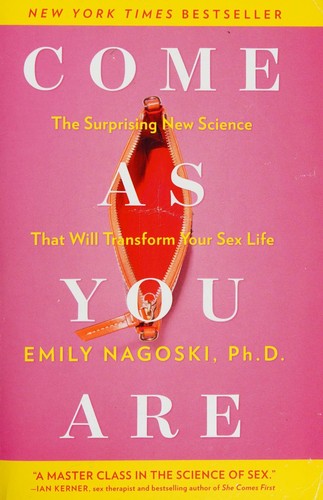
Come as You Are: The Surprising New Science that Will Transform Your Sex Life

by Emily Nagoski, PhD

View on Amazon →

"Your sexuality is not a problem to be solved; it's a source of pleasure and connection waiting to be understood and appreciated."

Sex educator and researcher Emily Nagoski presents the science of female sexuality, challenging myths and offering a neurobiological framework for sexual pleasure. The book explains how stress, body image, and emotional connection directly influence sexual response. Nagoski provides practical strategies for couples to address desire discrepancies and enhance intimacy.

Provides evidence-based understanding of sexuality that contradicts many myths and misconceptions, particularly about women's sexual response. The neurobiological framework explains many common sexual challenges. The practical exercises help couples move from problem-focused to pleasure-focused approaches to sexuality.

  • Sexual response in women operates through accelerators (things that increase arousal) and brakes (things that decrease it); context and stress profoundly affect sexual response
  • Desire discrepancies between partners are extremely common and addressable through understanding each person's sexual patterns
  • Self-criticism and body dissatisfaction directly diminish sexual pleasure; self-compassion and pleasure-focus enhance it
  • Communication about sexual needs and preferences is essential; most couples lack this foundational conversation
  • The book focuses primarily on women's sexuality; applicability to other genders is limited
  • Some people find the sexual content uncomfortable despite its scientific framing
  • Practical strategies, while helpful, sometimes feel simplified for complex sexual issues

"Nagoski's work is liberating—helping women understand their sexuality on their own terms, not as defined by partners or media."

Gloria Steinem, Feminist Icon and Activist
08

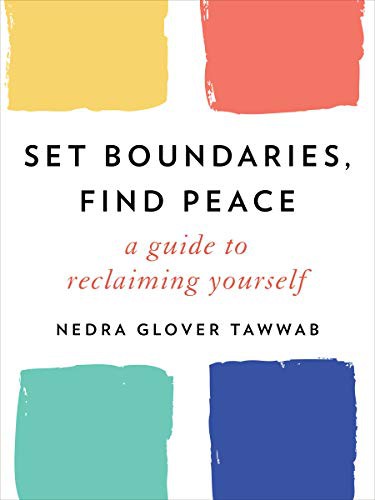
Set Boundaries, Find Peace: A Guide to Reclaiming Yourself

by Nedra Glover Tawwab

View on Amazon →

"Boundaries are the limits we set on how we will be treated. They are essential to healthy relationships, yet many people struggle to set them because they've internalized messages that boundaries are selfish."

Therapist Nedra Tawwab provides a practical guide to setting boundaries in all relationships, from romantic partners to family and friends. The book addresses why boundaries are essential, common obstacles to boundary-setting, and how to communicate limits clearly without guilt. Tawwab emphasizes that boundaries are acts of self-love, not selfishness.

Essential for anyone struggling with codependency or people-pleasing patterns that undermine relationship health. Tawwab reframes boundaries from being selfish to being necessary for healthy relationships. The practical scripts and examples make boundary-setting accessible and doable.

  • Healthy boundaries are essential for sustainable relationships; without them, resentment and burnout accumulate
  • Common obstacles to boundary-setting include guilt, fear of abandonment, and beliefs that boundaries are selfish
  • Clear, consistent boundaries create safety and respect in relationships; they don't diminish love or connection
  • Saying 'no' to some requests allows you to say 'yes' to the relationships and activities that matter most
  • Some readers find the emphasis on assertiveness more applicable to Western individualistic cultures
  • In relationships with significant power imbalances, implementing boundaries may require external support
  • The book is less focused on maintaining relationships after setting boundaries; the relational impact isn't deeply explored

"Tawwab's book is a gift—helping people understand that boundaries protect relationships rather than damage them."

Oprah Winfrey, Media Mogul and Life Coach
09

The Course of Love: A Novel

by Alain de Botton

View on Amazon →

"The course of love is not a straight line upward toward endless satisfaction. It's a complex journey involving periods of deep connection, periods of disconnect, and periods of growing understanding."

Philosopher Alain de Botton presents a novel following a couple from initial attraction through decades of marriage, exploring the evolution of love and the challenges of long-term commitment. Interspersed throughout the narrative are philosophical insights about expectations, intimacy, loss, and the nature of enduring love.

De Botton's unique approach—combining narrative with philosophical exploration—provides both emotional resonance and intellectual framework. The novel normalizes the trajectory of long-term love, showing that decline in initial passion doesn't mean decline in love. Essential for anyone struggling to understand evolution in long-term relationships.

  • Romantic love evolves over time; the intensity of early passion shifts to deeper, quieter forms of connection
  • Incompatibilities and differences that seem charming initially become sources of friction over time; this is normal, not a sign of wrong partnership
  • Long-term relationships require ongoing choice and recommitment; they don't sustain themselves on initial chemistry
  • Understanding love's trajectory helps couples navigate challenges with acceptance rather than disappointment
  • The novel format, while evocative, is less practical than relationship instruction books
  • Some readers find de Botton's philosophical perspective pessimistic about love
  • The couple portrayed is relatively privileged; applicability to couples with different constraints is limited

"De Botton's novel is a profound meditation on love, offering wisdom and perspective that no self-help book can achieve."

The Sunday Times, Major Publication
10

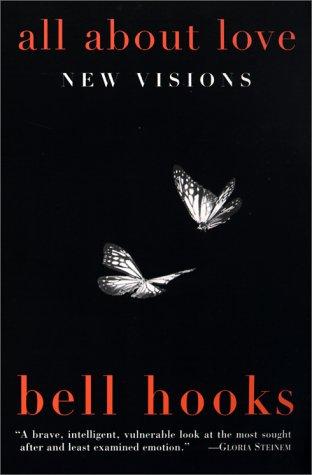
All About Love: New Visions

by bell hooks

View on Amazon →

"Love is a choice—a commitment to extend oneself for the benefit of another. This love, which requires action, is what we lack as a culture."

Renowned cultural critic bell hooks explores love as a spiritual practice—intentional, action-based, and central to human flourishing and social justice. The book challenges consumerist and patriarchal notions of romantic love, offering a vision of love as commitment to another person's wellbeing and growth. Hooks examines love in relationships, families, communities, and society.

Uniquely reframes love beyond romantic relationships to examine it as a foundational human practice with social and political dimensions. Hooks' intersectional perspective—considering race, class, and power—enriches understanding of relationships. The philosophical depth transforms how readers think about love's role in their lives and society.

  • Love is not a feeling alone but an action and commitment to another person's wellbeing and growth
  • Many people confuse passionate intensity with love; real love is patient, kind, and focused on the other person's growth
  • Healing from cultural trauma about love requires unlearning patriarchal and capitalist messages about relationships
  • Loving ourselves as a spiritual practice is foundational to loving others and contributing to just communities
  • Hooks' philosophical and theoretical approach, while profound, is less practical than other relationship books
  • Some readers find the spiritual and social justice dimensions feel removed from day-to-day relationship challenges
  • The book's broader scope means less detailed guidance on specific relationship scenarios

"Bell hooks' vision of love as spiritual practice and social commitment is both revolutionary and healing."

Cornel West, Philosopher and Cultural Critic
Back to all lists