Religion and Belief: Essential Readings

Exploring Faith, Spirituality, and Meaning Through History, Philosophy, and Personal Testimony

These works examine religion from multiple perspectives—historical analysis, theological argument, phenomenological description, and spiritual autobiography. Together they provide frameworks for understanding how humans seek meaning, construct communities around shared beliefs, and grapple with fundamental questions about existence, morality, and transcendence. Whether approaching religion as intellectual history, philosophical inquiry, or personal quest, these texts offer profound insights into human spirituality.

01

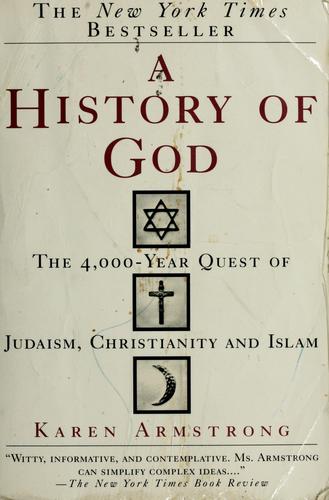
A History of God

by Karen Armstrong

View on Amazon →

"We cannot know God in the way that we know the rest of creation. We can only describe the experience of God."

Armstrong traces the evolution of the concept of God across four thousand years of Jewish, Christian, and Islamic tradition. She demonstrates how understanding of divinity transformed dramatically across historical periods and cultural contexts, challenging the notion that God-concepts remain static.

Armstrong's historical approach reveals that religious belief systems continuously evolve rather than maintaining unchanging doctrine. This scholarly examination shows how political, philosophical, and cultural factors shape theological understanding. Essential for comprehending religion as dynamic historical phenomenon.

  • God-concepts transform across historical periods and cultures
  • Theology responds to philosophical challenges and cultural shifts
  • Mystical traditions emphasize unknowability of ultimate reality
  • Fundamentalism represents relatively recent interpretive choice
  • Western religions receive emphasis at expense of others
  • Scholarly approach may alienate believers seeking affirmation
  • Some theological interpretations debated among scholars

"Witty, informative, and contemplative, Armstrong can simplify complex ideas with remarkable clarity and insight."

The New York Times Book Review, Major Book Review

"Karen Armstrong is a genius who has read widely and given us as solid a purview of the God of the past as possible."

A.N. Wilson, Author of Jesus: A Life

"A brilliantly lucid and splendidly readable book where Armstrong masterfully reduces long, complex subjects to their fundamentals."

The Sunday Times, Major Publication
02

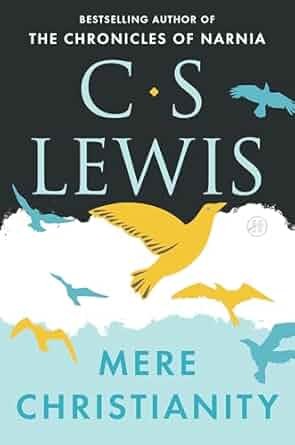
Mere Christianity

by C.S. Lewis

View on Amazon →

"I believe in Christianity as I believe that the sun has risen: not only because I see it, but because by it I see everything else."

Lewis presents Christian theology and ethics through logical argument and accessible explanation. Originally radio broadcasts, the work defends Christian orthodoxy while acknowledging doubt and difficulty, addressing both convinced believers and skeptics.

Lewis's clarity and honesty about Christian faith address intellectual objections while acknowledging emotional dimensions of belief. His refusal to minimize difficulties makes the case for faith more compelling than defensive apologetics. Essential for understanding Christian intellectual tradition.

  • Christian faith addresses intellectual and moral questions
  • Morality presupposes transcendent standard beyond human preference
  • Love and sacrifice form Christian ethics' center
  • Christian belief combines reason with acknowledgment of mystery
  • Assumes Christian framework may alienate non-Christian readers
  • Mid-twentieth-century theological assumptions limit contemporary relevance
  • Dismisses some theological positions without adequate engagement

"Voted the best book of the 20th century, instrumental in the conversions of Charles Colson and other well-known figures."

Christianity Today, Christian Magazine

"C.S. Lewis is the ideal persuader for the half-convinced, for good people who want to be Christian but find intellect getting in the way."

Anthony Burgess, New York Times Book Review

"Lewis possesses a quite unique power of making theology an attractive, exciting, and uproariously fascinating quest."

The Guardian, Leading Publication
03

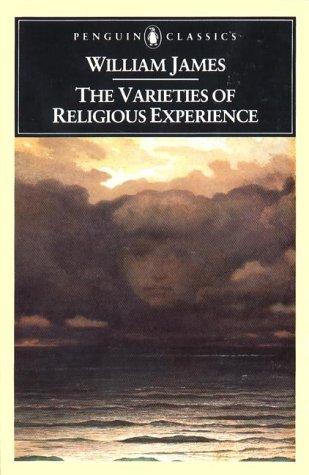
The Varieties of Religious Experience

by William James

View on Amazon →

"The true paradises are the paradises that we have lost."

James's phenomenological study of religious experience based on personal accounts and case studies. Rather than dogmatic theology, James examines the varieties of religious experience—mysticism, conversion, prayer—revealing common patterns across traditions.

James's empirical approach to religious experience reveals common psychological and spiritual phenomena across traditions. His focus on experience rather than doctrine enables comparative understanding. Essential for understanding religion as human psychological and spiritual phenomenon.

  • Religious experience manifests diverse psychological patterns
  • Mystical experience provides direct awareness of divine reality
  • Conversion experiences transform identity and perspective
  • Pragmatic effects of belief matter more than doctrinal purity
  • Early psychology concepts dated by contemporary standards
  • Focus on individual experience marginalizes communal dimensions
  • Evolutionary framework can seem judgmental of certain traditions

"A book that does me a lot of good whenever I have time to read it, one of the few books he recommended to close friends."

Ludwig Wittgenstein, Philosopher

"A work of classic beauty, with its wealth of illustration and courageous enterprise in exploring religious experience."

Josiah Royce, Philosopher

"Has remained in print for over a century and influenced major intellectuals including Émile Durkheim and Bertrand Russell."

Western Canon, Academic Tradition
04

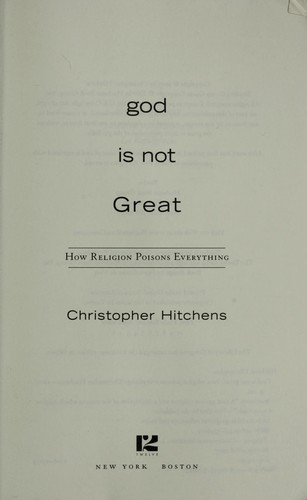
God Is Not Great

by Christopher Hitchens

View on Amazon →

"What can be asserted without evidence can be dismissed without evidence."

Hitchens argues that organized religion has caused immense suffering while offering no unique moral truth. He critiques religion's historical record, theological incoherence, and claim to moral authority while defending rationalism and humanist ethics.

Hitchens provides forceful counterargument to religious claims, demanding rigorous examination of religion's historical consequences. His sophisticated critique prevents uncritical acceptance of religious authority. Essential reading for understanding contemporary atheism's intellectual arguments.

  • Organized religion contributes to historical violence and oppression
  • Religious claims lack sufficient rational justification
  • Humanist ethics provide adequate moral foundation without religion
  • Religion demands intellectual surrender to unjustified authority
  • Polemical tone alienates believers and some agnostics
  • Oversimplifies religious belief and motivation
  • Limited engagement with sophisticated theological arguments

"An atheist book that is thoroughly enjoyable, achieving a kind of joyous impudence in its profane interrogation of the sacred."

The Wall Street Journal, Major Publication

"A thundering cannonade, thrillingly fearless, impressive, witty and brilliantly argued—easily the best of the present crop of atheistic books."

The Sydney Morning Herald, Australian Publication

"The best piece of atheist writing since Bertrand Russell, using elegant yet biting prose to challenge religious claims."

Bruce DeSilva, Book Critic
05

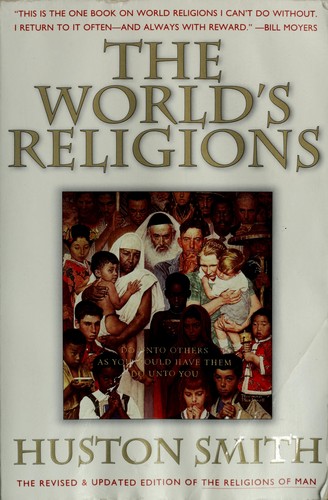
The World's Religions

by Huston Smith

View on Amazon →

"The ultimate religious question is not a question at all, but a response—an answer that life makes to those who have asked its deepest questions."

Smith provides phenomenological introduction to major world religions—Hinduism, Buddhism, Confucianism, Taoism, Christianity, and Islam. Each tradition receives respectful portrayal emphasizing inner meaning and psychological function rather than comparative judgment.

Smith's accessible, respectful treatment enables understanding religions on their own terms. His comparative approach reveals both universal spiritual patterns and distinctive traditions. Essential for appreciating religious diversity and shared human spiritual concerns.

  • Major religions address universal human spiritual concerns
  • Each tradition offers distinctive understanding of ultimate reality
  • Mystical and ethical dimensions appear across traditions
  • Comparative study reveals both difference and commonality
  • Appreciation emphasis may minimize religious traditions' conflicts
  • Universal spiritual patterns may obscure significant differences
  • Western framework shapes interpretation of non-Western traditions

"A phenomenological masterpiece providing accessible introduction to major world religions with respectful treatment of each tradition."

Religious Studies Community, Academic Scholars

"The standard introductory text for comparative religion courses, praised for accessibility and balanced treatment of diverse traditions."

University Curriculum, Educational Institutions

"Enables understanding religions on their own terms while revealing universal spiritual patterns that connect diverse traditions."

Spiritual Seekers, General Readers
06

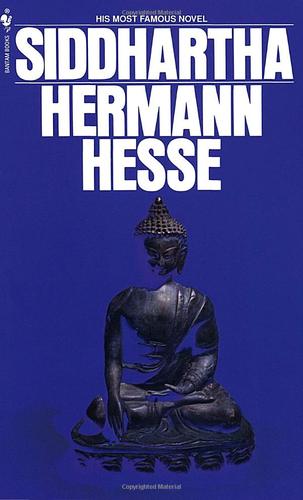
Siddhartha

by Hermann Hesse

View on Amazon →

"Knowledge can be conveyed, but not wisdom. It can be found, it can be lived, it is possible to be carried by it, to do miracles through it, but it cannot be expressed in words and taught."

Hesse's novel follows a spiritual seeker's journey from brahmin orthodoxy through asceticism and worldly life toward enlightenment. The narrative portrays a quest for truth transcending conventional religion through personal experience and self-knowledge.

Hesse's novel captures spiritual seeking's essence through imaginative narrative. The work demonstrates enlightenment as gradual self-knowledge rather than sudden revelation, offering profound meditation on meaning-seeking. Essential reading for understanding spiritual aspiration.

  • Spiritual understanding requires personal experience beyond teaching
  • Enlightenment involves transcending rational knowledge's limitations
  • Love and compassion emerge through suffering and understanding
  • The path matters as much as the destination
  • Romantic spirituality may seem naïve to contemporary readers
  • Hindu framework limited to that tradition's understanding
  • Narrative pace and structure challenge some readers

"A masterpiece capturing the essence of spiritual seeking through imaginative narrative that transcends conventional religious boundaries."

Literary Community, Writers and Scholars

"A profound meditation on enlightenment as gradual self-knowledge and transformation, offering timeless wisdom about human aspiration."

Spiritual Readers, General Audience

"Essential reading for understanding spiritual philosophy and the journey toward self-realization through direct experience."

Philosophy Educators, Academic Tradition
07

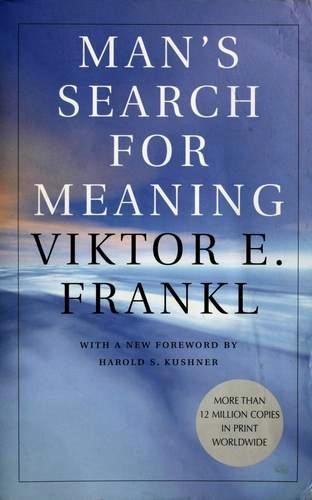
Man's Search for Meaning

by Viktor Frankl

View on Amazon →

"When we are no longer able to change a situation, we are challenged to change ourselves."

Frankl's memoir of Holocaust survival emphasizes finding meaning even in extreme suffering. He argues that humans survive through maintaining sense of purpose and that meaning-making enables endurance through the most horrific circumstances.

Frankl's testimony that meaning transcends suffering's pain provides profoundly moving affirmation of human capacity for dignity and purpose. His logotherapy offers framework for addressing existential meaninglessness. Essential reading on finding purpose amid adversity.

  • Humans can find meaning even in extreme suffering
  • Purpose and meaning enable psychological survival
  • Freedom of attitude remains possible even when circumstances are constrained
  • Responsibility to find meaning drives human flourishing
  • Survival account raises questions about survivor guilt dynamics
  • Logotherapy framework sometimes seems oversimplified
  • Can appear to minimize institutional evil by emphasizing individual meaning

"Named one of the 10 most influential books in the US in a 1991 survey, with 16 million copies sold in 52 languages."

Library of Congress, American Institution

"A book I reread often that gives me hope and a sense of strength, demonstrating human resilience in the face of extreme suffering."

Anderson Cooper, Journalist

"A gem of dramatic narrative that provides the most significant introduction to the existential movement of our time."

Gordon Allport, Psychologist
08

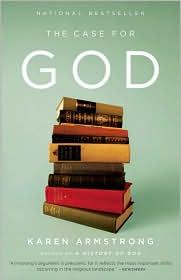
The Case for God

by Karen Armstrong

View on Amazon →

"Unless you teach people about what faith is not, what faith actually is will remain incomprehensible."

Armstrong argues that modern atheism attacks a false conception of God—the theistic deity of medieval theology—rather than religious faith itself. She advocates apophatic theology emphasizing what cannot be said about God and religion's practical ethics.

Armstrong's defense distinguishes between theological claims and lived religious practice. Her argument that ancient religion emphasized practice over belief provides important corrective to modern debates. Essential for understanding sophisticated religious thought beyond fundamentalism.

  • Modern atheism critiques particular theology, not religion itself
  • Apophatic theology admits unknowability of ultimate reality
  • Religion's value lies in practice and ethics, not doctrine
  • Fundamentalism represents aberration from traditional religious practice
  • Defensive tone suggests anxiety about religious viability
  • Distinction between apophatic and cataphatic theology may seem evasive
  • Limited engagement with stronger atheist arguments

"A sophisticated defense that distinguishes theological claims from lived practice, offering important corrective to modern secular debates."

Theological Community, Religious Scholars

"An enormously intellectually challenging book that explores themes of yearning and hope in religious experience and practice."

Archbishop of Canterbury Robert Runcie, Religious Leader

"A fascinating approach to the subject that reveals how traditional religion emphasized practice and ethics over doctrinal belief."

Rabbi Julia Neuberger, Religious Scholar
09

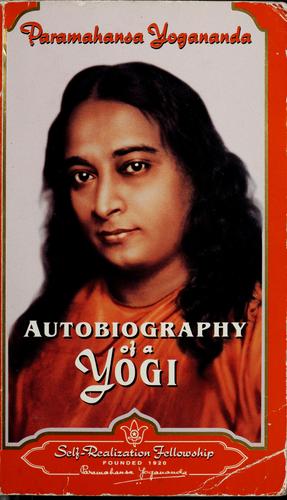
Autobiography of a Yogi

by Paramahansa Yogananda

View on Amazon →

"The Divine enjoys hiding and being sought."

Yogananda's account of his spiritual journey from childhood through becoming yoga teacher and spiritual master. The narrative combines spiritual autobiography with teaching on yoga, meditation, and enlightenment experience accessible to Western audiences.

Yogananda's personal testimony introduces yoga and meditation practice to Western readership. His non-dogmatic presentation of Hindu spirituality enabled widespread adoption in the West. Essential reading for understanding spiritual seeking and Eastern philosophical influence.

  • Yoga encompasses physical practice and spiritual development
  • Meditation enables direct experience of divine reality
  • Enlightenment involves transcending ego and individual identity
  • Spiritual growth requires commitment to disciplined practice
  • Hagiographic elements raise questions about critical distance
  • Westernized presentation may lose traditional Hindu context
  • Claims about spiritual powers strain modern credibility

"Introduced yoga and meditation to the West with non-dogmatic presentation of Hindu spirituality that enabled widespread adoption."

Spiritual Community, Yoga and Meditation Teachers

"An essential autobiography that combines spiritual instruction with personal testimony, revealing the path to enlightenment through disciplined practice."

Self-Realization Fellowship, Yogananda's Organization

"A transformative work that made Eastern spirituality accessible to Western audiences while maintaining authenticity of yoga traditions."

Western Spiritual Seekers, General Readers
10

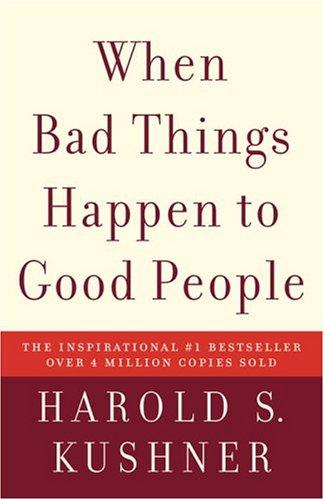
When Bad Things Happen to Good People

by Harold Kushner

View on Amazon →

"I can only speculate that the purpose of the book of Job is to reject the very notion that this world is controlled by the kind of God who is all-knowing and all-powerful. It's too much, and it's not true."

Kushner addresses theodicy problem—reconciling innocent suffering with God's goodness. Based on his son's death from progeria, Kushner argues that God is loving but not omnipotent, unable to prevent suffering but always present with sufferers.

Kushner's compassionate engagement with suffering and doubt respects both theological tradition and human experience. His willingness to limit divine omnipotence provides existential comfort without pretending evil serves hidden purpose. Essential for believers struggling with suffering.

  • Innocent suffering cannot be explained as divine punishment
  • Omnipotent God and innocent suffering cannot coexist logically
  • God's limitation to loving rather than controlling comforts sufferers
  • Meaning emerges through response to suffering rather than suffering's cause
  • Limiting divine omnipotence conflicts with orthodox theology
  • Solution seems too convenient for some theological traditions
  • May provide insufficient comfort for extreme suffering

"A compassionate and honest engagement with theodicy that respects both theological tradition and the reality of human suffering."

Believers Struggling with Suffering, Religious Community

"Essential reading for those grappling with loss and suffering, offering theological framework that acknowledges God's presence without pretending evil serves purpose."

Religious Leaders, Pastoral Ministry

"A thought-provoking contribution to theodicy debates that proposes meaningful alternative to traditional omnipotence theology."

Theological Community, Religious Scholars
Back to all lists