10 Best Sociology Books

Essential Reads for Understanding Society and Human Behavior

Sociology offers critical insights into how societies function, how culture shapes behavior, and how individuals and institutions interact. This curated collection presents 10 essential sociology books that have profoundly influenced how we understand social dynamics, inequality, and human connection. From foundational theoretical works to contemporary ethnographies, these books reveal the hidden structures of society.

01

The Sociological Imagination

by C. Wright Mills

View on Amazon →

"Neither the life of an individual nor the history of a society can be understood without understanding both."

Published in 1959, Mills' groundbreaking work introduced the concept of sociological imagination—the ability to connect personal troubles with public issues. This slim but influential volume challenges sociologists to understand history, biography, and social structure in relation to one another. Mills critiques abstract theorizing divorced from real-world concerns and argues for a humanist sociology.

This is the foundational text that defined how sociologists should think about their discipline. Mills' concept of connecting individual experience with broader social forces remains central to sociology education. It shaped generations of scholars and activists seeking to understand and change society.

  • Connect personal troubles to public issues
  • Understand the relationship between biography and history
  • Sociology must engage with real-world problems
  • Challenge abstract theorizing
  • Some argue Mills' critique of quantitative research dismisses valuable methodologies
  • The concept of sociological imagination is often used impressionistically without rigorous application
  • Lacks detailed guidance on practical research methods

"Ranked as the second most important sociological book of the 20th century"

International Sociological Association, Leading global sociology organization

"A cogent and hard-hitting critique that defined modern sociology"

Oxford University Press, Publisher
02

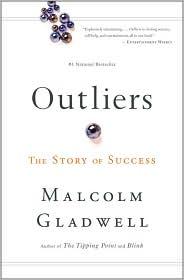
Outliers: The Story of Success

by Malcolm Gladwell

View on Amazon →

"Practice isn't the thing you do once you're good. It's the thing you do that makes you good."

Gladwell challenges conventional wisdom about achievement and success by examining exceptional individuals and groups. Through engaging narratives about hockey players, tech entrepreneurs, and outliers in various fields, he argues that success is not simply about talent or hard work but rather the convergence of timing, opportunity, cultural background, and deliberate practice. The book introduced the famous 10,000-hour rule.

Outliers demonstrates how sociological factors—birth dates, cultural values, economic circumstances—determine achievement in ways individuals often don't recognize. It applies sociological thinking to understand patterns of success and failure at the population level, making sociology accessible to general audiences.

  • Success depends on timing and opportunity, not just talent
  • Cultural values and legacy shape achievement
  • The 10,000-hour rule shows practice's importance for expertise
  • Demographic factors influence life outcomes
  • The 10,000-hour rule oversimplifies research; deliberate practice explains only 20-26% of performance variance
  • Case studies are often anecdotal without scientific controls
  • Misrepresents the original research on expert performance
  • Emphasizes opportunity in ways that overlook individual agency

"A compelling exploration of the factors that contribute to success"

Publishers Weekly, Major book review publication

"A fascinating look at the patterns that drive human achievement"

New York Times, Leading newspaper
03

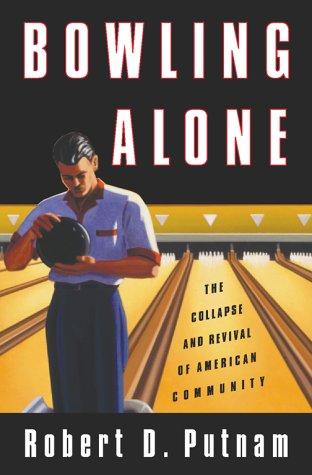
Bowling Alone: The Collapse and Revival of American Community

by Robert D. Putnam

View on Amazon →

"Bonding social capital constitutes a kind of sociological superglue, whereas bridging social capital provides a sociological WD-40."

Putnam's sweeping analysis documents the decline of social capital in America since 1950. Using the metaphor of bowling—more people bowl than ever, but far fewer bowl in leagues—he demonstrates how Americans have become increasingly disconnected from civic institutions, community organizations, and each other. The work sparked major debates about civic engagement and collective action.

This is essential reading for understanding community, social networks, and civic engagement. Putnam's concept of social capital—the trust and reciprocity in networks—became foundational to sociology and policy discussions. The book prompted serious reflection on how societies maintain themselves.

  • Social capital—networks of trust and reciprocity—is essential to society
  • Civic participation in America has declined significantly
  • Television and suburban sprawl have fragmenting effects
  • Restoring civic engagement requires intentional community building
  • Overlooks the emergence of new civic forms like youth soccer leagues and online communities
  • Methodologically conflates small percentage changes with major social transformations
  • Neglects diverse social capital forms developed by communities of color
  • Ignores that marginalized groups were historically excluded from traditional civic institutions

"A landmark work that reshaped how scholars understand American social life"

Journal of Democracy, Academic journal

"A defining study of contemporary American society"

American Academy of Arts and Sciences, Prestigious academic institution
04

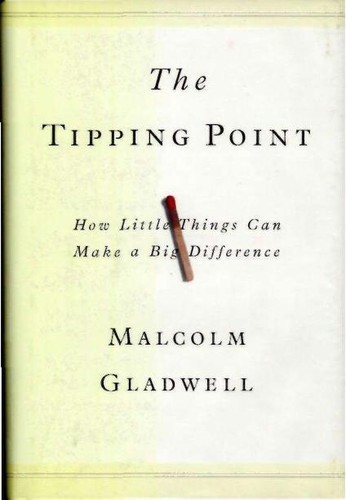
The Tipping Point: How Little Things Can Make a Big Difference

by Malcolm Gladwell

View on Amazon →

"The tipping point is that magic moment when an idea, trend, or social behavior crosses a threshold, tips, and spreads like wildfire."

Gladwell explores how small changes can trigger large-scale social epidemics. Drawing on epidemiology, psychology, and sociology, he examines how ideas, products, and behaviors spread through populations. He identifies three rules of epidemics: the Law of the Few (special people drive change), the Stickiness Factor (messages must be memorable), and the Power of Context (environment matters tremendously).

The Tipping Point demonstrates how sociological understanding of networks, influence, and context explains social change. It reveals non-obvious mechanisms behind phenomena from crime waves to fashion trends, showing how macro-level social patterns emerge from micro-level interactions.

  • Social epidemics follow predictable rules
  • A small number of connectors, mavens, and salespeople drive social change
  • Context profoundly influences behavior
  • Ideas spread like viruses through populations
  • Many case studies lack scientific rigor and controls
  • The theory of mavens and connectors lacks causal empirical evidence
  • Oversimplifies complex social phenomena through anecdotal examples
  • The connection between supposed mavens and actual behavior change remains unproven

"A fascinating exploration of how social change happens"

NPR, National Public Radio

"A study of how epidemics of all kinds help us understand much of the world"

Malcolm Gladwell Official, Author
05

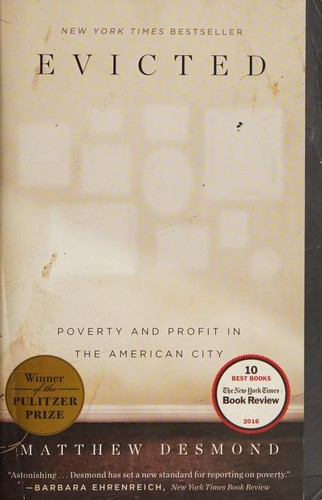
Evicted: Poverty and Profit in the American City

by Matthew Desmond

View on Amazon →

"Eviction is a cause, not just a condition, of poverty."

Desmond's groundbreaking ethnographic study follows eight families in Milwaukee facing housing instability and eviction. Through intimate narratives and rigorous data analysis, he reveals how eviction functions as a mechanism of poverty, not merely a consequence. The work demonstrates that inadequate housing destabilizes employment, health, education, and family structure, perpetuating cycles of poverty.

Evicted exemplifies contemporary ethnographic sociology at its best, combining qualitative immersion with quantitative rigor. It reveals how individual suffering connects to systemic structures and policy failures. The book fundamentally changed how policymakers, scholars, and the public understand housing insecurity.

  • Housing instability causes cascading social problems
  • Eviction disproportionately affects communities of color
  • Landlords profit from poverty through exploitative practices
  • Housing is a fundamental human need and right
  • Some scholars note the sample size limits generalizability
  • The focus on individual narratives could underemphasize structural analysis
  • Limited exploration of tenant resistance and agency

"A brilliant portrait of Americans living in poverty that deepens understanding through powerful storytelling"

Bill Gates, Gates Foundation

"Winner of the 2017 Pulitzer Prize for General Nonfiction"

Pulitzer Prize Committee, Literary award

"An ethnographic study that deepened understanding of American life in unprecedented ways"

Katha Pollitt, The Guardian
06

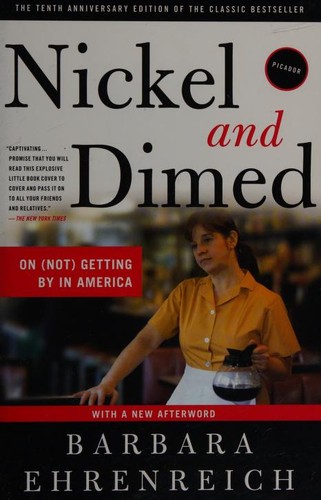
Nickel and Dimed: On (Not) Getting By in America

by Barbara Ehrenreich

View on Amazon →

"To be a member of the working poor is to be an anonymous donor, a nameless benefactor, to everyone."

Ehrenreich, a highly educated journalist, went undercover as a low-wage worker to experience firsthand the daily reality of American poverty. Working as a waitress, hotel maid, and retail clerk, she documents the physical exhaustion, psychological degradation, and economic impossibility of surviving on minimum wage. The narrative exposes the systemic barriers and dignity violations that working poor endure.

This book brings sociological perspective to the lived experience of class inequality. Ehrenreich's participant observation reveals how low-wage workers sacrifice health, time, and dignity so that others can enjoy affordable services and goods. It demonstrates how individual struggle reflects systemic economic organization.

  • Low-wage work is physically and psychologically exhausting
  • Poverty persists despite hard work due to structural economic barriers
  • Workers sacrifice their health and dignity for survival
  • Economic exploitation is fundamental to low-wage service industries
  • Ehrenreich began with savings unavailable to actual poor people, limiting authenticity
  • The study lasted only months, not years, providing limited insight into long-term poverty coping
  • Overlooks how marriage, family structure, and personal relationships affect poverty outcomes
  • May overstate hardship relative to people's actual adaptation strategies

"Ranked 13th on the 100 best books of the 21st century"

The Guardian, International newspaper

"Ranked 57th on the 100 best books of the 21st century (2024)"

New York Times, Leading publication
07

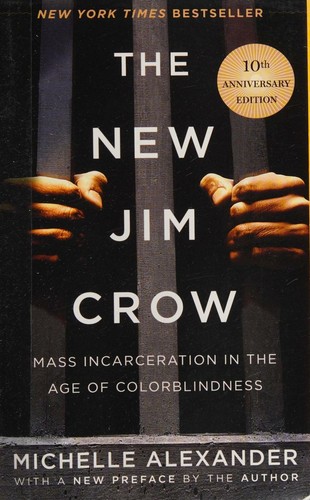
The New Jim Crow: Mass Incarceration in the Age of Colorblindness

by Michelle Alexander

View on Amazon →

"We have not ended racial caste in America; we have merely redesigned it."

Alexander argues that mass incarceration functions as a new system of racial control in America. Through legal analysis and sociological examination, she demonstrates how the War on Drugs has decimated communities of color while creating a permanent underclass of the incarcerated. The book reveals how the criminal justice system maintains racial hierarchy despite formal colorblindness.

The New Jim Crow transformed criminal justice scholarship and activism by revealing how institutions perpetuate racial inequality. It demonstrates how personal rights violations aggregate into systemic racial oppression. The work fundamentally shaped public understanding of mass incarceration and criminal justice reform.

  • Mass incarceration functions as a system of racial control
  • The War on Drugs disproportionately targets Black communities
  • Criminal justice involvement creates permanent second-class citizenship
  • Colorblind policies can perpetuate racial inequality
  • Some scholars argue the 'new Jim Crow' metaphor oversimplifies causes of mass incarceration
  • Downplays the role of violent crime concerns in public policy
  • Limited discussion of Black support for criminal justice reform

"A stunning work of scholarship that reveals the American criminal justice system's resemblance to a gulag"

David Levering Lewis, Pulitzer Prize-winning historian, NYU

"A carefully researched, deeply engaging work reflecting both advocacy passion and scholarly intellect"

Marc Mauer, Executive Director, The Sentencing Project
08

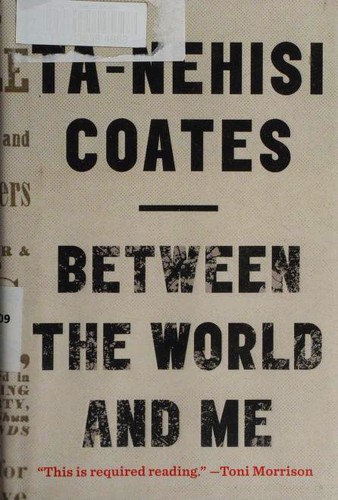
Between the World and Me

by Ta-Nehisi Coates

View on Amazon →

"You must never look away from this. You must always remember that the sociology, the history, the economics, the graphs, the charts, the regressions all land, with great violence, upon the body."

Written as a letter to his son, Coates meditates on the experience of inhabiting a Black body in America. He explores how racism is not merely a matter of conscious prejudice but a visceral physical and psychological reality shaped by American history. The work examines white supremacy, the Dream, and the necessity of authentic consciousness in a society built on exploitation.

Coates' work represents essential contemporary sociology of race and embodiment. He demonstrates how historical injustice becomes embodied in individuals through structural violence. The book shows how personal experience connects to centuries of exploitation and systemic racism, exemplifying Mills' sociological imagination.

  • Racism is a visceral experience affecting the body
  • The Dream functions as a distraction from systemic exploitation
  • Black consciousness requires acknowledging vulnerability and danger
  • Understanding American history is necessary to understanding present inequality
  • Some argue the focus on personal meditation limits policy engagement
  • The concept of the Dream could be more systematically analyzed
  • Limited discussion of intersectionality with other identity categories

"Ta-Nehisi Coates fills the intellectual void that plagued me after Baldwin died—this is required reading"

Toni Morrison, Nobel laureate author

"Winner of the 2015 National Book Award for Nonfiction"

National Book Award Committee, Major literary prize

"Coates is the Baldwin of our era—an instant classic and a gift to us all"

Isabel Wilkerson, Pulitzer Prize-winning author
09

Strangers in Their Own Land: Anger and Mourning on the American Right

by Arlie Russell Hochschild

View on Amazon →

"What he felt was being given away was tax money to support non-working people and non-deserving people—and not just tax money, but honor too."

Hochschild spent five years with residents of a struggling Louisiana parish to understand Tea Party politics and conservative thought. Through intimate interviews and observation, she constructs the concept of the deep story—the narrative people construct to make sense of their lives and justify their political beliefs. The work explores how feelings of relative deprivation and loss of honor shape political identity.

This ethnographic masterpiece demonstrates how to understand people across ideological divides with empathy and rigor. Hochschild shows how individual emotions and narratives connect to macro-level political phenomena. It exemplifies essential sociological work for understanding contemporary polarization.

  • Feelings and narratives drive political belief more than material interest
  • Honor and dignity are central to political identity
  • Relative deprivation shapes political resentment
  • Understanding requires emotional empathy across differences
  • The deep story concept may impose a coherent narrative on messy reality
  • Focus on emotional understanding may underemphasize structural analysis
  • Limited discussion of how to change these narratives and beliefs

"Named a National Book Award Finalist and New York Times bestseller"

National Book Award Foundation, Major literary award

"Essential reading for understanding contemporary American political consciousness"

Noam Chomsky, Renowned intellectual
10

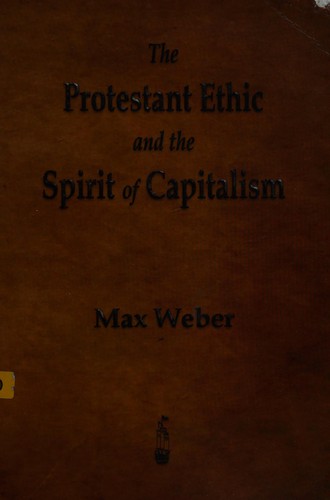
The Protestant Ethic and the Spirit of Capitalism

by Max Weber

View on Amazon →

"The Puritan wanted to work in calling; we are forced to do so."

Originally published in 1905, Weber's groundbreaking essay argues that Calvinist Protestant theology inadvertently fostered the psychological attitudes necessary for modern capitalism. He contends that the doctrine of predestination created an ethic of worldly asceticism—hard work and self-discipline—that accumulated capital without allowing enjoyment of it. This cultural values shift, he suggests, helped birth modern capitalism.

This foundational sociological text established the field by demonstrating how culture, religion, and economics interconnect. Weber's methodology of understanding social action through actors' meanings became central to sociology. His thesis continues shaping debates about modernization, capitalism, and the role of culture.

  • Culture and values shape economic behavior
  • Protestant ethics created modern capitalist mentality
  • Capitalist logic became disconnected from its religious roots
  • Understanding requires examining actors' meanings and motivations
  • Historians dispute the timing—capitalism predates Protestantism in some regions
  • Empirical evidence for the thesis remains thin
  • Recent research shows Protestants were not thriftier or more literate than Catholics
  • The concept of 'elective affinity' is too nebulous to permit rigorous testing

"A founding text in economic sociology and sociological thought generally"

International Sociological Association, Leading sociology organization

"Translated and championed Weber's work, bringing it worldwide attention"

Talcott Parsons, Harvard sociologist
Back to all lists