10 Best Stoicism Books

Essential Readings from Ancient Philosophy to Modern Practice

Stoicism is an ancient philosophy teaching that virtue is the highest good and that inner tranquility comes from accepting what we cannot control. These ten books span from timeless classics penned by Roman emperors and teachers to contemporary guides that make Stoicism accessible for modern life. Whether you seek classical wisdom or practical strategies for building resilience, this collection offers proven paths to a more meaningful existence.

01

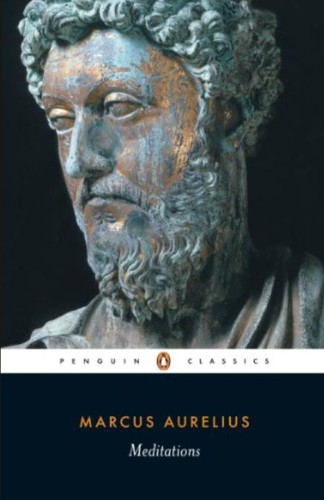
Meditations

by Marcus Aurelius

View on Amazon →

"Waste no more time arguing about what a good man should be. Be one."

Written by a Roman Emperor as personal reflections during his military campaigns, Meditations is philosophy distilled to its essence. Marcus Aurelius captures the struggle between duty, mortality, and virtue with raw honesty. This timeless work offers practical wisdom for anyone navigating life's challenges with dignity and purpose.

The foundational Stoic text written by one of history's most powerful men, revealing how ancient philosophy applies to leadership and personal discipline. Marcus Aurelius demonstrates that Stoicism is not mere theory but a practical system for living well. No serious study of Stoicism is complete without engaging directly with his personal meditations.

  • Focus only on what is within your control—your thoughts, intentions, and responses
  • Recognize the transience of all things and accept your place in the cosmos
  • Virtue is the only true good; external circumstances are indifferents
  • Return repeatedly to foundational principles when your mind wanders
  • Written in fragmented form without clear organization, requiring patience from readers
  • Occasionally prescriptive about acceptance which modern critics argue can minimize legitimate anger at injustice
  • Reflects the privileges and duties of an emperor that may feel distant from ordinary life

"Marcus Aurelius' meditations have profoundly shaped my thinking on resilience and clarity in a chaotic world."

Tim Ferriss, Entrepreneur and Podcaster

"Meditations is a book that has shaped my understanding of how to live a good life."

Bill Clinton, Former U.S. President
02

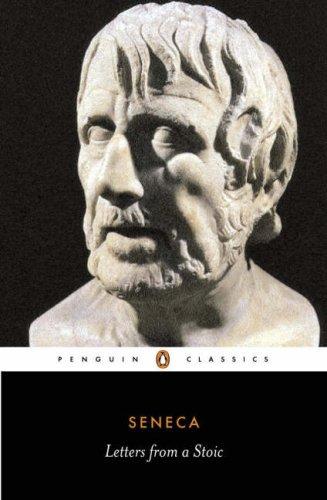
Letters from a Stoic

by Seneca

View on Amazon →

"We suffer more often in imagination than in reality."

Seneca's letters to a younger student form an intimate guide to developing virtue and managing life's troubles. Written with warmth and accessibility, these letters address real problems—anger, grief, loss, and social pressure—with practical counsel. Seneca speaks directly to the heart while grounding advice in Stoic principles, making philosophy feel like a conversation with a wise friend.

Unlike the abstract Meditations, these letters are intimately practical and personal, addressing specific struggles we all face. Seneca demonstrates how Stoic philosophy translates into daily living through clear examples and gentle guidance. His accessible tone opened Stoicism to wider audiences and continues to make ancient wisdom relatable to contemporary readers.

  • Time is our most precious resource—guard it more carefully than money or possessions
  • Emotional disturbances arise from incorrect judgments about external events
  • Friendship and generous living are essential to happiness, contrary to misunderstandings of Stoicism
  • Progress toward virtue requires consistent practice and self-examination
  • Historical contradiction between Seneca's teachings of simplicity and his own life of wealth and power
  • Some letters lack connection to modern concerns, requiring cultural translation by contemporary readers
  • Inconsistent tone and occasional repetition of themes throughout the collection

"Letters from a Stoic provided me guidance when I was burned out and seeking to simplify my life."

Tim Ferriss, Entrepreneur and Author

"Seneca's letters represent some of the most accessible and practical Stoic wisdom ever recorded."

Epictetus through Robert Dobbin's translation, Scholar and Translator
03

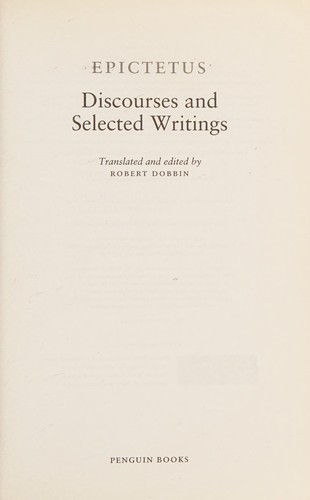
Discourses and Selected Writings

by Epictetus

View on Amazon →

"It is not things themselves that disturb people, but their judgments about those things."

Born a slave, Epictetus transformed hardship into a philosophy of freedom through discipline and moral choice. His teachings, recorded by his student Arrian, focus on distinguishing between what lies within our control and what does not. These discourses are intensely practical, addressing how to live with integrity in an indifferent universe and find freedom through virtue alone.

Epictetus' unique position as a former slave giving philosophy lessons creates powerful authenticity that resonates across centuries. His foundational principle that our judgments—not events—disturb us became the basis for modern cognitive behavioral therapy. Understanding his work directly is essential for grasping how Stoic theory translates into freedom and resilience.

  • The dichotomy of control: some things depend on us, others do not—this is the key to freedom
  • Our judgments and opinions, not external events, are the source of emotional disturbance
  • True freedom comes from mastering your character and will, regardless of external circumstances
  • Discipline and vigilance are required to maintain virtue in daily practice
  • The works are reconstructed from student notes rather than Epictetus' original writings, introducing potential distortion
  • Some teachings can feel austere or overly rigid in their emphasis on discipline
  • Limited discussion of how relationships and community fit into his individualistic focus on control

"Epictetus offers the most direct and practical guidance for applying Stoicism to your daily life."

Massimo Pigliucci, Philosopher and Author

"Epictetus' dichotomy of control remains the most powerful tool in the Stoic arsenal for modern practice."

Modern Stoicism scholars, Academic Community
04

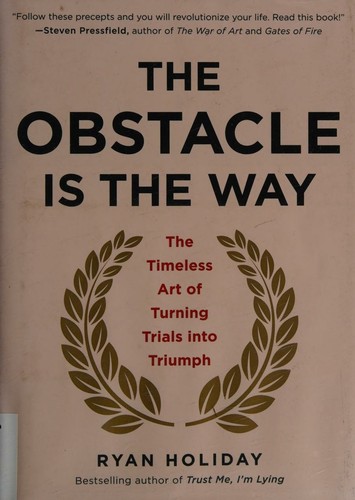
The Obstacle Is the Way

by Ryan Holiday

View on Amazon →

"The obstacle in the path becomes the path. Never forget, within every obstacle is an opportunity to improve our condition."

Ryan Holiday bridges ancient Stoicism and modern challenges by showing how obstacles become opportunities for growth. Through vivid historical examples and clear three-part structure—perception, action, will—he demonstrates that our response to adversity determines our character. This accessible modern classic revitalized Stoicism as a practical philosophy for navigating life's inevitable difficulties.

Holiday's work made Stoicism mainstream and relevant to contemporary life, particularly for entrepreneurs and leaders facing real obstacles. His narrative-driven approach and practical framework demonstrate that ancient wisdom applies powerfully to modern challenges. This book serves as an indispensable bridge between classical texts and practical application.

  • Obstacles and adversity are opportunities to practice virtue and develop character
  • Perception shapes reality more than external circumstances—control your perspective first
  • Decisive action paired with acceptance of what you cannot control produces resilience
  • History provides countless examples of people who transformed trials into triumphs
  • Critics argue the book lacks philosophical depth compared to ancient texts and other contemporary works
  • Some examples feel cherry-picked or lack sufficient context to be truly relatable
  • The distinction between the three sections sometimes blurs, making the framework less clear than intended

"Ryan Holiday's book on turning adversity into advantage is invaluable wisdom for anyone facing obstacles."

Arnold Schwarzenegger, Actor and Former Governor

"This is a very good book with excellent examples about people who overcame great obstacles to succeed."

Nick Saban, College Football Coach

"Adopted by winning teams as a core resource for understanding how to handle adversity and pressure."

Seattle Seahawks and New England Patriots, Professional Sports Teams
05

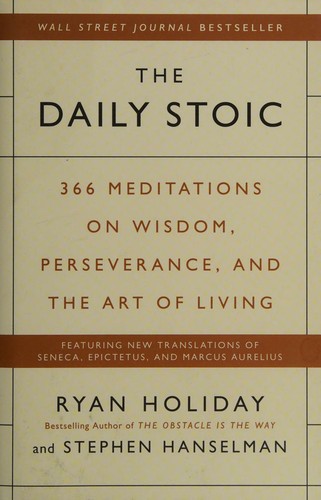
The Daily Stoic

by Ryan Holiday and Stephen Hanselman

View on Amazon →

"You have power over your mind—not outside events. Realize this, and you will find strength."

A year-long guide offering 366 daily meditations drawn from Stoic philosophy, The Daily Stoic makes ancient wisdom accessible through short, actionable reflections. Each day provides a quote from ancient thinkers with modern interpretation and practical application. This format creates a sustainable practice of Stoicism, helping readers integrate philosophical principles into their daily lives gradually and consistently.

The Daily Stoic democratized Stoicism by making it accessible to busy modern people through brief daily practices. It transforms philosophy from theoretical study into lived practice, proving that Stoic wisdom can be integrated into daily routines. This book is essential for readers who want practical application over lengthy philosophical treatises.

  • Small, consistent daily practices in Stoic thinking create lasting change in perspective
  • Ancient wisdom becomes relevant when connected to specific modern situations and challenges
  • Repetition of core principles is necessary because our minds naturally forget foundational truths
  • Combining historical quotes with contemporary reflection bridges classical and modern understanding
  • The brevity that makes it accessible may feel superficial to readers seeking deeper philosophical exploration
  • Some daily entries feel rushed or disconnected from broader philosophical themes
  • The format encourages skimming rather than deep reflection on complex ideas

"The Daily Stoic has become part of my morning routine, helping me maintain perspective and focus."

Tim Ferriss, Entrepreneur, Author, and Podcaster

"This book makes Stoicism practical and accessible, proving ancient philosophy works in modern life."

Bestselling readers worldwide, General Audience
06

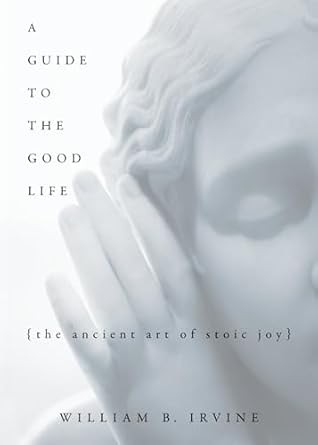
A Guide to the Good Life

by William B. Irvine

View on Amazon →

"The easiest way for us to gain happiness is to learn how to want the things we already have."

William Irvine combines clear explanations of Stoic theory with practical strategies for modern living. He traces Stoic philosophy from ancient Greece through Rome, explaining foundational concepts like the dichotomy of control and negative visualization. More importantly, he shows how practicing Stoicism leads to "stoic joy"—a profound contentment that comes from living according to reason and virtue.

Irvine's work offers intellectual rigor without academic jargon, making him ideal for readers who want understanding before practice. He systematically explains why Stoicism works and how to implement its methods in contemporary life. His emphasis on joy rather than grim resignation corrects common misconceptions about Stoicism.

  • Negative visualization—contemplating loss—paradoxically increases appreciation and contentment
  • Stoicism is a cure for anxiety and negative emotions through practicing virtue and reason
  • Voluntary discomfort practices build resilience and reduce fear of deprivation
  • Stoic joy comes from pursuing virtue and meaningful relationships, not external achievements
  • Some critics find his interpretation of Stoicism selective, emphasizing joy over virtue as the goal
  • The academic approach may feel dense for readers seeking only practical tips
  • Some recommended practices like negative visualization may seem morbid to contemporary audiences

"Irvine's work removes the grim mask from Stoicism and reveals the humanity and joy within it."

James Wolcott, Vanity Fair Writer

"A thought-provoking book for those seeking a life philosophy rather than mere self-help."

Austin American-Statesman, Publication
07

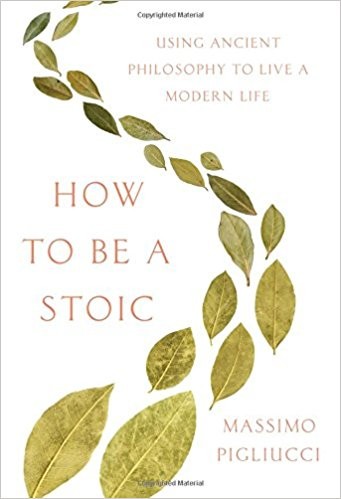
How to Be a Stoic

by Massimo Pigliucci

View on Amazon →

"One of the first lessons from Stoicism is to focus our attention and efforts where we have the most power and then let the universe run as it will."

Massimo Pigliucci, a philosophy professor, brings academic credibility to practical Stoicism while remaining accessible to general readers. Through personal anecdotes and clear explanations, he shows how to apply Stoic principles to modern challenges like career decisions, relationships, and personal growth. His work emphasizes that Stoicism is a living practice, not ancient history, and demonstrates how to continually refine your approach.

Pigliucci bridges the gap between academic philosophy and practical living, bringing scholarly rigor to contemporary applications. His willingness to adapt ancient Stoicism for modern concerns while remaining faithful to core principles makes him invaluable for thoughtful practitioners. He offers the intellectual foundation that prevents Stoicism from becoming shallow self-help.

  • Stoicism is not resignation or fatalism but an active practice of focusing on what you control
  • Virtue is achieved through continuous practice and willingness to examine and refine your principles
  • Role models help us develop character by showing how to embody Stoic values in real situations
  • Stoicism addresses modern problems when its principles are thoughtfully applied to contemporary life
  • The academic approach may feel overly theoretical to readers seeking only practical tips
  • Some adaptations of ancient philosophy for modern times may feel unfaithful to original texts
  • The book's depth on some topics may leave practical questions unanswered for busy readers

"A lucid, engaging, and persuasive book about what it means to pursue Stoic ideals in the modern world."

Lawrence C. Becker, Philosopher and Author

"If you want to learn about Stoicism in the 21st century, this should be one of your first books."

Donald J. Robertson, Stoicism Scholar

"Pigliucci's work represents some of the best contemporary thinking on practical Stoicism."

William B. Irvine, Author of A Guide to the Good Life
08

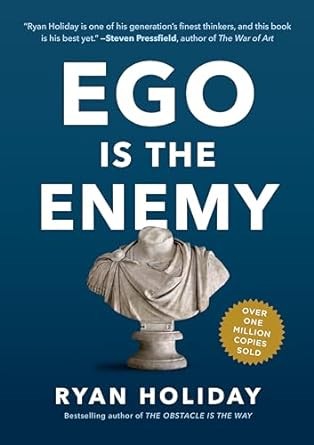
Ego Is the Enemy

by Ryan Holiday

View on Amazon →

"When we remove ego, we're left with what is real. What replaces ego is humility, yes—but rock-hard humility and confidence."

Ryan Holiday identifies ego—our distorted sense of self-importance—as the primary obstacle to growth and success. Through examples of historical figures, artists, leaders, and thinkers, he shows how ego sabotages ambition and relationships. The book is structured around three phases: aspiration, success, and failure, demonstrating that ego poses different challenges at each stage and how Stoic principles help overcome them.

Ego Is the Enemy addresses a distinctly modern problem: how unchecked ambition and self-aggrandizement undermine success and happiness. Holiday's framework helps readers recognize ego in themselves and others, providing practical strategies for maintaining humility and focus. This work complements The Obstacle Is the Way by addressing the internal enemy we often overlook.

  • Ego distorts reality and prevents us from seeing clearly and learning from experience
  • Confidence rooted in actual competence differs fundamentally from ego-driven false confidence
  • Silence, listening, and humility are strengths that ego prevents us from accessing
  • At every stage of life—aspiration, success, and failure—ego presents different challenges requiring vigilance
  • Critics argue Holiday doesn't clearly define ego, sometimes using it as a catch-all for various human flaws
  • The connections between historical examples and the book's points occasionally feel forced or projected
  • Some reviewers felt the tone was preachy rather than offering genuinely insightful advice

"Ryan Holiday is one of his generation's finest thinkers, and this book is his best yet."

Steven Pressfield, Author of The War of Art

"This is a book every athlete, leader, entrepreneur, and thinker should read."

George Raveling, Hall of Fame Basketball Coach

"If Ryan Holiday writes a book, I read it as soon as possible. This one does not disappoint."

Brian Koppelman, Screenwriter and Director
09

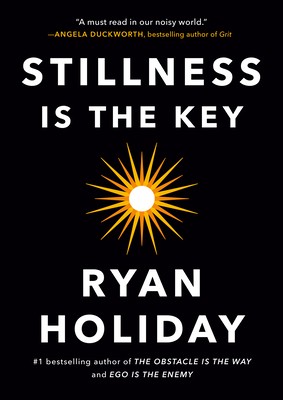
Stillness Is the Key

by Ryan Holiday

View on Amazon →

"Stillness is what aims the archer's arrow. It inspires new ideas. It sharpens perspective and illuminates connections."

Ryan Holiday's third book in his trilogy explores stillness as the foundation for clarity, creativity, and resilience. In a world of constant distraction and urgency, Holiday argues that stillness enables better decisions, deeper thinking, and authentic connection. Drawing from Stoic philosophy, Eastern wisdom, and contemporary neuroscience, he provides practical methods for cultivating the inner peace necessary for meaningful living and achievement.

Stillness Is the Key addresses the mental and spiritual depletion caused by modern overstimulation. It completes Holiday's trilogy by showing how to integrate Stoic principles with contemplative practice. For readers overwhelmed by constant demands, this book offers essential guidance on reclaiming mental clarity and purposefulness.

  • Stillness enables clear thinking, creative insight, and wise decision-making
  • Constant busyness and distraction prevent us from accessing our best capabilities
  • Contemplative practices rooted in Stoicism and Eastern philosophy reduce anxiety and increase effectiveness
  • Greatness, clarity, and peace exist only in the present moment, not in worrying about the future
  • Some readers find the shift toward Eastern philosophy dilutes the Stoic focus of earlier works
  • The practical advice on achieving stillness may feel generic to modern self-help readers
  • The book's emphasis on retreat and contemplation may seem disconnected from action-oriented Stoicism

"Ryan Holiday is among the most psychologically wise writers I know."

Angela Duckworth, Author of Grit

"Holiday's work on finding stillness has helped me understand what drives true excellence."

Manu Ginobili, Four-Time NBA Champion

"This book provides essential wisdom for finding peace and clarity in a chaotic world."

Tim Ferriss, Entrepreneur and Podcaster
10

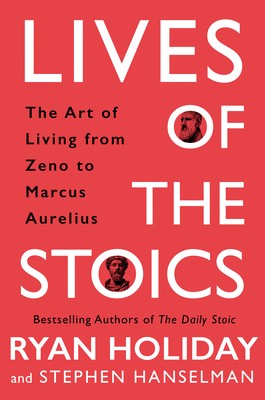
Lives of the Stoics

by Ryan Holiday and Stephen Hanselman

View on Amazon →

"The Stoics were not perfect. They were humans struggling to live well according to reason and virtue."

This final essential work moves beyond abstract principles to explore the lives of actual Stoics from Zeno to Marcus Aurelius. Holiday and Hanselman show how real people applied Stoicism in their own time, revealing both their triumphs and failures. By examining the messy, complicated lives of historical Stoics, the authors demonstrate that Stoicism is not perfection but a continuous practice of improvement and virtue.

Lives of the Stoics provides necessary historical context and human dimension to Stoic philosophy that pure theory cannot offer. Understanding how actual people struggled with and practiced Stoicism in their own complex lives makes the philosophy more relatable and applicable. This work completes a comprehensive foundation by grounding abstract principles in historical reality.

  • Stoic philosophers were real people facing genuine challenges, not idealized figures
  • Different Stoics emphasized different aspects of the philosophy, showing its flexibility and depth
  • The history of Stoicism spans centuries and continents, adapting to different cultures and times
  • Learning from the struggles and failures of historical Stoics is as valuable as studying their successes
  • The biographical format means some chapters lack depth about philosophical principles
  • Modern readers may find some historical figures and concerns distant from contemporary life
  • The book assumes some familiarity with Stoic concepts that novices might lack

"Whether you're a general or a gardener, there is much to learn from this excellent book on Stoics."

Senator Ben Sasse, United States Senator

"Holiday and Hanselman show us how the masters succeeded and sometimes failed at turning theory into practice."

David Epstein, Author of Range

"Lives of the Stoics entertainingly and thoughtfully introduces the philosophers whose wisdom has shaped the world."

General Stanley McChrystal, Author of Team of Teams
Back to all lists