10 Best True Crime Books

Essential Reads in Crime, Justice, and Investigation

True crime literature offers compelling narratives that explore the darkest corners of human nature while investigating systems of justice. From Truman Capote's groundbreaking In Cold Blood to modern investigative masterpieces like Killers of the Flower Moon, these ten essential works combine meticulous research with gripping storytelling to illuminate real crimes, their victims, and the pursuit of truth.

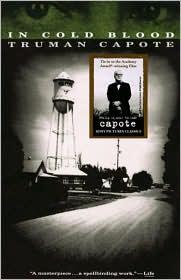
In Cold Blood
01

In Cold Blood

by Truman Capote

"Imagination, of course, helped. But not so much imagination as a capacity to recognize the extraordinary human drama that exists in the ordinary occurrences of life."

A pioneering non-fiction novel recounting the 1959 murder of a Kansas farm family and the investigation, capture, and execution of the killers. Capote spent six years researching and interviewing subjects, creating a novel that reads with the tension of great crime fiction while maintaining the accuracy of journalism.

This landmark work essentially invented the true crime literary genre and established the template for narrative non-fiction crime writing. Its psychological depth, meticulous storytelling, and moral complexity set the standard that all true crime works still aspire to meet. It remains essential reading for understanding both criminal behavior and the American justice system.

  • The psychology of seemingly ordinary people capable of extraordinary violence
  • How investigative journalism and narrative technique can create understanding without sensationalism
  • The moral implications of capital punishment and the humanity of killers
  • The importance of community context in understanding criminal acts
  • Some critics argue Capote's depiction of Perry Smith borders on romanticization, generating sympathy that may obscure the brutality of his crimes
  • The book's detailed examination of the killers' psychology can overshadow the victims' stories
  • Concerns have been raised about Capote's relationship with his subjects and potential influence on their accounts

"An instant critical and commercial success, widely considered one of the greatest books of the twentieth century and the prototypical true crime novel."

The New York Times, Major Publication

"Ranked among the 100 best English-language non-fiction books of the 20th century"

Modern Library, Publishing House

"A masterwork that established the foundations for literary non-fiction crime writing"

Edmund White, Literary Critic and Author
The Stranger Beside Me
02

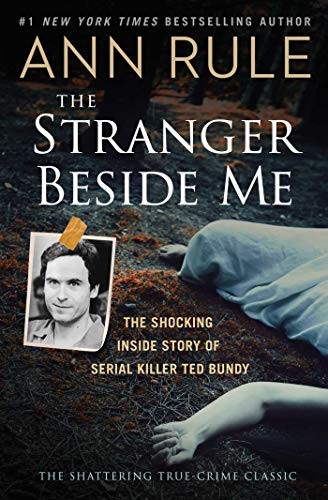
The Stranger Beside Me

by Ann Rule

"The nicest thing about Ted was he seemed so genuine, almost innocent of any wrong intent. But it was all a mask."

Ann Rule's unforgettable account of her personal friendship with Ted Bundy before his arrest for serial murder, combined with her investigation into his horrifying crimes. Rule worked as a crisis counselor when she met Bundy and later maintained contact with him until his execution, providing unprecedented access to one of America's most notorious serial killers.

This was the first true crime bestseller and remains essential for understanding serial killer psychology through a unique insider perspective. Rule's combination of personal memoir, investigative reporting, and legal details created a template for true crime narrative. It fundamentally changed how the public understands criminal psychology and the danger of people who can appear perfectly normal.

  • Serial killers can be charming, intelligent, and seemingly normal, making them dangerous precisely because they don't match preconceived notions of criminality
  • The importance of forensic evidence and psychological profiling in solving serial murders
  • How a criminal's personal relationships can reveal manipulation tactics and compartmentalization
  • The impact of true crime investigation on those who pursue justice
  • Some argue the book gives excessive attention to Bundy's perspective and charm at the expense of deeper exploration of his victims
  • Rule's personal connection to the case raises questions about objectivity and potential bias in her narrative
  • The memoir element sometimes overshadows the investigative journalism aspects

"Ann Rule's first bestseller, a defining work in the true crime genre that changed how America understands serial killers"

Publishers Weekly, Trade Publication

"One of the most significant true crime works, introducing millions to the dangers of seemingly trustworthy predators"

New York Times Bestseller List, Publishing Authority

"A masterwork of intimate crime reporting that established the modern true crime genre"

Crime Writers Association, Literary Organization
Helter Skelter
03

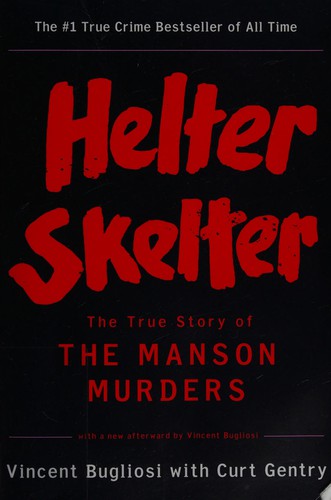
Helter Skelter

by Vincent Bugliosi with Curt Gentry

"A thin trail of circumstances eventually tied the Tate-LaBianca murders to Charles Manson—a trail that would lead to one of the most shocking trials in American criminal history."

Vincent Bugliosi, the prosecutor of the Manson Family murders, provides his definitive account of building the case against Charles Manson and his followers for the shocking 1969 murders of actress Sharon Tate and others. The book combines meticulous detective work, courtroom drama, and psychological analysis of how Manson manipulated his followers.

This remains the gold standard for prosecutorial narrative and crime investigation. Bugliosi's insider perspective as the trial prosecutor offers unparalleled authority and detail. The book's exploration of cult psychology, murder methods, and legal strategy makes it essential for understanding both criminal justice and the psychology of manipulation and control.

  • How charismatic manipulators can indoctrinate followers into committing extreme violence
  • The importance of forensic evidence and meticulous investigation in solving high-profile murders
  • Manson's twisted philosophy and how it influenced his followers' actions
  • The courtroom strategies necessary to convict intelligent manipulators for crimes they didn't directly commit
  • The book is extremely lengthy and sometimes gets bogged down in trial procedural details that less interested readers may find tedious
  • Some argue Bugliosi gives Manson more attention and mystique than his actual role in the murders warranted
  • Critics contend the book focuses heavily on Manson's perspective while giving less depth to his victims' lives

"One of the best crime stories ever written"

Chicago Sun-Times, Major Newspaper

"A social document of rare importance"

The New Republic, Political Magazine

"The definitive account of the Manson murders with over 7 million copies sold worldwide"

Time Magazine, Major Publication
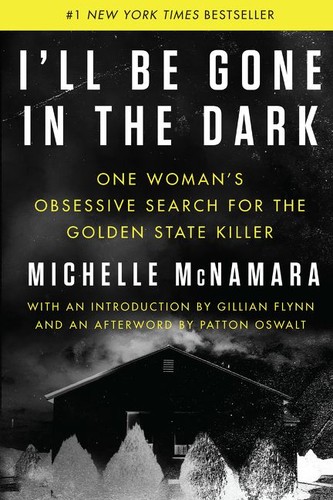
I'll Be Gone in the Dark
04

I'll Be Gone in the Dark

by Michelle McNamara

"You'll be silent forever, and I'll be gone in the dark—words spoken by the killer to his victim, becoming the central metaphor for McNamara's quest to give voice to the voiceless."

Michelle McNamara's obsessive search for the Golden State Killer, a violent predator who terrorized California with 50 assaults and 10 murders between the 1970s and 1980s. The book blends personal memoir with investigative journalism as McNamara recounts her journey interviewing victims, researching evidence, and connecting with online communities pursuing the case.

This modern masterpiece exemplifies citizen detective work and contemporary investigative journalism. McNamara's passion and meticulous research demonstrate how individual obsession can serve justice. Published posthumously, the book gained added poignancy when the killer was captured shortly after publication, validating McNamara's years of work and illustrating the power of persistent investigation.

  • How digital tools and citizen investigations can supplement law enforcement and advance cases
  • The psychological impact of obsessive pursuit of justice on investigators themselves
  • The humanity and individuality of serial killer victims often erased by media coverage
  • The importance of persistence in seeking truth even when institutional systems have given up
  • Some critics argue McNamara's obsession, while ultimately productive, comes at the cost of her personal relationships and well-being
  • The personal memoir elements occasionally overshadow the investigative aspects of the crime
  • Questions have been raised about the ethics of amateur investigations and their potential interference with law enforcement

"Hailed as a modern true crime classic that inspired a documentary series directed by Emmy-winner Liz Garbus"

HBO, Entertainment Network

"A powerful memoir and portrait of a woman's obsession that fulfilled her dream of unmasking a killer"

Publishers Weekly, Trade Publication

"A gripping account of one woman's relentless pursuit of truth and justice"

Gillian Flynn, Author and Collaborator
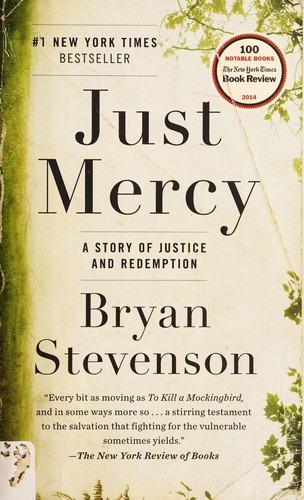
Just Mercy
05

Just Mercy

by Bryan Stevenson

"We are all implicated when we allow other people to be mistreated. An absence of compassion can corrupt the decency of a community."

Bryan Stevenson's memoir of his work as a young attorney defending disadvantaged and condemned prisoners, particularly focusing on the wrongful conviction of Walter McMillian. The book documents systemic injustice in capital punishment and reveals how race, poverty, and inadequate legal representation distort American justice.

This powerful examination of systemic racism and injustice in the American legal system represents essential reading for understanding modern criminal justice. Stevenson's work defending children sentenced to life without parole and the wrongfully condemned demonstrates the moral imperative of legal defense and exposes failures in the justice system that affect millions.

  • Systemic racial and economic bias in the American justice system affects every level from arrest to sentencing
  • The death penalty has been applied with dramatic racial disparity, killing primarily people of color and the poor
  • Children are prosecuted as adults and sentenced to life without parole despite developing brains and circumstances
  • Individual compassion and persistent legal advocacy can overturn even entrenched injustices
  • Some argue the book oversimplifies complex criminal justice issues for dramatic effect
  • Critics contend Stevenson's cases are not fully representative of all capital punishment scenarios
  • A few legal experts question some of Stevenson's conclusions about systemic racism despite statistical evidence

"When I wanted to deepen my understanding of mass incarceration and social justice, I was guided by Bryan Stevenson's masterful Just Mercy"

Oprah Winfrey, Media Mogul and Philanthropist

"As gripping as it is disturbing—as if America's soul has been put on trial. This book should be read by people of conscience in every civilized country in the world."

Desmond Tutu, Nobel Peace Prize Laureate

"An inspiring and powerful story of the fight for justice and mercy in the American legal system"

John Grisham, Best-Selling Author
Lost Girls
06

Lost Girls

by Robert Kolker

"A missing girl is missing only to the people who notice—a haunting reminder of how society elected to lose these women by deciding they were not worth attention."

Robert Kolker's investigative account of the Long Island Serial Killer and the lives of his victims, young women involved in sex work whose murders were largely ignored by authorities and media. The book centers the victims as full human beings with families and stories, rather than focusing on the killer.

This book redefines how true crime should be reported by centering victims' humanity and challenging how society marginalizes sex workers. Kolker's meticulous research and emphasis on the failures of law enforcement to protect vulnerable women makes this essential reading for understanding both serial murder and systemic inequality.

  • Sex workers are vulnerable to violence because society and law enforcement treat them as disposable and unworthy of protection
  • Serial killers often target people society has already marginalized and rendered invisible
  • Media coverage and police response to missing women differs dramatically based on the victim's perceived social status
  • True crime reporting must center victims' lives and humanity, not killer mystique
  • Some argue the book still inadvertently gives the killer too much attention despite efforts to center victims
  • Critics contend the online escort world is portrayed with some stereotypes despite Kolker's sympathetic approach
  • A few readers felt the narrative structure sometimes undermined the investigative momentum

"Riveting and often heartbreaking—a lashing critique of how society and the police let these young women down"

The New York Times, Major Newspaper

"Rich, tragic, monumental—true crime reporting at its best"

Washington Post, Major Newspaper

"A gothic whodunit for the Internet age, nearly unputdownable—a horrific, cautionary tale"

Mimi Swartz, NYT Book Review, Literary Critic
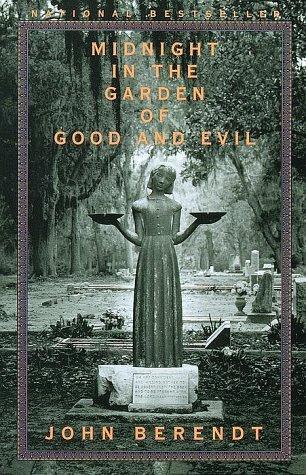
Midnight in the Garden of Good and Evil
07

Midnight in the Garden of Good and Evil

by John Berendt

"If a man can't have two, three, or four mistresses, he shouldn't have any. It's like having a Rolls-Royce but no gasoline."

John Berendt's atmospheric account of a murder in Savannah, Georgia, and the subsequent trials of Jim Williams, an antiques dealer accused of killing a young hustler. The book weaves the murder investigation with portraits of Savannah's eccentric residents and the city's distinct, decaying beauty.

This modern classic demonstrates that true crime narrative can transcend the crime itself by creating a complete portrait of place, culture, and community. Berendt's lyrical prose and structural innovation influenced how contemporary true crime is written. It remains essential for understanding how environment and character create the context for violence.

  • Southern Gothic culture and class dynamics profoundly shape criminal behavior and justice outcomes
  • The importance of understanding a crime's complete social and geographical context
  • Wealth and status dramatically influence how justice is pursued and trials are conducted
  • Narrative technique can elevate true crime from simple crime reporting to literary achievement
  • Some argue Berendt's focus on Savannah's colorful characters and atmosphere shifts attention away from justice for the victim
  • Critics contend the book's literary style sometimes obscures rather than clarifies the complex legal proceedings
  • Questions have been raised about Berendt's access to information and potential romanticization of Southern eccentricity

"Forceful, clear, gripping—the best nonfiction novel since In Cold Blood"

Edmund White, Literary Critic and Author
"One of the most unusual books to come this way in a long time, and one of the best"

The Washington Post, Major Newspaper

"John Berendt seems congenitally unable to write a dull paragraph"

Los Angeles Times, Major Newspaper
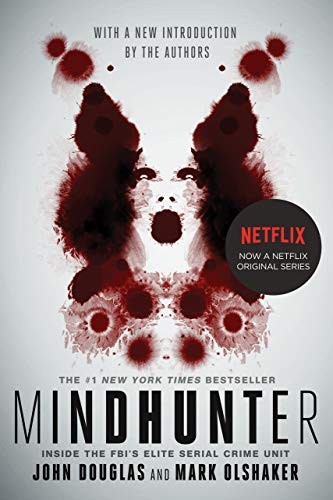
Mindhunter
08

Mindhunter

by John E. Douglas with Mark Olshaker

"I've spent a quarter of a century studying the criminal mind. What I've learned is that evil wears many faces—some of them almost impossible to recognize."

John E. Douglas, the pioneering FBI behavioral profiler, recounts his 25-year career analyzing the psychology of serial killers, mass murderers, and other violent criminals. The book includes detailed case studies and profiles of killers like Charles Manson, Edmund Kemper, and David Carpenter, revealing how Douglas developed criminal profiling techniques.

This work is essential for understanding how modern criminal psychology and profiling emerged as investigative tools. Douglas's interviews with incarcerated killers and his analysis of their psychology fundamentally changed law enforcement investigation methods. The book provides rare insight into killer psychology directly from someone who spent decades studying it.

  • Serial killers exhibit distinct psychological patterns and behavioral signatures that can assist investigation
  • Early childhood trauma, lack of empathy, and need for control are common factors in violent criminal psychology
  • Criminal profiling requires understanding the offender's perspective and probable actions in crime scenes
  • Interviews with convicted killers can provide insights that advance investigative techniques and prevention
  • Some experts argue criminal profiling is not always scientifically rigorous and can introduce bias into investigations
  • Critics contend the book occasionally presents subjective psychological analysis as scientific fact
  • A few argue Douglas's work may have inadvertently romanticized serial killers by treating them as subjects of fascination

"The basis for the acclaimed series Mindhunter, which dramatized Douglas's groundbreaking work in criminal profiling"

Netflix, Streaming Service

"Douglas's pioneering work transformed how the FBI analyzes and investigates violent crime"

FBI Behavioral Science Unit, Law Enforcement Agency

"A landmark work in understanding criminal psychology and investigative technique"

Publishers Weekly, Trade Publication
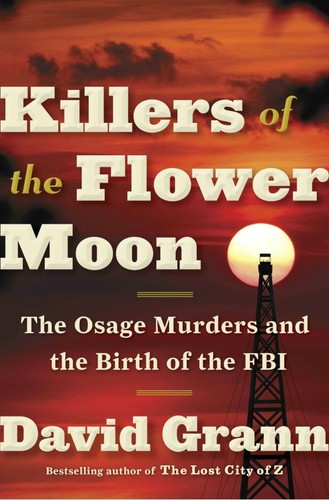
Killers of the Flower Moon
09

Killers of the Flower Moon

by David Grann

"The Osage had suddenly become the richest people in the world, per capita. But as their wealth grew, so did the murder rate among them."

David Grann's investigation of the 1920s Osage murders, when dozens of wealthy Osage Nation members in Oklahoma were systematically killed for their oil-rich headrights in a period known as the Reign of Terror. The book explores how the murders went largely unpunished and reveals the complicity of white citizens in a conspiracy of greed and racial violence.

This modern masterpiece exposes the systematic murder of Indigenous people and the failure of justice to address it. Grann's meticulous research and narrative power make this essential reading for understanding America's relationship with Native peoples. It demonstrates how greed, racism, and institutional failure combine to enable mass murder.

  • Systematic racial and economic violence against Indigenous peoples was enabled by institutional and individual complicity
  • The early FBI's origins were partly shaped by investigating crimes many white citizens wanted to ignore
  • Wealth itself became a death sentence for the Osage, inverting the promise of the American dream
  • Historical injustices have lasting consequences that continue to affect Indigenous communities today
  • Some argue the book, despite its intentions, still centers white investigators' perspective rather than fully centering Osage voices
  • Critics contend the narrative structure sometimes emphasizes thriller elements at the expense of historical context
  • A few Indigenous voices have questioned whether the book adequately represents Osage agency and resilience

"One of the ten best nonfiction books of 2017, a finalist for the National Book Award"

Time Magazine, Major Publication

"Adapted Killers of the Flower Moon into an epic film, recognizing it as a masterpiece of narrative nonfiction about American injustice"

Martin Scorsese, Academy Award-Winning Director

"A finalist for the National Book Award, winning the Edgar Allan Poe Award for Best Fact-Crime Writing"

National Book Foundation, Literary Organization
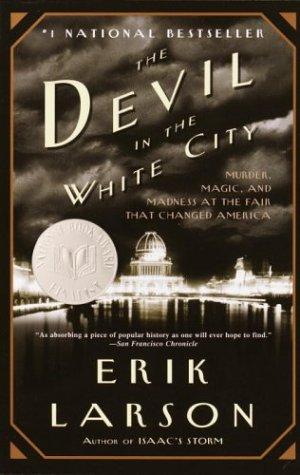
The Devil in the White City
10

The Devil in the White City

by Erik Larson

"In a great blur of snow and silvery glass the building's roof—that marvel of late nineteenth-century hubris, enclosing the greatest volume of unobstructed space in history—collapsed."

Erik Larson's gripping account of the 1893 Chicago World's Fair and the serial killer Dr. H.H. Holmes who used the fair's temporary architecture to lure victims to their deaths. The book interweaves the brilliant architectural achievement of the fair with Holmes's calculated murders and the hunt for him.

This book exemplifies how true crime narrative can elevate to literary art by creating a complete historical and cultural context. Larson's meticulously researched portrait of 1890s Chicago and Holmes's crimes demonstrates how environment, opportunity, and psychology converge to enable violence. It remains essential for understanding how killer psychology exploits modern urban conditions.

  • Serial killers exploit urban anonymity and opportunities created by modern architecture and social mobility
  • The contrast between human creativity and human depravity can exist within the same historical moment
  • Ambition and vision, whether architectural or criminal, both require intelligence and willingness to transgress boundaries
  • Late 19th-century Chicago's rapid growth created both opportunities for achievement and conditions that enabled predation
  • Some argue the book spends disproportionate time on World's Fair architecture at the expense of victim stories
  • Critics contend the dual narrative structure sometimes disrupts the true crime momentum for historical digression
  • A few argue the book can be slow-paced for readers primarily interested in the criminal narrative

"Larson does a superb job outlining the ineluctable conflict between good and evil, daylight and darkness"

Kirkus Reviews, Literary Publication

"A vivid and lively narrative that gives the historical events shape and energy through dramatic inclination"

The New York Times, Major Newspaper

"A finalist for the National Book Award, winner of the Edgar Award for Best Fact-Crime Writing"

National Book Award Committee, Literary Organization
Back to all lists