Typography Mastery Collection

Understand the discipline that shapes how we read and communicate through type

Typography is the foundation of visual communication. This collection brings together the definitive texts on typographic principles, history, and practice. From classical rules to contemporary digital typography, these books establish both the theoretical knowledge and practical judgment needed to work skillfully with type across all media.

01

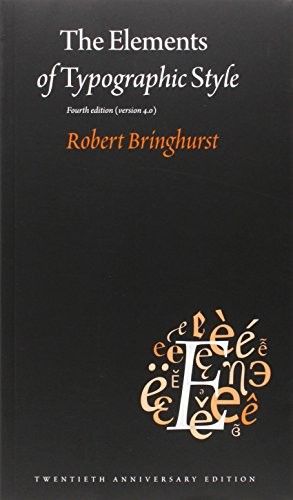
The Elements of Typographic Style

by Robert Bringhurst

View on Amazon →

"Typography is the craft of endowing human language with a durable visual form. And typographic design is the art of making that visual form beautiful and meaningful."

The definitive authority on typographic principles and practice. Bringhurst synthesizes classical typographic wisdom with contemporary design practice, covering everything from measure and leading to the relationship between type and music. The 20th anniversary edition provides updated guidance while maintaining the philosophical foundation that makes this work timeless.

Essential reading that establishes typographic literacy as essential design knowledge. Bringhurst's rigorous approach to proportion, hierarchy, and the visual music of type transcends trends and fashion. Required foundation for anyone serious about typography and visual communication.

  • Typographic principles follow musical and mathematical proportions
  • Measure and line length affect readability and comfort
  • Leading (line spacing) shapes visual rhythm and legibility
  • Type size, weight, and color work as relational systems
  • Historical knowledge informs contemporary typographic judgment
  • Dense reference format requires commitment to absorb
  • Some mathematical proportions feel abstract without practical application
  • Limited coverage of non-Latin typography and non-Western traditions

"Bringhurst has given us the definitive book on typography. Every designer must read it."

Erik Spiekermann, Master Typographer

"A remarkable synthesis of classical typographic wisdom and contemporary practice."

Hermann Zapf, Legendary Typeface Designer
02

Thinking with Type: A Critical Guide for Designers

by Ellen Lupton

View on Amazon →

"When you choose a typeface, you're choosing to set a particular historical moment and cultural environment into motion within the viewers' minds."

A practical guide transforming typography from technical skill into strategic communication tool. Lupton explores how typography shapes meaning, guides hierarchy, and influences readability. The third edition incorporates variable fonts, accessibility considerations, and digital-first design approaches while maintaining focus on fundamental principles.

Typography isn't just selecting fonts; it's organizing information and creating visual hierarchy. Lupton demonstrates how typographic decisions affect how audiences read, understand, and feel about content. Essential for understanding typography as communication strategy.

  • Typography creates hierarchy and guides information processing
  • Typeface choice carries historical and cultural meaning
  • Text formatting (size, weight, spacing) shapes visual perception
  • Digital typography requires different considerations than print
  • Accessibility in typography benefits all users
  • Dense visual presentations benefit from physical book format
  • Some coverage of contemporary digital typography still evolving
  • Limited exploration of non-Latin scripts and global typography

"Ellen Lupton's work continues to shape how designers think about type and communication."

David Carson, Legendary Typographer
03

Just My Type: A Book About Fonts

by Simon Garfield

View on Amazon →

"Fonts are invisible governors of our experience. They influence how we feel about things without us knowing about it. We have been branded, in a sense, by typefaces without us realizing."

A readable, engaging exploration of typography's role in culture and society. Garfield combines type history, cultural commentary, and entertaining anecdotes about famous typefaces and designers. He covers everything from Comic Sans to the psychology of typeface choice, making typography accessible without sacrificing substance.

Typography exists in cultural context. Understanding the history, cultural significance, and psychology of typefaces enriches design judgment. Garfield makes typographic knowledge engaging and memorable, suitable for designers seeking broader cultural literacy.

  • Typeface choice carries cultural and emotional meaning
  • Typography history informs contemporary design choices
  • Personality and emotion in typefaces influence perception
  • Corporate identity depends heavily on typographic consistency
  • Type design responds to technological and cultural changes
  • Popular approach sometimes lacks design rigor and depth
  • Some historical accounts feel simplified for general audiences
  • Limited technical guidance for type selection and usage

"Simon Garfield brings wit and insight to typography for general audiences and designers alike."

Michael Bierut, Design Principal, Pentagram
04

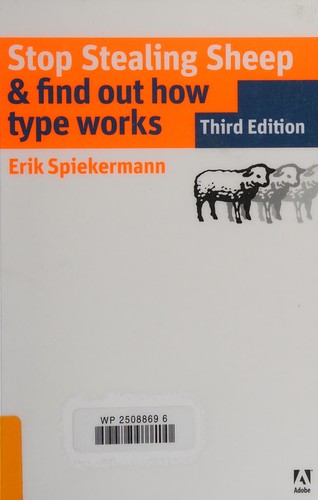
Stop Stealing Sheep & Find Out How Type Works

by Erik Spiekermann, E.M. Ginger

View on Amazon →

"Type is visible speech. Understanding how type conveys personality and emotion through form, proportion, and detail makes you a better designer."

A practical guide to understanding type design and selecting appropriate typefaces. Spiekermann, a legendary type designer, explains how typeface anatomy, personality, and technical characteristics determine usability and impact. The third edition updates examples while maintaining focus on fundamental type knowledge.

Typeface selection is both art and science. Understanding type anatomy, technical quality, and intended use prevents poor choices that undermine design. Essential for developing discriminating judgment about which typefaces work for specific applications.

  • Type anatomy (serifs, terminals, counters) affects legibility and personality
  • Technical quality in type design matters for rendering and readability
  • Typeface personality must match communication intent
  • Context determines whether type works for its purpose
  • Respecting typeface designer intent improves design outcomes
  • Focus on typeface understanding sometimes overshadows design application
  • Examples emphasize European and Roman type traditions
  • Limited guidance on variable fonts and modern type production

"Erik Spiekermann's understanding of type design is unparalleled in the field."

Jonathan Hoefler, Type Designer, Hoefler & Co.
05

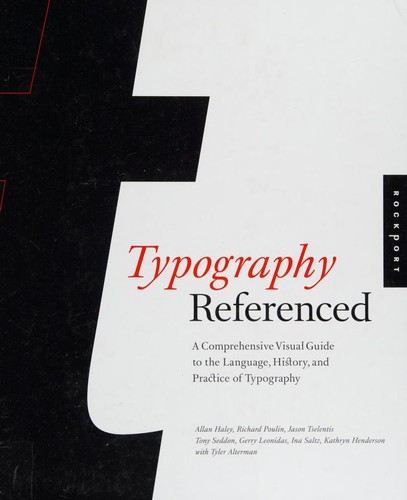
Typography Referenced: A Comprehensive Visual Guide to the Language, History, and Practice of Typography

by Kathryn Henderson, Allan Haley, Ina Saltz, et al.

View on Amazon →

"Typography is a language with its own grammar and syntax. Understanding this language fully enables fluent visual communication."

An encyclopedic reference documenting the full scope of typographic knowledge. This 400-page resource covers type history, classification systems, technical standards, and design practice. Extensive examples and illustrations make complex typographic concepts accessible and applicable.

Typography has developed centuries of technical vocabulary and classified knowledge. This reference provides comprehensive coverage of that knowledge in accessible format. Essential for designers seeking to build thorough typographic literacy and reference complex typographic questions.

  • Type classification systems organize design understanding
  • Typography terminology enables precise communication about type
  • Historical knowledge informs contemporary typographic choices
  • Technical specifications ensure type renders correctly
  • Global typography requires understanding diverse writing systems
  • Reference format lacks narrative flow and contextual story
  • Comprehensive scope can overwhelm those seeking focused guidance
  • Some technical standards may date as type technology evolves

"This comprehensive reference supports both typographic literacy and practical application."

Neilsen Norman Group, UX Research Leaders
06

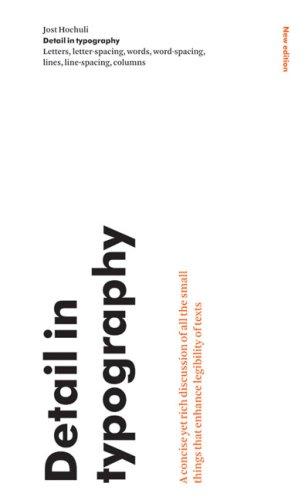
Detail in Typography

by Jost Hochuli

View on Amazon →

"Typography is about making text readable. The smaller details—spacing, line breaks, punctuation handling—determine whether reading is comfortable or frustrated."

A meticulous examination of typographic details that distinguish professional from amateur work. Hochuli explores letter spacing, word spacing, line breaks, paragraph spacing, and how these subtle adjustments affect reading comfort and visual harmony. Extensive examples demonstrate the cumulative impact of careful detail.

Typographic quality emerges from attention to detail. Hochuli demonstrates that the difference between adequate and excellent typography lies in small adjustments that profoundly affect reading experience. Essential for developing the discriminating eye that separates professional from mediocre work.

  • Letter spacing (tracking and kerning) affects readability and visual rhythm
  • Word spacing and line length determine reading comfort
  • Paragraph spacing creates visual structure without adding decoration
  • Punctuation handling affects text appearance and reading flow
  • Cumulative impact of small details creates professional quality
  • Detail focus sometimes overshadows broader strategic considerations
  • Examples emphasize print typography with less digital guidance
  • Technical nature may overwhelm designers seeking conceptual understanding

"Hochuli's attention to detail sets the standard for professional typographic practice."

Robert Bringhurst, Typographic Authority
07

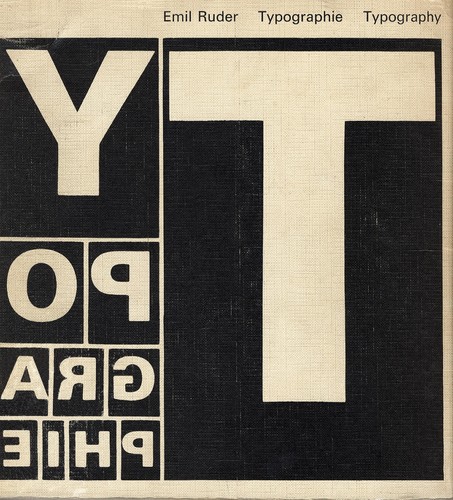
Typographie: A Manual of Design

by Emil Ruder

View on Amazon →

"Good typography is invisible. The reader should not be made aware of the type, but only of the message that it conveys."

A modernist manifesto and technical manual on typographic design from a Swiss typography master. Ruder establishes principles for systematic, functional typography emphasizing clarity and order. Published in 1967, it remains foundational despite technological changes, capturing timeless principles underlying organized visual communication.

Ruder's Swiss style modernist approach established principles for systematic, functional typography. His emphasis on grid systems, proportion, and functional clarity continues informing contemporary design. Essential for understanding how systematic thinking creates visual order and clarity.

  • Grid systems organize typography and create order
  • Proportion and mathematical relationships guide design decisions
  • Function determines form in typographic design
  • Clarity and legibility are primary design responsibilities
  • Systematic approaches enable consistency at scale
  • Modernist ideology limits discussion of expressive and playful typography
  • Published in 1967, examples feel historically specific
  • Swiss style approach may feel restrictive to contemporary designers

"Emil Ruder's principles of typographic order remain foundational to professional practice."

Josef Müller-Brockmann, Swiss Design Legend
08

Making and Breaking the Grid: A Graphic Design Layout Workshop

by Timothy Samara

View on Amazon →

"The grid is a tool. It provides structure, but the designer's role is knowing how to use it—and knowing when to break it for maximum effect."

A practical guide to understanding grid systems as design tools for organizing typography and visual information. The third edition explores how grids work across print and digital media while encouraging designers to break grids intentionally for expressive effect. Extensive before-and-after examples demonstrate grid system applications.

Grids provide invisible structure that enables organized typography and information hierarchy. Understanding how grids work and when to deviate from them is essential for confident layout decisions. This book teaches grid literacy through visual examples and practical exercises.

  • Grid systems provide proportional structure and visual harmony
  • Different grid types serve different design problems
  • Baseline grids align typography across columns
  • Breaking grids requires understanding rules before deviation
  • Digital grids require different considerations than print
  • Grid-centric approach sometimes limits discussion of flexible, responsive layouts
  • Print-biased examples need supplementation for digital design
  • Workshop format works better with hands-on engagement

"Timothy Samara's grid teaching remains the clearest and most practical available."

Ellen Lupton, Design Writer and Educator
09

The Anatomy of Type: A Graphic Guide to 100 Typefaces

by Stephen Coles, Erik Spiekermann

View on Amazon →

"To understand type, you must look closely at the letterforms—how each letter is constructed, what makes it distinct, why these subtle details matter for the whole."

A visual reference guide to 100 significant typefaces, examining each through detailed character analysis and visual commentary. Coles provides the full character set alongside annotated specimens, making visible the subtle details that distinguish typefaces. Prefaced by Erik Spiekermann's perspective on type design, this becomes both reference and learning tool.

Developing an eye for typeface distinction requires exposure to diverse faces and deep examination of their characteristics. Coles' systematic approach builds visual literacy and pattern recognition. Essential for developing the discriminating judgment needed for expert typeface selection.

  • Type anatomy determines character and personality
  • Serif, sans-serif, script, and decorative categories have distinct characteristics
  • Historical context informs typeface personality and usage
  • Detailed examination reveals design intent and quality
  • Comparative study develops typographic discrimination
  • Visual focus emphasizes historical and contemporary typefaces, less technical guidance
  • 100-typeface selection, while broad, inevitably omits significant faces
  • Limited discussion of variable fonts and modern type innovations

"Stephen Coles has created the definitive visual guide to typeface anatomy and distinction."

Paul Shaw, Type Historian
10

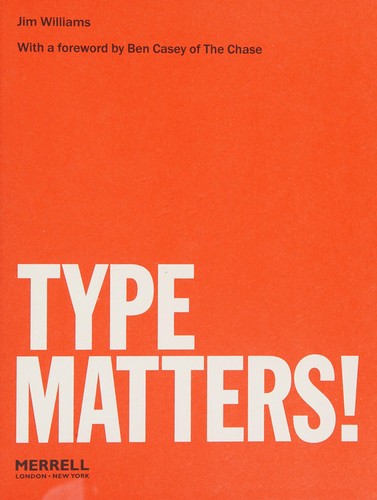
Type Matters!

by Jim Williams

View on Amazon →

"Type is personality. Every typeface has its own voice, and choosing the right voice for the right message is what separates good design from great design."

A visually sophisticated examination of type in applied design contexts. Williams uses case studies and real-world examples to demonstrate how typographic choices affect brand identity, communication, and visual impact. The book emphasizes type as an expressive tool while maintaining focus on functional communication.

Understanding type theory means little without seeing theory applied to real design problems. Williams demonstrates how expert typographic judgment emerges through observation of professional practice. Essential for understanding how to apply typographic knowledge in practical design contexts.

  • Type choice affects brand perception and identity
  • Typography in context reveals how theory applies to practice
  • Historical types gain new meaning in contemporary applications
  • Type combined with other visual elements creates powerful communication
  • Expressive and functional typography coexist in good design
  • Case study format works best with detailed engagement
  • Limited technical guidance compared to more instructional texts
  • Emphasis on visual sophistication may overshadow accessibility concerns

"Jim Williams understands that great typography depends on understanding context and intent."

Michael Bierut, Design Principal, Pentagram
Back to all lists