User Experience Design Essentials

Master the methods and mindsets that create intuitive, valuable digital products

This collection brings together the definitive texts on creating user-centered digital experiences. From Steve Krug's usability fundamentals to modern design thinking and research methodologies, these books provide both theoretical understanding and practical frameworks for building products that users love and choose to use.

01

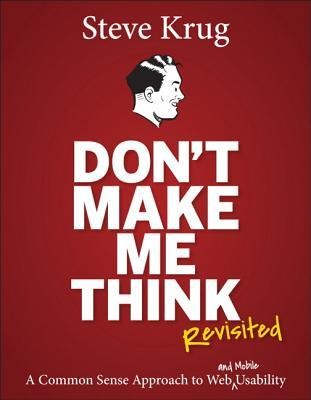
Don't Make Me Think

by Steve Krug

View on Amazon →

"Don't make me think. It's the first law of usability. As a rule of thumb: if something requires a large investment of effort to figure out, it's not obvious enough."

A practical guide to web usability that has become the canonical text for UX designers. Krug distills usability into principles anyone can understand: clear navigation, intuitive interactions, and mindless choices. The third edition adds mobile and responsive design considerations to the timeless foundations of good interface design.

The foundational text for modern UX design. Krug's principle that users shouldn't have to think about interfaces has shaped every web and app design since publication. Essential reading that immediately improves design judgment and decision-making across all digital platforms.

  • Usability is about making interfaces self-evident
  • Users scan rather than read, and don't follow ideal information architecture
  • Testing with real users reveals design assumptions
  • Mobile design requires different considerations than desktop
  • Accessibility improves usability for everyone
  • Published in 2000, some digital design contexts have evolved
  • Focuses on website usability with less coverage of application design
  • Somewhat superficial treatment of complex interaction patterns

"Krug's principles remain the foundation of all usable interface design."

Nielsen Norman Group, UX Research Leaders

"Essential reading that everyone building digital products should understand."

Jeff Gothelf, Lean UX Author
02

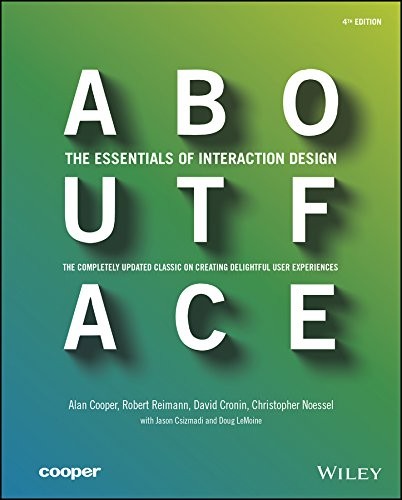
About Face: The Essentials of Interaction Design

by Alan Cooper, Robert Reimann, David Cronin, Christopher Noessel

View on Amazon →

"Interaction design is the creation of the dialogue between a person and a product, service, or system. As opposed to focusing on the aesthetics, interaction design is about defining the behavior and structure of interactive systems."

A comprehensive exploration of interaction design methodology centering on persona development and goal-directed design. The fourth edition examines how mobile, cloud, and social technologies reshape interaction patterns while maintaining focus on designing for real human needs and behaviors. Extensive case studies illustrate complex interaction design challenges.

Establishes interaction design as a discipline distinct from visual design. The persona methodology has become industry standard, and the goal-directed approach ensures designs solve real problems. Essential for understanding how to design not just what things look like, but how they behave.

  • Personas guide user-centered design decisions
  • Goal-directed design solves problems, not symptoms
  • Interaction design is distinct from visual design
  • Mental models shape how users understand systems
  • Feedback and affordances guide user actions
  • Comprehensive length may overwhelm UX newcomers
  • Persona-driven approach has received modern criticism
  • Published examples sometimes feel dated for mobile-first design

"About Face is essential reading for anyone designing interactive systems."

Don Norman, Design Pioneer
03

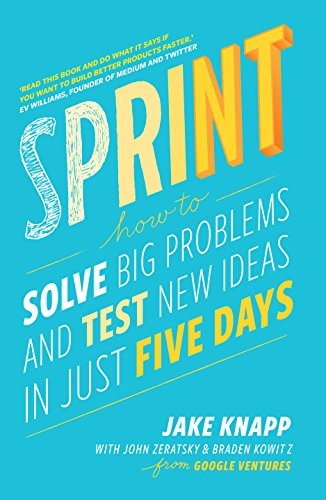
Sprint: How to Solve Big Problems and Test New Ideas in Just Five Days

by Jake Knapp, John Zeratsky, Braden Kowitz

View on Amazon →

"Instead of debating for weeks, you prototype and test ideas with real users by Friday. The most important thing is to fail fast and learn quickly."

A practical framework for rapid prototyping and testing developed at Google Ventures. Sprint methodology compresses months of work into one week: Monday problem definition, Tuesday solutions, Wednesday decisions, Thursday prototyping, Friday user testing. Detailed instructions and real case studies demonstrate how teams solve complex problems quickly.

Provides a proven methodology for moving from ideation to learning in compressed timeframes. Essential for startups and organizations needing to validate ideas rapidly. The sprint framework reduces meeting time and decision-making paralysis while maximizing learning from user feedback.

  • Structured sprints accelerate problem-solving and learning
  • Prototyping before development reduces waste
  • User testing with five people reveals major issues
  • Time constraints force prioritization and decisions
  • Diverse team perspectives strengthen sprint outcomes
  • Five-day timeframe may not suit all problem types
  • Requires significant time commitment from core team
  • Limited guidance on how to implement learnings after sprint

"The Sprint method has become one of the most effective approaches to solving hard problems."

Marty Cagan, Product Management Expert
04

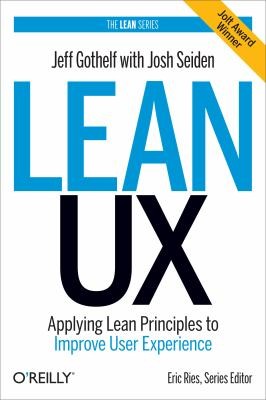
Lean UX: Applying Lean Principles to Improve User Experience

by Jeff Gothelf, Josh Seiden

View on Amazon →

"Lean UX is about achieving the right outcomes in the right context. Start with assumptions, validate them with real users, and adjust based on what you learn."

A methodology for applying lean and agile principles to user experience design. Rather than extensive upfront research and documentation, Lean UX emphasizes rapid iteration, continuous testing, and outcome-focused design. Gothelf and Seiden show how teams can move fast while remaining user-centered.

Resolves the tension between agile development and user research. Lean UX provides practical methods for maintaining user focus in rapid development cycles. Essential for teams working in startups or agile environments where traditional UX approaches feel too slow.

  • Assumptions drive research and design decisions
  • Quick experiments replace extensive research cycles
  • Outcomes matter more than deliverables
  • Cross-functional collaboration reduces handoffs
  • Continuous testing keeps design responsive to user needs
  • Can prioritize speed over thorough research
  • Assumes access to continuous user feedback
  • Limited guidance on complex regulatory or safety-critical design

"Lean UX brings user-centered thinking to agile development."

Jared Spool, UX Strategist
05

Laws of UX: Using Psychology to Design Better Products & Services

by Jon Yablonski

View on Amazon →

"The Laws of UX are universal principles that define how humans perceive and interact with digital products. Design with psychology, and users will understand instinctively."

A modern reference documenting psychological principles that influence user behavior and experience. The second edition expands coverage to include emerging topics like dark patterns, AI interactions, and ethical design considerations. Yablonski connects cognitive psychology to practical UX decisions through clear explanations and contemporary examples.

Psychology determines how users perceive, process, and interact with interfaces. Understanding cognitive principles like Fitts' Law, Miller's Law, and Jakob's Law helps designers make better decisions. Essential for moving beyond intuition to evidence-based design that respects human perception and cognition.

  • Human perception follows predictable psychological principles
  • Cognitive load affects usability and user satisfaction
  • Consistency reduces mental effort and aids learning
  • Choice architecture influences decision-making
  • Defaults powerfully shape user behavior
  • Relatively recent publication with limited long-term perspective
  • Some principles lack deep research backing
  • Design application varies by context and product type

"Jon Yablonski's Laws of UX provides modern, research-backed guidance for better design."

Neilsen Norman Group, UX Research Leaders
06

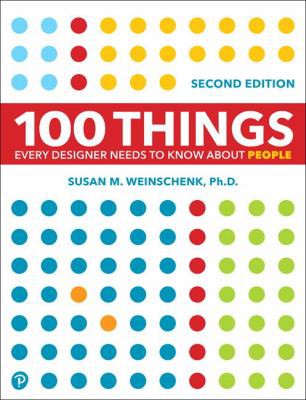
100 Things Every Designer Needs to Know About People

by Susan Weinschenk

View on Amazon →

"If you want to design products and services that are truly usable and lovely, you must understand people and their behavior first."

A collection of behavioral science insights translated into practical design implications. Weinschenk, a behavioral scientist with decades of experience, explains how people perceive, decide, remember, and feel. Each principle connects psychological research to concrete design applications, making cognitive science accessible and actionable.

Behavioral science is the missing link between design intuition and user behavior. Understanding how people actually think and decide improves design effectiveness. Essential for moving beyond assumptions to evidence-based design grounded in human cognition and perception.

  • Humans are cognitive misers who use mental shortcuts
  • Perception is selective and influenced by attention
  • Memory works through pattern recognition and association
  • Emotion strongly influences decision-making
  • Social proof and authority influence behavior
  • Second edition adds content that dilutes focus somewhat
  • Some principles lack specific design implementation guidance
  • Individual variation limits universal applicability

"Susan's insights into human behavior fundamentally improve design work."

Whitney Quesenbery, UX Writer & Researcher
07

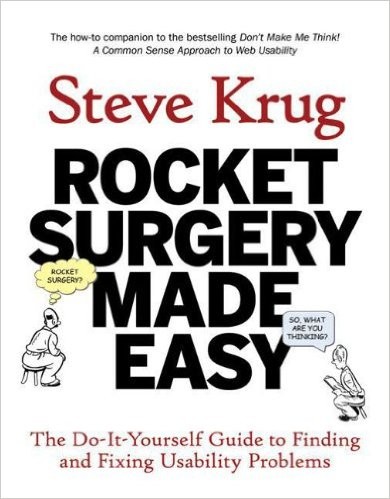
Rocket Surgery Made Easy: The Do-It-Yourself Guide to Finding and Fixing Usability Problems

by Steve Krug

View on Amazon →

"Testing is not a spectator sport. You don't need elaborate facilities or thousands of dollars. Get five people. Watch them use your product. Learn where they get stuck."

A practical guide to conducting usability testing without large budgets or elaborate facilities. Krug demonstrates how small, regular tests with just five participants reveal major usability issues. The book covers recruiting, conducting sessions, analyzing results, and presenting findings to stakeholders in ways that drive design changes.

Demystifies usability testing and removes barriers to implementation. Regular user feedback is essential to good design, but many teams skip testing due to perceived complexity. This book shows testing is simple, affordable, and extraordinarily valuable for improving design decisions.

  • Small tests with five people reveal major usability issues
  • Simple moderated testing outweighs large surveys
  • Observing users uncovers problems intuition misses
  • Remote testing reduces logistical burden
  • Regular testing beats infrequent comprehensive studies
  • Assumes access to users and recruiting abilities
  • Five-user sample may miss niche user population issues
  • Limited guidance on testing complex or technical products

"Testing is the most valuable thing you can do to improve design, and this book makes it easy."

Steve Krug, Usability Expert
08

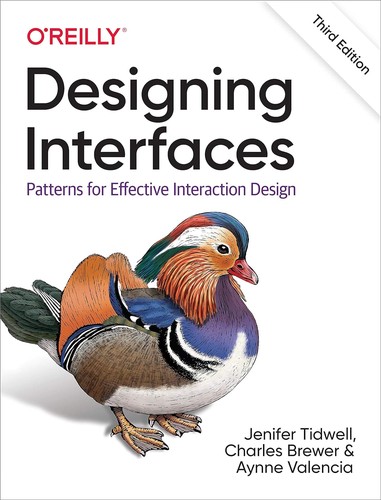
Designing Interfaces: Patterns for Effective Interaction Design

by Jenifer Tidwell, Charles Brewer, Aynne Valencia

View on Amazon →

"Patterns capture the expertise of experienced designers and make it available to everyone. Use them to stand on the shoulders of giants."

A comprehensive reference documenting interaction design patterns that solve common UX challenges. The third edition covers responsive design, gesture interactions, and voice interfaces alongside traditional patterns. Each pattern includes problem definition, common solutions, and implementation considerations with examples across platforms.

Interaction patterns are the vocabulary of UX design. Understanding established patterns helps designers make consistent, predictable interfaces. This reference accelerates design work by providing proven solutions while teaching underlying principles that enable pattern adaptation.

  • Established patterns reduce cognitive load for users
  • Pattern familiarity enables faster learning and use
  • Patterns evolve with technology and user expectations
  • Context determines pattern appropriateness
  • Breaking patterns requires strong justification
  • Heavy reference material challenging to read linearly
  • Patterns sometimes feel prescriptive rather than principles-based
  • Rapid technology changes can date specific implementations

"Jenifer Tidwell's patterns remain the gold standard reference for interaction designers."

Dan Saffer, Interaction Design Expert
09

UX Strategy: How to Devise Innovative Digital Products that People Want

by Jaime Levy

View on Amazon →

"UX strategy is about creating competitive differentiation through thoughtful product experiences that matter to users and create value for business."

A strategic framework connecting business goals, user research, and design to create valuable digital products. Levy explores how competitive analysis, user research, and strategic positioning inform feature prioritization and product direction. The second edition expands coverage of AI, machine learning, and modern product development contexts.

UX extends beyond individual interfaces to product strategy. Understanding how to align user needs with business objectives ensures design efforts deliver value. Essential for moving from tactical execution to strategic product thinking that shapes market impact.

  • User research informs strategic positioning
  • Competitive analysis reveals opportunity spaces
  • Value proposition connects user benefits to business goals
  • Strategic roadmaps align design with business objectives
  • Metrics track whether strategy delivers promised outcomes
  • Strategic framework requires business context to apply
  • Assumes access to research and strategic planning processes
  • Limited guidance for constrained startup environments

"Jaime Levy has done the definitive work on connecting UX to business strategy."

Jared Spool, UX Strategist
10

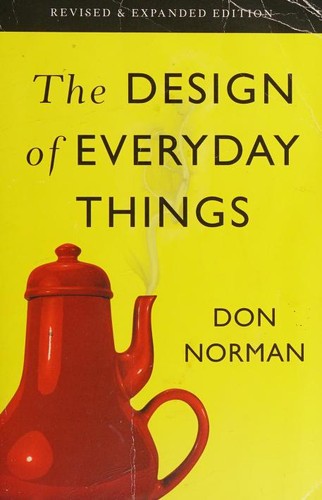
The Design of Everyday Things: Revised and Expanded Edition

by Don Norman

View on Amazon →

"The fundamental principles of human behavior don't change. People still need to understand how things work, and good design makes that understanding intuitive."

While included in the design list, this foundational text is equally essential for UX professionals. Norman establishes psychological principles governing how humans interact with all systems, from doors to software. The revised edition adds digital design examples and explores how design thinking applies to artificial intelligence and autonomous systems.

Every UX designer must understand the psychological foundations that Norman established. This book explains why good UX feels invisible and how understanding human behavior prevents designing systems that frustrate users. Foundational to all digital product design.

  • Users form mental models of how systems work
  • Affordances signal possibility for action
  • Feedback confirms action and provides system status
  • Constraints prevent errors and guide behavior
  • Consistent design patterns support learning
  • Foundational work occasionally feels philosophical versus tactical
  • Examples skew toward physical design over complex digital systems
  • Some principles require interpretation for modern contexts

"Don Norman's principles remain the foundation for every good user experience."

Jared Spool, UX Research Leader
Back to all lists