War and Strategy: The Essential Reading List

Classic and Contemporary Works on Military Strategy, Conflict, and the Art of War

This collection assembles the most influential texts on warfare and strategy, spanning from ancient military thought to modern conflict analysis. These works examine how war shapes civilization, how strategy governs tactical success, and how ordinary people experience combat. From theoretical treatises on the principles of war to gripping personal accounts of battle, these books provide essential perspectives on humanity's most destructive endeavor.

01

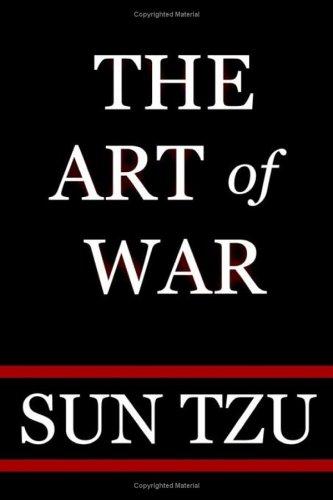
The Art of War

by Sun Tzu

View on Amazon →

"All warfare is based on deception."

An ancient Chinese military treatise presenting timeless principles of strategy, tactics, and psychological warfare. Sun Tzu emphasizes understanding the enemy, positioning for advantage, and winning without fighting. The text remains foundational for military strategy and has influenced commanders across centuries.

Sun Tzu's aphoristic wisdom has shaped military thought across cultures and centuries. The principles of deception, positioning, and psychological dominance remain relevant to contemporary strategic challenges. This brevity and density make it essential for understanding the intellectual foundations of strategic thinking.

  • Knowledge of enemy and self ensures victory
  • Best victory achieved without fighting
  • Terrain and positioning determine tactical outcomes
  • Psychological factors often determine military success
  • Ancient text lacks specificity for modern warfare
  • Emphasis on deception can encourage unethical conduct
  • Some principles applicable only to specific military contexts

"Cited Sun Tzu's principles as influential to guerrilla warfare theory: Know your enemy and know yourself, and you can fight a thousand battles without disaster."

Mao Tse-Tung, Military Strategist

"The Art of War continues to inspire decision-makers from military commands to Fortune 500 boardrooms with timeless strategic principles."

U.S. Marine Corps, Military Institution

"Transcended its warlike niche to be read and revered across all professions, offering wisdom that has guided military minds for 2,500 years."

Military History, Strategic Tradition
02

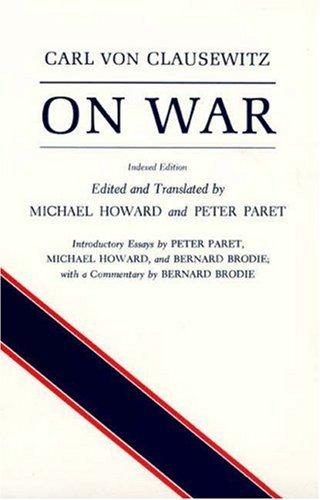
On War

by Carl von Clausewitz

View on Amazon →

"War is the continuation of politics by other means."

A foundational text of military philosophy examining war as political instrument and means of resolving conflicts. Clausewitz introduces the 'fog of war,' friction in military operations, and the role of chance and morale. His framework remains essential for understanding how political objectives drive military strategy.

Clausewitz's concept of war as continuation of politics revolutionized strategic thought. His recognition of fog, friction, and uncertainty in combat provides essential framework for understanding why military plans often fail. This work is essential for anyone seeking to understand war's relationship to political objectives.

  • War serves political objectives and must be subordinate to political aims
  • Fog of war introduces uncertainty into military operations
  • Friction makes execution harder than planning suggests
  • Moral and psychological factors often determine military outcomes
  • Dense philosophical writing difficult for general readers
  • Emphasis on Europe's wars limits applicability to other contexts
  • Prussian-centric perspective reflects its historical moment

"Described as undoubtedly the most significant attempt in Western history to understand war, both in its internal dynamics and as policy instrument."

Military Strategic Tradition, War College Curriculum

"The Howard and Paret translation is praised as smooth, readable, accurate, and handsomely printed contemporary English version."

Princeton University Press, Academic Publisher

"Remains undoubtedly one of the most useful books ever written, stimulating generations of soldiers, political leaders, and intellectuals."

Military Strategists, Modern Strategic Thinkers
03

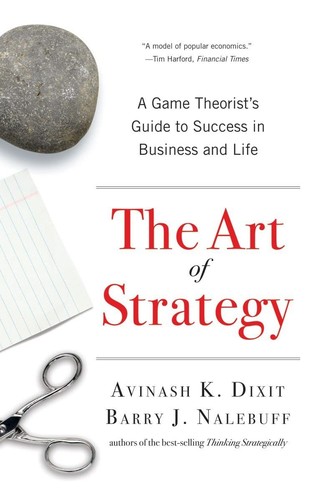
The Art of Strategy

by Avinash K. Dixit and Barry J. Nalebuff

View on Amazon →

"Strategy is the art of creating power, or preventing the opponent from creating it."

A modern application of game theory and strategic thinking to business, politics, and life decisions. Dixit and Nalebuff explain how to think strategically about competition, negotiation, and commitment. The book translates abstract game theory into practical strategic insights applicable across domains.

This work demonstrates how strategic thinking extends beyond military domains to all competitive situations. The authors provide practical frameworks for recognizing strategic interactions and choosing optimal responses. Essential reading for understanding how strategic reasoning applies to contemporary challenges from business to diplomacy.

  • Game theory reveals structure underlying competitive situations
  • Commitment and credibility shape strategic advantage
  • Information asymmetry creates strategic opportunities
  • Strategic dominance depends on thinking ahead and backward
  • Game theory models may oversimplify complex real-world situations
  • Business examples may not always apply to military or political contexts
  • Limited discussion of ethical implications of strategic deception

"Demonstrates how strategic thinking extends far beyond military domains to all competitive situations in business and politics."

Game Theory Community, Academic Field

"Provides practical frameworks for recognizing strategic interactions and choosing optimal responses in competitive business environments."

Business Strategists, Corporate Leaders

"Translates abstract game theory into practical insights about commitment, credibility, and how strategic thinking applies to diplomacy."

Negotiation Experts, Professional Community
04

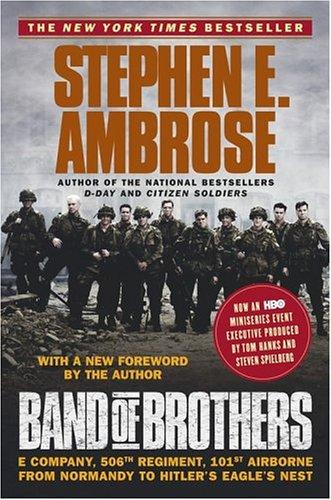
Band of Brothers

by Stephen E. Ambrose

View on Amazon →

"We knew we were going to die, but we also knew that if we were going to die, we would die together."

A meticulously researched history of Easy Company, 506th Regiment, 101st Airborne Division from formation through victory in Europe. Ambrose follows individual soldiers from training through combat, capturing the human experience of war and the bonds that develop among those sharing life-or-death circumstances.

This exemplary military history combines rigorous research with compelling narrative. Ambrose demonstrates how unit cohesion and leadership determine combat effectiveness. The intimate portrait of soldiers' experiences reveals war's profound psychological and emotional dimensions beyond strategic or tactical considerations.

  • Leadership and unit cohesion determine combat effectiveness
  • Individual soldiers carry profound courage and vulnerability
  • Shared hardship creates bonds that transcend normal human relationships
  • War's reality vastly differs from strategic plans
  • Focused exclusively on American perspective and experience
  • Emphasis on positive qualities can obscure war's brutality
  • Limited attention to command-level strategic decisions

"Pored over Band of Brothers extensively in researching his role, crediting Ambrose's detailed work with providing extensive D-Day landing knowledge."

Tom Hanks, Actor and Producer

"An absorbing, compelling, and stunning book providing a highly readable account of heroic service and the human bonds forged through combat."

Military Historians, Academic Community

"Recipient of the George Marshall Award, Abraham Lincoln Literary Award, and Will Rogers Memorial Award for military historical excellence."

Literary Awards, Recognition Institutions
05

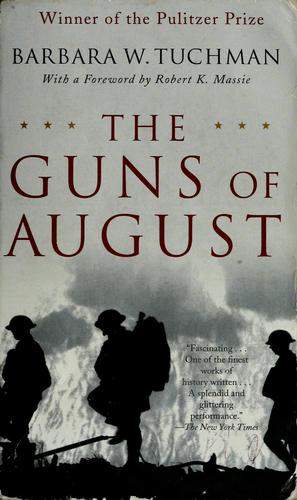
The Guns of August

by Barbara Tuchman

View on Amazon →

"The men at the top are often less concerned with the inevitable disasters that are heading their way than with the immediate problems they face."

A Pulitzer Prize-winning narrative history of the first month of World War I examining how Europe stumbled into catastrophic conflict. Tuchman traces military planning, diplomatic miscalculation, and the mobilization systems that locked nations into war despite initial ambivalence.

Tuchman's masterwork demonstrates how complex systems and rigid military timetables constrain political leaders' choices. This analysis of how plans overwhelm decision-making reveals crucial lessons about the gap between strategic intention and military reality. Essential for understanding how wars begin.

  • Military mobilization timetables constrain political choices
  • Military planning assumptions may prove catastrophically wrong
  • Alliance systems and chain reactions can precipitate unintended conflict
  • Strategic miscalculation can trap nations in unwanted wars
  • August 1914 focus limits broader understanding of war's origins
  • Emphasis on political and military elites marginalizes other perspectives
  • Some military historians dispute specific tactical interpretations

"Winner of the Pulitzer Prize for General Nonfiction, selected as one of the 100 best nonfiction books of the twentieth century."

Pulitzer Prize Committee, Literary Award

"Was gripped from the wonderful first sentence, demonstrating Tuchman's mastery of narrative that brings historical events to life."

Margaret MacMillan, Historian, Oxford University

"A magnificent narrative—beautifully organized, elegantly phrased, skillfully paced, and sustained with narrative power."

The Chicago Tribune, Major Publication
06

All Quiet on the Western Front

by Erich Maria Remarque

View on Amazon →

"We are not here to entertain ourselves; we are here to solve a problem."

A devastating novel following a group of German soldiers through trench warfare on the Western Front. Through the eyes of protagonist Paul Bäumer, Remarque presents the psychological devastation of industrial warfare, the senselessness of conflict, and the destruction of a generation.

This novel remains the most powerful literary portrayal of modern warfare's psychological reality. Remarque's unflinching depiction of fear, comradeship, and meaningless death shapes how subsequent generations understand war. It demonstrates literature's capacity to communicate truths statistics cannot convey.

  • Industrial warfare creates unprecedented psychological casualties
  • Soldiers bond through shared suffering and common enemy
  • War's logic extends beyond rational political objectives
  • Returning soldiers struggle to reintegrate into civilian society
  • Focuses on suffering without political analysis of war's origins
  • Literary merit may overshadow historical accuracy questions
  • German perspective can obscure Allied experiences

"Here at last is the great war novel for which the world has been waiting, speaking for a whole generation."

Literary Community, Critics and Scholars

"Sold 2.5 million copies in 22 languages in first 18 months, striking a chord with survivors who recognized the psychological reality of war."

War Survivors, Veterans and Civilians

"The world has gained a great writer in Erich Maria Remarque, whose literary power continues to shape understanding of warfare's human cost."

Modern Literature, Academic Tradition
07

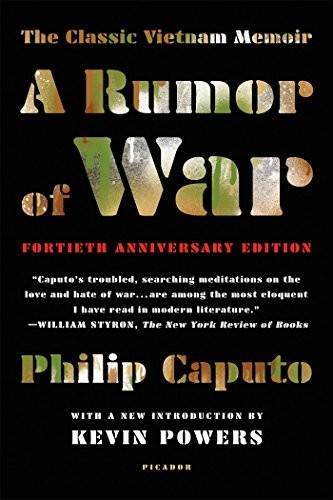
A Rumor of War

by Philip Caputo

View on Amazon →

"War is not a collection of images; it is an odor, a taste, a feeling."

A searing memoir of Caputo's service as a Marine officer in Vietnam combining combat narrative with moral reckoning. Caputo examines how ordinary men become capable of violence, how military culture socializes soldiers toward brutality, and how war transforms personality and ethics.

Caputo's unflinching account of how military institutions shape behavior provides essential perspective on war's moral dimensions. His analysis of how good intentions become corrupted by military logic reveals how institutional pressures override individual moral concerns. Essential reading for understanding war's psychological transformation of combatants.

  • Military training normalizes violence and brutalizes soldiers
  • Institutional pressures override individual moral judgments
  • War's moral ambiguities resist simple categorization
  • Combat experience psychologically transforms participants
  • Focuses on American combat experience at expense of broader context
  • Self-examination can approach self-indulgence
  • Limited engagement with political dimensions of conflict

"An essential perspective on war's moral dimensions, revealing how institutional pressures override individual moral concerns in combat."

Military Ethics Scholars, Academic Community

"A searing and honest account that speaks truth about how military institutions transform ordinary people into instruments of violence."

Vietnam Veterans, Combat Veterans

"Essential reading for understanding the psychological and moral dimensions of war and how combat transforms participants profoundly."

War Studies Programs, University Curriculum
08

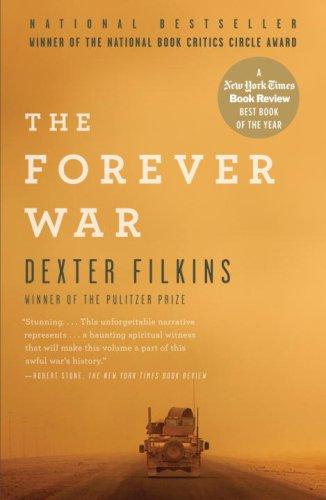
The Forever War

by Dexter Filkins

View on Amazon →

"War is a collection of individual stories."

A collection of dispatches from one of America's leading war correspondents covering Afghanistan and Iraq. Filkins combines reporting, narrative, and analysis to chronicle the rise of the Taliban, America's wars, and their consequences for civilians and soldiers across decades.

Filkins' eyewitness accounts from the ground provide perspective on modern asymmetrical warfare that policy documents cannot convey. His long-term engagement with both Afghanistan and Iraq reveals patterns and consequences often obscured by news cycles. Essential for understanding contemporary conflict.

  • Asymmetrical warfare creates new strategic challenges
  • Civilian populations bear devastating costs of modern conflict
  • Decades-long conflicts shape societies in profound ways
  • Military power cannot solve complex political and cultural problems
  • Reportorial focus may limit strategic analysis
  • American perspective shapes interpretation of events
  • Dispatch format can fragment understanding of larger patterns

"Eyewitness accounts from one of America's leading war correspondents provide perspective on modern asymmetrical warfare that transcends policy documents."

War Correspondents, Journalism Community

"Essential reading for understanding contemporary conflict in Afghanistan and Iraq, revealing patterns often obscured by news cycles."

Middle East Analysts, Foreign Policy Experts

"Demonstrates how military power alone cannot solve complex political and cultural problems inherent in asymmetrical modern warfare."

Military Strategists, Strategic Community
09

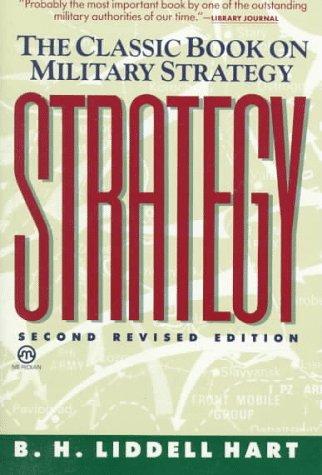
Strategy

by B.H. Liddell Hart

View on Amazon →

"The more indirect the approach, the less resistance to be encountered."

A comprehensive examination of military strategy across history emphasizing the 'indirect approach'—achieving objectives through maneuvering rather than frontal assault. Hart traces strategic principles through military history and contrasts successful indirect approaches with costly direct assaults.

Liddell Hart's historical analysis reveals how strategic principles repeat across centuries and contexts. His concept of the indirect approach challenges conventional military thinking and provides alternative frameworks for achieving objectives. Essential for understanding alternative strategic philosophies to attrition.

  • Frontal assault against prepared defenses proves extremely costly
  • Indirect approaches using maneuver achieve objectives with less force
  • Psychological dislocation of enemy often proves decisive
  • Understanding opponent's strategy shapes response options
  • Historical examples sometimes misinterpreted to support thesis
  • Emphasis on maneuver may underestimate attrition's role
  • Applicability to modern warfare questioned by some strategists

"Historical analysis reveals how strategic principles repeat across centuries, demonstrating the enduring value of the indirect approach."

Military Strategists, Strategic Tradition

"Essential reading for understanding alternative strategic philosophies to attrition, providing frameworks for achieving objectives with less force."

Military Academies, Military Education

"Demonstrates through historical examples how psychological dislocation of the enemy often proves more decisive than frontal assault tactics."

Military History Scholars, Academic Community
10

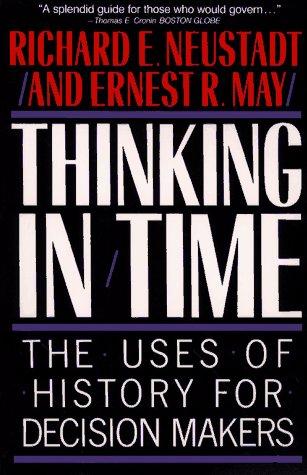
Thinking in Time

by Richard E. Neustadt and Ernest R. May

View on Amazon →

"The use of history in the making of policy is not merely an academic problem; it is a crucial challenge."

A methodological treatise on how decision-makers should use history to inform policy choices. Neustadt and May examine historical cases where leaders learned or failed to learn from precedent, developing frameworks for effective historical reasoning in strategic contexts.

This work demonstrates how rigorous historical analysis informs strategic decision-making. Rather than mining history for lessons, Neustadt and May teach critical examination of historical analogy and precedent. Essential for anyone responsible for consequential decisions to understand both history's value and its limitations.

  • Historical analogies easily mislead when contexts differ
  • Rigorous examination of precedent requires understanding differences as well as similarities
  • Decision-makers must consciously test historical reasoning
  • Failure to learn from history leads to strategic misjudgment
  • Methodological focus may seem abstract to general readers
  • Limited engagement with non-Western historical perspectives
  • Assumes decision-makers capable of sustained historical analysis

"Essential for anyone responsible for consequential decisions to understand both history's value and its significant limitations."

Policy Makers, Government Officials

"Demonstrates how rigorous historical analysis informs strategic decision-making while teaching critical examination of historical precedent."

Strategic Studies, Military Institutions

"A crucial challenge showing how decision-makers can use history rigorously without falling prey to misleading historical analogies."

Decision-Making Scholars, Academic Community
Back to all lists